Dog Skin Tag on Face: Symptoms, Diagnosis, and Vet Treatment Guide
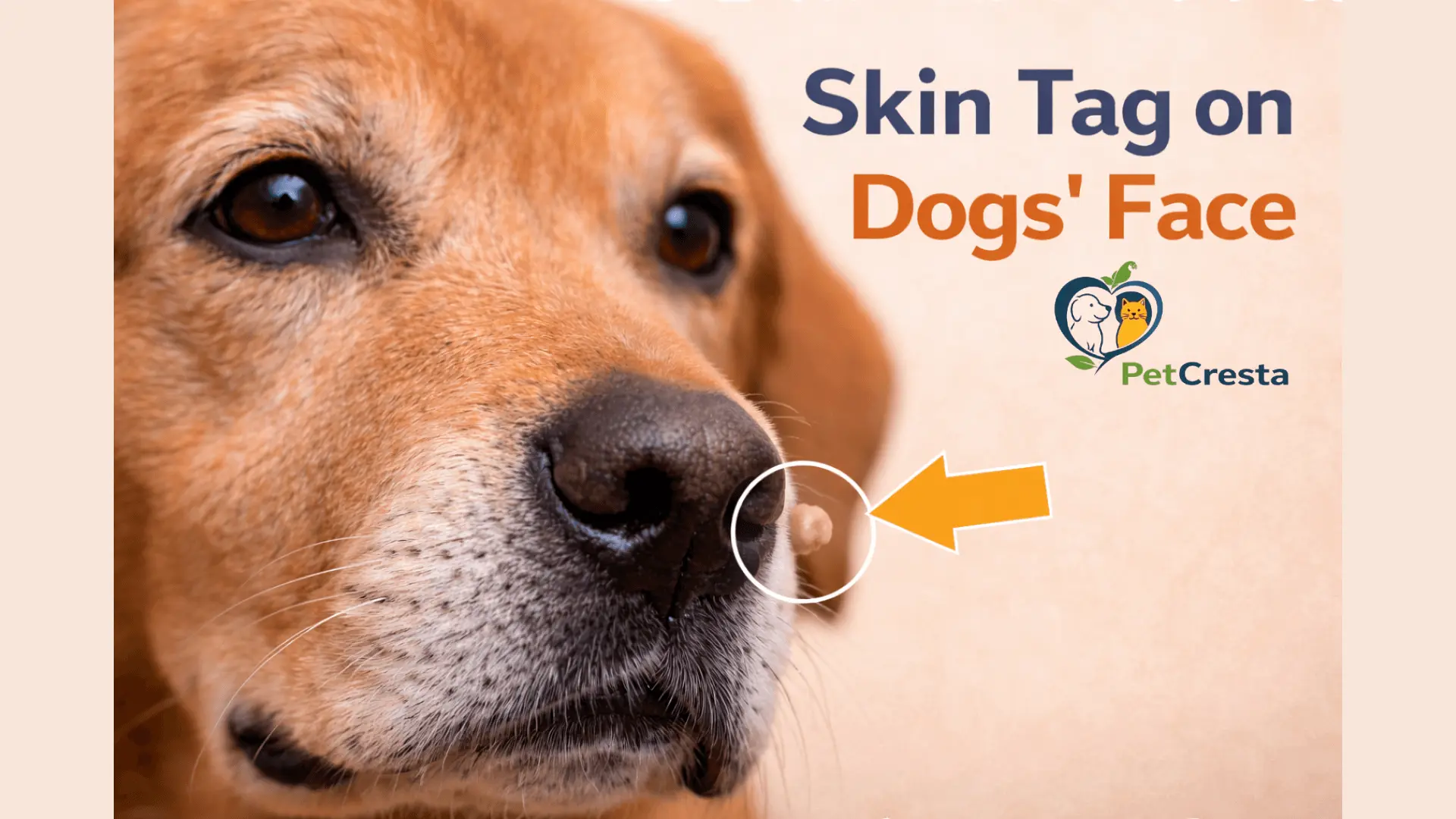
Skin tags on dogs face can look minor at first. In many cases, it may be a benign skin tag or another mild surface growth. Even so, the face is a more sensitive location than much of the body. Lesions near the eye, lips, mouth corners, muzzle, cheek, or chin can become irritated more easily and may affect blinking, eating, grooming, or comfort.
Many owners use the term skin tag for any small facial growth. That is understandable, but it is not always correct. Some facial bumps are soft and harmless. Others may be inflamed, traumatized, or different enough that a veterinary exam is the safer next step.
This guide explains what a dog face skin tag may look like, possible causes, common look-alike lesions, mouth growths that can be confused with skin tags, treatment choices, and when a visit should not be delayed. The goal is to make the next step clearer without creating unnecessary worry.
Quick Verdict: Should A Skin Tags On Dogs Face Worry You?
Many dog face skin tag are benign, but the face deserves more attention than areas like the chest or side. A small growth near the eye or mouth can become irritated quickly because of blinking, chewing, licking, and rubbing. If the lesion bleeds, crusts, changes fast, or affects blinking or eating, a veterinary visit is the safer choice.
At A Glance: Signs That Help Identify Skin Tag On Dogs Face
A quick comparison can help separate a likely mild surface growth from a lesion that needs closer review.
| Often fits a skin tag | Needs closer attention |
|---|---|
| Small and soft | Firm or fixed |
| Surface based | Deep or broad-based |
| Slow to change | Fast growth |
| Flesh colored or mildly pigmented | Dark, uneven, or changing color |
| Usually not painful unless rubbed | Pain, discharge, or odor |
| Does not affect daily function | Squinting, licking, or trouble eating |
What Is Dog Skin Tag On Face?
A skin tag is usually a small, soft, surface growth that may sit on a narrow stalk. On the face, these bumps are often confused with other lesions, so appearance alone does not always confirm the diagnosis. A veterinary exam, and sometimes testing, may be needed to determine what it really is.
What A Typical Benign Skin Tag Tends To Look Like
A simple skin tag is often small, soft, and slightly movable. It may be flesh colored, pink, or a little darker than the surrounding skin. Some hang from a narrow stalk, while others sit close to the surface and feel rubbery rather than hard.
These growths usually change slowly. They often stay painless unless they are scratched, rubbed, or bitten. That said, the face can make even a mild lesion seem more dramatic because it is easy to notice and easy to irritate.
What Makes A Dog Skin Tag Face More Concerning
A facial growth deserves more caution when it feels firm, looks irregular, grows quickly, or starts to bleed or crust. Color changes, ulceration, odor, discharge, and repeated reopening also matter.
On the face, function matters too. Squinting, tearing, blinking discomfort, drooling, licking, or trouble eating are stronger reasons to book a visit sooner rather than later.
What A Dog Skin Tag On Face Usually Looks Like
A true dog skin tag face often looks like a small flap, nub, or stalked bump attached to the surface of the skin. It may be smooth or slightly wrinkled. Some are the same color as nearby skin, while others are pink, tan, or mildly darker.
They are often more obvious on the cheek, muzzle, or lip line where the coat is thinner, or the skin moves more. On hairier faces, a small lesion can hide under fur until it gets larger or becomes irritated.
A soft flap on the cheek, a small stalked bump on the muzzle, or a hanging lesion near the lip line may fit the general appearance of a skin tag. Even so, facial hair, pigmentation, and inflammation can make one bump look very similar to another. That is why visual inspection alone has limits.
What Are The Causes of Skin Tag On Dogs Face?
The exact cause of a dog skin tag face is not always clear. In some dogs, age-related skin changes may play a role. In others, chronic irritation, repeated rubbing, or ongoing inflammation may contribute. A lesion near the lips may also be affected by moisture and saliva, which can keep the area irritated.
Another important point is that not every bump called a skin tag is truly a skin tag. If the lesion is actually a papilloma, cyst, sebaceous growth, or another type of mass, the underlying cause may be different.
Irritation Patterns That Can Matter On The Face
Repeated friction is one pattern worth noting. Pawing at the face, rubbing on carpet or furniture, and frequent grooming contact can all keep a small lesion irritated. Moisture around the lips and mouth corners may also make the surface look redder or more inflamed.
Dogs with chronic skin irritation or skin fold moisture may develop changes that are easier to notice on the face. This does not prove the cause in every case, but it is a useful pattern when looking at why some facial growths become more noticeable over time. For a pressure point location where friction often shapes how a growth looks and feels, see a skin tag on a dog’s elbow.
Skin Tag Vs Tumor Dog Face
Many owners use the word skin tag as a general label for a small bump on the face. That is common, but it can be misleading. Some facial growths are simple and benign. Others need testing to confirm whether they are inflammatory, benign but bothersome, or more concerning.
The comparison matters more on the face because even a small lesion can affect comfort and function. A growth near the eyelid may irritate the eye. A bump near the mouth may be rubbed by food, teeth, or repeated licking.
Features That May Fit A Skin Tag
A typical skin tag is often soft, surface-based, and slow-growing. It may sit on a narrow stalk and feel mobile rather than fixed to deeper tissue. It is usually not painful unless it has been irritated.
When the bump stays small, keeps the same color, and does not crust, bleed, or interfere with daily function, it is more likely to fit a mild benign pattern.
Features That May Be More Concerning For A Tumor Or Another Growth
A lesion deserves more caution when it feels firm, grows quickly, has an irregular shape, or appears fixed in place. Dark uneven pigment, crusting, ulceration, bleeding, or repeated reopening are also more concerning patterns.
These features do not automatically mean cancer. They do mean that guessing is less helpful than having the lesion examined properly.
What A Vet May Need To Do To Tell The Difference
A veterinary exam usually starts with a close look at the lesion, its texture, and its location. History matters as well, including how long it has been there, whether it has changed, and whether it bleeds or bothers the dog.
If the lesion is uncertain, a fine needle sample, biopsy, or removal with tissue testing may be recommended. That approach helps separate a simple skin tag from other facial growths more reliably than appearance alone.
| Feature | More consistent with a simple skin tag | More likely to need testing |
|---|---|---|
| Texture | Soft, rubbery | Firm, solid |
| Attachment | Surface-based, sometimes stalked | Broad-based or fixed |
| Change over time | Slow or minimal | Fast or obvious |
| Surface | Smooth or mildly wrinkled | Crusted, ulcerated, bleeding |
| Effect on the dog | Little to no unless rubbed | Pain, irritation, and function changes |
Types Of Dog Face Growths
Growths around the lips and mouth corners are often mistaken for skin tags. This area stays moist and active, so a small lesion can look swollen, stretched, or irritated after contact with saliva, licking, chewing, or teeth.
Papillomas are one common look-alike, especially when a bump has a rough or wart like surface. Lip fold lesions, inflamed bumps, cyst-like swellings, and pigmented spots near the lip line may also be confused with a skin tag.
These mouth area growths deserve closer attention because they can be rubbed while eating, bitten by accident, or become more irritated over time. For a more focused guide to lip line lesions, see skin tag on a dog’s lip.
Why The Face Needs More Attention
The face is exposed to rubbing, scratching, grooming, food contact, and saliva. That makes a small lesion more likely to become irritated, inflamed, or functionally bothersome. Even a mild growth can feel more urgent on the face simply because it affects areas used constantly.
The face also contains structures that matter every day. Blinking, eye comfort, chewing, grooming, and expression can all be affected by a poorly placed lesion. That is why small changes deserve more respect here than they might on less sensitive skin.
Near The Eye And Eyelid
A lesion near the eye can create redness, tearing, squinting, or blinking discomfort. If the bump rubs the eye surface, irritation can develop quickly. Owners may notice discharge, more blinking than usual, or a dog pawing at the face.
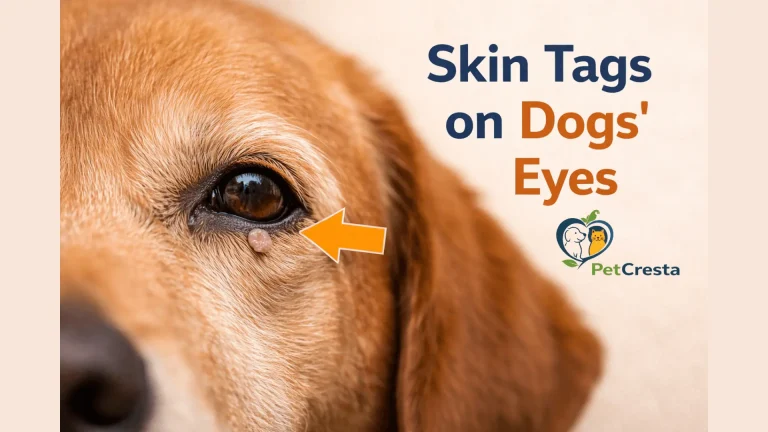
Because the eye is delicate, near-eye lesions usually deserve a lower threshold for examination. Waiting is less helpful when the dog seems uncomfortable, or the bump sits close to the eyelid margin. For a closer look at eyelid and near eye lesions, see skin tags on a dog’s eyes.
Near The Lips And Mouth Corners
The lip area is constantly exposed to saliva, chewing, and licking. A growth here may reopen, swell, or bleed after being bumped by food or teeth. Some dogs drool more or become sensitive when chewing.
Even a benign lesion can become a comfort problem in this location. If the bump changes repeatedly after meals or licking, the mouth area is telling you that the site itself matters.
On The Muzzle, Cheek, And Chin
Lesions on the muzzle, cheek, or chin may hide under facial hair until they enlarge. Repeated scratching can keep them irritated, and chin lesions may be confused with acne-type bumps or inflamed follicles.
These areas may seem less urgent than the eye or lip, but rapid growth, bleeding, firm texture, or repeated trauma still justify an exam. For another exposed area where scratching and repeated irritation can change how a lesion behaves, see the skin tag on a dog’s ear.
When It May Be Reasonable To Monitor Briefly
A brief period of monitoring may be reasonable when the lesion is small, soft, slow changing, and not interfering with blinking or eating. It should not be bleeding, reopening, or causing repeated rubbing. The dog should appear comfortable, and the bump should not sit in a spot where daily irritation is likely.
Monitoring works best when it is structured. A vague plan to watch it can turn into a delay. A simple photo and symptom record is much more useful.
What To Track At Home
Take a clear photo of dog face skin tag with good lighting and compare it over time. Note size, color, shape, and texture. Also, pay attention to blinking, pawing, licking, chewing changes, or any new crusting or discharge.
If the lesion looks different within a short period or if the dog becomes more bothered by it, the monitoring phase should end, and the lesion should be examined.
Simple Home Check Checklist
| What to track | What to look for |
|---|---|
| Size | Larger, same, or smaller |
| Color | Stable or changing |
| Surface | Smooth, crusted, bleeding |
| Comfort | Pawing, licking, rubbing |
| Function | Blinking normally, eating normally |
| Timing | Stable for weeks or changing quickly |
Signs That Mean It Should Be Checked Promptly
A dog face skin tag should be checked promptly if it is getting bigger quickly, bleeding, crusting, ulcerating, or developing odor or discharge. Pain matters. So does color change, especially if the lesion becomes darker or more irregular.
Facial function also matters. Squinting, tearing, trouble chewing, licking one area repeatedly, or refusing food because of mouth discomfort are not signs to keep waiting.
Routine Visit, Soon Visit, Or Urgent Advice
A routine appointment may be enough for a stable but uncertain lesion that is not causing discomfort. An earlier visit is better when the lesion is near the eye or mouth, or when it has clearly changed. Same-day advice is more appropriate if there is strong eye irritation, marked swelling, heavy bleeding, or major difficulty eating.
This kind of step-based decision is more useful than asking whether the bump looks bad enough. Location and function matter as much as appearance.
| Situation | Best next step |
|---|---|
| Stable but uncertain small lesion | Routine exam |
| Near the eye or mouth, or changing | Book soon |
| Squinting, heavy bleeding, major swelling, and eating difficulty | Same-day advice |
How A Veterinarian Figures Out What It Is
Appearance alone can mislead, especially on the face. A veterinarian will usually look at the lesion closely, consider its location, and ask how long it has been present and how it has behaved over time.
That first exam often gives strong clues, but some lesions still need testing. The goal is to avoid guessing when the lesion is changing, in a sensitive spot, or simply not behaving like a simple tag.
Questions The Vet May Ask
A vet may ask when the bump first appeared, whether it has changed in size or color, and whether it bleeds or crusts. Questions about licking, rubbing, blinking changes, or eating discomfort are also common.
Photos taken over time can be very helpful. They show whether the lesion is stable or clearly evolving.
Tests That May Be Used
A fine needle sample may be used in some cases, though not every surface lesion yields enough information that way. A biopsy may be recommended when the diagnosis remains uncertain. In other cases, the lesion may be removed and submitted for histopathology so the tissue can be identified properly.
Testing is especially helpful when the lesion has unusual features, affects a sensitive facial site, or does not fit the common pattern of a simple benign tag.
Terms the Vet May Use
Some vets may describe a lesion as an acrochordon, fibrovascular papilloma, or soft fibroma. These terms can sound intimidating, but they often refer to the medical naming of benign skin-type growths.
The more important issue is not the term itself. The key question is whether the lesion is mild and superficial or whether it needs more attention because of its behavior or location.
Vet Treatment Dog Face Lump And Removal Options
Treatment depends on what the lesion is, where it sits, and whether it is causing trouble. A confirmed benign surface growth that stays small and quiet may only need monitoring. A lesion that changes, bleeds, becomes irritated, or sits in a high-friction area may be better removed.
Facial lesions are often addressed sooner than body lesions because the location makes comfort and function more important. A tiny bump that would be watched on the side of the chest may not be left alone near the eyelid or the mouth corner. For comparison with a less sensitive body site where monitoring and removal decisions can differ, see a skin tag on a dog’s leg.
When Removal Is More Likely
Removal is more likely when the lesion contacts the eye, interferes with the lip or mouth, bleeds repeatedly, changes quickly, or remains uncertain after the initial exam. Some lesions are removed mainly because they keep getting traumatized.
In other cases, removal is both diagnostic and therapeutic. The tissue is taken off, comfort improves, and the sample is sent for confirmation.
What Recovery May Involve
Recovery is often straightforward, though the exact plan depends on the size and site of the lesion. Some dogs need a cone to prevent rubbing. The area may need short-term monitoring for swelling, discharge, or reopening.
If the tissue is submitted for analysis, the final diagnosis may guide whether any further steps are needed. Many benign facial growth removals are simple, but the plan should always match the individual lesion.
| Treatment path | When it fits best |
|---|---|
| Monitor | Confirmed benign, stable, not bothersome |
| Remove | Irritated, changing, uncertain, or poorly placed |
| Test first | Unusual appearance, firm texture, dark pigment, rapid change |
What Are The Treatment Of Old Dog Skin Tags on Face
Older dogs may develop benign skin growths more often, but age alone does not mean a lesion is harmless. When a growth appears on the face, especially near the mouth, the threshold for evaluation is often lower because this area is easily irritated, and older dogs may have several overlapping skin or oral changes.
When Treatment May Be Recommended In Older Dogs
Growth of an older dog face skin tag treatment is more likely when the lesion is repeatedly traumatized during eating, when there is drooling or persistent licking, or when the bump bleeds after chewing. Change in size, shape, color, or surface also matters.
A lesion that reduces comfort or makes eating awkward deserves closer attention. In older dogs, it is often worth confirming what the growth is rather than assuming it is age-related and harmless.
Treatment Approach In Older Dogs
The first step is still a proper exam. After that, the decision may be to monitor, sample, or remove the lesion. If it is removed, tissue testing helps confirm exactly what it was.
The best plan balances the dog’s comfort, the behavior of the lesion, and the dog’s overall health status. A small stable bump may be watched. A changing mouth lesion in an older dog often deserves a firmer plan.
What Not To Do At Home
Do not cut a growth on dog face skin tag off at home. Do not tie it off, freeze it, burn it, or apply wart or skin products made for human use. Home treatment can cause pain, bleeding, infection, and confusion if the lesion is not actually a simple tag.
This matters even more on the face because the eye and mouth are nearby. A bad home attempt can create a much harder problem than the original bump.
Better Steps Before The Visit
Take clear photos. Note whether the dog blinks normally, licks the area, or seems uncomfortable while eating. Try to prevent scratching if possible, and keep the area generally clean without applying random products.
That kind of observation helps a veterinary exam. It also keeps the lesion from being altered before it is assessed.
A Simple Monthly Facial Growth Check
A monthly check can help catch changes before a mild lesion becomes a bigger problem. Look at the eyelids, near eye area, lips, mouth corners, muzzle, cheeks, and chin. Compare the area with old photos if a bump is already present.
The most useful checks are consistent and brief. The goal is not to inspect every day. The goal is to notice whether anything is changing from month to month.
Checklist Items
| Check point | What to note |
|---|---|
| Size | Stable or enlarging |
| Color | Same or changing |
| Surface | Smooth, crusted, bleeding |
| Eye comfort | Tearing, squinting, rubbing |
| Mouth comfort | Licking, drooling, and chewing change |
| Overall behavior | Normal or more bothered |
A simple routine like this can help separate a stable long-term bump from one that is quietly becoming more active.
Conclusion
Many facial skin tags are benign, but the face is a location where small changes matter more. Lesions near the eye or mouth can affect comfort quickly and are easier to irritate through normal daily activity. A soft, stable bump may be monitored briefly in some cases, but a changing, bleeding, or bothersome lesion deserves professional evaluation. When the location is sensitive or the diagnosis is uncertain, a veterinary exam is the safest and clearest next step.
FAQ’s About Skin Tags on Dog’s Face
A facial skin tag often looks like a small soft flap or a tiny stalked bump sitting on the surface of the skin. It may be flesh colored, pink, tan, or slightly darker. Some are smooth, while others are a little wrinkled. The problem is that several other facial lesions can look similar, so appearance alone does not fully confirm the diagnosis.
The exact cause is not always known. Age-related skin changes, repeated irritation, rubbing, licking, and moisture around the lips may all play a role in some dogs. It is also important to remember that some bumps called skin tags are actually different types of growths, which means the underlying cause depends on what the lesion truly is.
Many are benign and remain mild. The concern increases when the growth is near the eye or mouth, changes quickly, bleeds, crusts, darkens, or starts affecting comfort. A lesion does not have to be dangerous to deserve attention. On the face, even a benign growth can still become a problem because of irritation and daily use of the area.
A soft, surface-based, slow-changing bump may fit a skin tag more closely. A firm, fast-growing, irregular, dark, bleeding, or fixed lesion is less reassuring. Even with those clues, it is not always possible to tell by sight alone. A veterinary exam, and sometimes sampling or biopsy, is the reliable way to separate one from the other.
Removal depends on location, irritation, growth pattern, and how certain the diagnosis is. A stable benign lesion may only need monitoring. A bump near the eyelid or mouth corner, or one that keeps bleeding or changing, is more likely to be removed. The decision is usually based on both comfort and clarity.
Yes, even a benign surface growth can bleed if it is scratched, rubbed, or bitten. That is one reason facial lesions draw more attention. Bleeding does not automatically mean the growth is serious, but it does mean the lesion should be assessed rather than ignored, especially if it happens more than once.
Papillomas, small lip fold lesions, inflamed bumps, cyst like swellings, and pigmented lip lesions can all be mistaken for a skin tag. The mouth area is tricky because saliva, chewing, and repeated friction can change how a lesion looks. If a mouth corner or lip line bump seems to keep changing, it is worth having it checked.
A facial bump deserves more concern when it grows quickly, bleeds, crusts, ulcerates, changes color, produces odor or discharge, or starts affecting blinking or eating. Location matters too. A small lesion near the eye or mouth usually deserves faster attention than a similar bump on a less sensitive part of the body.
Yes, it can. A bump near the eyelid may rub the eye surface and lead to redness, tearing, blinking discomfort, or squinting. Eye irritation is one of the clearest reasons not to wait too long. Even a small lesion can matter if it sits in the wrong place.
Treatment depends on whether the lesion is staying quiet or causing trouble. In older dogs, a mouth area growth may be monitored if it is stable and clearly benign, but many are examined more closely because this location is easily traumatized. If the lesion changes, bleeds, interferes with eating, or remains uncertain, removal or biopsy may be recommended.
Some small irritated surface lesions may dry out, shrink, or detach after repeated trauma, but that does not mean the diagnosis is known. A changing lesion still deserves monitoring or an exam. A bump that suddenly falls off, bleeds, or leaves an irritated base should not be assumed harmless without a closer look.
No. Home removal can cause pain, heavy bleeding, infection, and accidental injury, especially on the face. It also creates a bigger problem when the lesion is not actually a simple skin tag. A proper exam is safer, and it gives a better answer about whether anything needs to be treated at all.
References
- Bond Vet: Dog Skin Tags: What They Are and What To Do About Them
- Purina: Skin Tags on Dogs: How to Identify and Treat Them
- Hill’s Pet: Dog Skin Tags Facts, Causes and Diagnosis
- PetMD: Skin Tags on Dogs
- PetMD: Lumps, Bumps, and Cysts on Dogs
- Vetster: Is My Dog’s Lump a Skin Tag or Cancer? How to Tell the Difference
- MSD Veterinary Manual: Tumors of the Skin in Dogs