
How Often Do Dogs Need Rabies Shots? Puppy And Adult Schedule

If you’re asking how often do dogs need rabies shots, the standard schedule is straightforward. Most dogs get their first shot around 12-16 weeks. A booster is given one year later, and boosters will be given every 1 or 3 years following the first one. The exact timing will depend on the vaccination your dog was given and also the laws regarding rabies in your local area.
Owners are often given different explanations due to the fact that both labeling of vaccines and local regulations may affect the scheduling. Most of the time the sequence is quite simple. The puppies usually receive the first rabies vaccination around 12-16 weeks old. The first booster typically comes within a year. Following that, a lot of dogs follow an annual or three-year program according to the vaccine they receive and the rules that govern their area of residence.
This is why a dog might be due earlier, while a different dog will be covered for longer. This guide provides the usual timing, how it changes will bring, and what owners must do to ensure they are up-to-date without any confusion. This guide is informative and doesn’t substitute for a vet exam.
TLDR: Does My Dog Need A Rabies Shot Now?
If you’re not sure about how often does a dog need a rabies shot, it begins at the beginning of your record and does not require memory. If the question is when the dog requires a rabies vaccine and the most common answer is to start with puppy vaccination and a booster a year later, followed by an annual or three-year program following the initial.
- Puppy less than 12 weeks old: ask your veterinarian when the first valid rabies vaccine is due.
- Puppy 12-16 weeks, and not vaccinated. The time period when puppies receive Rabies vaccine protection for the first time.
- Adult due in the year to: Review the certificate and plan the time of your visit.
- Overdue: Contact your veterinarian instead of speculating on how long the rabies vaccination lasts or if your dog is legally protected.
- Unknown history: Seek previous records, if you can or ask your vet what constitutes legitimate evidence of rabies vaccination.
How Can A Dog Get Rabies?

The majority of dogs contract rabies when they come into contact with a rabid animal. Rabies spreads through saliva, which means that when an animal infected with rabies bites another animal and the virus enters the body, which means. Dogs can be exposed when saliva infected gets into an open wound or gets into the nose, eyes, or the mouth. That is less frequent than a bite but it’s still a chance.
Wildlife is an integral aspect of the problem. Raccoons, bats, skunks, and foxes are all common carriers of rabies across a variety of areas. Dogs do not need to travel much to come across some of them. Even a brief encounter in the backyard can cause an issue. This is why indoor dogs aren’t always safe.
To determine if the dog has rabies, it is essential to recognize that the dog could have been exposed to the virus in the initial instance. By the time symptoms start to manifest the situation could be extremely grave. That is why it’s always best to get started and speak with your vet immediately in the event that you suspect there has been any exposure.
Tick exposure is often found within the exact outdoor areas in which the risk of transmission from rabies is the highest. Owners managing embedded fully ticks on dogs should also review whether their dog’s rabies vaccination is current, since outdoor exposure raises multiple health concerns at once
How To Know If A Dog Has Rabies?
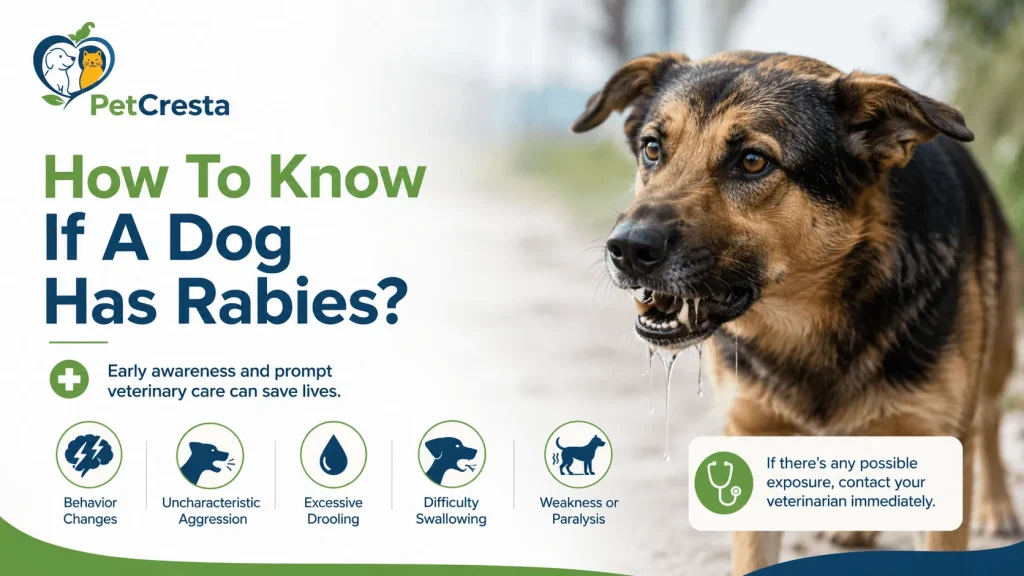
To identify whether a dog is suffering from rabies, the reality is that the obvious signs usually are not evident until later. A dog who has rabies can experience abrupt behavior changes, uncharacteristic aggressiveness, heavy drooling, difficulties swallowing, weakness and even paralysis.
But owners must not wait for signs before taking action. If there was a contact with wildlife or bite or exposure that could be a possibility to a person or animal, the best course of action is to consult a vet as soon as you notice any symptoms.
Dog Rabies Vaccine Schedule By Age
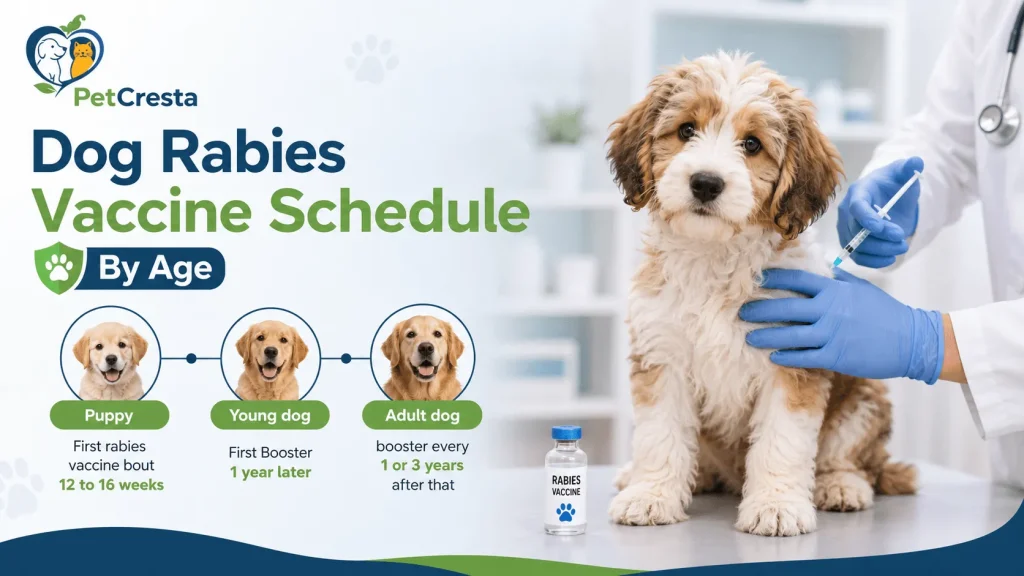
The dog’s rabies vaccine schedule is generally easier to comprehend when looking at it according to life stage. Most dogs follow the same general pattern at the beginning, but then they move to a more extensive schedule depending on the type of vaccine they are using as well as the laws that apply to the area they live in. Here is the basic version:
| Dog’s Age / Stage | Rabies Shot Timing |
|---|---|
| Puppy | First rabies vaccine bout 12 to 16 weeks |
| Young dog | First Booster 1 year later |
| Adult dog | booster every 1 or 3 years after that |
How Often Do Dogs Need Rabies Shots?
Puppies typically receive their first rabies vaccination around 12-16 weeks old. The exact time of the shot can differ according to the labeling on the product and local regulations. The rabies vaccine usually begins near the conclusion of the initial puppy vaccine, and not in the beginning.
Owners are often given mixed responses because they’re receiving different information about the duration of vaccines as well as legal regulations and the dose their dog received the last moment. The safest source is the rabies certificate as well as your local veterinarian’s guidance.
The First Booster One Year Later
After the initial shot for rabies, the next one is typically scheduled for a year later. This part is vital because many pet owners think that if a product is later identified to last for 3 years. The dog is able to immediately go from the initial shot to a 3-year interval.
This is not the way it works. The first booster that follows a year later is an essential element of the timeline standard.
Adult Dog Schedule After The Booster
After the first booster is given, most adult dogs are moved to the one-year or three-year schedule. Which interval applies to the particular product being used and also the laws in the area where the dog resides.
Do Dogs Need Rabies Shots Every Year?
Some dogs need annual rabies shots and some dogs are moved to a three-year plan following their first booster. The answer is dependent on the dog’s age in the calendar and the product used for vaccination and the local rules that apply.
The first puppy’s rabies vaccination does not necessarily mean that the dog is ready to stay for three years from the start. In most instances, the one-year booster is important. After that, the majority of dogs adhere to the three-year rule but only if the vaccination and local law permit it.
The best method to answer the question is to verify an official certificate of rabies and check the date of expiration with your veterinarian instead of making a decision based on memory.
Can A Dog Get A Rabies Shot Early?
The dog might receive a rabies shot earlier however, the decision must be based on veterinary advice and local regulations. The goal isn’t just to administer the shot, but also to ensure that the timing is actually effective.
Can A Dog Get 2 Rabies Shots In One Year?
Yes, in certain circumstances, a dog may get two shots of rabies in one year; that must be due to an official or veterinary reason not based on the whims of a dog. This is one of those instances where a quick confirmation is crucial.
Rabies Vaccine For Puppies
Rabies vaccine is generally administered around 12 weeks of age, or later, based on the type of product and regulations that are in place in the region. After that initial treatment, another dose will generally be due within one year.
Canine Rabies Vaccine
Canine rabies vaccination is a key vaccine to guard dogs against rabies, and also to keep their vaccinations current for public health and legal purposes. In most instances, the program begins at the time of puppyhood, and is increased after a year and continues for the same schedule for a period of 1 year or 3 years according to the law in your area and the vaccine.
How Long Does A Rabies Shot Last In Dogs?

In terms of practicality the rabies shot given to dogs is typically valid for a period of 1 year or three years. The exact response will depend on the product your dog received as well as the rules for rabies in the area you reside. That is why dog owners may get different responses and conclude that the answer is wrong even though both schedules could be valid.
Owners often attempt to recall when the last shot took place but this could easily cause errors. That becomes an issue when proof is required for boarding, licensing, grooming, travel or even for boarding.
The most efficient way to keep track of your time is:
- Look up the rabies certification at the end of each visit
- Print a paper copy or a digital copy
- Be sure to follow the given due date, not try to guess.
Most reliable information is found on the official Rabies certificate, not the memory. If you aren’t sure about the length of the rabies vaccine for your dog, be sure to check the due date that is provided by the clinic and then follow the official document. Product labeling and local laws are more important than speculation.
What If My Dog Is Overdue For A Rabies Shot?
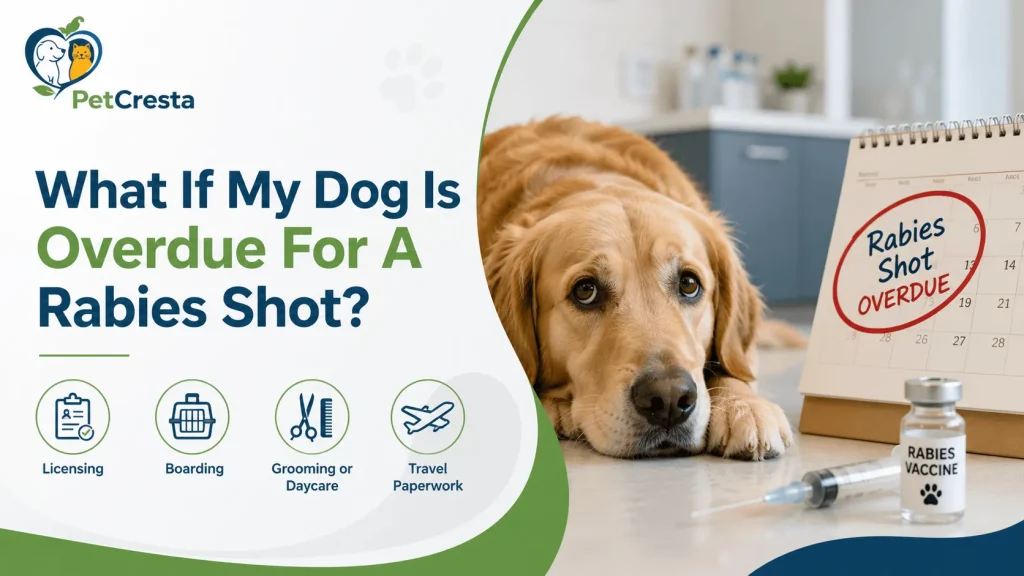
If your dog is due, do not guess, and don’t presume that this shot was legally up-to-date. The safest next step is to contact your vet clinic, verify the existence of records and inquire about what is needed based on the vaccination background and local regulations.
The status of an overdue person is crucial for more than just health records. It can affect travel, boarding licensing, grooming daycare and various other facilities that need evidence of rabies vaccination. An overdue rabies shot can affect:
- licensing
- boarding
- grooming or daycare requirements
- travel paperwork
- How is exposure handled when a dog is bitten by another dog
The most practical option is to contact your veterinarian and confirm the most recent documented vaccination, and then find out the steps needed to bring the dog up-to-date.
Overdue, But Records Available
If you own this certificate, a veterinarian will be able to determine the date when the last shot for rabies was administered as well as the specific product that was utilized. That record will help determine what’s required next and whether or not the dog will be able to go back to a regular schedule without confusion.
Documentation is important since it is the certification, and not the memory, is the most reliable way to determine the status of a rabies patient. Keep a copy of the certificate and keep it updated whenever it is taken.
Overdue And Records Unclear
When your pet is due and the records aren’t there or insufficient, or difficult to verify, speak with your veterinarian and begin collecting evidence from your previous vet or shelter or rescue group. Do not think that a shot from the past is valid if you are unable to prove it.
This is because a misunderstood status could result in issues with the licensing process, boarding and other requirements that are routine. A clinic will help you determine what constitutes legitimate proof and the steps that follow.
Overdue After Possible Exposure
When your pet is due and could have had a rabies exposure, don’t delay and don’t depend on your own judgment. Contact a vet immediately, since the rules regarding exposure may be more stringent when the status of vaccination is past due or unclear.
In this setting the documentation becomes more vital. Your vet will want to know if the dog is due for proof of the date, not overdue in the absence of proof or undocumented under the local rabies regulations.
Vaccinated Vs Overdue After Possible Exposure
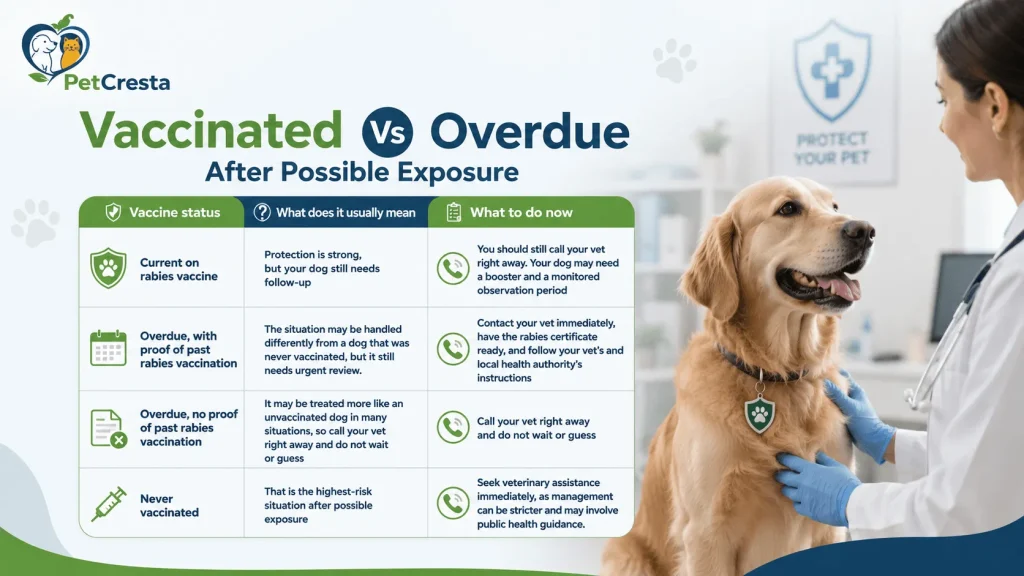
| Vaccine status | What does it usually mean | What to do now |
|---|---|---|
| Current on rabies vaccine | Protection is strong, but your dog still needs follow-up | You should still call your vet right away. Your dog may need a booster and a monitored observation period |
| Overdue, with proof of past rabies vaccination | The situation may be handled differently from a dog that was never vaccinated, but it still needs urgent review. | Contact your vet immediately, have the rabies certificate ready, and follow your vet’s and local health authority’s instructions |
| Overdue, no proof of past rabies vaccination | It may be treated more like an unvaccinated dog in many situations, so call your vet right away and do not wait or guess | Call your vet right away and do not wait or guess |
| Never vaccinated | That is the highest-risk situation after possible exposure | Seek veterinary assistance immediately, as management can be stricter and may involve public health guidance. |
What If Your Dog’s Vaccine History Is Unknown?
If the history of your dog’s rabies is unclear, consider the issue as one of records initially, and not something you can think about based on memories. Previous veterinary records are more important than tag information, papers that you can’t confirm, or a person’s memory of the date when that last dose was administered.
This is closely related to the overdue status. If a dog is due and the vaccination history is not verified, the next step must be determined by your vet according to what can be recorded. That matters since dogs that are not documented could be treated differently following the possibility of exposure to rabies or proof of vaccine may impact the way you board, travel, license and other services.
A veterinarian can assist you in determining what is considered authentic documentation, whether older documents are still available and what the most secure next step should be if the dog’s status as a rabies victim is not clear.
Is Rabies Vaccine Safe For Dogs?
It is generally accepted that the rabies vaccination is a safe option for dogs, and most dogs tolerate it with ease. It is one of the most crucial vaccinations dogs can receive since it guards against an illness that is almost always fatal after the first signs appear.
A dog who has previously reacted to vaccinations should be discussed prior to the next visit, so the treatment plan can be modified as needed.
Rabies Vaccine For Dogs Side Effects And When To Call The Vet

Most dogs can handle the rabies vaccine with ease. When side symptoms do occur, they’re generally mild and temporary. However, pet owners should be aware of the normal side effects and what is more urgently needed.
Similar to other types, there are a few adverse consequences. The good part is that the majority of vaccinations against rabies have minimal and brief-lived adverse effects.
| Common mild side effects | Call the vet now |
|---|---|
| Soreness at the injection site | Facial swelling |
| Low energy for a day or two | Vomiting |
| Reduced appetite | Trouble breathing |
| Mild fever | Collapse |
| Small lump at the injection site | Severe lethargy |
The same applies to the side effects of the rabies vaccine for small dogs. The majority of reactions are mild. However, since small canines have less body mass, owners can notice side effects more easily. The signs that are mild tend to improve with time and a little observation. If symptoms appear to be serious, get worse, or don’t resolve in the way you expected, speak to your vet.
What To Do If You Think Your Dog Was Exposed To Rabies?

If you suspect that your dog is suffering from rabies, contact your veterinarian immediately. Do not wait for the symptoms to manifest at first. When you contract rabies, speedy action is more important than just watching and waiting for symptoms to show up.
Inform your vet about what took place. Share:
- What animal was involved?
- If there was a scratch or bite, it happened
- If your dog’s rabies vaccination is up-to-date
If your dog is suffering from an injury, your veterinarian might suggest that you lightly clean it and go to the vet immediately. The status of your dog’s vaccination is important in this regard. If your dog is currently on rabies vaccinations could be treated differently from an older dog.
Be on the lookout for red flags such as:
- Sudden behavior changes
- Drooling
- Trouble swallowing
- Weakness
- Paralysis
The most important thing to remember is that if you suspect that you have been exposed, contact your vet right away.
How To Know if a Dog Has Rabies?
The dog’s owner should not rely solely on their home observations to determine if they have the presence of rabies or not. A dog suffering from rabies could display sudden behavior changes and aggression, excessive swallowing, difficulty swallowing, weakness, or paralysis but the most obvious signs are usually later.
If you have experienced an animal bite, contact with wildlife or exposure to danger, the most appropriate solution is to seek immediate advice from a veterinarian.
Unexpected changes in behavior in dogs can prompt a variety of questions, such as whether the root cause is environmental, neurological or medical.
How Long Can A Dog Live With Rabies?
If clear clinical signs are detected, the rabies epidemic is usually fatal, and recovery is usually very limited. That’s why rabies should be treated as a preventative and exposure-response concern and not as a reason why people should be waiting at home.
How Much Is A Rabies Vaccine For Dogs?

The rabies shot cost for dogs may not be all the same, so it is best to consider what factors affect the cost, rather than to anticipate a single price. The cost can differ based on the clinic, the region where the visit takes place, whether or not certificate documents are provided or not, and if the vaccination is included in an overall wellness plan.
Some clinics charge for the vaccine but others will include the exam, record update and a rabies certificate in the same visit. Shelters, clinics, and community vaccination events may occasionally lower the price however, it’s important to confirm in advance if they have all the documents you might require later.
Rabies Shot Cost For Dogs
The cost of a Rabies shot for dogs may vary depending on the location, clinic and if the visit comes with an examination, certificate or other benefits. The best way to obtain an accurate estimate is to inquire what’s included in your appointment cost prior to making the appointment.
Where To Get Rabies Vaccine For Dogs?

To receive rabies shots in pets, the most popular location is your usual vet clinic.
Some dog owners can also take it to:
- Animal hospitals
- Low-cost vaccine clinics
- Local shelters
- Community vaccinations are held in certain regions
The best choice is typically an agency that will provide you with the appropriate documents. It is important to note that the shot itself is just one aspect of the procedure. It is also possible to require an official rabies certificate to be used for grooming, boarding, licensing or even travel. Before you make a booking, check whether the event or clinic offers the complete certification of rabies, not simply the tag or reminder slip. The certificate is essential for licensing for boarding, traveling or grooming, daycare and any questions you may have regarding the proof of vaccination.
What Other Shots Do Dogs Need?

Rabies is a vital vaccine; it’s only one component of a dog’s complete vaccination program. Dogs require a mixture of core vaccines as well as lifestyle-based vaccines. The core vaccines are those the majority of dogs require, and lifestyle vaccines are dependent on factors like age, environmental conditions such as travel, boarding as well as contact between dogs.
The majority of puppies require a course of vaccines at an early age. This is the reason why owners often inquire about how many shots their puppy will require. Adult dogs could require booster shots over time, based on the vaccine they receive and the risk level.
In simple terms:
- The core vaccine is generally recommended for all dogs.
- Lifestyle vaccines are determined by how your dog is living and what they are exposed to.
What To Expect At A Rabies Vaccination Appointment

A rabies appointment is usually quick and easy. Most of the time the visit is not so much about the shot itself, but more about ensuring that the time, the product and the records are properly handled.
- Your dog will typically receive an initial health check prior to the vaccination being administered.
- The rabies vaccine is given, usually in a routine wellness check.
- The clinic keeps the record updated and issues a refresh or update to the certificate for rabies.
- It’s also the perfect moment to inquire about when the next shot will be due and the schedule that is in effect for your location.
A regular rabies vaccination is also a great time to get any skin growths examined. If an owner has noticed a new bump or lump, a skin tag on dog is a common concern that fits naturally into the same appointment.
What Proof Of Rabies Vaccination Do You Actually Need?
If proof of vaccination against rabies is needed, the rabies tag is beneficial, but it’s generally not sufficient to suffice on its own. A reminder card can help keep track of the next dose but it’s not equivalent to the official evidence. The document that matters the most is an official certificate of rabies from the hospital.
What Counts As Proof
The official rabies certification should normally contain:
- The dog’s identifying details
- The manufacturer or product of the vaccine
- Information about the serial or lot when it is included
- The date that the vaccine was administered
- The due date for the next payment or the expiration date
- Clinic or veterinarian confirmation
The record of your vet is also important. It will help verify the schedule. When an establishment asks for documentation, it is often the one they’re looking for.
When You May Need It
Owners are frequently asked to provide proof of rabies for:
- Licensing
- Boarding
- Grooming
- Daycare
- Travel
This is why it’s important to review your records following every rabies visit instead of thinking that the tag or the memory will suffice.
Conclusion
If you’re wondering what frequency dogs should receive shots against rabies, the standard schedule is straightforward. The majority of dogs get their first rabies shot between 12 and 16 weeks. One year later, a booster, after which they receive booster shots every 3 or 1 year, depending on the type of vaccine and the laws in the area where they reside.
The most secure approach is to adhere to the certificates for rabies, local regulations as well as the guidance of your veterinarian instead of relying on your memories. If your dog is due or the records are not clear or there is a possibility that an exposure has occurred contact your veterinarian and verify the next step immediately.
FAQ’s
Dogs usually need a mix of core vaccines and lifestyle-based vaccines. Rabies is one of the key vaccines, but the full plan depends on age, environment, boarding, travel, and exposure risk.
It depends on the vaccine. Some are given as puppy series, some need boosters later, and some depend on lifestyle or local law.
Puppies usually need a series of early vaccines rather than just one shot. The exact number depends on age, vaccine type, and the schedule your vet uses.
Some do, but many dogs move to a 3-year schedule after the first booster. The due date on the rabies certificate matters more than memory.
Not always. Some dogs stay on a yearly schedule, while others are due every 3 years based on the vaccine product and local law.
Most side effects in small dogs are still mild, such as soreness, low energy, reduced appetite, or a small lump. Call your vet if you see facial swelling, vomiting, trouble breathing, collapse, or severe lethargy.
A rabies booster is the follow-up vaccine given after the first shot. The first booster is usually due 1 year later, then future boosters may be due every 1 or 3 years.
It can vary by clinic, region, whether an exam is included, certificate paperwork, and whether the vaccine is part of a wellness package or a low-cost clinic event.
Rabies vaccine for puppies is usually given at about 12 to 16 weeks, though the exact timing can depend on local law and your veterinarian’s schedule.
Puppies usually get their first rabies shot at about 12 weeks of age, though some products are licensed for older timing, such as 16 weeks. The exact timing depends on the vaccine used and local rules.
Rabies vaccine usually lasts for either 1 year or 3 years, depending on the product and the rules that apply where the dog lives. The due date on the rabies certificate is the one that matters most.
Rabies vaccine for dogs is generally recognized as valid for 1 year or 3 years. After the first rabies vaccine, a booster is typically recommended within 1 year, before the longer interval may apply.
Once clear clinical signs appear, rabies is nearly always fatal, and survival is usually very short. Urgent veterinary action matters before symptoms develop.
Most dogs need core vaccines, and some also need non-core vaccines based on lifestyle and exposure risk. Rabies is one of the core vaccines commonly recommended for dogs.
Most dogs need the rabies vaccine in puppyhood, again one year later, and then every one or three years. The exact interval depends on the vaccine used and local law.
Sources And Veterinary Guidance
The following professional and government resources support the medical, vaccination, exposure, waiver, and travel information used in this guide:
- American Animal Hospital Association, Key Vaccination: Rabies.
- American Animal Hospital Association, Postvaccination Adverse Events and Reactions.
- Centers for Disease Control and Prevention, Information for Veterinarians: Rabies.
- Centers for Disease Control and Prevention, Clinical Overview of Rabies.
- Centers for Disease Control and Prevention, Documents for Veterinarians to Complete for Dogs Being Imported into the United States, updated April 28, 2026.
- American Veterinary Medical Association, Annual Rabies Vaccination Waiver.
- American Veterinary Medical Association, Vaccinating Your Pet.
- National Association of State Public Health Veterinarians, Compendium of Animal Rabies Prevention and Control, 2016. NASPHV states that the compendium is currently being revised.
- National Association of State Public Health Veterinarians, 2026 Rabies Vaccination of Dogs and Cats Position Statement.
- National Association of State Public Health Veterinarians, Rabies Vaccination Certificate suggested template.






One Comment