Skin Tags on Dogs: When to Worry, and Safe Vet Removal
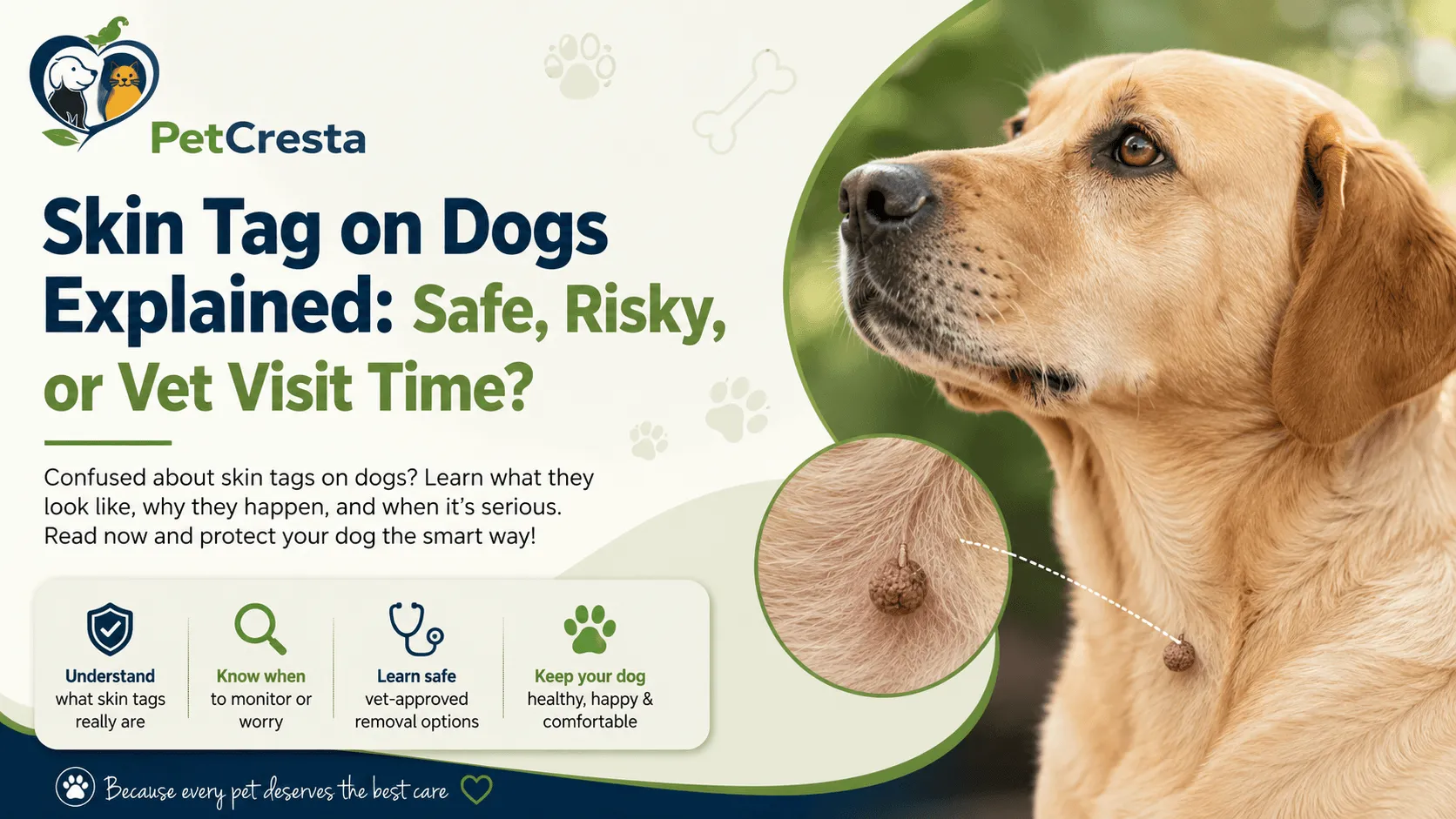
The skin tag on dog may appear small initially. It could appear to be an unassuming little piece of skin that’s simple to overlook, particularly when the dog seems normal and the spot doesn’t seem to be in any way painful.
The issue is that some bumps that appear harmless are actually skin tags. The appearance of ticks, warts, cysts, and even tumors may look alike enough to frighten even the most careful owners. The majority of canine skin tags are harmless, soft growths, veterinarians advise checking any newly or altered skin mass due to the fact that certain tumors might appear similar at first.
A dog’s skin tag is typically soft flesh-colored or darker than the skin. It can also be hung from the surface of the end of a short stalk. The tags are more frequent when dogs are older and in areas that are subject to friction or pressure like the chest, stomach, limbs, skin folds, and under harnesses and collars.
The safest option is to follow a simple one. Find out what a skin tag that dogs have typically appears like, and then watch for changes, and be careful attempt to get rid of it from home.
TLDR; When A Dog Skin Tag Needs A Vet Visit
Book a veterinary visit sooner if the growth is doing any of the following:
- growing quickly
- bleeding
- changing color
- becoming crusted or ulcerated
- causing pain when touched
- being chewed, scratched, or rubbed often
- interfering with blinking, eating, walking, or wearing a collar
- difficult to tell apart from a tick, wart, cyst, or tumor
A true skin tag is usually benign, but new or changing skin growths should not be judged by appearance alone. Some tumors can resemble a harmless tag in the early stages, which is why a changing lump deserves a proper exam.
What Is A Skin Tag On A Dog?
It’s typically an insignificant, harmless growth that appears on the skin’s surface. A lot of them are soft and fleshy and are easy to move in the skin.
Skin tags for dogs are usually found in older dogs and at locations where the skin is being rubbed or pressurized, or exposed to water. Skin tags can lie in a flat position against the skin or be a little splayed out or be hung from a small base.
The majority of those who inquire about what the skin tags have to know if a bump is likely to be harmless or requires additional care. The answer is less dependent on the label and more on the fact that the growth is regular, is not a problem and has been appropriately examined.
They’re fairly widespread, it is not always the case that every bump that appears to be a skin tag is actually a skin tag.
Vet Terms You May Hear
- acrochordon
- Fibroepithelial Polyp
- Fibrovascular papilloma
- Hamartoma
The definitions of these terms may differ depending on the physician the report and the specific shape of the tissue.
Quick Answer: What Most Dog Owners Need to Know First
Most skin tags are safe and are especially effective when they stay soft, secure and do not irritate the dog.
- Any new or shifting growth must be analyzed within the correct setting.
- Every bump is not an actual skin tag.
- Don’t cut or tie, burn or treat skin tags at home.
- Bleeding, infections rapid growth and pain in places like the eyelid mouth, or paw require urgent veterinary attention.
- In the event that growths are difficult to discern, it’s safer to have it examined rather than guess.
Important Note: Not all bumps are an actual skin tag even though it appears simple and small.
What Does A Skin Tag On A Dog Look Like?
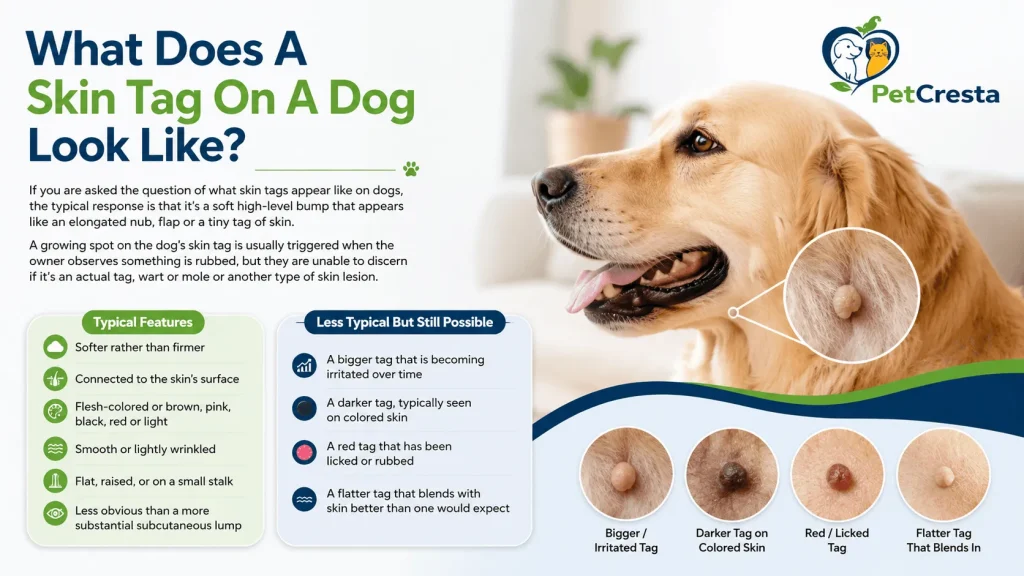
If you are asked the question of what skin tags appear like on dogs, the typical response is that it’s a soft high-level bump that appears like an elongated nub, flap or a tiny tag of skin.
A growing spot on the dog’s skin tag is usually triggered when the owner observes something is rubbed, but they are unable to discern if it’s an actual tag, wart or mole or another type of skin lesion.
Typical Features
- Softer rather than firmer
- connected to the skin the skin’s surface
- flesh-colored color, like brown, pink or black, red or light
- Smooth or lightly wrinkled
- flat either raised or surrounded by a stalk
- less obvious than a more substantial subcutaneous lump
Less Typical But Still Possible
- A bigger tag that is becoming irritated over time
- A darker tag is typically seen on colored skin
- A red tag that has been licked or rubbed
- A flatter tag that blends with skin better than one would expect.
Types Of Skin Tags
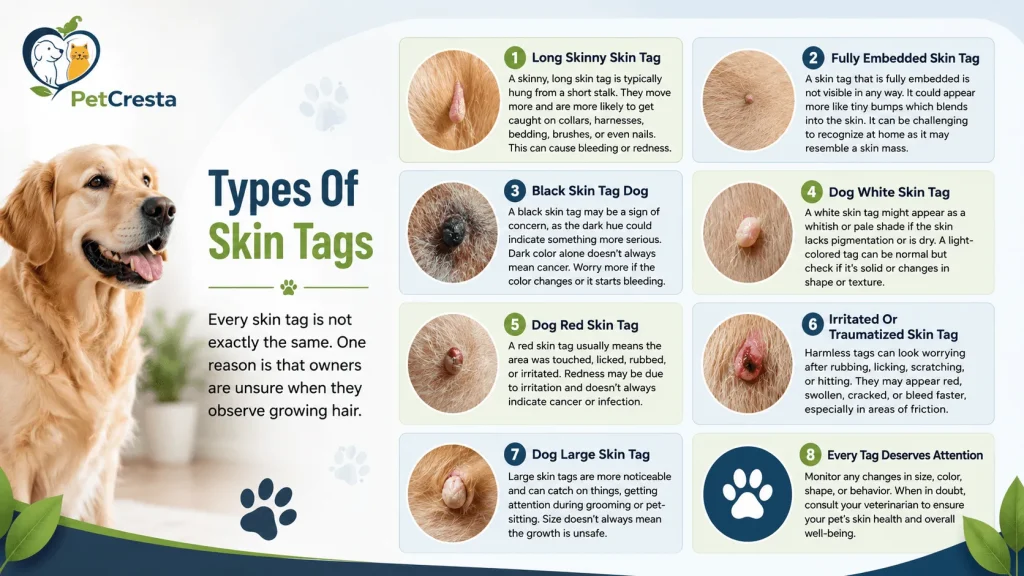
Every skin tag is not exactly the same. One reason is that owners are unsure when they observe growing hair.
Long Skinny Skin Tag
A skinny, long skin tag is typically hung from a short stalk. It is easy to see that they move faster than shorter tags.
They are also more likely to get caught on collars, harnesses bedding, brushes, or even nails. Even a harmless tag could begin bleeding or appear red when it is stuck repeatedly.
Fully Embedded Skin Tag
A skin tag that is fully embedded is not visible in any way. It could appear more like tiny bumps which blends into the skin.
It can be challenging to recognize at home due to the fact that they could resemble skin mass. If a lesion appears large-based or has a deeper attachment it is less useful.
Black Skin Tag Dog
A skin tag that is black on a dog generally is a sign of concern, as the dark hue could indicate something more serious. The dark color alone does not necessarily mean cancer.
Certain tags are naturally colored. The issue is more serious when the color changes abruptly or the surface is uneven, or the surface starts to show signs of bleeding.
Dog White Skin Tag
The white tag on the dog’s skin might appear a bit like a whitish or pale shade in the event that the skin is lacking pigmentation or is dry.
A light-colored tag could be a good thing. It is important to know if the lesion is solid or changes in shape or texture.
Dog Red Skin Tag
A dog’s skin tag that is red usually indicates that the area was touched, licked, rubbed or otherwise irritated. The redness could be caused by an injury that is not always indicate cancer or infection.
Irritated Or Traumatized Skin Tag
A seemingly harmless tag may appear more frightening after rubbing, licking scratching or hitting. The tags might appear red, swollen, cracked or bleed faster particularly in areas of friction.
Dog Large Skin Tag
The large skin tags of pets are much more likely to be noticed as they catch objects and draw attention when pet-sitting or grooming.
Size doesn’t necessarily indicate that the growth is unsafe however, a larger lesion is more difficult to assess from appearance alone.
Skin Tag Vs Tick Vs Wart Vs Nipple Vs Cyst Vs Lipoma Vs Scab Vs Histiocytoma Vs Tumor
There is a lot of confusion there. The most frequently asked queries is to find an identification tag for a tick or skin on a dog, as tiny dark spots under the skin can be difficult to spot quickly. The tick is usually on the skin’s surface and could have legs visible or a distinct body. Skin tags are a part of the dog’s skin. It is usually softer and is more in touch with the skin’s surface.
The same thing happens when you compare a dog wart. skin tags. Warts tend to be rougher, harder, and more irregular. Skin tags are typically softer, smoother, plus more flexible.
Questions such as ” Do dogs have moles, skin tags or warts?” are frequent because the bumps that are pigmented may appear similar. Warts, moles skin tags, and even small tumors all can look alike enough that the home’s identification is not as easy.
Skin tags embedded with fully ticks on dogs typically reflect doubt about whether a hidden tick is actually a part of the human skin. If you are in doubt, it’s better to examine the area and get the area examined instead of making assumptions.
| Conditions | How it looks | How it feels | Common location | What makes it different | When a vet check is needed |
|---|---|---|---|---|---|
| Skin tag | Small flap, nub, or hanging stalk of skin | Soft, fleshy, flexible | Chest, belly, limbs, skin folds, friction points | Usually looks superficial and moves with the skin | If it grows, bleeds, darkens, gets painful, or keeps getting irritated |
| Tick | Small, dark, gray, or brown body attached to skin | Firm body on top of the skin | Ears, neck, armpits, toes, hidden fur | May have visible legs and does not look like part of the skin | If you are not sure it is a tick, or the area looks swollen or infected |
| Wart | Rough, raised, sometimes cauliflower-like | Firmer, uneven, more fixed | Mouth, lips, face, skin surface | Usually rougher and less floppy than a skin tag | If it grows fast, bleeds, or multiple bumps appear |
| Nipple | small, normal body structure | Soft, normal body structure | Chest and belly | Often has a matching one on the other side | If it changes, swells, leaks, or suddenly looks different |
| Cyst | Rounded lump under or within the skin | Smoother, fuller, more anchored | Anywhere on the body | Feels deeper and less like a flap on the surface | If it gets larger, red, painful, or starts draining |
| Lipoma | Soft lump under the skin | Doughy, movable, deeper than a tag | Chest, belly, side of body, upper legs | Usually sits under the skin instead of hanging from it | If it grows quickly, affects movement, or feels firm instead of soft |
| Scab | Dry, crusty patch or rough spot | Harder and crust-like on top | Anywhere there has been irritation or injury | Often linked to healing skin, scratching, or a wound | If it does not heal, keeps coming back, or hides a lump underneath |
| Histiocytoma | Round, raised, button-like bump, often pink or red | Firm, smooth, hairless or nearly hairless | Head, ears, limbs, especially in younger dogs | Often appears suddenly and looks more solid than a skin tag | If it grows, ulcerates, or does not improve as expected |
| Tumor or cancerous growth | Can look mild at first or irregular later | May feel firm, fixed, uneven, or deeper | Anywhere on the body | May change in size, shape, color, or texture over time | Any rapid growth, bleeding, ulceration, pain, darkening, or uncertainty deserves a vet exam |
The skin tag is typically thinner and less surface-level than most bumps however there’s an abundance of overlap. In the event that a bump seems fresh and is bleeding, changing or darkening, is firm or difficult to determine, it’s best to have your vet look at it rather than trying to figure out what it might be at home.
Skin Tag Vs Tick On Dog
Many owners inquire about a tick or skin tag on their pet because they appear similar initially particularly in thick fur or close to sensitive areas such as the eyelids. The real skin tag is a part of the dog’s skin. It’s usually soft and elastic and is attached to the skin. Ticks are parasites that are attached to the skin. When they feed, they get bigger and more rounded. PetMD observes that a lot of people confuse ticks with skin tags and moles and AKC specifically mentions that eyelid-related ticks are frequently misinterpreted as skin tags.
A skin tag is usually the same form and texture over time, unless it becomes irritated. A tick changes more quickly. After being attached to the skin, the head could be hidden within the skin, and the body is visible. The tick usually appears darker and more round when it feeds. Skin tags can also appear in areas that are susceptible to friction such as the chest neck, and legs, and ticks can be found almost everywhere within the body.
If ticks have been feeding for a long time it will become rounded and become more tightly attached to the skin’s surface.
Owners who need more detail on identifying and safely handling this situation can find a complete guide on embedded fully ticks on dogs.
Cancerous Skin Tag On Dog
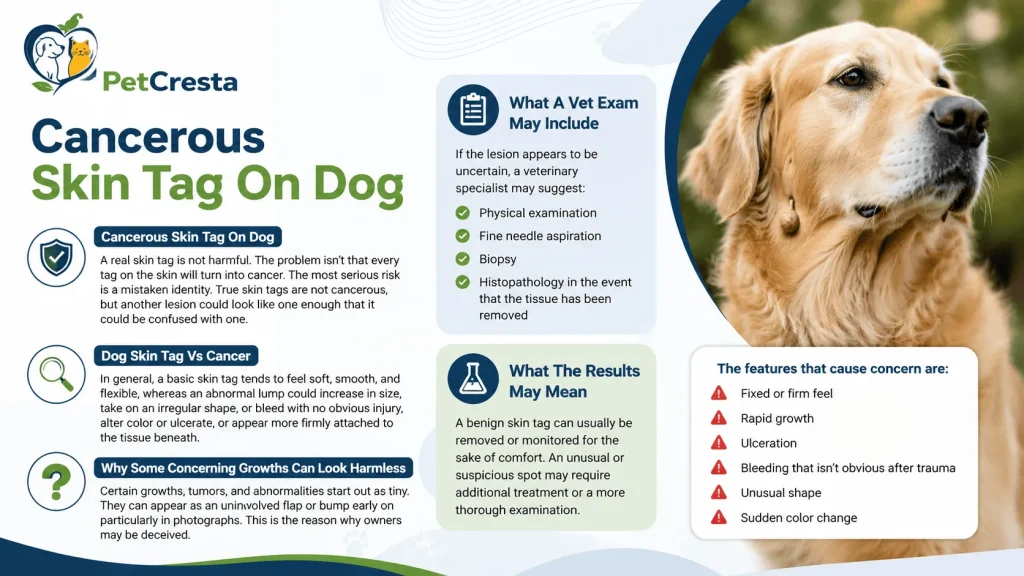
A real skin tag is not harmful. The problem isn’t that every tag on the skin will turn into cancer. The most serious risk is a mistaken identity. True skin tags are not cancerous, but another lesion could look like one enough that it could be confused with one.
Dog Skin Tag Vs Cancer
In general, a basic skin tag tends to feel soft, smooth, and flexible, whereas an abnormal lump could increase in size, take on an irregular shape, or bleed with no obvious injury, alter color or ulcerate, or appear more firmly attached to the tissue beneath.
The appearance alone isn’t enough to distinguish between the two in a reliable manner, especially since certain cancers, like mast cell and melanoma tumors may resemble harmless skin growths. Any new or altered bump bleeding, darkening, or one that is difficult to recognize should be checked by a vet
Why Some Concerning Growths Can Look Harmless
Certain growths, tumors, and abnormalities start out as tiny. They can appear as an uninvolved flap or bump early on particularly in photographs. This is the reason why owners may be deceived. A tiny, soft or slightly elevated bump might appear harmless at first, but more serious lesions may appear to be quite simple.
This does not mean that all skin tags are cancerous. It’s a sign that the most serious risk is misidentification. Photos can be helpful to observe changes, but they can’t determine if the growth is actually a skin tag or not.
What A Vet Exam May Include
If the lesion appears to be uncertain, a veterinary specialist may suggest:
- Physical examination
- Fine needle aspiration
- biopsy
- histopathology in the event that the tissue has been removed
What The Results May Mean
A benign t-shirt can usually be removed or monitored for the sake of comfort. An unusual or suspicious spot may require additional treatment or a more thorough examination.
The features that cause concern are:
- Fixed or firm feel
- rapid growth
- ulceration
- bleeding that isn’t obvious after trauma
- Unusual shape
- sudden color change
Why Do Dogs Get Skin Tags?
There isn’t one definitive basis for every instance. It is typically an assortment of factors rather than a single cause.
Skin tags are typically associated with age, friction and areas of the skin that are subjected to constant friction or pressure.
Common Contributing Factors
- repeated friction
- Pressure points
- skin folds
- chronic irritation
- water in high-rub areas
- The collar or harness rubs
- Age-related changes to the skin
In a lot of cases, the pattern is found in areas of the skin that are frequently overstressed.
Are Some Dogs More Prone To Skin Tags?
Certain breeds seem to be inclined to have these. It’s not a guarantee that each bump can be a skin tag however it can help to determine why they occur more often in certain dogs than others.
Dogs that could be more susceptible include:
- older dogs
- larger dogs
- dogs with folds on their skin
- dogs that are repeatedly contacted or pressure points
- dogs suffering from ongoing skin irritation
It doesn’t mean that every bump on these dogs is a skin tag. It’s just that some dogs might be less likely to get them in the future.
When Should You Worry About A Dog’s Skin Tag?
Some skin tags remain unnoticed. The issue arises when a growth ceases to behave like a stable, harmless skin lesion. The most important thing to observe is whether the skin tag remains in a state of numbness and remains unchanged or if it begins to behave differently in time.
Utilize this triage guideline to determine the degree of concern:
| Monitor | Book A Vet Visit | Get Checked Quickly |
|---|---|---|
| Soft | Getting bigger | bleeding |
| Stable in size | Getting darker | Ulcerated or infected |
| Not painful | Repeatedly irritated | painful |
| Not bothering your dog | Bothering your dog | Growing quickly |
| Not changing in color or texture | Getting caught on collars, bedding, or grooming tools | Located on the eye, mouth, paw, or another sensitive area |
A developing skin tag should be given more attention, especially when other warning signs are popping up simultaneously.
What Happens If You Leave A Dog’s Skin Tag Alone?
In most instances, leaving a benign tag by itself is appropriate.
If the growth is already evaluated, remains in a steady state, and not causing any discomfort to the dog, just a little monitoring might suffice.
The biggest error is leaving a harmless tag by itself. The most common error is leaving an insecure bump on its own because it appears innocent.
Monitoring Checklist:
- The date was first noticed
- size
- color
- texture
- irritation
- bleeding
- discharge or odor
- licking or chewing
- monthly photo
How Vets Diagnose A Suspected Skin Tag
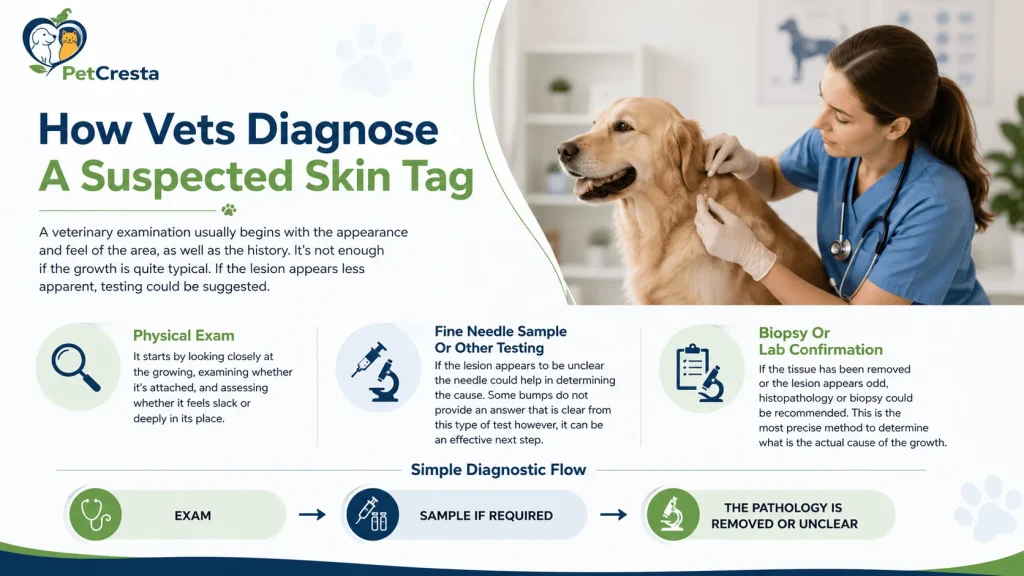
A veterinary examination usually begins with the appearance and feel of the area, as well as the history. It’s not enough if the growth is quite typical.
If the lesion appears less apparent, testing could be suggested.
Physical Exam
It starts by looking closely at the growing, examining whether it’s attached, and assessing whether it feels slack or deeply in its place.
Fine Needle Sample Or Other Testing
If the lesion appears to be unclear the needle could help in determining the cause. Some bumps do not provide an answer that is clear from this type of test however, it can be an effective next step.
Biopsy Or Lab Confirmation
If the tissue has been removed or the lesion appears odd, histopathology or biopsy could be recommended. This is the most precise method to determine what is the actual cause of the growth.
Simple Diagnostic Flow
- exam
- Sample if required
- The pathology is removed or unclear
What To Photograph And Bring To The Vet Visit
A little bit of preparation will make your appointment more efficient.
Bring These Photos And Notes
- One clear close-up photo
- One photo showing where the growth is on the body
- One photo with a ruler or coin for size reference
- When the growth first appeared
- Any change in size, color, or texture
- Bleeding, licking, discharge, odor, or pain
Questions To Ask Your Vet
- Does this appear to be the real skin tag?
- Do you need the use of a needle or biopsy?
- Should it be taken off immediately or is it being monitored?
- Should the tissue removed be taken to a laboratory?
Skin Tags By Body Location
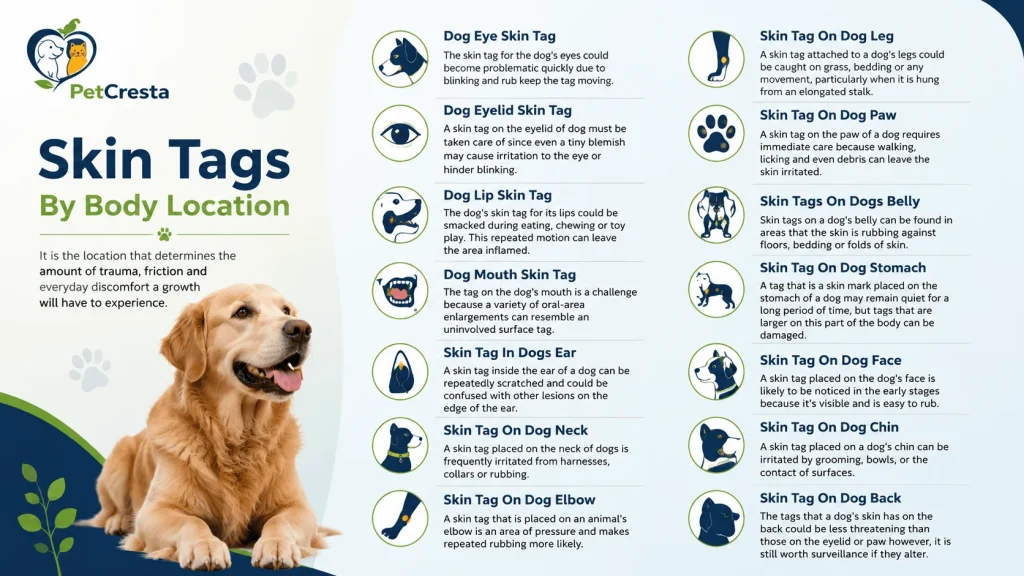
It is the location that determines the amount of trauma, friction and everyday discomfort a growth will have to experience.
Dog Eye Skin Tag
The skin tag for the dog’s eyes could become problematic quickly due to blinking and rub keep the tag moving.
Dog Lip Skin Tag
The dog’s skin tag for its lips could be smacked during eating, chewing or toy play. This repeated motion can leave the area inflamed.
Dog Mouth Skin Tag
The tag on the dog’s mouth is a challenge because a variety of oral-area enlargements can resemble an uninvolved surface tag.
Skin Tag In Dogs Ear
A skin tag inside the ear of a dog can be repeatedly scratched and could be confused with other lesions on the edge of the ear.
Skin Tag On Dog Neck
A skin tag placed on the neck of dogs is frequently irritated from harnesses, collars or rubbing.
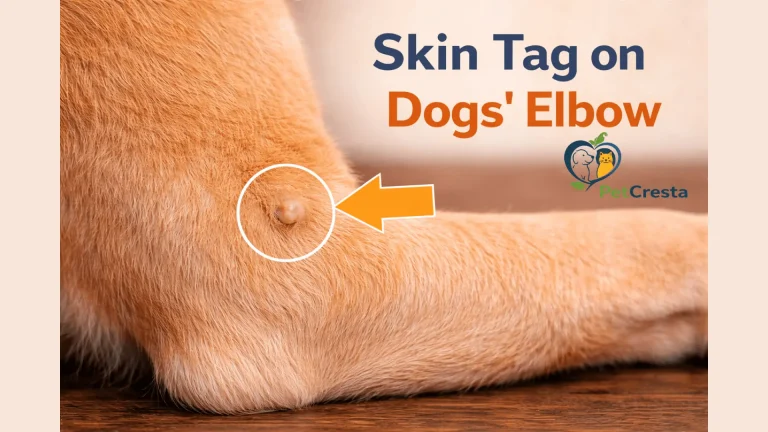
Skin Tag On Dog Elbow
A skin tag that is placed on an animal’s elbow is an area of pressure and makes repeated rubbing more likely.
Skin Tag On Dog Leg
A skin tag attached to a dog’s legs could be caught on grass, bedding or any movement, particularly when it is hung from an elongated stalk.
Skin Tag On Dog Paw
A skin tag on the paw of a dog requires immediate care because walking, licking and even debris can leave the skin irritated.
Skin Tags On Dogs Belly
Skin tags on a dog’s belly can be found in areas that the skin is rubbing against floors, bedding or folds of skin.
Skin Tag On Dog Stomach
A tag that is a skin mark placed on the stomach of a dog may remain quiet for a long period of time, but tags that are larger on this part of the body can be damaged.
Skin Tag On Dog Face
A skin tag placed on the dog’s face is likely to be noticed in the early stages because it’s visible and is easy to rub.
Skin Tag On Dog Chin
A skin tag placed on a dog’s chin can be irritated by grooming, bowls, or the contact of surfaces.
Skin Tag On Dog Back
The tags that a dog’s skin has on the back could be less threatening than those on the eyelid or paw however, it is still worth surveillance if they alter.
Should Skin Tags Be Removed From Dogs?
Removal of skin tags is not always needed. Many skin tags are benign and can be easily observed.
Removal is recommended if the tag reads:
- The bleeds
- Gets annoyed
- Is repeatedly traumatized
- It is situated in a delicate area
- hinders grooming or even comfort
- is unsure of the diagnosis
If people request the dog skin tags removal, they usually are trying to determine if removal is necessary. The answer will depend on your comfort level, location and the degree of diagnostic certainty.
How Vets Remove Skin Tags Safely
Removal methods are based on the amount of tag that is present, the location it is situated, and whether it is easy to remove.
A few smaller tags can be removed using local anesthesia. Less sensitive or poorly placed lesions might require sedation or anesthesia.
Simple Removal Process
- Examine the lesion and determine the most secure route
- Take the lesion off with the appropriate procedure
- Request a pathology report if you require it.
It is generally a simple procedure when the tag is straightforward and well-placed. The process becomes more careful when the location is fragile and the diagnostics are not clear.
Dog Skin Tag Removal Cost
Costs for removing skin tags may vary quite a bit. The cost is based on a variety of aspects, such as the cost of the exam and how large the lesion is, if it is necessary to sedate, if the tissue is sent to the diagnosis of a disease, and if aftercare is needed.
A minor, easy removal could be closer to less than the bottom of the spectrum. An intensive procedure that includes the use of sedation and laboratory testing could cost a few hundred dollars.
It is better to consider costs and variables as opposed to assuming a fixed price.
How To Remove Skin Tags On Dogs Naturally
Natural doesn’t always mean secure. Home remedies may cause bleeding or pain, an infection, skin damage, and delay diagnosis if the lesions are not an unintentional skin tag.
The best way to protect yourself is to monitor the area, stopping scratching or licking, as well as seeking advice from a veterinarian in the event that the lesion appears to be uncertain or is changing.
Can I Use Skin Tag Remover On My Dog?
This isn’t a great option without the guidance of a veterinarian. The product could cause irritation to the skin or delay diagnosis.
What To Do If The Skin Tag Is Bleeding, Infected, Black, Growing, Or Falling Off
Bleeding Skin Tag On Dog
The tags on dogs that are bleeding should be gently compressed using clear gauze. Also, the pet should be prevented from licking the area. Incessant or frequent bleeding requires medical attention from a veterinarian.
| What It May Mean | What To Do Now | When To Call The Vet |
|---|---|---|
| The tag may have been scratched, rubbed, or partly torn. | Apply gentle pressure with clean gauze and stop your dog from licking it | Call if the bleeding does not stop, comes back, or the area looks worse after. |
Dog Infected Skin Tag
A dog’s skin tag that is infected could appear swollen, red and painful. It could also look moist, tender or smell foul. Infection deserves prompt care
| What It May Mean | What To Do Now | When To Call The Vet |
|---|---|---|
| Infection, irritation, and repeated licking. | Do not treat it at home. Keep your dog from licking. | If it is red, swollen, painful, leaking, or smells bad. |
Dogs’ Skin Tag Turning Black
A dog’s skin tag going black may be due to pigmentation dry blood, or changes within the lesion. A new darkening growth deserves closer review.
| What It May Mean | What To Do Now | When To Call The Vet |
|---|---|---|
| Sometimes this is irritation or pigment. Sometimes it means the growth is changing. | Take a clear photo and note when the color changed. | Get it checked if the dark color is new, spreading, or happening with pain, bleeding, or growth |
Skin Tag Getting Bigger
A dog’s skin tag that is getting larger might still be safe. However, the change in size makes evaluation more important.
| What It May Mean | What To Do Now | When To Call The Vet |
|---|---|---|
| Some irritated tags can swell, but a growing bump should not be ignored. | Take a photo with a coin or ruler for size reference | Book a vet visit if the growth is clearly getting larger or changing shape |
Skin Tags On Dogs Fall Off
Might people think about do dog skin tags fall off? Sometimes, they do, particularly after rubbing or minor tears. However, the affected region should be observed if the initial bump was not correctly recognized.
| What It May Mean | What To Do Now | When To Call The Vet |
|---|---|---|
| A tag can come off after rubbing, injury, or partial tearing. | Clean the area gently and watch it closely while it heals. | Tell your vet if the growth was never diagnosed, the spot keeps bleeding, or the healing does not look normal |
Dog Skin Tag Treatment
The majority of benign skin tags that have been confirmed don’t require any active treatment. In the event that the growth does not seem large and stable, as well as not cause any discomfort to your dog’s health, the best option is to monitor it instead of immediate removal. The treatment is more crucial when the tag becomes repeatedly affected, is bleeding, becomes infected, causes discomfort or is hard to determine with certainty.
The first step of the treatment of dog skin tags is to ensure that the growth is actually the result of a skin tag. It isn’t always enough because benign and more severe skin lesions may overlap in the way they appear. A doctor might recommend an examination first in case the lesion is unusual, tests like an ultra-fine needle biopsy, histopathology, or biopsy might be necessary prior to deciding on a treatment.
If treatment is required, removal by a veterinarian is the most common procedure. Based on the dimensions or location of the lesions, as well as the degree to which the lesion is typical the removal can be accomplished by a simple cut, and in certain instances cryosurgery is an alternative for skin tags or other skin lesions that are superficial. If the skin tag is linked to an ongoing irritation, allergy or skin condition or other issue, the root cause might also require attention, making the area less likely to remain irritated.
The home remedy is not an option that is safe. If you attempt to cut or burn, or treat a skin tag by yourself could delay a proper diagnosis and cause the area to become more painful or affected. In the event that the growth seems to be undergoing a change, bleeding or unusually colored, quickly expanding, or is located in an area that is sensitive It is important to determine the cause before assuming it’s safe.
If a dog goes through anesthesia or sedation for the removal of skin tags, slight nausea may occur following the procedure.
Dog vomiting covers a range of causes, and when vomiting occurs after a veterinary visit, it warrants a follow-up call.
Can You Prevent Skin Tags?
It is impossible to avoid each skin tag. It is possible to minimize friction and irritation that is chronic when it is.
Prevention Checklist
- Make sure that harnesses and collars are properly fitted.
- Reduce repeated rubbing in pressure areas
- Keep skin folds clean and dry
- Manage chronic skin irritation
- Use softer bedding where pressure points matter
The prevention of irritation can help, however, it doesn’t eliminate the risk completely. Knowing how dogs are exposed to various health concerns, from skin issues to internal parasites owners create a better understanding of the health risks their dog faces. How do dogs get worms? Covers another common health question that fits into the same routine monitoring mindset.
Are Skin Tags Contagious?
True skin tags aren’t infectious. They do not transmit between dogs the way that wart-like conditions can. This is one reason why accurate recognition is crucial.
Skin tags aren’t contagious between dogs or between humans and dogs. Owners who are concerned about what does and does not pass between humans and their dogs may also find Can Dogs Get Lice from humans a useful related read on cross-species transmission.
Recovery And Prognosis After Vet Removal
Most dogs recover quickly after the removal of a benign skin tag.
What Normal Recovery Looks Like
A little soreness, some redness and a temporary sense of the affected area are normal in the early stages of healing.
When To Call The Vet
The vet should be contacted for:
- The swelling is becoming more severe
- discharge
- open wound
- increasing pain
- Repetitive licking keeps the area inflamed
Long-Term Outlook
The outlook is generally excellent for skin tags that are benign and confirmed. There are dogs who may develop skin tags that are not as obvious later on, particularly when they’re already susceptible to them.
Final Takeaway
A lot of skin tags are not harmful, particularly when they are soft and steady, and don’t appear to bother the dog.
The key point is that not all bumps are real tags on dogs. A bleeding, changing or painful, rapidly growing or a lesion that is not properly located requires medical attention rather than a home remedy.
If growth isn’t certain the best next step is to conduct a proper assessment instead of relying on the appearance by itself.
FAQs
Yes. Skin tags are fairly common in dogs, especially older dogs, and in areas that deal with repeated friction. Not every small bump is a skin tag, so new or changing growths still need the right context.
A skin tag is usually a small, benign overgrowth of skin that sits on the surface rather than deep under it. It may be soft, fleshy, and attached by a small base or stalk.
A skin tag on a dog often looks like a soft flap, nub, or stalk-like piece of skin that is small and movable. It may be pink, flesh-colored, or darker, and it is usually not painful unless irritated.
Skin tags in dogs are commonly linked with chronic irritation, repeated rubbing, pressure points, skin folds, and age. Collars, harnesses, and allergy-related scratching can also contribute in some dogs.
Some dogs are simply more prone to skin tags because of age, body shape, skin folds, or repeated friction in the same areas. If your dog keeps developing new bumps, it is still important not to assume every one is a harmless tag.
Yes. Skin tags are more common in older dogs than in younger dogs. That pattern is one reason age is considered a major contributing factor.
Yes. Dogs can have both moles and skin tags, and they can look similar enough to confuse owners at home. If a bump is dark, changing, or hard to identify, it is safer to have it examined than to guess. Some owners also confuse behavioral skin licking or repetitive irritation patterns with neurological concerns discussed in can dogs have autism.
Most confirmed skin tags are not dangerous if they stay soft, stable, and do not bother the dog. The real concern is a bump that only looks like a skin tag but is actually something else.
Yes, dog skin tags can grow, but they often change slowly rather than rapidly. A bump that grows quickly, changes color, or becomes irritated deserves a closer look.
Sometimes they do, especially after rubbing, scratching, or partial tearing. Even if one falls off, the area should still be watched if the original bump was never properly identified.
A blood-filled bump can happen after trauma, but it can also reflect a more vascular lesion that is harder to judge at home.
If it looks bruised, dark, swollen, or keeps bleeding, it should be checked promptly.
Skin tags on dogs should be removed by a veterinarian when they bleed, get irritated, sit in a sensitive spot, or are hard to identify. Surgical removal is the standard treatment when removal is actually needed.
There is no proven safe natural method to remove skin tags on dogs at home. Home remedies can delay diagnosis and cause pain, bleeding, irritation, or infection.
No. Human skin tag remover products are not made for canine skin or for undiagnosed skin growths. Using them can irritate the area and make a proper diagnosis more difficult.
Home removal is not the safest option, even if the bump looks small and simple. A veterinary exam is the next step when the lesion is changing, irritated, or uncertain.
Yes, it can be normal for dogs to get skin tags, especially in older dogs and in areas where the skin rubs together. Even so, a new or changing bump should not be assumed harmless without the right context.
Skin tags are commonly linked with age, friction, pressure points, and skin folds, so some dogs develop more of them over time. If your dog is growing new bumps, it is still important not to assume every one is a simple skin tag.
A true skin tag is benign, but some tumors can look similar enough to be mistaken for a skin tag. The only reliable way to tell whether a lump is cancerous is to have it examined and sampled by a veterinarian.
No, that is not considered a safe home treatment because human remover products are not made for canine skin or undiagnosed growths. Using them can irritate the area, delay diagnosis, and make a more serious lesion harder to assess properly.
Old dogs get skin tags more often because age-related skin changes, repeated friction, and long-term pressure points make these benign growths more likely over time. They are common in senior dogs, especially in areas where the skin rubs, folds, or gets irritated repeatedly.
No. Human skin tag removers on dogs are not considered safe because these products are not made for canine skin or for undiagnosed growths. Using one can irritate the area, delay diagnosis, and make a more serious lesion harder to assess properly.
Yes, skin tags on dogs can be removed—but it’s best done by a veterinarian rather than at home.