Dog Skin Tag on Paw: Symptoms, Diagnosis, and Vet Treatment Guide
Many owners notice a small growth on dog’s paw and assume it is only a skin tag. Sometimes that is true. Sometimes it is not.
Skin tags on dogs paw may be benign, inflamed, infected, or cancerous. It may sit on the surface, start between the toes, involve the paw pad, or affect the nail area. Because paws are exposed to pressure, rough ground, saliva, and moisture every day, even mild lesions can change quickly.
This guide covers what a dog skin tag paw look like, common causes, important lookalikes, warning signs, diagnosis, treatment, home care limits, and when to book a veterinary visit. A broader guide to skin tags on dogs’ lesions can help explain how these growths may behave on other parts of the body.
Quick Verdict: Does A Skin Tags On Dogs Paw need a Vet Visit?
Yes. A new growth on dog paw skin tag should be checked by a veterinarian, especially if the dog is licking it, limping, bleeding, or showing pain when walking.
Even a benign lesion can become irritated quickly on the paw. A more concerning mass can also look mild early on, so waiting too long is not a good plan.
Characteristics At A Glance: Key Facts About Dog Paw Skin Tags
| Feature | What to Know |
|---|---|
| What it may look like | A soft flap, a small stalked bump, a red swollen nodule, a firm raised mass, or a sore near the nail |
| Common locations | Between the toes, on the top of the paw, along the side, on the paw pad, or near the nail bed |
| What may bother the dog | Licking, chewing, limping, tenderness, bleeding, swelling, or reluctance to bear weight |
| What it could be | Skin tag, papilloma, histiocytoma, interdigital lesion, cyst-like swelling, mast cell tumor, melanoma, or another paw mass |
| What a vet may use | Physical exam, cytology, biopsy, culture, and, in some cases, imaging |
| What not to do | Do not cut, tie off, burn, squeeze, or use human wart products on the growth |
| Best next step | Take a clear photo, prevent licking, and arrange a veterinary exam |
| Why the paw is different | Constant pressure, moisture, dirt, licking, and repeated trauma can change how a lesion looks and feels |
What Is A Skin Tag On Dogs Paw?
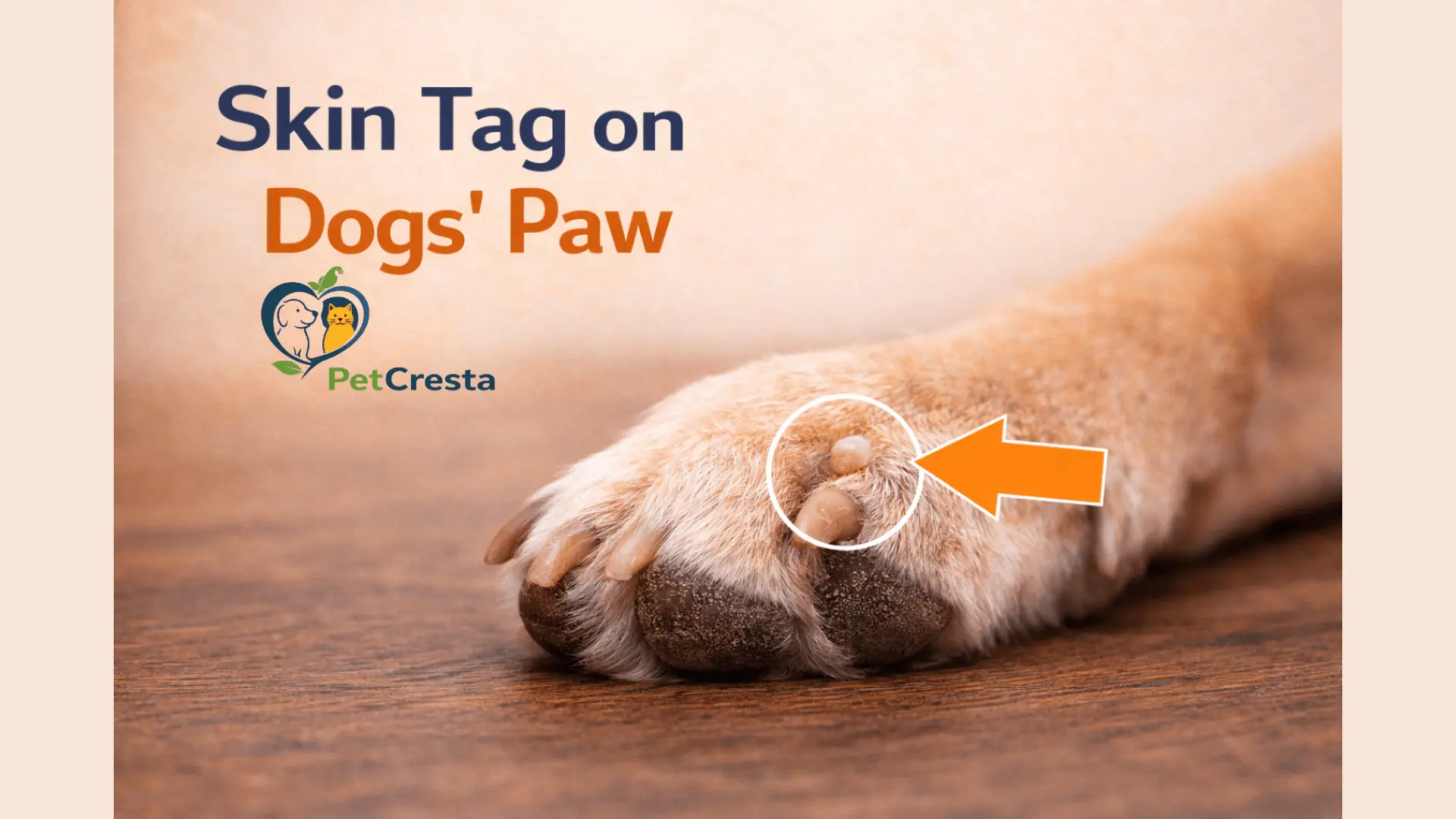
A skin tag is usually a soft, fleshy growth that may hang from the surface on a small stalk. On the paw, that appearance can overlap with several other conditions, including inflamed toe web lesions, wart-like growths, and tumors.
That is why a dog skin tag paw that seems harmless at home may still need a veterinary exam. The location matters just as much as the appearance.
This quick scan section matters because paw growths are often more irritating, more painful, and harder to judge by sight alone than similar-looking lesions on less active body areas.
What A Dog Skin Tag On Paw May Look Like
A true skin tag is often soft and fleshy. It may be flesh colored, lightly pigmented, or slightly darker than the surrounding skin. Some are attached by a small stalk, while others look like a small flap or raised nub on the surface.
On the paw, that tidy appearance does not always last. Walking can rub the lesion. Licking can make it swollen. Dirt and moisture can add redness or crusting. A growth that started out looking harmless may later appear raw, thicker, or more inflamed. A skin tag on a dog’s ear may also become inflamed from repeated scratching, which is similar to how a paw lesion can worsen with constant licking and friction.
Surface Features That Fit A Benign Skin Tag
- Soft to the touch
- Surface-based rather than deep
- Small flap or stalk
- Slow to change
- Usually not painful unless traumatized
Why Paw Irritation Can Change The Appearance
- Friction can cause redness and swelling
- Licking can make a lesion look larger
- Bleeding can happen after repeated rubbing
- Secondary infection may add odor or discharge
- A painful lesion may be mistaken for a simple tag when it is actually a different condition
Dog Paw Lump: When To See A Vet
A small paw bump is not something to ignore for weeks just because it is not dramatic on day one. As with skin tags on a dog’s eyes, a growth in a sensitive area should be checked early because irritation can lead to more discomfort and secondary problems.
A veterinary visit is important for any new growth on dog paw skin tag. That visit should move up faster when the dog is uncomfortable or the lump is changing.
Signs That Should Not Be Watched For Weeks
- Limping
- Constant licking or chewing
- Bleeding
- Discharge
- Bad odor
- Rapid growth
- Color change
- Ulceration
- Swelling between the toes
- Pain when the paw is touched
- Nail splitting, loosening, or loss
When Is The Same Week For Scheduling
- The dog is still walking, but clearly bothered
- The lesion has enlarged in a short time
- The growth keeps reopening
- The paw looks inflamed after repeated licking
- There is a sore near the nail bed or paw pad
A lump that is firm, dark, ulcerated, or attached more deeply also deserves faster attention. Nail area changes are especially important because some digital tumors start there.
What Are The Causes Of Skin Tag On Dog Paw
The exact cause of every skin tag is not always clear. In general, chronic irritation and repeated friction are often linked with surface skin growths.
On the paw, local trauma matters more than on many other parts of the body. Repeated contact with rough surfaces, abnormal weight bearing, licking, and chronic inflammation can all affect the skin.
Friction And Chronic Irritation
Pressure and rubbing may contribute to the development or worsening of a superficial lesion. A dog that lies on rough surfaces, walks often on abrasive ground, or drags the paw slightly may create repeated stress on the skin. Friction also matters with a skin tag on a dog’s elbow, where repeated pressure can irritate the tissue in a way that is similar to stress on the paw.
Allergy, Licking, And Inflammation
A dog with itchy feet may lick and chew the paw often. That does not directly prove a skin tag caused the problem, but chronic irritation can change the local tissue and make many types of lesions worse.
Why Do Some Paw Growths Have Completely Different Causes
Not every lump on the paw follows the same pattern as a skin tag. Some growths come from inflamed toe web tissue. Others arise from the nail bed, deeper skin structures, or tumor cells.
That is why this page must stay broader than a simple skin tag description while still staying centered on paw location intent.
Types Of Dog Paw Growths
| Growth Type | Usual Look | Common Location | Concern Level | Common Vet Test |
|---|---|---|---|---|
| Skin tag | Soft, fleshy, small flap or stalk | Top or side of paw | Lower if stable | Exam, sometimes biopsy |
| Papilloma | Wart-like, rough surface | Skin surface, toe area | Usually lower, but it can irritate | Exam, biopsy if uncertain |
| Histiocytoma | Round, button-like, pink to red | Limbs and feet | Often benign, but can look alarming | Exam, cytology |
| Interdigital lesion | Red, swollen, painful bump | Between toes | Moderate to high if inflamed | Exam, cytology, culture |
| Cyst-like swelling | Smooth rounded lump | Surface or toe web | Variable | Exam, sampling |
| Mast cell tumor | Variable look, may swell or change | Any paw location | High concern | Cytology, biopsy |
| Melanoma | A dark or irregular mass may ulcerate | Nail bed or toe | High concern | Biopsy, imaging |
| Squamous cell carcinoma | Ulcerated, firm, destructive | Toe or nail area | High concern | Biopsy, imaging |
| Digital tumor | Firm mass, nail change common | Nail bed | High concern | Biopsy, imaging |
Benign or Often Less Concerning Possibilities
A confirmed skin tag may only need monitoring if it is small and not being traumatized. Papillomas and histiocytomas can also look dramatic while still being less dangerous than malignant tumors.
That said, even a benign lesion can become painful on the paw because of constant movement and licking.
Inflammatory And Infectious Lookalikes
A raised sore between the toes is often not a true skin tag. Interdigital lesions can appear red, swollen, painful, and may drain or rupture. These are common lookalikes and can confuse the owner because they feel like a bump or raised nodule.
More Concerning Tumor Possibilities
Paw tumors deserve special respect because they can affect walking, invade local tissue, and sometimes involve the nail or toe structures. A dark lesion near the nail, a persistent ulcer, or a deeper firm mass should not be brushed off as a harmless tag.
Skin Tag Vs Tumor Dog Paw
This comparison matters because appearance alone is not enough. Still, a side-by-side review helps owners understand why one lesion may look more skin tag-like while another demands quicker testing.
| Feature | More Skin Tag Like | More Tumor-Like |
|---|---|---|
| Texture | Soft and surface-based | Firm, thickened, or deeper |
| Shape | Small flap or stalk | Irregular nodule or expanding mass |
| Change over time | Usually slow | May enlarge faster |
| Bleeding | Usually, from rubbing only | May bleed without much trauma |
| Color | Often flesh-toned | May be dark, red, mixed, or changing |
| Pain | Often mild unless irritated | More likely painful or linked to limping |
| Nail involvement | Uncommon | More concerning if the nail is abnormal |
Clues That Lean More Skin Tag-Like
A lesion that stays small, remains soft, and does not seem anchored deeply under the skin may fit better with a benign skin tag. A skin tag may still bleed if it gets rubbed often, but it usually does not cause severe pain on its own.
Clues That Raise Concern For A Tumor
Fast growth, repeated ulceration, spontaneous bleeding, pigment change, deeper attachment, or any nail bed abnormality should raise concern. Constant licking and limping also make a more serious problem more likely.
Why Appearance Alone Is Not Enough
Some tumors look quite early on. Some inflamed but noncancerous lesions look alarming. That is why the final answer often depends on cytology, biopsy, or other veterinary testing rather than appearance alone.
Where On The Paw The Growth Is Located Matters
The exact location changes the list of possibilities and the level of concern. This is one of the biggest gaps in many broad competitor pages.
Between The Toes
A bump between the toes is often an interdigital inflammatory lesion rather than a true skin tag. These lesions are commonly painful, red, swollen, and linked with licking, chewing, and secondary infection.
On The Paw Pad
A paw pad lesion affects comfort quickly because the dog walks directly on it. Even a small lesion in this area may crack, bleed, or make the dog reluctant to bear weight.
At The Nail Bed
Nail changes deserve extra attention. A split nail, loose nail, dark swelling, bleeding around the nail, or persistent soreness in one toe can point to a more serious process.
On The Top Or Side Of The Paw
These locations may be easier to monitor when a lesion is superficial. Even so, repeated rubbing against the ground or licking can still make a simple lesion look worse than it first appeared.
How Veterinarians Tell What It Is
A veterinarian does not rely only on appearance. The exam starts with the texture, depth, location, surface change, pain level, and whether the dog reacts when the paw is touched.
From there, the next step depends on what the lesion looks like and how the dog is doing. As with a skin tag on a dog’s nipple, the exact location of the lesion can affect how a veterinarian approaches the exam and treatment plan.
Physical Exam Clues
- Soft or firm feel
- Surface only or deeper attachment
- Pain or no pain
- Ulceration or crusting
- Discharge or odor
- Nail changes
- Single lesion or multiple lesions
Cytology, Biopsy, And Culture
A fine needle sample may be used for some lumps. In other cases, the growth may need a tissue biopsy or full removal with pathology. If the area is inflamed or draining, a culture may be recommended to guide treatment.
When Imaging May Be Needed
If the lesion is near the nail, involves deeper tissue, or raises concern for a tumor, imaging may be used to check the underlying structures. This helps shape the treatment plan.
This process is often more straightforward than owners expect, and it helps avoid guessing wrong.
Vet Treatment Dog Paw Lump
Vet treatment for dog paw growth depends on the diagnosis, the size and location of the lesion, and how much discomfort it causes.
A confirmed benign skin tag may only need monitoring if it is small, stable, and not being rubbed or licked. If it keeps getting traumatized, removal may be the better choice.
Treatment For A Confirmed Benign Skin Tag
- Monitoring when stable
- Removal of repeatedly irritated
- Local wound care if it has been rubbed raw
- Preventing licking during healing
Treatment For Interdigital Inflammatory Lesions
- Anti-inflammatory care
- Treatment for infection, if present
- Paw soaks or topical care when prescribed
- Addressing allergy, licking, or friction triggers
- Recheck visits if the lesion persists
Treatment When A Tumor Is Suspected Or Confirmed
- Cytology or biopsy
- Surgical planning
- Pathology review
- Imaging or staging in selected cases
- Referral when needed for complex tumor care
Aftercare And Recovery Basics
Paw wounds can be slower to settle because the dog keeps using the area. Bandage care, activity restriction, preventing licking, and follow-up visits often matter more with paw lesions than with similar growths on the trunk.
Home Remedies For Dog Skin Tags On The Paw
This heading matches real search intent, but the safe answer needs to stay clear. Home removal is not recommended.
Do not cut, tie off, burn, squeeze, or treat the lesion with human wart products. Those steps can cause pain, bleeding, infection, delayed diagnosis, and unnecessary tissue damage. A skin tag on a dog’s lip can be irritated by chewing and licking, just as a paw growth can be aggravated by walking and repeated contact with the ground.
What Is Safe, Supportive Care At Home
- Keep the paw clean and dry
- Prevent licking with a cone if advised
- Use only vet-approved paw protection
- Check the lesion once daily
- Take clear photos to track change
- Limit rough surface exposure if the paw is sore
What Not To Do
- Do not remove the growth yourself
- Do not use acids or harsh chemicals
- Do not keep a tight wrap on the paw without guidance
- Do not assume a quiet lesion is harmless forever
- Do not keep waiting if the dog is uncomfortable
When Home Care Is Not Enough
If the dog is limping, bleeding, licking constantly, or the lesion is growing, supportive care at home is not enough. The next step should be a veterinary visit.
Common Mistakes Owners Make With Paw Growths
A few errors show up often with paw lesions.
Most Common Mistakes
- Waiting too long because the bump seems small
- Treating a painful lesion between the toes like a harmless surface tag
- Missing nail changes that point to deeper disease
- Trying home removal
- Not taking photos to track change
- Assuming reduced licking means the problem is gone
A small lesion can still matter if the location is wrong. On the paw, that matters a lot.
Monitoring Checklist For A Confirmed Benign Lesion
If a veterinarian has confirmed that the lesion is benign, home monitoring becomes more useful. Compared with a skin tag on a dog’s leg, a paw lesion is more likely to be irritated by constant movement, rough surfaces, and licking.
| What to Track | Why It Matters |
|---|---|
| Date first noticed | Helps judge growth rate |
| Exact location | Different locations carry different concerns |
| Size | Detects change early |
| Color | Darkening or reddening matters |
| Texture | A soft lesion becoming firm is important |
| Bleeding or discharge | May suggest trauma or infection |
| Licking frequency | Tracks irritation and pain |
| Walking changes | Shows functional impact |
| Monthly photo | Gives a clear visual record |
Quick Checklist
- Check once a week
- Use the same lighting for photos
- Note any change in size or surface
- Watch for bleeding, odor, or limping
- Book a recheck if anything changes
Prevention And Paw Care Support
Not all dog paw skin tag can be prevented. Still, routine paw care may lower irritation and help owners notice problems earlier.
Helpful Paw Care Habits
- Check paws after walks
- Keep nails trimmed
- Manage foot licking and allergies
- Maintain a healthy body condition
- Reduce repeated exposure to rough surfaces when possible
- Keep feet clean and dry after wet outdoor activity
Prevention reduces some friction and inflammation problems, but it does not remove the chance of tumors or other significant paw diseases. Early detection still matters.
Conclusion
A skin tag is one possible explanation for a paw growth, but it is not the only one. The paw is a high-use area, and that makes irritation, lookalikes, and treatment needs more important than they would be on a quieter patch of skin.
The safest approach is simple. Photograph the lesion, prevent licking, and arrange a veterinary exam for any new, changing, bleeding, painful, or persistent growth. That gives the best chance of early treatment and fewer complications.
FAQ’s About Skin Tag on Dog Paw
Yes, a dog can develop a skin tag on the paw, especially if the lesion is superficial and soft. The challenge is that many paw bumps are not true skin tags, so the term is often used before the growth is properly identified. A veterinary exam is still the safest next step for a new lesion in this location.
A skin tag usually looks like a small fleshy growth on the surface of the skin. It may appear soft, lightly pigmented, and attached by a small stalk or flap. On the paw, friction and licking can make it look redder or more swollen than it first did, which can blur the picture.
A confirmed skin tag is often benign, but the paw is a more sensitive location than many other body areas. Even a harmless lesion can become painful or inflamed because of walking and licking. A more serious mass can also look mild at first, so new paw growth should not be ignored.
A soft, stable, surface-based flap may look more like a skin tag. A firmer, deeper, faster-growing, bleeding, or ulcerated mass may be more concerning. Even so, appearance alone is not enough to tell the difference with confidence, which is why sampling or biopsy may be needed.
Licking usually means the area is irritated, itchy, sore, or inflamed. On the paw, even a small lesion can become bothersome because it is rubbed during normal walking. If licking is persistent, the lesion needs attention because saliva and trauma can make the problem worse.
Common possibilities include skin tags, papillomas, histiocytomas, interdigital inflammatory lesions, cyst-like swellings, and tumors such as mast cell tumors, melanoma, and squamous cell carcinoma. The exact location on the paw helps narrow the list, especially when the nail bed or toe web is involved.
A new paw lump should be checked promptly, even if the dog still seems comfortable. A faster visit is important when there is limping, repeated licking, bleeding, discharge, odor, rapid enlargement, or nail damage. Paw lesions are often more irritating and harder to monitor safely at home.
No. Home removal can cause pain, bleeding, infection, and delayed diagnosis. It is also risky because the lesion may not be a skin tag at all. The safest plan is to let a veterinarian identify the growth first and decide whether monitoring or removal is appropriate.
The veterinarian will examine the size, location, texture, depth, and whether the lesion is painful or inflamed. Depending on what is found, the next step may be cytology, biopsy, culture, or imaging. Treatment then depends on whether the lesion is benign, inflammatory, infected, or cancerous.
Not usually. A bump between the toes is often more suggestive of an interdigital inflammatory lesion than a true skin tag. These lesions are commonly red, painful, and linked with licking or infection. Because they can look dramatic and feel sore, they deserve a proper veterinary evaluation.
A new paw growth should be checked by a vet soon, because paw masses are easy to irritate, and earlier evaluation usually leads to a better outcome. Until then, do not cut, tie, or treat it at home. Stop licking or chewing, keep the paw clean, and watch for bleeding, limping, fast growth, or repeated rubbing on the ground.
In older dogs, true skin tags can be benign, but age does not confirm that a paw lesion is harmless. Treatment may be simple monitoring if the bump stays small, stable, and nonpainful, but biopsy or removal is more likely if it grows, bleeds, gets rubbed while walking, or keeps bothering the dog. On paws, friction matters, so even a benign growth may need treatment sooner if it is repeatedly traumatized.
References
- PetMD, Tumors on Dog Paws
Used for paw mass locations, red flags, diagnostic workflow, and treatment pathway. - Purina, Skin Tags on Dogs: How to Identify and Treat Them
Used for irritation and trauma are common contributors to skin tag formation. - Bond Vet, Dog Skin Tags: What They Are and What To Do About Them
Used for biopsy and removal guidance, and for caution against home treatment. - VCA Animal Hospitals, Interdigital Cysts in Dogs
Used for between the toes, such as red bumps, licking, and limping. - MSD Vet Manual, Interdigital Furunculosis in Dogs
Used for web space inflammation, friction, allergy-related trauma, and lesion appearance.