6 Things To Consider Before Travelling With A Pet
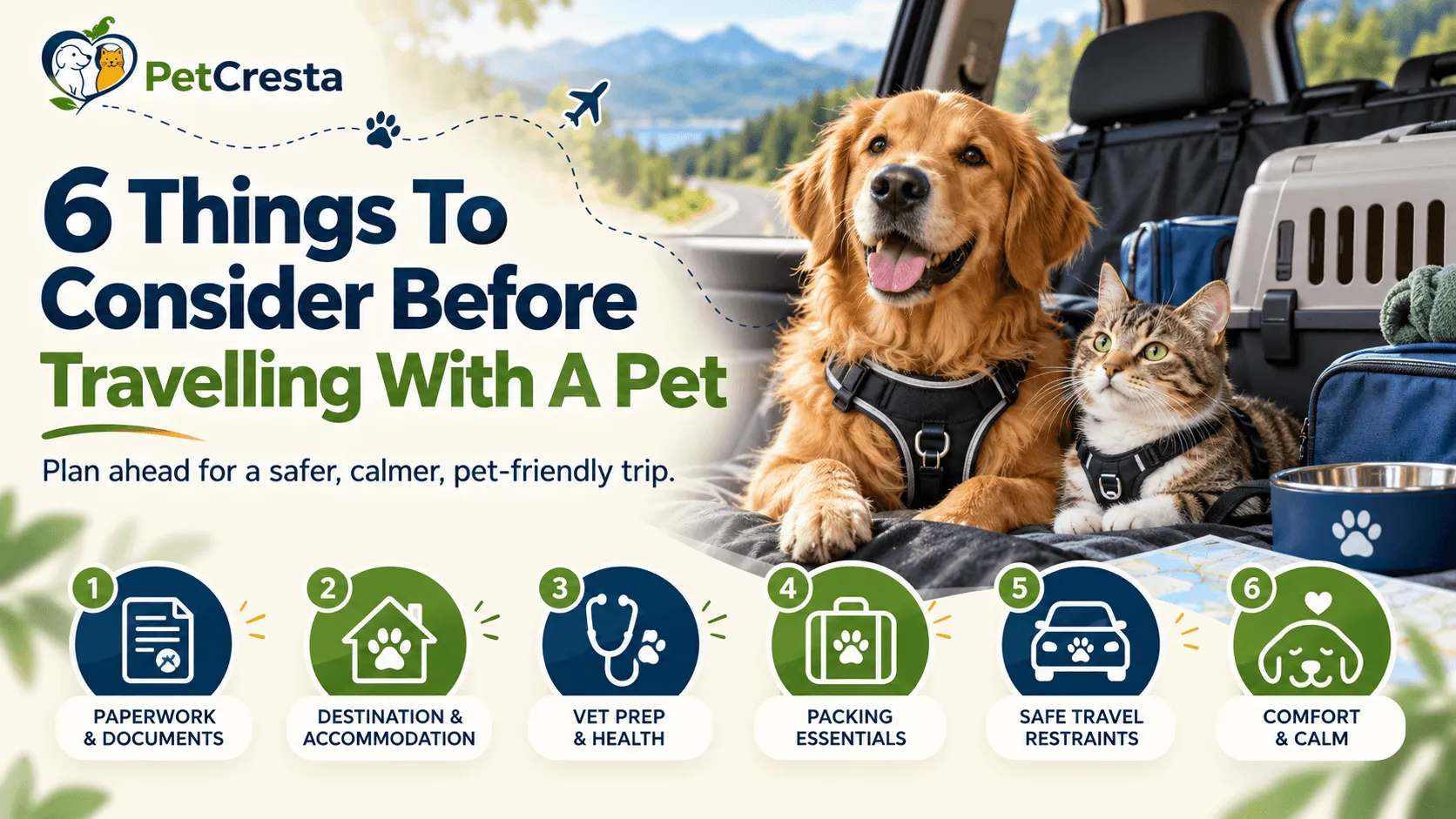
You’re going travelling and you’ve decided that your trusty four-legged friend is coming on holiday with you – brilliant! Pet sitters aren’t always easy to find and not all pets are happy to go to boarding kennels, so rather than spending your entire holiday stressing about your pup’s wellbeing, the best thing to do is to take them with you. Travelling with a pet can be an absolute joy, but it does take a little planning; think of it as preparing for a journey with a very small, very fluffy toddler who cannot read a map and has strong opinions about service station sandwiches.
So, whether you’re heading to Portrush or Port de pollença, here are six things worth thinking about before you put the lead in the boot and set off…
Quick Answer: What Should You Check Before Travelling With a Pet?
Before travelling with a pet, check:
- Entry and return requirements for your destination
- Microchip and identification details
- Vaccination and health-document requirements
- Your transport provider’s pet policy
- Pet-friendly accommodation rules
- Safe restraints or carriers
- Food, water, medication, and familiar bedding
- Weather and temperature risks
- Your pet’s comfort with travel
- Access to veterinary care at your destination
International rules can differ considerably depending on where you live, where you are travelling, and where you will return, so check official requirements before booking.
1. Paperwork and Regulations
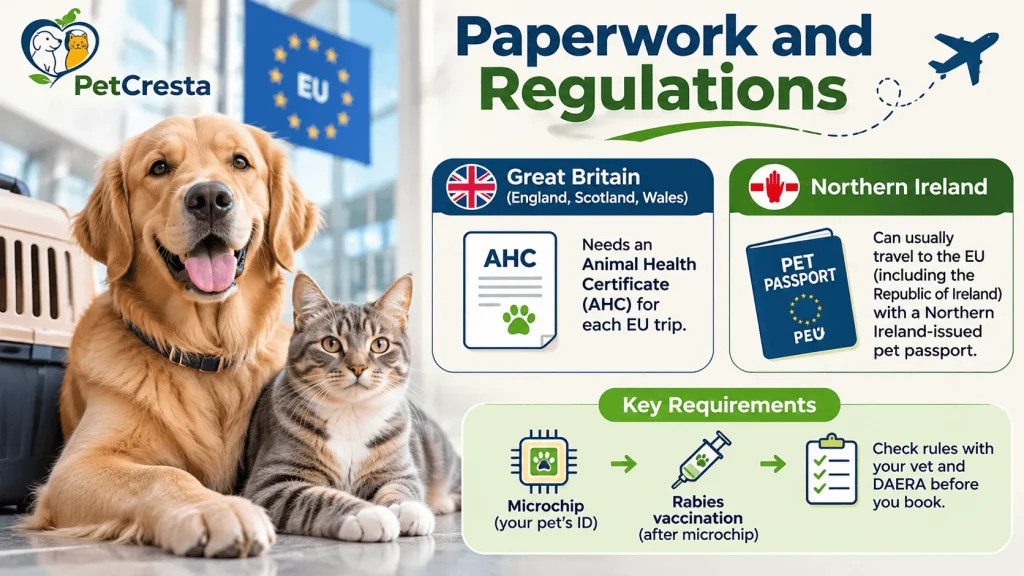
A pet passport issued in Great Britain is no longer valid for travel to the EU. Northern Ireland is the exception, because its vets can still issue EU pet passports to pets that live here. So the document you need depends on where your pet lives. Pets living in Great Britain need an Animal Health Certificate, or AHC, for each trip to the EU. Pets living in Northern Ireland can generally travel to the EU, including the Republic of Ireland, on a Northern Ireland-issued pet passport. Check this with your vet and DAERA before you book, as the rules have been tightening recently.
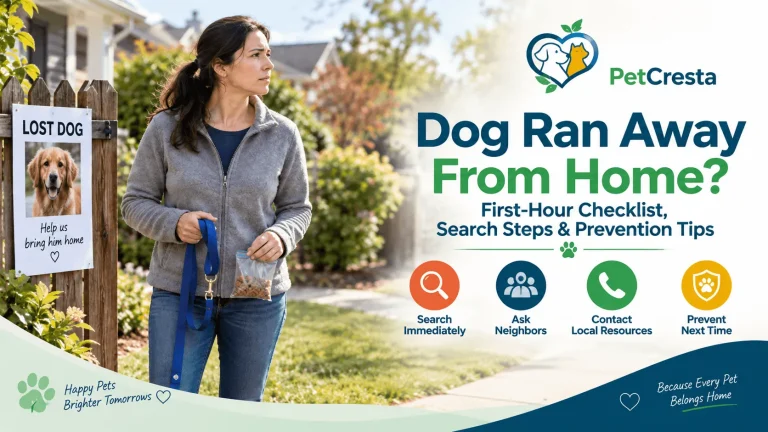
Is your pet microchipped? If not, sort that before anything else. For dogs, cats and ferrets, the microchip underpins the whole process, a bit like your pet’s passport photo, only with fewer bad hair days. The order of events matters too. The microchip must be implanted before, or at the very least at the same time as, the rabies vaccination. Get it the wrong way round and the vaccination may not count, which means starting again (and nobody wants to pay for that twice). Ask your vet to scan the chip at your appointment to confirm it reads properly, because a chip that won’t scan can’t do its job. It is also worth knowing what to do if your dog runs away before you travel, especially when staying somewhere unfamiliar where an escaped pet may be harder to locate.
2. Choose a Destination That Loves Pets Back
Britain is truly dog friendly; there are pubs with roaring fires, windswept beaches, rolling hills and cafés that hand out free puppaccinos like they are going out of fashion; Cornwall, the Lake District, the Scottish Highlands and the Norfolk coast are all fantastic choices. But not everywhere welcomes pets with open arms, or if they do they may have specific restrictions. It is worth checking while you are making your travel plans if there are rules you need to abide by and if it’s worth making a detour.
Here are a couple of things to check before you fall in love with a spot:
– Not every beach welcomes dogs all year round. Many have seasonal restrictions, usually from May to September, so look before you leap, or rather before you let the lead go.
– Accommodation policies vary wildly. Some places charge a pet fee, some limit the number of animals, and a few will provide a cosy bed and a welcome treat. Always book a pet-friendly stay rather than hoping for the best at the door.
3. Prep Your Pet Like a Pro
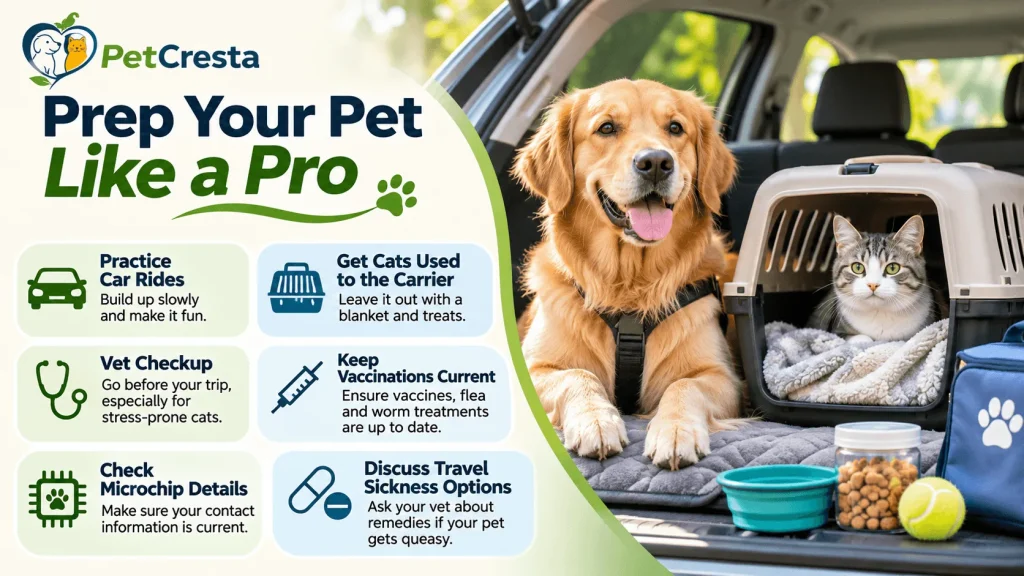
Pets are creatures of habit. Suddenly putting pets into a moving metal box can be a bit much, so ease pets in. If your dog has never been in the car for more than a trip to the park, start with some practice drives just to get them familiar with being in the car for longer durations, build up gradually and make it fun.
Cats, who tend to regard the carrier as a prison, can be won round by leaving it out in the living room for a week with a blanket and treats inside. Before long, the carrier becomes a safe spot. A visit to the vet beforehand is wise too. Travel can cause noticeable stress in some cats, including physical reactions such as drooling. PetCresta’s guide on why cats may drool when stressed explains when anxiety may be involved and when another cause should be considered.
Make vaccinations, flea and worm treatments are up to date and ask about travel sickness remedies if the pet gets queasy. Also check that the microchip details are current.
4. The Packing List
Packing for a pet is almost as involved as packing for a toddler, only with fewer snacks required and more fur. Here is what should make the cut:
– Their usual food, plus a bit extra. Sudden diet changes on holiday are a recipe for an upset tummy and nobody wants that in a hotel room.
– Fresh water and a portable bowl. Staying hydrated matters, especially in warm weather.
– Their own bed or blanket to give a familiar smell of home.
– Lead, harness and spare poo bags. Always more bags than you think you need. Always.
– A favourite toy or two, because a bored pet is a destructive pet.
– Medication, a basic pet first aid kit and your vet’s contact details.
– A recent photo of your pet, just in case they go walkabout. Fingers crossed you never need it.
5. Hitting the Road
Car travel is by far the most popular (and easiest) way to take your pet on holiday. Make sure that your dog is properly restrained in a crate, a secure harness or behind a dog guard as expected under the Highway Code to prevent distraction. Cats and smaller animals belong in a secure carrier, ideally strapped in so it does not go skidding about when you go round corners. Never leave a pet in a parked car, not even for a few minutes, because on a warm day the temperature inside can soar (even with the windows cracked open). Make regular stops at motorway services, pet-friendly cafés or anywhere with outdoor seating. Build these little stops into your journey every couple of hours so your dog can stretch their legs, sniff something new and have a drink. It makes the journey a little longer but a lot more pleasant, and let’s be honest, you probably fancy a coffee anyway.
6. Keep Them Comfy and Calm
Even the most laid back animal can find a new environment overwhelming. Once you arrive, give them time to sniff around and settle in. Set up their bed in a quiet corner and keep to their usual routines for feeding and walks. Familiarity works wonders. Watch for signs of stress, such as panting, pacing, hiding or excessive barking. If you spot any, take a breather and offer reassurance. A calm owner makes for a calm pet, so try to keep your own stress levels in check, even if the satnav has just directed you down a farm track.
Travelling with your pet requires a bit more forward planning than when you go alone but the benefits are huge. There is nothing like seeing your dog running across a sunny beach with ears flying or your cat looking happy from a holiday cottage window. Think ahead, pack appropriately you will come back with a phone full of pictures of a happy pet and memories that will last forever.
Final Takeaway
Travelling with a pet can be a great experience when the trip has been planned around the animal rather than simply adding the pet to an existing itinerary.
Start with the legal requirements. Confirm the microchip, travel documents, vaccinations, destination rules, transport policy, and return requirements before booking.
Then think about comfort. Familiar food, safe restraints, planned breaks, a suitable place to stay, and enough time to settle can make a big difference.
Most importantly, be realistic about your individual pet. A holiday is only truly pet friendly when the journey and destination are safe and manageable for the animal travelling with you.
FAQs About Travelling With a Pet
Check the entry and return rules for your route, confirm your pet’s microchip and identification details, arrange any required veterinary documents or vaccinations, check the transport provider’s policy, book suitable accommodation, and prepare food, water, medication, bedding, and safe travel equipment.
It depends on where in the UK you live and your travel route. Dogs, cats, and ferrets travelling from Great Britain to the EU generally require an Animal Health Certificate rather than a Great Britain-issued pet passport. Northern Ireland follows different arrangements. Check current official guidance before travelling.
Begin checking requirements before booking whenever possible. Some routes require vaccinations, waiting periods, certificates, parasite treatments, or other procedures that cannot be completed at the last minute.
A pre-travel veterinary appointment is sensible for international journeys and for pets with health problems, medications, previous travel sickness, significant anxiety, or specific documentation requirements.