
Dog Ran Away From Home? First-Hour Checklist, Search Steps & Prevention Tips
Your dog ran away – now what? The first hour matters most, and a calm, planned search beats frantic driving around the block.
Start at the last place your dog was seen, recruit neighbors, and log every sighting. Don’t assume your dog will simply find its way home on its own.
This guide covers what to do in the first hour, how to search effectively (including at night or in the woods), what to do if your dog runs from you, and how to prevent another escape.
Quick Answer: What to Do If Your Dog Ran Away
Search immediately around the last known location, then expand outward. Bring treats, a leash, a recent photo, and something carrying your scent. Ask neighbors to check their properties, and tell everyone: do not chase the dog.
Contact local shelters, animal control, veterinary clinics, and lost-pet groups as soon as possible. Pet FBI recommends scent items, food and water, flyers, and community outreach – with chasing off the table. If your dog wears a mini GPS tracker, check its live location and movement history first – it can point you straight to the right search area instead of starting blind.
What to Do in the First Hour After Your Dog Runs Away
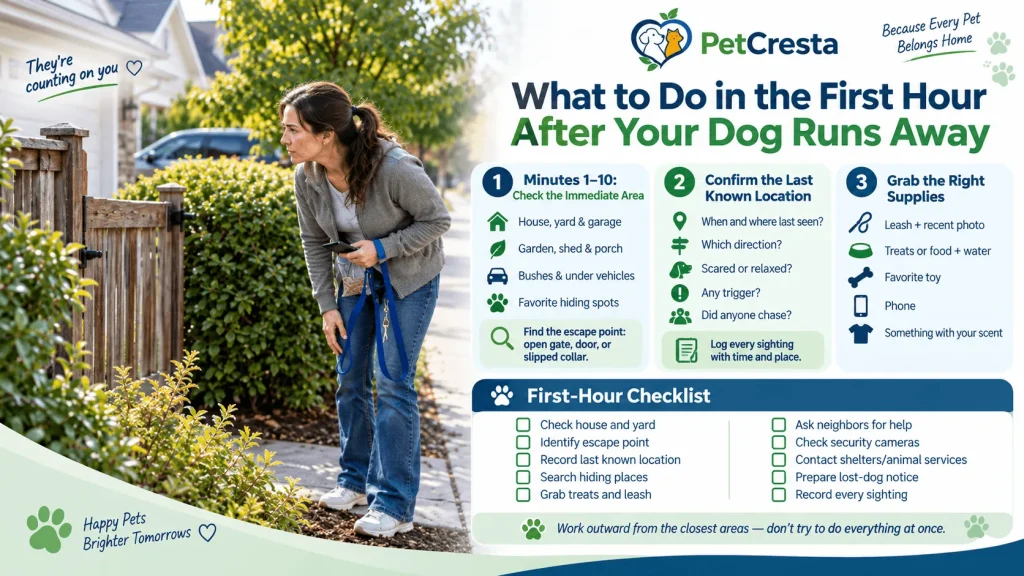
Minutes 1-10: Check the Immediate Area
Don’t assume your dog has gone far.
Check:
- The house, yard, and garage
- Garden, shed, and porch
- Nearby bushes and under vehicles
- Your dog’s favorite hiding spots
A frightened dog may stay silent instead of responding when called.
Next, find the escape point: an open gate, unlocked door, or slipped collar. This tells you exactly where to start searching.
Confirm the Last Known Location
- When and where was the dog last seen?
- Which direction was it heading?
- Was it scared or relaxed?
- Was there a trigger-traffic, fireworks, thunder, construction?
- Did anyone try to chase it?
Write down the time and location, and log any new sighting immediately. This stops multiple people searching the same spot.
Grab the Right Supplies
- Leash and a recent photo
- Treats or familiar food, plus water
- Favorite toy
- Phone
- Something carrying your scent
Pet FBI recommends leaving familiar bedding or clothing, along with food and water, near the last-seen area when it’s safe to do so.
Lost Dog Checklist (First Hour)
| Task | Done |
|---|---|
| Check the house and yard | ☐ |
| Identify the escape point | ☐ |
| Record the last known location | ☐ |
| Search nearby hiding places | ☐ |
| Grab treats and a leash | ☐ |
| Ask neighbors for help | ☐ |
| Check nearby security cameras | ☐ |
| Contact local shelters/animal services | ☐ |
| Prepare a clear lost-dog notice | ☐ |
| Record every sighting | ☐ |
Work outward from the closest areas – don’t try to do everything at once.
How to Find a Lost Dog: Step-by-Step Search Strategy
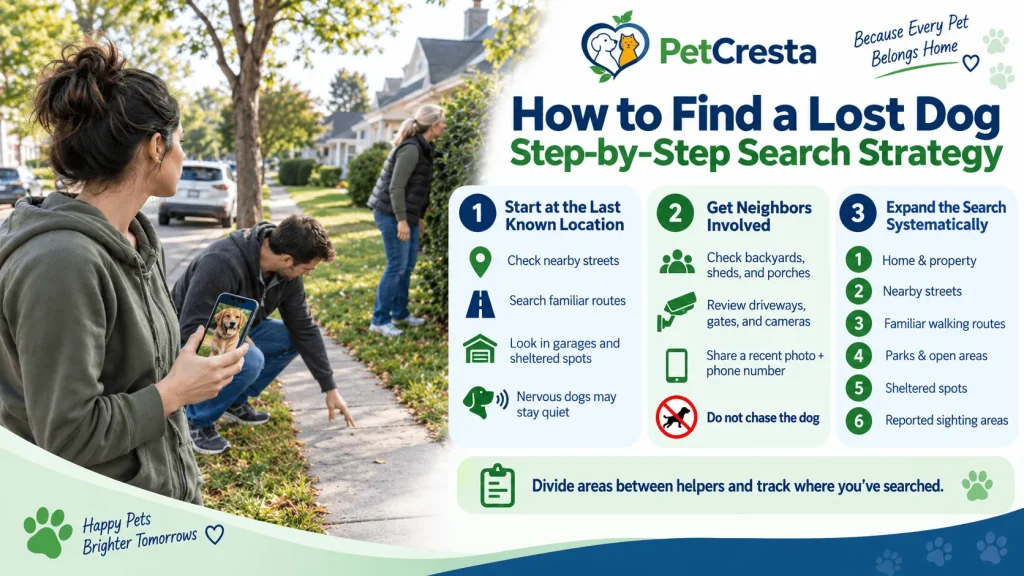
Start at the Last Known Location
Walk nearby streets and check places your dog already knows – parks, familiar routes, open lots, garages, and sheltered spots. A nervous dog may not respond to its name.
Get Neighbors Involved
Ask neighbors to check:
- Backyards, garages, and sheds
- Porches, driveways, and open gates
- Security-camera footage
Share a recent photo and your phone number, and give everyone one instruction: if they spot your dog, don’t chase it. Pursuit often makes a scared dog run farther, per Pet FBI’s lost-dog recovery guidance.
Expand the Search Systematically
If there’s no luck nearby, widen the radius in zones:
- Home and immediate property
- Nearby streets
- Familiar walking routes
- Parks and open areas
- Sheltered locations
- Areas tied to reported sightings
Divide zones between helpers and track what’s already been covered – random driving wastes time.
Searching for a Dog That Ran Away at Night
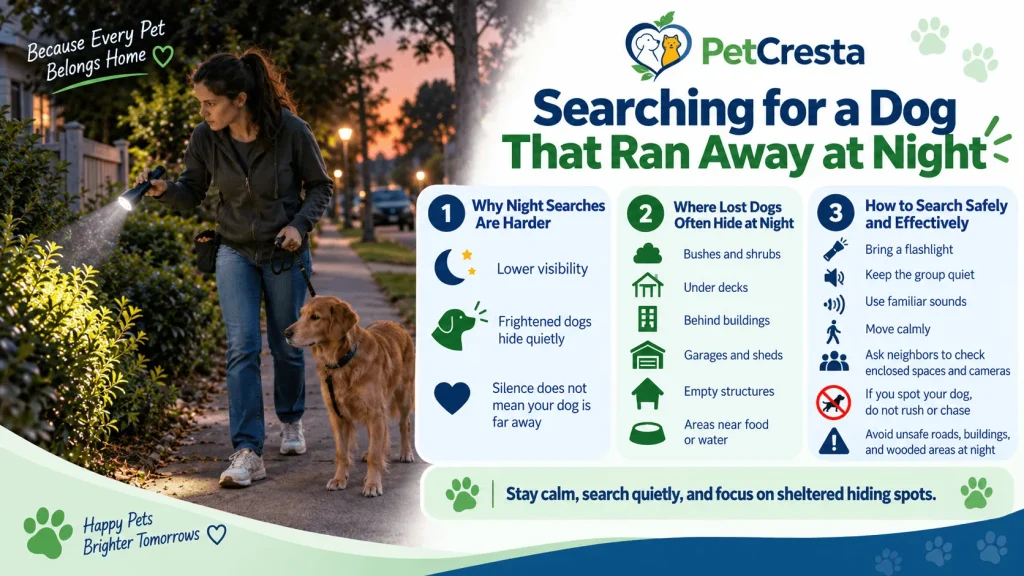
Lower visibility and a hiding instinct make night searches harder.
Where do lost dogs go at night? Frightened dogs seek quiet, sheltered spots: bushes, under decks, behind buildings, garages, empty structures, and areas near food or water. Silence doesn’t mean your dog isn’t close by.
How to search: Bring a flashlight but keep the group quiet. Use familiar sounds, move calmly, and ask neighbors to check enclosed spaces and cameras. If you spot your dog, resist the urge to rush toward it. Avoid unsafe buildings, roads, or wooded areas at night without proper precautions.
What If Your Dog Runs Away in the Woods?
Patience matters here. Sending a large, loud group through the woods can push a frightened dog farther away.
If there’s a reliable sighting, focus your search there and look for:
- Trails and cover
- Water sources
- Quiet resting spots
- Signs of recent movement
Skip areas with cliffs, fast water, traffic, or wildlife hazards – your safety comes first.
My Dog Runs Away When I Approach: What Now?
A stressed dog may ignore its name, avoid eye contact, or bolt when approached. This usually means fear, confusion, or overstimulation, not defiance.
What to do: Stop. Don’t chase. Give the dog space, avoid running toward it, and try lowering your body while staying calm. Familiar food can encourage it to approach on its own terms. Pet FBI specifically warns against chasing a shy or frightened dog.
When to escalate: If sightings continue but the dog won’t approach, contact a shelter, animal control, or a professional lost-pet recovery service rather than attempting a risky capture yourself.
Common Lost-Dog Scenarios
Escaped through an open gate: Likely still nearby. Search surrounding streets and yards, and ask neighbors to check cameras. No sightings? Widen the search and contact local animal resources.
Ran off during a walk: May have chased a scent or been startled. Return to the last-seen point, ask bystanders to watch for movement, and note direction of travel. If it crossed a busy road, escalate quickly.
Frightened and hiding: Use calm behavior, scent items, and food. Skip large, noisy search parties. If repeatedly seen but unapproachable, call in professional help.
Do Dogs Come Back If They Run Away?
Sometimes, but don’t wait and hope. Some dogs stay close to where they disappeared; others travel far, especially if frightened or chased. Behavior varies by dog and circumstance, according to Pet FBI.
If Your Dog Comes Back on Its Own
- Secure the dog immediately and offer water
- Check for visible injuries
- Keep the dog calm
- Call a vet if you notice injury, weakness, or unusual behavior
- Check the collar and ID
- Figure out how the escape happened
A safe return isn’t proof it won’t happen again.
How to Prevent Your Dog From Running Away Again
Secure doors, gates, and fences. Check for loose latches, fence gaps, damaged panels, low sections, and doors that don’t close properly. Fix the actual escape point rather than hoping it won’t happen again.
Keep identification current. Update the collar, ID tag, microchip registration, and emergency contact info regularly.
Train in a controlled environment first, reward successful returns, and gradually introduce distractions. If your dog regularly ignores recall, return to an easier setting and rebuild the behavior before practicing around stronger distractions. Our training for adult dogs guide explains how to progress from easier environments to more distracting ones.
Coming back to you should always feel safe and rewarding – never punish a delayed return.
Identify the trigger. Was it fireworks, thunder, another animal, boredom, or an unsecured gate? AAHA notes that loud noises like thunder and gunshots can spook noise-sensitive dogs, so plan appropriate restraint and ID measures in advance.
Common Myths About Dogs Running Away
- “My dog will come home on its own. ” Maybe – but waiting isn’t a search strategy. Start looking right away.
- “If I chase my dog, I’ll catch it.” Often the opposite: pursuit can make a scared dog run farther.
- “A microchip shows me my dog’s location.” No – it’s an ID tool, not GPS.
- “Once my dog is back, we’re fine.” The escape trigger still needs fixing – check gates, update ID, and revisit recall training.
When to Contact Local Animal Resources
If your dog is still missing, don’t search alone. Reach out to:
- Animal shelters
- Animal-control services
- Veterinary clinics
- Local rescue organizations
- Lost-pet community groups
Report the missing dog through your local channels, too.
Have this ready: a recent photo, your dog’s name, color and markings, last-seen location, date and time, collar/harness details, microchip info, and your contact number. Skip unnecessary personal details on public flyers or social posts.
Conclusion
Losing sight of your dog is frightening, but panic won’t help you find them – a calm, systematic search beats driving around at random or waiting for them to wander home.
Check the immediate area first, recruit neighbors instead of searching alone, never chase a frightened dog, and keep identification current on the collar, tag, and microchip. Pairing that with a tracker from SpaceHawk GPS means you’re never starting the next search from scratch. Act fast, stay calm, and don’t wait to start looking.
FAQ’s
Some do, especially if they haven’t gone far or were just startled. But it’s not guaranteed, and a frightened or chased dog is harder to predict. Don’t wait, start searching and notify neighbors and shelters right away.
Check your property first, then identify how the dog got out and confirm the last time and place it was seen. Search nearby streets, ask neighbors to check their yards and cameras, and contact local shelters and vets. Log every sighting so you’re not covering the same ground twice.
Start at the last known location and search outward in expanding zones rather than randomly. Bring a photo, treats, and a leash, get neighbors to help cover different areas, and log every credible sighting with a time and place.
Leave familiar bedding, food, and water near the last-seen spot – scent can draw a nearby dog back. If you see your dog, don’t run toward it; stay low, speak calmly, and let treats do the work.
No. A microchip only stores an ID number that’s read when a vet or shelter scans it, it has no signal and can’t report location in real time.