
What Happens During A Dog Dental Cleaning? 8 Steps Explained
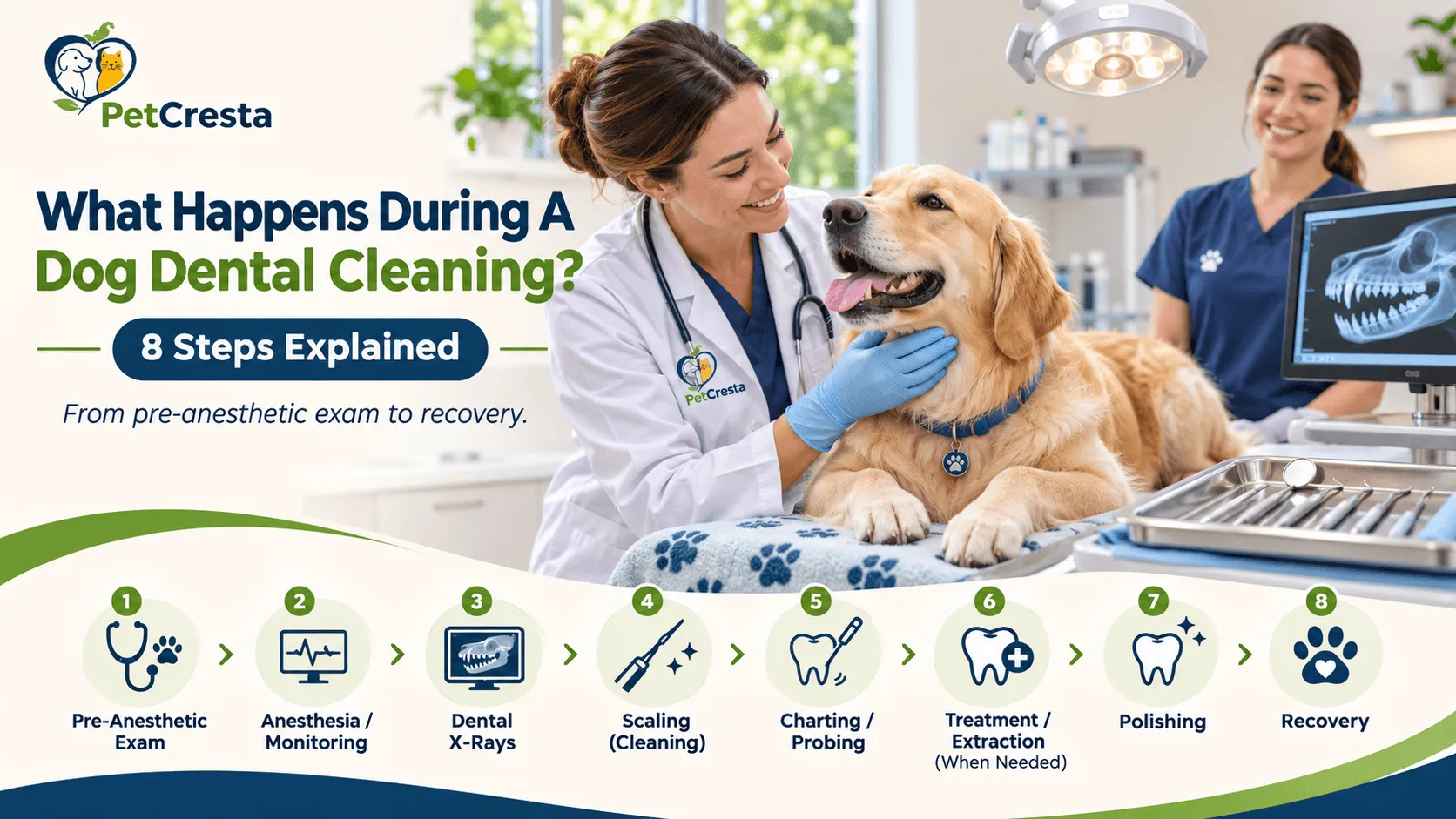
Dropping your dog off for a dental cleaning can feel a little unsettling. You hand over the leash in the morning, and a few hours later, you pick up a sleepy dog with cleaner teeth. But what actually happens while your dog is at the veterinary clinic?
A professional dog dental cleaning involves much more than removing visible tartar. Your veterinary team examines the mouth, takes dental X-rays, cleans around and beneath the gums, and treats problems that may be causing pain.
Understanding the procedure can make the appointment less worrying and help you prepare for your dog’s recovery.
What Happens During a Professional Dog Dental Cleaning?
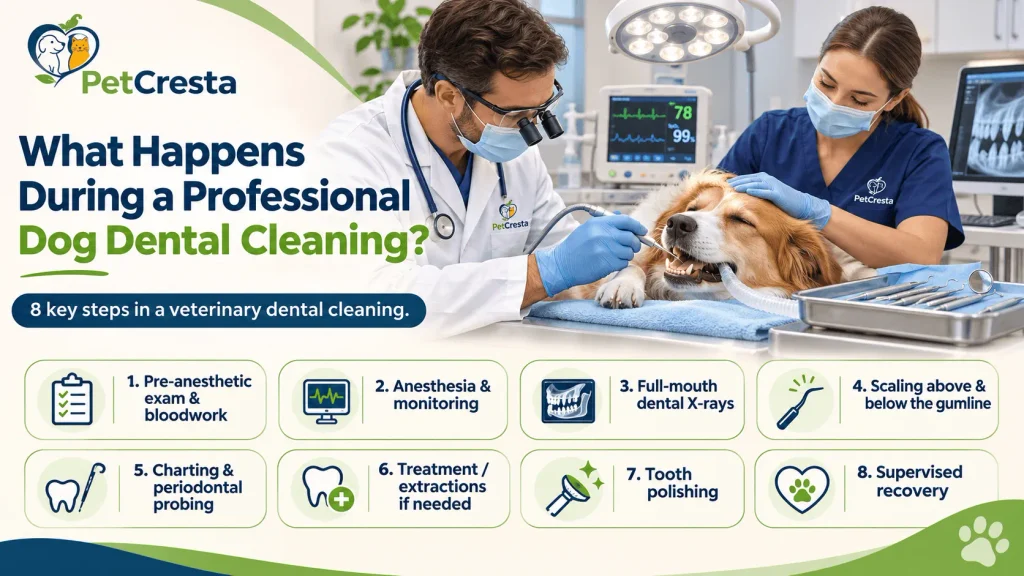
A veterinary dental cleaning typically involves eight main steps:
- Pre-anesthetic examination and bloodwork
- General anesthesia and monitoring
- Full-mouth dental X-rays
- Scaling above and below the gumline
- Dental charting and periodontal probing
- Treatment of damaged teeth and extractions when needed
- Tooth polishing
- Supervised recovery and discharge
The order of some steps may differ between clinics. For example, dental charting and X-rays may happen before or during scaling. The goal is the same: to examine, clean, and treat the entire mouth safely.
Before The Appointment: Preparing Your Dog For Dental Cleaning
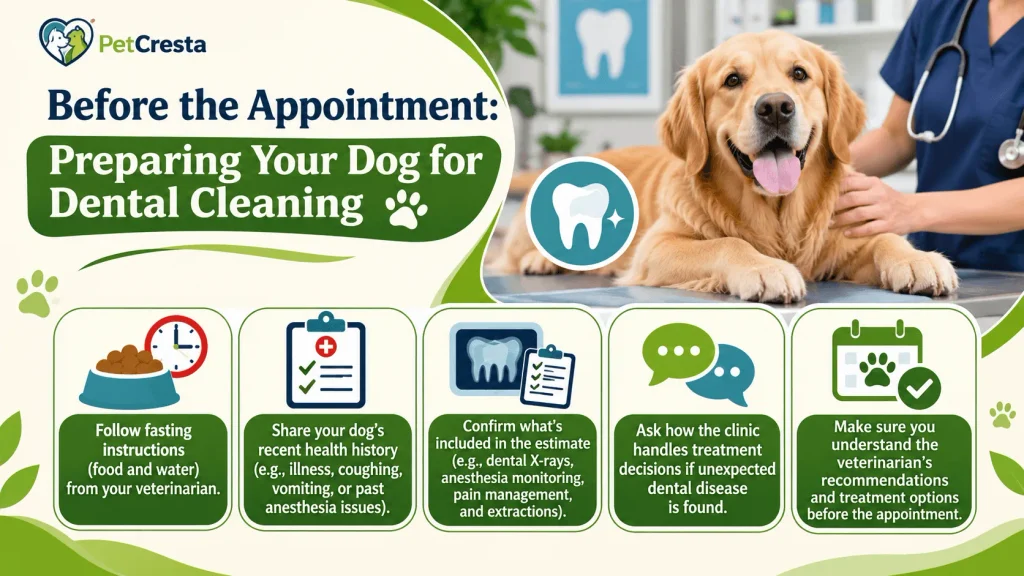
Your veterinary clinic will explain how to prepare for the procedure.
Dogs generally need to fast before anesthesia, but the instructions depend on their age, medical condition, and medications. Follow your veterinarian’s specific directions about food, water, and any prescribed medication.
Before the appointment, tell the veterinary team about any recent illness, coughing, vomiting, previous anesthesia problems, or changes in your dog’s health.
Ask whether the estimate includes dental X-rays, anesthesia monitoring, pain management, and possible extractions. It is also worth confirming how the clinic handles treatment decisions if unexpected dental disease is discovered.
Before your dog’s appointment, make sure you understand the veterinarian’s recommendations and any possible treatment options. You can also read our guide to red flags in online pet health articles to learn how to evaluate veterinary information and recognize unreliable health advice.
Step 1: The Pre-Anesthetic Exam and Bloodwork
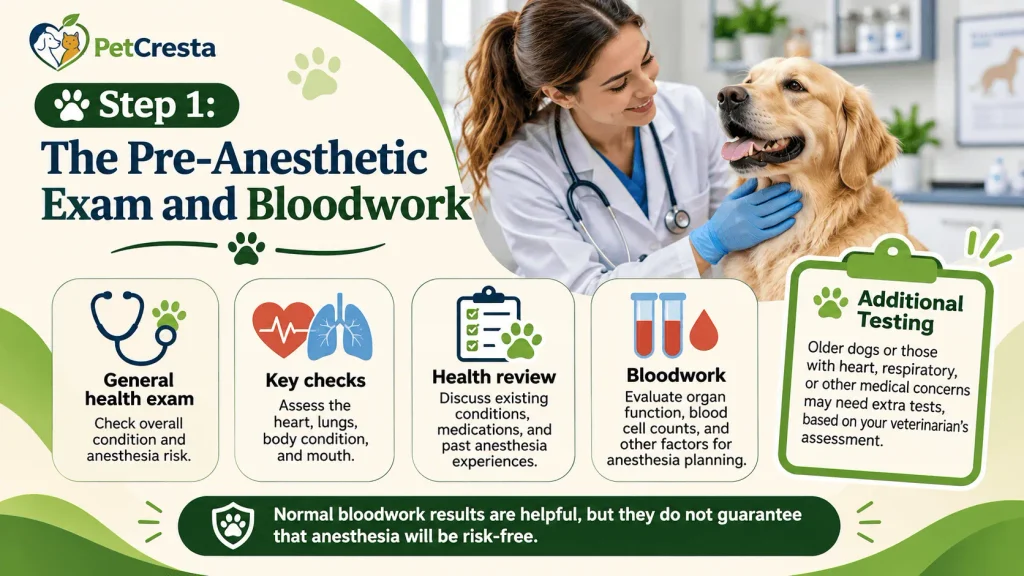
Before the cleaning begins, your veterinarian examines your dog to assess their general health and potential anesthesia risks.
The examination usually includes checking the heart, lungs, body condition, and visible parts of the mouth. The veterinarian also reviews any existing health conditions, medications, and previous anesthesia experiences.
Bloodwork is commonly recommended to assess organ function, blood cell counts, and other factors that may affect anesthesia planning. However, normal results do not guarantee that anesthesia will be risk-free.
Older dogs or dogs with heart, respiratory, or other medical concerns may need additional testing. The veterinarian decides which tests are appropriate for the individual patient.
Step 2: General Anesthesia and Monitoring
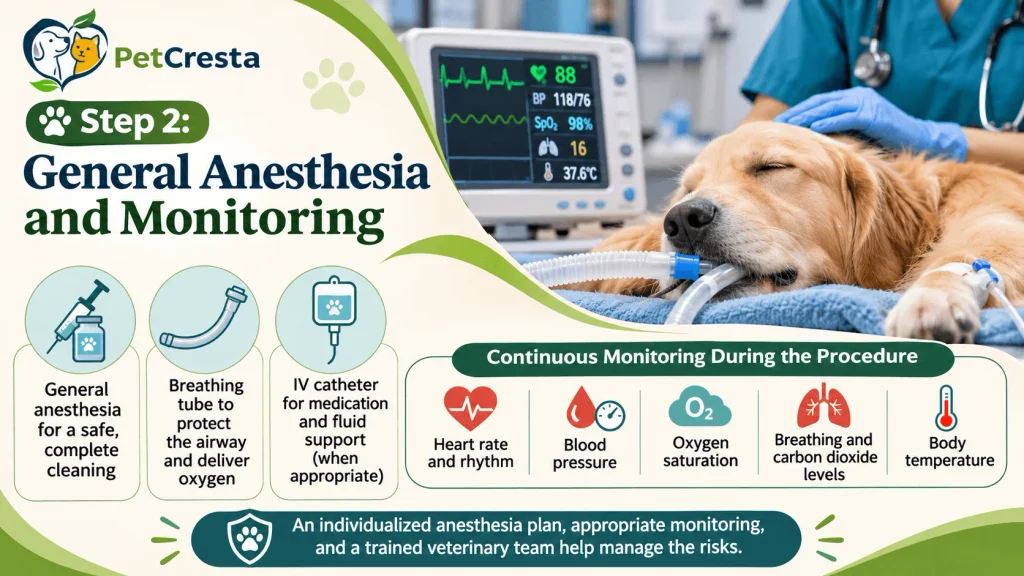
A complete veterinary dental cleaning requires general anesthesia.
Anesthesia allows the team to examine and clean areas that would be difficult or painful to reach while your dog is awake. It also keeps your dog still during dental X-rays, periodontal probing, and treatment.
After anesthesia is induced, the team typically places a cuffed breathing tube to help protect the airway and deliver anesthetic gases and oxygen. An intravenous catheter provides access for medication and fluid support when appropriate.
A trained team member monitors important measurements throughout the procedure, including:
- Heart rate and rhythm
- Blood pressure
- Oxygen saturation
- Breathing and carbon dioxide levels
- Body temperature
General anesthesia carries some risk, but an individualized anesthesia plan, appropriate monitoring, and a trained veterinary team help manage that risk.
Step 3: Full-Mouth Dental X-Rays
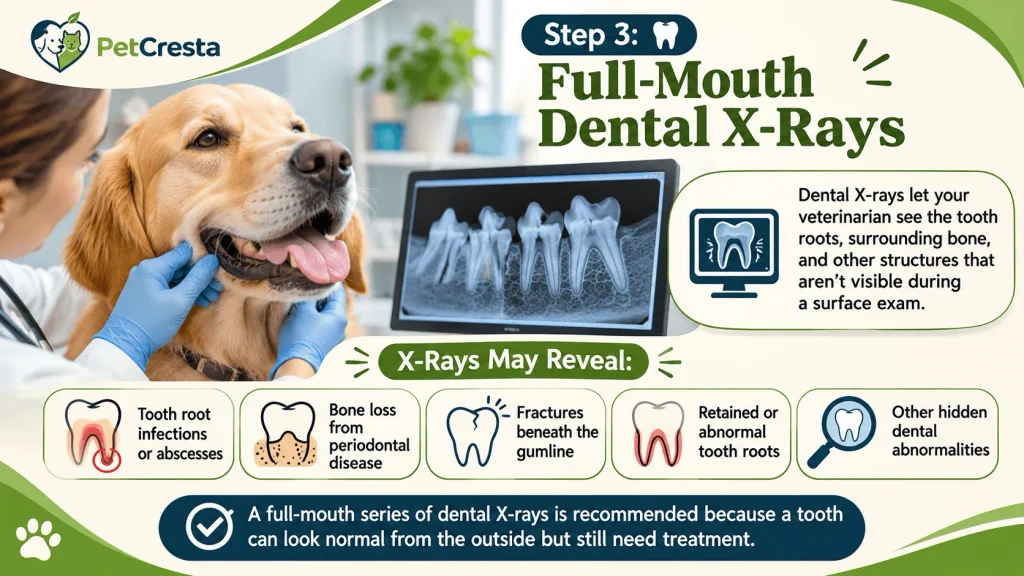
A dog’s teeth can look healthy above the gums while problems develop beneath them.
Dental X-rays, also called intraoral radiographs, allow your veterinarian to examine tooth roots, surrounding bone, and structures that cannot be seen during a surface examination.
These images may reveal:
- Tooth root infections or abscesses
- Bone loss caused by periodontal disease
- Fractures extending beneath the gumline
- Retained or abnormal tooth roots
- Other hidden dental abnormalities
Full-mouth dental radiographs are recommended because visible inspection alone cannot reliably identify every problem.
A tooth that looks normal from the outside may still need treatment.
Step 4: Scaling Above and Below the Gumline
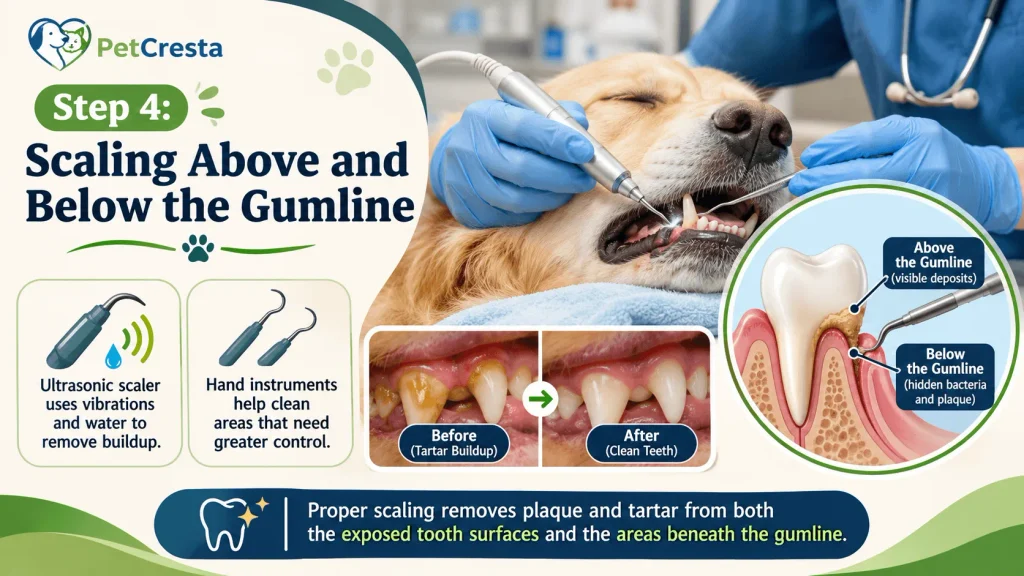
Once the dental assessment is underway, the veterinary team removes plaque and hardened tartar, also called calculus.
An ultrasonic scaler uses vibrations and water to remove deposits from the tooth surfaces. Hand instruments may also be used to clean areas requiring greater control.
Cleaning below the gumline is particularly important.
Bacteria and plaque that collect between the teeth and gums can trigger inflammation and damage the structures supporting the teeth. Removing visible tartar alone does not adequately treat this problem.
Proper scaling targets both the exposed tooth surfaces and the areas beneath the gumline.
Step 5: Dental Charting and Periodontal Probing
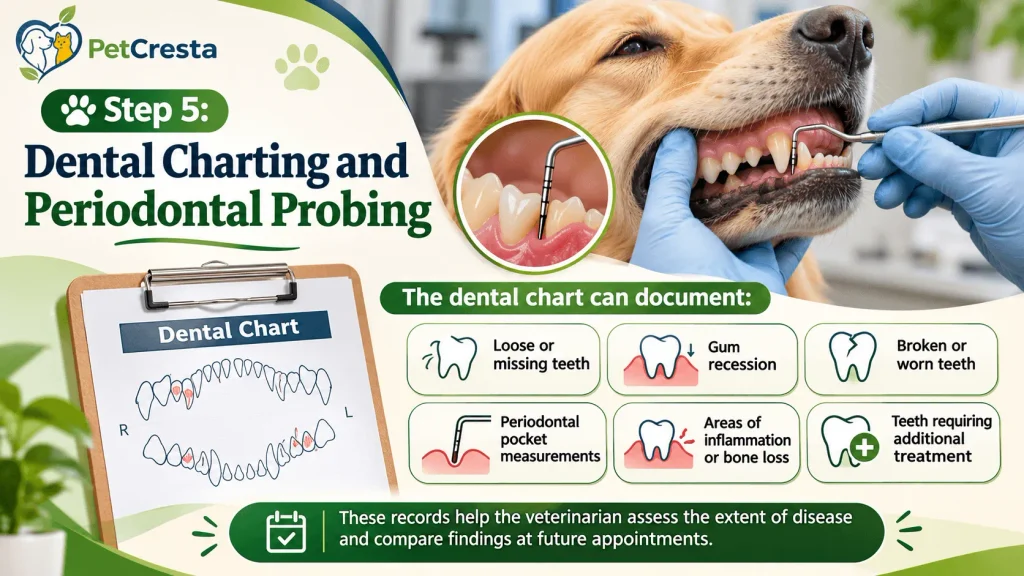
During the dental examination, the veterinarian or appropriately trained team member evaluates individual teeth and records the findings.
A periodontal probe measures the space between each tooth and its surrounding gum tissue. Abnormally deep pockets may indicate periodontal disease.
The dental chart can also document:
- Loose or missing teeth
- Gum recession
- Broken or worn teeth
- Periodontal pocket measurements
- Areas of inflammation or bone loss
- Teeth requiring additional treatment
These records help the veterinarian assess the extent of disease and compare findings at future appointments.
Step 6: Treatment of Damaged Teeth and Extractions
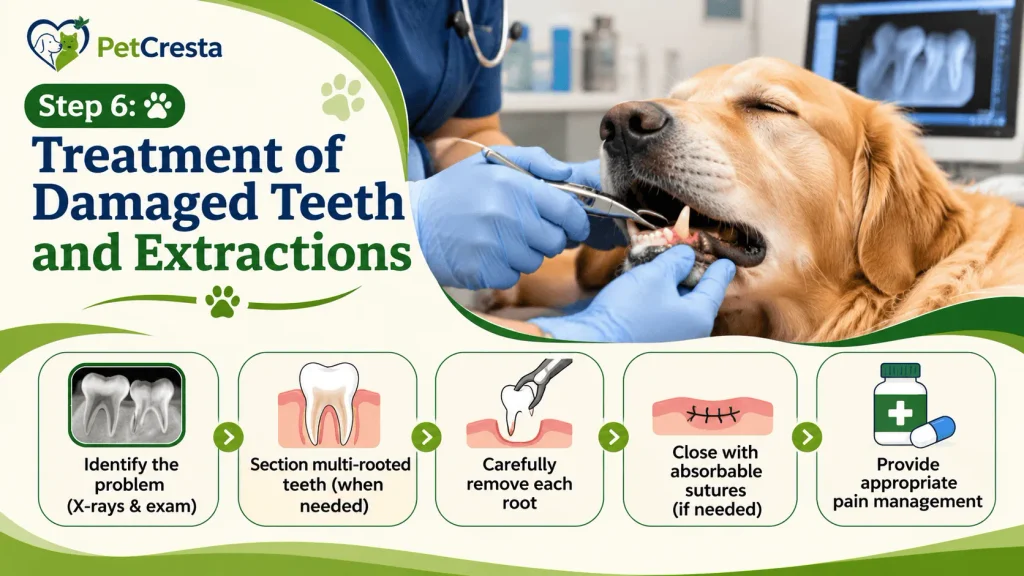
Not every dental cleaning involves tooth removal.
However, when X-rays and examination findings reveal advanced periodontal disease, a fractured tooth, or another serious dental problem, additional treatment may be needed.
Your veterinarian should explain the findings and discuss the recommended treatment according to the consent arrangements agreed upon before the procedure.
When extraction is necessary, the technique depends on the tooth and its roots.
Some dog teeth have multiple roots. For these teeth, the veterinarian may separate the tooth into sections using specialized dental instruments, including the burs vets use to section teeth.
Each root can then be carefully loosened and removed. The veterinarian may take additional X-rays to confirm complete removal and evaluate the surgical site.
When a surgical extraction requires a gum incision, the tissue is commonly closed with absorbable sutures.
Pain management is provided as appropriate during and after treatment.
Step 7: Tooth Polishing
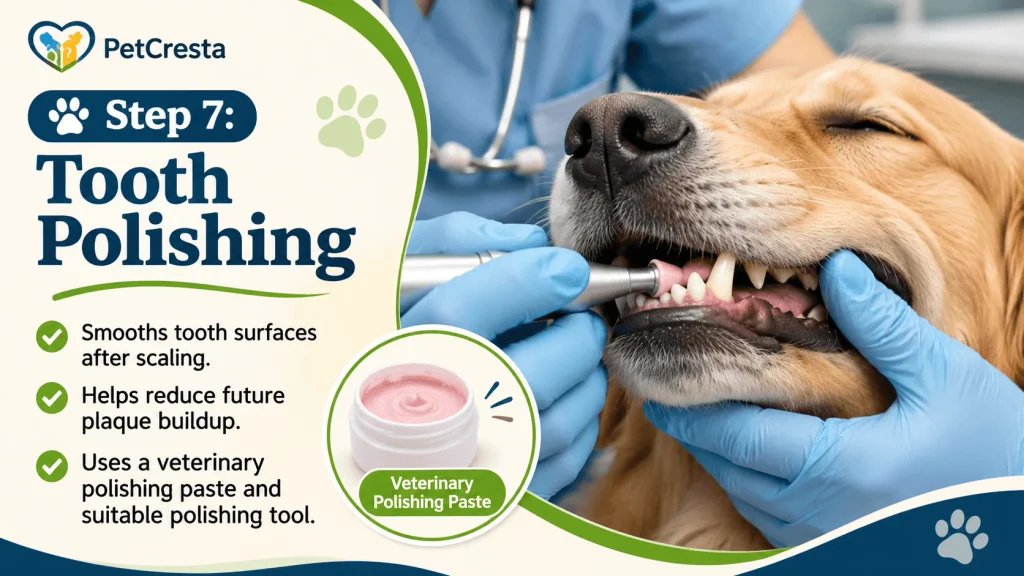
After scaling, the veterinary team polishes the cleaned teeth.
Scaling can leave small surface irregularities that allow plaque to accumulate more easily. Dental polishing helps smooth the tooth surfaces.
A veterinary polishing paste and suitable equipment are used for this step.
Polishing is an important part of a complete dental cleaning, but it does not replace treatment for diseased gums or damaged teeth.
Step 8: Recovery and Going Home
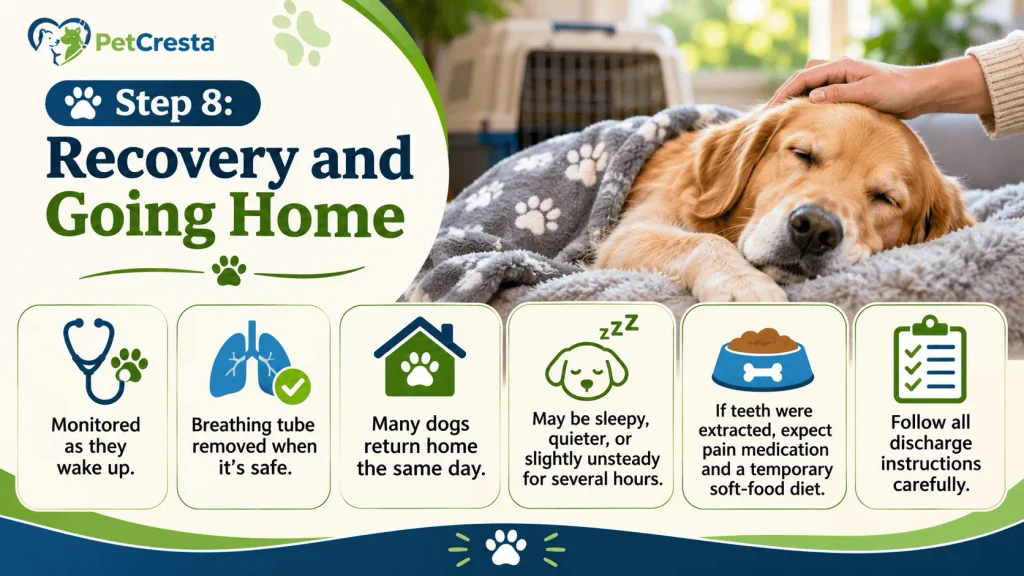
When the dental procedure is finished, the veterinary team stops the anesthetic medication and monitors your dog as they wake up.
The breathing tube is removed when your dog has recovered enough to protect their airway. Monitoring continues until the team determines that your dog is stable enough for discharge.
Many dogs return home the same day.
Your dog may seem sleepy, quieter than usual, or slightly unsteady for several hours after anesthesia.
If teeth were extracted, the clinic may provide pain medication, recommend a temporary soft-food diet, and explain when normal chewing activities can resume.
Follow the discharge instructions carefully, especially when medication or surgical aftercare is involved.
What Is Normal After a Dog’s Dental Cleaning?
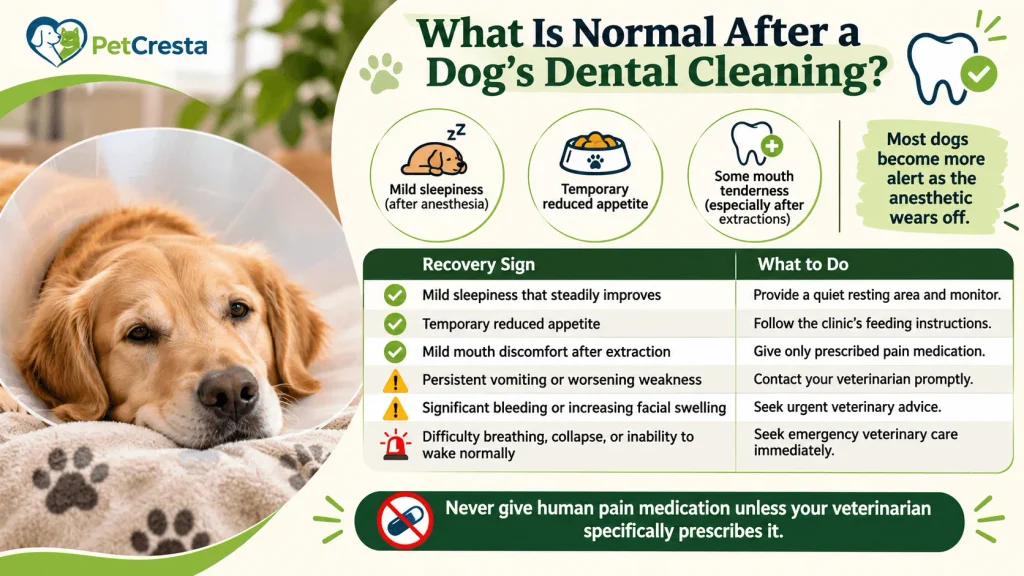
Mild sleepiness and a temporary reduction in appetite can occur after anesthesia. Dogs that have undergone extractions may also experience some oral tenderness.
Most dogs gradually become more alert as the anesthetic medications wear off.
However, some symptoms need prompt veterinary attention.
| Recovery sign | What to do |
|---|---|
| Mild sleepiness that steadily improves | Provide a quiet resting area and monitor |
| Temporary reduced appetite | Follow the clinic’s feeding instructions |
| Mild mouth discomfort after extraction | Give only prescribed pain medication |
| Persistent vomiting or worsening weakness | Contact your veterinarian promptly |
| Significant bleeding or increasing facial swelling | Seek urgent veterinary advice |
| Difficulty breathing, collapse, or inability to wake normally | Seek emergency veterinary care immediately |
Never give human pain medication unless your veterinarian specifically prescribes it. Some common human medications can be dangerous for dogs.
How Much Does a Dog Dental Cleaning Cost?
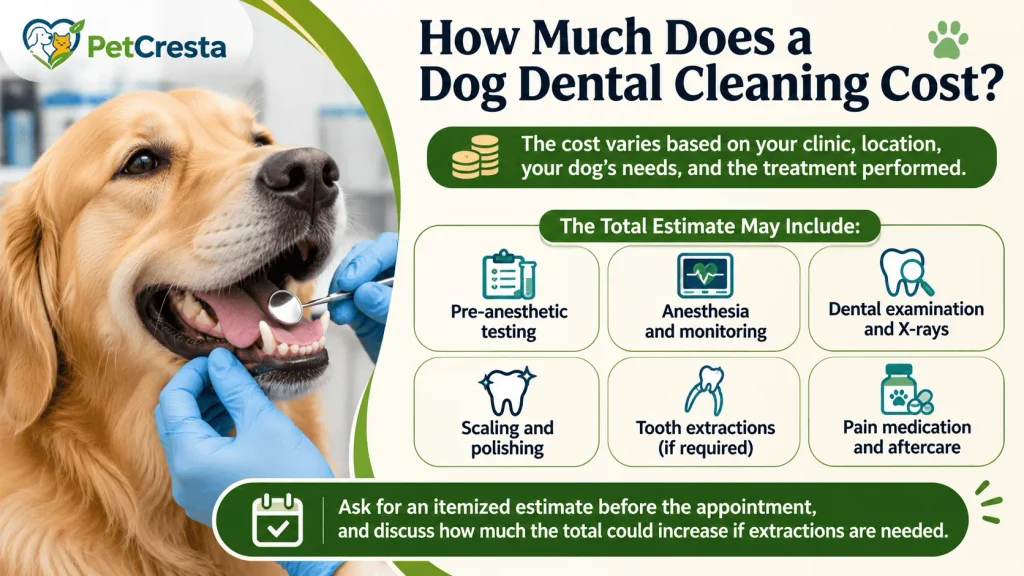
The price of a professional dog dental cleaning varies considerably depending on the clinic, location, your dog’s medical needs, and the treatment performed.
A routine cleaning is generally less expensive than a procedure involving multiple surgical extractions.
The total estimate may include:
- Pre-anesthetic testing
- Anesthesia and monitoring
- Dental examination and X-rays
- Scaling and polishing
- Tooth extractions, if required
- Pain medication and aftercare
Ask for an itemized estimate before the appointment.
It is also helpful to discuss how much the total could increase if the veterinarian finds teeth that require extraction. An exact treatment cost may not be available until the mouth and X-rays have been evaluated under anesthesia.
Why Is Anesthesia-Free Dental Cleaning Not Recommended?
Anesthesia-free dental cleaning may sound appealing, particularly if you are concerned about putting your dog under general anesthesia.
However, removing tartar from visible tooth surfaces is not the same as performing a complete veterinary dental procedure.
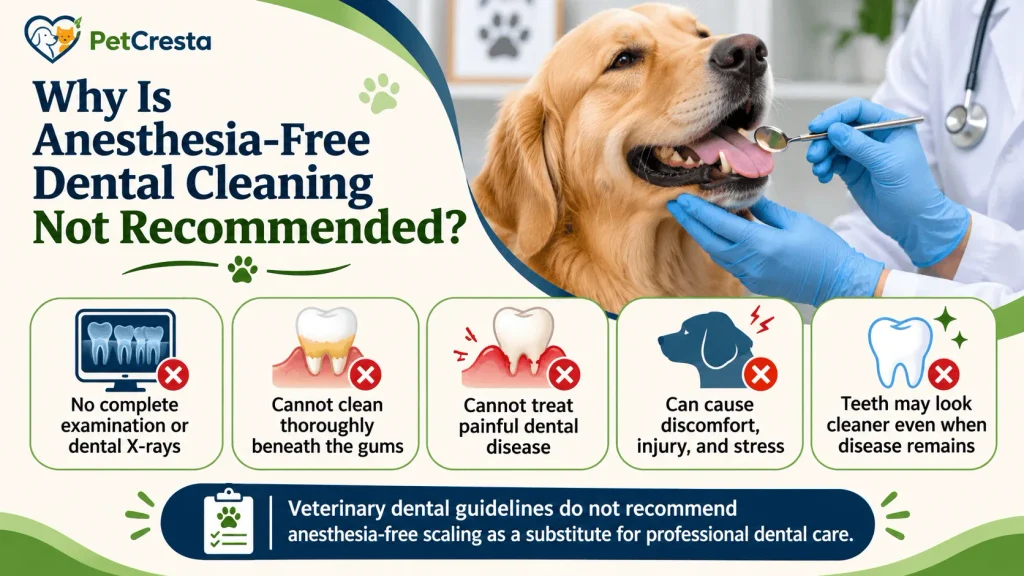
Without general anesthesia, the team cannot reliably carry out a complete examination, take diagnostic dental X-rays, clean thoroughly beneath the gums, or treat painful dental disease.
Trying to scale an awake dog’s teeth can also cause discomfort, injury, and stress.
The teeth may look cleaner afterward, even when disease remains untreated below the gumline.
For these reasons, veterinary dental guidelines do not recommend anesthesia-free scaling as a substitute for professional dental care.
How Often Should Dogs Have Their Teeth Professionally Cleaned?
There is no single cleaning schedule that works for every dog.
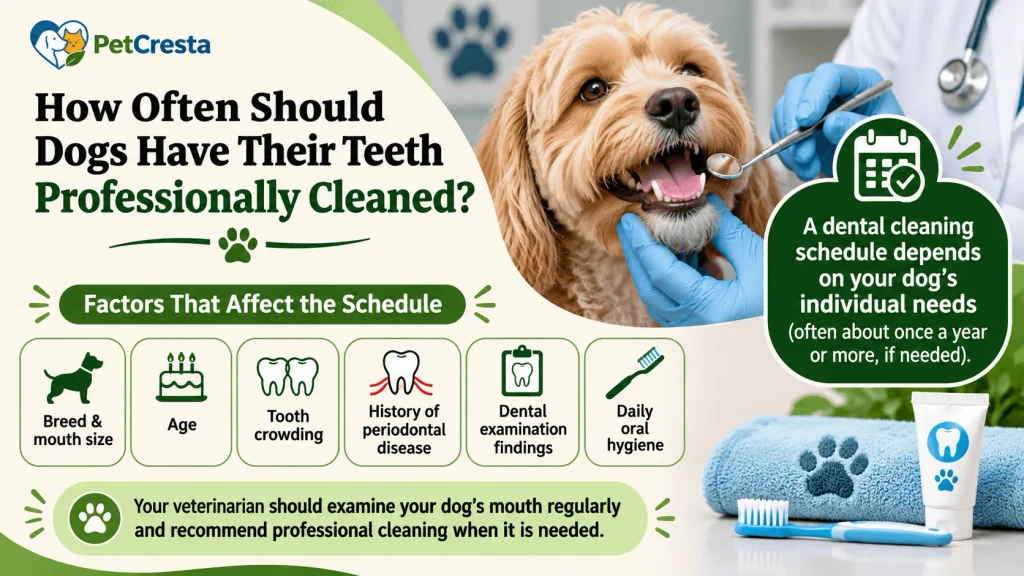
Some dogs may need professional dental treatment annually or more frequently, while others can go longer between cleanings based on their oral health.
Factors that affect the schedule include:
- Breed and mouth size
- Age
- Tooth crowding
- History of periodontal disease
- Dental examination findings
- Daily oral hygiene
Small-breed dogs and dogs with existing dental disease may require closer monitoring.
Your veterinarian should examine your dog’s mouth regularly and recommend professional cleaning when the findings indicate it is needed.
Daily toothbrushing with dog-safe toothpaste can reduce plaque buildup between veterinary visits, but it does not remove hardened tartar or replace professional dental examinations. Small breeds often need closer dental monitoring because their teeth can become crowded, allowing plaque and tartar to accumulate more easily. If you have a smaller companion dog, our Bichpoo dog breed guide also covers everyday care needs, including dental hygiene.
Final Takeaway
A professional dog dental cleaning is a medical procedure, not simply a cosmetic treatment for stained teeth.
From the pre-anesthetic examination and dental X-rays to scaling, polishing, and recovery, each step helps your veterinary team identify and address oral health problems.
Knowing what happens during the appointment makes it easier to ask questions, understand treatment recommendations, and care for your dog afterward.
If your dog has persistent bad breath, inflamed gums, loose teeth, or difficulty chewing, schedule a veterinary dental examination rather than waiting for the next routine cleaning. Keeping your dog’s teeth healthy is one part of supporting their overall well-being. For more practical advice on grooming, preventive care, nutrition, and everyday health, explore our dog care guides.
Frequently Asked Questions
The time depends on the amount of dental disease and whether additional treatment is necessary. A straightforward cleaning may take around one to two hours of procedure time, while complicated extractions can extend it significantly. Your dog may spend several additional hours at the clinic for preparation and recovery.
Dogs receive general anesthesia during a proper dental cleaning, so they are not consciously experiencing the procedure. Some soreness may occur afterward, especially when extractions are performed. Veterinarians use appropriate pain-management techniques to help keep dogs comfortable.
Many senior dogs can undergo dental procedures with an individualized anesthesia plan. Age alone does not determine anesthesia safety. Your veterinarian evaluates underlying illnesses, test results, and overall health before recommending treatment.
No. A routine cleaning may involve no extractions at all. Teeth are removed only when examination findings indicate that extraction is appropriate. Some dental conditions may also have alternatives that your veterinarian can discuss.
Many dogs can eat a small meal after they are alert enough, but follow the clinic’s discharge instructions. If teeth were extracted, your veterinarian may recommend soft food and avoiding hard chews during healing.
Many dogs are noticeably more alert by the following day after a routine cleaning. Recovery after surgical extractions can take longer, and oral tissues may need approximately 10–14 days to heal. Follow the veterinarian’s instructions for your dog’s particular procedure.
Dental X-rays show tooth roots, supporting bone, and abnormalities hidden beneath the gumline. They help veterinarians diagnose conditions that cannot be identified by looking at the visible teeth alone.
Daily brushing helps control plaque but cannot reliably remove hardened tartar or treat advanced periodontal disease. Home dental care and professional veterinary treatment serve different purposes, and many dogs need both.
Your veterinarian evaluates the affected teeth using examination findings and dental X-rays. Depending on the diagnosis, treatment may involve periodontal care, extraction, or referral for advanced dental treatment. Additional procedures should follow the consent and communication arrangements established with the clinic.
Contact your veterinarian if your dog has persistent vomiting, worsening lethargy, significant mouth bleeding, increasing swelling, or refuses food beyond the period explained in the discharge instructions. Breathing difficulties, collapse, or severe unresponsiveness require emergency care.