10+ Red Flags In Online Pet Health Articles Every Owner Should Know
If your pet is acting strangely, it can fluster you. Watching a loved one fall ill, especially when it’s your pet, can be a very stressful experience. In this case, the easiest solution is to go online and search for symptoms.
You can find information that relates to almost every oddity, from changes in eating habits to odd behavior to the appearance of lumps. However, not all websites offer the same quality of information.
Quick Answer: What Makes An Online Pet Health Article Unreliable?
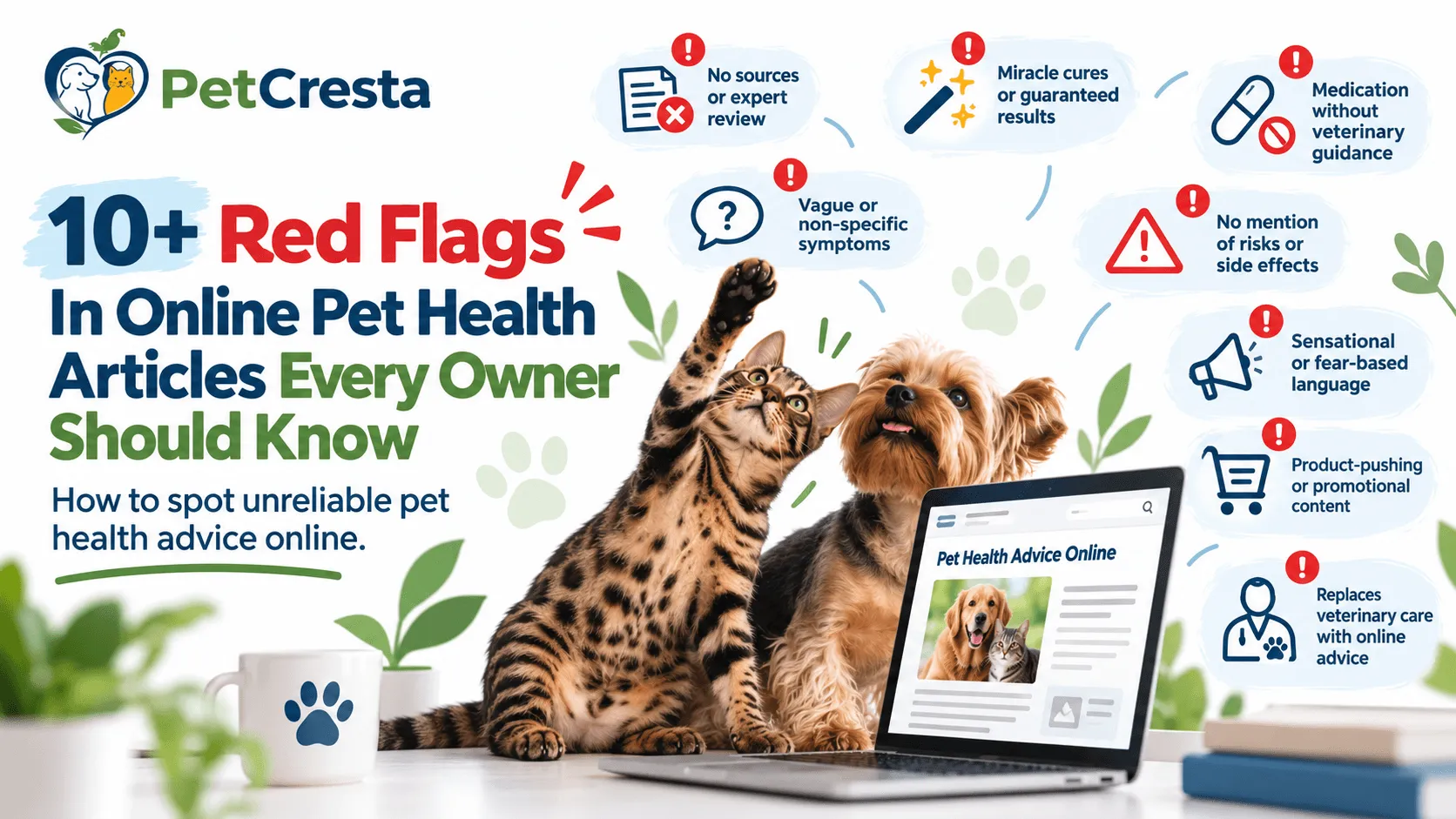
Be cautious when a pet health article:
- does not identify its author or sources
- promises miracle cures or guaranteed results
- recommends medication without veterinary guidance
- dismisses serious or sudden symptoms
- offers one simple solution for a complicated condition
- uses fear to attract clicks
- fails to mention risks or limitations
- promotes products more heavily than it explains the issue
- gives vague symptoms without telling you what to do next
- treats every pet as though age, species, weight, and health history do not matter
- encourages online advice to replace professional veterinary care
One warning sign does not automatically prove an article is wrong. Several of them together, however, should make you much more cautious.
Why Should You Care About Pet Information Online?
The information that you read can influence your choices and actions. Advice that is good can help you to become aware of a crucial change and call a veterinarian, while bad advice can delay your pet’s treatment.
By learning how to identify good and bad information about your pet’s health, you can make better decisions and not get confused.
You Notice No Clear Source or Expert Review
A reliable pet health article should offer you useful information that is well-researched and useful for you.
When you come across articles that make outrageous-sounding health claims but do not back them up, you should be careful. For instance, a source that tries to claim that a single food item can cure dozens of different diseases is most likely not telling you the truth.
You could also use an AI checker to assess online content, especially if you want to check whether it is written by an expert. Your best bet is to always fact-check the information and talk to your vet about your pet’s symptoms.
You See That Pet Advice Turned Into Promotion
Although online pet articles may sometimes provide helpful information, they often tend to shift into advertisements.
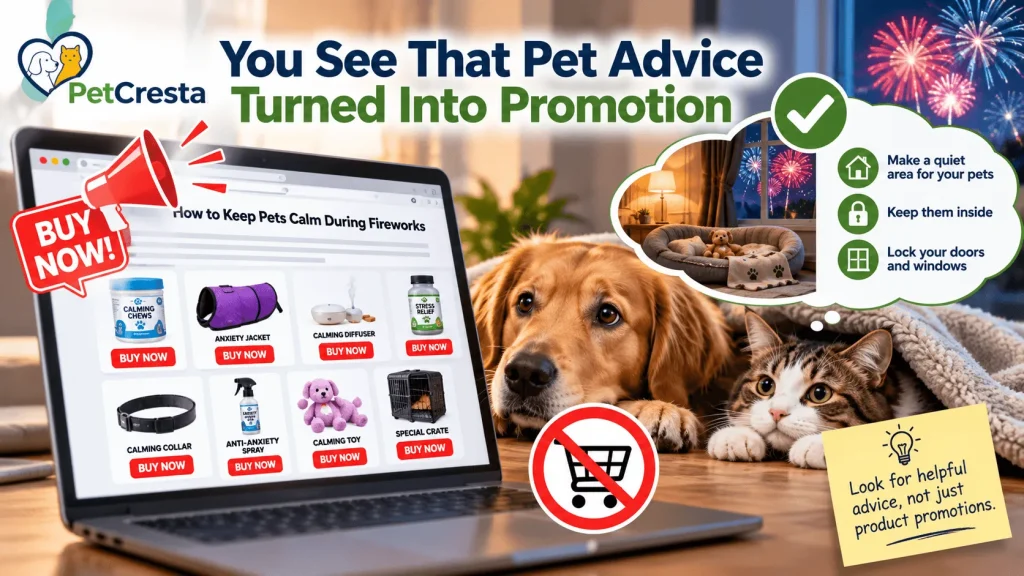
Be careful when online articles keep pushing you to buy products for every problem. You do not need to buy expensive products just to keep your pets healthy.
For example, you might want to research an article about how to keep your pets calm and safe during celebrations. The article should not tell you to buy things; instead they should advise you to make a quiet area for your pets, keep them inside, and lock your doors and windows.
It is easy, as a pet owner, to buy any products people suggest to you to keep your furbabies healthy. But it is your duty to educate yourself.
You Realize the Articles Dismiss Sudden Changes
You know your pet better than any online article. If your energetic dog is suddenly lethargic, or your picky cat is extra hungry, you should definitely investigate it.
A responsible article should guide you to make this comparison instantly.
Your pet’s eating habits and volume of their urination can be telling. They might be having dental problems or having problems digesting. You do not have to stress about every little issue, but you should still be cautious.
A responsible article, however, should not irresponsibly reassure you that these deviations are normal. It should rather advise you to keep track of your pet’s irregularities and know when to bring it to the vet.
This way, you will know how to differentiate between minor problems and urgent issues instead of panicking just because your pet is a picky eater.
You Get Very Simple Solutions for Difficult Problems
Online pet articles tend to make things sound easy. You read about vomiting or diarrhea caused by something that your pet ate, and they will tell you that it will simply pass.
Your pets might have internal issues if the vomiting or diarrhea persists.
You should definitely check in with your vet and follow their guidance because your pet might have an infection or digestive problems. When they suffer from this for too long, it can cause dehydration.
Articles should not tell you to panic over your pet’s occasional vomiting or diarrhea but should definitely encourage you to look for symptoms. The best articles will help you know when to be cautious and when you can relax.
You Notice They Do Not Take Breathing Problems Seriously
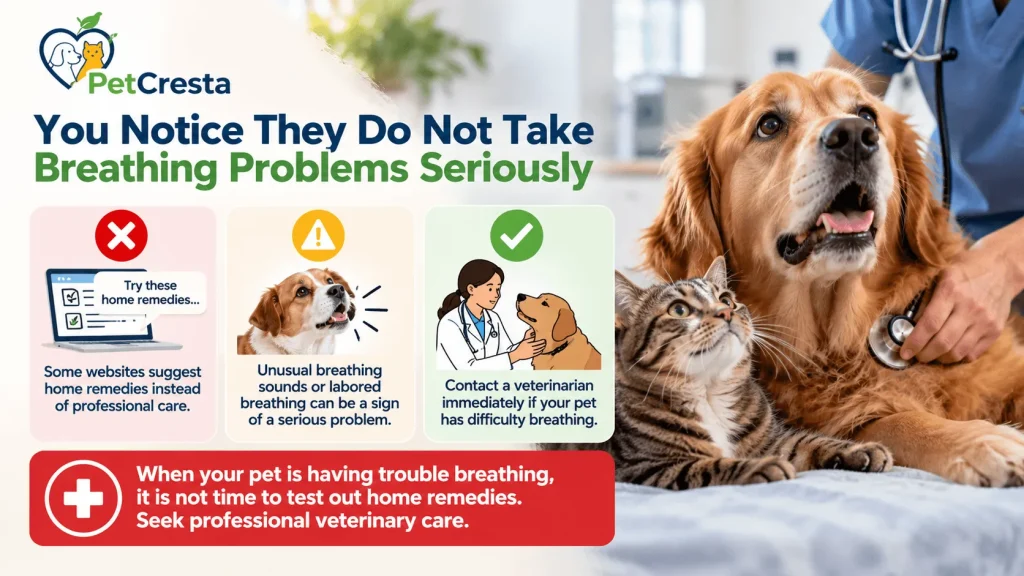
Any article concerning pet health should tell you the importance of seeking professional care when it comes to your pets having difficulties breathing.
You should be careful if they are making unusual breathing sounds and contact a vet immediately.
Some sites will suggest that you try various home remedies before you seek veterinary advice, which can be really bad if your pet is suffering from a respiratory illness or having an allergic reaction.
A helpful article should point out when you need to stop intervening and contact the vet. When your pet is having trouble breathing, it is not time to test out possible home remedies.
You See “Miracle Cure” or “Guaranteed Results”
Be sceptical when an article promises that one food, supplement, home remedy or treatment will cure a serious condition. No one can guarantee a cure, neither for you or your pets.
Even veterinary medicine rarely works this way.
Words such as ‘guaranteed’ or ‘instant cure’ should give you a reason to doubt such claims. A responsible article should definitely mention what treatment you should go for, how it may help your pet, and when you need to contact a professional.
If something seems too good to be true, you should research the claim or speak to veterinary sources before believing or sharing it.
You Are Told To Give Medication Without Veterinary Guidance
This is one of the biggest red flags. Always be careful if an article is advising you to give a prescription medication to your pet without asking your vet first.
You should also be concerned if the medicine they suggested was initially intended for humans. If the dosage seems suspicious to you, then maybe you should not trust the article at all.
The thing is, the correct medication, as well as the correct dosage, will be different depending on what kind of animal you have. Not only that, but how old they are, their weight, and other factors are important too.
The FDA also warns that human medications, particularly pain medications, can sometimes be especially dangerous for your cats.
You Find Vague Symptoms With No Clear Next Step
A good pet health article should inform you about the symptoms and, more importantly, give advice on what you can do about it.
An article listing scary symptoms without telling you when to actually call the vet is not very helpful. You will end up worrying unnecessarily or not worry enough when you need to, because you were not guided correctly.
Make sure that you know that there is a difference between when you should simply keep an eye on your pet and when you need to schedule an appointment.
If your pet is going through things like trouble breathing, seizures, and heavy bleeding, then you should take them to the vet right away.
You See No Mention Of Risks or Side Effects
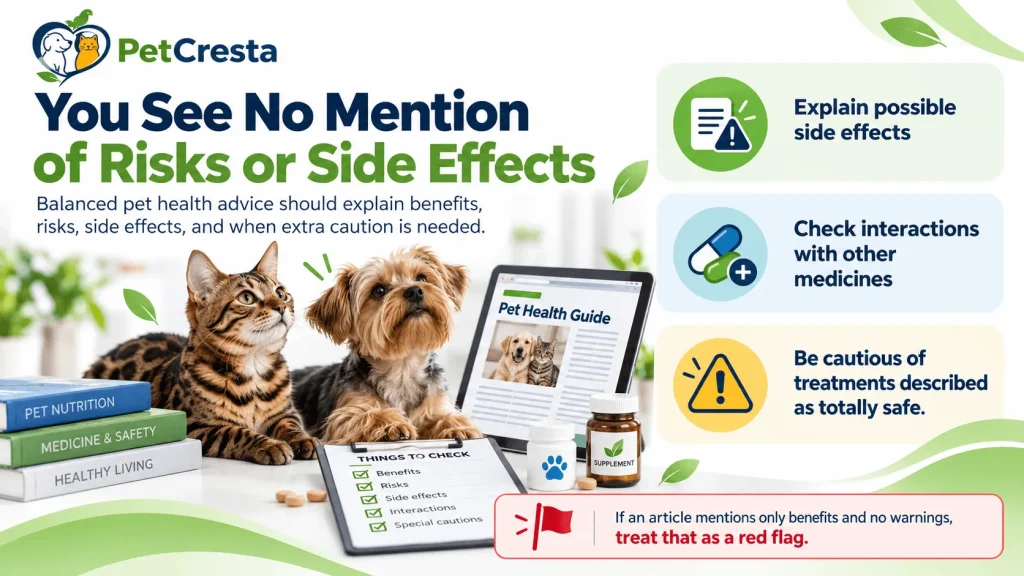
Any article you read for your pet’s health and safety should have balanced information. It should not only tell you of the possible benefits but also harms, adverse effects, or the effectiveness of the method you are using.
This is especially important if you are giving your pets some medicines and supplements, since veterinary medical products require you to monitor your pets closely. You might notice side effects, or it might interact with other medications you are giving your pet.
Therefore, if an article claims that a treatment is totally safe without setting any warnings, you should see it as a red flag.
You Notice Fear-Based Or Sensational Language
Your pet’s wellbeing is an emotional matter, and people can manipulate that for views. They want to scare you so that you stay on their page and go through other content as well.
Articles which claim that your pet’s life is at risk in the next 48 hours even if the behaviors they listed are normal and healthy behavior, then they are just raising false alarms for your clicks.
You should seek out sites that explain things calmly and give you specific advice on what to do instead. Pet care sites should make you feel educated and prepared, not stressed and scared.
A Simple Rule Before Acting On Online Pet Advice
Ask yourself three questions:
- Who is giving me this advice?
- What evidence supports it?
- What happens if the advice is wrong?
- The third question is especially useful.
If following incorrect advice could delay emergency treatment, expose your pet to a toxic substance, or result in inappropriate medication, verification matters much more than it would for a low-risk question such as choosing a grooming brush.
Final Thoughts
Online pet health information may be helpful to you if you know how to evaluate it correctly. You can rely on reputable online articles as an additional tool in caring for your pets; however, you should not fall for vague headlines or articles that show you quick fixes.
It should not be the basis of their treatment.
You should look for important information, such as who is giving you the advice or whether it is applicable to your pet or not.
At the same time, when your furbaby is sick, you should not replace professional treatment with online articles. You should educate yourself so that you are not misled by various unreliable resources.
Most importantly, do not follow any advice for your pet that you would not do for your children.
FAQ’s
Check whether the website identifies its authors and reviewers, supports important health claims with reputable sources, provides publication or update dates, discusses risks and limitations, and explains when veterinary care is appropriate. A transparent editorial and fact-checking process is another useful trust signal.
Major warning signs include miracle-cure claims, guaranteed results, unsupported medical statements, medication recommendations without veterinary guidance, sensational language, missing author information, no discussion of risks, and advice that encourages readers to avoid professional veterinary care.
Do not judge health information solely by whether a human or AI helped produce the wording. Evaluate the actual medical claims, sources, author or reviewer responsibility, editorial process, and veterinary oversight. Health information should be fact-checked regardless of how the first draft was produced.