Pet Photography Tips for Capturing Special Moments
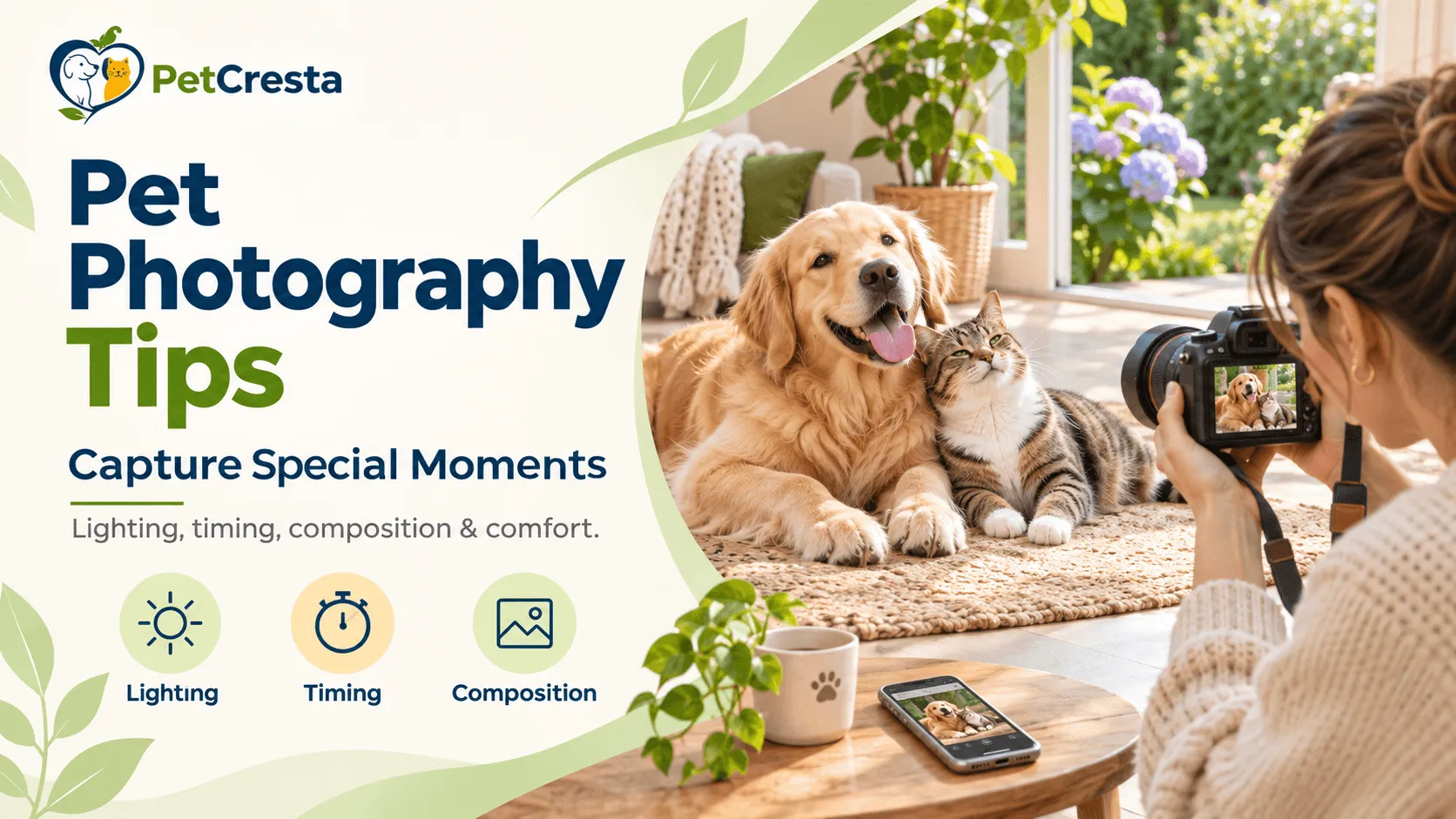
Pets create memorable moments through their everyday habits, expressions, and interactions. A dog chasing a ball, a cat exploring a new room, or a puppy discovering the outdoors can all become photographs worth keeping.
These pet photography tips will help you capture special moments with your furry companion using better lighting, camera settings, composition, and timing. You do not need professional equipment to get meaningful results. Understanding your pet’s behavior and keeping photography sessions comfortable matter just as much.
Whether you use a smartphone or a dedicated camera, the goal is to preserve genuine experiences rather than force a perfect pose.
Photograph Everyday Activities
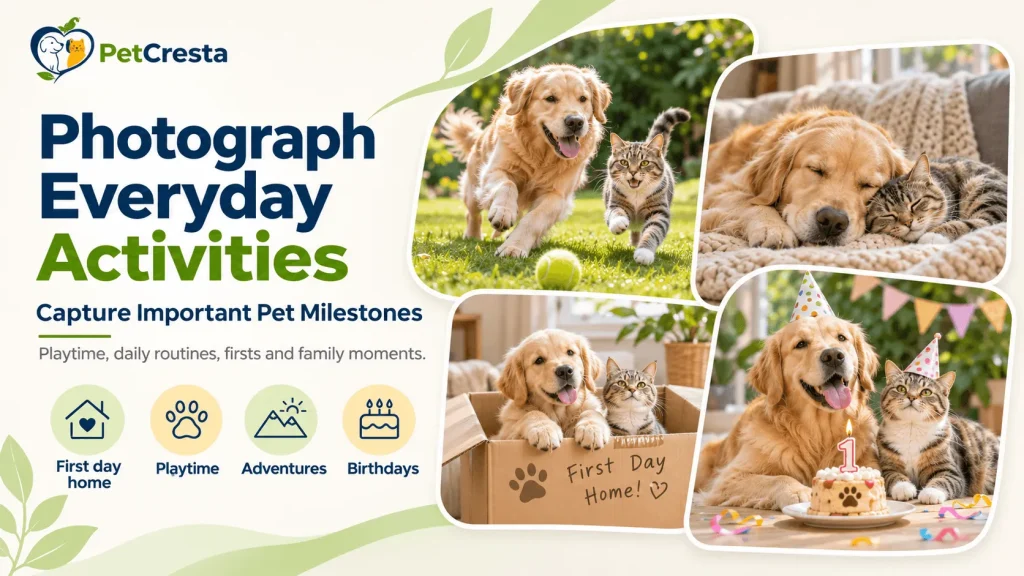
Natural behavior often produces more expressive pet photographs than staged poses. Familiar environments allow animals to move comfortably and reveal the habits that make them recognizable to their families.
Observe your pet’s daily routine to identify opportunities for interesting photographs. Playtime, outdoor exploration, quiet resting moments, and interactions with family members can all make meaningful subjects.
Prepare your camera before an activity begins. This reduces interruptions and makes it easier to capture spontaneous expressions and movement.
Capture Important Pet Milestones
Everyday photographs are worth keeping, but certain milestones deserve special attention.
Consider documenting:
- Your pet’s first day at home
- Puppy or kitten growth stages
- First walks and outdoor adventures
- Favorite toys and familiar sleeping places
- Birthdays and family celebrations
- Holidays and memorable trips
- Quiet moments with family members
- Changes in appearance as your pet ages
Photographing these moments over time creates a more complete visual history than relying on occasional formal portraits.
Use Appropriate Camera Settings
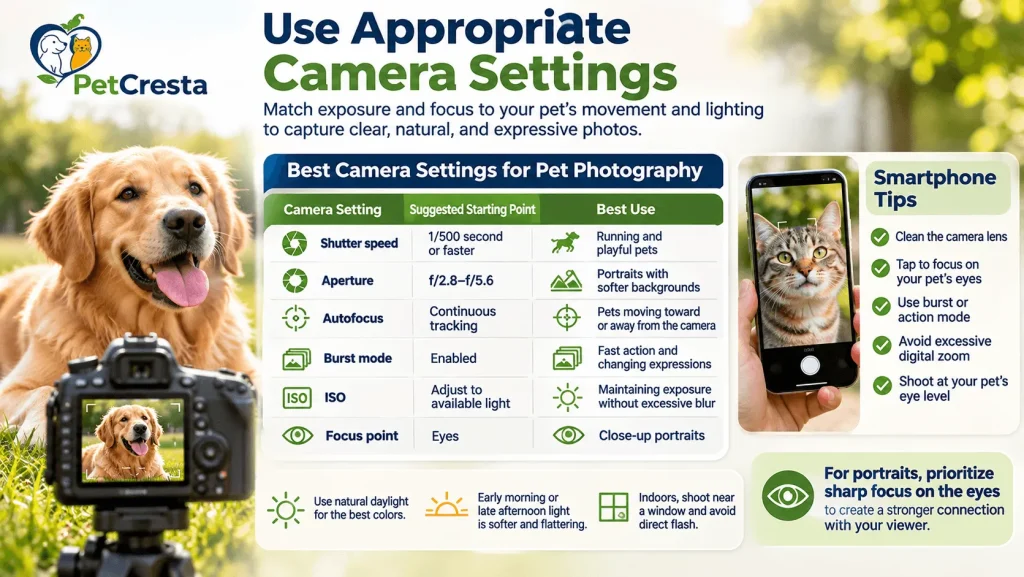
Exposure and focus settings should match your pet’s movement and the available lighting. Natural daylight often produces pleasing colors and reduces the need for artificial illumination.
Early morning and late afternoon can provide softer outdoor light. Indoors, position your pet near a window when possible and avoid direct flash, which may startle sensitive animals.
For moving subjects, a shutter speed around 1/500 second is a useful starting point. Fast running or jumping may require an even quicker shutter speed.
Best Camera Settings for Pet Photography
| Camera Setting | Suggested Starting Point | Best Use |
|---|---|---|
| Shutter speed | 1/500 second or faster | Running and playful pets |
| Aperture | f/2.8–f/5.6 | Portraits with softer backgrounds |
| Autofocus | Continuous tracking | Pets moving toward or away from the camera |
| Burst mode | Enabled | Fast action and changing expressions |
| ISO | Adjust to available light | Maintaining exposure without excessive blur |
| Focus point | Eyes | Close-up portraits |
These settings are starting points rather than fixed rules. Lighting, camera equipment, movement, and the desired image style can all affect the best choice.
For portraits, prioritize sharp focus on the eyes. Eye contact can create a stronger connection between the viewer and the animal.
Taking Better Pet Photos With a Smartphone
Modern smartphones can capture excellent pet photographs when lighting is suitable.
Clean the camera lens, tap the screen to focus on your pet’s eyes, and use burst or action features when available. Avoid excessive digital zoom, which can reduce image quality.
Try photographing from your pet’s eye level instead of standing above them. This simple adjustment often makes the photograph feel more personal.
Preserve Your Favorite Pet Photographs

Digital photographs are convenient, but images can become difficult to manage when stored across multiple devices and accounts. Organizing selected photographs into collections makes them easier to access and preserve.
Create folders based on dates, activities, or important milestones. Remove duplicates and technically poor images before selecting photographs for a permanent collection.
Printed keepsakes offer another way to enjoy these memories. Beyond photo books, owners who enjoy creative visual projects can also explore pet care posters and infographics for ideas on arranging pet-related information and images into readable designs. Pet owners can use Mixbook photo books to organize favorite photographs into personalized collections.
How to Create a Pet Photo Book
When preparing a photo book, consider the following:
- Select high-resolution photographs for better print clarity.
- Arrange images chronologically to document your pet’s development.
- Include captions, dates, and locations for personal context.
- Maintain consistent spacing and layouts.
- Choose photographs representing different activities and stages of life.
- Include both close-up portraits and wider environmental photographs.
A thoughtfully organized collection can document everything from a pet’s first day at home to family trips and ordinary experiences.
Keep Digital Copies Safe
Printed photographs are enjoyable, but digital backups provide another layer of protection.
Keep your favorite images in at least two separate storage locations, such as an external drive and a reputable cloud service. Organize files consistently and check that backups can be opened.
Preserve original high-resolution files whenever possible. Social media uploads and messaging apps may compress images, making them less suitable for large prints.
Apply Effective Composition Techniques
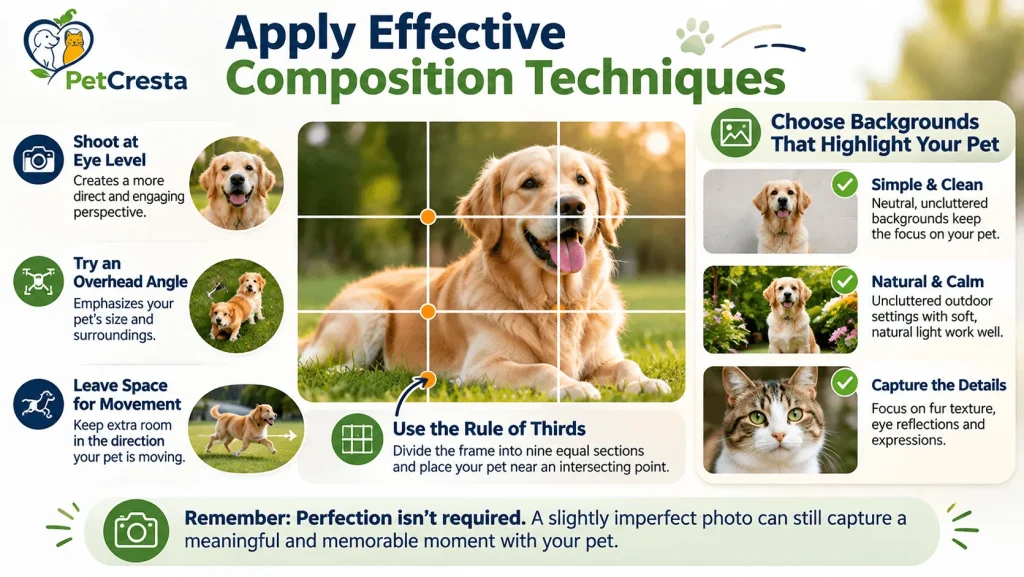
Composition determines how viewers interpret a photograph. Shooting from a pet’s eye level creates a more direct perspective, while overhead angles can emphasize the animal’s size and surroundings.
The rule of thirds is a useful technique for creating balanced images. Divide the frame into nine equal sections and position your pet near one of the intersecting points.
For moving animals, leave additional space in the direction of movement. This helps the image feel less crowded.
Choose Backgrounds That Highlight Your Pet
Background selection is equally important. Cluttered surroundings and distracting objects can compete with the subject.
Choose simple backgrounds that help distinguish your pet from its environment. Neutral walls, uncluttered gardens, and softly lit rooms can work well.
For close-up portraits, pay attention to fur texture, eye reflections, and facial expressions. These details help make photographs more distinctive.
Do not worry about making every image perfectly composed. Sometimes a slightly imperfect photograph captures a memorable expression better than a technically polished portrait.
Prioritize Animal Safety and Comfort
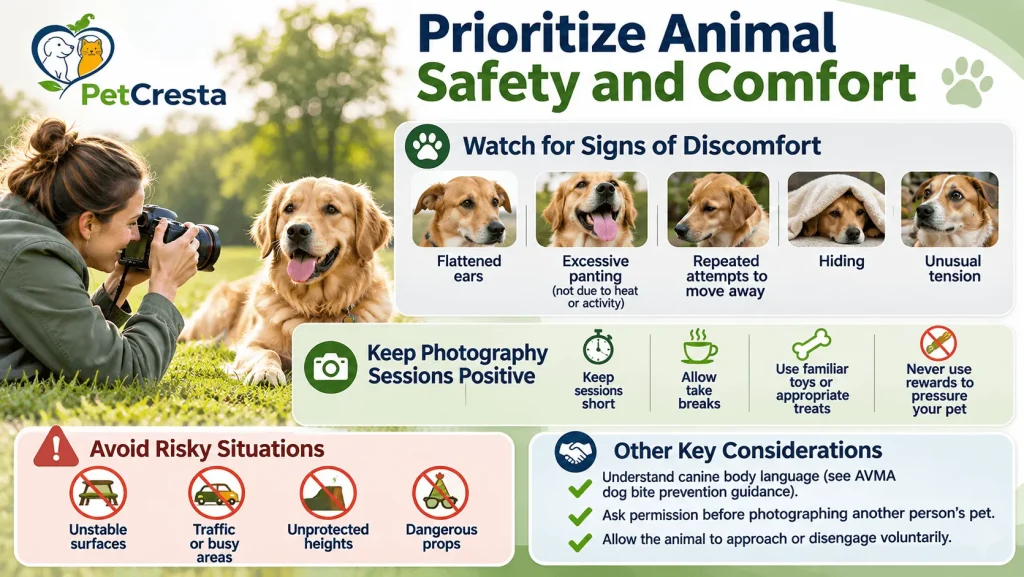
Photography sessions should never compromise a pet’s well-being. Unfamiliar equipment, loud environments, and repeated attempts to position an animal can create unnecessary stress.
Watch for changes in body language, including flattened ears, excessive panting unrelated to heat or activity, repeated attempts to move away, hiding, or unusual tension.
These behaviors should be interpreted in context because individual animals communicate discomfort differently.
Keep Photography Sessions Positive
Keep sessions short and allow your pet to take breaks. Familiar toys or appropriate treats may help create positive associations, but never use rewards to pressure an animal into an unsafe situation.
Avoid placing pets on unstable surfaces, near traffic, close to unprotected heights, or around dangerous props.
When photographing unfamiliar dogs, understanding their body language is particularly important. The American Veterinary Medical Association’s dog bite prevention guidance explains how recognizing canine behavior can help reduce the risk of unsafe interactions.
Ask permission before photographing another person’s pet, and allow the animal to approach or disengage voluntarily.
Create a Lasting Record of Your Pet’s Life
Meaningful pet photography combines technical knowledge, careful observation, and responsible handling. Appropriate camera settings improve image quality, while effective composition helps communicate the subject’s personality.
Consistency matters more than taking hundreds of photographs in one session. Photographing ordinary activities alongside major milestones creates a fuller record of your pet’s life.
Instead of concentrating exclusively on perfect portraits, document genuine interactions, familiar places, and small daily habits.
Over time, these photographs become a valuable record of companionship, development, and shared memories.
Final Takeaway
Capturing special moments with your furry companion does not require expensive equipment or elaborate setups. Good lighting, suitable camera settings, thoughtful composition, and patience can make everyday pet photographs more meaningful.
The best images often come from allowing animals to behave naturally. Keep sessions comfortable, save original photographs, and organize your favorites into collections that are easy to revisit.
FAQ’s
Start with natural light, photograph at your pet’s eye level, and focus on the eyes. Keep backgrounds simple and take photographs during familiar activities. Allow your pet to move naturally rather than forcing a pose.
Use continuous autofocus and a fast shutter speed, starting around 1/500 second. Faster movement may require 1/1000 second or more. Burst mode can help capture the sharpest moment during running or play.
Yes. Use good natural lighting, clean your camera lens, tap to focus on the eyes, and try your phone’s burst or action mode. Avoid heavy digital zoom and photograph from a lower angle when possible.
Soft natural light is often a good choice. Early morning, late afternoon, or indirect window light can provide attractive results without harsh shadows. Avoid direct flash when it may startle your pet.
Use familiar locations, keep sessions short, and allow breaks. Avoid uncomfortable costumes, loud noises, unsafe surfaces, and repeated forced positioning. Stop if your pet shows signs of distress.
Capture everyday play, resting habits, favorite toys, family interactions, first adventures, birthdays, growth milestones, and changes as your pet ages. Ordinary moments often become especially meaningful later.
Choose clear, high-resolution photographs, group them by date or milestone, and arrange them in a logical order. Add short captions and use consistent layouts so the collection tells a recognizable story.
Keep original high-resolution files and maintain backups in separate locations. Organize images into labeled folders, review storage periodically, and consider printed photo books for favorite collections.