Australian Berne Doodle Dog Size, Temperament, Care, and Color Guide

It is the Australian Bernedoodle is often described as a term used to describe a Bernedoodle with Australian Labradoodle influences in the background. It’s a name that can be simple however it’s not used in the same way. This is the reason why the clarity of lineage is more important than just the label.
The majority of families aren’t just seeking out what their dog’s name is known as. They would like to know what size it will grow, if it sheds, what grooming is required and what its temperament in the home environment, as well as if it is a good fit for their lifestyle. This guide addresses those concerns with a focus on coat size care, family-friendly and expectations for ownership.
Quick Answer: What Is An Australian Bernedoodle Breed?
This dog is often described as a term used to describe a Bernedoodle with an Australian Labradoodle influence as a background. It is a mixed breed companion dog instead of an acknowledged pure breed that has one standard.
The word can be used in different ways between one breeder and one, and so the exact lineage could differ. This is why it’s always a good idea to inquire about the parents’ mix and the expected sizes and coat type rather than using the label as the sole source.
Name Confusion At A Glance
The word “name” can mean various things based on the breeder. When choosing a puppy the best way to go is to inquire about what the breeder intends to convey by the name.
| Name Used | Common Meaning | What To Confirm |
|---|---|---|
| Australian Berne doodle | Often Bernedoodle plus Australian Labradoodle influence | Exact parent dogs |
| Aussie Bernedoodle | May include Australian Shepherd influence | Whether “Aussie” means Australian Shepherd |
| Australian Mountain Doodle | Often, the Australian Shepherd, Bernese Mountain Dog, and Poodle influence | Whether it is a different mix |
| Multigenerational Australian Berne doodle | Several generations of planned doodle-line breeding | Health testing and past adult size history |
This will help to avoid confusion when placing a deposit. A puppy’s list should clearly explain the exact lineage and not rely only on the latest breed name.
Quick verdict: Is This The Right Fit For You?
An Australian Bernard typically appeals to those who are looking for a warm pet that’s focused on people, with an appealing appearance and coat that sheds less than other breeds of dogs. The appeal is not difficult to comprehend. The downside is that the routine of grooming, care for coats, and regular engagement are often more than the cute dog look.
Good Fit If…
- The family enjoys a devoted pet companion.
- Regular grooming and professional brushing are manageable
- Walking, training, and socializing are all very realistic
- The family is looking for a friendly dog who is close to its owners
- The decision is based on the fit of the dog not pictures of puppies or colors
Weaker Fit If…
- Your dog is allowed to roam for a long time each day
- Low maintenance coat care is the aim
- The family wants a quiet dog with minimal daily activity
- Appearance is more important than health tests, lineage and temperament
- Costs and time for grooming can seem like an expense
Australian Berne Doodle Characteristics At A Glance
Identity Snapshot
| Trait | Typical pattern |
|---|---|
| Type | Companion-focused mixed breed |
| Most common meaning | Bernedoodle with Australian Labradoodle influence |
| Breed status | Not a recognized pure breed |
| Predictability | More variable than a long-established breed |
| Generation effect | Coat, size, and shedding may be more predictable in some lines than others |
| Best for | Homes wanting an affectionate, involved family dog |
Physical Snapshot
| Trait | Typical pattern |
|---|---|
| Size | Mini, medium, or standard |
| Build | Soft-coated, sturdy, often athletic under the coat |
| Coat | Straight, wavy, or curly |
| Colors | Black and white, brown, red, phantom, bicolor, tuxedo, and more |
| Full maturity | Often still filling out after reaching most of adult height |
Behavior Snapshot
| Trait | Typical pattern |
|---|---|
| Affection | High |
| Trainability | Moderate to high |
| Energy | Moderate, sometimes moderately high |
| Mental stimulation need | Moderate to high |
| Family focus | Strong in many lines |
| Alone time tolerance | Often lower than more independent breeds |
Care Snapshot
| Trait | Typical pattern |
|---|---|
| Shedding | Low to moderate, depending on coat type |
| Allergy reality | No dog is fully hypoallergenic |
| Brushing | Several times each week |
| Professional grooming | Commonly, every 6 to 8 weeks |
| Exercise | Daily activity plus mental work |
| Training | Early routine makes a big difference |
Parent Lines And Generation Influence

This classification makes sense in the case of parent lines viewed in a different way. Bernedoodle influence usually results in the appearance of a larger build, soft expression, and feeling of a family member. Australian Labradoodle breeds are frequently examined in connection with social temperament training, coat, and other goals. They are broad tendencies, not a guarantee.
Generation labels are important as they impact the degree of certainty a litter can be with regard to size or coat and shed pattern. They cannot ensure a specific result, but they do assist families with better questions.
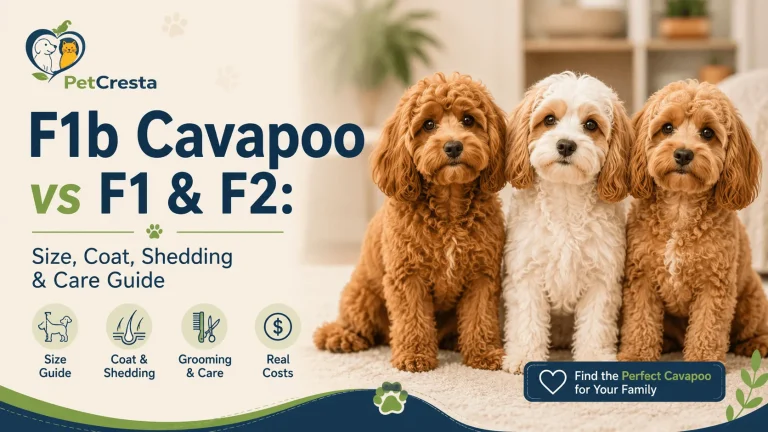
| Generation term | What it usually means | Why it matters |
|---|---|---|
| F1 | First cross-generation | Often more variation in coat and type |
| F1b | A backcross, often toward Poodle influence in doodle lines | May increase curl and lower visible shedding in some dogs |
| F2 | Second generation doodle to doodle cross | Can still be quite variable |
| Multigenerational | Several generations of doodle line breeding | Often used when programs aim for more consistency |
The main point is straightforward. A single label does not provide the complete picture. The real dogs that are the parents as well as the breeding goals and the track record of the breeder are more important than the name of the generation included in a listing.
Australian Bernedoodles Meaning, Origin, And Naming Clarification

This term is a modern breeder term and is not a standardized purebred breed name that has an official standard. In a lot of shows it refers to the word Bernedoodle with an Australian Labradoodle influence as a background.
The part that is confusing about the name is “Australian.” Some families believe it refers to the Australian Shepherd. In certain breeding programmes, it is. In other programs, it refers to Australian Labradoodle lines instead.
This is the reason why a name shouldn’t be used without an explanation of the lineage. Breeders should be able to describe the exact parents’ generation, coat type, size range and health tests in plain phrases.
An accurate answer is crucial as parent mix can impact the level of energy coat care, the pattern of shedding, temperament and long-term stability in the home.
| Common definition | Common confusion | Smart question to ask |
|---|---|---|
| Bernedoodle with Australian Labradoodle influence | Confused with Australian Shepherd-based doodle mixes | What are the exact parent dogs in this litter? |
| Companion-focused mixed-breed label | Mistaken for a fixed breed standard | Is this term used the same way in all your litters? |
| Varies by breeder program | Blended with similar-sounding doodle names | Can you explain the lineage in simple terms? |
Australian Berne Doodle Vs Australian Mountain Doodle
They are very easy to confuse. However, they shouldn’t be considered interchangeable. Australian Mountain Doodle often points towards Australian Shepherd, Bernese Mountain Dog and Poodle influence. Australian Bernard is, in the structure which is being used, suggests Bernedoodle and Australian Labradoodle lineage.
This can impact the coat, energy levels and the type of dog’s home. If you are sorting out these similar names before choosing a puppy, an Australian Mountain Doodle is the clearest next comparison for understanding how Australian Shepherd influence can change energy, coat, and day-to-day fit.
Australian Berne Doodle Temperament And Family Fit

A lot of families are attracted to this mix due to its reputation as being loving and trainable. It is also easy to get along with. In everyday life, a lot of them prefer to be near their family members and do best as a part of the family routine, not being treated as an outside dog.
But the temperament can vary. Some people are calm and steady. Some are alert active, and busy. A puppy’s calm photo can’t determine that on its own.
What Temperament Depends On In Real Life
- The dogs’ parents and their natural temperament
- The early socialization phase and how to handle
- Sleep and routines, daily routines and daily routines
- Mental stimulation and exercise
- How well the family can teach boundaries
Common Tendencies
- People-focused and affectionate
- Responds to routines and is rewarded
- Sometimes, it’s playful and has some snarkiness
- Sensitive in a few lines
- More demanding than usual when bored or uninterested
Apartment And Living Situation Fit
A small apartment isn’t necessarily the best choice for a dog. A smaller area is a good fit if your dog is getting daily walks or training sessions, as well as enough physical activity. A big yard will not eliminate boredom on its own.
The more important thing to consider is whether a home will provide structure, organization and routine. In most cases, it is more important than the square area.
Are Australian Berne Doodles Good With Kids?
A lot of Australian Bernards are able to do well with children if the situation is appropriate and the family environment teaches an empathetic and calm approach from the beginning. A dog that is gentle can be able to knock over a young child at times when they’re excited, especially when in large lines, and so the routine of the family and its supervision is as important as the breed’s label.
A successful relationship with children is usually based on three aspects. The dog must be socialized, adults should be in charge of interactions, and children should be taught to treat the dog with respect. A good manner of conduct and clear boundaries can be more important than just the name of the breed.
Great match with children when
- Interactions are controlled
- The use of jumps and rude greetings is not permitted.
- The dog is exercised enough and also rests
- Children are taught how to handle and approach peacefully
Australian Bernedoodles With Other Pets
A lot of people are happy with other dogs, particularly when they’re surrounded by careful introductions and a steady routine. Many also get along well with cats. A good reputation doesn’t take the place of management in the initial weeks. The tendency to chase, the confidence and control of impulses can be different depending on the line.
Australian Bernedoodle Size And Full Grown Expectations

Size is among the most sought-after parts due to labels such as mini medium, and standard, which are more precise than they actually are. For mixed breed canines, the size categories can be helpful planning tools however, they are not a guarantee.
How Big Do Australian Bernedoodles Get?
The size of the adult depends upon the dimensions of the Poodle in the lineage as well as the construction of the Bernedoodle side, the larger lineage, and the goals that the breeder has in mind.
Mini Australian Bernedoodle Full Grown Size And Weight:
| Size label | Approximate weight | Approximate height | Common fit |
|---|---|---|---|
| Mini | 20 to 40 pounds | 15 to 20 inches | Smaller homes, lighter handling |
| Medium | 40 to 60 pounds | 18 to 23 inches | Balanced family size |
| Standard | 60 to 90 or more pounds | 22 to 29 inches | Homes comfortable with a larger dog |
Families drawn to the smaller end of this type may also want to compare a miniature Bernedoodle for a closer look at how a smaller Bernese-Poodle line may differ in handling, size range, and daily fit.
What Affects Adult Size
- Poodle size used in the line
- Parent weights and structure
- Generation and breeding goals
- Past history
- How honestly does the breeder explain the range
What Full-Grown Size Labels Really Tell You
Size labels are planning tools, not promises. A puppy listed as mini, medium, or standard can still finish outside the expected range because mixed-breed size depends on the parent dogs and the wider line.
The most useful clues are parent weights, past adult sizes from related litters, and how clearly the breeder explains the expected range. A careful breeder should give a realistic range, not one exact adult number.
Ask these questions before relying on a size label:
● What do both parents weigh?
● How tall are the parents at the shoulder?
● What size have past puppies from similar pairings reached?
● Is the estimate based on real adult dogs or only puppy size?
If your search is leaning toward the very small end of Bernedoodle-type dogs, a micro Bernedoodle can help show why tiny size labels need closer review before a deposit is placed.
Australian Bernedoodle Coat Types
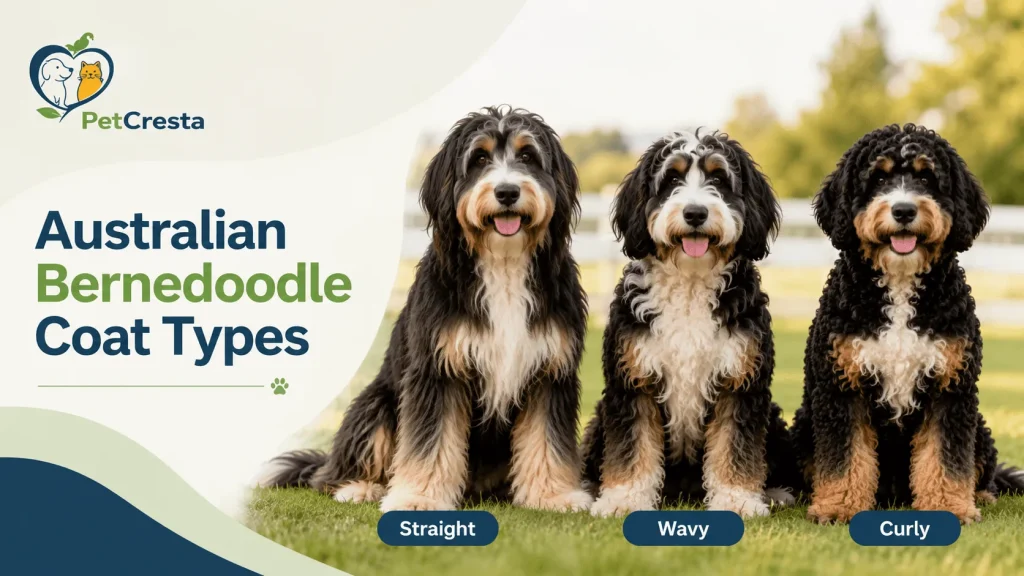
Coat type affects more than appearance. It influences how much brushing is needed, how visible shedding may be, and how easily mats can form close to the skin.
| Coat type | Typical look | Shedding pattern | Grooming demand | Common owner experience |
|---|---|---|---|---|
| Straight | Flatter, looser coat | May show more visible shedding | Moderate | Easier to brush, less teddy bear look |
| Wavy | Soft wave or loose curl | Often has lower visible shedding than straight coats | Moderate to high | Popular balance of look and upkeep |
| Curly | Tighter curl pattern | Often, lower visible hair on furniture | High | More brushing and grooming needed |
A straight coat is not the same as an unfurnished coat. Furnishings refer to the fuller facial hair and softer doodle expression that many families expect. A dog can have a straighter coat and still not look like a short-coated breed.
Puppy Coat To Adult Coat Changes
A puppy may not keep the same coat texture into adulthood. Puppy coats are often softer, fluffier, and easier to brush. As the adult coat comes in, the texture can become thicker, curlier, or more mat-prone.
This change can affect how much grooming the dog needs. A coat that looked loose and easy at eight weeks may need more combing as the dog matures.
Common changes include:
● The coat is becoming denser near the skin
● More matting behind the ears, under the collar, and around the legs
● A curlier or more textured adult finish
● A different face shape after the first full groom
● Color or markings look softer after the adult coat grows in
A grooming routine should start early, even when the puppy’s coat seems easy. Early brushing, gentle handling, and short groomer visits help the dog accept coat care before the adult coat becomes harder to manage.
Shedding And Hypoallergenic Reality
Many of these dogs are described as low-shedding, especially when the coat is wavy or curly. That does not mean no shedding. Straighter coats may release more visible hair, while curlier coats may hold loose hair in the coat and need more brushing.
No dog is fully hypoallergenic. Lower visible shedding may help some allergy-sensitive homes, but dander and saliva still matter. That is why cautious language is more useful than promises.
Quick Allergy Reality Check
- Lower shedding does not mean allergy-proof
- Coat type matters more than marketing phrases
- Meeting the dog in person is still useful when allergies are a concern
- The lowest shedding coat may still be the most work to maintain
Australian Berne Doodle Coat Colors And How They Change

Color draws attention quickly, but it should stay lower on the priority list than health, temperament, and fit. Markings can be beautiful, but they do not tell a family how the dog will behave, how much grooming will cost, or how predictable the adult coat will be.
Popular colors and patterns
| Color or pattern | What it often looks like | Common change with age | Notes for families |
|---|---|---|---|
| Black and white Bernedoodle | Dark base with white chest, blaze, or feet | Usually keeps a strong contrast | Classic, clean look |
| Brown or chocolate Bernedoodle | Soft cocoa to deep coffee tones | Some coats lighten slightly | Shade can shift as puppy coat changes |
| Red Bernedoodle | Cinnamon to apricot red | May deepen or fade slightly | Often looks warmer after the adult coat comes in |
| Phantom Bernedoodle | Dark base with lighter point markings | Contrast often becomes clearer with age | Markings may stand out more after grooming |
| Bicolor Bernedoodle | Two main visible colors | The pattern usually stays recognizable | Simple, bold look |
| Tuxedo Bernedoodle | Dark coat with white chest and trim style contrast | Adult trim changes the look a lot | Popular because markings are easy to spot |
How Colors And Markings Can Look As Adults
Puppy fluff can hide the adult finish. As the coat changes, the face shape, trim style, and body outline become easier to see. A black dog may look more polished after the adult coat comes in. Phantom points may appear sharper. Reds may settle into a softer apricot or a warmer cinnamon tone.
That is why full-grown appearance matters more than puppy fluff alone. The adult trim, coat texture, and grooming style all shape the final look.
Rare Color And Merle Ethics
Some programs charge more for unusual markings or rare-looking coats. Color can affect price, but it should never outrank temperament, health testing, or breeder transparency.
Merle deserves extra caution. It should only be discussed in the context of responsible breeding decisions and clear health screening. A program that leads with rare color and says little about parent testing, adult size history, or temperament should raise concern.
Australian Bernedoodle Grooming Needs And Maintenance

Coat care is one of the biggest realities in doodle ownership. Families who understand grooming early usually have a better experience after the puppy coat changes.
Dense coats can mat close to the skin even when the surface looks brushed. That is why quick top-layer brushing often is not enough.
| Task | Typical rhythm |
|---|---|
| Brushing | Several times each week |
| Comb through mat prone areas | Every few days |
| Bathing | As needed |
| Professional grooming | Often every 6 to 8 weeks |
| Ear checks | Weekly |
| Nail trimming | About every 3 to 4 weeks |
| Tooth care | Several times weekly, ideally daily |
Grooming checklist
- Brush through to the skin, not just the top coat
- Check behind the ears and under the collar
- Watch the armpits, legs, and rear feathering
- Keep grooming appointments on a regular schedule
- Do not wait for the mats to turn into a full shave situation
Mat Prone Areas To Check
Some areas may be faster because of friction, moisture, or movement. These spots should be checked with a comb, not only a brush.
Common mat-prone areas include:
● Behind the ears
● Under the collar or harness
● Armpits
● Chest and belly
● Rear legs and tail base
● Beard and muzzle after eating or drinking
Small tangles can tighten close to the skin. Once that happens, brushing can become uncomfortable and a groomer may need to clip the coat shorter. Regular comb checks are easier than waiting until mats become painful.
Australian Bernedoodle Exercise Requirements And Daily Activity

These dogs usually need more than casual yard time. Many do best with a mix of physical movement, training, sniffing, play, and a calm routine.
| Life stage | Common need |
|---|---|
| Young puppy | Short play sessions and gentle exploration |
| Adolescent | Walks, training, play, and structured outlets |
| Adult | Daily physical activity plus mental engagement |
Simple Daily Routine
This dog usually does best with a steady routine, not random bursts of activity. The goal is to balance movement, training, rest, and calm time indoors.
A simple day may include:
● Morning potty break and short walk
● Five to ten minutes of basic training
● Rest time after activity
● Sniff walk, play session, or food puzzle later in the day
● Calm chewing or quiet enrichment indoors
● Short evening walk
● Settling routine before bedtime
This type of routine helps prevent boredom without over-exercising the dog. Puppies need shorter sessions, while adults can usually handle longer walks and more structured activity.
Signs the dog needs more to do
- Chewing on household items
- Trouble settling indoors
- Pacing or attention seeking
- Barking at every small trigger
- Restlessness after a normal walk
Young puppies should not be pushed into long, repetitive, high-impact exercise while their bodies are still developing. Short training games, calm exploration, and brief walks are a better match.
Australian Bernedoodle Training Tips
Training often goes well when it starts early and stays simple. Many of these dogs learn quickly, but that works both ways. Good habits and bad habits can settle in fast.
Training Priorities
- Start house manners right away
- Keep sessions short and clear
- Use rewards, repetition, and calm timing
- Teach leash skills and polite greetings early
- Build alone time gradually instead of waiting for distress
Alone Time Training
Because many lines are strongly people-focused, alone time should be taught in small, successful steps. Short departures, calm returns, and a predictable routine are often more useful than long periods of forced isolation.
First Year Training Map
| Stage | Main focus |
|---|---|
| Early puppyhood | House training, handling, crate comfort, socialization |
| Later puppy stage | Leash work, settling, polite greetings |
| Adolescence | Impulse control, consistency, routine under distraction |
Australian Bernedoodle Health Concerns And Lifespan

As with all mixed breed dogs, health is dependent on the quality of the parents, size, body condition and upkeep. The future is never predictable for every dog – no number or slogan can foretell it.
Joints, eyes, ears, skin and weight management are examples of potential watch areas. But not all dogs will develop those problems. It means that breeding and good weight gain play a much greater role than marketing language, and routine veterinary care is important.
Common Areas To Watch
- Hips and elbows
- Eyes
- In dogs with well-groomed coats, particularly the ears.
- In well-groomed dogs, particularly the ears.
- The condition of the skin and coat.
- Affected areas include the body and weight.
- Body condition, weight.
Health Testing Records To Ask For
Health risks can still be passed on to mixed breed dogs by their parent breeds. A good breeder should be able to tell you what tests were performed, who was tested and what the results mean.
Useful records to ask about include:
- Hip evaluation
- Elbow evaluation
- Eye screening
- Regular reviews of devices and cables, including battery testing, as appropriate
- The testing of DNA from parent breeds.
- Should be carried out without distinction.
- Any breed-specific testing that is used in the breeding program should be performed in an unbiased manner.
- Documented information, as well as verbal claims
The intent is not to secure an ideal dog with no potential health risk. The aim is to select a breeder who will carefully screen animals, be able to clearly explain their results, and not make general health guarantees.
A breeder stating that the puppies are healthy, if they are cross-bred, should be asked more questions. Testing, selection, structure, temperament and honest record keeping are essential to good breeding.
Why Body Condition Matters
Maintaining a dog’s lean body is good for the joints, for comfort and in many cases for the dog’s long-term health. This is particularly true in medium and large lines.
Health Testing Questions Worth Asking
- On both parents, what health tests were carried out?
- Hips, elbows and eyes (where applicable) have been assessed.
- What is the possible range of the adult length of this line?
- Are temperament tests conducted on breeding dogs?
- Are temperament tests performed in breeding dogs?
- If concerns about health or placement are raised at a later date, what support is provided?
Australian Bernedoodle Life Expectancy
The lifespan of this mix is not determined. In general, smaller breeds do live longer than larger breeds, and mini and some medium breeds may be as long lived as larger standard breeds. While size is important, it’s not the most significant factor – genetics, healthy body weight, preventative measures and day-to-day management are still more significant.
Feeding And Body Condition

The dog’s age, adult size, growth rate and daily activity should all be taken into consideration in feeding. There may be significant differences in feeding requirements between a mini line and a standard line, particularly when reared to puppyhood.
Weight is important as many of these are a strong framed dog under the fur. Extra body weight should be assessed by body condition as well as by appearance, in a fluffy body.
A healthy dog has a prominent waistline and its ribs are palpable but not overly pronounced. If it’s hard to feel the ribs, the amount of food, treats, and the exercise regimen might need to be adjusted.
Some good feeding practices are:
- Select a dog food that is appropriate for the dog’s age.
- Select the dog food suitable for the dog’s age.
- Feed big puppies in a controlled manner to promote a gradual weight gain.
- Count training treats as part of the daily food count
- Do not make judgments about body shape on coat volume alone.
- If the veterinarian has advised you to change or adjust your dog’s diet, ask the doctor for advice.
Australian Bernedoodle Cost And First Year Budget

Australian Bernard’s price gets most of the attention, but the first year often costs more than new owners expect. Grooming, veterinary care, parasite prevention, supplies, training, and emergency planning add up quickly.
What Affects Price
- Breeder reputation
- Health testing
- Location
- Size goals
- Coat type and color marketing
- Level of early socialization and support
First Year Cost Planning
The purchase price is only one part of the first year. Grooming, veterinary care, training, supplies, food, and emergency planning can add up quickly.
A lower price at pickup does not always mean a lower total cost. Weak health screening, poor socialization, or coat neglect can become expensive later.
Plan for these cost areas:
● Puppy purchase or adoption fee
● Veterinary exams and vaccines
● Parasite prevention
● Grooming tools and professional grooming
● Food and training treats
● Crate, leash, bed, bowls, and safe chew items
● Training class or private support
● Pet insurance or emergency savings
The most expensive puppy is not always the best choice, but the cheapest option can carry hidden risks. A transparent breeder should be able to explain what is included, what is not included, and what care the puppy has already received.
First-year budget categories
| Category | What to plan for |
|---|---|
| Purchase price | Varies widely by line and breeder |
| Supplies | Crate, bed, leash, bowls, grooming tools |
| Veterinary care | Exams, vaccines, parasite prevention |
| Grooming | Ongoing and often significant |
| Training | Classes or private support |
| Emergency planning | Insurance or savings fund |
Often Forgotten Costs
- Professional grooming every 6 to 8 weeks
- Replacing chewed items during adolescence
- Emergency visits
- High-quality chew items and enrichment tools
A lower price at pickup does not always mean a lower cost overall. Poor breeder screening, weak socialization, or unrealistic coat expectations can become expensive later.
How To Choose A Reputable Breeder

A good conversation with a breeder typically is relaxed, straight to the point and straightforward. A strong program should be able to communicate lineage with clarity, provide no hesitation about health testing and provide realistic expectations in size, coat and temperament. Families still deciding whether they want this more layered mix or a more direct Bernese-Poodle route can compare Bernedoodle puppies before making a final choice.
Green Flags
- A good description of what the label refers to in that programme.
- There is a clear discussion about health testing open
- Not too exact when it comes to adult size.
- Coat outcomes are communicated truthfully
- Socialization information is specific
- There is a follow-up after pick up
Questions Worth Asking
- In your program what does this label mean
- What are the specific dog parents
- What health testing (if any) was performed
- Which of the following types of coats is the most probable to be in this litter?
- What is a possible range in which the adult size can be realistically expected?
- How do puppies learn to be puppies and what do they learn?
- What comes with a placement that isn’t a good fit?
Documents A Breeder Should Be Willing To Share
Basic information should not be hard for a good breeder to provide. Before families make a serious decision they should have the opportunity to look at the health, contract and care information.
Helpful documents include:
- Health records of parents
- Puppy Vaccination and Deworming Record.
- Written contract
- Health guarantee details
- A return/rehoming policy is in place.
- There is a return/rehoming policy.
- Feeding and grooming notes
- Socialization summary
- Microchip details, if already completed
These documents are not a substitute for judgment but they do help to substantiate that the breeder is organized, transparent and ready to assist the dog after the purchase.
Red Flags
- Linguistic equivocations or ambiguous descriptions of descent.Ambiguous or uncertain statements of descent.
- A strong emphasis on rarity, rather than health and temperament
- Absolute hypoallergenic promises
- No clear discussion of health testing
- The demand for a deposit prior to answering basic questions.
- Rumors that don’t go away after explanation
Comparison Guide

Families don’t limit themselves to one breed name. Most do a comparison of several types of doodles, and then choose which one will best fit their home, their energy level and their grooming tolerance.
Bernedoodle vs Australian Bernedoodle
Bernedoodles are a cross between a Bernese Mountain Dog and a Poodle. In this sense, an Australian Bernard will bring the Australian Labradoodle influence. The biggest difference between real life and a label is not the label itself. It is the breeding program, the parent dogs and the breeder’s ability to communicate what they can expect.
| Trait | Bernedoodle | Australian Bernard |
|---|---|---|
| Core lineage | Bernese Mountain Dog and Poodle | Bernedoodle with Australian Labradoodle influence |
| Coat expectations | Variable | Variable, with some programs aiming for more consistency |
| Temperament style | Affectionate, often soft or goofy | Affectionate, social, often more tuned in |
| Grooming demand | Moderate to high | Moderate to high |
Australian Labradoodle vs Bernedoodle
This comparison helps explain why the hybrid label exists. Australian Labradoodles are often discussed around trainability, social nature, and fleece or curly coat goals. Bernedoodles are often chosen for their softer look, heavier build, and family companion appeal.
| Trait | Australian Labradoodle | Bernedoodle |
|---|---|---|
| General build | Often lighter and more athletic | Often stockier and heavier boned |
| Coat reputation | Frequently bred for lower-shedding coat goals | Quite variable |
| Energy feel | Often brighter and busier | Often calmer, though not always |
| Common appeal | Social, active companion | Softer, sturdy family dog |
If the Australian Labradoodle side is what interests you most, a mini Australian Labradoodle is a useful follow-up for seeing how that influence may shape size, coat goals, and family life in a smaller format.
Mini Aussiedoodle Vs Mini Bernedoodle
This comparison usually comes down to household rhythm. Mini Aussiedoodles often feel quicker, busier, and more driven. Mini Bernedoodles often feel softer and steadier.
| Trait | Mini Aussiedoodle | Mini Bernedoodle |
|---|---|---|
| Energy feel | Faster paced, more driven | Softer, steadier |
| Training style | Quick learner, often busy | Quick learner, often more mellow |
| Exercise need | Often higher | Moderate to moderately high |
| Household fit | Very active homes | Families wanting a gentler feel |
Conclusion
While the Australian Bernedoodle may be a very good choice of dog for the right household, the first step is to consider more than the label. Ownership should be seen as a commitment when it comes to coat care, and size should be discussed in terms of ranges, not promises, when it comes to adult size.
This is a time for the fun of colour, but also for the normal way to do comparison shopping—that is, stay focused on the bigger questions. If you have realistic expectations for care, a clear breeding background and a dog that’s a good match for your home, it’s going to be so much more important than a catchy name or an attention-grabbing puppy photo.
FAQ’s
The label is not used the same way in every breeding program. In many cases, it refers to Bernedoodle plus Australian Labradoodle influence, while in other places, similar wording is used for mixes that bring in Australian Shepherd lines. That is why the exact parent dogs matter more than the title alone.
No, those names should not be treated as interchangeable. Australian Mountain Doodle usually points to Australian Shepherd, Bernese Mountain Dog, and Poodle influence, while Australian Bernard often points to Bernedoodle plus Australian Labradoodle influence. Because the names are easy to confuse, lineage should always be confirmed directly.
Many are low shedding, especially with wavy or curly coats, but shedding still varies by coat type and line. Straighter coats often show more visible hair, while curlier coats may trap loose hair and need more brushing.
No dog is fully hypoallergenic. Some coats may work better for allergy-sensitive households, but dander and saliva still matter. No breeder should promise an allergy-proof dog.
Most need regular brushing, routine ear and nail care, and professional grooming on a schedule. Dense coats can mat close to the skin quickly, especially if brushing only skims the surface.
Questions should cover hips, elbows, eyes, ears, skin, and body condition management. The focus should stay on parent testing, healthy weight, and routine veterinary care rather than broad claims about the mix being perfect or problem-free.
Start with the exact parent lineage, health testing, realistic adult size range, likely coat types, socialization methods, and what support is offered after pickup. Those answers matter much more than rare color or marketing language.
A Bernedoodle is a Bernese Mountain Dog and Poodle mix. An Australian Bernard is most often used to describe a Bernedoodle with Australian Labradoodle influence in the background. The difference matters because that added lineage may affect coat goals, temperament style, and how predictable some traits are, though results can still vary by breeding program.
References
Breed definition and lineage context
- Doodles of Oz
https://www.doodlesofoz.com/what-is-an-australian-bernedoodle - Great Day Labradoodles
https://www.greatdaylabradoodles.com/blog/what-is-an-australian-bernedoodle - Happy Top Doodles
https://www.happytopdoodles.com/australian-bernedoodle-breed-description - The Doodle Tribe
https://thedoodletribe.com/about-australian-bernedoodles/
Care, coat, and comparison context
- Wisconsin Designer Doodles
https://www.wisconsindesignerdoodles.com/australian-bernedoodle?srsltid=AfmBOooK7W7jDZ_ZJZRtFlWrXfq1T2z4bEMO5VqP8KgV25fps3Aizsc3 - Natural Goldendoodle
https://www.naturalgoldendoodle.com/blog/australian-bernedoodle-puppies-the-perfect-blend-of-intelligence-and-affection - Alpine Bernedoodles
https://www.alpinebernedoodles.com/blog/all-about-the-unique-australian-bernedoodle/
General health and care context
- American Kennel Club: Hypoallergenic Dogs
https://www.akc.org/expert-advice/dog-breeds/hypoallergenic-dogs/ - American Kennel Club: How Long Do Dogs Live?
https://www.akc.org/expert-advice/health/how-long-do-dogs-live/ - AVSAB Position Statements
https://avsab.org/resources/position-statements/