How to Prepare Fruits and Vegetables Safely for Your Dog
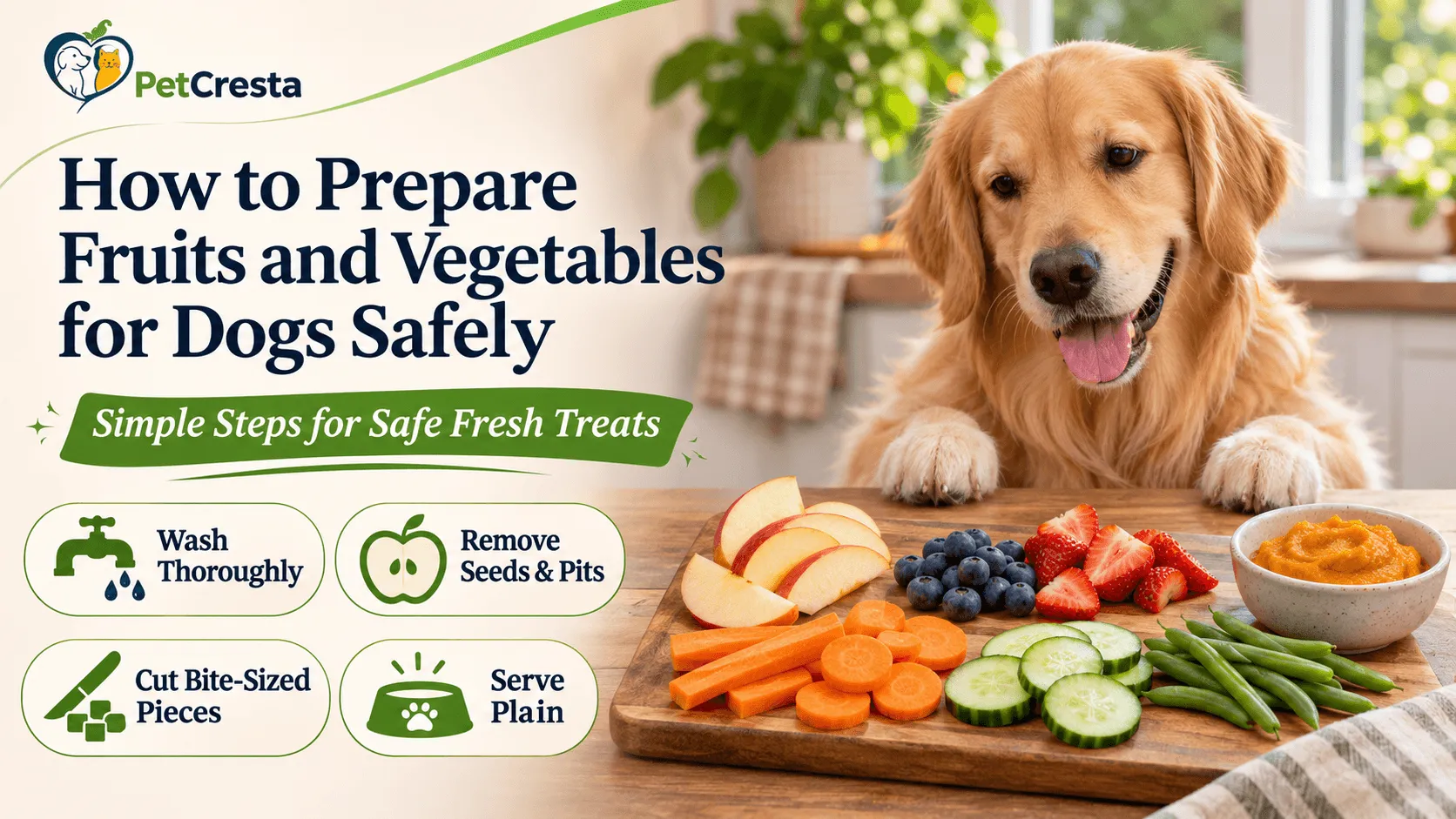
Sharing a piece of fruit or a crunchy vegetable with your dog can be a nice little treat. Maybe your dog sits beside you while you prepare dinner, hoping a carrot or apple slice might come their way. While many fresh foods are safe for dogs, how you prepare them is just as important as what you choose.
A food that is healthy for people can still cause trouble if it contains seeds, pits, tough skin, or added seasoning. Some pieces may also be too large for your dog to chew safely. With a few simple steps, you can make fresh produce easier to eat and reduce the risk of choking or stomach problems.
Start by Choosing Fresh, Safe Produce
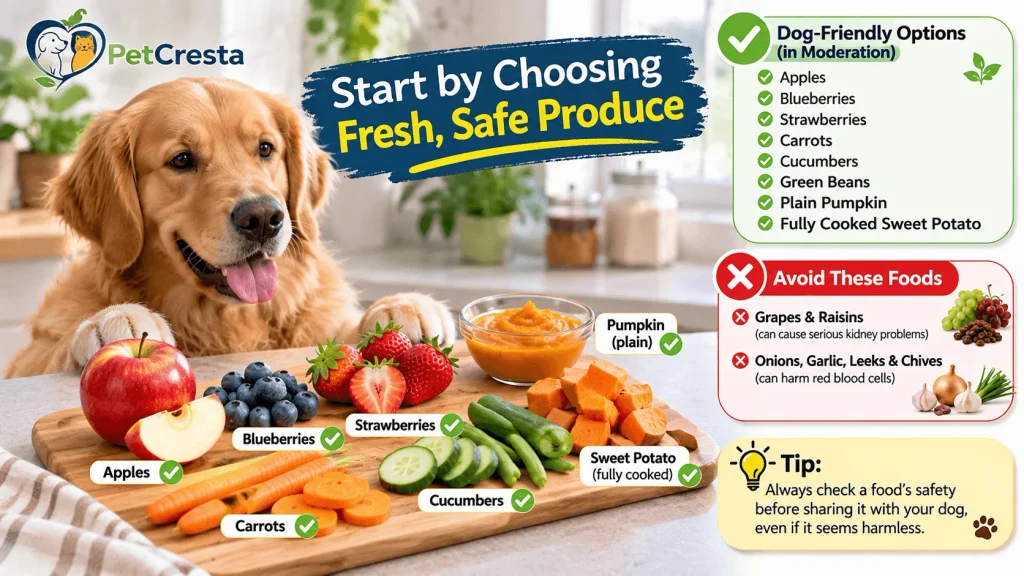
Before washing or cutting anything, check that the fruit or vegetable is fresh and suitable for dogs. Apples, blueberries, strawberries, carrots, cucumbers, and green beans are common choices. Plain pumpkin and fully cooked sweet potato can also be suitable in small amounts.
However, some foods should never go into your dog’s bowl. Grapes and raisins can cause serious kidney problems, while onions, garlic, leeks, and chives can harm red blood cells. Always check a food’s safety before sharing it, even if it seems harmless.
Bully Bunches’ guide to fruits and vegetables dogs can eat is a helpful reference when deciding which everyday foods are suitable for your pet. Once you have chosen a safe option, the next step is preparing it properly.
Wash Fruits and Vegetables Before Cutting
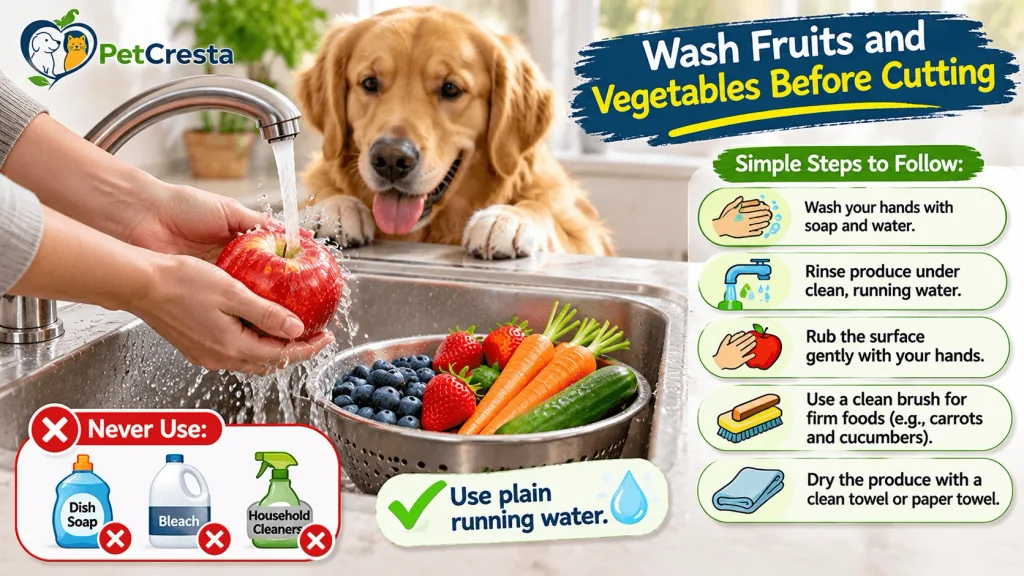
Fresh produce can carry dirt, germs, and other unwanted material on its surface. Washing helps remove some of these things before your dog eats the food.
The US Food and Drug Administration recommends rinsing fresh fruits and vegetables under running water, even when you plan to remove the skin. This helps prevent dirt and bacteria from moving onto the edible part when you cut or peel the food.
Here are a few simple steps to follow:
- Wash your hands with soap and water before handling the food.
- Rinse produce under clean, running water.
- Rub the surface gently with your hands.
- Use a clean brush for firm foods such as carrots and cucumbers.
- Dry the produce with a clean towel or paper towel.
You should never use dish soap, bleach, or household cleaners to wash food. These products can leave harmful residues behind. Plain running water is the better choice. The FDA’s produce safety guide explains these steps in more detail.
Remove Seeds, Pits, Stems, and Tough Parts
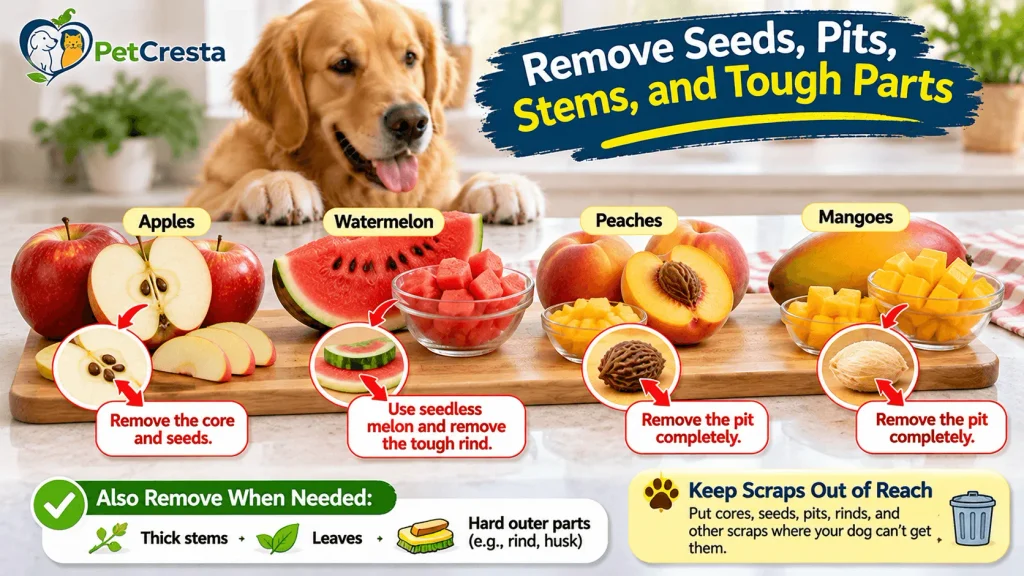
Some fruits have parts that dogs should never swallow. These can cause choking, blockages, or other health problems.
For example, remove the core and seeds from apples before offering a slice. Watermelon should be seedless and free of its tough rind. Peaches and mangoes need to have their pits removed completely before you cut the flesh into smaller pieces.
It is also a good idea to remove thick stems, leaves, and hard outer parts when needed. Keep these scraps away from your dog while you prepare the food. Curious pets may try to grab a discarded piece from the counter or bin.
Cut Food Into Small, Easy-to-Eat Pieces
A large piece of fruit or vegetable can be difficult for a dog to chew. This is especially true for small breeds, puppies, and dogs that tend to swallow their food quickly.
Cut produce into bite-sized pieces that suit your dog’s size and eating habits. A small dog may need an apple slice cut into tiny cubes, while a larger dog may manage a slightly bigger piece.
Pay attention to the shape as well. Thick carrot rounds or large chunks of cucumber can be difficult to chew. Thin slices or small cubes are often easier to manage.
Frozen fruit needs extra care because it can become very hard. If your dog struggles to chew it, let it soften before serving. Always watch your pet when introducing a new food or texture.
Serve Vegetables Plain and Cook Them When Needed
Many vegetables can be served raw, but some are easier for dogs to chew when cooked. Carrots and green beans can be offered raw or lightly cooked, while sweet potatoes should be fully cooked before serving.
Avoid adding salt, butter, oil, garlic, onion powder, sauces, or seasoning blends. These extras can turn a suitable snack into an unhealthy choice. Plain food is usually the best option for your pet.
Keep Portions Small and Introduce One Food at a Time
Even safe fruits and vegetables should only make up a small part of your dog’s diet. The University of California, Davis, School of Veterinary Medicine advises that treats and extra foods should provide no more than 10% of a dog’s daily calories. The rest should come from complete and balanced food.
Portion control is particularly important for smaller dogs, where even a few extra treats can contribute significantly to daily calorie intake. PetCresta’s Bichpoo feeding and weight management guide also explains how age, activity level, measured meals, and treats affect a dog’s overall feeding routine.
Start with one small piece when offering something new. Watch your dog over the next day for signs such as loose stools, vomiting, itching, or changes in appetite. If your pet reacts badly, stop giving that food and contact your veterinarian if symptoms continue or seem serious.
Dogs with allergies, medical conditions, or special diets may also need different food rules. It is worth asking your vet before making changes to their usual meals.
Store Prepared Produce the Right Way
Once fruits and vegetables have been cut, they need proper storage. Fresh pieces left on the counter for too long can spoil or become unsafe.
Place cut produce in a clean, covered container and keep it in the fridge. Store different foods separately when needed, and throw away anything that smells strange, looks spoiled, or has been left out for too long. Wash cutting boards, knives, and other tools after use.
You should also prepare only a small amount at a time. This helps reduce waste and means your dog gets fresh snacks rather than food that has been sitting in the fridge for days.
Conclusion
Preparing fruits and vegetables for your dog does not take much effort, but each step has a purpose. Choose safe foods, wash them well, remove risky parts, and cut them into pieces your dog can manage. Keep portions small and avoid seasonings or added ingredients.
Most importantly, remember that fresh produce is an extra treat, not a replacement for your dog’s regular meals. A little care in the kitchen can help you share the occasional snack while keeping your furry friend happy and healthy.
FAQ’s
Start by choosing dog-safe produce and washing it thoroughly under running water. Remove seeds, pits, cores, and tough parts that could cause choking or digestive problems. Cut the food into small, manageable pieces and serve it plain, without added salt, sauces, or seasonings.
Dogs can enjoy small portions of apples without seeds or cores, blueberries, strawberries, carrots, cucumbers, and green beans. Plain pumpkin and fully cooked sweet potatoes can also be suitable. Always introduce new foods gradually and consider your dog’s individual health needs.
Yes. Rinse fresh produce under clean, running water to help remove dirt and surface contaminants. Wash it before peeling or cutting to reduce the transfer of unwanted material to edible portions. Avoid using soap, bleach, or household cleaning products.
Yes, many dogs can eat certain raw vegetables, including carrots, cucumbers, and green beans. However, hard vegetables should be cut into appropriately sized pieces to reduce choking risks. Some dogs may find lightly cooked vegetables easier to chew and digest.
Not all vegetables require cooking. Carrots and green beans can be offered raw or cooked, while sweet potatoes should be fully cooked before serving. Steam or boil vegetables without seasonings, and allow them to cool before feeding.
Dogs should never be given grapes, raisins, onions, garlic, leeks, or chives. Grapes and raisins can cause serious kidney injury, while members of the onion family can damage red blood cells. Contact a veterinarian immediately if your dog eats a potentially toxic food.
Fruits, vegetables, and other treats should generally contribute no more than 10% of a dog’s daily calories. The remaining calories should come from complete and balanced dog food. Portion sizes depend on your dog’s weight, age, health, and activity level.
Seeds, pits, and cores should generally be removed before serving fruit. Large pits can create choking or intestinal blockage hazards, while certain fruit seeds and pits contain potentially harmful compounds. Offer only appropriate edible portions cut into safe sizes.
Keep prepared produce in clean, covered containers in the refrigerator. Discard pieces that show signs of spoilage or have been left unrefrigerated for an unsafe period. Preparing small portions helps maintain freshness and reduces waste.
No. Fruits and vegetables should be occasional treats rather than replacements for complete and balanced dog food. Dogs require appropriate amounts of protein, fats, vitamins, minerals, and other nutrients that produce alone cannot reliably provide.