Teacup Maltipoo Dog Breed Guide: Size, Temperament, Shedding, Grooming, and Cost
Teacups Maltipoo is typically chosen for one main reason: its tiny size. Its appeal is easy to comprehend. The dog is small, soft and easy to transport.
The same small size can affect everyday care. The routine of feeding and fall prevention, dental treatment, careful handling and the quality of breeders are more important in this area than many people imagine.
This isn’t just an inferior version of a companion dog. In many households the main issue is not about personality. It’s fragility, constant surveillance, and whether the family can safeguard the very tiny frame.
This guide will cover full-grown size as well as development stages, health hazards as well as costs for care breeder red flags and the best way to determine whether the dog you are considering is a fit for the environment you have created for it.
TLDR: Is This The Right Dog For You?
| Stronger fit | Weaker fit |
|---|---|
| Calm home with a steady routine | Loud, busy, unpredictable household |
| Adults, seniors, or gentle older children | Rough young children who may grab or drop a tiny dog |
| The owner can supervise most days closely | The owner is away most of the day with little supervision |
| Home with calm small pets | Home with large rough dogs |
| Person comfortable with grooming and dental care | A person wanting a very low-maintenance dog |
| Home is willing to manage furniture and stair safety | Home where jumping and falls are not managed |
Best for quiet, attentive homes. Harder fit for rough, busy, or low supervision homes.
Quick Answer: What Is A Teacup Maltipoo?
The Maltipoo is a small and unusual Maltese or Poodle mix marketed due to its small size. The term”teacup” is generally a label for marketing, but not a breed-specific size class.
The majority are marketed as small companion dogs that can develop between 6 and 9 inches tall, and weigh 3 to 7 pounds. However, there are exceptions to that. They tend to be friendly, devoted to people and a breeze to be around.
The primary warning is straightforward: small size can cause fragility. A dog this small could require more consistency in feeding and more cautious handling and protection against accidents, rough play and poor breeding choices as compared to other small dogs.
Teacup Maltipoo Characteristics At A Glance

| Trait | What to expect |
|---|---|
| Size class | Extra small companion mix |
| Adult height | Usually around 6 to 9 inches |
| Adult weight | Often around 3 to 7 pounds |
| Full-grown stage | Commonly near adult size by 9 to 12 months |
| Coat type | Wavy, curly, or soft and slightly straight |
| Shedding | Usually low, but not zero |
| Grooming level | High |
| Dental care needs | High |
| Exercise need | Low to moderate |
| Trainability | Good with calm consistency |
| Barking tendency | Moderate in alert situations |
| Separation sensitivity | Common |
| Lifespan range | Often around 12 to 15 years |
| Typical price range | Often around $2,000 to $4,500 or more |
| Suitable for | Calm homes, apartments, gentle handling |
| Harder fit homes | Rough child households, large dog homes, and low supervision homes |
What Teacup Really Means

Teacups sound precise, but in reality it isn’t. In reality, it’s an advertising term used to indicate that a dog is described as smaller than typical.
It is important to note that the label cannot guarantee an exact adult size, an exact health profile or even an officially recognized breed standard. Some breeders use it to identify the puppy of the smallest size in an entire litter. Other sellers use it to identify any Maltese Poodle that is a very small mix.
The best way to buy is to ask questions directly. What is the size of the parents? What is the age of the puppy? What is its weight in the present? Did it have any recent vet examination? Do you think the estimates for adult size are accurate or is the sales pitch concentrated on the smallest possible result?
What The Size Label Does Not Tell You?
The word teacup could make an unpredictability sound more like a puppy than it actually is. It is not a reliable way to determine the health of the dog, its weight at adulthood and the strength of bones, personality or breed quality.
A puppy that is tiny may expand beyond the size that is anticipated. A puppy that is small may also require more attention than a family would expect. That’s why the tag should not be the sole motive behind choosing a puppy.
Better signs matter more. The size of the parents, the current puppy’s weight, veterinary records energy, appetite and coat condition, as well as social behavior can give a clearer image than sales words.
A savvy buyer will be patient when the seller is talking primarily about the size of the dog, rare color or how small the puppy will remain. Healthy structures, safe early care and a clear record of the puppy’s development be top of the list.
Teacup Dogs vs Toy Dogs
A toy dog is typically linked to a recognized size class within a well-established breed. A teacup dog typically is not. The label for toys tends to be more reliable. The teacup label can be looser and less reliable.
Micro And Mini Labels
The use of terms like mini Maltipoo and micro teacup Maltipoo frequently adds appeal to marketing more than they provide clarity. They don’t inform the buyer if the puppy is sound, healthy or likely to grow properly.
Teacup Maltipoo Parent Breeds, Lineage, And Why Adult Traits Vary

A Maltipoo is a hybrid of Maltese and Poodle lines, typically from dogs with very small parents. The aim is usually an extremely small, soft-coated companion dog, the result isn’t set in stone. Teacups do not refer to a distinct breed. It is utilized to advertise a smaller-than-average Maltese or Poodle mix.
The Maltese side is often associated with an affable temperament and a soft, relaxed expression and a strong, companion-like nature. The Poodle side is often associated with training ability, intelligence and coat textures that shed less. But mixed breed dogs are not able to have the same pattern of development.
A puppy might be more inclined towards the Maltese side of the body and manner of behavior. A different puppy may be more on the Poodle side with regards to coat texture and confidence or in movement. Size of coat, coat type, barking levels grooming needs, and overall strength can differ within the same litter.
This is the reason why adult size is always considered an estimation rather than a guarantee. A smaller puppy isn’t necessarily the most reliable indicator of size at the end of the day or overall health. The size of the parent, the quality of breeding early nutrition, and general health influence the way that a dog grows.
A better way to shop is to ask the right questions instead of focusing solely on the brand.
- What is the weight of the parents right now?
- What is the age of the puppy?
- Have the puppies had an exam with a vet in recent times?
- Are estimates of the size of an adult based on actual information from parents or is it based on sales terminology that is centered around the tiniest of outcomes?
Maltipoo Teacup Dog: Pros And Cons
Pros
- Very loving and affectionate pet
- Simple to maintain even in tiny living spaces.
- Trainable and smart
- Convenient and easy to carry
- Most of the time, low shedding
Cons
- Fragile body
- It can be costly to purchase and maintain.
- You require constant surveillance
- The cost of grooming and dental treatment adds up
- Unsuitable for rough or chaotic homes.
The small size that makes this dog simple to carry makes everyday security more crucial.
Size, Height, Weight, And Growth Stages

The majority of these dogs remain very small. They are often close to adult height, ranging from 9 to 12 months. The size is contingent on the parent’s size, breeder quality, and the way in which the puppy develops.
Teacup Maltipoo Size And Height
A large Maltipoo typically falls within the range of a small size. A lot of adults are 6-9 inches tall when they are at their shoulders. Some people mature a little shorter or taller.
A full grown teacup maltipoo can differ from what buyers are used to. The puppy with the smallest size in a litter doesn’t always mean that it is the largest adult. And the tag alone should not be taken as an assurance.
Teacup Maltipoo Height And Size Chart
| Age stage | Typical height range | What this usually means |
|---|---|---|
| 8 to 12 weeks | 4 to 6 inches | Early growth and a very delicate body |
| 3 to 4 months | 5 to 7 inches | Legs lengthen, and the frame becomes clearer |
| 5 to 6 months | 6 to 8 inches | Many show a small adult outline |
| 7 to 9 months | 6 to 9 inches | Height growth often starts to slow |
| 10 to 12 months | 6 to 9 inches | Many are near adult height |
Teacup Maltipoo Weight
Weight is just as important as height in the case of a dog this tiny. A small frame might look attractive, but it implies that a diet of slack, low appetite, excessive feeding and body fat that is too large could cause problems quicker than larger breeds. A full grown Maltipoo typically weighs 3-7 pounds, some adults are within that range.
Estimated Weight Chart
| Age stage | Typical weight range | What to monitor |
|---|---|---|
| 8 to 10 weeks | 1 to 2 pounds | Appetite, energy, and feeding consistency |
| 11 to 12 weeks | 1.5 to 2.5 pounds | Steady gain without overfeeding |
| 3 to 4 months | 2 to 3.5 pounds | Body condition and meal routine |
| 5 to 6 months | 2.5 to 4.5 pounds | Growth pace and joint strain |
| 7 to 9 months | 3 to 6 pounds | Healthy muscle, not just body fat |
| 10 to 12 months | 3 to 7 pounds | Mature weight becomes clearer |
Teacup Maltipoo Growth Stages
Maltipoo growth happens in clear phases during the beginning of the year. Although the dog remains small, the size of it, its routine requirements, and the daily management will continue to grow with time.
Early Puppy Stage: 8 To 12 Weeks
It is the most sensitive time. The puppy is small and easily stressed. They are still getting used to handling, food, and a new environment. Warmth, safety as well as gentle handling an established routine are the most important factors.
Fast Growth Stage: 3 To 6 Months
The weight and height usually rise more prominently here. The body begins to appear less like a baby, and the frame remains delicate. This is an important time to socialize, grooming practices and a routine for early training.
Late Growth Stage: 6 To 9 Months
Growth is often continued, but the pace can slow. The body starts to level out, and many canines get closer to the adult height. Controlling weight is crucial because more body fat causes stress on the frame of a small dog.
Young Adult Stage: 9 To 12 Months
A lot of dogs in this size range have gotten close to the height of an adult at present. There are some that may fill out in a small amount, but major size changes aren’t as often seen. This is because long-term coat care, body condition and house-fit become easier to assess.
What Affects Final Size
The final size will be determined by the height and weight of parents as well as overall quality of breeding, the quality of nutrition in the early years overall health and development, and whether it was sold with untrue size promises. Be cautious when buying a puppy. The size of an adult as a spectrum, not a guarantee.
When Will A Teacup Maltipoo Stop Growing?
The majority of them are close to adult height between 9 and 12 months. However, the exact size of the dog cannot be determined. The size of the parents, breed quality, and the beginning of growth patterns still determine how the dog develops. A puppy that is sold as tiny could end up growing a bit larger or smaller than the size that is anticipated.
First Year Milestone Snapshot
The first year isn’t just about size. It’s also when routine, behaviour eating habits, dental adjustments, and the tolerance for handling change. A puppy of a small size usually requires more structured attention than what buyers would expect.
| Age stage | What usually happens | What matters most |
|---|---|---|
| 8 to 12 weeks | Settling into a new home, learning where to sleep, eat, and potty | Gentle handling, regular meals, warmth, close supervision, and a calm routine |
| 3 to 4 months | Growing confidence, stronger curiosity, early house training progress | Socialization, grooming practice, reward-based training, and safe boundaries |
| 4 to 6 months | Teething often becomes more obvious, and coat care becomes more important | Chew management, dental support, brushing habits, and feeding consistency |
| 6 to 9 months | Body shape becomes clearer, and movement looks more balanced | Weight control, controlled exercise, routine training, and fall prevention |
| 9 to 12 months | Many are near adult height, and long-term routine becomes easier to judge | Adult care habits, body condition, dental upkeep, and household fit review |
A good way to assess the progress made during your puppy’s first year is not just through height or weight but also by stability in routine. Food intake, stool quality energy and coat condition, as well as comfort in handling, and recovery from stress can all determine how the puppy is getting used to its new surroundings.
Teacup Appearance, Coat, And Color Expectations
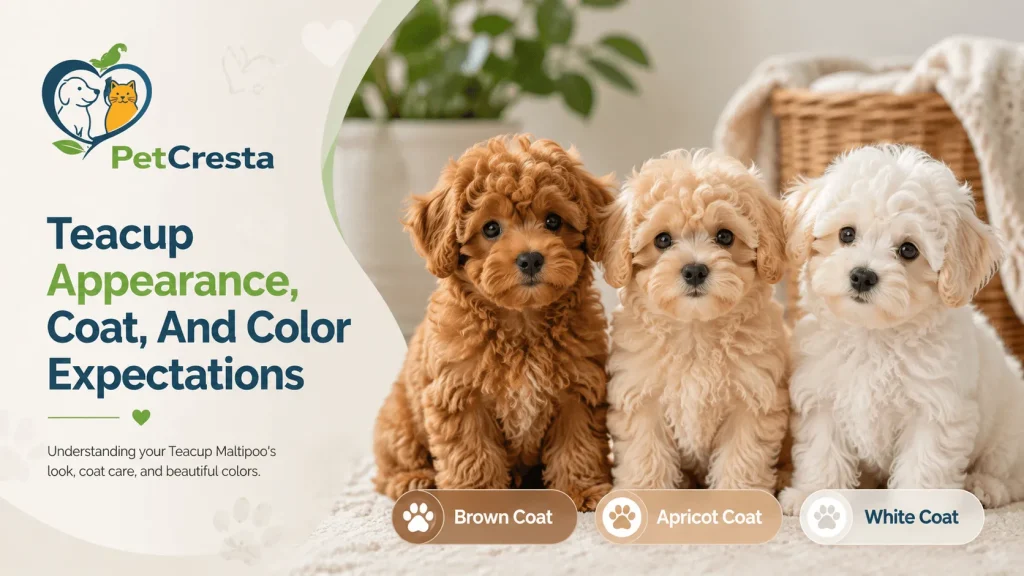
The dog is usually selected for its soft, rounded appearance as well as its smaller size. The texture of coats can range from loose curl to soft waves and grooming requirements may be very high regardless of the texture.
Coat Texture, Shedding, And Allergy Expectations
A curlier coat could get caught up in a knot faster. A loose coat could be more prone to collecting debris. In any case, taking care of your coat is an integral part of owning a home right from the beginning.
Many shed lightly, not all dogs shed the same way. Maltipoo’s hypoallergenic claim is to be viewed with caution because no dog can be allergy-free. Some people react to saliva, dander and skin proteins, not just loose hair. The term “low shedding” is not the same as being allergy-proof.
Maltipoo Coat Colors And What They Mean
Maltipoo coat colors impact the appearance more than any other. Shades like brown, apricot and white can alter the overall appearance of a dog, but the color of the coat is not a reliable indicator of well-being and temperament or ease of maintenance.
Brown Coat
A teacup with a brown color Maltipoo usually features a warmer, more pronounced coat tone. The color may appear lush and soft if the coat is tidy and well-brushed. Some brown coats will become lighter with time.
Apricot Coat
Apricot teacups maltipoo usually has a light gold or peach hue. This shade is popular due to the fact that it creates the appearance of a teddy bear. The shade ranges from apricot, which is pale to warm gold.
White Coat
White teacup maltipoo typically has that classic fluffy look that people think of first. The lighter coats can display dirt and tear staining more easily, which is why the care of your face and regular brushing are more important.
Color is a factor that affects the appearance, not the character. Color does not reveal to a prospective buyer if the dog is more relaxed, healthier or easier to train or better bred.
Teacup Maltipoo Temperament And Everyday Behavior
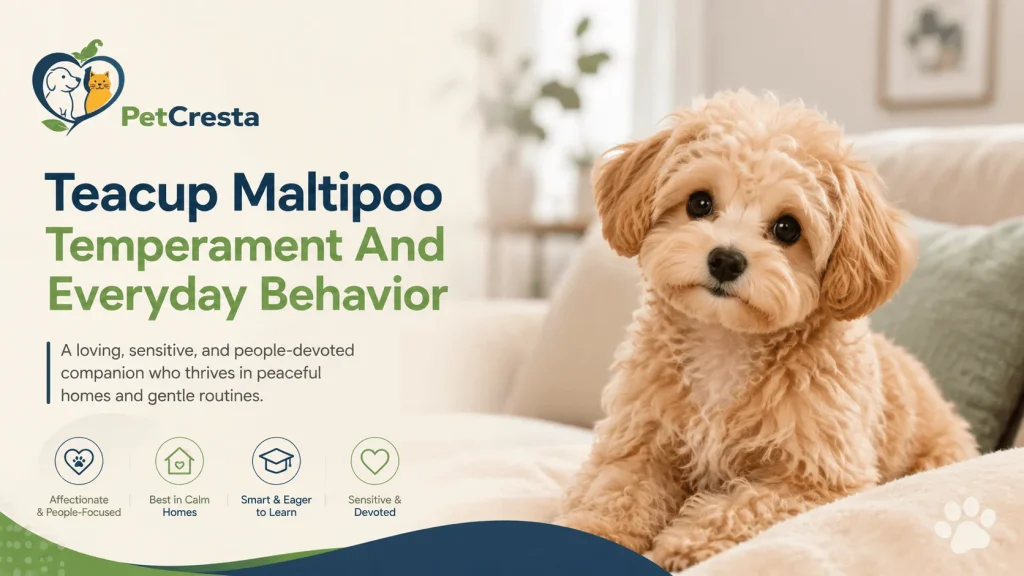
The dog that is loved, sensitive, and devoted to people and more at home in peaceful households than caustic or active dogs.
Many dogs love staying with their pet’s owner and settling down for lap time, brief games, or daily interaction. The close relationship can be beneficial but it can result in clinginess and distress when they are left for long periods.
Common Personality Traits
- People-focused and affectionate
- Alarms at doors and sounds
- Intelligent with regular training
- Fun in short bursts
- Sensitive to sound, tone and changes in the household
Common Behavior Challenges
- Clinginess and overattachment
- Alert Barking
- The tiniest dogs are more likely to be irritable around larger dogs.
- A slower house training routine when the routine isn’t consistent
- Stress in noisy or busy homes
Good With Kids, Other Pets, And Apartment Living
The dog is most likely to do well with children of a certain age who are able to handle their pets with care. It is often a good companion with small dogs that are calm, but be cautious with larger, rough dogs as play can turn dangerous fast.
Apartments are often the best for this breed because the area required is small. The most important thing is routine, daily interaction as well as enough structure to avoid excessive attachment, barking and a lack of care.
Teacup Maltipoo Health Issues, Fragility, And Lifespan

Maltipoo health needs particular attention as its tiny size could affect everyday safety as well as long-term health. Dental problems, fragility and low blood sugar levels and the risk of injury are just a few of the most significant concerns, while longevity typically is dependent on breed quality, routine maintenance and the management of the home.
Are They Healthy?
Certain breeds are healthy and can do great with sound breeding practices and well-controlled conditions. But a smaller size may increase the likelihood of some health issues and can make normal small dog problems more difficult to handle.
Teacup Maltipoo Health Problems
- A low blood sugar level, especially in puppies who are tiny puppies, is a problem, especially if food is delayed
- Dental crowding and tooth decay in very small mouths
- Fragile bones and a higher risk of injury due to falls or rough handling
- Problems with joints, such as kneecap instability
- Some dogs are sensitive to airways.
- Heart and eye concerns that require routine monitoring
Health Concerns That Need Extra Attention
| Concern | Why It Matters |
|---|---|
| Low blood sugar | Tiny puppies can become weak faster if meals are missed or appetite drops. |
| Dental crowding | A small mouth can trap plaque and make dental disease more likely. |
| Patellar luxation | Loose kneecaps may cause skipping, limping, or discomfort. |
| Eye issues | Redness, squinting, cloudiness, or discharge should be checked early. |
| Fragile bones | Falls, stairs, rough handling, and larger dogs can raise injury risk. |
| Digestive upset | Vomiting or diarrhea can affect a very small dog faster than a larger one. |
These worries are not a guarantee that every cup of Maltipoo is unhealthy. Small changes require greater focus. Missing a food, a minor falling, or a light limp may be more significant for a dog that has very low body reserves.
Why Fragility Matters At Home
Fragility is more than an illness that is medically diagnosed. It affects daily life at home.
A leap from a couch or bed that appears minor to a small dog could be dangerous in the teacup of a Maltipoo. The rough handling of children even when they’re not intentionally doing it could result in injury. Dogs that are larger than you can be risky rapidly because the difference in size alone alters the force that is involved.
A daily routine is equally important. Insufficient meals, exercise flooring that is slippery, unsafe stairs, and inadequate furniture all add weight to a dog who has an extremely small frame.
Teacup Maltipoo Lifespan
Teacups Maltipoo lifespan is typically 12-15 years if breeding routine treatment, body condition, dental assistance and prevention of injury are well handled.
Longevity isn’t determined by the size of the label. The main elements are the nutrition routine, health foundation, dental care, a safe home setting and how fast issues are treated when they occur.
What Shapes Lifespan Over Time
Quality of life over the long term is influenced by breeding high-quality dental health, dental treatment and balance in weight as well as fall prevention. regular veterinary check-ups. Even a tiny amount of extra weight can strain the smallest frame, and untreated dental issues can impact well-being and comfort much more than the majority of owners anticipate.
When To Call A Vet Right Away
Be on the lookout for signs of poor energy levels, eating less or drinking, constant shaking and limping following the fall or jump or fall, breathing changes or collapse, constant nausea or vomiting, as well as an unpleasant mouth odor and eating problems. These are the most important signs to look out for in dogs that are small dogs, as the reserve is smaller and the problem can become more severe.
Why Tiny Size Breeding Is Controversial

The concern around teacup dogs usually comes down to priorities. When extreme small size becomes the main selling point, health, soundness, and resilience can move into the background.
That does not mean every tiny dog comes from poor breeding. It does mean buyers should become more careful, not less, when they see words such as teacup, micro, or ultra tiny.
Why Some Buyers And Vets Are Cautious
Some buyers and veterinarians are cautious because extreme size selection can raise fragility, cute photo-driven marketing can hide weak structure, and loose size promises can make the dog sound more predictable than it really is. Another concern is that many buyers underestimate the daily care level needed once the puppy comes home.
What Better Decision Making Looks Like
A better decision focuses on parent health, realistic size expectations, veterinary oversight, socialization, and honest communication. If the sales pitch is centered almost entirely on the puppy being super tiny, that is a reason to slow down.
How To Care For A Teacup Maltipoo

Caring for this dog is mostly about routine, safety, and close observation. The body may be small, but the care standard is high.
Keep Feeding Consistent
Very small dogs usually do better with meals given on schedule. Long gaps, poor appetite, or sudden refusal to eat should not be ignored. Fresh water should always be available, and body condition should be checked often.
Stay on Top of Grooming
The coat usually needs regular brushing to prevent tangles, debris buildup, and skin discomfort. Bathing, nail trimming, ear checks, and face cleaning should stay part of the normal routine.
Make Dental Care a Priority
Small mouths often crowd teeth. That raises the long-term risk of plaque, gum disease, pain, and tooth loss. Brushing should start early and continue as a regular habit.
Use Gentle Exercise
These dogs still need activity, but the goal is controlled movement, not hard physical output. Short walks and gentle indoor play usually work well.
Train With Patience
Training should be short, calm, and reward-based. A sensitive small dog often responds better to repetition and predictability than pressure.
Create A Safe Home Setup
Beds, couches, stairs, and slippery floors all deserve attention. Good care includes preventing falls, limiting rough handling, and supervising larger pets.
Keep Up With Routine Vet Care
Regular checkups help catch small problems before they become bigger ones. Appetite changes, limping, coughing, unusual odor from the mouth, or energy drops should be taken seriously.
First Year Daily Routine Checklist
Morning
- First meal
- Potty break
- Brief coat and face check
- Short play or light walk
Midday
- Potty break
- Meal if age appropriate
- Short training repetition
- Rest and supervised quiet time
Evening
- Meal
- Short play or walk
- Brushing check
- Final potty break and calm rest
Teacup Maltipoo Feeding Guide

Tiny puppies often do best on a regular meal schedule. Adults still need portion control and good quality food, but consistency remains the main point.
Feeding Frequency At A Glance
Tiny puppies often do better with a steady meal schedule. Adults still need portion control and good quality food, but consistency remains the main point.
| Age stage | Common feeding rhythm | What to watch |
|---|---|---|
| 8 to 12 weeks | Many very small puppies do better with 3 to 4 small meals a day | Appetite, energy, vomiting, loose stool, and missed meals |
| 3 to 6 months | Often, 3 small meals a day | Steady growth, body condition, and feeding routine |
| 6 to 12 months | Often 2 to 3 meals a day, depending on size and veterinary guidance | Weight gain, picky eating, and stomach upset |
| Adult | Commonly, 2 measured meals a day | Body condition, dental comfort, and long-term routine |
In a dog this small, poor appetite matters more than many owners expect. Sudden refusal to eat, repeated vomiting, unusual weakness, or an obvious drop in energy should never be brushed off as a minor issue.
Why Missed Meals Matter More In Tiny Puppies
A very small puppy has less reserve than a larger dog. Delayed meals, stress, poor appetite, vomiting, or diarrhea can lead to weakness faster than many owners expect. Any sudden drop in energy or refusal to eat deserves attention.
Teacup Maltipoo Grooming
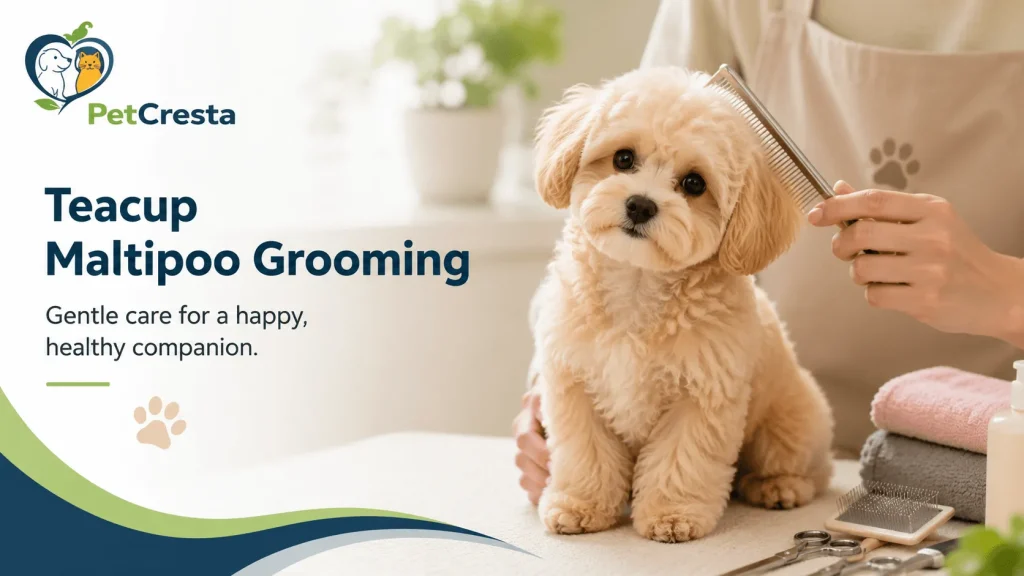
Coat care is part of ownership from day one. Most dogs need brushing several times a week, often more if the coat is curly. Professional grooming is often needed every 4 to 8 weeks, depending on coat length and home care.
Simple Grooming Routine
A Maltipoo usually needs steady coat care, even when the coat looks soft and light. A coat that is not brushed can mat close to the skin, especially behind the ears, under the legs, around the collar area, and near the tail.
Short brushing sessions are often easier than waiting until the coat tangles. A few calm minutes at a time can help the dog accept handling without stress.
Face care also matters. Lighter coats may show tear staining more easily, and food can collect around the mouth. Gentle wiping, regular brushing, and routine trims can keep the face cleaner and more comfortable.
Professional grooming is often needed every 4 to 8 weeks, depending on coat length and texture. A shorter pet trim is usually easier for many homes than a long fluffy coat that needs more daily upkeep.
Teacup Maltipoo Training Tips

Short sessions usually work best. Clear repetition, simple rewards, and steady potty timing matter more than long lessons. Harsh correction is usually a poor fit for a sensitive toy-sized companion.
House Training A Tiny Puppy
House training can take patience because very small puppies have limited bladder control. A clear routine usually works better than long lessons or corrections.
Take the puppy to the potty area after waking, after meals, after play, and before sleep. Praise should be calm and immediate so the puppy understands what worked.
Some homes use indoor pads during the early stage, especially in apartments or bad weather. If pads are used, the setup should stay consistent. Moving the potty area too often can confuse the puppy.
Accidents should be cleaned well and handled calmly. A Maltipoo often learns best through repetition, timing, and gentle structure.
Teacup Maltipoo Exercise Needs
Exercise needs are modest, but regular movement still matters. Short walks, gentle indoor play, scent games, and simple training tasks usually meet the needs well. Avoid overexertion, repeated jumping, and rough play.
Safe Activity Matters More Than Hard Exercise
A Maltipoo does not need heavy exercise, but it still needs daily movement and mental activity. Short walks, gentle play, simple training, and scent games are usually enough for many adults.
The goal is not to tire the dog out through hard running or jumping. The goal is steady movement without strain.
Repeated jumping from furniture, rough chasing, slippery floors, and play with large dogs can create avoidable risk. A small dog can enjoy activity while still being protected from impact.
Good exercise should leave the dog relaxed, not exhausted, sore, or shaky. If the dog limps, refuses to move, pants heavily, or seems unusually tired after light activity, the routine should be adjusted.
Teacup Maltipoo Puppies, Price, And What To Check Before You Buy

Maltipoo puppies can be appealing at first glance, but the buying decision should stay focused on health, soundness, and long-term care. Price is only one part of the picture, so it is important to look closely at breeder quality, early veterinary care, parent size, and the puppy’s overall condition before bringing one home.
What To Expect From Puppies
Maltipoo puppies are easy to fall for because they look soft, tiny, and portable. That same stage is also where emotion can cloud judgment.
Very small puppies need close observation. Energy dips, poor eating, stress, and rough handling matter more in a body this small. The smallest puppy in a photo is not always the best long-term choice.
Teacup Maltipoo Price And Ongoing Cost
A Maltipoo price often falls in a premium range, commonly around $2,000 to $4,500 or more, depending on breeder reputation, location, claimed size, and what is included.
That purchase price is only part of the cost story. Grooming, dental care, veterinary visits, emergency care, training support, and routine supplies can add up quickly over time.
First Year Cost Areas
| Cost area | What it usually includes |
|---|---|
| Purchase | Puppy price, deposit, travel, or delivery |
| Vet care | Exams, vaccines, parasite prevention, and follow-up visits |
| Grooming | Trims, brushes, shampoo, combs, maintenance tools |
| Dental care | Toothbrush, toothpaste, cleanings, future procedures |
| Supplies | Crate, harness, bowls, bed, pens, grooming items |
| Emergency reserve | Injury, stomach upset, appetite problems, urgent visits |
Buyer Red Flags
- Unrealistic promise of staying extremely tiny
- No clear parent information
- No health records or veterinary paperwork
- Pressure to pay fast
- Puppies are offered too young
- Sales focus mainly on size
Breeder, Rescue, Or Rehome?

The majority of Maltipoos are advertised through breeders, but it isn’t the only route. There are rescue groups, owner rehome scenarios and small-sized dog foster groups. This option might be suitable for families that are more concerned with the quality of their dogs and their temperament rather than finding the smallest young puppy.
Rehome or rescue options can provide a better picture of the size of an adult the coat, size, and the way they behave, particularly in the case of dogs that are over the stage of being a puppy. This makes the choice simpler for those who want the smallest dog but don’t wish to deal with a small puppy.
If the dog is from an animal breeder, rescue or a private return home these questions are relevant. Find out about the current weight, feeding habits and dental history, past injuries, social behavior household training and separation anxiety and vet records. The source of information is crucial; the quality of information is just as much.
If you are buying from a breeder, health certificates and honest information about parents and realistic expectations for size are more important than the extremely tiny or rare color claims. marketing.
Questions To Ask Before Paying
A trustworthy seller should be able and willing to answer real questions without putting pressure on or making vague assertions.
Find out about the puppy’s weight and age, as well as the feeding schedule, veterinary check-ups and vaccination records and deworming records. the size of their parents. Ask if the puppy experienced any issues with appetite or shaking episodes, injury, breathing problems or digestive issues.
It is also helpful to inquire what the puppy’s experience has been like introduced to the world. A puppy of a small size is still able to be accustomed by gentle hand-holding, regular household sounds, grooming touches as well as short intervals of quiet separation.
Sellers should not make payments too quickly or avoid the need for paperwork. If the response to most queries will be “do not worry,” it’s not enough. Transparent records and honest communication are more important than flawless photographs.
Comparisons With Other Small Companion Mixes
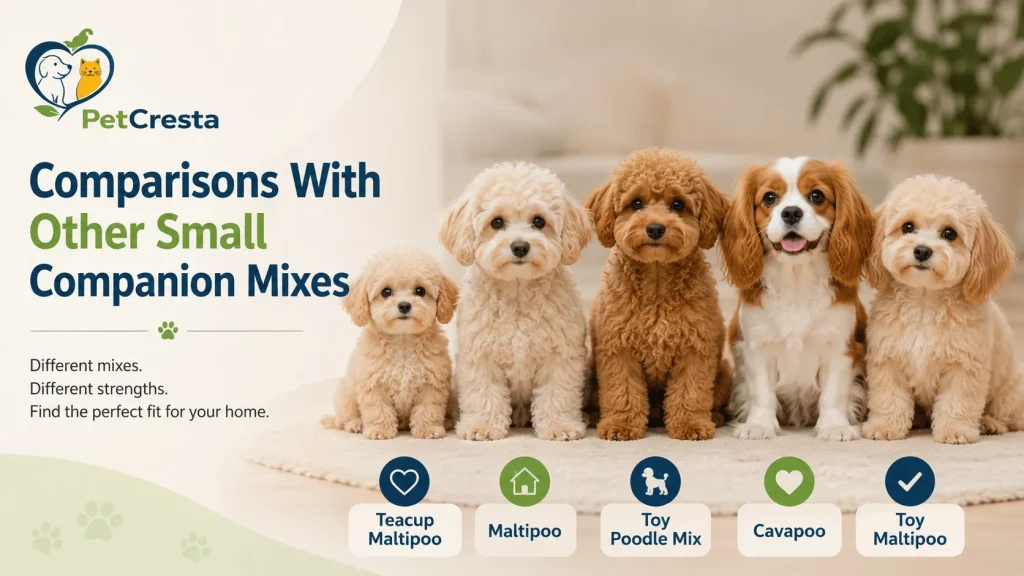
Choosing between these small companion types is not only about looks. Size, fragility, grooming load, household flexibility, and daily supervision all affect which dog fits best. Another comparison worth making is the miniature cockapoo, especially for homes that want a small companion dog without choosing the tiniest possible frame.
Teacup Maltipoo vs Maltipoo
This comparison usually comes down to tiny size versus easier day-to-day management. A regular Maltipoo often stays small enough for apartment living while offering a bit more sturdiness.
Teacup Maltipoo vs Toy Poodle Mix
This comparison often comes down to predictability and structure. A toy Poodle mix may offer a more predictable frame in some lines, while a Maltipoo may vary more in final look and coat texture depending on the parents.
Teacup Maltipoo vs Cavapoo
A Cavapoo may suit homes wanting a slightly sturdier small companion with a broader family fit. A Maltipoo usually fits a narrower lane centered on very small size and closer management. Anyone still deciding between these two companion types should also compare daily care, family fit, and early training needs in a cavapoo puppy guide.
Teacup Maltipoo Vs Toy Maltipoo
This comparison is usually about whether the smallest possible size is worth the extra fragility. A toy-size Maltipoo often stays compact while easing some of the handling pressure that comes with the tiniest dogs.
| Comparison point | Teacup Maltipoo | Maltipoo | Toy Poodle mix | Cavapoo | Toy Maltipoo |
|---|---|---|---|---|---|
| Size | Extra small | Small | Small | Small to medium | Small |
| Fragility | High | Moderate | Moderate | Lower | Lower than a teacup |
| Handling tolerance | Low | Better | Better in many lines | Better | Better |
| Grooming need | High | Moderate to high | Moderate to high | Moderate to high | Moderate to high |
| Family flexibility | Best in calm homes | Broader fit | Depends on the line | Broader fit | Easier than a teacup |
| Supervision need | High | Moderate | Moderate | Moderate | Moderate |
| Best for | Homes wanting the tiniest companion | Homes wanting balance | Homes want more predictability | Homes wanting a softer, sturdier small companion | Homes wanting compact size without extreme fragility |
Is A Teacup Maltipoo Worth It For Your Home?

A Maltipoo is a great pet when it is in the right place. The decision is more based on the lifestyle of the dog than on its appearance. This breed is often selected for its small dimensions and closeness to its owner however the true life experience of a pet is determined by the fragility of the dog, its grooming requirements as well as dental care, regular feeding, and continuous monitoring.
Good Fit Homes
The calmer homes, apartments and adults who have a steady routine or seniors looking to be close with a pet and homes where a person is often present are typically better matches. These kinds of settings help to safeguard a dog from injuries rough handling, sloppy handling, missed routines, and stress that could be avoided.
Harder Fit Homes
Children who play rough big, active dogs with busy schedules, constant noise, and little supervision are not the best choices. The problem is not the level of affection or intelligence. It’s the amount of everyday management that a tiny and delicate body needs.
Beginner Fit
A puppy can do great with this breed of dog, provided the home is calm and attentive. It is also aware of the demands on their time. It can be a challenging puppy for someone who wants stability and independence, or a basic routine.
When This Dog May Not Be The Best Choice
A Maltipoo might not be the ideal option for every house. This is particularly true if the house is populated by rough children, big active dogs and long hours of unsupervised time as well as furniture behaviors that can be difficult to manage.
A dog can be a bad match for someone who requires minimal attention. While the body is small but the routine isn’t always straightforward. Cleaning, grooming, dental food consistency and vet visits as well as the safe handling of animals all require attention.
homes that frequently travel or leave their dogs alone for the majority of the time or need a solid dog to play with their children might prefer a smaller dog.
A smaller size isn’t a degradation. In a lot of homes, it is possible to have a toy Maltipoo or a regular Maltipoo that can provide the same intimate companionship without the daily shakiness.
Final Take
Teacup Maltipoo can be a loving pet charming, charming, and incredibly connected pet to its owners. If it is in a home that is right, this closeness is the reason for its appeal. In a bad home the risk of deterioration, expense and the daily burden will quickly overwhelm the appeal.
It is better to evaluate the dog based on well-being as well as soundness, temperament and the overall fit of the household rather than by its small size by itself. If your home is able to support cautious feeding, secure handling, regular grooming dental treatment and constant supervision, the dog could be a wonderful pet. For those searching for a simpler or stronger small dog the smaller size is generally the best choice.
FAQ’s
Most stay very small, often around 6 to 9 inches tall and about 3 to 7 pounds as adults. Some fall outside that range depending on parent size and breeding quality. The label alone should never be treated as a promise.
Many are near adult height by about 9 to 12 months. Some continue filling out slightly after that, but major size changes are less common. Parent size, early nutrition, and general health still affect the outcome.
Many can live around 12 to 15 years with good daily care, strong dental support, safe handling, and regular veterinary follow-up. Lifespan depends more on breeding quality and long-term management than on the teacup label itself.
Purchase price is often high, commonly around $2,000 to $4,500 or more, depending on breeder reputation, location, and what is included. Long-term cost also matters because grooming, dental care, veterinary visits, and emergencies can add up.
Some are healthy and do very well, especially when breeding quality and early care are strong. Still, a very small size can increase fragility and make certain problems more likely or harder to manage. Health should matter more than novelty or extreme size.
They can be very good pets in the right home because they are affectionate, people-focused, and easy to keep close. They usually do best in calm households with gentle handling, close supervision, and a steady routine.
No dog is truly hypoallergenic. Many shed lightly, but allergy response can still happen because people react to dander, saliva, and skin proteins too. This mix should not be chosen as a guaranteed low-allergy dog.
The controversy comes from what can happen when extreme small size is prioritized over health and soundness. Some buyers and veterinarians worry that the smallest possible dogs may face more fragility and that marketing can hide the real care burden.
That depends on how the puppy was bred, raised, and represented. A more responsible decision focuses on health testing, veterinary care, realistic size expectations, and honest breeder communication rather than the smallest label alone.
Reference
| Source | Topic covered | Page link |
| Dogster | Breed overview, suitability, care, temperament | https://www.dogster.com/dog-breeds/teacup-maltipoo |
| A Z Animals | Growth chart and milestone background | |
| LuckyTail | Parent breed background and teacup label context | |
| Premier Pups | General care, lifestyle fit, and market language reference | |
| PetMD | Maltipoo health, grooming, and care background |