Are Bully Sticks Safe for Dogs? What Owners Should Know

Imagine giving your dog a new chew and watching them settle happily into their favorite corner, eagerly working away at it. For a moment, everything seems perfect. But as your dog gets closer to finishing the treat, you begin to wonder: Could they swallow a piece that is too large? Is this chew suitable for their size? These are important questions for any responsible dog owner.
Bully sticks are popular because dogs enjoy their taste and texture, but they also come with potential risks. Understanding how to choose and use them safely can help you make a more informed decision about your dog’s chewing habits. Paying attention to your dog’s individual needs, chewing style, and overall health is just as important as selecting a suitable product.
What Are Bully Sticks, and Why Do Dogs Like Them?
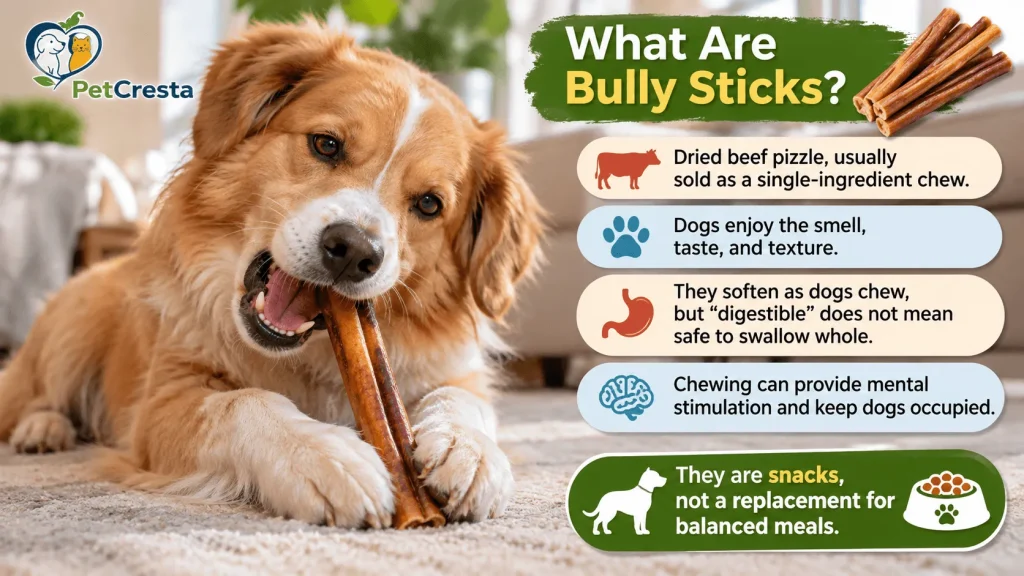
Bully sticks are dried beef pizzle, usually sold as single-ingredient dog chews. Dogs enjoy their smell, taste, and texture. They are snacks, not a replacement for balanced meals.
They soften as dogs chew, but “digestible” does not mean safe to swallow whole. A large chunk can still lodge in the throat or digestive tract.
Chewing can also provide mental stimulation and keep dogs occupied. However, every dog responds differently to treats, so owners should consider whether a particular chew is appropriate for their pet.
How Should Owners Choose the Right Bully Stick?
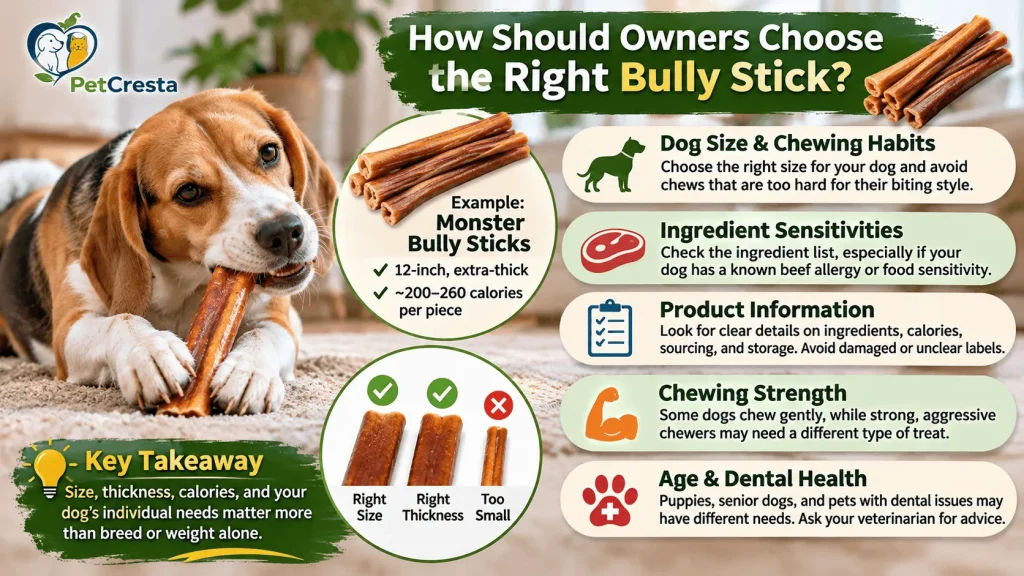
Size and thickness should suit the individual dog, not just its breed. A chew that is too small may be swallowed, while one that is too hard may be difficult to manage.
For example, Monster Bully Sticks are 12-inch, extra-thick beef chews containing approximately 200–260 calories per piece. Consider this calorie content when calculating your dog’s daily intake, especially if chews are offered regularly.
Before choosing, check:
- Dog size and chewing habits: Choose a chew that is appropriately sized for your dog and cannot be swallowed whole. Avoid giving a very hard chew to a dog that bites down forcefully.
- Ingredient sensitivities: Check the ingredient list, especially if your dog has a known beef allergy or food sensitivity.
- Product information: Look for clear ingredient, calorie, sourcing, and storage details. Avoid damaged packaging or products with unclear labeling.
- Chewing strength: Some dogs gently work on a chew, while others try to break it into pieces quickly. Strong, aggressive chewers may need a different type of treat to reduce the risk of swallowing large pieces.
- Age and dental health: Puppies, senior dogs, and pets with missing or damaged teeth may have different chewing needs. Ask your veterinarian whether a particular texture is suitable.
A dog’s weight alone does not determine the right chew. Two dogs of similar size may have very different chewing habits and abilities.
What Safety Risks Should Dog Owners Know?
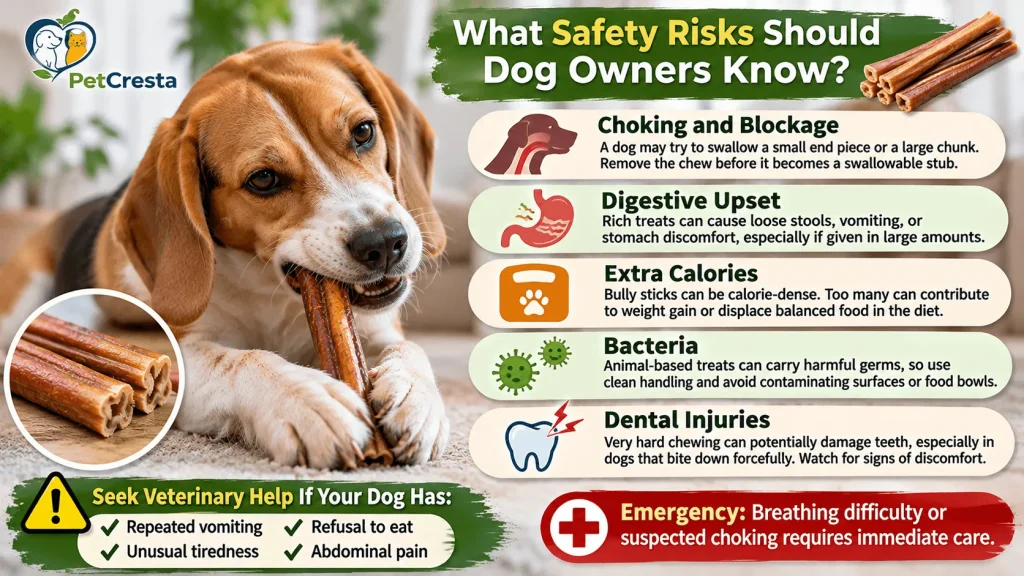
Even a natural, single-ingredient chew can cause problems. The main risks are linked to how a dog chews, how much it eats, and how the treat is handled.
- Choking and blockage: A dog may try to swallow the small end piece or a large chunk. Remove the chew while it is still large enough to hold safely, before it becomes a swallowable stub. A suitable chew holder may help, but it does not replace supervision.
- Digestive upset: Rich treats can cause loose stools, vomiting, or stomach discomfort, particularly when introduced suddenly or given in large amounts.
- Extra calories: Bully sticks can be calorie-dense. Too many can contribute to weight gain or displace balanced food in the diet.
- Bacteria: Animal-based treats can carry harmful germs, so clean handling matters. Bacteria may also transfer to household surfaces and food bowls if treats are handled carelessly.
- Dental injuries: Very hard chewing can potentially damage teeth, particularly in dogs that bite down forcefully. Watch for signs such as chewing on one side of the mouth, dropping food, or showing discomfort while eating.
Seek veterinary help for repeated vomiting, unusual tiredness, refusal to eat, or abdominal pain. Breathing difficulty or suspected choking is an emergency.
How Can You Make Chewing Safer?
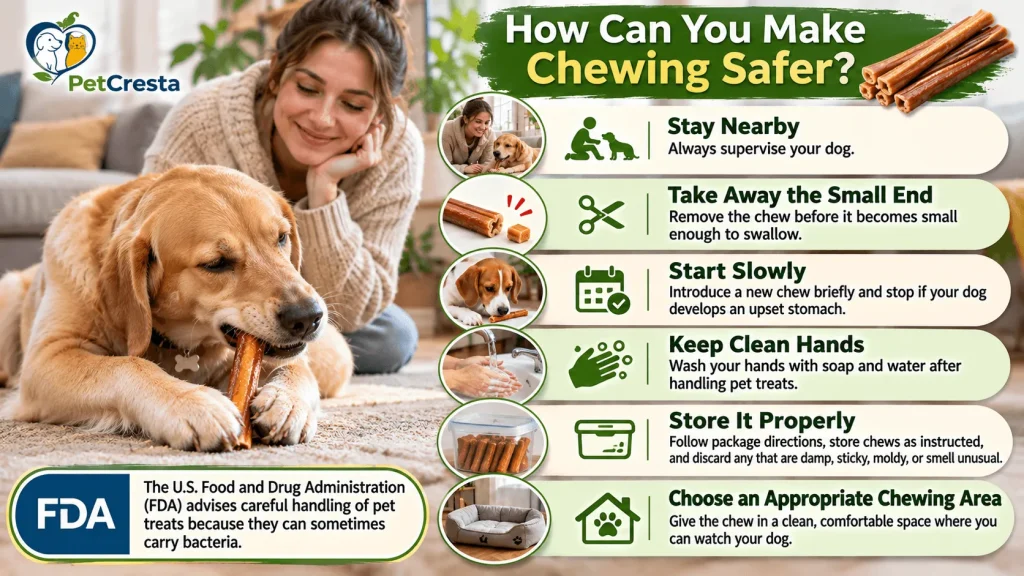
Use these habits to lower the risks:
- Stay nearby: Always supervise your dog.
- Take away the small end: Remove the chew before your dog can fit the remaining piece entirely into its mouth. Dogs that gulp treats may need an even earlier cut-off.
- Start slowly: Introduce a new chew briefly and stop if your dog develops an upset stomach.
- Keep clean hands: Wash your hands with soap and water after handling pet treats.
- Store it properly: Follow package directions and store unused chews as instructed. Discard one that becomes damp, sticky, moldy, or smells unusual.
- Choose an appropriate chewing area: Give your dog the treat in a clean, comfortable space where you can watch them. This also makes it easier to notice changes in their chewing behavior.
The U.S. Food and Drug Administration also advises careful handling of pet food and treats because they can sometimes carry bacteria. Its pet food and treat safety guidance recommends washing hands after handling treats and cleaning feeding utensils.
How Often Can Dogs Have Bully Sticks?
There is no schedule that suits every dog. The right amount depends on calorie needs, health, and the chew itself.
The World Small Animal Veterinary Association advises that treats should make up less than 10% of a dog’s daily calorie intake. A thick bully stick may use much of that allowance, especially for a smaller dog. Check the calorie information, account for other treats, and adjust meal portions with veterinary guidance rather than adding chews on top of the usual diet.
Owners should also consider how treats fit into their dog’s overall feeding routine. If a dog receives training rewards, table scraps, or other snacks throughout the day, those calories need to be included in the daily total. Keeping track of treat portions can help prevent accidental overfeeding.
Dogs with swallowing problems, digestive disease, food allergies, dental issues, or weight concerns may need another option. Ask your veterinarian if your dog has a medical condition or prescribed diet.
The Bottom Line
Bully sticks can be an enjoyable chew for some dogs when the size, ingredients, and calorie content are appropriate. They still need close supervision, careful handling, and timely removal before the remaining piece can be swallowed. Consider your dog’s chewing style and health rather than assuming one chew suits every pet. If you are unsure whether a bully stick is appropriate, your veterinarian can help you choose a safer option for your dog.
FAQ’s
Some puppies may manage appropriately sized chews, but ask your veterinarian first and supervise closely because their teeth, jaws, and chewing habits are still developing.
Chewing may help scrape some material from tooth surfaces, but it does not replace daily toothbrushing or professional dental care.
Not necessarily; daily use may exceed an individual dog’s treat-calorie allowance, so frequency should be based on the chew’s calories and the dog’s diet.
Soaking is generally unnecessary and may change the chew’s texture, so follow the manufacturer’s instructions rather than modifying the product.