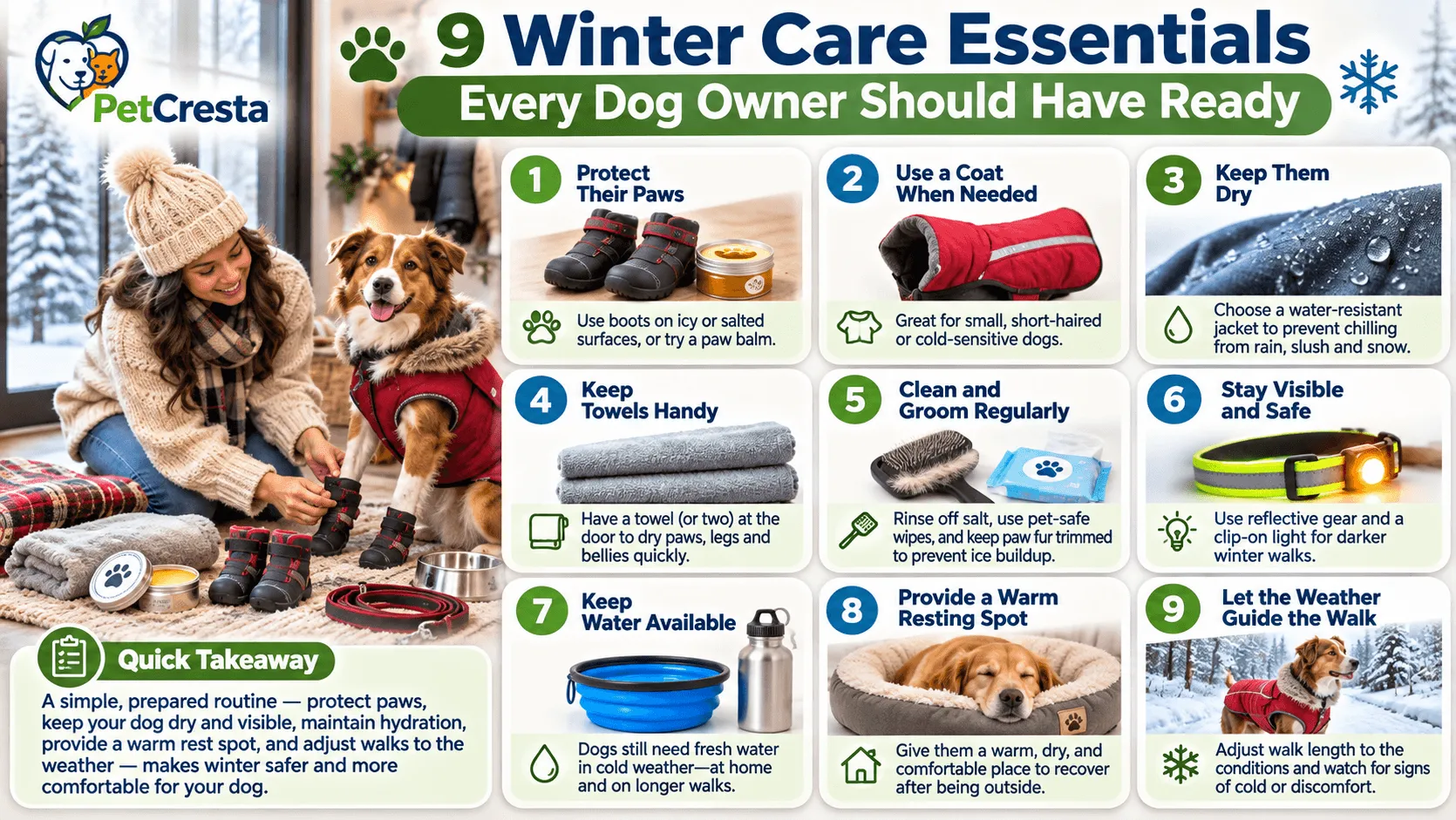
9 Winter Care Essentials Every Dog Owner Should Have Ready
It’s wild, but researchers say dog owners are almost 50% less likely to walk their dogs once winter hits. Half! The thing is, dogs don’t magically need less exercise because it’s January.
We just end up staring at that mess by the door: drippy leash, numb fingers, muddy paw prints all over the last clean floor in the house.
Nobody’s mustering sheer willpower at 6 a.m. in sleet. The trick is to have the right stuff waiting by the door before you groan and grab the leash. Here’s exactly what should be there.
1. Start With the Paws; They Get the Worst of It
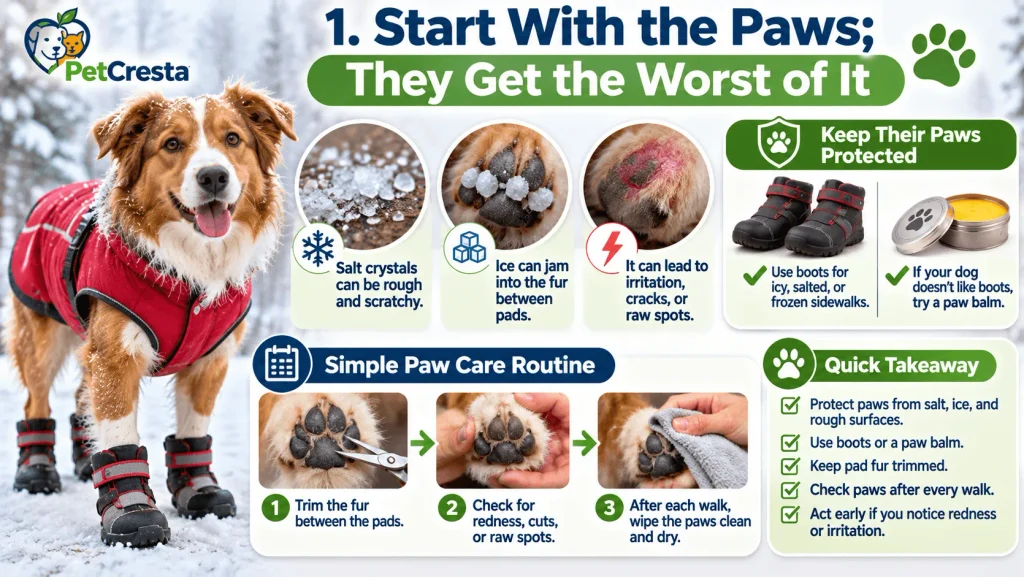
Paws take the hit every time. Salt crystals? They’re rough and scratchy. And ice jams right into the fur between their pads. Unless you’re a mind reader, you’ll never know which sidewalks have pet-safe salt and which ones went with the cheap stuff.
That’s why winter paw protection for dogs is a must. Boots are great for icy, salty, or frozen sidewalks. If your dog freezes in place at the sight of boots, try a paw balm.
Also, trim that fur between their pads. After every walk, take a second to check for redness or raw spots. Seriously, two seconds can save your dog a lot of pain.
2. Does Your Dog Really Need a Coat?
Sometimes yes, sometimes no. Small or short-haired dogs love a cozy sweater, even for quick walks. Thin-coated breeds- think Chihuahuas or Greyhounds- hate the cold more than you do.
Super active dogs? They can often skip the coat since they’re generating plenty of heat while running wild. But a dog trotting down the trail isn’t the same as one sniffing the same bush for five whole minutes; you know which one gets cold faster.
As a rough guide, most dogs start feeling chilly below 32°F (0°C). If you’re cold, your dog probably is, too. Also, make sure the coat fits right and lets your dog move the way they want.
3. Wet Cold Is a Whole Different Animal
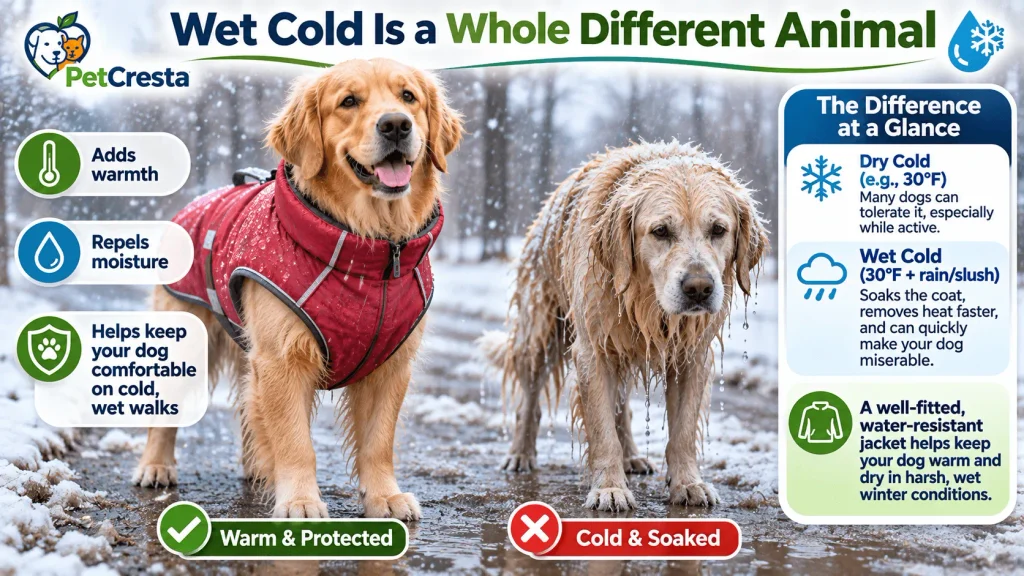
There’s cold, and then there’s wet cold. Once a dog’s fur gets soaked, they lose heat much faster. A pup who tolerates a dry 30°F could be miserable and shivering if their coat gets wet from slush or rain. That’s where winter dog jackets come in handy, especially for dogs that struggle with cold, wet weather.
A well-fitted jacket adds an extra layer of warmth, while water-resistant options help keep moisture out. It’s much better to prevent your dog from getting soaked than to deal with a cold, shivering pup afterward. Imagine two dogs out on a winter walk: one is warm and protected in a jacket, while the other is dripping wet.
Want to guess which one’s begging to go home sooner? I’m betting on the unhappy, soggy one.
4. Stash Towels Where You Actually Need Them
Have a towel (or two) ready at the door. The first’ll be soaked after one good shake, so you’ll want a backup. Use a damp towel to wipe paws, legs, and bellies, clearing off salt, ice, and any chemicals.
Then get everything dry, fast; wet fur just saps their warmth. And when your dog shakes at the door? He’s mostly flinging that slush onto your clean wall.
5. Wipes, Warm Water, and a Bit of Grooming
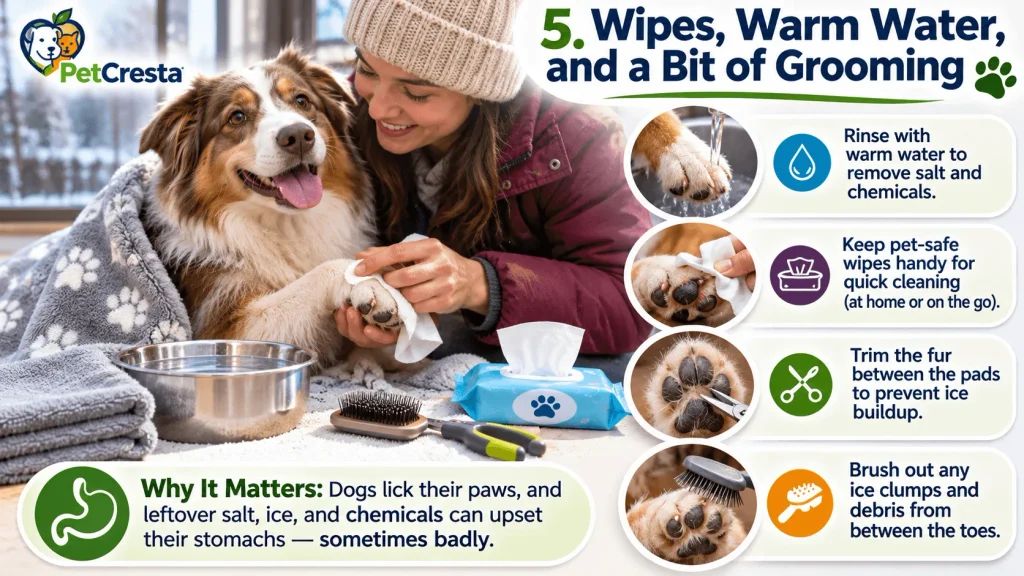
This stuff’s important for more than your floors. Dogs lick their paws, and all that salt and gunk can mess with their stomachs; sometimes badly.
Rinse with warm water to clear off salt and chemicals, and keep pet-safe wipes (or even baby wipes if you’re out and about) handy for quick cleaning.
Get in between the toes, brush out any ice clumps, and keep the fur between the pads trimmed. It’s boring, sure. But you’d rather spend a few minutes on this than deal with a dog chewing at sore feet.
6. Dark Mornings Mean It’s Time for Reflective Gear
Winter steals daylight, and suddenly you’re walking your dog before sunrise or after sunset a lot more than you were in July. A reflective leash, vest, or collar helps cars and everyone else see you coming. Snap on a little clip-on light for extra backup.
If your dog’s got a dark coat and you’re out before the sun’s up, you’ll be practically invisible without some reflective gear. And while you’re at it, grab something reflective for yourself, too.
It is also worth checking that your dog’s collar, ID tag, leash, and harness are secure. Winter weather can make an escaped dog harder to spot, so reviewing basic lost-dog prevention and search steps before you ever need them can be useful.
7. Water Doesn’t Stop Being Important Just Because It’s Cold
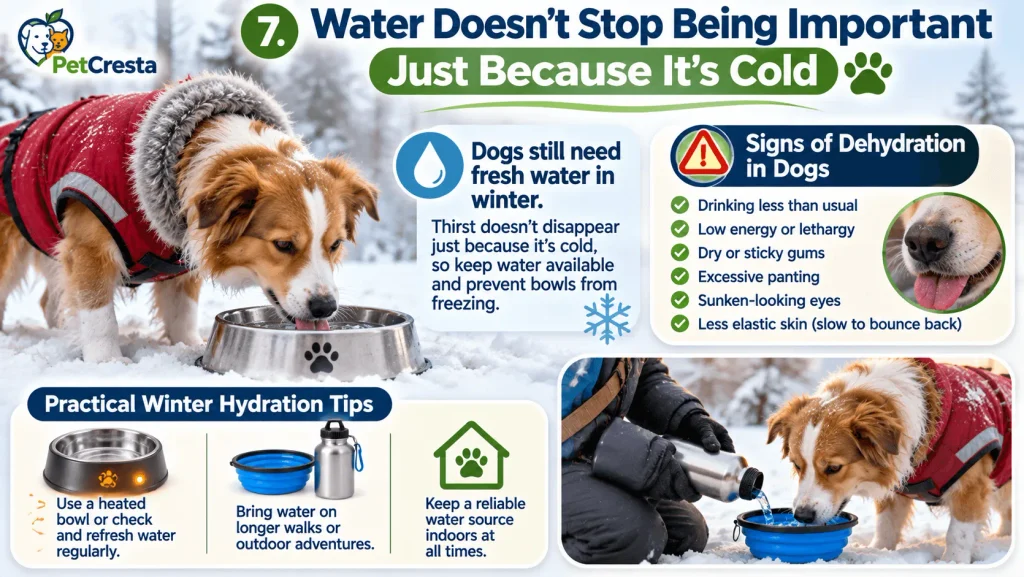
Thirst doesn’t disappear in winter. Dogs need fresh water even when it’s freezing, so make sure their water bowls aren’t just blocks of ice.
It is also useful to know the signs of dehydration in dogs, especially if your dog is drinking less than usual, seems lethargic, or has other symptoms.
If you’re out for longer walks, toss a water bottle in your bag. It’s easy to forget until your dog’s lagging behind and panting.
8. Give Your Dog a Warm, Dry Spot to Land
When you both finally make it inside, your dog needs somewhere warm and dry to recover. A soft bed or a pile of blankets in a cozy spot works perfectly. If your dog has ongoing stiffness or struggles to stand, climb stairs, or walk comfortably, PetCresta’s guide to joint pain and stiffness in dogs explains common joint-support options and when veterinary guidance is appropriate.
If your dog’s still shivering, warm them up with blankets and take it slow. If they don’t perk up, call the vet. The main thing is to set up the spot before winter really hits.
9. Let the Weather Decide The Walk
There’s no single rule about how long winter walks should be. Age, breed, coat, and health all matter. So pay close attention to your dog, not just the thermometer. If you see shivering, paw-lifting, slowing down, whining, or stubborn refusal to move, it’s time to head in.
Icy spots are rough for older dogs, especially those with arthritis; they fall easier than you’d think. On the nastiest days, keep walks short, and consider shoveling out a bathroom patch near the door.
Small Habits Make Better Walks
Winter dog care does not require a cupboard full of specialized equipment.
The most useful routine is straightforward: protect the paws, keep your dog dry, use clothing when the individual dog needs it, improve visibility, maintain access to water, and pay attention to changes in behavior.
A basket containing boots or paw balm, towels, reflective gear, a light, and basic cleaning supplies can remove much of the friction from cold-weather walks.
Most importantly, let your dog tell you when conditions have become uncomfortable. A shorter walk on a miserable day is often a better choice than forcing the usual routine.
FAQs
Useful winter dog care essentials include paw protection, towels, appropriate cold-weather clothing, reflective walking gear, fresh water, and a warm indoor resting area. The exact equipment your dog needs depends on their coat, size, health, age, activity, and local weather.
There is no single temperature that is unsafe for every dog. Size, breed, coat thickness, age, health, wind, moisture, acclimation, and length of exposure all affect cold tolerance. Watch your dog’s behavior and shorten the walk if they show discomfort.
Not every dog needs boots, but they can be useful on icy, very cold, rough, or heavily salted surfaces. Boots should fit correctly and should not rub, twist, or interfere with normal walking.
It is sensible to rinse or wipe away road salt and de-icing residue after winter walks. Use lukewarm water or a clean damp cloth, then dry the paws and check between the toes for irritation or packed ice.