
St. Berdoodle Dog Breed: Size, Temperament, Cost & Complete Care Guide
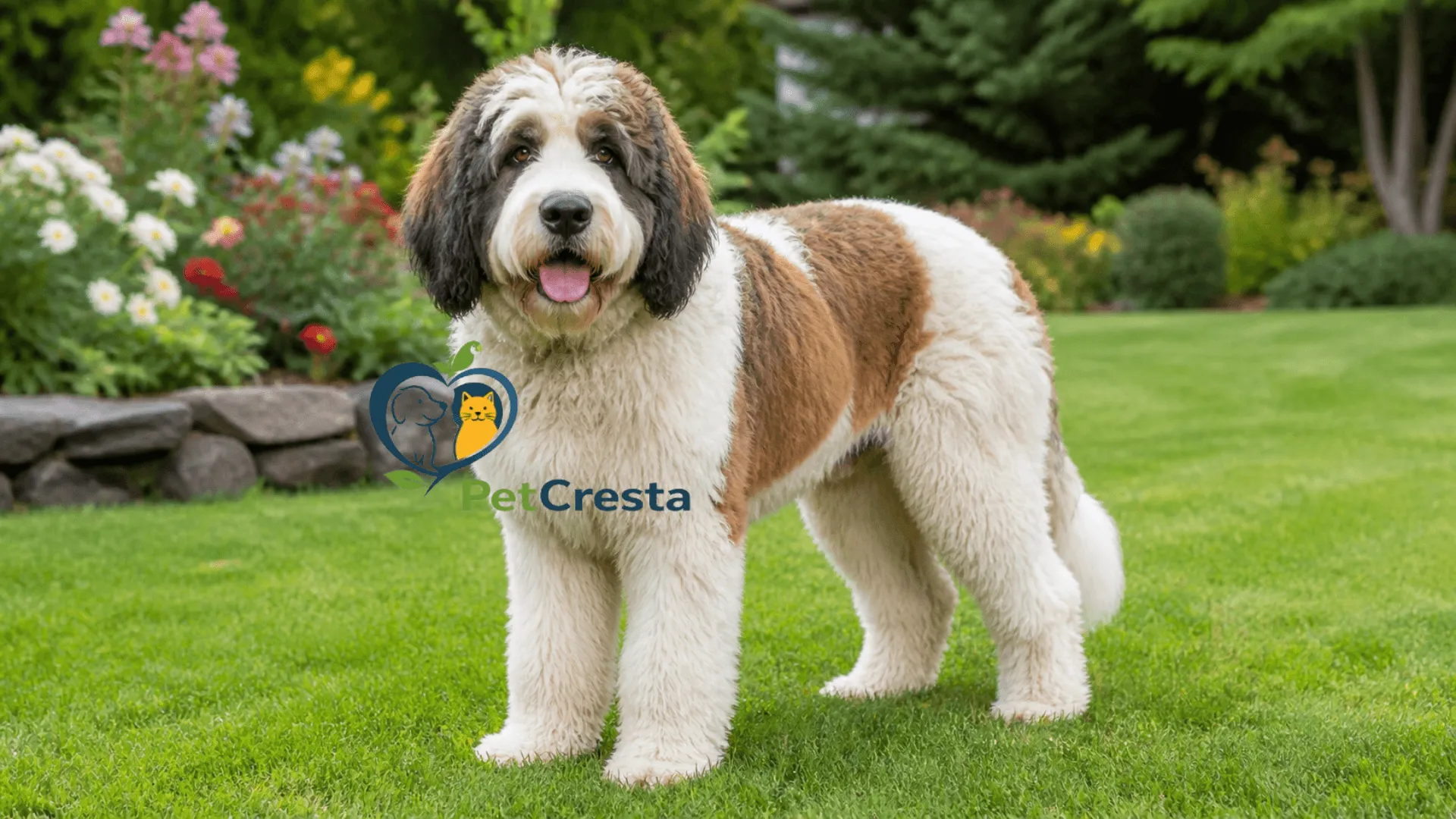
A Berdoodle St is a large companion cross that combines the scale and steadiness of the Saint Bernard with the trainability and coat variation of the Poodle. Many are affectionate, family-focused, and closely attached to their household, but daily life with one is shaped by giant-dog realities such as grooming, drooling, food cost, slow maturity, and long-term joint care.
This guide explains what this mix is like to live with, how big it can get, how coat type changes grooming needs, what health issues deserve attention, what ownership usually costs, and whether this breed is a practical fit for the home.
TL;DR: Is a St. Berdoodle Right For You?
A St Bernard can be an excellent fit for homes that want a large, affectionate companion and are ready for grooming, training, food costs, drool, and slow maturity. It is usually a poor fit for homes that want a very low-maintenance pet, a small dog, or a tidy doodle with minimal grooming and mess.
| Best fit | Less ideal fit |
|---|---|
| Families wanting a close companion | Homes wanting a very low-maintenance pet |
| Households with room for a large dog | Very small homes with limited space |
| Owners are prepared for grooming work | People expecting a neat, low-mess doodle |
| People are ready for steady training | Homes with long daily absences and no support plan |
| Buyers with a realistic large dog budget | Buyers focused only on a low purchase price |
Saint Berdoodles Characteristics At A Glance
This quick chart gives a fast overview before the full guide.
| Trait | Typical pattern |
|---|---|
| Breed type | Large to giant companion cross |
| Parent breeds | Saint Bernard and Poodle |
| Height | Often around 24 to 30 inches |
| Weight | Commonly about 70 to 180 pounds, sometimes more |
| Lifespan | Often around 8 to 12 years |
| Coat | Straight, wavy, or curly |
| Shedding | Low to moderate, sometimes higher |
| Drooling | Mild to heavy, depending on structure |
| Energy level | Moderate |
| Trainability | Usually good with calm, consistent guidance |
| Child fit | Often strong with supervision |
| Apartment fit | Limited in most homes |
| Grooming demand | Moderate to high |
| Main concerns | Joint health, bloat risk, coat upkeep, ears, skin |
Quick Answer: What Is A St Berdoodle?
A Bernard Siant is a St Bernard and Poodle mix. It is a large companion cross, not a standardized pure breed, so size, coat type, shedding, drooling, and energy level can vary more than many buyers expect.
Most St. Bernards are affectionate and people-oriented, but the daily experience depends heavily on parent influence, especially when it comes to adult size, grooming workload, and house mess. For buyers comparing large family-oriented doodles with different coat and size patterns, the Golden Mountain doodle is another strong side-by-side option.
Parent Breed Influence And Breed Background
The Berdoodle comes from crossing a Saint Bernard with a Poodle. Like many doodle mixes, it is a companion cross rather than a standardized pure breed. That matters because adult size, coat type, shedding, drooling, and energy can vary more than many first-time buyers expect.
The Saint Bernard side often contributes size, substance, a broad frame, and a calmer family presence. It can also increase drooling, heat sensitivity, and the need for careful joint support during growth.
The Poodle side often contributes trainability, alertness, and coat variation. If you are leaning more toward the Poodle side and want a more common doodle comparison, the standard goldendoodle is worth reviewing as well. In some dogs, it may also reduce visible shedding, but it does not create a guaranteed hypoallergenic result.
This mix is not officially recognized by the American Kennel Club as a breed. Some hybrid registries list it, but there is no single breed standard that guarantees one adult outcome. The simplest way to think about a St Bernard is that one side often brings giant-dog structure while the other brings coat diversity and learning ability, and the finished dog can land anywhere between those patterns.
| Parent influence | What it may contribute |
|---|---|
| Saint Bernard | Size, bone, steadiness, drool potential, heat sensitivity |
| Poodle | Trainability, coat variation, alertness, and lower visible shedding in some lines |
Home Fit
This breed usually does best in homes that can manage both closeness and size. Many want steady contact with their people and do not thrive when treated like a distant yard dog.
Space matters, but routine matters just as much. A home with enough room, a clear daily structure, and time for grooming and training usually handles this mix better than a cramped home with long empty hours.
Practical setup also matters. Large dogs need safe flooring, enough room to turn and settle, a vehicle that can carry them comfortably, and a plan for warm weather because a heavy frame and thick coat can make heat harder to handle.
Home Fit Checklist
☐ Enough indoor space for a large body
☐ Time for brushing, training, and daily supervision
☐ Budget for food, grooming, and veterinary care
☐ Comfort handling a heavy adolescent dog
☐ Realistic expectations about drool and shedding
☐ A plan for alone time, heat, and exercise
Saint Berdoodle Size, Weight, Full Grown Expectations, And Growth Pattern
A full grown saint berdoodle is often large or giant. Many standard lines reach roughly 24 to 30 inches in height and about 70 to 180 pounds, though some individuals may fall outside that range depending on genetics, sex, and the size of the Poodle parent.
The body usually matures more slowly than many first-time doodle buyers expect. A dog may look big well before it is physically and mentally finished growing. That is why joint protection, controlled body weight, and early maneuvers matter so much.
The safest approach is to plan for a bigger outcome rather than a smaller hope. Beds, crates, feeding cost, transport, leash control, and living space all change once the dog moves into giant dog territory.
| Adult measure | What to expect |
|---|---|
| Berdoodle Height | Often around 24 to 30 inches |
| Saint Berdoodle weight | Commonly about 70 to 180 pounds |
| Build | Broad, heavy, strong bone |
| Maturity | Slow, often not fully settled until late adolescence |
Growth Pattern Snapshot
| Growth stage | What often happens |
|---|---|
| 8 to 16 weeks | Fast growth, heavy sleep need, frequent meals |
| 4 to 8 months | Long legs, awkward movement, rising appetite |
| 8 to 18 months | Heavy adolescent phase, manners matter more |
| 18 to 24 months | More filling out, steadier body control, slower mental maturity |
Mini Saint Berdoodle Vs Standard Saint Berdoodle
Mini St Berdoodle are usually produced by using a smaller Poodle parent. This can reduce the final size, but it does not create a toy dog. Many smaller lines are still sturdy, substantial dogs that take up far more space than the word mini suggests.
The better question is not whether the puppy is called mini. The better question is what the parent dogs weigh, how previous litters matured, and what adult range the breeder can realistically support.
In practical terms, standard lines are more likely to enter giant dog territory. Smaller lines may be easier to handle day to day, but they still need grooming, training, and realistic cost planning. If a smaller, more manageable Bernese-influenced doodle is the real goal, a miniature Bernedoodle is a helpful comparison before making a final decision.
| Type | Type |
|---|---|
| Mini line | Smaller than standard, but still often a sturdy medium to large dog |
| Standard line | Large to giant adult, heavier handling demand |
Saint Berdoodle Shedding, Coat, And Drooling
Saint Bernard and poodle mix can shed, and no coat type should be treated as guaranteed hypoallergenic. Some dogs have straighter coats that drop more visible hair. Others have wavy or curly coats that may leave less hair around the home but require more brushing and carry a higher matting risk.
The coat should be judged by maintenance, not only by appearance. A soft teddy bear look can still require frequent line brushing, regular clipping, careful drying after baths, and extra attention behind the ears, under the collar, and around the legs.
Drooling is separate from coat type. It depends more on lip shape, muzzle structure, heat, excitement, and drinking style. Some dogs stay fairly tidy, while others leave water and saliva on bowls, floors, toys, and furniture.
Texture And Grooming Load
| Coat type | Visible shedding | Matting risk | Grooming load |
|---|---|---|---|
| Straight | Often higher | Low to moderate | Moderate |
| Wavy | Low to moderate | Moderate to high | Moderate to high |
| Curly | Often lower | High | High |
Color Patterns
Color can vary widely. White and brown markings are common, but black st berdoodle, black and white st berdoodle, red and white, and mixed patterns also appear. Some dogs carry more Saint Bernard-style patching, while others lean more toward Poodle influence in color placement and coat texture.
Color does not predict shedding, grooming work, or drool. A black and white coat can still be straight, wavy, or curly, and each texture changes maintenance more than color does.
St. Berdoodle Hypoallergenic Expectations
No dog in this mix should be described as guaranteed hypoallergenic. A lower visible shedding coat may suit some allergy-sensitive homes better, but dander, saliva, and skin proteins still matter.
The most realistic expectation is moderation. Some dogs may be easier for a sensitive household, but none should be sold as allergy-proof.
Saint Berdoodle Temperament, Personality, And Family Life
Many dogs in this mix are affectionate, people-focused, and steady in the home. They often want to stay near their household and can be very rewarding companions for families that enjoy a close, involved dog.
A gentle temperament does not automatically make the breed easy. Size changes the conversation. Even a friendly dog can crowd doorways, bump into children, lean heavily into people, or become hard to manage if early manners are missing.
This mix often does well in family life when expectations are realistic. The strongest outcomes usually come from homes that supervise children, build calm indoor habits, and do not confuse friendliness with self-control.
Saint Berdoodle Personality
Many are companion-oriented and prefer to be part of the home routine. Some are playful and goofy, while others are more settled and observant. The common thread is usually social attachment.
With Children And Other Pets
This mix can do well with children and other animals when the dog is raised with structure, and the home uses common sense supervision. Older children often handle giant dog movement more easily than toddlers do.
Separation Related Behavior
Because many bond closely, some struggle with long periods alone. Pacing, chewing, vocalizing, and clingy behavior may appear when the dog is under-stimulated or when the routine changes suddenly.
Training, Intelligence, And Common Behavior Problems
The St Bernard mixed with Poodle is often trainable and responsive, especially when training is calm, reward-based, and consistent. The Poodle side often supports learning, while the Saint Bernard side may bring a slower, steadier pace.
The biggest problem is not intelligence. The biggest problem is that a large dog with weak manners becomes difficult to handle much faster than a smaller one. That is why training should focus on real-life skills first.
A dog that seems not to listen is often distracted, overexcited, confused, or moving through adolescence. In many cases, the issue is timing, environment, or weak reinforcement rather than stubbornness.
Aggressive-looking behavior should never be brushed off as normal for the breed. Fear, frustration, pain, guarding, and poor socialization can all play a role, and sudden behavior change deserves medical and behavioral attention.
| Problem | Common reason | Helpful response |
|---|---|---|
| Pulling on a leash | Excitement, weak leash foundation | Short, loose leash sessions in quiet areas |
| Jumping on people | Attention seeking, over arousal | Reward calm greetings and a controlled approach |
| Not listening | Adolescence, distraction, confusion | Simplify cues, lower distractions, improve rewards |
| Reactive behavior | Fear, frustration, pain | Veterinary check and structured training plan |
Exercise Needs, Activity Style, And Weather Limits
Saint Bernards do well with moderate daily exercise. They usually enjoy walks, sniffing time, light play, and family interaction more than repeated hard-impact activity.
The goal is steady movement, not overwork. A large frame benefits from joint-friendly routines and sensible pacing, especially during growth.
Warm weather deserves extra care. A heavy body and thicker coat can make heat harder to tolerate, so cooler walk times, shade, water, and rest breaks matter.
| Better activity choices | Poorer activity choices |
|---|---|
| Steady walks | Forced long-distance running |
| Scent games | Repeated high-impact jumping |
| Light play sessions | Long midday heat exposure |
| Swimming is enjoyed | Hard activity on slippery surfaces |
Grooming Routine And Bathing Schedule
This is rarely a low-care coat. Brushing, mat checks, ear care, nail work, paw trimming, and face cleanup all matter, especially in wavy or curly dogs.
Good home grooming usually follows a simple order. Brush through the coat fully, check hidden mat areas, inspect the ears, trim nails before gait changes, clean up the beard and paws, and dry the coat well after a bath.
Bathing should be based on coat condition, skin comfort, and how dirty the dog gets. Too much bathing can dry the skin, while poor drying can worsen tangles, odor, and skin trouble.
At Home Grooming Routine
| Step | What to do |
|---|---|
| Brushing | Work through the coat, not just the surface |
| Mat check | Look behind the ears, under the collar, legs, and tail base |
| Ear care | Check weekly for moisture and debris |
| Nail care | Trim regularly before posture changes |
| Face and paws | Clean beard, trim paw hair, remove trapped debris |
| Drying | Dry thoroughly after baths |
Feeding, Appetite, Bloat Prevention, And Weight Control
Feeding a large cross takes more thought than simply filling a bowl. Growth rate, stomach comfort, body condition, and joint support all matter.
Large breed puppy food is often the best fit during growth because it supports more controlled development. After maturity, the focus shifts toward balanced adult nutrition, portion control, and keeping the dog lean.
Bloat awareness is important in a large, deep-chested dog. Calm feeding habits, measured meals, and quick response to repeated retching, sudden restlessness, or a swollen abdomen can matter a great deal.
Hands-on body checks are more useful than coat appearance alone. Ribs should be easy to feel without a heavy fat layer, and a waist should still be visible from above.
| Feeding focus | Why it matters |
|---|---|
| Controlled puppy growth | Helps support joints during development |
| Set meal times | Supports digestion and portion control |
| Calm meal routine | May reduce stomach stress |
| Lean body condition | Lowers extra strain on joints |
Saint Berdoodle Health Issues And Lifespan
St Berdoodle Lifespan often falls in a medium range for a large cross, commonly around 8 to 12 years. Genetics, adult size, body condition, preventive care, and everyday management all influence long-term comfort.
Joint and orthopedic concerns are high on the list in a large dog. Stiffness, reduced willingness to exercise, uneven movement, or trouble rising can all suggest stress on the body. Ear trouble, skin irritation, and coat-related issues are also common practical concerns.
Stomach emergencies matter because large dogs can be at risk for bloat. Eye issues, mobility decline, and age-related wear may also appear over time, especially in heavier adults.
The goal of a useful health section is not to frighten the reader. It is to help the owner notice patterns early and seek care before a manageable problem becomes a harder one.
| Monitor early | Seek prompt veterinary care |
|---|---|
| Mild itching | Swollen abdomen |
| Light ear debris | Repeated retching |
| Slight weight gain | Collapse |
| Mild stiffness | Severe limping |
| Coat dullness | Trouble breathing |
Living With A St Berdoodle Puppy And Early Development
A Siant Berdoodle puppy needs an environment that protects growing joints and teaches body control early. Slippery floors, repeated jumping off furniture, frantic stair use, and rough greetings can create management problems later.
The puppy stage shapes the adult dog. Potty routine, crate comfort, leash introduction, greeting manners, handling tolerance, grooming exposure, and calm movement indoors should begin early and stay consistent. The goal is not only obedience. The goal is a large dog that can move safely through daily life without pulling hard, knocking into people, or turning excitement into chaos.
A large-breed puppy should not be managed loosely just because it still looks young. Mouthing, pulling, rough greetings, and poor body awareness become much harder to fix once the dog grows heavy. Good early socialization means calm, thoughtful exposure to people, surfaces, sounds, handling, grooming tools, and routine change. It should build confidence, not force overwhelm.
First Month Priorities
☐ Stable potty routine
☐ Calm crate practice
☐ Gentle brushing and paw handling
☐ Leash introduction
☐ Polite greeting habits
☐ Rest, structure, and predictable daily rhythm
Protect Growing Joints Checklist
☐ Use good floor traction where possible
☐ Limit repeated jumping off beds and couches
☐ Keep stair use controlled, not frantic
☐ Reward calm greetings
☐ Watch body weight closely during growth
Saint Berdoodle Price, Adoption, And Where to Buy
Purchase price is only one part of ownership cost. This mix is usually more expensive to keep than many medium-sized dogs because food, equipment, grooming, and preventive care all scale up with size.
Puppy price can vary widely based on breeder practices, location, parent health testing, and local demand. Some buyers focus too heavily on the purchase number and underestimate the long-term cost of feeding, grooming, training, and veterinary care for a large dog.
Adoption or rescue may cost less up front, but ongoing care still needs a realistic budget. The cheapest source is not always the safest one. A lower price means little if health testing, early handling, size expectations, and breeder transparency are weak.
| Cost area | What to expect |
|---|---|
| Purchase or adoption | Wide range, often higher than fully tested lines |
| Food | Higher than many medium breeds |
| Grooming | Moderate to high over time |
| Veterinary prevention | Often higher because of size |
| Equipment | Larger crate, bed, bowls, and harness |
| Training support | Often worthwhile during adolescence |
Breeder And Rescue Screening Checklist
A responsible source should be open about parent health, parent temperament, living conditions, expected adult size, and what coat outcomes are realistic. Clear answers matter more than polished marketing.
A good conversation should also cover what happens if the placement does not work out. Return policy, support after purchase, and honesty about shedding, drool, and grooming needs are all important.
Screening Checklist
☐ Parent health testing has been completed and explained
☐ Expected adult size is discussed realistically
☐ Parent temperaments are described clearly
☐ No guaranteed hypoallergenic claims are made
☐ Living conditions are clean and transparent
☐ Early socialization and handling are explained
☐ Return policy is clear
☐ The breeder or rescue answers practical questions directly
Saint Bernard Types And Generation Labels
Generation labels can be helpful, but they do not remove variation. Coat, size, shedding, and personality can still shift a great deal from one dog to the next.
An F1 dog is a first cross between the two parent breeds. An F1B dog is a backcross, often toward the Poodle side. An F2 dog comes from crossing two first-generation dogs.
In practical terms, some backcrossed dogs may show more Poodle coat influence. That may affect curl or visible shedding, but it still does not create a guaranteed adult result.
| Label | Meaning | What may influence it |
|---|---|---|
| F1 | First cross between the two parent breeds | Broad variation in build and coat |
| F1B | Backcross, often toward the Poodle | May increase curl or reduce visible shedding |
| F2 | A cross between two first-generation dogs | Still variable, not fully predictable |
St Berdoodle Vs Bernedoodle
This comparison is useful for families choosing between two large doodle mixes. Both can be affectionate and family-oriented, but daily life with them can feel different.
This mix is often heavier and more physically demanding at home. That can affect space, feeding cost, transport, drool management, and day-to-day handling. A Bernedoodle may offer more size flexibility depending on the line. For families who like the doodle look but want more flexibility in size and daily handling, Bernedoodle puppies are a practical comparison point.
Coat care can be significant in both. The practical difference often comes down to adult size, drool, and whether the household is ready for giant dog realities.
| Point | St Berdoodle | Bernedoodle |
|---|---|---|
| Body size | Often larger and heavier | More variable, sometimes easier to size down |
| Drool potential | Often higher | Often lower |
| Handling demand | Higher in many homes | Sometimes easier in smaller lines |
| Coat care | Moderate to high | Moderate to high |
| Best fit | Homes ready for giant dog logistics | Homes wanting more size flexibility |
Siant Berdoodles Pros And Challenges At A Glance
A balanced summary helps show the breed clearly.
| Pros | Challenges |
|---|---|
| Affectionate nature | Large body size |
| Strong family bond | Meaningful grooming demand |
| Often trainable | Food and care costs can be high |
| Impressive presence | Drool and house mess may be significant |
| Usually, moderate activity needs | Slow maturity and joint care matter |
Conclusion
This breed can be a warm, steady, and rewarding companion when the home is ready for its size, grooming needs, cost, and slow maturity. The strongest outcomes usually come from realistic expectations, calm training, careful growth management, and good body weight control.
Before bringing one home, the most useful questions are practical. Is there enough space, enough grooming tolerance, enough budget, and enough patience for a large dog that may take time to mature well? If the answer is yes, this mix can be a strong family fit.
FAQ’s
A full-grown adult is often large or giant. Many standard lines mature around 24 to 30 inches and roughly 70 to 180 pounds, though size can vary with genetics, sex, and the size of the Poodle parent. The better plan is to prepare for a heavier outcome rather than expecting the smallest estimate. Physical growth can outpace mental maturity. Some dogs look adult early, but still need time, structure, and careful body weight management before they become truly settled.
Listening often weakens during adolescence, when distraction, excitement, and inconsistency begin to compete with previously learned habits. In many cases, the dog still knows the cue, but struggles to respond in a stimulating setting. Training usually improves when tasks are simplified, rewards become more meaningful, and the environment is made easier. Sudden change should also raise the question of discomfort, stress, or pain.
Aggressive behavior can come from fear, pain, frustration, poor socialization, or resource guarding. It should not be treated as a normal personality trait for this mix without closer evaluation. Large dogs should be assessed early when warning signs appear. A sudden change in tolerance, handling comfort, or body language deserves both medical attention and structured behavior support.
Many are friendly or neutral with new people, but not every dog is instantly social. Some are more watchful at first, and their large size alone can feel imposing even when their intent is calm. Early socialization, leash control, and calm greetings matter because a giant dog with weak manners is much harder to manage in public.
Some can, especially if they are calm, people-oriented, and comfortable being handled in different settings. The better question is whether the individual dog has the right stability, training, and public behavior for that work. Size, drool, grooming, and ease around strangers still need to be considered.
Usually not in most homes. The main issue is not only exercise, but space, movement, transport, grooming, drool, and the daily logistics of living with a large or giant dog. A smaller line may be easier to manage, but this mix is generally better suited to homes with more room and a practical setup.
Bathing depends on coat condition, lifestyle, skin comfort, and how well the dog dries afterward. Some need more frequent cleaning because of dirt, odor, or drool, while others can go longer between baths. The bath itself is only one part of the routine. Brushing, full drying, ear checks, and mat inspection matter just as much in keeping the coat comfortable and the skin healthy.
Ownership is often more expensive than many first-time doodle buyers expect. Food, grooming, large size preventives, bigger equipment, and possible orthopedic care can add up quickly. The first year is often the most expensive because setup costs arrive all at once. A realistic budget helps prevent corners from being cut on grooming, training, or medical care later.
This mix should be bought only from a source that is open about parent health, temperament, size expectations, and coat reality. Rescue and adoption are also worth checking, especially for buyers open to an older puppy or adult dog.
A large breed puppy formula is often the best choice during growth because it supports more controlled development. As an adult, this mix usually does best on balanced nutrition with measured portions and close body weight control.
Common grooming problems include hidden mats, ear moisture, beard odor, overgrown nails, and debris trapped in paw hair. Wavy and curly coats often need more care than they first appear to need.
Brush through the full coat, check hidden mat areas, inspect the ears, clean the face and paws, and keep the nails trimmed. After bathing, dry the coat fully so damp fur does not worsen tangles, odor, or skin trouble.
References
- A Z Animals, Saint Berdoodle
- Prize Poodles and Doodles, Key Features Every Potential Owner Should Know About St Berdoodles
- Dog Breed Info, Saint Berdoodle
- Karing Saints N Doodles, F1 vs F1B St Berdoodle Comparison
- TrustedHousesitters, St Berdoodle Facts
- My Darling Doodles, About St Berdoodles
- Wag Walking, Saint Berdoodle
- Rover, Saint Berdoodle Facts
- PetGuide, Saint Berdoodle
- The Furry Farmhouse, Saint Berdoodle
- Prize Poodles and Doodles, Saint Berdoodle Care Handbook
- Animal Corner, Saint Berdoodle