Everything About Miniature Australian Labradoodles
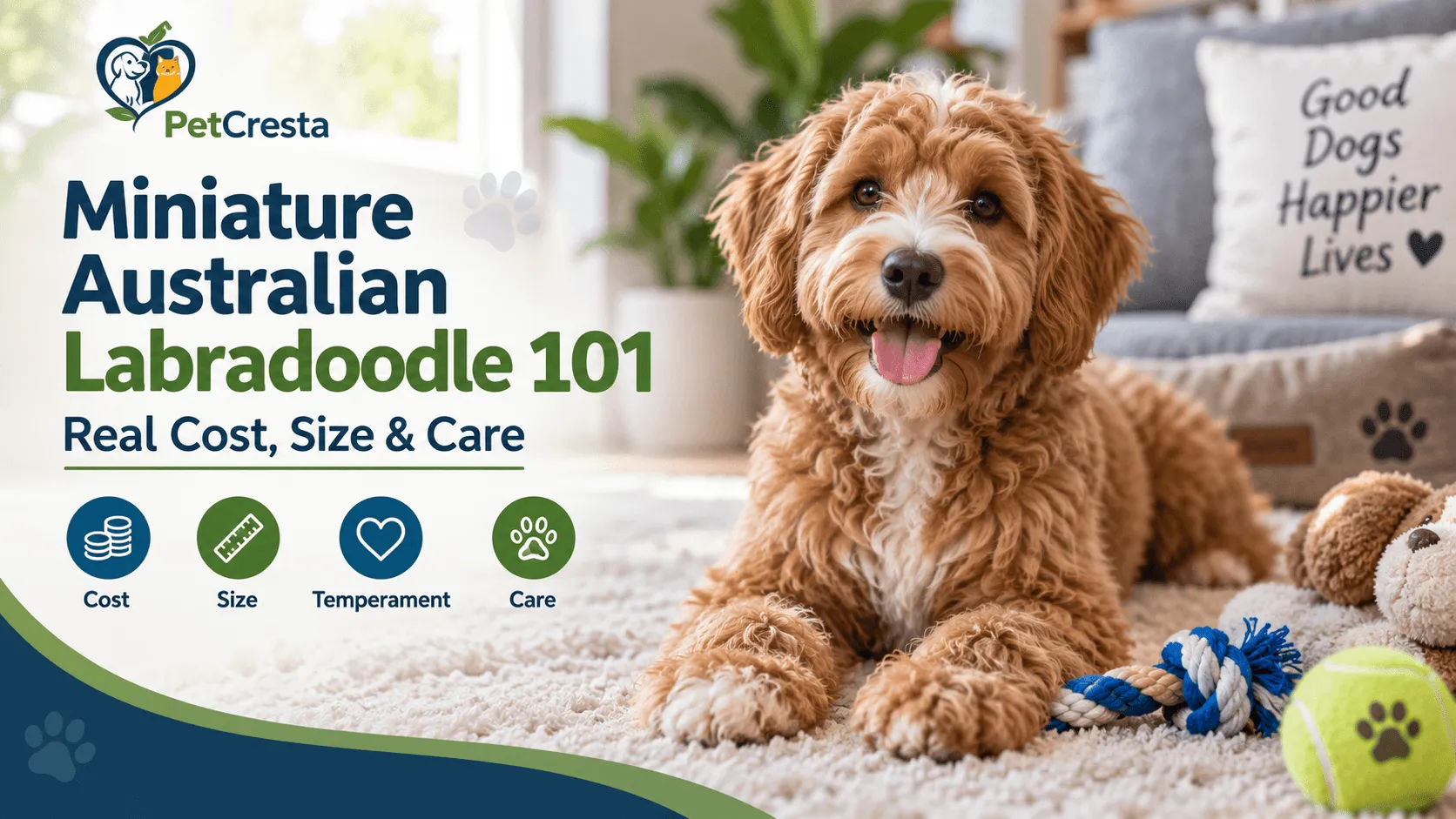
The Mini Australian Labradoodle can be a great addition to the right family. This guide will answer the question of what this breed is, how large it typically becomes, what it requires for proper coat maintenance, the expenses of owning one and if it is compatible with everyday life.
There’s a reason why this breed is attractive. It’s not too big, warm and friendly and some shed less than other dogs. However, despite their size and reduced shedding, it doesn’t mean they are easy to keep.
It’s the name that counts, too. Australian Labradoodle miniature refers to a very different breed from a general mini Labradoodle label, and might be more predictable in coat, temperament and size.
Quick Verdict: Is An Australian Labradoodle Miniature Right For Me?
| Best fit | Think twice |
|---|---|
| Homes wanting a social companion | Homes away for long hours every day |
| Families ready for grooming and training | Homes wanting a very low effort coat |
| Owners who enjoy daily interaction | Buyers wanting an exact adult size guarantee |
| People are comfortable with routine care costs | Buyers focused mostly on color or trend appeal |
| Homes that want a trainable, people-focused dog | Homes expecting a highly independent dog |
An Australian labradoodle mini is another type of dog that is a good choice for a family looking for a companion that’s not a “dog that doesn’t get in the way”.
Quick Answer: What Is An Australian Labradoodle Miniature?
The Australian Labradoodle mini size range is the smaller version of the multi-generational Labradoodle. Many adults end up at 14-16 inches tall and 15-25 pounds, but miniature still isn’t a sure thing.
The breed is often social, trainable and loving, but with a daily routine and grooming, it can feel more demanding than it seems.
Australian Labradoodle Mini At A Glance
| Trait | What to expect |
|---|---|
| Size | Small companion range |
| Height | Often about 14 to 16 inches |
| Weight | Often about 15 to 25 pounds |
| Lifespan | Commonly into the teen years |
| Coat type | Fleece, wool, or a less predictable outlier coat |
| Shedding level | Usually low, not zero |
| Grooming level | Moderate to high |
| Exercise needs | Daily activity plus mental work |
| Training style | Reward-based, calm, consistent |
| Family fit | Often strong with structure and supervision |
| Apartment fit | Possible if enrichment needs are met |
| Maintenance level | Higher than many expect |
| Professional grooming interval | Often every 6 to 8 weeks |
| Full height timing | Often looks close by 6 to 8 months |
| Full maturity timing | Often 12 to 18 months |
Australian Labradoodle Mini: History And Breed Development
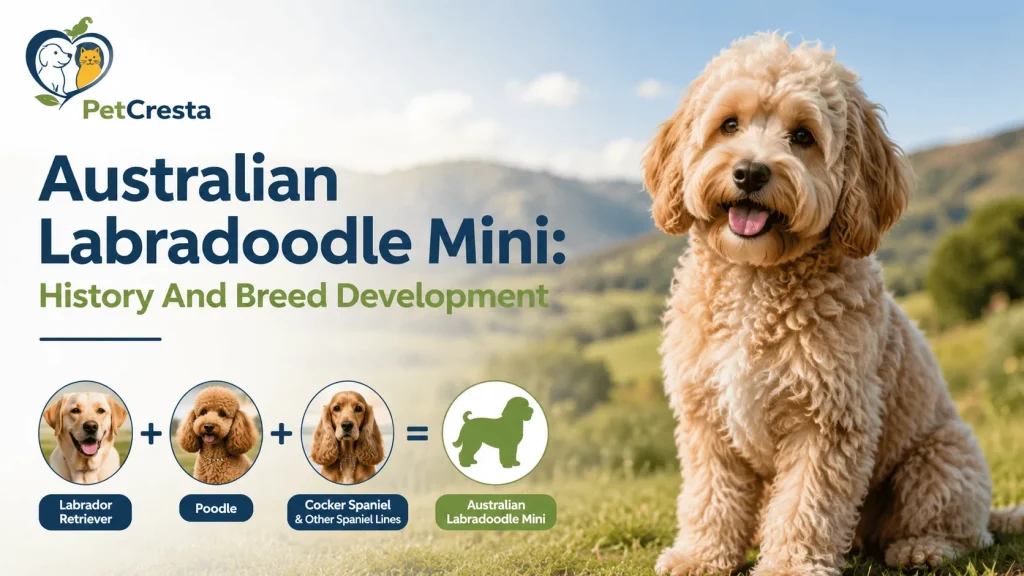
This cross was not just a Labrador and Poodle, but was bred over multiple generations. The desired outcome was a dog that would have more predictable coat characteristics and a more social temperament and clearer size patterns.
The modern Australian Labradoodle is believed to have originated in the late 80s when breeders sought to create a service/companion breed with good trainability and a coat that would be more suitable for some allergy sufferers. Labrador Retriever and Poodle were the foundation lines, which were refined with other spaniel lines, particularly Cocker Spaniel, to enhance consistency in temperament, coat and companionability.
That’s important because potential buyers don’t just want a cuddle-worthy puppy. They are attempting to make as accurate a prediction of adult size, coat maintenance and overall disposition as they can.
Breed Standards And Naming Note
Miniature size ranges are slightly different in wording by various breed organizations. This can create the appearance of inconsistencies in size figures when read on the Internet.
This is a normal variation. It does not imply that the breed term is blank. Miniature is not a single adult target, but a range.
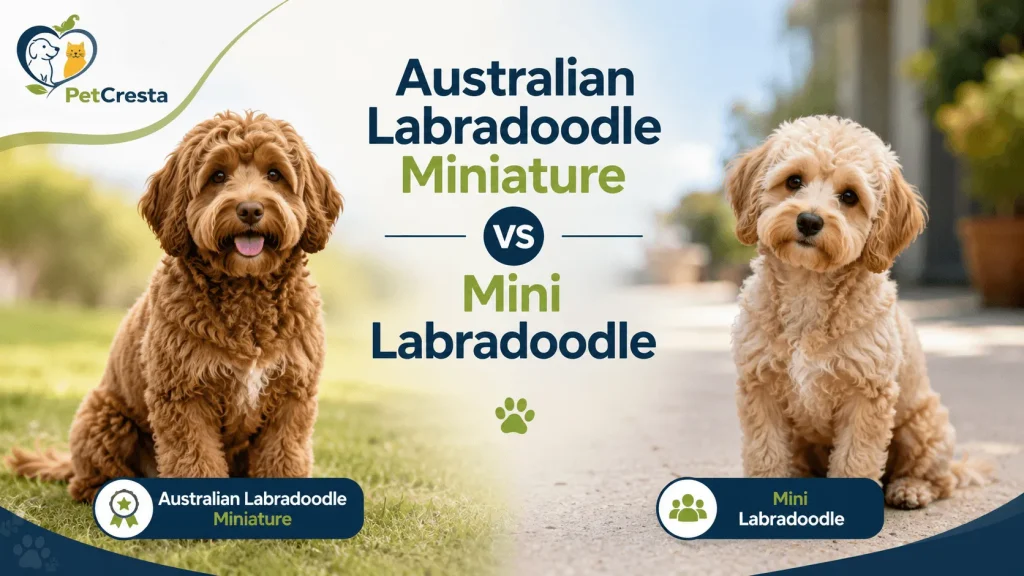
Australian Labradoodle Miniature Vs Mini Labradoodle
| Point | Australian labradoodle miniature | Mini Labradoodle |
|---|---|---|
| Breeding background | Usually multigenerational | Maybe first cross or mixed background |
| Trait consistency | Often more consistent | Can vary more |
| Size predictability | Often better, still not exact | Can swing more widely |
| Coat predictability | Often stronger | Less consistent |
| Label meaning | Usually linked to pedigree records | Often used more loosely |
| Why records matter | Helps with expectations | Often, a less clear lineage picture |
This difference helps explain why two small Labradoodle-type dogs may look similar as puppies but mature quite differently.
Australian Labradoodle Miniature Vs Cockapoo Vs Aussiedoodle
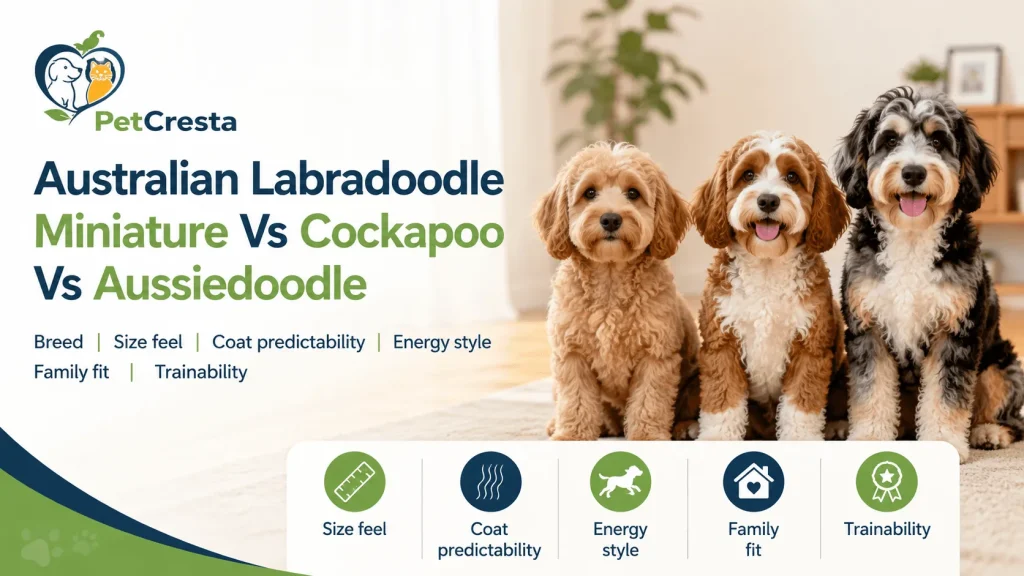
| Breed | Size feel | Coat predictability | Energy style | Family fit | |
|---|---|---|---|---|---|
| Australian labradoodle miniature | Small companion range | Often more consistent | Moderate, social, involved | Often strong | Usually very good |
| Cockapoo | Small to medium feel | Can vary | Cheerful, busy, people-focused | Often strong | Usually good |
| Aussiedoodle | Often more intense | Varies | Higher drive in many lines | Depends on household activity | Often very bright |
An Aussiedoodle is a whole other ball game entirely. This is important because the way people use and manage energy as they go through their day might be a bit different. For readers comparing similar companion doodles, a Miniature Cockapoo can also be worth reviewing because the size range and household energy level may overlap in some homes.
Mini Australian Labradoodle Size And Growth
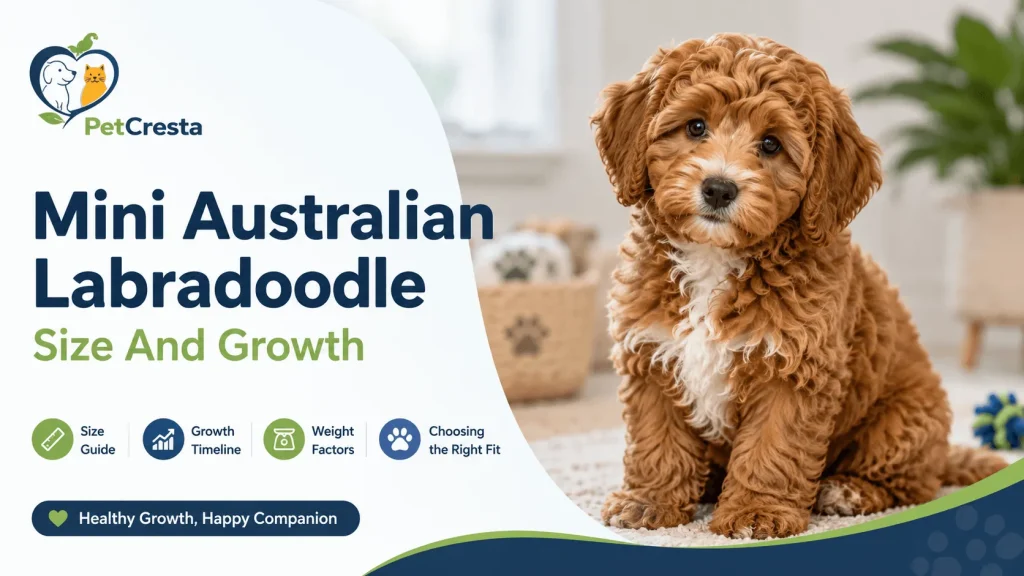
This dog will remain in a small companion dog size. Most adults are approximately 14 to 16 inches tall and 15 to 25 pounds, but it depends on lineage history and parent size.
Miniature is a size range, certainly not an exact promise. Mini can puppies can grow a bit bigger or smaller than their original size.
| Age | Typical Stage | What Owners Usually Notice |
|---|---|---|
| 8 weeks | Early puppy | Small frame, round features, rapid growth ahead |
| 3 months | Young puppy | Longer legs, rising energy, bigger appetite |
| 6 months | Adolescent | Height may look close to finished |
| 9 months | Late adolescent | Slower change, body still filling out |
| 12 months | Young adult | Growth slows, structure looks more settled |
| 12 to 18 months | Full maturity | Chest, coat, and body condition become clearer |
By 6 – 8 months, many of these dogs are near their full height. Often, this is followed by body fill, muscle tone and coat maturity.
What Changes Adult Size?
Weight at adult size is influenced by parent size, line consistency, nutrition, body condition and individual variability. Other litters from the same line may also provide some valuable information.
A good breeder will typically talk in an approximation of ranges. It is important to take with caution any promises that are made as to the size.
Miniature Vs Medium Vs Standard
| Size Class | General Pattern | Often Suits |
|---|---|---|
| Miniature | Smaller companion range | Smaller homes, owners wanting portability |
| Medium | Middle range | Families wanting more dogs without going large |
| Standard | Largest range | Homes comfortable with more size and strength |
Those who desire a more substantial doodle with a different vibe could also consider the Standard Goldendoodle prior to opting for the smaller companion range.
What About A Micro Mini Australian Labradoodle?
Micro mini tends to refer to a marketing size class rather than a breed standard size class. While the label may sound good, parent size, breeder record and adult dogs from related litters provide a better indicator than slick verbiage.
Mini Australian Labradoodle Temperament And Family Fit
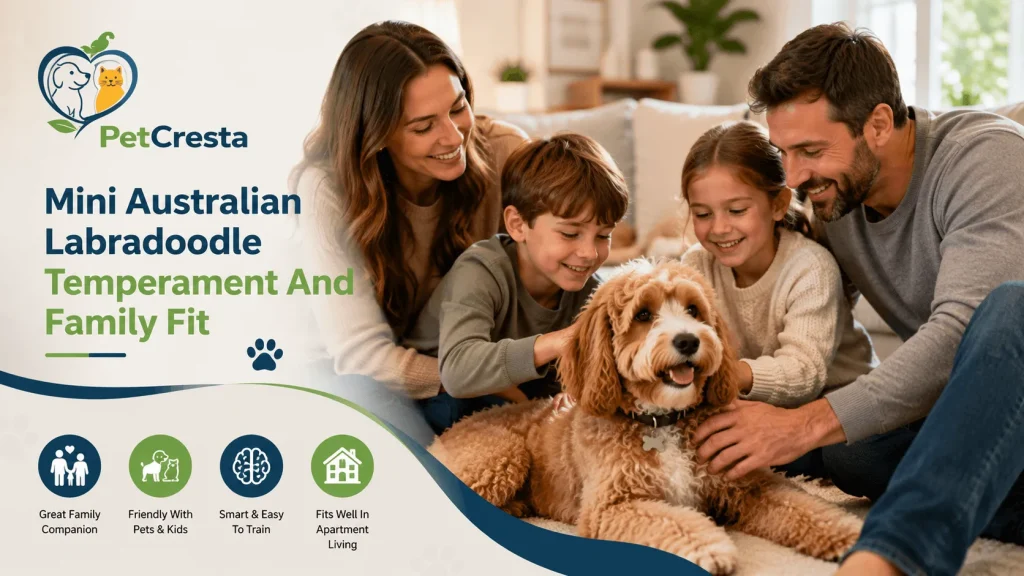
This dog is socially engaging, loving, trainable and people oriented. Many like to be near the household and to learn its daily activities.
Progress is most likely to be achieved through regular training, good handling and sufficient mental exertion. Having a friendly disposition doesn’t negate the need for structure.
Family Life, Kids, And Other Pets
Most of these dogs can be family pets as they are not too large to care for, and they often have a friendly disposition. Children still have to learn how to handle themselves, play well, and have boundaries.
Others do well with other pets as well when introduced slowly and under supervision. The harmony is not to be assured by the breed label. Success is more about routines and owner/management than assumptions.
Apartment Living And Alone Time
Daily exercise, enrichment and quiet settling routines can be managed effectively, and apartment living can be a successful option. The smaller size can be beneficial in regard to space; however, it will not eliminate the necessity of motion and thinking.
Long absences for the day may be more difficult. If there is no gradual separation from humans, many Australian Labradoodles can become clingy, vocal, and restless.
Common Behavior Mistakes
| Mistake | What It Can Lead To |
|---|---|
| Inconsistent rules | Confusion and pushy habits |
| Too little mental work | Barking, pacing, chewing |
| Assuming friendliness means easy training | Sloppy manners |
| Not teaching calmness early | Restless indoor behavior |
| Too much attention without independent work | Trouble being alone |
Therapy And Service Style Traits
There are some Australian Labradoodle lines that are known for being people oriented, responsive and easy to train. In the proper environment, some of those characteristics can make a dog a good candidate for therapy work.
That does not mean that every puppy will be a good therapy training, emotional support and service dog. Taking pride in one’s individual temperament, health status, training value and handler skills are more important than the breed label.
Mini Australian Labradoodle Coat Types, Shedding, And Allergy Reality
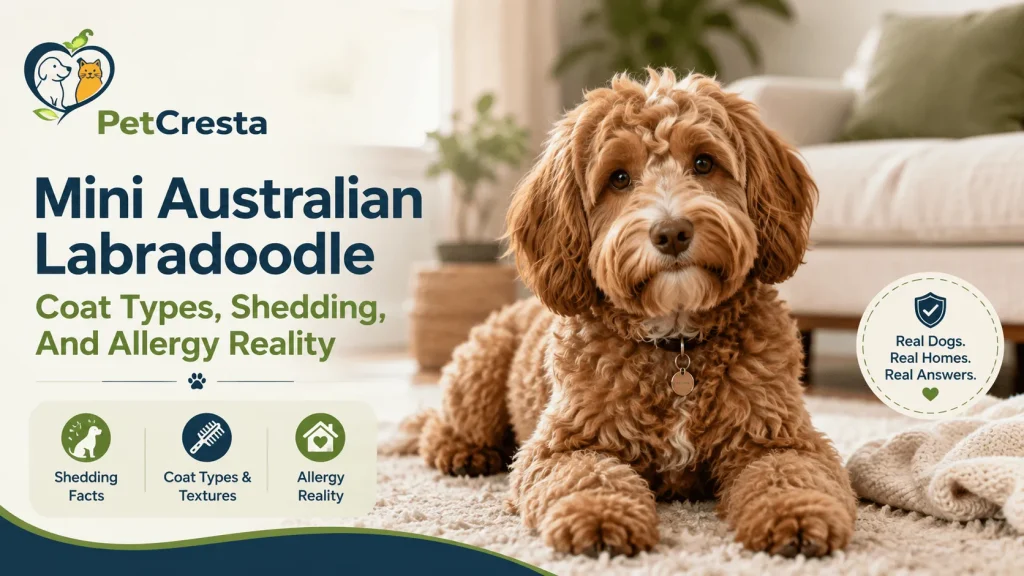
Some families prefer to have a lower shedding coat because it makes home life easier. But it doesn’t imply easy coat maintenance. Shedding does not equal low maintenance.
Do Mini Australian Labradoodles Shed?
A lot of shed a bit less than heavy shedding breeds, but not all. Coat type matters. Other dogs shed excessively all around the house. Some lose more than they might expect. It’s important to brush and trim a dog’s coat, even if it’s a low-visibility shedding coat.
Are Mini Australian Labradoodles Hypoallergenic?
Not all dogs are hypoallergenic. This is a good choice for sensitive homes, but allergies are individual and specific to each dog and person. It is important to be exposed to the real world when allergies are a significant problem.
Coat Types And Textures
| Coat type | What it feels like day to day | Shedding pattern | Grooming load |
|---|---|---|---|
| Fleece | Soft, flowing, often wavy to loose curl | Usually low | Moderate to high |
| Wool | Denser, curlier, often plush | Often very low visible shedding | High |
| Less predictable outlier coat | Looser or less consistent texture | May shed more | Varies, often less ideal for low shedding expectations |
Owners tend to focus on fleece and wool in this breed. A loose coat of fur can be a beautiful animal, but it is typically less predictable in shedding and maintenance.
Breed Standard Coat Reality
This dog may come with fleece coats or wool coats but may have varying coat results. There are soft or flowing coats, dense, curly, or unruly coats.
It isn’t low care if it’s low shedding. If the loose hair is not brushed regularly, it can be matted in the coat.
Home guarantees are a risk for allergy sensitive homes. There are no 100% hypoallergenic dogs and reactions can differ between individuals and between dog breeds. What you can learn from the adult dog or a dog around the adult dog is more valuable than the label.
Australian Labradoodle Miniature Colors And Coat Shades
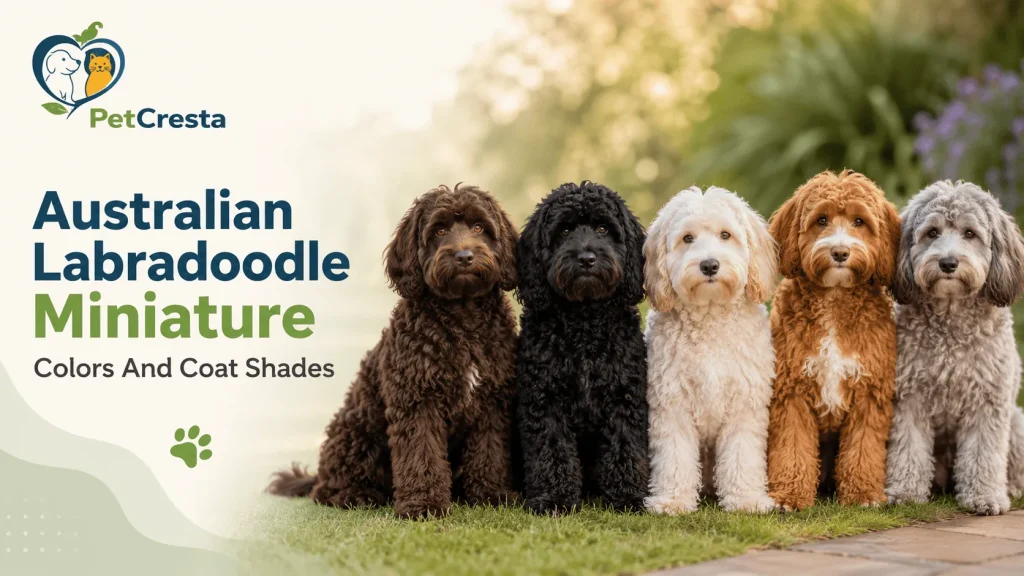
The coats of these dogs are available in a variety of appealing colours such as chocolate, black, white or cream, red, brown and silver. While photos may often include color first, it is secondary to health, temperament, coat type and breeder quality.
It is not always the case that puppy color will be the final adult color. However, some coats will lighten, soften or look different when the puppy coat sheds and the adult coat appears. The color of a dog can also vary depending on lighting, length and texture of the coat.
Common Australian Labradoodle Miniature Colors
The mini chocolate Labradoodle typically has a chocolate brown to a more milk-chocolate brown. Mini brown Labradoodle is often the same color family in search terms, and as a result, the two colors are often used interchangeably.
When the coat is healthy and well-groomed, a mini black Labradoodle will look one of the boldest solid colors. The mini white Labradoodle can be bright white or nearer to cream, and lighter-coloured coats may be more prone to picking up dirt or to face staining. The mini red Labradoodle can be anywhere from a warm apricot-red to a deeper red shade, and the mini silver Labradoodle is typically a lighter grayish tone that can be more prominent as the dog grows up.
Regardless of the color, you can’t predict the behavior of the dog, its trainability, its upkeep requirements or if it will make a better family pet. Those answers are in the temperament, line history, coat type and daily care.
Puppy Color Vs Full-Grown Color
The appearance of a mini chocolate Labradoodle puppy may not be the same when large. This is also true for the other shades. Many puppies develop a softer, fluffier, and sometimes darker toned coat than their adult coat.
That’s the reason why searches like mini chocolate Labradoodle full grown are of interest to buyers. There are many factors in adult appearance that relate to the color name, including coat transition, coat texture, and grooming styles. It can be hard to decide whether a longer cut would make the dog look softer or less intense, and a shorter cut might make the same dog look darker and more defined.
The same precaution is to be taken with any mini cute Labradoodle puppy photo. Despite their obvious cuteness, the initial impression is not a good indicator of the adult coat, grooming requirements, or general home comfort.
Mini Labradoodle Grooming Needs And Maintenance
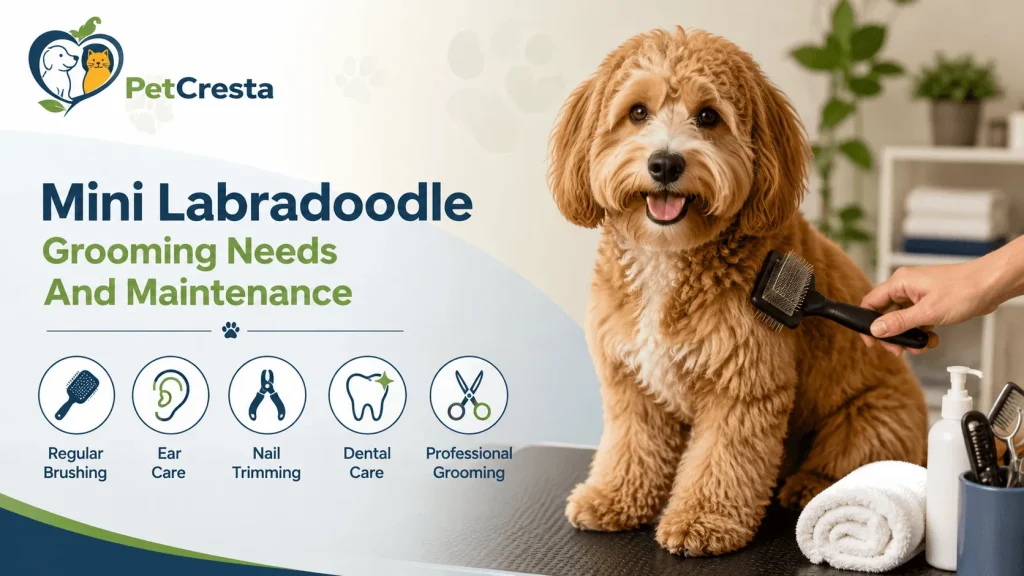
This is not a low maintenance coat. The Australian Labradoodle mini frequently requires regular brushing, coat checking, ear cleaning, nail trimming, dental exam and grooming. Long and/or fluffy coats generally require more work.
Typical Grooming Rhythm
| Task | Common rhythm |
|---|---|
| Home brushing | Several times each week, sometimes more, with a longer coat |
| Ear checks | Regular, especially after baths or swimming |
| Nail trimming | On a steady schedule as needed |
| Teeth brushing | Frequent home care is ideal |
| Professional grooming | Often every 6 to 8 weeks |
How To Groom A Mini Australian Labradoodle?
Brushing through the coat rather than brushing over the top. Friction areas like the back of the ears, under the legs, near the collar and at the base of the tail are common places to construct hidden mats.
Frequently examine ears. Keep nails cut so they don’t become too long to obstruct movement. Brush teeth regularly. Keep a professional haircut regimen that isn’t too late.
How Often To Bathe A Mini Australian Labradoodle?
Grooming time varies based on coat length, dirtiness, skin sensitivity and the type of grooming. Depending on how the dog lives, some require more frequent baths. Some people can handle a lighter beat. The answer is dependent on the dog’s coat and is not a hard and fast one.
Common Grooming Mistakes
| Mistake | Why it matters |
|---|---|
| Surface brushing only | Mats stay hidden near the skin |
| Waiting too long between sessions | Small tangles become difficult mats |
| Skipping ear care | Moisture and debris build up |
| Keeping a coat style that exceeds maintenance ability | Daily care becomes frustrating |
| Assuming low shedding means low effort | The coat still needs steady work |
Exercise, Training, And Mental Work
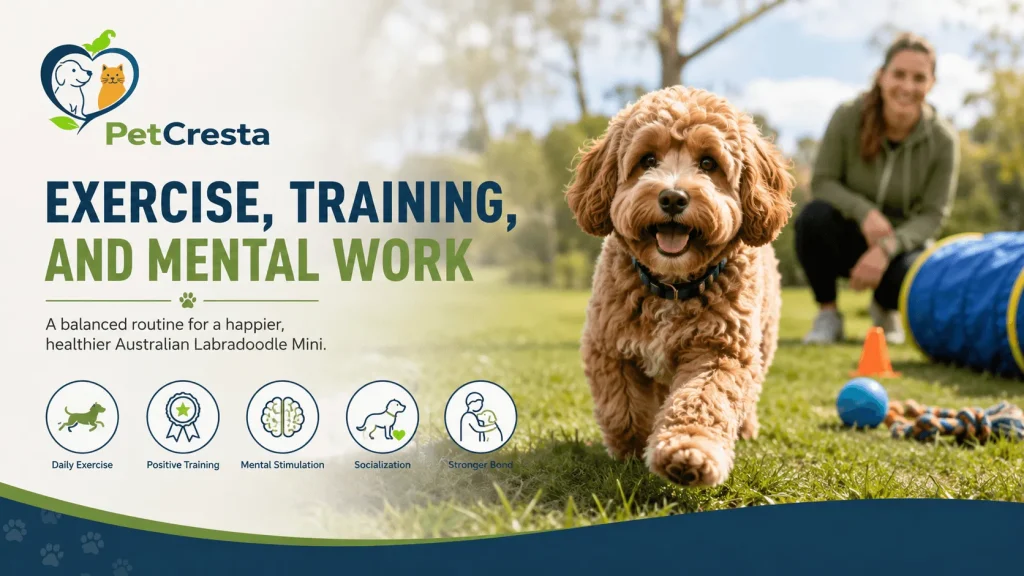
The Australian Labradoodle mini is generally a lot more than a stroll.
Most prefer a combination of exercise, thoughtwork, short training, and the relaxation of habits. Intensity is less important than consistency.
How Much Exercise Does A Mini Australian Labradoodle Need?
For adults, 30-60 minutes of activity per day, plus enrichment, is sufficient.
Puppies typically require shorter and more manageable sessions. It’s very likely that the most structure adolescents need is when their energy level goes up before their judgment does.
Training Style That Works Best
Typically, reward-based training is the most appropriate training method.
This breed can be well handled with repetition and calmness. Manners, leash skills, recall, polite greetings, tolerance of grooming, and alone time practice are examples of things that should be addressed early.
Socialization In The First Year
Good socialization means calm exposure, not nonstop excitement. That may include normal household sounds, different surfaces, gentle dogs, car rides, grooming tools, and everyday routines. The goal is not endless novelty. The goal is good recovery and steady confidence.
The early socialization period is especially important in the first weeks and months of life. Calm, well-managed exposure during that window can shape confidence far more effectively than last-minute correction later on.
Signs Your Dog Needs More Mental Stimulation
| Sign | What it may signal |
|---|---|
| Barking for attention | Under engagement |
| Pacing | Trouble settling |
| Chewing | Frustration or boredom |
| Shadowing | Too little independent work |
| Restless evenings | Daytime needs were not fully met |
| Trouble settling after activity | Mental fatigue without calm habits |
Diet, Feeding, And Healthy Weight

Feeding should stay practical and balanced. Australian labradoodle mini do best on a complete and balanced diet matched to life stage and body condition. In a smaller-framed dog, treat drift and portion creep can show up quickly.
What Do Mini Australian Labradoodles Eat?
Puppies need a diet built for growth. Adults need a maintenance diet that supports lean body condition and stable energy. The aim is steady health, not simply a full-looking coat or a round body.
Feeding schedule by age
| Age | Feeding rhythm |
|---|---|
| 8 to 12 weeks | Several small meals daily |
| 3 to 6 months | Regular meals with growth support |
| 6 to 12 months | Gradual movement toward fewer meals |
| Adult | Consistent daily portions and schedule |
Healthy Weight Tips
- Watch body shape, not just appetite
- Keep treats measured
- Adjust food when activity changes
- Recheck portions after growth slows
- Ask a veterinarian if the weight starts creeping up
Health Concerns And Mini Australian Labradoodle Lifespan
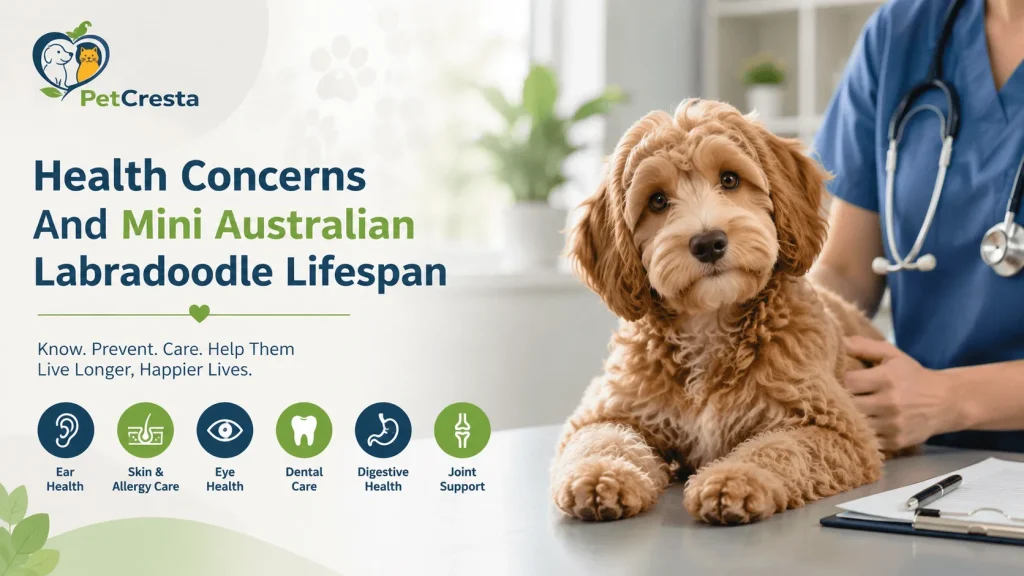
Many Australian Labradoodle mini live long, active lives. That positive reality should still sit beside clear health planning.
No dog is risk-free. Informed owners can still screen more carefully, choose more thoughtfully, and manage daily health more proactively.
Common Health Issues To Know
Potential concerns may include joint issues such as hip dysplasia, eye disorders such as progressive retinal atrophy, ear infections related to ear structure and moisture retention, skin or allergy problems, dental disease, and occasional digestive sensitivity.
Not every dog will face these problems, and a named condition should not be treated as a prediction. The goal is not fear. The goal is clearer screening, better preventive care, and more informed expectations.
Health Signs Owners Should Watch For
Not every Australian Labradoodle will develop these problems. The goal is to recognize early changes and ask for veterinary guidance before a small issue becomes harder to manage.
| Health Concern | Signs Owners May Notice | Why It Matters |
|---|---|---|
| Ear irritation or infection | head shaking, odor, redness, scratching | Dense coat and floppy ears can trap moisture |
| Skin allergies | licking, itching, hot spots, recurring irritation | Skin problems can become chronic |
| Eye disease | cloudiness, redness, squinting, vision changes | Some eye conditions progress quietly |
| Dental disease | bad breath, tartar, gum redness, and chewing discomfort | Small companion dogs need steady dental care |
| Digestive sensitivity | vomiting, loose stool, appetite changes | Repeated stomach upset needs veterinary advice |
| Joint issues | stiffness, limping, trouble jumping | Weight control and early care can help comfort |
Australian Mini Labradoodle Puppy Care
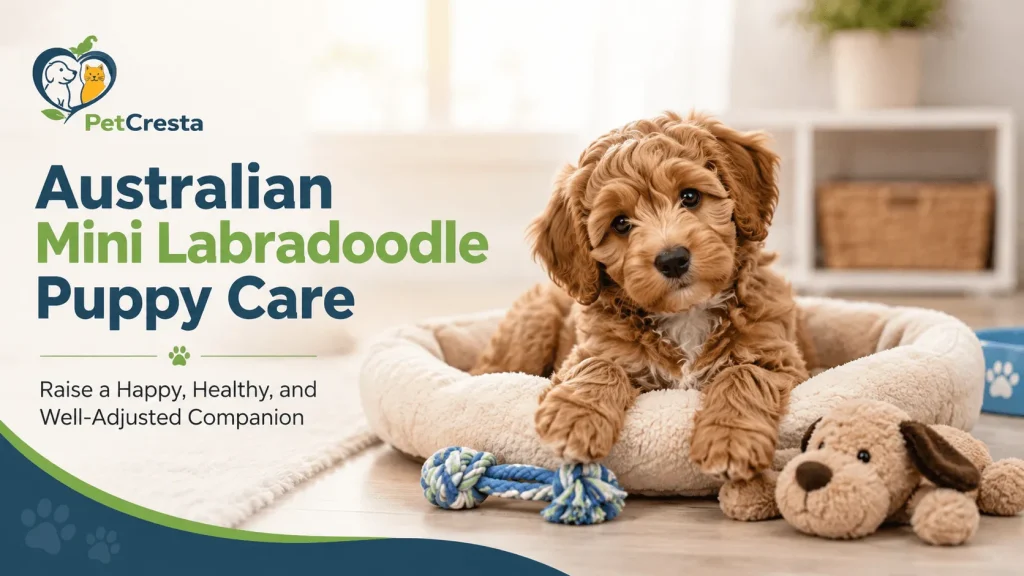
A puppy may be intelligent, loving, inquisitive and learn extremely fast. The first few months should be about routine, handling, safe socialisation, grooming comfort and calm household manners.
During this stage it is not only the command teaching that is important. It’s a matter of developing behaviors that will make the grown-up dog simpler to reside with.
What To Expect In The First Few Weeks
The first weeks at home tend to be a combination of sleeping, playing briefly, getting them out to the toilet, chewing and adjusting. A young puppy requires a routine rather than a lot of activity.
Create a rest area, establish routines and take the puppy out frequently in a quiet place. It’s better to have short, quiet training sessions than long ones. A young dog can get overstimulated from too many people, too much excitement and overhandling making him more difficult to calm down and relax.
A simple early routine should include:
| Care Area | What To Focus On |
|---|---|
| Sleep | Quiet rest periods throughout the day |
| Potty training | Frequent outdoor breaks and reward based practice |
| Crate comfort | Short, positive sessions without pressure |
| Chewing | Safe chew toys and close supervision |
| Handling | Gentle touch around paws, ears, mouth, and coat |
| Grooming | Light brushing practice before the coat becomes harder to manage |
First Month At Home
The first month should be casual. The aim is to get the puppy to feel comfortable, to get him a feel for the family life, and to get him started on the basic training without causing undue anxiety.
Work on name response, coming into the house, short leash, calm feeding and gentle grooming exposure. This breed tends to pick things up quickly, which can sometimes be both good and bad. Good and bad habits can develop from an early age.
Also, one should start with short, positive steps for alone time. If you are giving a people-focused puppy all of his time then he can become clingy. Short crate or pen breaks in a safe puppy space can help develop confidence.
Socialization And Confidence
Calm exposure is good socialization; not too many busy places. It should slowly begin to become accustomed to normal household sounds, safe surfaces, gentle people, car rides, grooming tools and regular handling.
The aim is steady confidence. If a puppy can be led into new experiences without agitation, he is likely to be easier to lead than a puppy who is overstimulated.
Socialization needs to be done safely until vaccines are fully effective. High traffic dog areas are not as safe as clean environments, controlled visits and a veterinarian’s guidance.
Grooming Practice Starts Early
The first coat should start before the adult coat. Brushing for a few minutes helps the puppy to deal with grooming as a natural routine instead of a fight later.
Gently touch ears, paws, tail, muzzle and chest at quiet times. Use rewards and positive reinforcement for pairing grooming tools with. Don’t make the first sessions too long or the puppy will not finish relaxed.
This is important because as an adult, this dog may need frequent brushing and grooming. A puppy that’s taught early handling is more easily controlled by its owner and the groomer.
Preventive Care That Matters
| Care area | Why it matters |
|---|---|
| Routine veterinary care | Helps catch issues early |
| Weight control | Supports joints and overall health |
| Ear care | Helps prevent irritation and buildup |
| Dental care | Supports comfort and long-term wellness |
| Parasite prevention | Protects skin and internal health |
| Sensible exercise | Supports fitness without overdoing it |
| Coat and ear aftercare after baths or swimming | Helps reduce skin and ear trouble |
Routine veterinary care should also keep core vaccines current, including how often do dogs need rabies shots, based on local law and veterinary guidance.
Health Testing: A Responsible Breeder Should Show
Relevant health records matter more than reassuring claims. A responsible breeder should be able to explain what was tested, why it matters, what the results showed, and how those results affect breeding decisions.
Ask for documentation related to:
- hips
- elbows when relevant
- eyes
- cardiac screening when relevant
- genetic testing tied to the parent lines
- known health patterns in related dogs
- adult size and temperament records from previous litters
Good testing does not guarantee a perfect dog. It does show that the breeder is working with records instead of promises.
Mini Australian Labradoodle Puppies

Puppyhood is where expectations become real. This puppy can be bright, affectionate, and quick to learn. That same puppy can also be sleepy, mouthy, messy, distractible, and dependent if the first year is handled casually.
What To Expect From A Puppy
Expect frequent sleep, house training work, chewing, handling practice, grooming introduction, bite control, and early independence work.
The first year should build habits, not just excitement. Calm grooming practice and alone time work are especially useful in this breed.
First year milestones
| Stage | What usually matters most |
|---|---|
| Homecoming | Sleep, routine, safe setup, bonding |
| Early months | House training, bite control, handling |
| Mid puppy stage | Social exposure, leash habits, and grooming comfort |
| Adolescence | Boundaries, consistency, calmer focus |
| Near adulthood | Adult height looks clearer, and coat changes may show more |
Questions To Ask Before Choosing A Puppy
- What is the adult size of both parents
- What health testing has been done
- How are puppies socialized before placement
- What support is offered after pickup
- What coat care is expected in this line
- What adult outcomes have earlier litters shown
- What does the contract require
- What is the spay or neuter policy, and why
- What happens if placement fails
These questions help future owners compare substance rather than just compare photos.
Mini Australian Labradoodle Cost, Price, And Ongoing Expenses
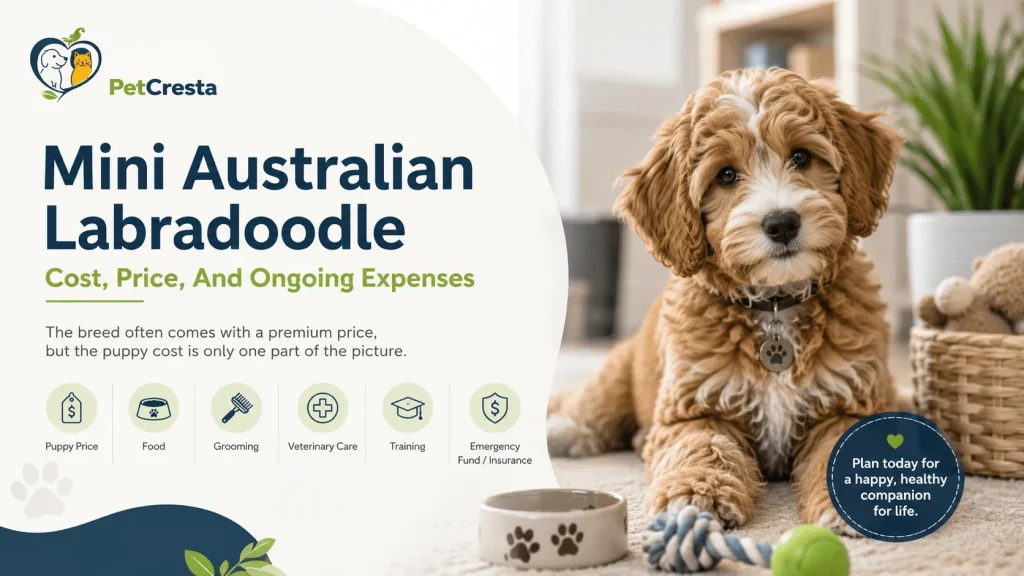
This breed often comes with a premium price, but the puppy cost is only one part of the picture. Grooming is one of the most underestimated recurring expenses. Routine veterinary care, food, training, and backup funds matter too.
Australian Labradoodle Miniature Puppy Price
Puppy price from a well-established program is often in the premium range. In many markets, buyers may see figures in the low to mid thousands, with some programs pricing higher based on region, pedigree depth, health testing, breeder reputation, and demand.
A lower sticker price can look attractive at first, but weak screening, weak socialization, or limited breeder support can cost far more later.
A low purchase price should not be judged by price alone. Weak health testing, poor socialization, unclear contracts, and limited breeder support can create higher costs later through behavior help, medical care, or grooming problems.
The better question is not only “How much is the puppy?” It is “What is included, what records are available, and what support exists after placement?”
First Year Costs
| Expense | What to plan for |
|---|---|
| Puppy price | The highest early cost in many homes |
| Food | Ongoing from day one |
| Crate and supplies | Immediate setup costs |
| Veterinary visits | Standard first-year care |
| Grooming | Recurring and often underestimated |
| Training | Strong value for first-time owners |
| Emergency fund or insurance | Useful protection |
Yearly Maintenance Costs
Annual expenses may include grooming, food, veterinary medical, parasite prevention, refresher training, boarding and pet sitting, emergency savings and/or insurance, and supply replacement.
For many people, grooming is one of the most consistent expenses that will be present throughout their home.
Is An Australian Labradoodle Miniature Right For You?
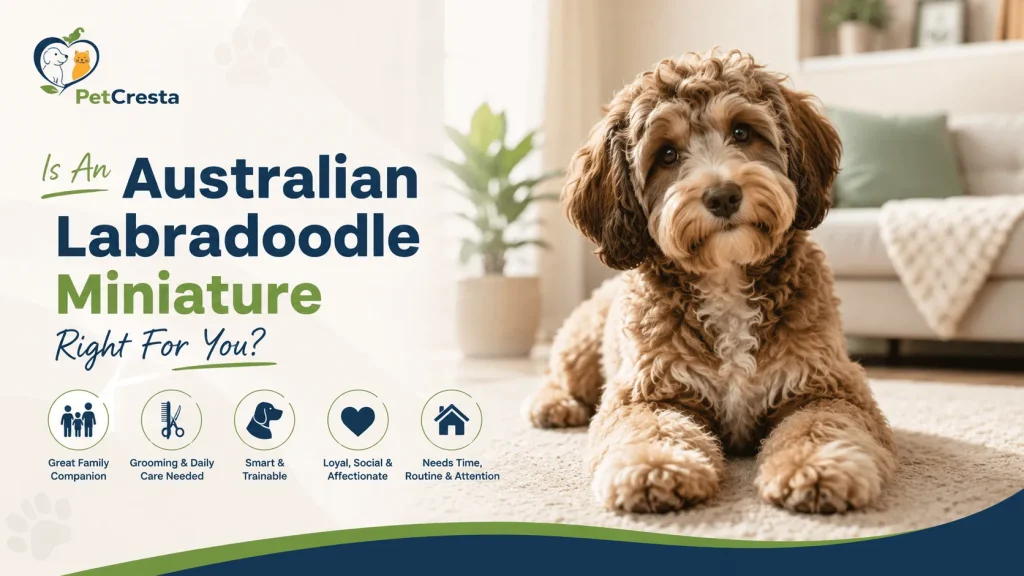
Bred for their large, fluffy appearance, this dog can make an excellent companion dog for families who desire a small, social, trainable dog who will require grooming, daily attention and routine maintenance.
It may not be the best breed for a home where a very low-maintenance coat is desired, a certain certainty of adult size is required, or the dog is to be kept happily independent for extended periods.
Strong Fit For
- A companion for homes that are in need of one.
- Families to be groomed and trained.
- Owners who like to interact with them on a daily basis.
- The cost of routine care is acceptable to people.
- Smaller families who desire a more responsive and involved dog.
Think Twice If
- The house is vacant for extended periods of the day.
- The most important factor is a very low maintenance coat.
- Adult size is expected to be that of the species.
- There’s a limited budget for grooming.
- The decision is primarily determined by the color, trendiness, or allergy hope.
Quick Tradeoff Summary
| Often Appealing | Important Reality |
|---|---|
| Warm temperament | Daily involvement still matters |
| Trainable nature | Manners need practice |
| Smaller size | Size is still a range |
| Lower visible shedding | Grooming is still moderate to high |
| Family friendly potential | Supervision and consistency still matter |
Self-Check Before Bringing One Home
- Do you have time to train and interact with them on a daily basis?
- Does the grooming budget make sense?
- Would it be possible to have an effective exercise program throughout the year?
- Is there consistency in the home?
- Do you have a backup care plan?
- Is there actual proof of exposure to allergens (when necessary)?
- Are there breeders who are willing to be screened thoroughly?
How To Choose A Responsible Breeder Or Rehoming Source

Good decision-making typically is based upon documentation, honesty, and realistic language, not pretty photos and pretty words.
Questions To Ask A Breeder
- Both parents have had health testing conducted on them.
- What is the size and temperament of the parents?
- Do Pedigree records exist?
- Puppy socialization prior to placement.
- What is the deal?
- What are the terms of the contract?
- What is the sterilization policy?
- What have related litters demonstrated for the adult?
- Return Policy
- What assistance is provided following the pick up?
Hard Questions To Ask Before Placing A Deposit
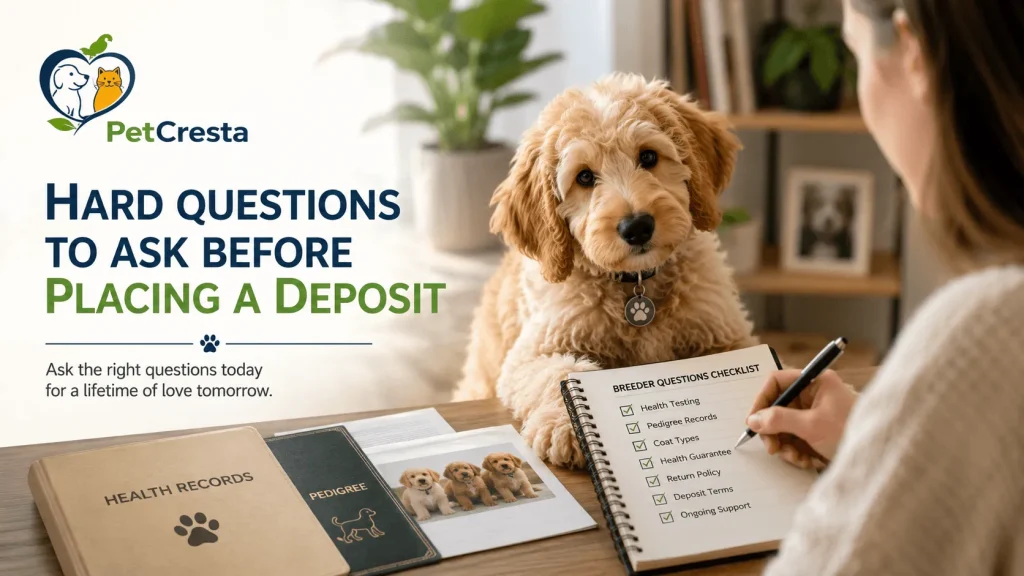
Clear records are more important than a polished website, pretty pictures of pups or uncommon color wording. Ask specific questions before making a deposit and listen for clarity in the answers.
Ask:
- About how many litters are produced annually?
- Does the breeder provide health testing documentation of both parents?
- Do there exist pedigree records?
- At what age do related puppies become adults?
- What types of coats have been seen in other litters?
- Is spaying, neutering, and/or young animal sterilization encouraged?
- What if the puppy has a severe health problem?
- What happens if the placement doesn’t go according to plan?
- Can the deposit be refunded or moved to a different school?
- Do they provide any assistance following the puppy’s departure?
If the answers are clear to them, they will trust it. Answers that are vague, pressure or emotional selling should slow the decision down.
Red Flags
| Red flag | Why it matters |
|---|---|
| Allergy guarantees | No dog can promise that |
| Exact adult size promises | Miniature is still a range |
| Pressure to reserve quickly | Good decisions need review time |
| Missing paperwork | Trust should not depend on words alone |
| Heavy focus on rare color | Color should not lead the decision |
| Vague micro mini language | Labeling can distract from substance |
| Polished branding with weak records | A good presentation is not proof |
| Refusal to explain contract terms | Clarity matters before commitment |
Why Pedigree And Paperwork Matter
Records can be used to help set realistic expectations on size, coat and health background. Pedigree is not the name of the game. It’s all about predictability and transparency.
Rehoming And Rescue Considerations
A dog that was previously adopted can be a good match. History of behavior, medical history, grooming tolerance and time alone habits are of great importance. The pros of an adult dog are that the end size and coat are more easily determined.
Simple Decision Diagram
Good Fit Path
- Like to have a social compact companion?
- There is nothing that needs to be done to the animal. The animal is ready for grooming and routine care.
- Comfortable with daily training and involvement
- A professional groom is included in the price for grooming.
- Ready to check the breeder/rehoming papers
- An elevated score indicates that the candidate is a strong candidate.
Poor Fit Path
- A dog that requires very little effort is what you’re looking for.
- Home is empty most of the day
- A hope for a certain size or allergy confirmation
- Budget is tight for care and grooming
- A selection that was done primarily by appearance or popularity.
- Better to consider another breed or type
Conclusion
The Australian labradoodle comes in miniature form and can be a rewarding dog for the proper household. The breed is known for being warm, intelligent, and compact, making them a suitable choice for many households.
The simple truths are these. Size is a range. Coat care is real. Daily involvement matters. Breeder screening matters.
This breed can be a great fit for families willing to put in the effort to maintain the charm that comes with it. If a simpler coat, less maintenance or greater independence is desired, another type of dog can fit the bill for the house.
FAQ’s
Many adults stand around 14 to 16 inches tall and weigh roughly 15 to 25 pounds. Final size still depends on parent size, line consistency, and normal individual variation.
Many live into the teen years with sound breeding, good preventive care, and healthy body condition. Lifespan should be seen as a range, not a promise.
Some can handle reasonable alone time when it is introduced gradually. Long daily absences are harder, especially for puppies and young dogs. This breed is usually people focused, so a plan for potty breaks, exercise, enrichment, and quiet rest matters.
Fleece and wool coats are often preferred because they are usually lower shedding and fit the expected look of the breed. Wool coats may show less visible shedding but can mat faster. Fleece coats may feel softer and easier for some homes, but both need regular brushing and grooming.
Miniature is a range, not a fixed adult size. Parent size, line history, nutrition, body condition, and individual variation can all affect final height and weight. A responsible breeder should speak in ranges and show adult outcomes from related litters when possible.
Yes, this can be a very good pet for the right home. Many are friendly, trainable, social, and easy to live with in terms of size. They often enjoy being close to people, usually learn routines well, and can fit family life, couple households, or single-owner homes when daily care is consistent.
They often can be, especially when children are taught respectful handling and calm play. Good family outcomes depend on management, not just breed label.
They are often moderate to high maintenance compared with short-coated dogs. Grooming, daily interaction, and steady training are the main reasons.
An Australian labradoodle miniature usually refers to a multigenerational line with stronger consistency goals. A Mini Labradoodle label may be used more loosely and can cover a wider range of backgrounds.
References
- WALA breed standard and size ranges
https://www.walalabradoodles.org/about-australian-labradoodles/australian-labradoodle-breed-standard - ALAA breed standard and overview
https://alaa-labradoodles.com/
https://alaa-labradoodles.com/for-breeders/breed-standard/ - ASPCA Pet Insurance breed guide
https://www.aspcapetinsurance.com/resources/mini-australian-labradoodle/
- Harmony Labradoodles size article
https://www.harmonylabradoodles.com/learning-center/mini-australian-labradoodle-size - Red Desert Doodles guide
https://reddesertdoodles.com/mini-australian-labradoodle-a-complete-guide-for-future-owners/ - Fancy Pants Labradoodles article
https://www.fancypantslabradoodles.com/post/understanding-mini-australian-labradoodles-and-their-unique-traits - ASPCA Pet Insurance article used for neutral market comparison
https://www.aspcapetinsurance.com/resources/mini-australian-labradoodle/ - Paws and Pup article used for market pattern review
https://pawsandpup.com/blogs/labradoodle/mini-australian-labradoodle-your-ultimate-guide-to-this-adorable-pooch