What Are Cavapoo Puppies? Guide To Size, Temperament, Shedding, Grooming, and Cost
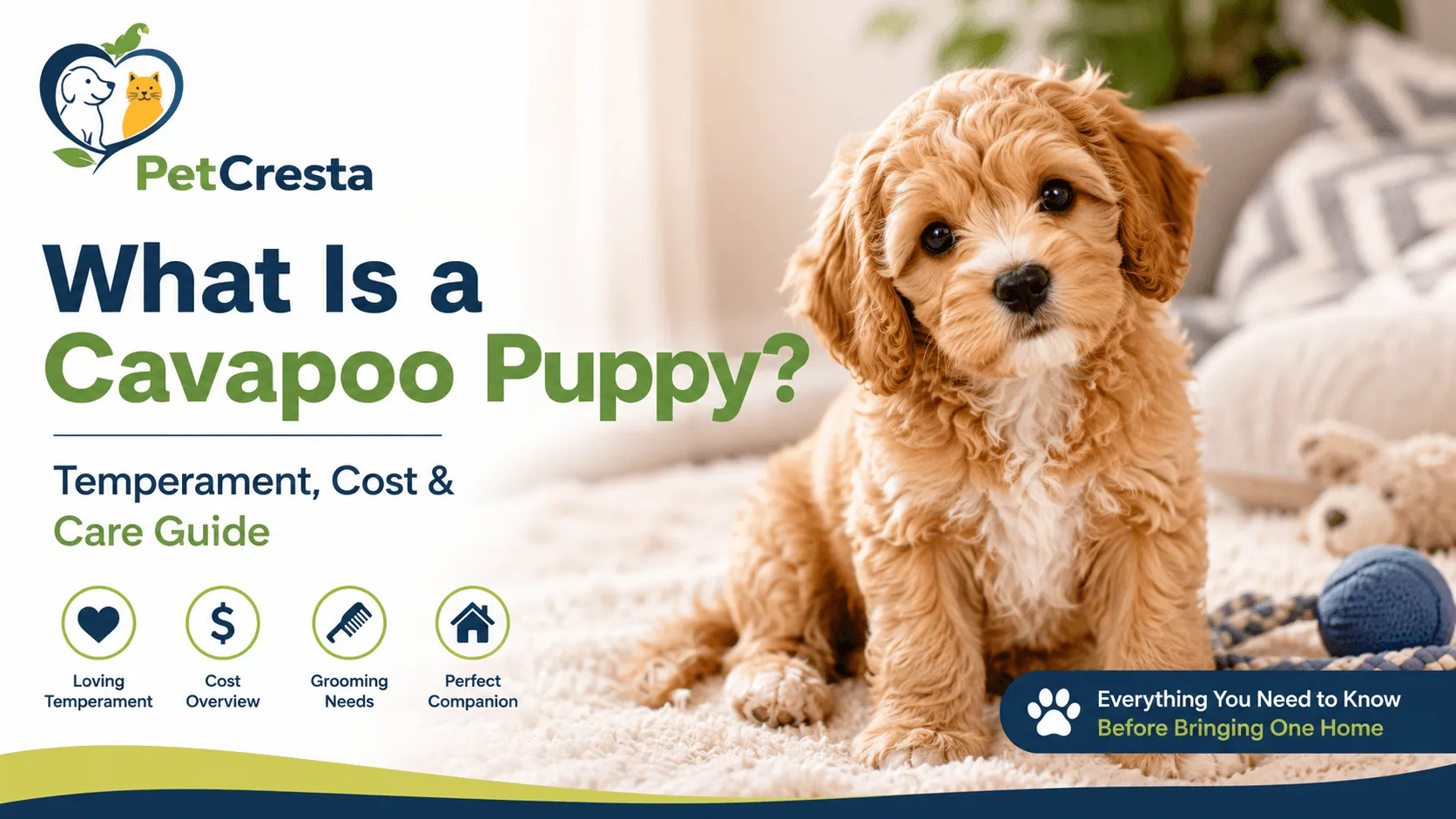
A Cavapoo puppy is an intermix of the Cavalier King Charles Spaniel and a Poodle typically Toy as well as Miniature. Many families like this breed because the puppies are tiny, loving and are often easily bonded with.
This appeal could also lead to unrealistic expectations. The fact that shedding is low does not mean that the dog is not being maintained. A dog that is friendly isn’t necessarily simple to handle. A puppy of a small size still requires the structure of a routine, socialization, sleeping, grooming, and daily attention.
This guide will explain what you can expect from the Cavapoo in a practical manner. It covers appearance, size and temperament, as well as health grooming, food, training costs, and the first year of care to ensure that the right suitability of the dog can be assessed right from the beginning.
TLDR: Is A Cavapoo Puppy Right For You?
| Good fit | Needs caution |
|---|---|
| Homes wanting an affectionate companion | Homes where the puppy will be alone for long hours |
| First-time owners willing to follow a routine | Owners wanting a very low-maintenance coat |
| Families ready for regular grooming | Households with little time for daily training |
| People want a small social dog | Anyone expecting a fully predictable mixed breed |
| Homes that enjoy steady interaction | People want a very independent dog |
Cavapoos tend to fit best in homes prepared for regular grooming, daily interaction, and calm, consistent routines.
Quick Facts Before Bringing One Home
A Cavapoo may be a loving, people-oriented puppy; however, the first year can go more smoothly if there are clear guidelines as to the main needs that will need to be addressed on the day of pickup. Appearance is not the only thing that concerns a woman’s coat care, daily routine, training and health history.
| Area | What To Expect |
|---|---|
| Best home fit | Homes with time for daily care, grooming, and interaction |
| Adult size | Usually small to small medium, depending on the Poodle parent |
| Coat care | Regular brushing and routine trimming are usually needed |
| Shedding | Often low to moderate, but not guaranteed |
| Alone time | Needs gradual independence training |
| Training style | Short reward based lessons usually work best |
| Health planning | Parent health history and vet records should be reviewed |
| First year focus | Toilet training, sleep, grooming, socialization, vet care, and routine |
Don’t select a puppy based on appearance. The question one should ask is if the home is able to care for the puppy’s coat, socialization, training, and long-term care.
Cavapoo Dog Compatibility At A Glance
| Area | General fit | Notes |
|---|---|---|
| Children | Often good | Best with gentle, supervised handling |
| Cats | Often can do well | Slow, calm introductions help |
| Other dogs | Often good | Early socialization still matters |
| First-time owners | Often good | Best when basic care and training are taken seriously |
| Apartment living | Often good | Daily exercise and settling routines are still needed |
| Alone time | Often challenging | Independence needs to be taught gradually |
| Grooming commitment | High | Coat care is ongoing, not occasional |
Cavapoos do best in a house where the house is groomed and maintained regularly, they interact with people daily, and their routine is calm and consistent. In general, a puppy is a dog that is likely to thrive in a home where the family enjoys being around him and where they are willing to attend to his needs, including grooming, exercise, training, and socialization.
What Are Cavapoo Puppies?
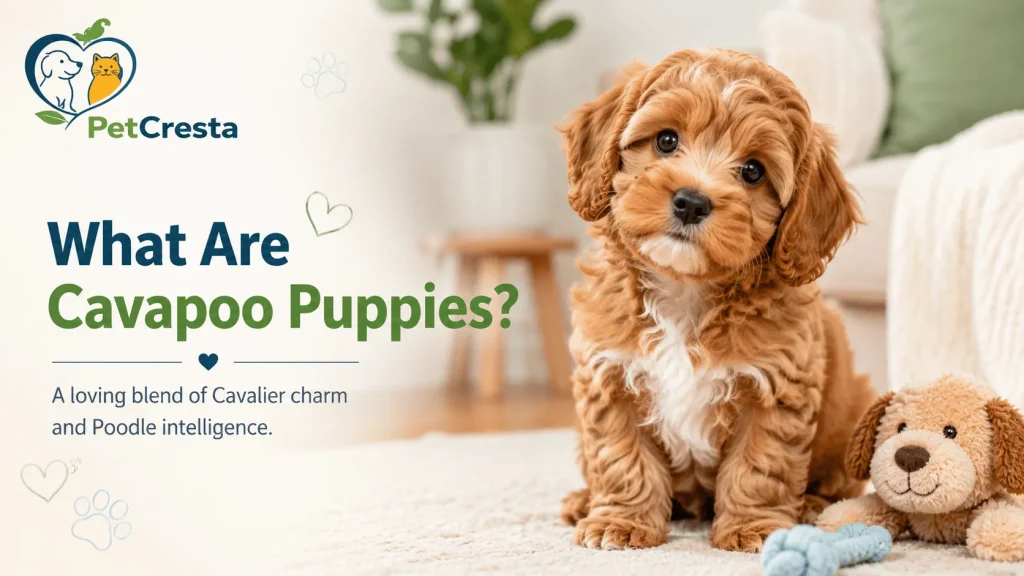
A Cavapoo is a dog that’s bred from a Cavalier King Charles Spaniel and a Poodle, typically a Toy or Miniature variety. The blend was created to be a companion dog, with the loving nature of a Cavalier and the bright and versatile nature of a Poodle.
As more local families adopted this desire for a small social dog that would fit into close daily routines and fit into an apartment, Cavapoos became more popular. They were popular because they were soft, had a small size and were doodle-ish.
However, the Cavapoo remains a cross-breed rather than a standard breed. This is important because when you have litters, they can have different coat textures, frames, adult size, and needs for grooming. An offspring can be born with curlier fur and a compact body, while the other can be born with a loose coat, a sturdy body or different shedding.
Some puppies are referred to as F1 Cavapoo puppies; F1 stands for the first generation of a Cavalier and a Poodle breeding. There are others, most often called F1b Cavapoo puppies, which typically means a Cavapoo has been backbred to a Poodle. These labels may influence the overall trends, particularly in coat type, but are not a promise of a specific size, size look or care.
If generation is one of your main decision points, read f1b cavapoo for a more focused look at what added Poodle influence may change in coat, grooming, and day-to-day expectations.
Cavapoo Puppy Colors And Appearance
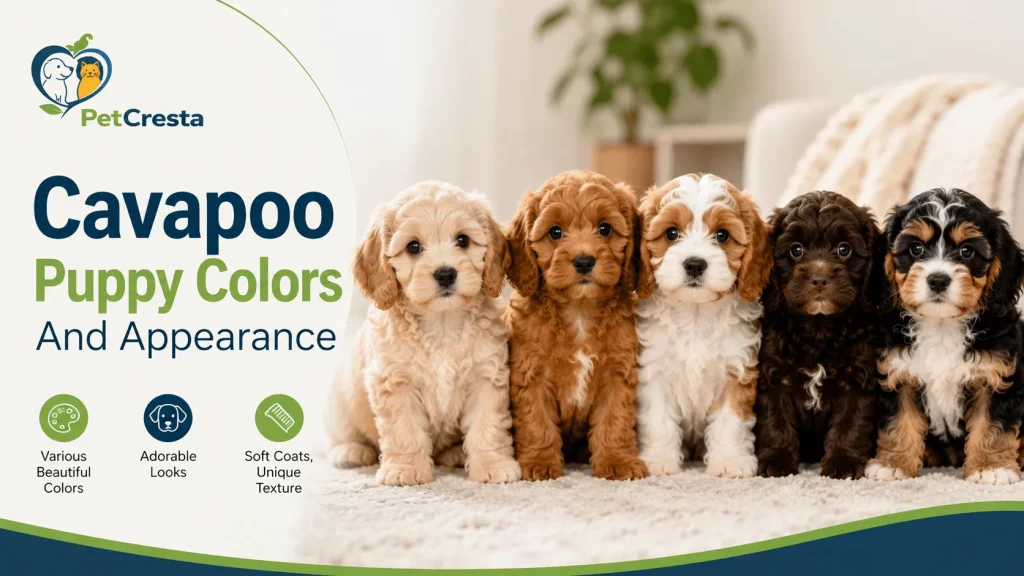
It can come in a variety of colors. They come in a variety of colors and patterns, such as cream, apricot, red, brown, white, and tricolor.
Changes in colour do not mean changes in temperament, intelligence or trainability. Red Cavapoo puppies are not necessarily more loving than any other size because of the color of their coat and the markings of a brown and white Cavapoo are not necessarily easier to train.
Most Cavapoos will have a drop ear, soft facial expression and round eyes. The body is typically compact and well-muscled, though some puppies may have a more refined appearance, while others may have a more muscular build.
The texture of the coat may be loose, wavy or curly. Curlier coats tend to mat more than others, so they require more brushing. While it may seem easier to handle with a looser coat, loose coats still require regular care.
Cavapoo Puppy Size, Growth, And Adult Expectations

Appearance is not necessarily the best indicator of size, it is more of a genetic factor. All of these have an impact on the size of the Poodle parent, family line, nutrition, and the individual’s growth pattern.
Mini Cavapoo Puppy Vs Toy Cavapoo Puppy
Mini Cavapoo puppies are typically bred from a Miniature Poodle line and typically end up being a bit larger than regular Miniature Poodles. The Cavapoo is most commonly bred from a Toy Poodle line and may not grow to a large size.
These are tendencies, not guarantees. Owning one litter, adult size can even differ more than many owners realize.
F1 Cavapoo Puppy Vs F1b Cavapoo Puppy
An F1 puppy cavapoo is a one-part breed of a Cavalier and the other breed is a Poodle. An F1b puppy typically has more Poodle in them.
That extra influence could mean that the coat pattern and overall grooming requirements become more poodle, but it doesn’t mean that the shedding, size or allergy tolerance will match the poodle.
How Big Will A Cavapoo Puppy Get?
A majority of Cavapoo puppies become small or small-medium sized adults. Many fall within the 8-25 lb. and 9-14″ size range, but some do not.
It is impossible to predict exactly how the adult coat, frame and size will appear from a very young puppy. Growth estimates should be regarded as a range, not a promise.
When Do Cavapoo Puppies Stop Growing?
A large number of Cavapoos continue to grow until well into the first year. Growth tends to be fastest at the beginning and then decreases gradually over time.
While many puppies reach near adult size at 9-12 months, some may grow, mature and change in coat after this.
Puppy To Full Grown: What Changes?
Many times, a dog will change more than owners realize in the first year of their life. The legs grow longer, the body develops, the face is shaped and the puppy’s fur slowly begins to change into the adult coat.
One of the reasons early photographs are not an accurate indicator of full-grown is because of this.
| Age | Typical Growth Stage |
|---|---|
| 8 to 12 weeks | Rapid early growth, frequent meals, short activity bursts |
| 3 to 6 months | Noticeable body change, teething, and early coat development |
| 6 to 9 months | Growth often slows, and training habits matter more |
| 9 to 12 months | Many approach adult size, though maturation continues |
Newborn Cavapoo Puppy
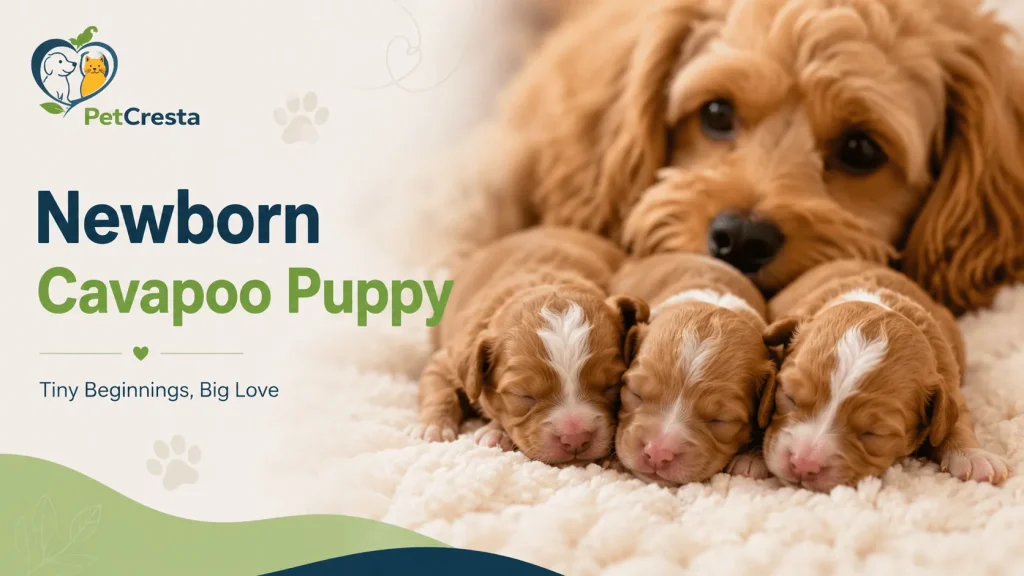
Newborn Cavapoo puppies are very small, immature, and helpless. When born, puppies have a limited ability to control their body temperature and sleep and nurse the majority of the time.
Early development progresses rapidly. Eyes and ears open and litter interactions begin to influence early learning in subsequent weeks.
Puppies are not ready to be placed in a new home. Only rehome puppies when they are sufficiently developed, able to learn socially, and have some stability.
| Stage | What happens |
|---|---|
| Birth to 2 weeks | Nursing, warmth, sleep, very limited movement |
| 2 to 4 weeks | Eyes and ears begin opening, and awareness increases |
| 4 to 8 weeks | Movement, play, and early social learning grow |
Why Cavapoo Puppies Are So Popular
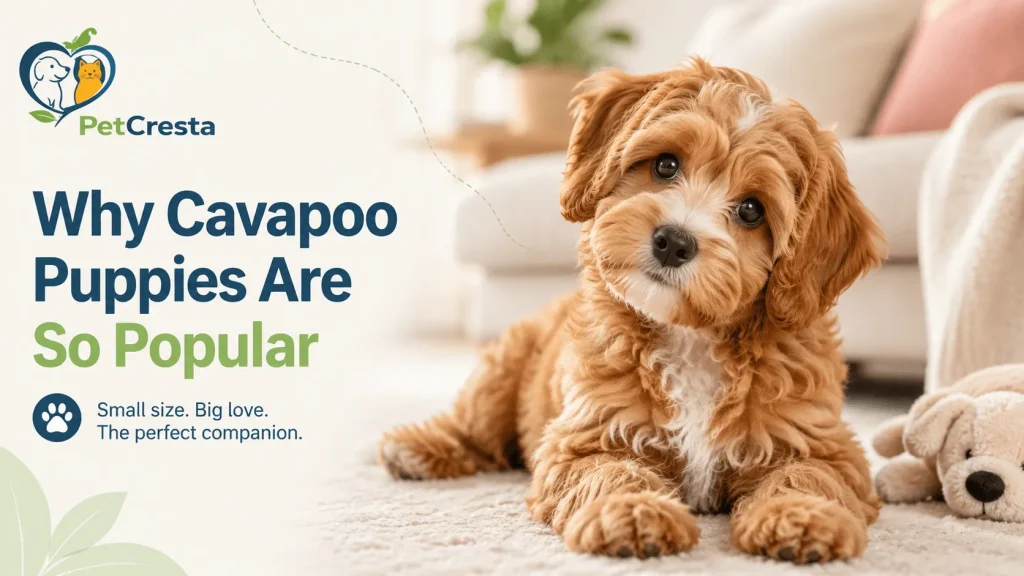
They are popular for their small size, soft expression and companion dog qualities. Many have a good reputation, too that is suited to the family lifestyle.
This is an extremely popular combination that has gained attention due to Doodle’s popularity. The outcome is a puppy that frequently appears friendly, cuddly and “home-able.
Popularity can blur realism. Buyers comparing small companion doodle mixes may also want to review the cavapoochon before deciding which type fits their home and grooming tolerance best. Some owners will concentrate on what they look like and neglect the work of grooming, alone time training and building the daily routine.
Is A Cavapoo Puppy Right For You?
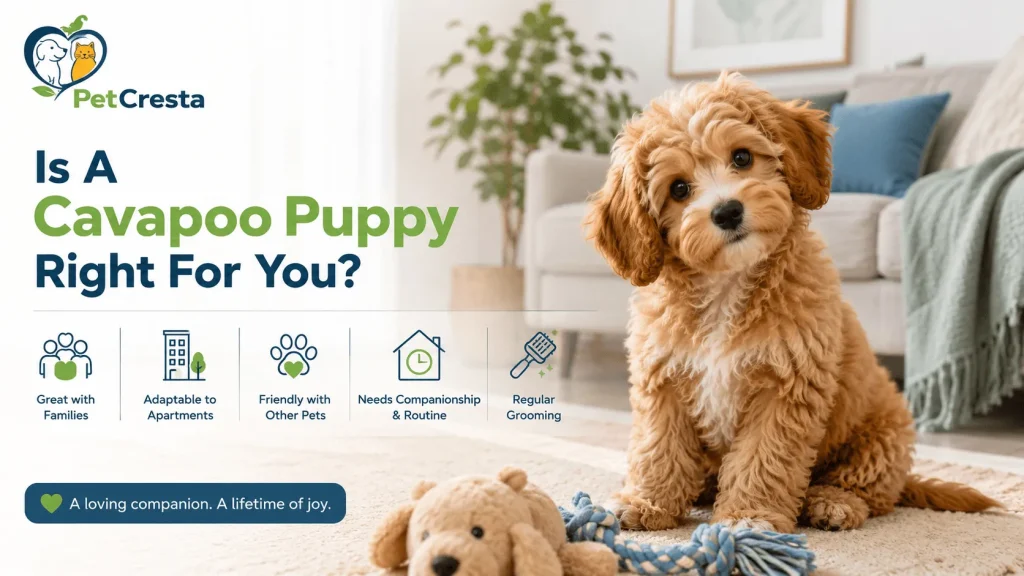
While the Cavapoo is a good choice for many homes, it may not be for all. The best match is one that can offer consistent companionship, grooming, and routine.
Best Home Types
People who often find home ownership to be successful are those who have time to care for their home each day, singles or couples who want a close companion, and first-time homeowners who are willing to learn and be consistent.
Homes That May Struggle
The house may have some difficulty when the puppy is left alone for extended periods, when grooming is not a regular occurrence or when there is no consistency in the household schedule.
Children, Apartments, And Other Pets
With proper settling habits, training and exercise, many Cavapoo puppies will do very well in an apartment. They tend to respond positively to children when touched in a nonthreatening way.
With careful early socialization and gradual introductions, they can live peacefully with other animals.
| Home factor | Good match | Needs thought |
|---|---|---|
| Family with children | Often yes | Gentle handling must be taught |
| Apartment living | Often yes | Routine and enrichment still matter |
| Other pets | Often yes | Calm introductions help |
| Full-time work outside the home | Sometimes | Alone time needs planning |
| Low grooming preference | Usually no | Coat care is regular |
Cavapoo Puppy Temperament And Personality
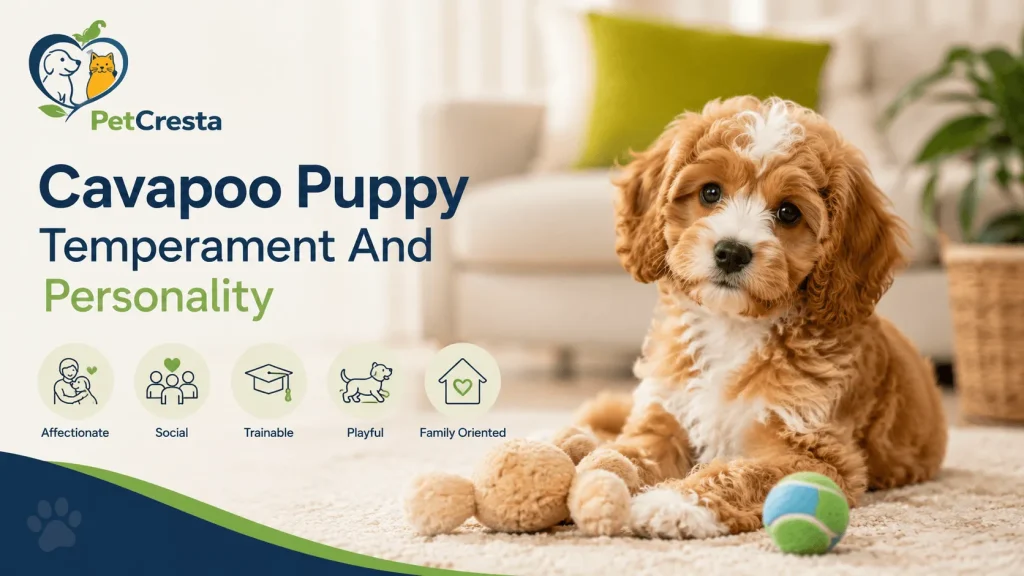
Cavapoos are usually affectionate and friendly, playful and enjoy being around people. This is what makes this breed so appealing to pet owners and families. homes. The breed’s characteristics are not the complete picture when it comes to temperament. The behavior that is displayed at home is influenced by parental influence as well as early handling of socialization, family routine and quality of sleep and training routines.
Love is a powerful force however it can turn fragile if independence isn’t practiced. Training with intelligence can be more efficient but it does mean boredom when there is no structure. Some are more sensitive and prone to stress. Others are more confident and energized.
Training with rewards and boundaries is still essential, and a tranquil routine of daily life is vital for both breeds. Dogs, regardless of how small, need the right structure. Size, skill, and agility do not detract from the training, rest and help with behavior.
Common Temperament Strengths and Weaknesses
| Strength | Watch point |
|---|---|
| Affectionate | May become overattached |
| Social | Can be vocal when excited |
| Trainable | May get distracted without consistency |
| Playful | Can become mouthy when overtired |
| Family oriented | Often dislikes long stretches alone |
Health, Inherited Risks, And What To Ask Before Bringing A Puppy Home
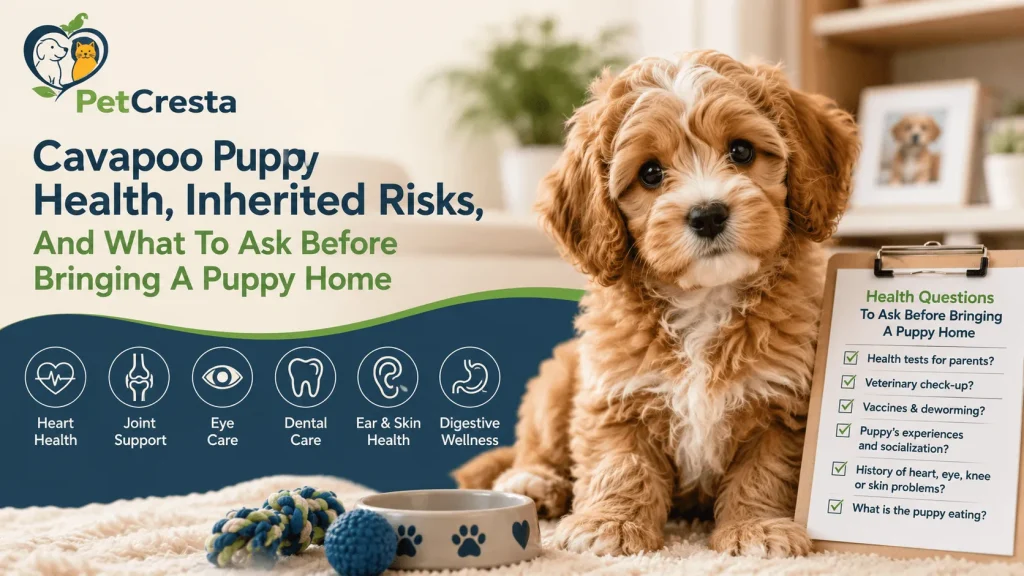
Not all puppies are problem-free. Like most other mixes, a Cavapoo can be healthy and thrive, but because of the possibility of inherited risk, health concerns can occur from either parent line.
Some of the common concerns that should be addressed are ear problems, dental crowding, luxating patella, eye problems, skin irritation, and the tendency to gain weight when feeding and activity are not balanced.
Cavalier lines may be at a greater risk for heart disease, so it is important to watch for it. While not all puppies will have a disease, it does suggest that background screening and honest health information are important.
Ear shape and coat type can also be an issue with Cavapoos. Some dogs may be more susceptible to ear canal irritation or infections due to moisture, debris that becomes trapped and ear canal hair.
Health Risks By Parent Line
Both the Cavalier King Charles Spaniel and Poodle can pass on tendencies to health problems to the Cavapoo. Not all puppies will experience health issues. This involves screening parents, early veterinary examinations, and accurate records, which should all be taken into account.
| Possible Concern | Why It Matters | Signs Owners May Notice |
|---|---|---|
| Heart disease risk | Cavalier lines can carry a higher heart risk | Coughing, tiring quickly, fainting, or a murmur found at an exam |
| Patellar luxation | Small dogs can be prone to kneecap movement | Skipping steps, holding up a back leg, limping, or sudden discomfort |
| Eye problems | Both parent breeds can carry eye related risks | Redness, squinting, discharge, cloudiness, or vision changes |
| Dental crowding | Small mouths can make dental care harder | Bad breath, retained puppy teeth, plaque, or gum redness |
| Ear irritation | Drop ears and coat around the ear can trap moisture | Ear odor, head shaking, scratching, wax, or redness |
| Skin allergies | Some dogs may develop an itch or sensitivity | Paw licking, scratching, red skin, or recurring irritation |
| Digestive sensitivity | Young puppies can react to stress or sudden food changes | Loose stool, gas, vomiting, or poor appetite |
When considering bringing home a puppy, inquire about any health screening that was performed on the parents. Verbal reassurances are not as powerful as written records.
A responsible source should be able to tell you if anyone in their family has ever had a heart problem, eye problem, knee problem, skin problem, repeated ear infections, etc. The risks are more challenging to assess if the answers are general.
Health Questions To Ask Before Bringing A Puppy Home
- Did the parent dogs have health tests for common inherited problems?
- Have you been seen by a veterinarian?
- What vaccines and deworming have been given so far?
- What type of experiences has the puppy had and how has it been socialized?
- Is there any mention in the line of a heart problem, eye problem, knee problem or skin problem?
- What is the puppy eating?
How To Choose A Cavapoo Source
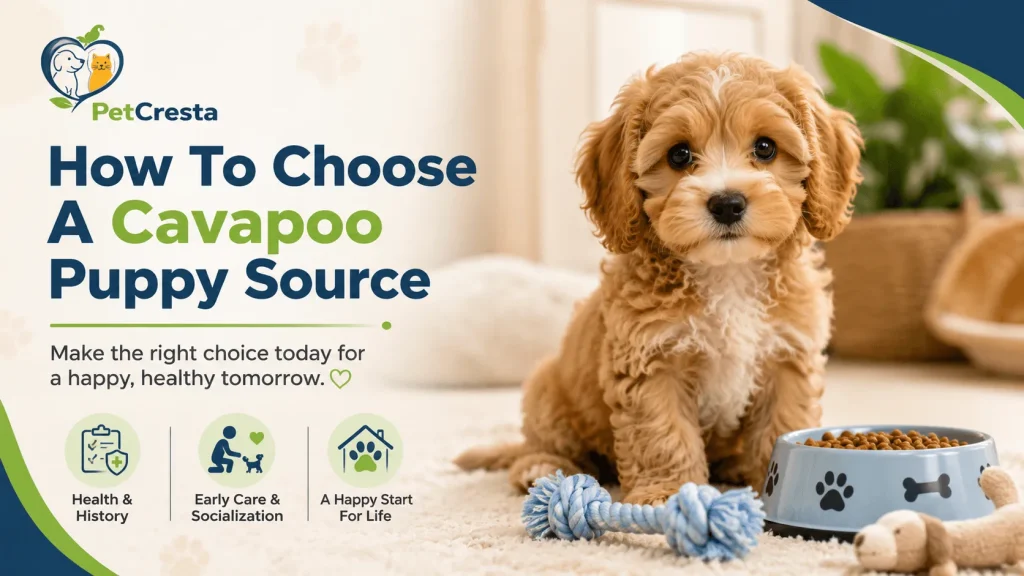
As much as how cute the puppy looks on pickup day, its origin is just as important. The good source should clearly be able to describe the puppy’s health history, early handling, socialization and the routine in a non-threatening manner.
Adoption Vs Breeder
Breeder puppies and rescue puppies can be both good options, but the questions are a bit different. Breeder health testing, early development and honesty of the breeding program are priorities in a breeder. Rescue work is frequently concerned with the health and behaviour of the puppy, how he behaves, what he needs to adjust to and what his background is.
What To Ask Before Pickup
The origin of the puppy is important. A reputable breeder or rescue should be able to discuss the puppy’s health, routine, socialization and care without pressuring you into making a quick decision.
Before picking up, ask these questions:
- What are the parent breeds and sizes?
- What tests were performed on the parents?
- Are health records available for viewing?
- Has the puppy received a check-up at the vet’s office?
- Which vaccinations and deworming have been administered?
- So now what is the puppy munching on?
- What has been done with the puppy and in terms of socialization?
- Has the puppy had experience with brushing, nail touch or simple grooming?
- Has there been any coughing, diarrhea, limping, skin or ear problem that has been noticed?
- What assistance can be provided after the puppy returns home?
Warning Signs During The Search
If the seller doesn’t ask about health, won’t provide health documentation, rushes the purchase, or doesn’t offer an explanation of the puppy’s routine, be aware of the possibility.
Also, when there are lots of litters but little information about the individual pets from the seller is a worry. The puppy’s condition on pickup day is only part of a healthy start. Information, childcare and truth are important.
How To Judge Early Socialization Quality
Early socialization is not a matter of providing constant stimulation. It’s a matter of exposing them to normal household life, handling them gently, various surfaces, familiar sounds and a slow progression toward human contact in an age-appropriate way. A puppy that has received careful handling in the early stages will more easily make the transition than one raised with very little contact or overstimulation.
Early Warning Signs That Need Veterinary Attention
- Frequent vomiting or diarrhea
- Poor appetite
- Low energy
- Changes in coughing or breathing.Changes in cough or breathing.
- Tear-smell or leakage, ear discharge or ear odor
- Scratching or redness of the skin that does not go away.
- Limping, or obvious pain
Puppy planning is a normal process that involves responsible screening. If there is no medical history or symptoms are noted, it is best to seek veterinary advice that is specific to the horse.
When To Call A Vet
There are some puppy problems that can be closely monitored at home, and some that require veterinary assistance. Young puppies are more susceptible to being affected by changes than old ones are and any signs of loss of appetite, energy, breathing, stool or pain should be seen as a serious sign.
If the puppy has any of the following, call a vet:
- Repeated vomiting
- Persistent diarrhea
- Poor appetite
- Weakness or lack of energy.
- A cough or breathing pattern.
- Leading the horse on a lead or with obvious pain
- Wetness, discharge or shaking of the head from the ears
- Red, itchy or irritated skin.
- Bulging belly/ recurrent abdominal pain
- Descending gums, collapse or difficulty breathing
Call Sooner For Young Puppies
If your puppy is very young and vomiting or having diarrhea, refusing food or being weak, do not leave him/her to wait. Using early advice can prevent a little problem from getting worse.
There’s only so much home care that can be done. If signs recur, increase or occur in combination with pain or lack of energy, the next best course of action is a veterinary examination.
Vet Visits, Vaccines, And Preventive Care
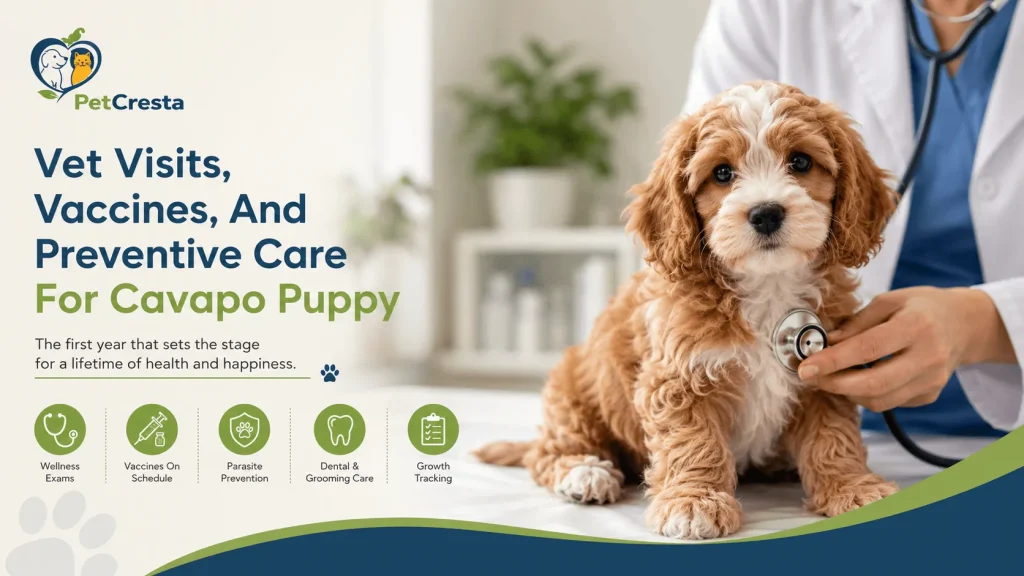
That’s the first year that sets the stage for a lifetime. Vet visits track growth, ensure the vaccination series is completed, monitor development and can detect problems at an earlier stage.
A first check-up after the puppy arrives at home is a good place to begin. It provides a perception of the veterinary team of weight, hydration, stool quality, vaccination timing, parasite prevention, and any immediate concerns.
Preventive care also involves routine handling at home. Gentle and frequent handling of the ears, paws, mouth and coat is preferable for puppies, as they will not feel the pinch but will be used to the care and feel it is normal rather than stressful later on.
First Year Care Calendar
| Care area | Early first-year focus |
|---|---|
| Wellness exams | Regular checkups after coming home |
| Vaccines | Series completed on schedule |
| Parasite prevention | Flea, tick, and heartworm plan as advised |
| Growth tracking | Weight and body condition monitored |
| Dental habits | Tooth brushing introduced early |
| Ear and coat care | Handling and routine grooming practice |
| Home observation | Appetite, stool, skin, and activity were watched |
Home Preventive Care Checklist
- Check ears regularly
- Brush teeth multiple times per week (if tolerated)
- Brush and handle their coats regularly, handling paws as well.
- Brush regularly and handle paws; handle coat.
- Monitor the body condition throughout the puppy’s development
- Maintain up-to-date parasite control as recommended by the veterinarian
Feeding Guide Of Cavapoo
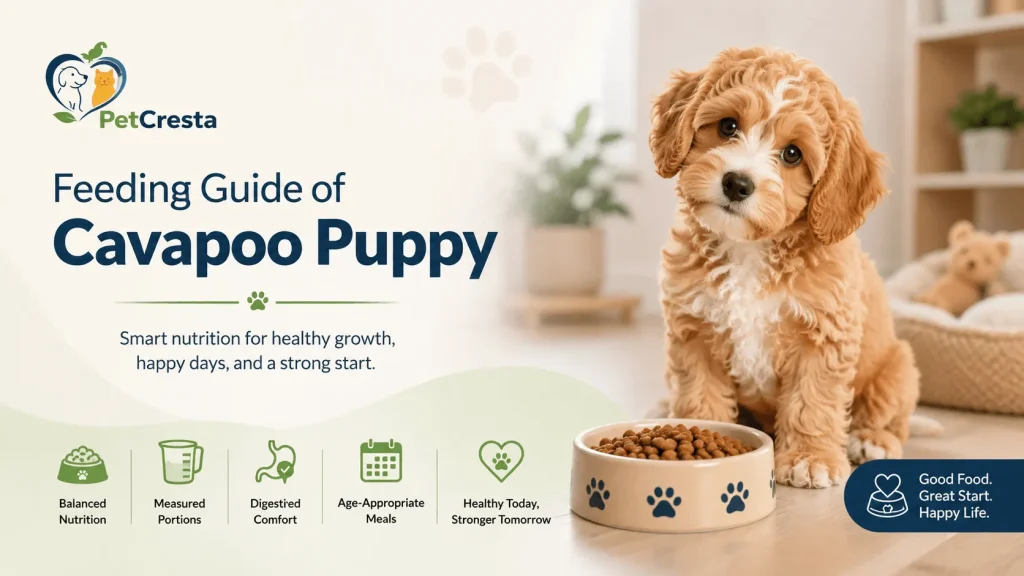
The choice of the Cavapoo’s food is not just a matter of selecting a bag of food. All this impacts growth and digestive comfort, including meal frequency, portion control, body condition and smooth food transitions.
The objective is to provide a complete puppy diet for growth. Smaller Cavapoo puppies may benefit from small breed puppy formulas as kibbles are usually smaller and help the puppy’s stomach to feel full with a lower calorie density.
The highest-priced label isn’t necessarily the best food for a Cavapoo. It is the one that promotes growth, is easily digestible, corresponds with the puppy’s size and health background, and can be fed regularly.
What To Feed A Cavapoo
Select a well-balanced puppy diet. Maintain a consistent diet during transition periods, and make gradual changes to foods, not all at once.
How Much To Feed A Cavapoo Dog?
The feeding rates are determined by the calorie density of the diet, activity, body condition and age. Package feeding guides are a point of departure, not a point of arrival.
Treats are included in total calories. Treats fed to small puppies can cause them to become overweight if not fed appropriately.
When To Move Toward Adult Food?
Some will start to transition to adult feeding patterns later in the first year but this may depend on size, growth and body condition. If the time is not known, the veterinarian should lead the team.
Cavpoo Puppy Feeding Chart By Age
| Age | Meals per day | Main focus |
|---|---|---|
| 8 to 12 weeks | 3 to 4 | Steady intake, digestive comfort, routine |
| 3 to 6 months | 3 | Growth support, measured portions |
| 6 to 12 months | 2 to 3 | Body condition, controlled treats, transition planning |
Feeding Notes That Help Most
- Measure meals rather than guessing
- Watch stool quality and appetite
- Change foods slowly
- Keep treats controlled
- Monitor body condition, not just body weight
Cavapoo Puppy Training And Socialization
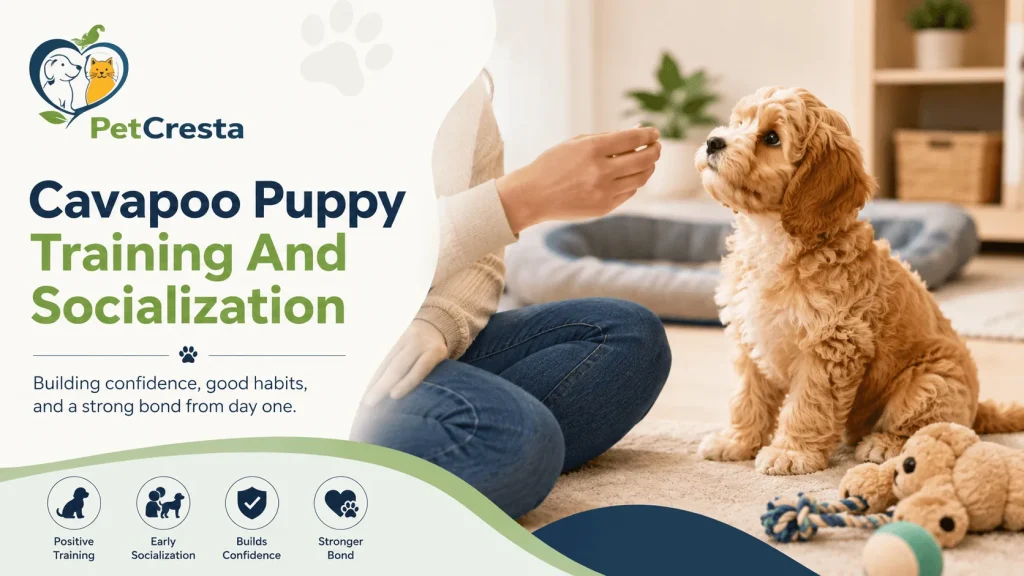
Training begins on day one. Training immediately begins from day one. It is important to remember that a Cavapoo learns best in short bursts of training, with a clear structure and a timely reward.
This is because small companion dogs tend to spend a lot of time around humans. It is possible to get into habits such as biting, barking, clinging and inadequate settling habits very rapidly when structure is delayed.
Socialization is not about “overloading” but calm exposure. It isn’t to overwhelm the puppy with noise and activity. The principle is to develop confidence by tackling manageable experiences.
First 30 Days Priorities
- Name recognition
- Toilet routine
- Crate comfort
- Gentle handling
- Bite redirection
- Settling after play
- Early leash skills
- Short alone time practice
Socialization Exposures
| Exposure | Why it matters |
|---|---|
| Household sounds | Builds everyday confidence |
| Different surfaces | Helps body awareness and comfort |
| Gentle visitors | Encourages calm social behavior |
| Car rides | Supports future travel tolerance |
| Grooming handling | Makes brushing and trims easier later |
| Safe dog introductions | Helps social development |
Alone Time Training
Cavapoo puppies don’t like independence when they are not given it early. It is generally better to separate, rather than wait until a long separation is required, but short and calm are better.
Calm exits and calm returns help to keep alone time from becoming emotional or confusing. The timing of rewards is also important. Desired behaviour should be marked and rewarded promptly and the reward should be put in close association with the learning.
First Night Tips For Cavapoo
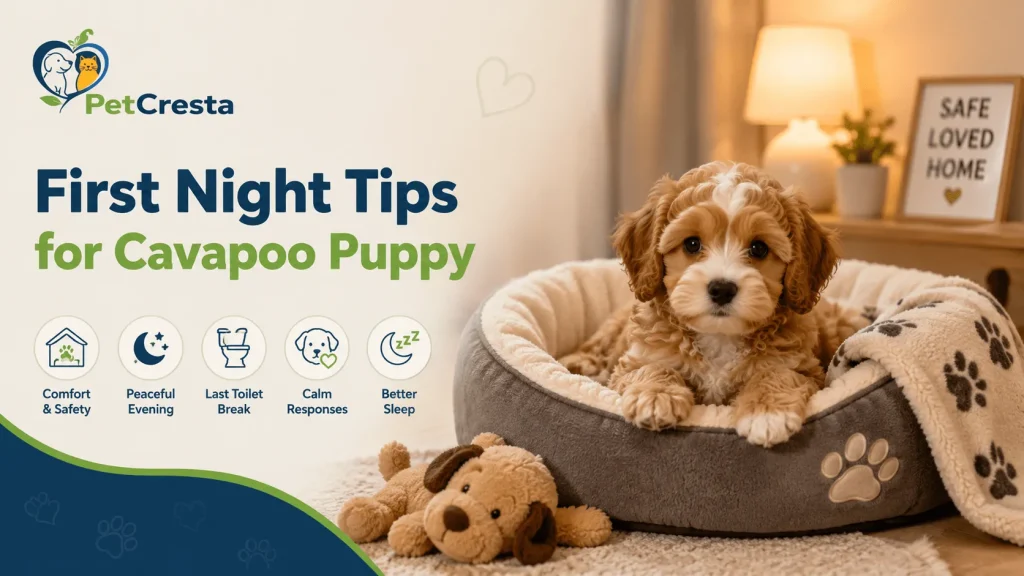
Moving into a new house can be a stressful first night. Crying, poor sleep and increased bathroom visits are normal and do not necessarily indicate a problem.
A quiet evening, a setup bed and a simple routine with no repetition until morning are usually the most helpful.
What Helps
- Set up the sleep space before arrival
- Keep the evening quiet
- Offer a final toilet break before bed
- Limit late excitement
- Respond calmly to night waking
What Not To Do
- Do not give too much freedom at once
- Do not punish crying
- Do not change the sleep plan every hour
- Do not overstimulate the puppy late at night
Cavapoo Puppy Coat, Shedding, And Grooming
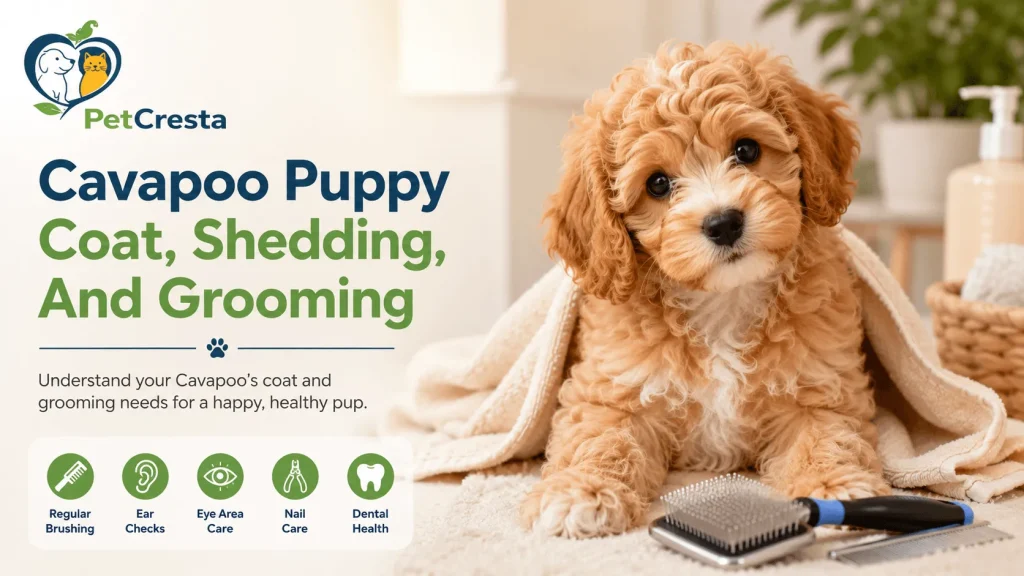
This is one of the most confused aspects of Cavapoo upkeep. A low shedding dog isn’t a low-maintenance dog.
While a Cavapoo sheds less than some other breeds, its coat will still need regular brushing and trimming. The coat type is variable and grooming needs can be greater than owners realise.
Do Cavapoo Puppies Shed?
The shedding is light to moderate and varies from one puppy to another. Loose coats may shed a little more, though, curled coats shed less visible hair into the home.
Are Cavapoo Puppies Hypoallergenic?
The dog you choose to adopt is not completely hypoallergenic. Certain individuals tolerate one dog better than the other, coat type, dander type, saliva and sensitivity to individual factors all impact the results.
What Coat Types Can Occur?
Cavapoo coats can be loose or curly. They can be wavy, curly or soft like fleece. Curlier coats are more likely to mat easily. The loose coats may still get caught in tangles in particular areas of friction like the neck, ears or armpits.
The care for coats is simpler to comprehend when it’s determined by coat type, rather than being treated as a standard rule for each puppy.
Grooming at home
Brushing at home usually depends on coat type, regular checking of ears, eye cleaning as required, nail care and early brushing practices. Puppy who are taught to handle themselves calmly early are more likely to be able to handle daily grooming.
Grooming Schedule By Coat Type
Cavapoo coats look a bit similar when they are puppies, but they can behave differently when the adult coat grows. The loose, wavy and curly coat may require distinct levels of brushing.
| Coat Type | Common Look | Grooming Focus |
|---|---|---|
| Loose or softer coat | Flatter, softer, or lightly waved | Brush several times weekly and check behind the ears, legs, and collar area |
| Wavy coat | Fuller coat with a soft teddy look | Brush often and watch for mats during coat change |
| Curly coat | Denser curls with more volume | Brush close to daily when needed and keep trims on a routine schedule |
A curlier coat could result in less visible hair at home, but it generally requires more frequent brushing. A loose coat might appear more manageable, but tangles may remain in the friction zones.
The home grooming routine should consist of:
- Cleaning several times a week
- Ear checks every week
- Eye area cleaned when needed
- Nail trimmings are needed as required
- Brushing your teeth a few times a week
- Professional grooming on a consistent timetable
The aim isn’t just to have a nice coat. The objective is to stop painful mats, safeguard the skin, and assist the puppy to be able to handle without fear.
Professional Grooming Needs
There are many puppy owners who benefit from regular professional grooming once the coat develops. The frequency of grooming depends on the coat’s type and length preference, as well as how regular home brushing is.
Puppy Coat Transition
When the coat of a puppy changes to become a mature coat, the matting may become more obvious. This is a typical point when owners notice that the coat is more noticeable than they expected.
| Grooming task | Typical routine |
|---|---|
| Brushing | Several times each week, sometimes more |
| Ear checks | Weekly |
| Eye area check | A few times each week |
| Nail care | Regularly as needed |
| Tooth brushing | Several times each week if tolerated |
| Professional grooming | On a routine schedule based on coat type |
Exercise, Sleep, And Daily Routine Of Cavapoo Puppies
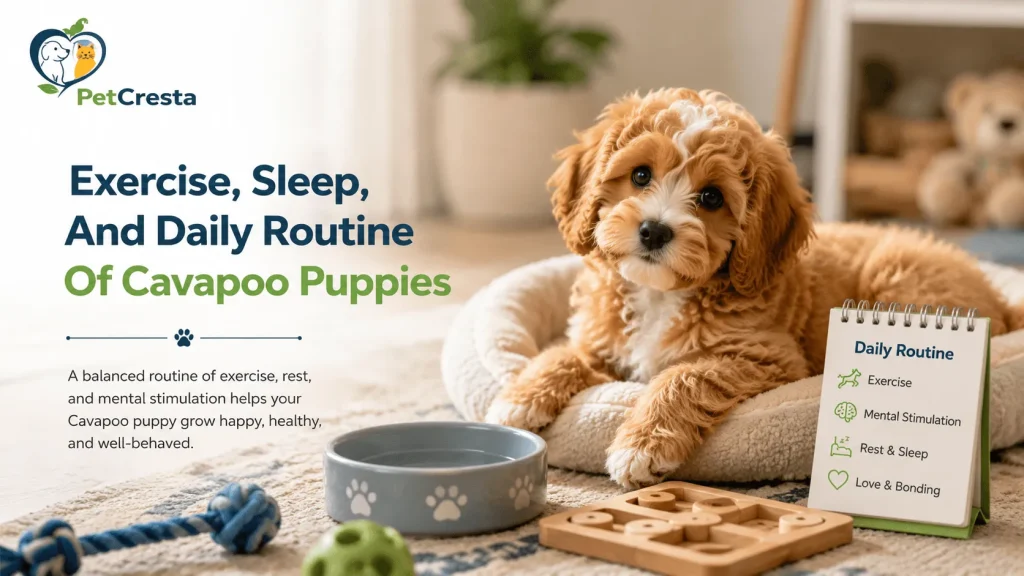
This dog needs to move, but also plenty of rest. The severity of behavioral issues can be increased when the dog is not sleeping well and excitement is poorly timed, or when the day doesn’t have a rhythm.
Puppy exercises should be easy, short, and appropriate for their age. This differs from exercise for adults. Young puppies benefit from short walks, a few minutes of play as needed, and games for training such as sniffing and enrichment.
Mental activity is also important. Scent games, food puzzles, brief training sessions, and quiet exploration can all be used to channel energy in a productive way.
It is also important to take the weather into taken into consideration. Extremely hot or cold weather can make it difficult for puppies of small size particularly those who have thicker coats or a lower tolerance to extreme temperatures.
Exercise And Alone Time By Age
The puppy’s exercise needs to be tailored to age and should not be confused with advice for adult breeds. A Cavapoo could develop into an adult with moderate energy but a puppy of a younger age requires a moderate, short-term activity that is balanced by sleepiness along with regular rest.
| Age | Exercise focus | Alone-time focus |
|---|---|---|
| 8 to 12 weeks | Very short play, brief exploration, gentle handling, frequent naps | Very short separations only, with calm returns and no long absences |
| 3 to 6 months | Short walks when appropriate, short training sessions, play, sniffing, and enrichment | Gradual practice with short, planned periods alone |
| 6 to 12 months | Longer but still measured activity, more training, more structured enrichment | Independence can be built gradually, but routine still matters |
Sample Daily Routine
| Time of day | Example activity |
|---|---|
| Morning | Toilet break, meal, short play, rest |
| Mid morning | Toilet break, training, nap |
| Midday | Meal, quiet play, rest |
| Afternoon | Toilet break, enrichment, nap |
| Evening | Meal, family time, short training, toilet break |
| Night | Calm routine, final toilet break, sleep |
Consistent vomiting, constant vomiting, loss of appetite, fatigue, pain, or obvious discomfort should warrant medical attention from a veterinarian.
Common Puppy Problems And Practical Solutions
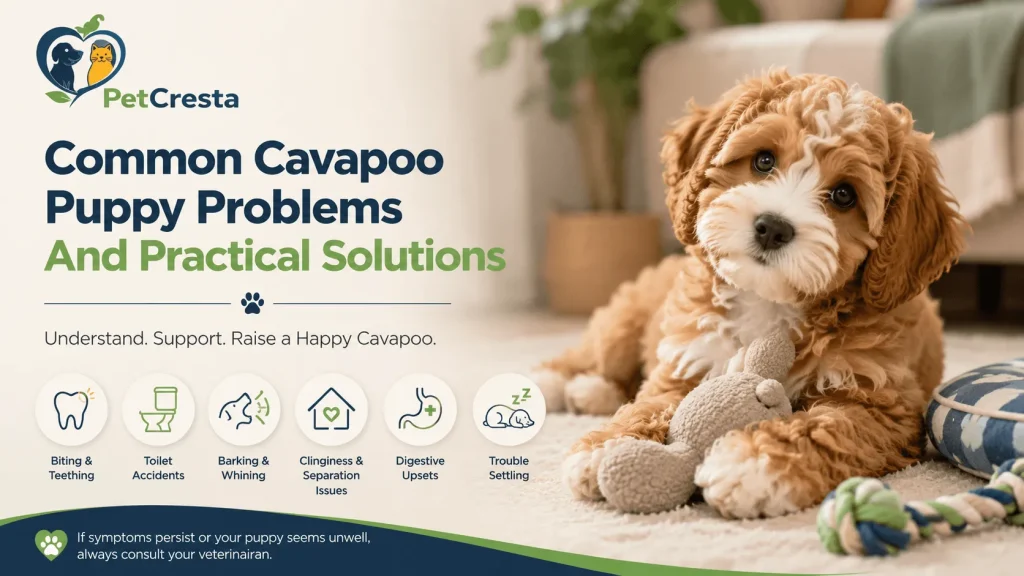
No puppy is perfect in the first year. Most early problems are manageable when addressed calmly and early.
| Problem | Likely cause | What helps |
|---|---|---|
| Biting and teething | Overtiredness, arousal, teething discomfort | Redirect to a chew, shorten play, protect naps |
| Toilet accidents | Schedule gaps, too much freedom | More frequent toilet trips, closer supervision |
| Barking | Excitement, boredom, overattachment | Enrichment, calm routine, reward quiet moments |
| Whining | Frustration, stress, unclear expectations | Meet needs first, keep responses steady |
| Clinginess | Too little independence practice | Short separations, calm exits, and returns |
| Loose stool | Food change, stress, and digestive sensitivity | Slow transitions, simple routine, vet care if it continues |
| Trouble settling | Poor sleep, overstimulation | More nap support, lower intensity activity |
Repeated vomiting, persistent diarrhea, loss of appetite, lethargy, pain, or obvious distress should prompt veterinary attention.
Cavapoo Puppy Cost And First Year Budget

The purchase price is just one component of the actual price. A Cavapoo purchased from breeders could be more expensive based on location and generation, demand, parent health test results, and even the need for early care. The adoption fees could be less but the ongoing care requires preparation.
In a lot of U.S. listings, Cavapoo puppies can be found for sale between $1,500-$3,500, but this may vary greatly. The lower cost isn’t always the best option if medical records, parent screening and the early care of the puppy aren’t clear.
Make a plan for the first year’s cost:
- Pet or adoption fee
- Exams for veterinary medicine
- The prevention of parasites and vaccinations
- Treats and food for the puppy
- Tools for grooming
- Professional grooming
- Crate, bed bowls, leash harness and toys
- Toiletries, cleaning supplies, and to prevent accidents
- Assistance with training, if required
- Emergency veterinary fund
Hidden Costs Owners Often Miss
Regular grooming can quickly add up. The same goes for chewed household products and cleaning products. pets sitting services, dental treatment as well as frequent vet visits for ear, skin and digestion issues, as well as limping.
A budget that is realistic budget can help reduce stress during this first season. The best way to ensure your puppy is secure is to consider more than the price of a puppy and plan for the subsequent care.
Preparing Your Home For A Cavapoo Puppy
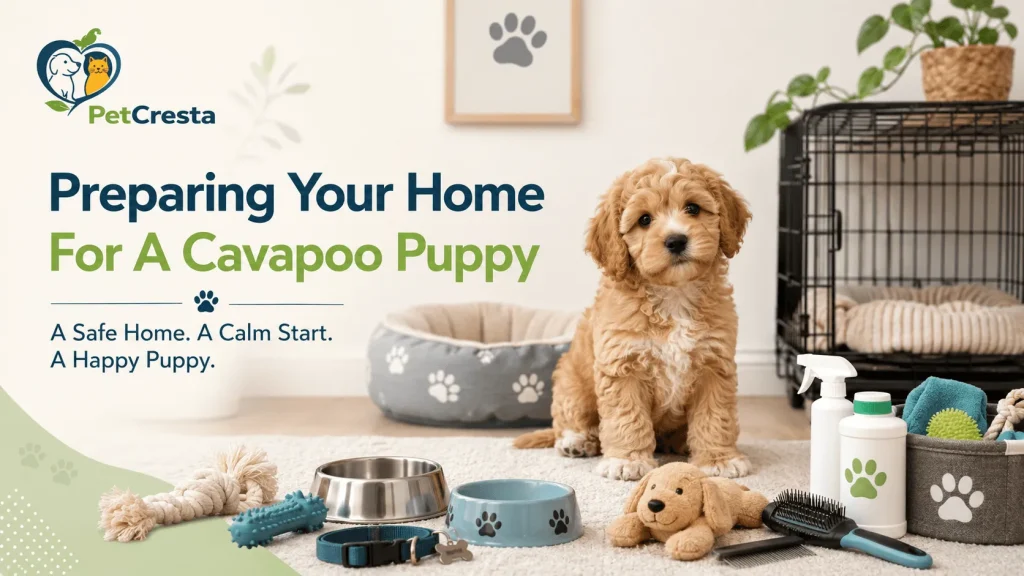
Preparation makes the transition easier for both the puppy and the household. The goal is not to buy everything available. The goal is to create a safe space and a predictable start.
Essential Supplies
- Crate or safe sleep area
- Food and water bowls
- Collar or harness
- Identification tag
- Puppy food
- Bedding
- Chew toys
- Brush and grooming tools
- Cleaning supplies for accidents
Puppy Proofing Checklist
- Secure electrical cords
- Move medications and chemicals out of reach
- Remove toxic foods
- Pick up small swallowable items
- Check plants for safety
- Block unsafe areas if needed
First Week Setup
Be calm when introducing them, schedule time for meals, plan toilet breaks, and try to avoid excessively stimulating the puppy with too many spaces or people all at the same time. Regularity is the best thing for your puppy in the beginning.
First 7 Days At Home
The first week of puppyhood should be tranquil and predictable. A puppy is getting used to a brand new house with new smells, new people and a completely different routine. Exuberance can cause toilet training, sleep and settling more difficult.
Day 1: Keep Arrival Quiet
Begin with a restroom break and water, followed by a basic food schedule, as well as a stocked sleeping area. Beware of passing the puppy from person the next.
Day 2: Start The Daily Rhythm
Make sure that meals, trips to the toilet as well as naps and play in a short, steady manner. Make sure to use the puppy’s name with care and praise with praise.
Day 3: Build Trust
Concentrate your attention on calm, controlled handling quick play and a quiet nap. Help your puppy understand that his new house is secure and reliable.
Day 4: Begin Simple Training
Training in names, toilet cues, gently redirecting, and then settling down after playing. Keep lessons short.
Day 5: Add Light Exposure
Introduce typical household sounds, secure rooms as well as brushing and the practice of a harness or collar. Avoid areas with a lot of people.
Day 6: Practice Short Separation
Begin with a brief, quiet time. Remain calm and peaceful. aid the puppy in understanding how normal it is to be separated.
Day 7: Review The Routine
Check out what’s working. Make adjustments to the timing of toilets and sleep set-up, grooming response, and feeding ease if necessary.
The first week of training isn’t about the perfect manner of behavior. It’s about creating an environment that the puppy will be able to.
This timetable is helpful to establish predictions, but each puppy grows at its own individual speed. If weight gain, growth, digestion, or behaviour are off, veterinary advice should guide what the future steps are.
Cavapoo Dog Milestones By Age
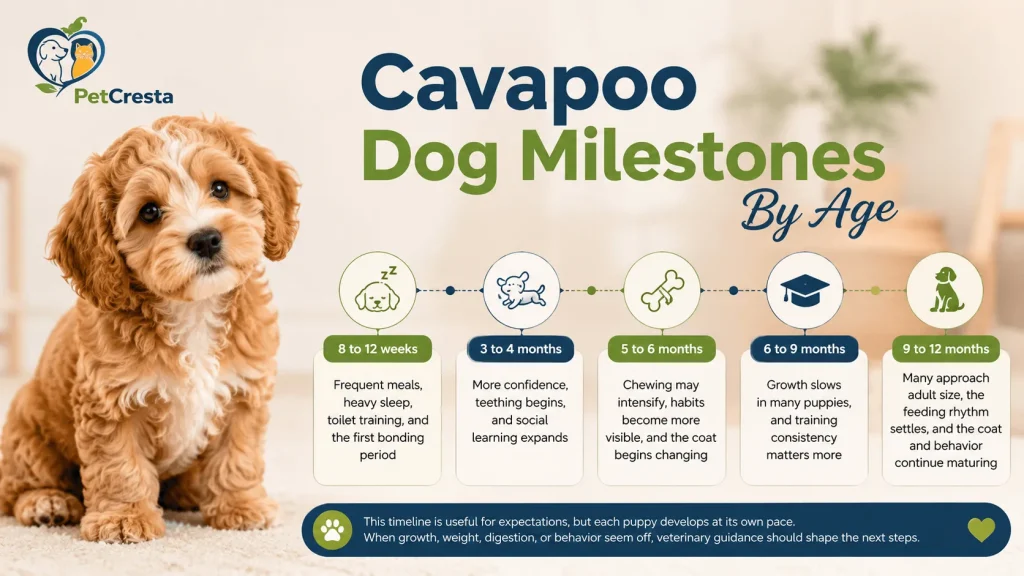
| Age | What often changes |
|---|---|
| 8 to 12 weeks | Frequent meals, heavy sleep, toilet training, and the first bonding period |
| 3 to 4 months | More confidence, teething begins, and social learning expands |
| 5 to 6 months | Chewing may intensify, habits become more visible, and the coat begins changing |
| 6 to 9 months | Growth slows in many puppies, and training consistency matters more |
| 9 to 12 months | Many approach adult size, the feeding rhythm settles, and the coat and behavior continue maturing |
This timeline is useful for expectations, but each puppy develops at its own pace. When growth, weight, digestion, or behavior seem off, veterinary guidance should shape the next steps.
Cavapoo Puppy Vs Similar Breeds
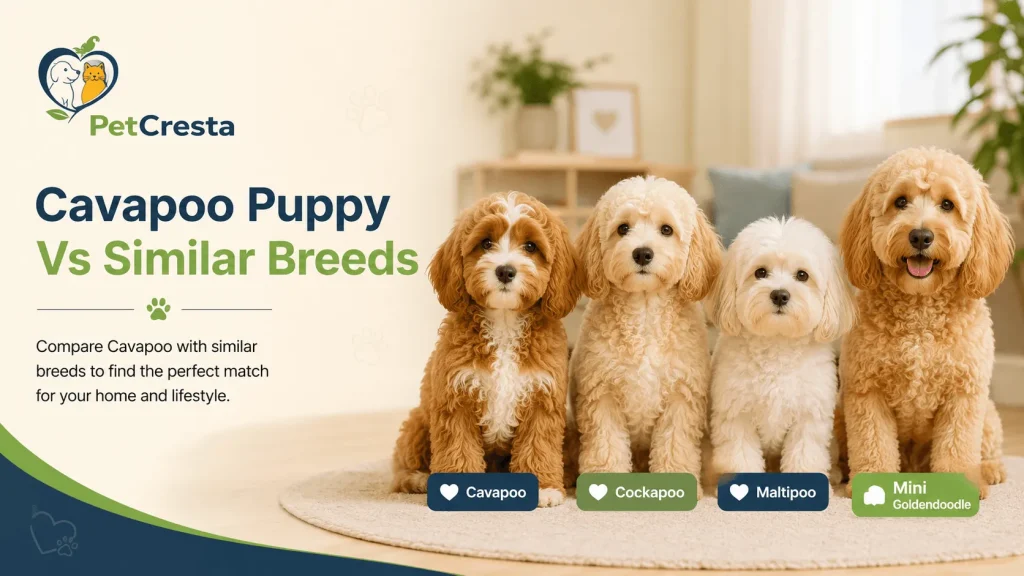
Comparing a Cavapoo to similar breeds could help you decide if size, coat maintenance levels, energy level and the home all matter. While Cavapoos are typically chosen because of their adoring nature and tiny sizes, other breeds like Cavapoos with other breeds like Cockapoo, Maltipoo, and Mini Goldendoodle may suit different households better.
A side-by-side comparison helps set realistic expectations and shows which breed is the better match for daily routine, grooming commitment, and family lifestyle.
Cavapoo Vs Cockapoo
| Feature | Cavapoo | Cockapoo |
|---|---|---|
| Size | Often smaller | Small to medium |
| Temperament | Often softer and companion-oriented | Often lively and social |
| Exercise | Moderate | Moderate to higher in some lines |
| Grooming | Regular coat care is needed | Regular coat care is needed |
| Home fit | Strong for homes wanting a close companion | Strong for homes wanting a more active social dog |
If you are leaning toward the Cockapoo side of this comparison, the miniature cockapoo is a useful next read for a closer look at size, coat care, and daily fit.
Cavapoo Vs Maltipoo
| Feature | Cavapoo | Maltipoo |
|---|---|---|
| Size | Small to medium | Often smaller |
| Build | Sometimes a bit sturdier | Often finer boned |
| Temperament | Social and affectionate | Affectionate, sometimes more delicate in feel |
| Exercise | Moderate | Moderate |
| Grooming | High | High |
For homes considering an even smaller companion mix, a teacup maltipoo can help clarify how size, delicacy, and grooming needs compare with a Cavapoo.
Cavapoo vs Mini Goldendoodle
| Feature | Cavapoo | Mini Goldendoodle |
|---|---|---|
| Size | Smaller in many cases | Often larger |
| Exercise | Moderate | Often somewhat higher |
| Coat care | High | High |
| Home fit | Often suits smaller homes well | May suit homes wanting a bigger doodle type |
These tests are best used as fitness checks. The final decision should be based on how much grooming is tolerated, the amount of time at home, the training goals and the desired size.
Conclusion
A Cavapoo is a wonderful pet in a home with the right. A lot of them are friendly, social and enjoyable to spend time with.
The most effective results are derived from real-world experience, not only attraction to a cute puppy’s face. Training, grooming, companionship sleeping, eating and preventive health all influence the first year of a puppy.
The proper fit is more important than just appearance. Cavapoos typically thrive in homes that are designed for regular contact, structure, and consistent coat care.
FAQ’s
To take care of a Cavapoo, focus on a steady routine for feeding, toilet breaks, sleep, grooming, training, and socialization. Regular brushing, early handling, short reward-based training sessions, and routine veterinary care all help a Cavapoo grow into a healthy, well-adjusted adult.
A Cavapoo grooming at home guide should include regular brushing, gentle ear checks, eye area cleaning when needed, nail trims, and early tooth brushing practice. Home grooming works best when it starts early and stays consistent, since even low-shedding Cavapoo coats can mat quickly if brushing is skipped.
Possible concerns include ear issues, dental crowding, luxating patella, eye problems, skin irritation, heart disease risk from Cavalier lines, and weight gain if body condition is not watched.
The total cost varies by source, location, and the type of care already provided. Beyond the puppy price, first-year costs usually include food, veterinary care, grooming, supplies, training, and prevention. A realistic budget should also leave room for unexpected medical costs and routine grooming appointments.
The right amount depends on age, food type, activity level, and body condition. Most puppies do best with several measured meals each day, early on, then fewer meals as they mature. Portion guides on the bag are a starting point, but growth and body condition matter more than the label alone.
Many Cavapoo puppies continue growing through much of the first year. Some look close to adult size by around 9 to 12 months, but body shape, coat, and maturity may keep changing after that. Growth should be viewed as a range, not an exact deadline.
Many Cavapoos begin coat transition during the first year as the soft puppy coat starts changing. This stage often makes tangles and matting more noticeable, especially in wavy or curly coats. Regular brushing becomes even more important during this period.
They often can be a good fit for first-time owners who are ready for routine, grooming, and training. Their affectionate nature can make bonding easier, but they still need boundaries and consistency. A cavapoo is usually easier for prepared beginners than for homes wanting a low-maintenance dog.
They can learn to stay alone for short periods, but the skill needs to be taught gradually. Many Cavapoo puppies are very people-oriented and can struggle if independence is never practiced early. Calm, short separations are usually more helpful than waiting until a long absence becomes unavoidable.
Most Cavapoo puppies grow into small or small to medium adults. Many finish around 8 to 25 pounds and about 9 to 14 inches tall, though some fall outside that range. Adult size depends mostly on genetics, especially the size of the Poodle parent.
They are often responsive to reward-based training, but they are not effortless. Consistency, timing, sleep, and routine have a major effect on results. A smart puppy can still develop difficult habits quickly when structure is missing.
Cavapoo puppies can be vocal, but barking is usually shaped by excitement, boredom, frustration, or overattachment. It is not just a breed issue, and the habit often gets worse when routine and rest are poor. Early training, enough sleep, and calm daily structure usually help more than correction alone.
Many Cavapoo puppies can do well with children when interaction is gentle and supervised. The most important factor is whether the household protects the puppy’s sleep and prevents rough handling. Calm boundaries on both sides usually matter more than breed reputation alone.
They often can be, especially when introductions are slow and carefully managed. A calm start with space, supervision, and gradual exposure usually works better than forced closeness. Success depends on the puppy’s behavior, the cat’s temperament, and the way the home manages early contact.
The crate should fit the puppy’s current size while still allowing room to stand, turn, and lie down comfortably. It should not be so large that toilet training becomes harder in the early stage. Expected adult size matters too, especially if the crate will be used long-term.
A Cavapoo should come home only when old enough for normal early development and basic social stability. Going home too early can reduce useful time with the litter and early handling experience. A well-timed transition usually supports better adjustment, sleep, and behavior in the new home.
They can be very people-oriented, which is one reason they are so appealing. That same trait can turn into clingy behavior when independence is never practiced. Short calm separations, a steady routine, and not over-relying on constant contact usually help.
They need age-appropriate activity, not adult-level exercise targets. Short play sessions, gentle exploration, training games, sniffing, and enough rest are usually more useful than long walks. Too much forced exercise can be just as unhelpful as too little structure.
References
- PetMD, Cavapoo
https://www.petmd.com/dog/breeds/cavapoo - Cavapoopuppiesmd, Cavapoo Dog Breed Guide
- https://cavapoopuppiesmd.com/breed/
- Purina UK, Cavapoo Dog Breed Guide
https://www.purina.co.uk/find-a-pet/dog-breeds/cavapoo - Chewy, Cavapoo Breed Guide
https://www.chewy.com/education/dog-breeds/cavapoo - Petplan, Cavapoo Breed Guide
https://www.petplan.co.uk/dog-insurance/dog-breeds/cavapoo.html