Why Do Cats Lick Each Other? Reasons Cats Lick And Groom Each Other
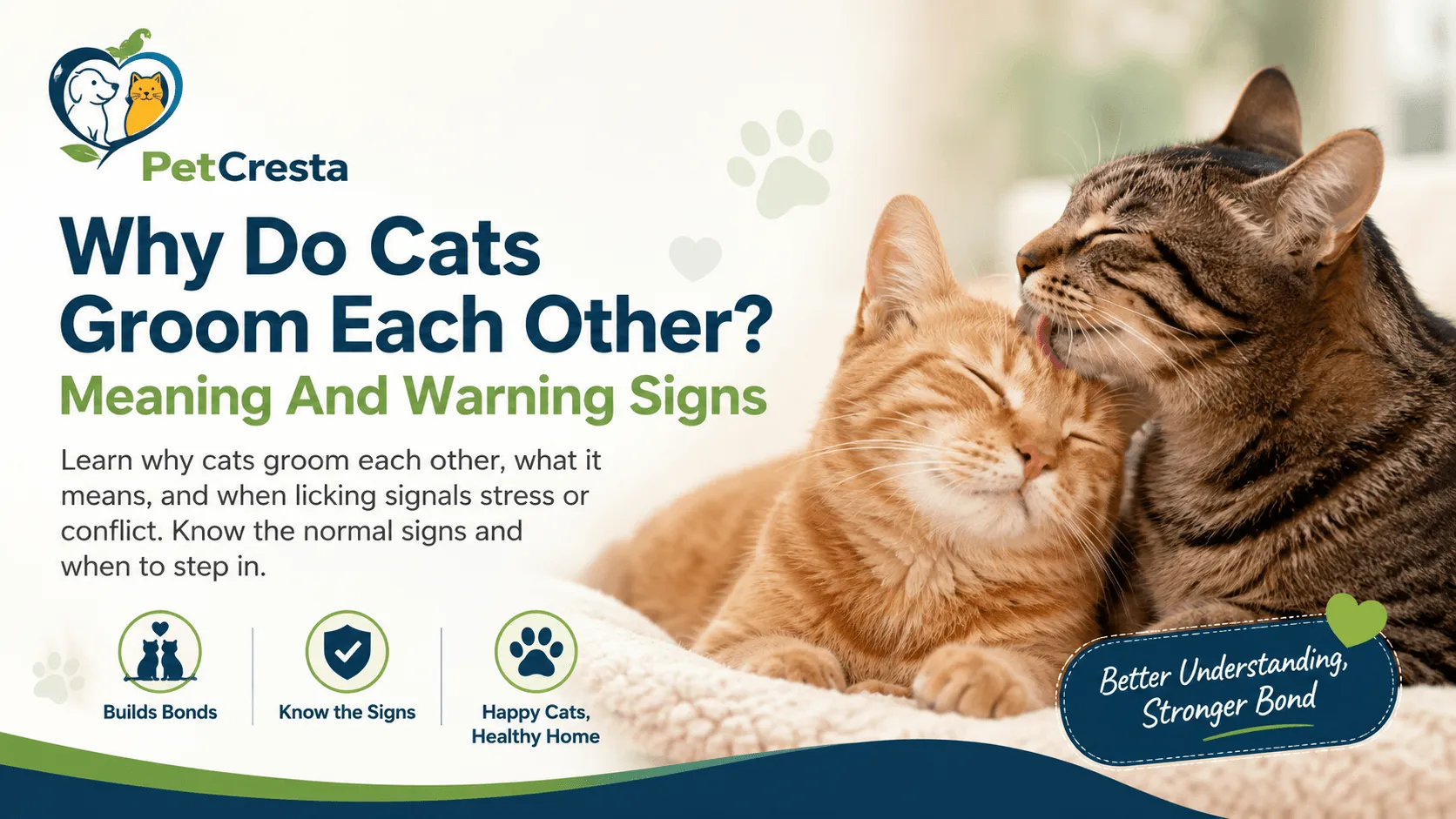
Cats grooming each other can look sweet, strange, or a little worrying. In many homes, the behavior is a normal part of feline social life. In other homes, it can be a clue that one cat is feeling tense, overstimulated, or pushed too far.
This behavior is called allogrooming, which simply means one cat grooming another cat. It can happen for several reasons, including bonding, scent sharing, comfort, help with hard-to-reach areas, and social hierarchy. The meaning depends less on the licking itself and more on the body language, the relationship between the cats, and what happens next.
This guide explains why do cats groom each other, what the behavior can mean, why grooming sometimes turns into biting or fighting, how to spot healthy grooming, and when it is time to step in or call the vet.
TL;DR: Is Cats Grooming Each Other Normal?
Yes, gentle grooming between relaxed cats is usually normal. It often reflects comfort, familiarity, and normal social behavior.
It deserves a closer look when the licking is one-sided, forceful, repeated after the other cat tries to leave, or followed by tension, biting, or chasing. The best way to judge it is to watch posture, comfort, and what happens after the grooming stops.
At A Glance: What Social Grooming Can Mean
| Pattern | What it usually means | What it can look like | When to watch more closely |
|---|---|---|---|
| Mutual gentle grooming | Comfort and social closeness | Soft posture, calm pauses, grooming back | If the pattern suddenly changes |
| One-sided grooming | Often normal, sometimes slightly uneven social style | One cat licks more while the other stays relaxed | If the other cat looks tense or tries to leave |
| Grooming then wrestling | Play or mild overstimulation | Loose movement, quick pauses, both cats re-engage | If one cat looks trapped, fearful, or upset |
| Repeated forceful licking | Poor boundaries, tension, or social pressure | Tail flicking, pinned posture, escape attempts | If it happens often or always involves the same cat |
| Grooming with bald spots | Overgrooming or skin irritation | Thin fur, broken hair, sore skin | Needs closer follow up |
| Grooming around wounds or stitches | Not appropriate | Focus on painful or healing areas | Stop it and contact the vet |
Why Grooming Matters So Much To Cats
Grooming is a major part of normal feline behavior. Cats use it to keep their coats clean, spread skin oils, remove loose hair, manage scent, and settle themselves. Because grooming already matters so much to cats, social grooming can carry meaning beyond hygiene alone.
When one cat grooms another cat, the act may reflect comfort, familiarity, scent sharing, practical help, or an established social pattern. That is why the same licking behavior can look warm and welcome in one pair, but pushy or tense in another.
Self Grooming Is A Major Part Of Normal Cat Behavior
Cats spend a large part of their waking time grooming. Self-grooming helps keep the coat clean, spreads skin oils, removes loose hair, and can have a calming effect.
That matters here because social grooming grows out of a behavior cats already treat as important. When one cat directs that behavior toward another, the act can carry social meaning as well as practical value.
Social Grooming Is Called Allogrooming
Allogrooming means one cat grooming another cat. It is different from self-grooming because it takes place inside a relationship.
A cat grooming another cat may be showing closeness, helping with hard-to-reach areas, or reinforcing a social pattern. That is why the same act can look affectionate in one pair and controlling in another.
Research Snapshot: What Studies Suggest
Observational work on social grooming in cats points to a few patterns that are useful for owners to know.
- Grooming between cats is often one-sided rather than perfectly equal.
- The head, face, neck, and ears are common targets.
- Some grooming appears linked with social rank in the household.
- Grooming can be followed by tension or aggression in some interactions.
- Related cats may groom more easily, but unrelated housemates can also do it when they are comfortable together.
Why Do Cats Groom Each Other?
A single behavior can have several meanings, so the answer is rarely just one thing.
Why The Head And Neck Get Groomed Most
It is usually a normal social behavior. In many homes, it reflects comfort, familiarity, scent sharing, or help with hard-to-reach areas such as the head and neck. In other homes, the same behavior can look more tense and may lead to swatting, biting, or avoidance.
This behavior is called allogrooming, which means one cat grooming another cat. The key is not the licking alone. The meaning depends on body language, how both cats respond, and what happens after the grooming stops.
To Strengthen Social Bonds
Cats lick each other to reinforce comfort and familiarity. In relaxed pairs, the behavior often appears during quiet moments, after resting together, or during calm social contact.
That is why the cats grooming each other’s meaning is often tied to trust. It is one of several ways cats can maintain a comfortable social connection.
To Share Scent And Feel Like Part Of The Same Group
Cats live through scent as much as sight and sound. When they groom each other, they mix scent in a way that can support familiarity and group identity.
In a multi-cat home, this can help the cats smell more alike. That does not guarantee perfect harmony, but it can support a sense of social belonging.
To Help Clean Areas That Are Hard To Reach
The face, ears, top of the head, and neck are harder for a cat to groom alone. Another cat can reach those areas more easily.
This is one of the simplest reasons a cat licking another cat may happen. Sometimes the act really is practical help, especially when the cats are calm, and the licking stays gentle.
To Soothe And Settle Each Other
Some cats use social grooming during quiet routines that seem calming or familiar. It may happen before resting together, after a mild disruption, or during peaceful social contact.
This does not mean cats are deliberately giving therapy to each other. It means the act itself may help maintain calm in a relationship that already feels safe.
To Carry Forward Behavior Learned In Kittenhood
Kittens are groomed by the mother very early in life. That early care helps with cleaning, stimulation, and comfort.
As cats mature, some continue to use grooming as part of social life with littermates, bonded companions, or familiar adult cats. This is one reason why do kittens groom each other is such a common one.
To Reinforce Hierarchy Or Redirect Tension
Not every grooming session is purely affectionate. In some homes, cat grooming dominance may be part of the picture.
One cat may groom more often, hold the other in place, or continue after the other cat is no longer comfortable. In those cases, the behavior may reflect social pressure, mild control, or tension rather than relaxed affection.
What Does It Mean When Cats Groom Each Other?
It depends on the whole interaction, not just the licking. A calm, welcomed grooming session means something very different from repeated licking that ends with swatting or escape.
Grooming Can Be A Sign Of Affection
When two cats look relaxed and comfortable, grooming often reflects trust and social closeness. It can be one of the clearer signs that the cats feel safe together.
This is why many owners connect the behavior with affection. In the right context, that is a fair interpretation.
Grooming Can Reflect A Social Relationship, Not Just Emotion
Cat grooming another cat is not always emotional in a simple human sense. It can reflect familiarity, tolerance, routine, or social structure.
Some pairs groom because they are closely bonded. Some because they live well together and share space comfortably. Some because one cat tends to take the lead in interactions.
Grooming Can Show That The Cats Feel Safe Enough To Be Vulnerable
The head and neck are common targets because they are harder to reach and more exposed. Allowing another cat to groom those areas can suggest a level of comfort.
That said, a head and neck focus is not proof of a perfect bond. It is only one piece of the larger social picture.
Do Cats Groom Each Other As A Sign Of Affection?
Often, yes. But affection is not the only explanation, and it is not always the best explanation.
When Grooming Is Probably Affectionate
Affection is more likely when both cats look relaxed. Signs that point in that direction include:
□ Soft body posture
□ Calm stillness without freezing
□ Purring or relaxed facial expression
□ Grooming back in return
□ Resting together afterward
□ No attempt to escape or defend
In these cases, the grooming is usually part of a comfortable relationship. Some relaxed cats also purr or drool during pleasant social contact, so it can help to read more about why do cats drool.
When Affection Is Not The Best Explanation
The act may be less affectionate when one cat tries to move away, flattens the ears, flicks the tail, freezes in place, or reacts with a swat or bite.
A cat can allow contact without enjoying it. That is why body language matters more than a single label like love or bonding.
What Bonded Cats Usually Look Like
Bonded cats do not all behave the same way. Some groom each other often. Others rarely do, but still show strong social comfort in other ways.
Signs Of Bonded Cats Beyond Grooming
Bonded cats meaning should not be reduced to licking alone. A close pair may also:
□ Sleep together
□ Rest in body contact
□ Follow each other calmly
□ Greet each other quietly
□ Sit near each other by choice
□ Show mild distress when separated in some pairs
Grooming is one clue, not the full definition.
What Does It Mean When Cats Are Bonded?
Bonded cats usually prefer each other’s company and handle close contact with ease. Their behavior tends to look settled, predictable, and low-stress.
In practical terms, that means fewer defensive reactions, more voluntary proximity, and easier social sharing.
Do Bonded Cats Always Groom Each Other?
No. Some bonded cats never groom much at all. Their relationship may show up more clearly in shared rest, calm proximity, or cooperative routines.
For that reason, a lack of grooming does not automatically mean the cats dislike each other.
Related Cats And Unrelated Housemates
Social grooming is often easier to see in related cats or cats that formed a strong relationship early. Even so, unrelated housemates can groom each other when they feel secure together.
A peaceful pair may still be healthy and compatible even if grooming is rare. The larger relationship matters more than any single sign.
Why Do Kittens Groom Each Other?
Kitten grooming starts in early life and makes sense within normal feline development. Young cats learn social contact partly through the care they receive and observe.
Grooming Starts With The Mother Cat
The mother cleans the kittens from the start. This helps remove debris, stimulates normal body functions, and provides early physical care.
That first grooming experience helps make close contact and licking a normal part of social life for kittens.
Littermates And Young Cats May Continue The Behavior
Kittens grooming each other often reflects comfort, familiarity, and playful social contact. Young cats may be more open and frequent with the behavior because social boundaries are still developing.
As they grow, some cats keep that pattern with trusted companions, and some do not.
Older Cat Grooming Kitten And Kitten Grooming Older Cat
Older cat grooming kitten behavior can be normal when the interaction stays gentle, and the kitten remains relaxed. Kitten grooming older cat behavior can also happen in calm pairs and often reflects social comfort.
It becomes less normal when the older cat pins the kitten, when the kitten repeatedly tries to escape, or when the licking turns rough or repetitive.
Is Grooming A Sign Of Dominance In Cats?
Sometimes it can be. But grooming should not be treated as a simple dominance test.
What Research Suggests
Observational work has found that social grooming is often one-sided and may flow more often from a higher-ranking cat to a lower-ranking cat. The head and neck are frequent grooming targets.
That pattern helps explain why some owners notice one cat doing most of the licking. It can be part of a household hierarchy.
What Dominance Does Not Explain?
Dominance does not explain every grooming session. Cats also groom for comfort, routine, practical help, and social bonding.
That is why it is not accurate to say the cat doing the grooming is always the dominant one. The rest of the relationship has to be considered, too.
Which Cat Is Dominant When Grooming Happens?
Look at the wider social pattern, not the licking alone. More useful clues include:
| Wider clue | What to watch for |
|---|---|
| Control of space | One cat regularly claims doorways, shelves, or favored resting places |
| Resource access | One cat blocks the food, water, or litter area access |
| Initiation | The same cat starts most physical interactions |
| Response to objection | The grooming cat ignores signs that the other cat has had enough |
| Ending the interaction | The same cat decides when contact starts and stops |
A single grooming session is not enough to label a cat dominant.
Household Stress Can Shape Grooming Patterns
Social tension often becomes clearer around resources. Food bowls, litter boxes, resting spots, vertical space, and tight walkways can all affect how cats behave with each other.
If the cat grooming hierarchy seems more intense around those areas, the home setup may be part of the problem.
What Healthy Grooming Usually Looks Like
Healthy grooming looks calm, welcome, and easy. The cats do not appear trapped, defensive, or annoyed.
Body Language That Suggests Comfort
Relaxed grooming often includes:
□ Soft muscles
□ Calm posture
□ No urgent attempt to move away
□ Gentle pauses
□ Grooming back at times
□ Staying close afterward
□ Soft tail carriage rather than sharp flicking
These signs matter more than whether the grooming is perfectly mutual.
One-Sided Grooming Can Still Be Normal
One cat may simply be more socially active or more likely to groom. One-sided grooming does not automatically mean cat aggressive grooming.
It becomes more questionable when a cat always receives the licking with a stiff posture, tries to leave, or gets pushed into the interaction.
Common Body Areas That Get Groomed
Most social grooming is focused on the face, ears, head, and neck. Those are areas a cat cannot reach as easily alone.
That focus is one reason the behavior may look nurturing or intimate, even when the relationship is not deeply bonded.
When Grooming Is Not Welcome
Unwelcome grooming usually looks different. The receiving cat appears irritated, trapped, tense, or defensive.
Signs The Other Cat Is Uncomfortable
Watch for these cues:
□ Repeated attempts to leave
□ Freezing in place without relaxing
□ Tail flicking or tail slapping
□ Ears turned back
□ Skin twitching
□ Swatting
□ Hissing or growling
□ Sudden biting
A cat that sits still is not always a cat that feels safe.
Forced Grooming And Pinning
The behavior becomes more concerning when the licking cat holds the other cat in place, blocks escape, or follows the other cat to keep licking after the interaction is clearly unwanted.
Forced grooming may look like close contact, but the social tone is very different from gentle mutual comfort.
Aggressive Grooming Vs Normal Social Grooming
Normal social grooming is brief, calm, and accepted. Cats aggressive grooming is more repetitive, less flexible, and more likely to end with protest, pinning, or conflict.
The difference is not just how much licking happens. The difference is whether both cats stay comfortable and whether one cat can leave without being pressured.
Why Do Cats Lick Each Other Then Fight?
This is one of the most important sections because many owners notice the pattern and assume the relationship must be bad. That is not always true.
Sometimes It Is Play, Not A Real Fight
Some cats shift quickly from licking to wrestling. If both cats stay loose, pause, and re-engage without fear, the behavior may be rough play rather than a serious dispute.
This is more common in younger or more playful cats.
Sometimes One Cat Has Had Enough
A grooming session may start out acceptable and then go on too long. The receiving cat may become overstimulated, irritated, or impatient.
In those cases, the bite or swat is more of a boundary signal than a major social breakdown.
Sometimes Grooming Is Tied To Tension
Why do my cats lick each other, then fight can also be explained by the tension that was already present. The grooming may carry mild control, redirected frustration, or a subtle social challenge.
If the same pair regularly moves from licking to pinning, chasing, or hissing, the relationship may need a closer look.
When The Pattern Is A Red Flag
The pattern is more concerning when it includes:
□ Screaming or panic sounds
□ Hard chasing
□ Repeated pinning
□ Injuries
□ One cat hiding later
□ One cat avoiding shared spaces afterward
These signs point away from normal play and toward stress or conflict.
Medical Exceptions
Cats should not be allowed to groom each other roughly when one has wounds, stitches, painful skin, or a healing surgical site. Even light licking can interfere with recovery.
In those situations, stop the interaction and protect the medical area as instructed by the vet.
Simple Decision Guide:
Grooming
↓
Both cats stay loose and re-engage = likely play or normal social contact
Grooming
↓
One cat swats once and walks away = boundary reached or overstimulation
Grooming
↓
One cat pins, chases, hisses, or causes fear = conflict that needs attention
Can Cats Groom Each Other Too Much?
Yes. Social grooming can cross from normal into excessive.
Overgrooming And Barbering
Too much licking can lead to thinning hair, broken hair, bald areas, and irritated skin. When one cat repeatedly targets the same spot on the other cat, the coat can start to look uneven or damaged. This is one way excessive grooming becomes easier to spot.
Why Excessive Licking Matters
Repeated licking can create skin irritation and friction. It can also signal that the relationship is not as settled as it appears. Because excessive licking can increase swallowed hair, some cats may later show signs that look like cat coughing, especially when hairballs are part of the problem.
In some cases, the real issue is not the skin. The real issue is poor boundaries, ongoing social pressure, or a stressed home environment.
Medical Causes Can Play A Role
Not every grooming problem is purely behavioral. Pain, allergies, fleas, mites, and other medical causes can make a cat more sensitive or more likely to react badly to contact.
If the pattern is sudden, intense, or paired with skin changes, a medical cause should be considered.
Hairballs And Saliva Concerns
More grooming can mean more loose hair is swallowed, which may increase vomiting or hairball problems in some cats. Shared saliva contact also matters more when the skin is irritated or wounds are present.
This is not a reason to panic. It is simply one more reason to take repeated excessive licking seriously.
When To Worry About A Cat Licking Another Cat
Most social grooming does not need intervention. The behavior deserves attention when the cats stop looking comfortable or when the skin starts to pay the price.
Contact Your Vet If You See
A veterinary check is sensible when social grooming leads to:
□ Bald patches
□ Broken skin
□ Sores or hot spots
□ Repeated vomiting from excess hair
□ Licking around wounds or stitches
□ Obvious pain
□ Sudden behavior change
□ Repeated conflict in a previously peaceful pair
These signs move the issue beyond normal social behavior.
Consider Behavior Help If You Notice
A behavior-focused plan may help when the problem is social rather than medical. Watch for repeated forced grooming, one cat hiding from the other, tension around resources, stalking after grooming, or an ongoing pattern where the same cat controls contact.
When those signs repeat, the home setup and the relationship itself may need support.
What To Do If One Cat Keeps Grooming The Other
The goal is not to punish the cats. The goal is to lower pressure and make the interaction easier to stop.
Interrupt Calmly
Use a calm interruption such as walking over, calling the cats apart, tossing a toy away from them, or redirecting attention with play. Avoid yelling or physically grabbing unless safety is at risk.
A calm interruption helps without turning the moment into extra stress.
Reset The Environment
If the cats are getting tense, separate them briefly and let both settle. Short breaks can prevent the pattern from building into a bigger fight.
Keep the reset quiet and simple.
Reduce Household Tension
Improving the environment often helps more than correcting the cats directly. A useful checklist includes:
□ More litter boxes in different areas
□ More than one feeding area
□ Extra resting spots
□ Vertical space, such as cat trees or shelves
□ Easy escape routes
□ Daily play and enrichment
□ Less crowding in tight walkways
Resource pressure often shows up in social contact long before it shows up in obvious fighting.
Get Help When The Pattern Keeps Repeating
A veterinary visit is the right first step when the skin is affected, the behavior is sudden, or pain may be involved. A behavior professional may help when the pattern is social, repetitive, and tied to tension between the cats.
Help is especially useful when one cat keeps grooming the other past clear signs of discomfort.
Common Myths About Cats Grooming Each Other
This behavior is often misunderstood because the same act can have more than one meaning.
Myth: Grooming Always Means Love
Grooming often reflects comfort and affection, but not always. It can also reflect routine, tolerance, hierarchy, or mild social pressure.
The context changes the meaning.
Myth: The Cat Doing The Grooming Is Always Dominant
Some grooming patterns are linked with social rank, but the groomer is not automatically dominant in every pair. The wider relationship matters more than the licking alone.
Food access, resting space, and reaction to boundaries give better clues.
Myth: Grooming Then Wrestling Means The Cats Hate Each Other
Some cats move from grooming into play. That does not automatically mean the relationship is bad.
The key question is whether both cats stay loose and willing, or whether one becomes frightened or defensive.
Myth: Cats That Never Groom Each Other Are Not Close
Some close pairs simply show a connection in other ways. Shared sleep, calm proximity, and easy coexistence may say more about the relationship than licking does.
A healthy bond does not require every social behavior.
Myth: If One Cat Allows Grooming, It Must Enjoy It
A cat may tolerate something without liking it. Freezing, staying still, or not fighting back can still be signs of discomfort.
That is why body language matters so much in multi-cat homes.
Conclusion
Cats groom each other for several reasons, and the act is usually normal when both cats look relaxed and comfortable. It may reflect affection, scent sharing, practical help, early learned behavior, or social structure.
The most useful way to judge the behavior is to watch how both cats look during the interaction and what happens next. Calm, welcome grooming is usually fine. Repeated forceful licking, skin damage, fear, or conflict deserves closer attention.
FAQ’s
Cats may lick each other to reinforce social comfort, mix scent, clean hard-to-reach areas, or follow a pattern learned from kittenhood. In some cases, the licking may also be part of a social imbalance. That is why the same behavior can look gentle in one pair and tense in another.
A bite during grooming often means the receiving cat has had enough. It can also happen when social tension is already present. The behavior becomes more concerning when it happens often, when one cat always seems annoyed, or when the interaction ends in fear or chasing.
The head and neck are hard for a cat to groom alone, so another cat can help with those areas. These zones also tend to show up often in social grooming because they are exposed and important in close contact. That is why grooming there can look both practical and socially meaningful.
Cats lick themselves to keep their coats clean, remove loose hair, spread natural skin oils, and maintain normal grooming routines. Self-grooming can also help a cat settle and feel more comfortable. Because grooming matters so much to cats, social grooming with another cat can carry added meaning.
A cat should be groomed gently, with short sessions and the right tools for the coat type. Brushing helps remove loose hair, reduce mats, and lower hairball risk, but the skin should never be scraped or irritated. Any grooming should stop if the cat becomes stressed, painful, or defensive.
Cat grooming behavior includes both self-grooming and social grooming. It covers licking the coat, cleaning the face and paws, smoothing the fur, and sometimes grooming another cat in the home. The behavior can serve practical, emotional, and social functions depending on the situation.
Some cats do form close social bonds and appear deeply comfortable with one another. That bond may show through grooming, sleeping together, calm proximity, and easy body language. Even so, not every peaceful pair behaves the same way, so love should not be judged by grooming alone.
When two cats lick each other, the behavior often points to social comfort and trust. It may reflect bonding, shared scent, or cooperative grooming of the face, ears, or neck. The clearest way to read the behavior is to watch whether both cats stay relaxed and comfortable during the interaction.
Cat grooming hierarchy refers to the idea that social grooming can sometimes reflect rank or control within a pair or group. One cat may groom more often, initiate contact more often, or continue grooming after the other cat has had enough. This does not mean grooming is always dominance-based, but hierarchy can be part of the pattern in some homes.
References