Moving House With a Dog: Planning and Safety Tips
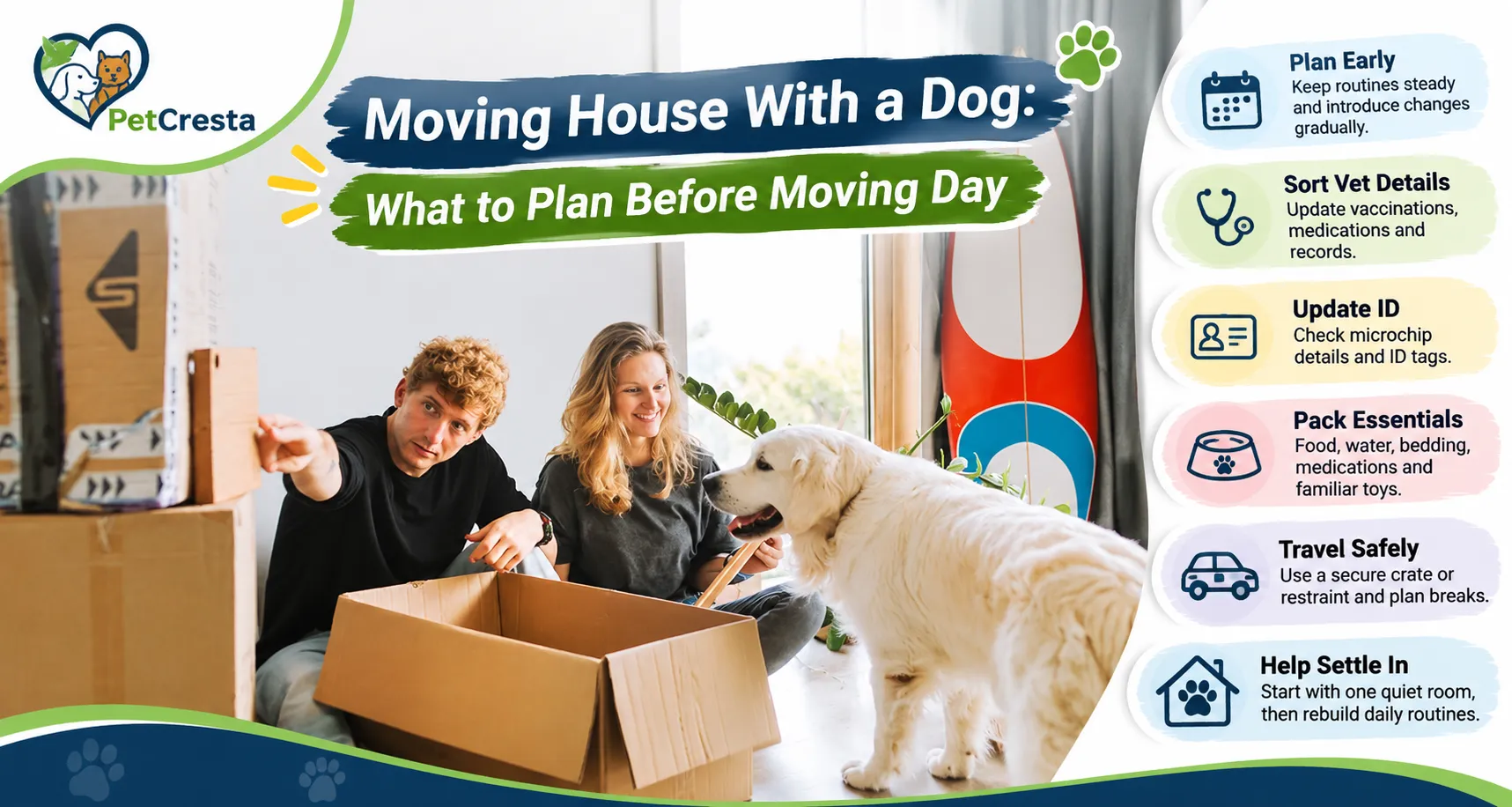
Moving with a dog looks simple on paper: pack your things, load the car, and bring the leash. Real life gets messier fast. Dogs notice changes in their environment and daily routines long before moving day, and that stress can show up as pacing, skipped meals, barking, or accidents around the house.
Moving house with a dog requires early preparation, safe transportation, updated identification, and a consistent routine after arrival. A successful transition isn’t just about getting your belongings to the new address. It’s about helping your dog feel secure throughout the process.
If you want the move to go smoothly, you need a plan that covers timing, veterinary records, housing rules, travel, moving-day safety, and the first few weeks in your new home.
Start Planning Before Your Dog Senses the Disruption
Dogs are experts at recognizing familiar patterns. When furniture starts disappearing into boxes and household routines change, some dogs may become unsettled.
You might notice clinginess, restless behavior, increased barking, or sudden resistance to being left alone.
Start preparing early so your dog experiences gradual changes instead of one chaotic weekend.
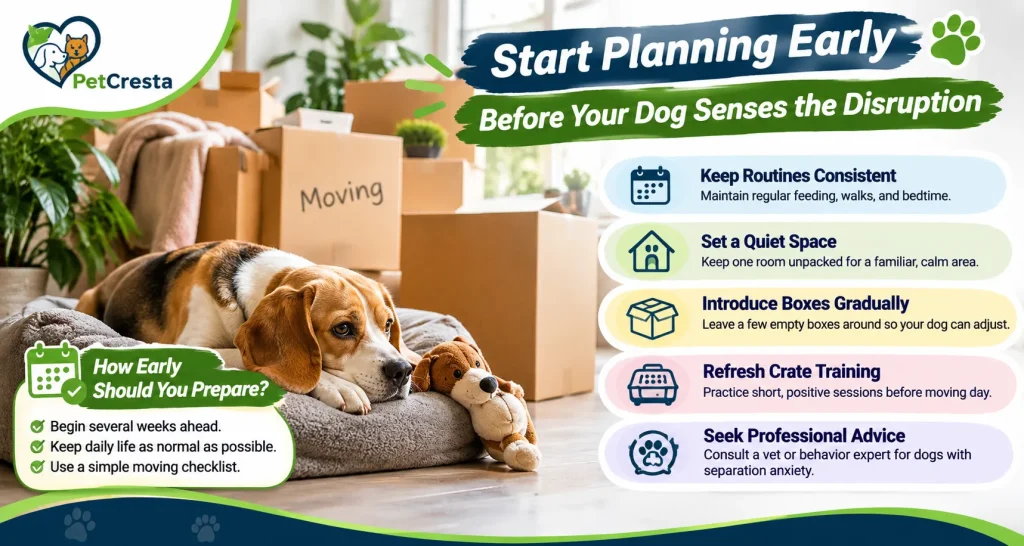
Keep feeding times, walks, and bedtime as consistent as possible. Set aside one quiet room where packing hasn’t started, allowing your dog to retain a familiar resting space.
If your dog is crate-trained, refresh that routine before the move. If not, avoid introducing confinement suddenly on departure day.
How Early Should You Prepare Your Dog for Moving?
Begin preparing several weeks ahead when possible.
Leave a few empty moving boxes around the home so your dog can become accustomed to them. Continue normal activities and reward calm behavior around new packing materials.
If your dog will travel in a crate or carrier, practice short, positive sessions well before moving day.
A solid checklist helps. A practical guide to moving with pets can help you map out the basics, especially if you’re balancing movers, travel logistics, and a nervous dog at the same time.
For dogs with a history of severe separation distress or anxiety, consult a veterinarian or qualified behavior professional before the move.
Get the Vet Details Handled Before They Become Urgent
A move can expose gaps in your dog’s medical records that normally go unnoticed.
You don’t want to discover missing vaccination paperwork while signing a lease, checking into temporary accommodation, or enrolling your dog in daycare near the new home.
Book a pre-move veterinary appointment if your dog needs vaccine, medication refills, treatment reviews, or help managing travel anxiety.
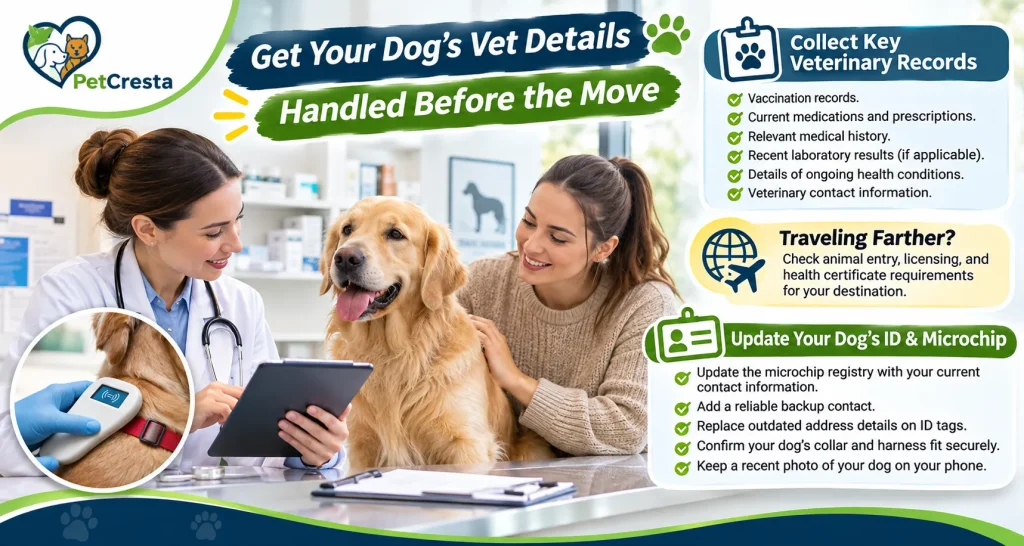
Ask for copies of:
- Vaccination records.
- Current medications and prescriptions.
- Relevant medical history.
- Recent laboratory results, when applicable.
- Details of ongoing health conditions.
- Veterinary contact information.
If you’re moving across state lines or internationally, check the destination’s current animal entry, licensing, and health certificate requirements.
Update Your Dog’s Microchip and Identification
Microchip information matters just as much as veterinary paperwork.
Many owners microchip their dogs but forget to update their contact details after moving. A microchip is much less useful if the registered telephone number or address is outdated.
Before moving day:
- Update the microchip registry with your current contact information.
- Add a reliable backup contact where possible.
- Replace outdated address information on ID tags.
- Confirm your dog’s collar and harness fit securely.
- Keep a recent photograph available on your phone.
If your dog escapes in an unfamiliar neighborhood, accurate identification can improve the chances of being reunited.
Pack Your Dog’s Essentials Like You Expect Delays
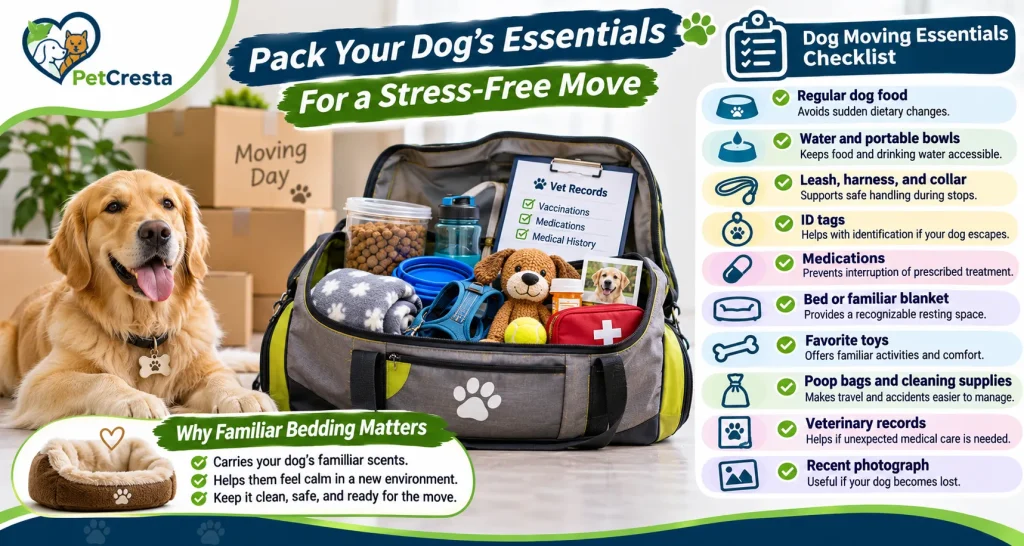
Most people pack their dog’s belongings as an afterthought, which creates unnecessary stress when they arrive tired and disorganized.
Prepare a grab-and-go pet kit, similar to a carry-on bag.
Include enough supplies to manage unexpected travel or delivery delays.
Dog Moving Essentials Checklist
| Essential | Why You Need It |
|---|---|
| Regular dog food | Avoids sudden dietary changes |
| Water and portable bowls | Keeps food and drinking water accessible |
| Leash, harness, and collar | Supports safe handling during stops |
| ID tags | Helps with identification if your dog escapes |
| Medications | Prevents interruption of prescribed treatment |
| Bed or familiar blanket | Provides a recognizable resting space |
| Favorite toys | Offers familiar activities and comfort |
| Poop bags and cleaning supplies | Makes travel and accidents easier to manage |
| Veterinary records | Helps if unexpected medical care is needed |
| Recent photograph | Useful if your dog becomes lost |
Keep the kit separate from your main moving boxes.
If the truck arrives late or a box gets buried beneath furniture, your dog will still have access to its daily essentials.
Why Familiar Bedding Matters
Smell is an important part of how dogs recognize their environment.
An unwashed blanket or familiar bed may help your dog settle because it carries recognizable scents from the previous home.
Avoid replacing all your dog’s belongings immediately before moving. A brand-new bed might look appealing, but familiar items can make the transition easier.
Keep bedding clean and safe while preserving familiar items wherever practical.
Think Through Transportation, Not Just the Destination
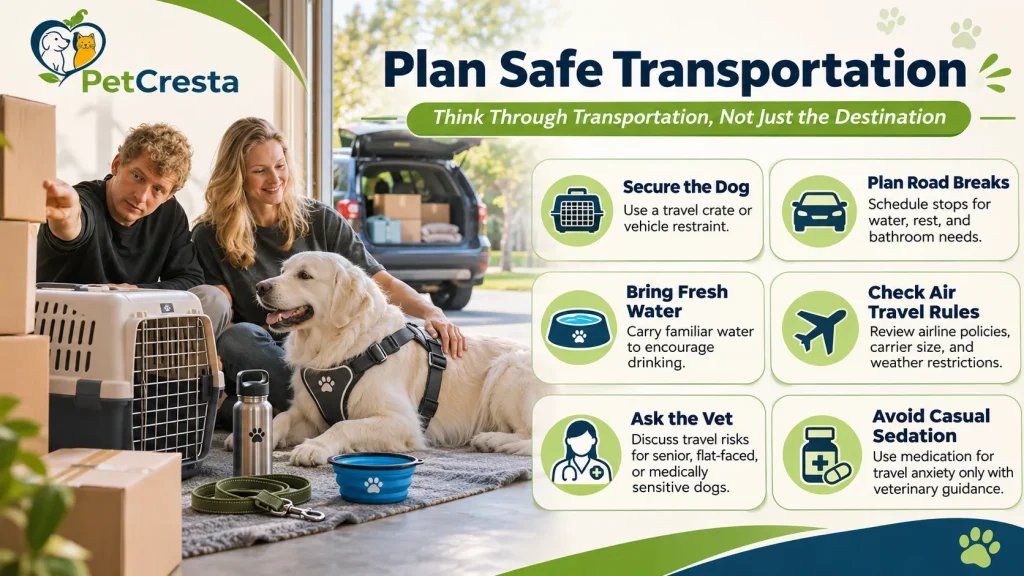
Moving-day transportation deserves its own plan.
A dog loose inside a packed vehicle can distract the driver, become injured during sudden braking, or escape when a door opens.
Use an appropriately secured travel crate or a suitable vehicle restraint. When choosing a restraint, look for credible crash-testing information and ensure it fits your dog’s size and your vehicle.
How to Travel Safely With a Dog During a Move
For longer road journeys, plan breaks around bathroom needs, hydration, rest, and temperature.
Bring fresh drinking water and avoid leaving your dog unattended in a parked vehicle.
Some dogs are sensitive to changes in water taste, so carrying water from home may encourage normal drinking during the journey.
If your move includes air travel, check airline pet policies, breed restrictions, carrier dimensions, and weather-related transport rules before booking.
PetCresta’s guide to travelling with a pet explains practical considerations such as transportation requirements, essential supplies, documentation, and keeping pets comfortable during a journey.
For elderly dogs, flat-faced breeds, or animals with existing medical conditions, ask your veterinarian about travel-specific risks.
Sedation during transport should never be treated as a casual solution. Any medication intended to manage travel anxiety requires veterinary guidance.
Protect Your Dog From Moving-Day Chaos Inside the House
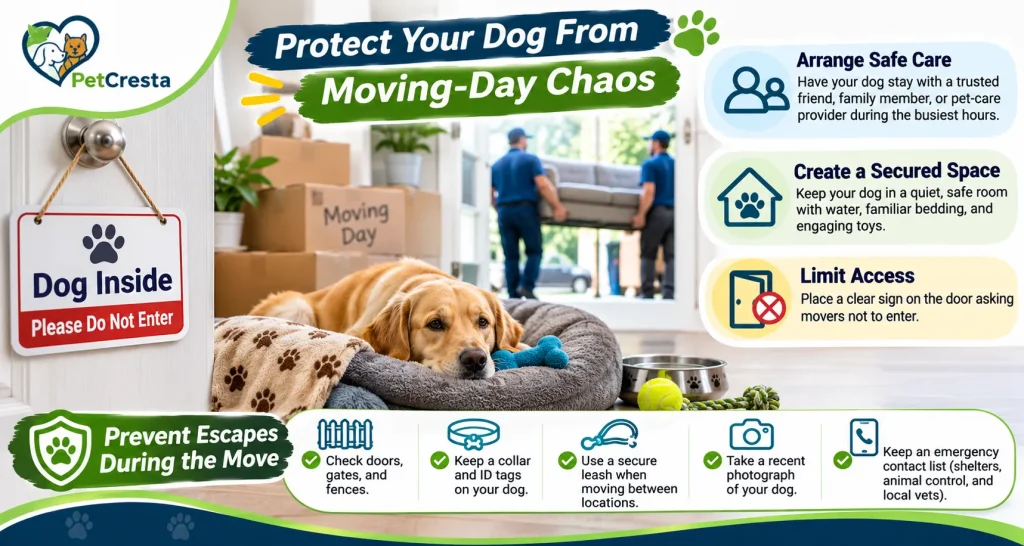
Moving day is loud, unpredictable, and full of open doors.
For many dogs, it’s the highest-risk stage of the process. Even a confident dog may become frightened or attempt to escape when unfamiliar people move furniture through the house.
Whenever possible, arrange for your dog to stay with a trusted friend, family member, or suitable pet-care provider during the busiest hours.
If that isn’t possible, prepare a secured room with water, familiar bedding, and safe enrichment.
Place a clear sign on the door asking movers not to enter.
How to Prevent Your Dog From Escaping on Moving Day
Before movers arrive, check doors, gates, fences, and any temporary access points.
Keep your dog’s collar and identification tags attached where appropriate, and use a secure leash whenever moving between the house and vehicle.
Take a recent photograph that clearly shows your dog’s appearance.
If your dog escapes, knowing what to do if your dog runs away can help you respond more effectively during the first hours.
Keep a saved emergency contact list that includes nearby shelters, animal control services, and local veterinary clinics.
These precautions may seem unnecessary when everything is going smoothly, but unfamiliar surroundings and open doors create avoidable risks.
Help Your Dog Adjust to the New Home One Zone at a Time
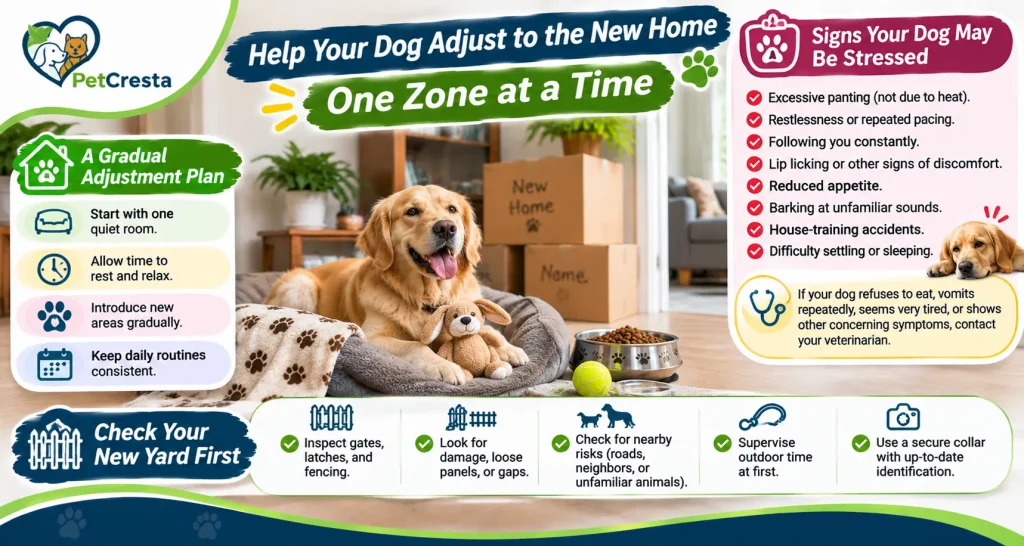
When you arrive, your dog doesn’t need a grand tour of the entire property.
It needs a controlled introduction.
Start with one quiet room containing familiar items such as its bed, bowls, crate, and favorite toys.
Allow your dog to rest before exploring additional rooms.
Once it appears comfortable, introduce the rest of the home gradually.
Too much freedom too quickly can be overwhelming, particularly for dogs that are already anxious or overstimulated.
Signs Your Dog May Be Stressed After Moving
Watch for:
- Excessive panting when the dog isn’t hot or exercising.
- Restlessness or repeated pacing.
- Following family members constantly.
- Lip licking or other signs of discomfort.
- Reduced appetite.
- Barking at unfamiliar sounds.
- House-training accidents.
- Difficulty settling or sleeping.
These behaviors may occur during adjustment, but they are not always caused by stress.
Persistent refusal to eat, repeated vomiting, significant lethargy, or other concerning symptoms deserve veterinary attention rather than being dismissed as moving anxiety.
Check Your New Yard Before Letting Your Dog Explore
A fenced yard at your previous home doesn’t guarantee that the new yard is equally secure.
Walk the perimeter and inspect gates, latches, damaged fencing, loose panels, and gaps beneath barriers.
Check whether neighboring properties, roads, or unfamiliar animals create additional risks.
Supervise outdoor time while your dog becomes familiar with the new environment.
Some dogs may investigate unfamiliar exits or react differently to surrounding sounds and smells after moving.
A secure fence, reliable identification, and supervised exploration provide a safer starting point.
Rebuild Routine Fast Because Routine Is the Real Comfort Item
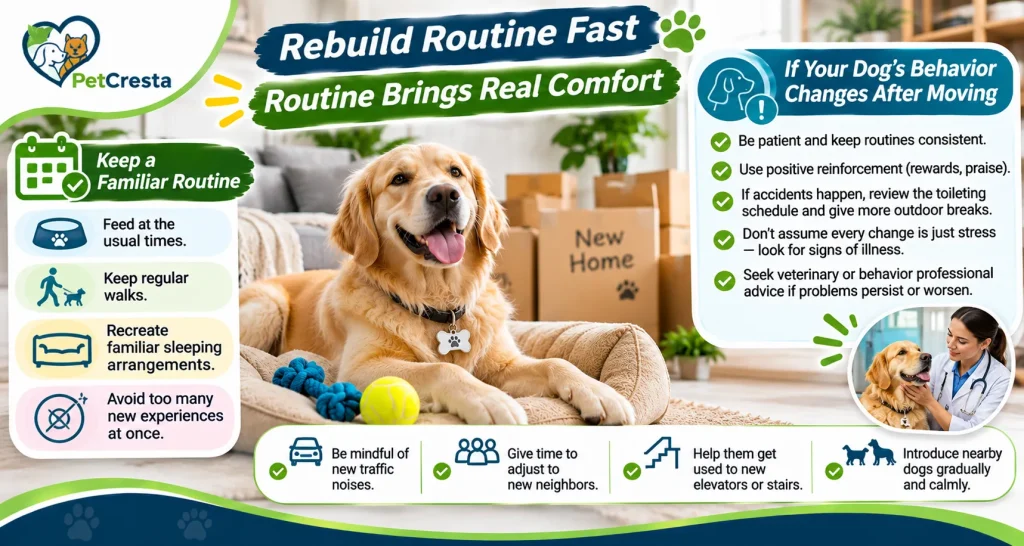
The first week in a new home gives your dog a chance to learn that everyday life will still follow a predictable pattern.
Feed at the usual times. Keep walks reasonably consistent and recreate familiar sleeping arrangements.
Avoid introducing too many new experiences at once.
Traffic noise, unfamiliar neighbors, elevators, stairs, and nearby dogs can all add stimulation, particularly when moving into an apartment or busy neighborhood.
Short, calm walks are often easier to manage than long outings filled with unfamiliar sights and sounds.
What if Your Dog’s Behavior Changes After Moving?
Temporary changes in behavior can occur during relocation.
Some dogs bark more frequently, become clingy, or need reminders about household routines.
Respond with patience, predictable schedules, and positive reinforcement rather than punishment.
PetCresta’s guide to training for adult dogs explains how consistent rewards and manageable training sessions can support everyday household behaviors.
If accidents occur, review your dog’s toileting schedule and provide frequent opportunities to go outside.
Avoid assuming that every behavioral change is simply stress-related. A sudden or persistent change may indicate discomfort or illness.
If problems continue, worsen, or become severe, consult your veterinarian or a qualified behavior professional.
A Simple Moving House With a Dog Timeline
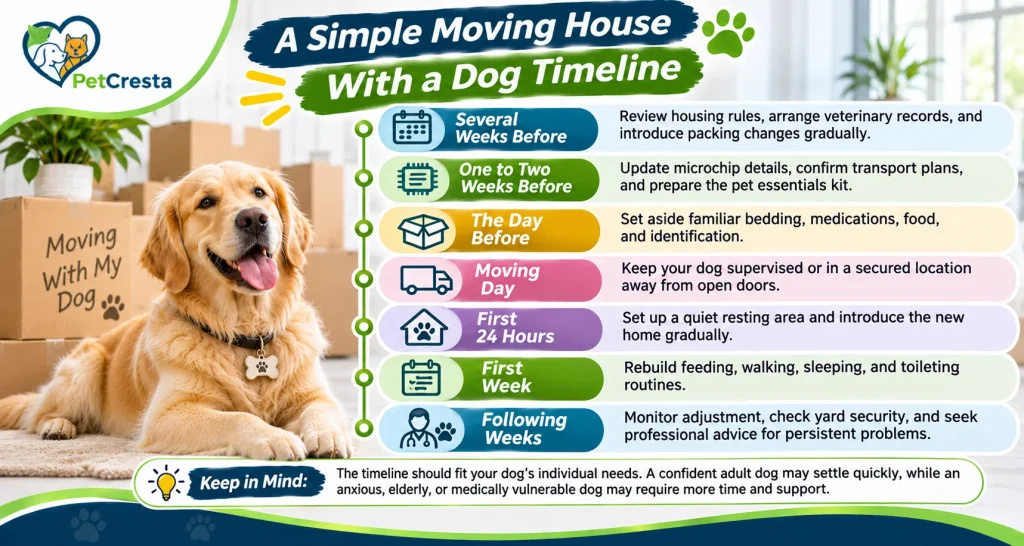
A timeline helps keep important tasks from getting lost among packing and paperwork.
| When | What to Do |
|---|---|
| Several weeks before | Review housing rules, arrange veterinary records, and introduce packing changes gradually |
| One to two weeks before | Update microchip details, confirm transport plans, and prepare the pet essentials kit |
| The day before | Set aside familiar bedding, medications, food, and identification |
| Moving day | Keep your dog supervised or in a secured location away from open doors |
| First 24 hours | Set up a quiet resting area and introduce the new home gradually |
| First week | Rebuild feeding, walking, sleeping, and toileting routines |
| Following weeks | Monitor adjustment, check yard security, and seek professional advice for persistent problems |
The schedule should fit your dog’s individual needs.
A confident adult dog may settle relatively quickly, while an anxious, elderly, or medically vulnerable dog may require more time and support.
Final Takeaway
Moving house with a dog takes more preparation than packing a leash and loading the car.
The most helpful steps begin well before moving day: maintaining routines, arranging veterinary records, updating identification, planning safe transportation, and setting aside familiar belongings.
During the move, prevent escapes and protect your dog from unnecessary noise and disruption.
After arrival, introduce the home gradually and return to predictable daily habits.
Most dogs can adapt to a new home with appropriate support, but the adjustment period varies. Give your dog time, monitor its wellbeing, and contact a veterinarian if concerning symptoms appear.
A calm move starts with practical planning, not a perfect moving day.
FAQ’s
Start several weeks before the move if possible. Maintain familiar routines, introduce packing materials gradually, prepare veterinary records, update identification, and arrange safe transportation.
Moving can be stressful because dogs experience changes in routine, smells, surroundings, and household activity. Some adjust quickly, while others may show temporary anxiety or behavioral changes.
Adjustment varies considerably. Some dogs appear comfortable within days, while others need several weeks or longer. Age, temperament, previous experiences, and the new environment can influence the process.
Pack regular food, water, bowls, medication, a leash, a secure harness, waste bags, familiar bedding, toys, veterinary records, and a recent photograph. Keep these items separate from the main moving boxes.
Keep your dog away from the busiest packing and loading areas. A trusted caregiver or a secured quiet room with familiar belongings may help reduce stress and escape risks.
A pre-move visit is particularly useful if your dog needs vaccinations, prescriptions, travel documents, anxiety support, or management of an existing medical condition.
Use secure leashes and restraints, keep identification current, supervise entrances, and check the new property’s fencing and gates before allowing outdoor exploration.
Stress and changes in routine can temporarily affect appetite, but reduced food intake can also indicate illness. Contact your veterinarian if your dog refuses food, has other symptoms, or seems unwell.
A gradual introduction is often more manageable. Begin with a quiet room containing familiar belongings, then expand access as your dog becomes comfortable.
Identify possible triggers such as unfamiliar noises, visitors, or separation distress. Maintain consistent routines, reward calm behavior, and seek professional help if barking remains persistent or becomes severe.