How to Find a Reliable Vet When Your Regular Clinic Is Fully Booked
Your dog has been scratching at one ear all morning, but your regular veterinarian cannot offer an appointment until next week. Or perhaps your cat has stopped eating normally, and the clinic’s earliest opening is several days away.
For many pet owners, the challenge isn’t simply finding another veterinarian. It’s finding someone qualified, trustworthy, and equipped to provide appropriate care without losing the continuity that comes from an established veterinary relationship.
Fortunately, having a regular veterinarian doesn’t mean you’re limited to one clinic. A reliable backup provider can help when appointment schedules are full, provided you know what to look for.
Quick Answer: To find a reliable vet when your regular clinic is fully booked, first assess your pet’s symptoms, then look for a licensed veterinary practice that offers appropriate appointments, diagnostic services, transparent communication, and coordinated follow-up care. Serious or rapidly worsening symptoms require emergency veterinary attention rather than waiting for a routine opening.
First, Determine How Quickly Your Pet Needs Care
Before contacting multiple clinics, assess the urgency of your pet’s condition.
Mild skin irritation or a minor limp in an otherwise comfortable animal may allow time to arrange a prompt appointment. Persistent vomiting, significant pain, or rapidly changing behavior may require more immediate assessment.
Some symptoms should never wait for a routine appointment. Severe breathing difficulties, collapse, uncontrolled bleeding, repeated seizures, or an inability to urinate require emergency veterinary attention.
Changes in appetite also deserve attention, particularly in cats. Understanding how long a cat can go without eating can help owners recognize why a prolonged refusal of food should not be ignored.
If you’re uncertain, call your regular veterinarian and explain what’s happening. Even when appointments are unavailable, the team may recommend an appropriate level of care or refer you elsewhere.
The goal is to avoid both unnecessary delays and choosing a clinic that cannot provide the treatment your pet needs.
Look Beyond Appointment Availability When Comparing Clinics
An open appointment is helpful, but availability alone doesn’t establish whether a veterinary practice is suitable.
Start by checking that the clinic employs appropriately licensed veterinarians and provides the services your pet may require.
Review its website for information about medical examinations, diagnostic testing, surgery, dental care, and urgent appointments.
Consider whether the clinic explains its services clearly and provides practical ways to contact its team.
For Colorado pet owners, access to timely, comprehensive veterinary care can make a meaningful difference when a pet needs medical attention. Denver vets with modern facilities, such as those at Sploot Veterinary Care, demonstrate how primary care, urgent veterinary services, and preventive treatments can be brought together under one roof.
Sploot’s Denver clinics advertise extended opening hours, including weekends and holidays. The practice also describes same-day appointments, urgent drop-off options, and in-house diagnostic services, including digital X-rays, ultrasound, and laboratory testing. Pet owners should confirm current hours and service availability before visiting.
Beyond urgent medical concerns, its veterinary teams provide wellness examinations, vaccinations, dental care, surgical procedures, and ongoing preventive care. Online scheduling, the Sploot Vets app, and dedicated Pet Parent Concierge support are designed to make accessing veterinary services more convenient.
For co-founders Gil Bolotin and Yoav Mordowicz, however, innovation is only one part of delivering a better veterinary experience. As they explain:
“While a commitment to innovation is core to Sploot’s mission, what truly sets us apart is our world-class team of veterinary professionals that are committed to providing customers with a personalized and comprehensive care experience 365 days a year.”
This philosophy reflects Sploot’s emphasis on combining modern clinical capabilities with personalized attention, clear communication, and accessible veterinary services.
For pet owners evaluating their options, the availability of qualified veterinary professionals, appropriate diagnostic resources, and consistent care remains just as important as the convenience of extended hours and modern facilities.
Questions to Ask Before Booking an Appointment
A short phone call can help determine whether a clinic is appropriate for your pet’s situation.
Consider asking:
- Is the practice accepting new or temporary patients?
- Can a veterinarian assess my pet’s symptoms within the required timeframe?
- Which diagnostic services are available on-site?
- Does the practice handle urgent cases or refer them elsewhere?
- Can the clinic share medical records with my regular veterinarian?
- Will I receive an estimate before additional tests or treatment?
These questions help establish whether a clinic offers suitable care rather than simply an available appointment.
Check Whether the Clinic Has Appropriate Diagnostic Equipment
Not every veterinary concern can be assessed through a physical examination alone.
Depending on symptoms, veterinarians may recommend bloodwork, urine testing, imaging, or other investigations.
A clinic with in-house diagnostic capabilities may be able to obtain certain results more quickly than one that sends every sample to an external laboratory.
This can be useful when a pet has unexplained vomiting, suspected injury, or symptoms that require further investigation.
However, equipment alone doesn’t guarantee better care. Veterinarians must determine which tests are appropriate and interpret the findings alongside the animal’s history and examination.
Ask whether the clinic can perform the necessary tests, when results are expected, and whether referral to a specialist might be required.
Make Sure Your Pet’s Medical History Follows Them
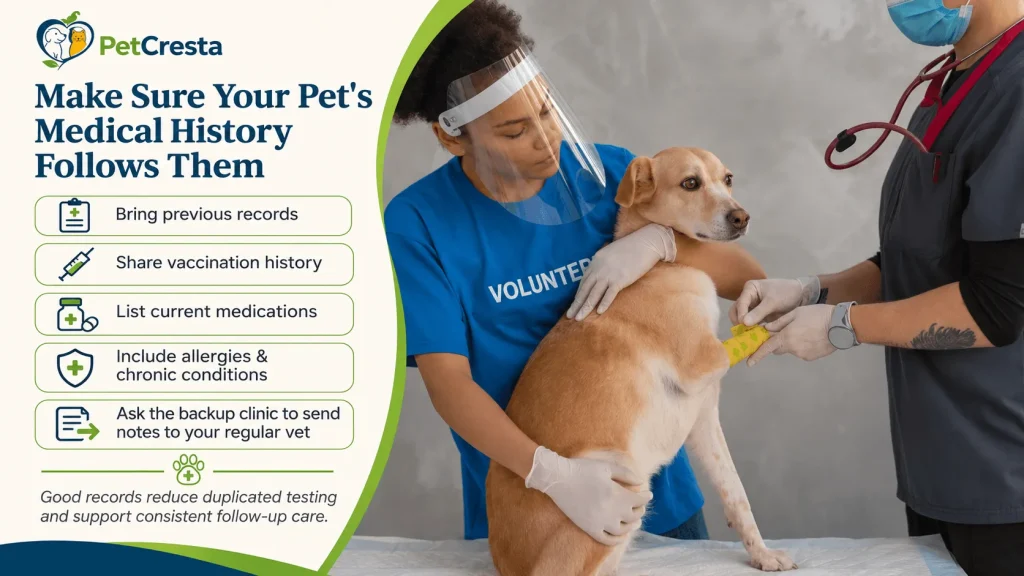
One advantage of visiting the same veterinarian regularly is familiarity with your pet’s medical history.
A backup clinic may not know about previous illnesses, allergies, medication reactions, or ongoing treatment.
Before the appointment, request relevant records from your regular practice or bring copies you already have.
Include vaccination history, current medications, recent test results, and details of chronic conditions.
If your pet takes medication, provide the exact name, strength, and dosing instructions.
Ask the temporary veterinarian to send examination findings and treatment recommendations back to your usual clinic.
This exchange helps reduce duplicated testing where appropriate and supports consistent follow-up care.
What Should You Bring to a New Veterinary Appointment?
Along with medical records, prepare a short summary of your pet’s current problem.
Include when symptoms started, whether they are improving or worsening, any changes in eating or drinking, and whether your pet has received medication.
Photographs or short videos of intermittent symptoms can also help, particularly when the behavior does not occur during the examination.
Keeping this information organized makes the appointment more productive and helps the new veterinarian understand the situation.
Pay Attention to Communication and Transparency
A reliable veterinary practice should make it easy to understand what happens during an appointment.
The veterinarian should explain examination findings, discuss possible causes, and describe why particular tests or treatments may be recommended.
You should also have opportunities to ask questions about costs, potential risks, and follow-up care.
Before booking, ask whether the clinic provides estimates and how unexpected additional charges are handled.
Online reviews may offer useful information about appointment experiences and communication. However, look for recurring patterns rather than relying on a single positive or negative review.
Pet owners should also understand the red flags in online pet health information. Unverified claims, exaggerated promises, missing qualifications, and advice that discourages professional treatment can make online information unreliable.
The same critical approach is useful when assessing a clinic’s website, promotional claims, and publicly available information.
Choose a Clinic That Understands Your Pet’s Particular Needs
Not every pet requires the same type of veterinary support.
A young, healthy dog with a minor paw injury may have different needs from an older cat with heart disease or a puppy experiencing persistent digestive symptoms.
When contacting a new clinic, explain your pet’s age, breed, existing conditions, and current symptoms.
Ask whether the veterinary team has experience managing the concern and whether appropriate diagnostic or referral services are available.
For example, cat coughing and wheezing can indicate respiratory problems that require clinical assessment rather than treatment based on assumptions about hairballs.
A clinic that recognizes its limitations and recommends specialist care when appropriate can be a responsible choice.
Build a Backup Veterinary Plan Before You Need One
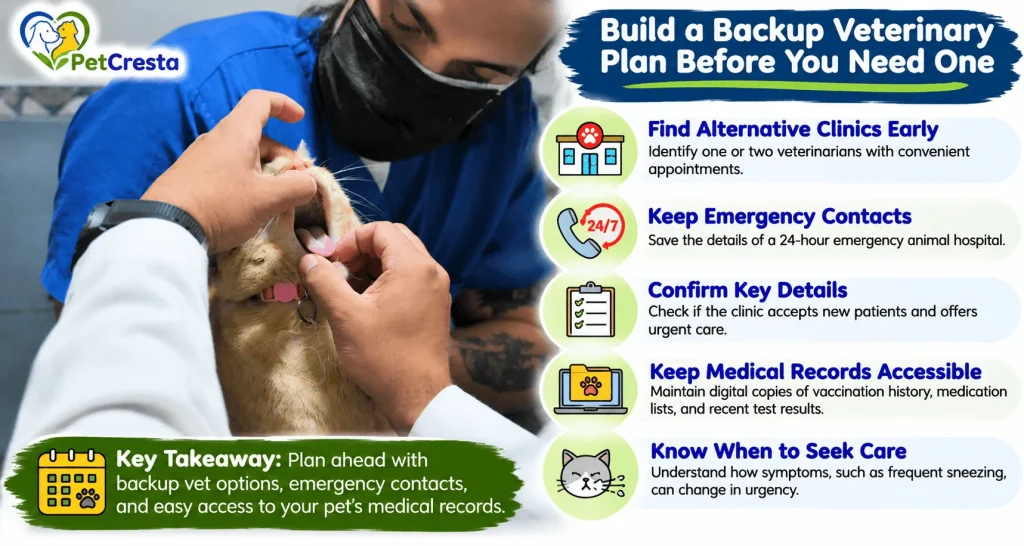
Finding a replacement veterinarian becomes easier when the research is completed before your pet becomes ill.
Identify one or two clinics offering convenient appointments, and keep the contact details of a 24-hour emergency animal hospital.
Confirm which practices accept new patients and whether they provide urgent care.
Maintain digital copies of important veterinary records, including vaccination history, medication lists, and recent test results.
Pet owners can also benefit from understanding how symptoms may change in urgency. PetCresta’s guide to frequent sneezing in cats explains why accompanying symptoms and their progression matter when deciding to seek veterinary care.
A backup veterinarian doesn’t have to replace your established provider. Instead, the clinic can serve as an additional resource when scheduling conflicts or unexpected illnesses arise.
Final Takeaway: Reliable Veterinary Care Is More Than Getting an Appointment
When your regular veterinary clinic is fully booked, finding another provider can be a sensible decision.
The important consideration is not simply which practice can see your pet first. It is whether the clinic offers qualified professionals, appropriate services, clear communication, and a plan for continued care.
By researching backup options, maintaining accessible medical records, and understanding when emergency treatment is necessary, pet owners can arrange appropriate care without losing the benefits of an established veterinary relationship.
FAQ’s
Start by checking how urgently your pet needs care. Then look for a licensed veterinary clinic with appropriate services, suitable appointment availability, clear communication, and a process for sharing records with your regular veterinarian.
Yes. Pet owners can generally visit another veterinary practice for a second opinion, an urgent appointment, or temporary care. Sharing medical records between providers helps maintain continuity.
Call your regular veterinarian and explain the symptoms. If same-day care is needed but unavailable, ask for a referral or contact another veterinary clinic that accepts urgent appointments. Emergency symptoms require an emergency veterinary hospital.
Severe breathing difficulties, collapse, uncontrolled bleeding, repeated seizures, and an inability to urinate are examples of symptoms requiring emergency veterinary attention. Sudden severe pain or other rapidly worsening symptoms also warrant urgent assessment.
Verify the veterinarian’s licensing through the relevant state or provincial veterinary regulator. Review the clinic’s services, communication policies, medical capabilities, estimates, and approach to follow-up care.
Reviews can help identify patterns in customer experiences, but they should not be the only factor. Professional qualifications, clinical capabilities, transparent communication, and suitability for your pet’s needs are more important.
Bring vaccination history, current medication details, relevant medical conditions, recent laboratory results, imaging reports where available, and any previous treatment recommendations.
Not necessarily. Urgent veterinary care commonly handles problems that need prompt attention but may not require intensive emergency treatment. Emergency hospitals are better equipped for life-threatening conditions, although services vary by facility.
Often, yes. Ask the temporary clinic how it sends examination notes, test results, prescriptions, and treatment recommendations to your usual veterinarian. You may need to authorize record sharing.
Yes. Identifying suitable clinics in advance allows you to check opening hours, services, licensing, and contact details without the pressure of an unexpected medical problem.