How Dog Bandanas Became A Popular Pet Fashion Accessory

Dog fashions are becoming a more noticeable component of modern-day pet ownership. There are many options available for pet owners to allow their pets to show some personality through their clothing, collar color and design as well as various types of decorative accessories. Of all the possible accessory choices for dogs, dog bandanas have become especially popular as a result of their versatility, simplicity in terms of styling and ability to provide a visual element to the pet’s appearance. Initially used primarily as a form of protection against dirt and debris, bandanas are now recognized as a standard item within contemporary pet fashion.
The History of Bandanas and Their Journey into Pet Fashion

The traditional use of bandanas is as a practical accessory that can be worn on the head or around the neck to protect the wearer from the sun and dust. They are made with lightweight fabric, so they can easily be folded up when not in use. Bandanas are a simple square shape and can be reused many times.
As bandanas gained popularity in various types of fashion, culture, and outdoor activity, they also influenced the way that people dressed their pets.
As well as a rise in pet photography, family celebrations, and social media helping to make decorative dog accessories popular, owners have increasingly treated pets as part of the family, causing a greater interest in dressing up their dogs in clothing and accessories that represent who they are.
Over time, dog bandanas have evolved from a simple way to protect your dog’s neck during walks, into a well-known accessory for daily walking, special events and photo opportunities.
Why Dog Bandanas Became a Popular Fashion Accessory

Several factors explain why dog bandanas have become popular among pet owners.
Personal expression: Colours, patterns and illustrations allow owners to choose accessories that reflect their dogs’ personalities. A bright floral design may suit a playful appearance, while a simple patterned bandana can create a more understated look.
Choosing accessories is also one of several ways to show off your pet’s personality while keeping their comfort and everyday needs in mind.
Visual appeal: Bandanas are relatively small accessories, but they can noticeably change a dog’s overall appearance. They are also popular in pet photography because their colours and patterns can add visual interest.
For owners who enjoy taking pictures of their dogs, these pet photography tips offer ideas for capturing natural expressions and comfortable poses.
Versatility: Unlike some specialised clothing items, bandanas can be worn for casual outings, family gatherings, seasonal celebrations and photographs.
Changing pet-owner trends: Social media has made pet fashion more visible. Photos and videos featuring dogs in colourful accessories have encouraged owners to experiment with different styles.
However, safety and comfort of an animal must always be given higher importance than its appearance.
Different Types of Dog Bandanas and Their Styles
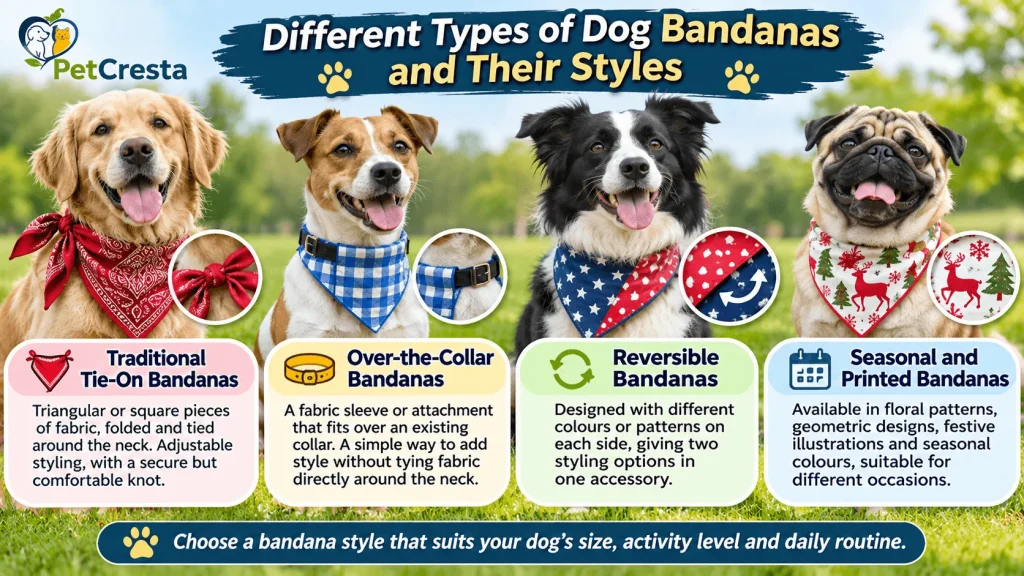
There are numerous options for dog bandanas. Each option has its own practical advantages.
Traditional tie-on bandanas: These are usually triangular or square pieces of fabric folded and tied around a dog’s neck. Their appearance can be adjusted through different folding methods, although owners must ensure the knot is secure without being restrictive.
Over-the-collar bandanas: These designs feature a fabric sleeve or attachment that fits over an existing collar. They offer a different way to position decorative fabric without tying it directly around the neck.
Reversible bandanas: These feature different colours or patterns on each side, providing two styling options in one accessory.
Seasonal and printed bandanas: Floral patterns, geometric designs, festive illustrations and seasonal colours allow owners to choose accessories for different occasions.
Understanding these types will assist pet owners with selecting a style which fits their dog’s size, behavioral characteristics and day-to-day activity level.
Choosing Comfortable and Suitable Fabrics for Dog Bandanas
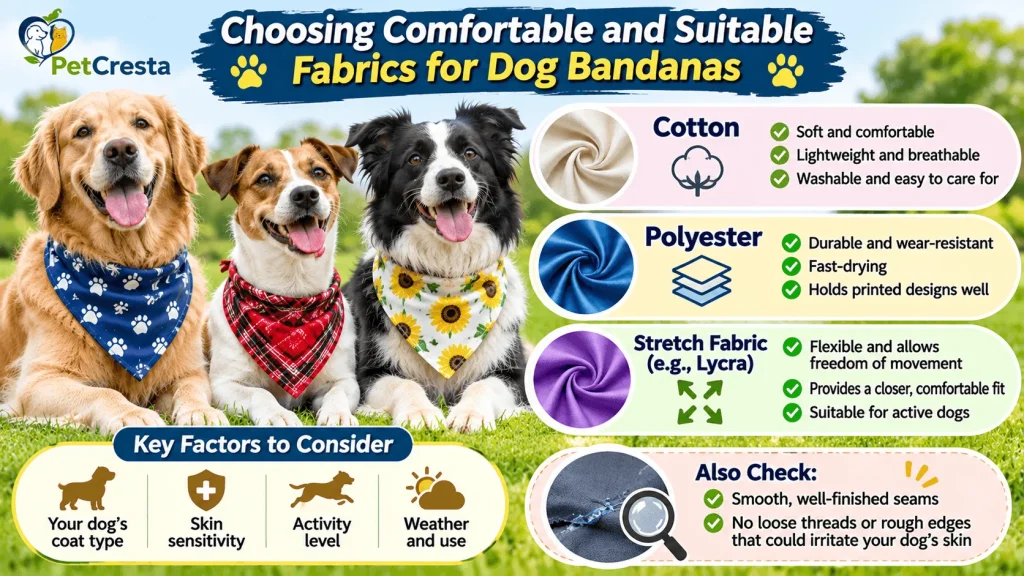
The choice of fabric will affect how comfortable your pet is and how easy it is to keep their gear clean. Your pet’s type of fur, skin sensitivity, and level of physical activity are all factors that can determine which fabric is best for your pet.
Many people use cotton for several reasons. It has a soft feel that makes it an appropriate material for many daily accessory items. Additionally, cotton is usually lightweight, allows your skin to breathe, and can be washed.
Polyester is an alternative to nylon. It has many advantages, including being resistant to wear and tear, fast-drying, and holding ink during printing. The appropriateness of using polyester as a material will depend on the way the fabric was created, the weather in which it will be used, and the comfort level of the dog.
The use of stretch fabric, such as those made with Lycra, allows for an increased amount of freedom of movement and a closer fit. While there is no guarantee that the owner will experience any restriction to their movement, they should always make sure that the fabric doesn’t put undue stress on them or limit their ability to move freely.
In terms of fabric types and construction methods, the 4inbandana line of dog bandanas shows that there are various types of fabrics (cotton, polyester, and lycra) that will meet the needs of different designs and/or material preferences.
Regardless of what type of fabric is being used to make your pet accessory, you need to check for rough seams, loose threads and other things that may cause irritation to your pet’s skin.
How to Choose the Right Bandana for Different Dog Breeds

Selecting the proper size is critical. If you select a too small bandana it will likely be too restrictive. However, if you select a too large bandana, then you run the risk of having it fall off your head, or possibly restrict your ability to move naturally.
Start with the measurement of your dog’s neck. Use a flexible measuring tape to find this dimension. Be sure to measure for comfort and not tight to your dog’s skin.
In addition to being influenced by breed, accessory choices are also dependent upon a breed’s size. Smaller breeds, including Chihuahuas and Yorkshire Terriers, tend to use smaller accessories than larger breeds like Golden Retrievers and German Shepherds.
However, the name of a breed does not alone indicate size. There may be significant variation among different individuals within a single breed with respect to the circumference of their neck, their body proportions, and the thickness of their coat.
Always refer to the manufacturer’s sizing instructions and make sure your dog has a proper fitting when you place the bandana around his neck.
Safety and Comfort Considerations
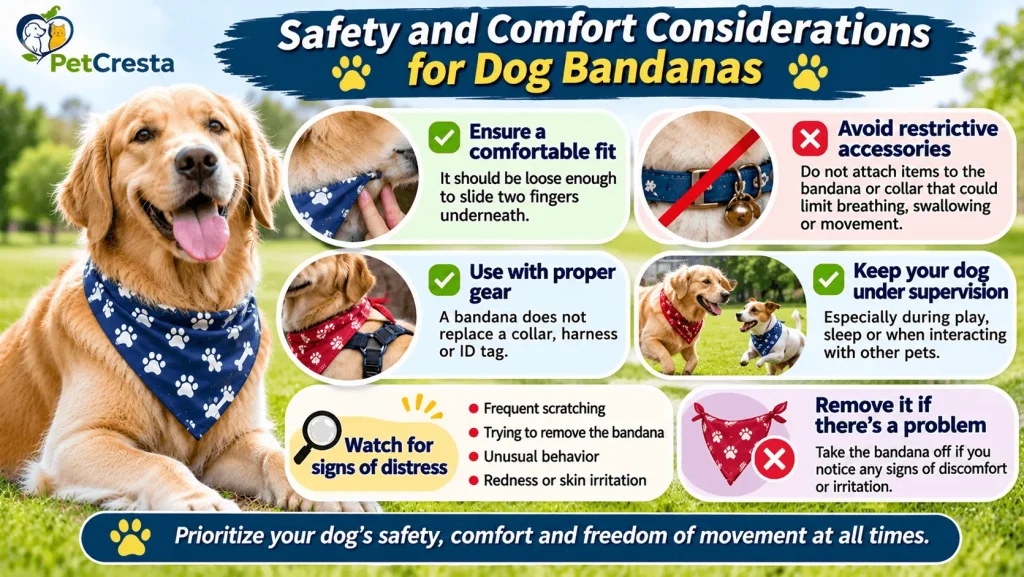
Although dog bandanas are primarily decorative, responsible use is important.
Owners should avoid using fabric as a tight band around the neck, and they should also refrain from attaching accessories to their dog’s collar which may restrict its ability to breathe, swallow, or move freely. A bandana does not take the place of a well-fitted collar, harness, or ID tag.
Dogs must always have supervision while wearing loose-fitting clothing accessories, especially when they are involved in activities such as playing, sleeping, or interacting with other pets. There is also a possibility that some dogs will chew on the clothing item, which creates the potential for choking or swallowing the clothing accessory.
Look out for indicators of distress such as recurring scratching, attempting to take off the item, unusual behavior, or skin irritation. If any of those symptoms are present, take the bandana off.
Caring for and Maintaining Dog Bandanas
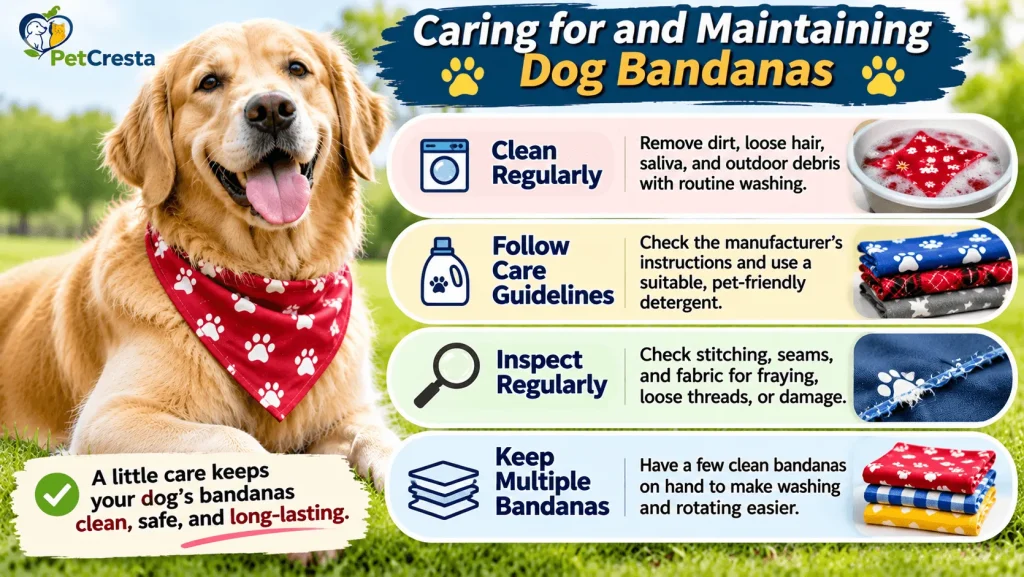
Regular cleaning is a great way to maintain the cleanliness of your fabric accessories. During normal daily use, such as collecting dirt, loose hair, saliva, and outdoor debris, bandanas will accumulate a build up of these materials.
Before washing, refer to the manufacturer’s care guidelines. Select an appropriate detergent, thoroughly rinse out all soap from the garment, and wait until it has completely dried before wearing it again.
It is also recommended that you examine your accessories’ stitching, seams and fabrics periodically. If you notice any fraying around the edges, damage to the fastenings or loose threads on your accessory, these can cause safety issues and suggest it needs to be replaced.
By having separate clean accessories available you can also make your routine maintenance easier.
The Future of Dog Fashion and Personalised Pet Accessories

Pet clothing has continued to develop in response to evolving customer needs. New trends such as custom-designed patterns, seasonal lines of products, and matching outfits for pets and their owners have increased the number of product options in pet accessories.
Technology and digital printing are allowing us to create colorful designs and custom patterns. However, the future of responsible pet fashion is going to be determined by more than just what looks good.
The use of comfortable materials, appropriate sizes, long-lasting construction and the treatment of animals are top priorities when choosing accessories.
Final Thoughts
Bandanas for dogs have evolved from being plain cloth accessories to a very popular decorative item in the current trend of pet culture. Due to their many uses, various styles/designs and how easy they are to style with, bandanas have become an important part of a dog’s daily wardrobe.
However, designing a pet’s collar is only the first step in being a responsible pet owner. Selecting the right size, using the best materials, maintaining cleanliness and providing proper supervision are all equally important. By balancing your personal tastes with what will make your dog comfortable and safe, decorative accessories can be a fun part of your dog’s daily routine.
FAQ’s
Dog bandanas are popular because they are affordable, easy to style, and available in different colors, patterns, and fabrics. Pet owners use them to express their dogs’ personalities, celebrate special occasions, and add a decorative touch without requiring a complete outfit.
Yes, dog bandanas can be safe when they fit properly and are worn under supervision. They should not restrict breathing, swallowing, or movement. Remove the bandana during unsupervised play, sleeping, or whenever your dog shows signs of discomfort.
Cotton is a popular choice because it is generally soft, lightweight, breathable, and easy to wash. Polyester and stretchy fabrics such as Lycra may also be suitable, depending on the construction, weather conditions, and your dog’s comfort.
Measure your dog’s neck using a flexible measuring tape and compare the measurement with the manufacturer’s sizing chart. The bandana should fit comfortably without being tight or excessively loose. Always check the fit after putting it on.
Dogs can wear bandanas during supervised daily activities if the accessory is comfortable, clean, and properly fitted. However, it is best to remove them during sleep, rough play, or when the dog is left unattended to reduce snagging and chewing risks.
Tie-on bandanas are folded or triangular pieces of fabric secured around a dog’s neck. Over-the-collar bandanas slide onto an existing collar through a fabric sleeve. Both offer decorative options, but the most suitable design depends on fit, security, and comfort.
Wash a dog bandana whenever it becomes dirty, develops an odor, or collects excessive saliva and loose hair. Dogs that wear bandanas regularly may need more frequent cleaning. Follow the fabric’s care instructions and allow it to dry completely before reuse.
Yes, poorly fitted bandanas, rough seams, certain fabrics, or accumulated dirt may irritate a dog’s skin. Watch for scratching, redness, rubbing, or attempts to remove the accessory. If irritation occurs, remove the bandana and consult a veterinarian if symptoms persist.