Bitten by a Dog You Know? 6 Common Mistakes to Avoid
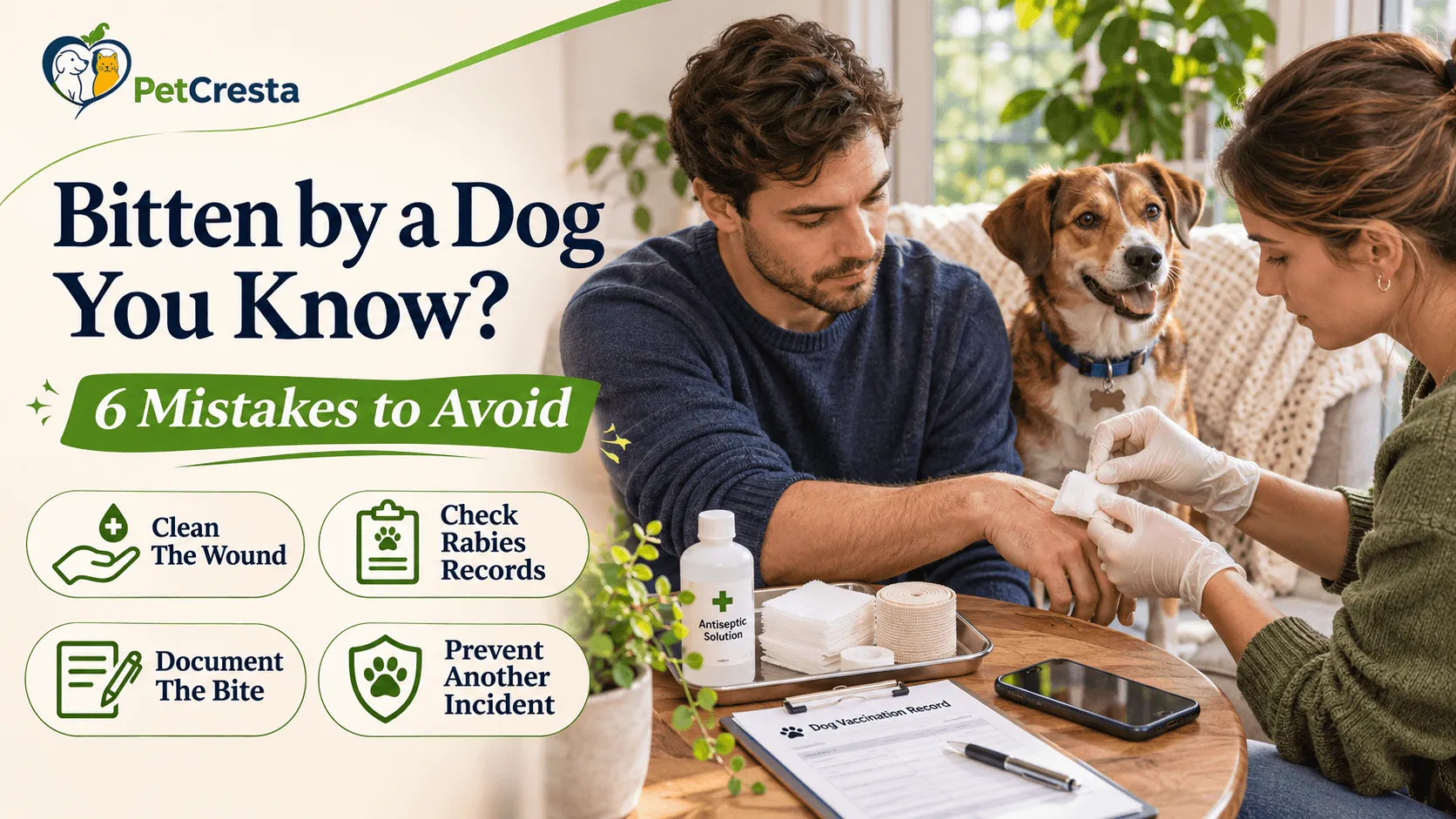
Being bitten by a dog you know can be especially confusing. The dog may belong to a neighbor, friend, family member, or even someone in your own household. Because the animal is familiar, people sometimes minimize the injury, delay medical care, or avoid discussing what happened.
But a familiar dog can still cause a serious bite. Even a small puncture may become infected, and questions about rabies vaccination, documentation, insurance, and future behavior should not be overlooked.
If you’ve been bitten by a dog you know, wash the wound immediately, seek appropriate medical assessment, confirm the dog’s vaccination information, and document what happened. The dog’s owner should also take steps to prevent another incident and investigate what may have contributed to the bite.
Here are six common mistakes people make after a dog bite and what to do instead.
This article provides general educational information, not individualized medical or legal advice. Seek prompt medical assessment for a bite that breaks the skin, and emergency care for severe injuries. Laws and reporting requirements vary by location.
Mistake 1: Brushing Off a Small Bite Because the Skin Barely Broke
A dog bite doesn’t have to look severe to require attention.
A small puncture wound may introduce bacteria beneath the skin, sometimes without causing extensive visible damage. Injuries to the hands, face, feet, or areas near joints deserve particular care because important structures may be affected.
People are sometimes tempted to dismiss minor bites when the dog belongs to someone they trust.
However, familiarity with the dog doesn’t eliminate the possibility of infection.
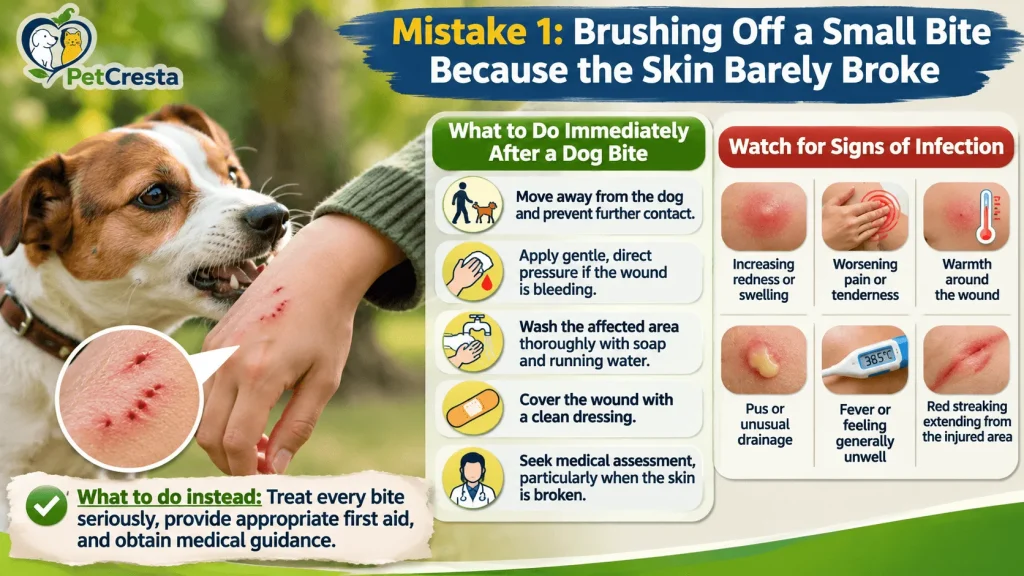
What Should You Do Immediately After a Dog Bite?
Start with basic wound care.
The Mayo Clinic’s first aid guidance on animal bites recommends washing minor bite wounds with soap and water and covering them with a clean bandage.
A practical response includes:
- Move away from the dog and prevent further contact.
- Apply gentle, direct pressure with a clean cloth if the wound is bleeding.
- Wash the affected area thoroughly with soap and running water.
- Cover the wound with a clean dressing.
- Seek medical assessment, particularly when the skin is broken.
- Ask a healthcare professional whether tetanus protection, antibiotics, or rabies-related treatment is needed.
Severe bleeding, deep wounds, loss of sensation, impaired movement, or injuries involving vulnerable areas require urgent or emergency medical evaluation.
Watch for Signs of Infection
Over the following hours and days, monitor for:
- Increasing redness or swelling.
- Worsening pain or tenderness.
- Warmth around the wound.
- Pus or other unusual drainage.
- Fever or feeling generally unwell.
- Red streaking extending from the injured area.
Do not wait for infection to develop before seeking initial medical advice.
If your dog caused the bite, offer assistance immediately and help provide accurate information about the animal.
What to do instead: Treat every bite seriously, provide appropriate first aid, and obtain medical guidance rather than judging the risk by wound size alone.
Mistake 2: Not Confirming the Dog’s Rabies Vaccination Status Right Away
Rabies in vaccinated domestic dogs is uncommon in the United States, but the consequences of an untreated rabies infection are extremely serious.
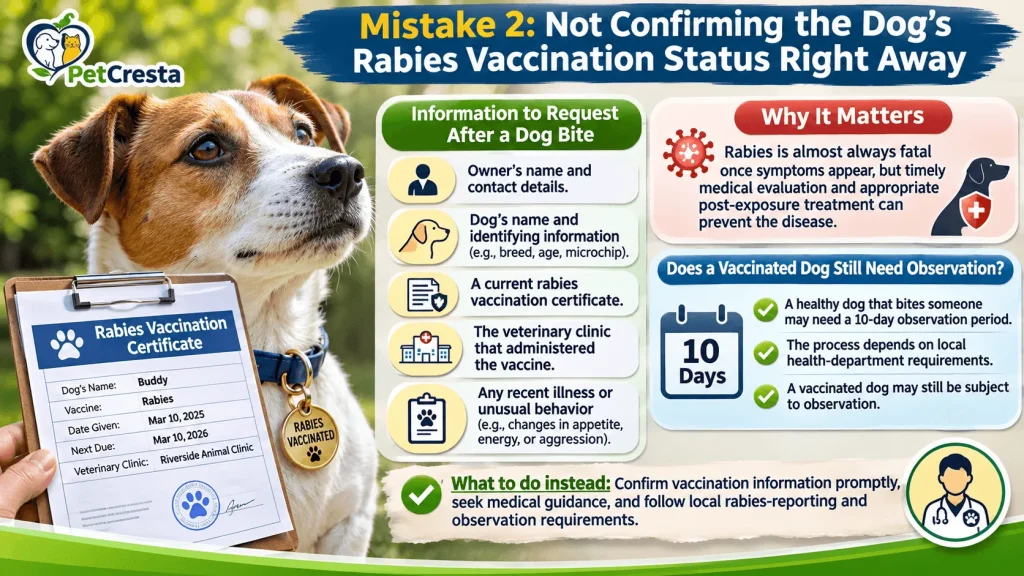
According to the Centers for Disease Control and Prevention, rabies is almost always fatal once clinical symptoms appear. Timely medical evaluation and appropriate post-exposure treatment can prevent the disease.
That is why vaccination records and information about the biting animal matter.
What Information Should You Request?
If someone else’s dog bites you, ask for:
- The owner’s name and contact details.
- The dog’s name and identifying information.
- A current rabies vaccination certificate.
- The veterinary clinic that administered the vaccine.
- Information about any recent illness or unusual behavior.
A rabies tag may help identify vaccination records, but a current veterinary certificate provides more useful documentation.
Dog owners should keep vaccination records readily accessible. PetCresta’s guide explaining how often dogs need rabies shots covers vaccination schedules and why requirements may differ depending on local rules and vaccine products.
Does a Vaccinated Dog Still Need Observation?
Public-health authorities may require a healthy dog that bites someone to undergo a 10-day observation period.
The exact process depends on local health-department requirements and the circumstances of the exposure.
A vaccinated dog may still be subject to observation.
Do not independently decide that rabies treatment is unnecessary simply because the dog appears healthy or has a vaccination tag.
A healthcare professional and public-health authority should assess the exposure and determine whether post-exposure prophylaxis is appropriate.
What to do instead: Confirm vaccination information promptly, seek medical guidance, and follow local rabies-reporting and observation requirements.
Mistake 3: Leaving Without Names, Photos, and a Written Record
A bite can be frightening, particularly when it happens unexpectedly.
People may want to leave quickly, avoid confrontation, or assume everyone will remember the details later.
Unfortunately, memories can become less reliable as time passes.
Documentation helps healthcare professionals, animal-control authorities, insurers, and other relevant parties understand what happened.
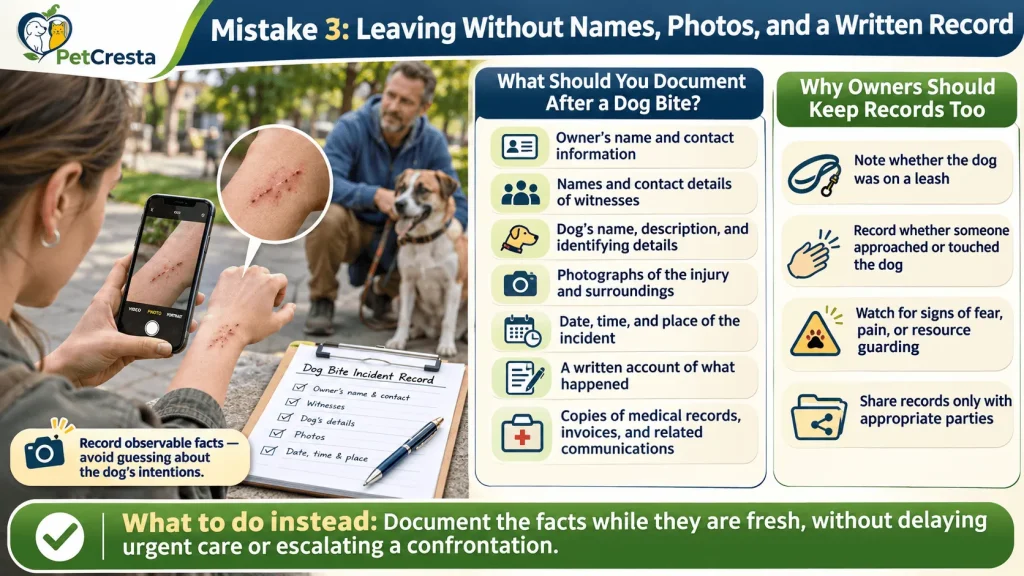
What Should You Document After a Dog Bite?
Once you’re safe and any urgent medical needs are addressed, collect:
- The dog owner’s name and contact information.
- Names and contact details of witnesses.
- The dog’s name, description, and identifying details.
- Photographs of the injury, taken when appropriate.
- Photographs of the location or relevant surroundings.
- The date, time, and place of the incident.
- A written account of what happened immediately before the bite.
- Copies of medical records, invoices, and related communications.
If the bite occurred while the dog was eating, resting, interacting with children, or encountering another animal, include that information.
Avoid guessing about the dog’s intentions. Record observable facts instead.
Why Owners Should Keep Records Too
The dog’s owner can also benefit from an accurate incident record.
Write down whether the dog was on a leash, whether someone approached or touched it, and whether there were signs of fear, pain, or resource guarding.
This information may later help a veterinarian or qualified behavior professional evaluate the incident.
Protect the privacy of everyone involved and provide records only to appropriate parties.
What to do instead: Document the facts while they are fresh, without delaying urgent care or escalating a confrontation.
Mistake 4: Assuming Insurance Has Nothing to Do With It
When a bite involves neighbors, relatives, or friends, people may prefer to settle the matter privately.
However, medical costs and liability questions can become more complicated than expected.
Depending on the circumstances and policy terms, homeowners or renters insurance may provide liability coverage for certain dog-bite incidents.
Coverage is not guaranteed.
Some policies contain exclusions or restrictions involving animals, prior bite incidents, or specific circumstances.
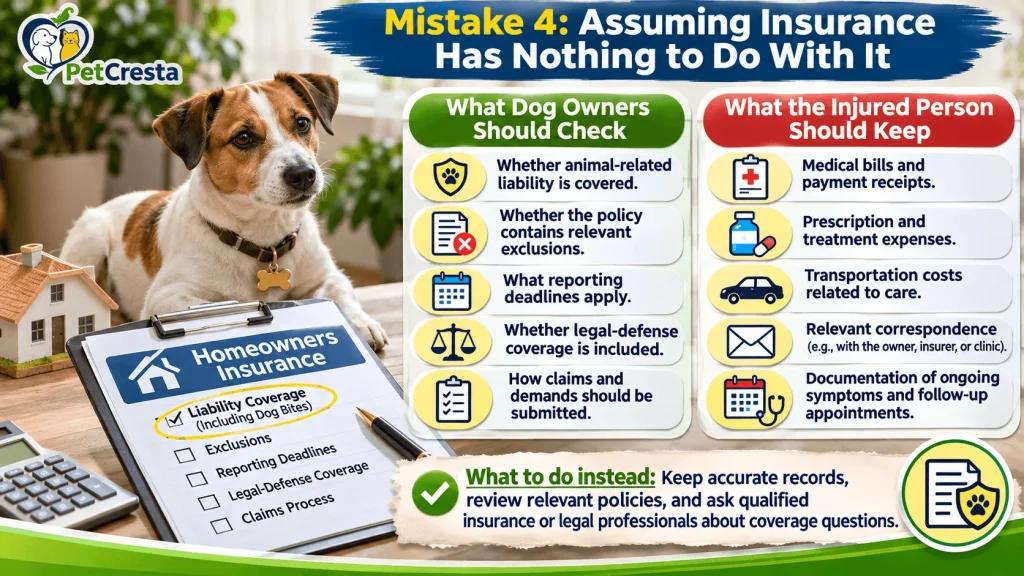
What Should Dog Owners Check?
Owners should review their insurance documents and confirm:
- Whether animal-related liability is covered.
- Whether the policy contains relevant exclusions.
- What reporting deadlines apply.
- Whether legal-defense coverage is included.
- How claims and demands should be submitted.
If you receive a formal claim or demand letter, notify your insurer according to the policy’s requirements.
What Should the Injured Person Keep?
Retain copies of:
- Medical bills and payment receipts.
- Prescription and treatment expenses.
- Transportation costs related to care.
- Relevant correspondence.
- Documentation of ongoing symptoms and follow-up appointments.
Health insurance may initially cover certain treatment costs, depending on the plan. Other insurers may later become involved where legally appropriate.
Avoid assuming that one person’s insurance must automatically cover every expense.
What to do instead: Keep accurate records, review relevant policies, and ask qualified insurance or legal professionals about coverage questions.
Mistake 5: Punishing the Dog Instead of Figuring Out What Triggered the Bite
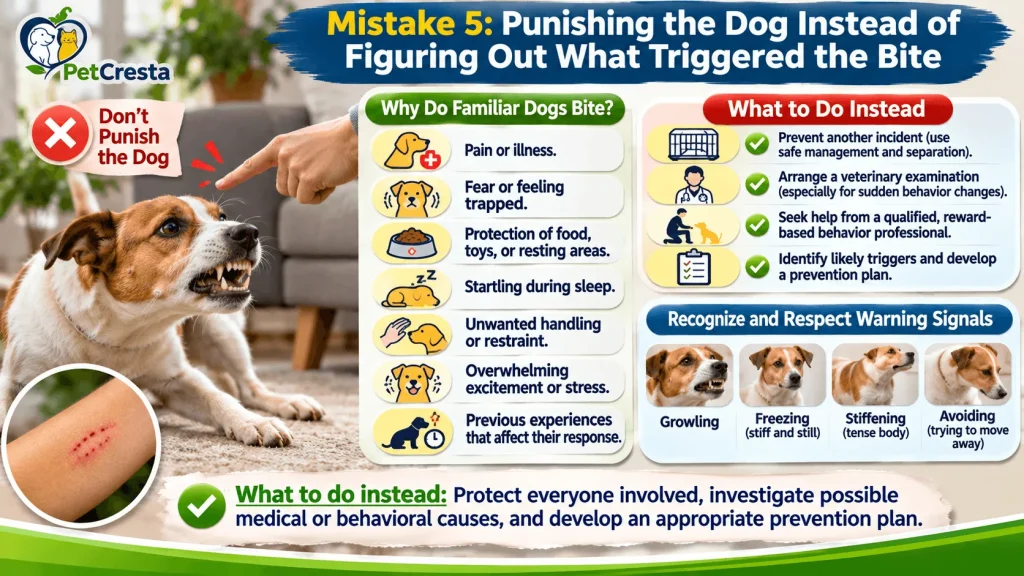
A dog bite can leave owners frightened, angry, or embarrassed.
Some respond by yelling, hitting, or using harsh punishment.
However, punishment can increase fear and may suppress warning behaviors without resolving the underlying problem.
A dog that stops growling because it has been punished has not necessarily become safer.
Why Do Familiar Dogs Bite?
Dogs may bite in situations involving:
- Pain or illness.
- Fear or feeling trapped.
- Protection of food, toys, or resting areas.
- Startling during sleep.
- Unwanted handling or restraint.
- Overwhelming excitement or stress.
- Previous experiences that affect their response to people.
Not every bite has the same cause.
Owners should avoid assuming the dog acted out of spite, dominance, or deliberate disobedience.
What Should You Do if Your Dog Bites Someone?
Begin by preventing another incident.
Temporarily separate the dog from people or situations that may trigger another reaction. Use secure barriers and safe handling rather than attempting to force further interaction.
Arrange a veterinary examination, especially if the behavior was sudden or out of character.
Pain, illness, or other medical problems can contribute to behavior changes.
When fear, aggression, resource guarding, or repeated biting is involved, it is important to understand when a dog needs professional training.
A qualified reward-based behavior professional or veterinary behaviorist can help assess the circumstances and develop an appropriate management plan.
Avoid Punishing Warning Signals
Growling, freezing, stiffening, and other warning behaviors may indicate that a dog is uncomfortable.
Punishing these signals does not necessarily resolve the cause of that discomfort.
A safer approach involves recognizing early warnings, managing the environment, preventing repeated exposure to triggers, and seeking professional guidance.
What to do instead: Protect everyone involved, investigate possible medical or behavioral causes, and develop an appropriate prevention plan.
Mistake 6: Guessing at the Rules, Which Vary From State to State
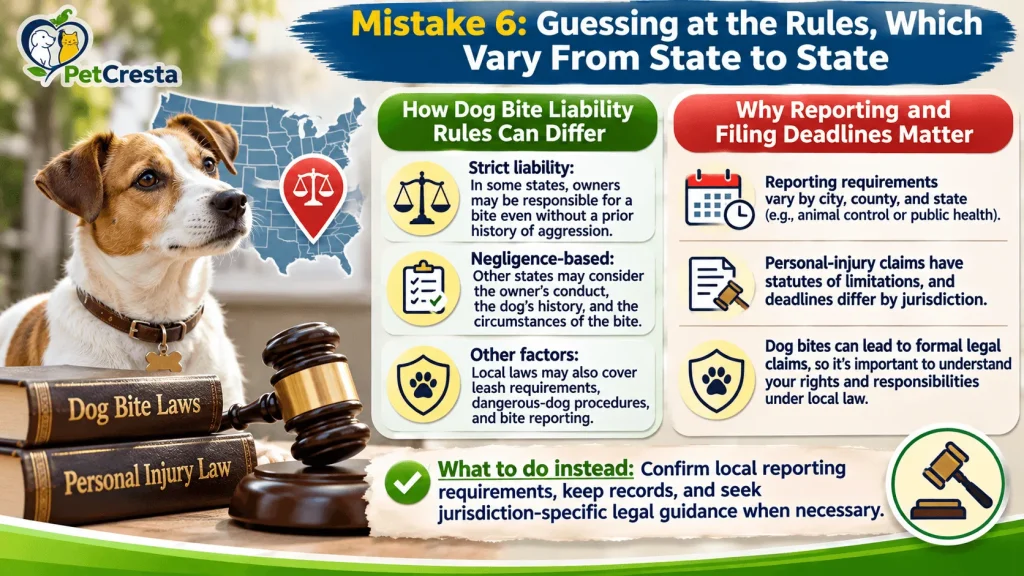
Dog-bite laws are not identical throughout the United States.
Depending on the jurisdiction, liability may involve strict-liability rules, negligence principles, or other legal standards.
Some laws consider whether the owner knew or should have known about dangerous behavior. Others may impose liability under different circumstances.
Local rules may also address leash requirements, dangerous-dog procedures, and bite reporting.
How Do Dog Bite Liability Rules Differ?
In some states, strict-liability statutes can make an owner responsible for certain bite injuries even without a known history of aggression.
Other states or situations may require consideration of the owner’s conduct, the dog’s history, or the circumstances of the incident.
Legal defenses, exceptions, and responsibilities depend on the applicable law.
Do not assume that a dog being familiar, previously friendly, or vaccinated automatically resolves questions of liability.
Why Reporting and Filing Deadlines Matter
Animal-control and public-health reporting obligations vary by location.
Personal-injury claims are also subject to statutes of limitations, and the applicable deadline may depend on the type of claim and jurisdiction.
Dog bites are one of the injury categories addressed by personal-injury law practices. Firms such as Dimopoulos Injury Law handle personal-injury matters, illustrating why some bite incidents may develop into formal legal claims.
A licensed attorney in the state where the bite occurred can explain the applicable rules, deadlines, and options.
If you’re the dog’s owner, review insurance notice obligations before responding to a formal claim.
What to do instead: Confirm local reporting requirements, keep records, and seek jurisdiction-specific legal guidance when necessary.
Preventing the Next One: Simple Habits for Dogs, Kids, and Visitors
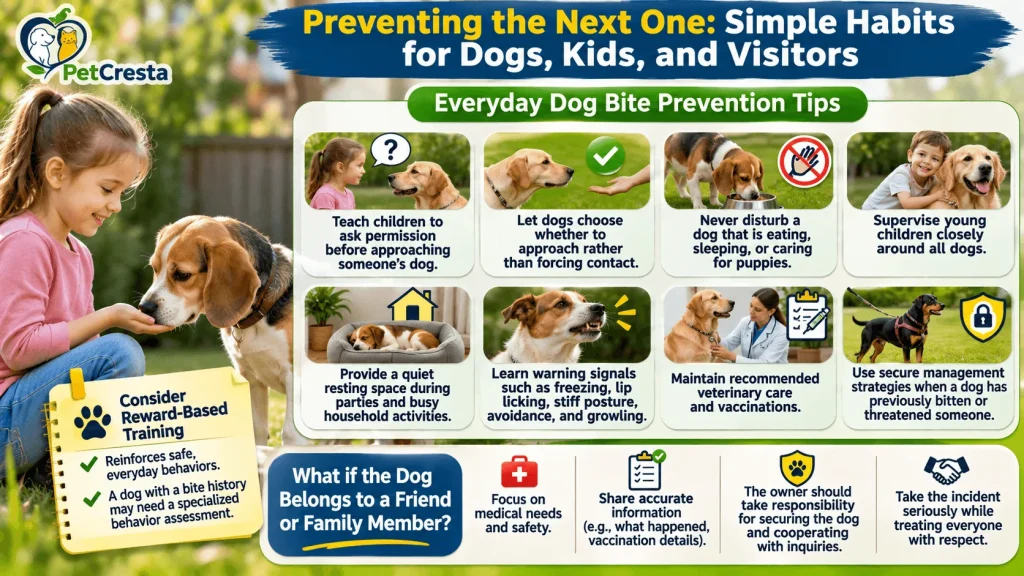
Preventing another bite requires understanding the situations in which dogs may become uncomfortable, frightened, or defensive.
A familiar dog still needs boundaries, supervision, and opportunities to withdraw from unwanted interactions.
Everyday Dog Bite Prevention Tips
- Teach children to ask permission before approaching someone else’s dog.
- Let dogs choose whether to approach rather than forcing contact.
- Never disturb a dog that is eating, sleeping, or caring for puppies.
- Supervise young children closely around all dogs.
- Provide a quiet resting space during parties and busy household activities.
- Learn warning signals such as freezing, lip licking, stiff posture, avoidance, and growling.
- Maintain recommended veterinary care and vaccinations.
- Use secure management strategies when a dog has previously bitten or threatened someone.
Owners can also use consistent, reward-based training for adult dogs to reinforce everyday household behaviors. However, a dog with a bite history may need a specialized behavior assessment rather than ordinary obedience lessons alone.
What if the Dog Belongs to a Friend or Family Member?
Avoid turning the incident into an argument about whether the dog is normally friendly.
Focus on medical needs, accurate information, and immediate safety.
The owner should take responsibility for securing the dog and cooperating with appropriate medical or public-health inquiries.
The injured person should not feel pressured to ignore a bite because of a personal relationship.
Taking the incident seriously is compatible with treating everyone respectfully.
Quick Checklist: What to Do After Being Bitten by a Dog You Know
| Step | Recommended Action |
|---|---|
| 1. Get safe | Move away from the dog and prevent another bite |
| 2. Clean the wound | Wash thoroughly with soap and running water |
| 3. Seek medical care | Arrange prompt assessment, especially for broken skin |
| 4. Check rabies information | Request vaccination records and follow medical or public-health instructions |
| 5. Document the incident | Record names, photographs, location, and relevant details |
| 6. Check reporting requirements | Contact appropriate local authorities when required |
| 7. Preserve records | Keep medical bills, treatment details, and relevant communication |
| 8. Prevent another bite | Use safe management and arrange veterinary or behavior assessment |
This checklist is not a substitute for emergency treatment. Severe injuries or suspected rabies exposures require urgent professional attention.
Final Takeaway
Being bitten by a dog you know can be upsetting for everyone involved.
Familiarity with the animal should not lead to delayed wound care, overlooked rabies information, missing documentation, or an assumption that another bite cannot happen.
The most useful response is calm and practical: protect the injured person, wash the wound, obtain appropriate medical advice, document the incident, and follow local reporting requirements.
For the dog’s owner, preventing another bite means understanding the circumstances, addressing possible medical or behavioral concerns, and using appropriate management.
A responsible response protects both people and animals while reducing the chance of a similar incident in the future.
FAQ’s
Move away from the dog, wash the wound thoroughly with soap and running water, and obtain appropriate medical assessment. Seek emergency treatment for severe bleeding, major injuries, or other urgent symptoms.
Yes, medical assessment is advisable when a bite breaks the skin, even if it appears minor. Puncture wounds can become infected, and a clinician can assess whether additional treatment is necessary.
Rabies in properly vaccinated dogs is uncommon, but vaccination status alone should not be used to dismiss an exposure. A healthcare professional or public-health authority should assess the circumstances.
Not everyone bitten by a familiar dog requires rabies post-exposure prophylaxis. The decision depends on factors such as the exposure, local rabies risk, the dog’s condition, and whether appropriate observation is possible. Seek prompt medical or public-health advice.
In the United States, a healthy dog involved in a human rabies exposure may be confined and observed for 10 days under public-health guidance. Local procedures determine how observation is conducted.
Reporting requirements depend on the city, county, and state. Contact the local health department or animal-control office to determine what applies to the incident.
Increasing redness, swelling, warmth, pain, pus, fever, or red streaking may indicate infection. Seek prompt medical assessment if these symptoms develop.
Possibly. Coverage and liability depend on the circumstances, insurance policy, and applicable law. Keep medical records and seek insurance or legal guidance where needed.
No. Physical punishment may increase fear and suppress warning behaviors. Secure the dog, arrange veterinary evaluation, and consult an appropriately qualified behavior professional.
Many behavior problems can be managed or improved, but outcomes depend on the cause, severity, circumstances, and individual dog. A veterinarian and qualified behavior professional can assess risk and recommend a suitable plan.