Cat Coughing And Wheezing: Causes & When To Get Help
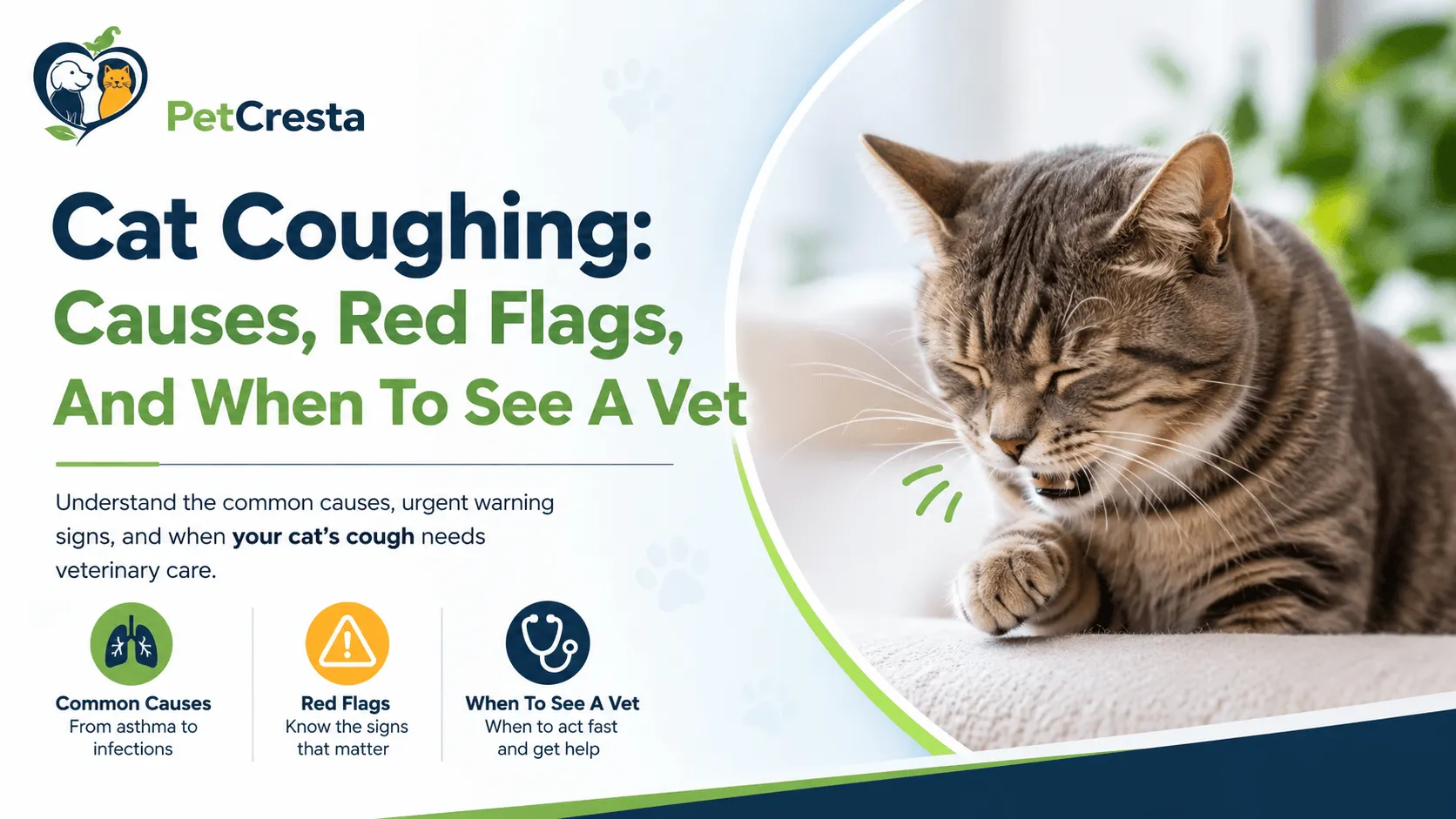
Many owners first assume a cat’s coughing episode is just a hairball attempt. That mix-up is common. Cats often crouch, extend their necks, and make a hacking sound that can look similar at first glance. The important point is that a true cough often produces nothing, while a hairball episode usually ends with hair, foam, or stomach material coming up.
Coughing is a symptom, not a diagnosis. It can happen with feline asthma, bronchitis, respiratory infection, parasites, inhaled irritants, swallowing problems, or less common chest disease. Some episodes are mild. Others point to a breathing problem that needs fast attention.
This guide is built to answer the questions most owners have right away. It explains what a cat cough looks like, how to tell it from a hairball, which signs are urgent, what the most likely causes are, and what a veterinarian may do next.
TL;DR: Should You Worry About Cat Coughing?
A mild one-time cough in a cat that is otherwise breathing normally, eating well, and acting like usual may be watched closely for a short time. That does not mean it should be ignored forever. If it repeats, the situation changes.
A same-day veterinary call is wise if the cough becomes persistent, sounds productive, keeps coming back, or appears with wheezing, sneezing, discharge, poor appetite, or weight loss. Open mouth breathing, blue or gray gums, blood-tinged mucus, collapse, or tongue out of distress should be treated as emergencies.
At A Glance: What Different Cat Coughing Signs May Mean
| Sign | What it may suggest | Urgency |
|---|---|---|
| Dry hacking cough | Asthma, bronchitis, irritation, parasites | Moderate to high if repeated |
| Wet cough | Mucus, infection, lower airway disease, fluid | High |
| Wheezing | Asthma, airway narrowing, bronchitis | High if repeated or severe |
| Sneezing too | Respiratory infection, upper airway irritation | Moderate |
| No hairball produced | True cough more likely than a hairball event | Moderate to high if repeated |
| Mucus | Infection, inflammation, chronic airway disease | High |
| Tongue out | Respiratory distress, severe airway problem | Emergency |
| After eating | Swallowing issue, irritation, aspiration concern | Moderate to high if repeated |
| After drinking water | Throat irritation, swallowing problem, aspiration risk | High if repeated |
| At night | Trigger exposure, chronic airway inflammation | Moderate |
| Blood | Airway injury, severe inflammation, serious disease | Emergency |
This table is a fast guide, not a diagnosis. One sign alone does not confirm the cause, but certain patterns can help show which direction is more likely.
Why Is My Cat Coughing?
A cat may cough because the airways are irritated, inflamed, narrowed, or partly blocked. Common causes include asthma, allergic airway disease, bronchitis, respiratory infections, parasites such as heartworm or lungworms, inhaled irritants, aspiration, and, less commonly, structural airway disease or serious chest problems.
A single brief cough can happen with temporary irritation. Repeated coughing is different. When the pattern keeps returning, sounds wet, comes with wheezing, or happens with low energy or breathing effort, the cause needs a closer look.
What A Cat Cough Looks And Sounds Like
Cats do not always cough in an obvious way. The sound may be brief, the posture may look unusual, and the episode is often mistaken for a hairball or gagging. Understanding how a true cough looks and sounds can make it easier to describe the pattern clearly and decide whether the cat needs closer attention.
What Does A Cat Cough Look Like?
Coughing in a cat often lowers its body, stretches its neck forward, and uses its belly to force air out. Some cats swallow after the episode. Others end the cough with a retch that makes owners think a hairball is about to appear.
The movement can be subtle compared with a dog cough. That is one reason repeated mild episodes are often missed at first. Watching the body motion is usually more useful than listening to the sound alone.
What Does A Cat Cough Sound Like?
A coughing sound may be dry and hacking, wet and gurgly, wheezy, or sometimes honking. Dry cough in cats often sounds sharp and unproductive. A wet cough in cats can sound deeper or more congested.
A short video can be very helpful for the veterinarian. Many coughing episodes are brief and may not happen during the exam, so a video often gives clearer information than memory alone.
Is It A Cough, A Hairball, Or Something Else?
Many coughing episodes are mistaken for hairballs, gagging, or vomiting because the body movement can look similar at first. The difference matters because a true cough points more toward the airways, while hairballs and vomiting usually involve the stomach or throat. A clear comparison can help narrow down what the cat is actually doing and how urgent the situation may be.
Is My Cat Coughing Or Trying To Bring Up A Hairball?
This is the most common point of confusion. In a hairball episode, something often comes up at the end, even if it is only foam or fluid. In a true cough, the cat may hack repeatedly and produce nothing.
Hairball episodes also tend to fit cats with heavy grooming, long coats, or repeated retching. A repeated crouched-hacking pattern without a hairball should raise more concern for airway disease than for stomach or grooming issues. A true cough often produces nothing and is more closely tied to the lungs and airways. A hairball event is more likely when the episode ends with hair, foam, or stomach material, especially in a cat that grooms heavily or has a long coat. When the same hacking posture keeps happening without anything coming up, airway disease deserves more attention than hairballs.
Is My Cat Coughing, Gagging, Or Vomiting?
Vomiting usually involves a stronger abdominal push and a propulsive motion that ends with stomach contents coming up. Gagging or retching may stop short of vomiting, but still looks more throat and stomach-related than a true cough.
A cough is more about forcefully moving air out of the lungs. That is why the chest and belly often look tight through the effort, rather than like a full stomach heave.
Could This Be Reverse Sneezing?
Reverse sneezing usually sounds more like a repeated snort than a cough. It is often noisy and startling, but the pattern is different from a forceful lower airway cough.
If the event is hard to identify, a video is usually the fastest way to clear up the confusion. Reverse sneezing, vomiting, gagging, and coughing can overlap visually for someone seeing it for the first time.
Could My Cat Be Choking?
Choking is different from ordinary coughing because distress is usually immediate and obvious. The cat may paw at the mouth, drool, panic, or show blue gums if air flow is badly blocked.
A cat that may be choking belongs in the emergency group, not the watch-and-wait group. Sudden intense distress with poor air movement should be treated as urgent. If the episode also includes saliva or drooling, it may help to compare those signs with this article on why does my cat drool.
| Pattern | Sound or motion | What may come out | Urgency |
|---|---|---|---|
| Cough | Hacking, wheezing, forceful outward air | Usually nothing, sometimes mucus | Moderate to emergency, depending on signs |
| Hairball | Retching, repeated gagging effort | Hair, foam, fluid, stomach material | Low to moderate unless repeated or distressed |
| Gagging | Throat-focused retch may stop short | Often nothing | Moderate if repeated |
| Vomiting | Strong abdominal push and neck propulsion | Food, bile, fluid | Variable |
| Reverse sneezing | Repetitive snorting inward sound | Nothing | Usually low unless breathing looks abnormal |
| Choking | Sudden panic, gagging, pawing at the mouth | Usually nothing | Emergency |
When Is Cat Coughing An Emergency?
Some coughing episodes can be watched briefly, but others point to a breathing problem that should not be ignored. The biggest concern is not just the cough itself, but the signs that come with it, such as open mouth breathing, blue or gray gums, severe wheezing, weakness, or visible distress. Knowing which warning signs move the situation into an urgent category can help prevent dangerous delay.
When Should I Go To The Emergency Vet Right Away?
Emergency care is needed if the cat has open-mouth breathing, blue, pale, or gray gums, tongue out, distress, collapse, blood-tinged mucus, severe wheezing, or obvious effort to move air.
A cat sitting with elbows pointed outward, breathing with the belly, or unable to settle after repeated coughing, should also be treated as urgent. These signs suggest the problem may be more than a simple irritating cough.
When Should I Book a Same-Day Vet Visit?
A same-day call is appropriate if the cough is persistent, recurs over a few days, sounds wet, comes with wheezing, causes poor appetite, or appears with sneezing, nasal discharge, or low energy.
Repeated nighttime episodes, coughing after drinking water more than once, or a cough that keeps being mistaken for a hairball also belong in this group. These patterns may not be emergencies yet, but they are not normal enough to ignore.
How Can I Check Breathing At Home?
Count breaths while the cat is resting quietly. A normal resting breathing rate is about 20 to 30 breaths per minute. Faster breathing, stomach effort, flared nostrils, or visible strain raise concern.
This home check does not replace an exam, but it helps separate a mild-looking cough from a case that may actually involve more serious respiratory stress.
Symptom Pattern Guide
A cough often becomes easier to understand when it is viewed as part of a pattern rather than a single symptom. Details such as wheezing, sneezing, mucus, nighttime episodes, or coughing after eating or drinking can help narrow down which causes are more likely. These symptom combinations do not confirm a diagnosis on their own, but they do help show when the problem may be more urgent or more likely to involve the airways.
Why Is My Cat Coughing And Wheezing?
Coughing and wheezing often push asthma or bronchitis higher on the list. Wheezing suggests the airways are narrowed or inflamed rather than only mildly irritated.
This pattern deserves prompt evaluation because airway narrowing can worsen quickly in some cats. If wheezing becomes severe or the cat opens its mouth to breathe, treat it as an emergency.
Why Is My Cat Coughing And Sneezing?
A cat sneezing and coughing with nasal discharge, or eye discharge, upper respiratory infection, or upper airway irritation, moves higher on the list. Drainage can irritate the throat and trigger coughing.
This pattern still needs attention, especially if the appetite drops or the cat seems tired. A simple head-cold-style illness can sometimes spread deeper into the airways. If coughing happens with repeated nasal irritation or discharge, this page on cat sneezing a lot can help explain the upper airway side of the problem.
Why Is My Cat Coughing But No Hairball Comes Up?
This is one of the clearest clues that the episode may be a true cough rather than a hairball event. If the same dry hacking pattern keeps repeating without anything coming up, the airways deserve more attention than the stomach.
Asthma, bronchitis, irritation, parasites, and infection all become more relevant when repeated coughing happens without a hairball result.
What Is The Difference Between A Dry Cough And A Wet Cough?
A dry cough is more often linked with airway irritation, asthma, bronchitis, or some parasites. It tends to sound sharp, hacking, and unproductive.
A wet cough suggests mucus, fluid, or a heavier inflammatory burden in the airways. It deserves quicker evaluation because infection, chronic airway disease, or more serious chest problems can sit behind it.
Why Is My Cat Coughing Up Mucus?
Mucus raises concern for lower airway inflammation, infection, or chronic respiratory disease. It is not the same thing as a hairball.
If a cat throwing up mucus, the discussion should shift toward airway disease and a veterinary workup instead of grooming or stomach issues. A wet productive pattern deserves more caution.
Why Is My Cat Coughing With Its Tongue Out?
A tongue-out cough can signal respiratory strain rather than a simple mild irritation. When this is paired with open-mouth breathing, blue gums, or visible panic, it belongs in the emergency category.
This pattern should not be watched casually at home. Severe asthma attacks and other airway emergencies can look this way.
Why Is My Cat Coughing After Eating?
Coughing after meals raises concern for throat irritation, swallowing problems, or aspiration. Food that goes the wrong way can irritate the airway and trigger coughing, especially if the pattern repeats.
A single brief episode may be minor, but repeated coughing after eating needs attention because aspiration-related problems can become serious if missed.
Why Is My Cat Coughing After Drinking Water?
Coughing immediately after drinking water can point toward a swallowing issue, throat irritation, laryngeal dysfunction, tracheal problems, or aspiration.
This is not a pattern to dismiss if it keeps recurring. A cat that coughs after drinking more than once should be examined, especially if other breathing signs appear too.
Why Is My Cat Coughing At Night?
Nighttime episodes may be more noticeable because the home is quiet, but they can also reflect indoor triggers such as dust, smoke residue, litter dust, fragrance, or chronic airway inflammation.
If the pattern repeats at night, it still deserves the same workup as daytime coughing. Timing alone does not make it harmless.
Why Is My Cat Coughing After Surgery?
A short-lived cough after anesthesia or airway instrumentation may happen from irritation, but persistent coughing, low energy, or any breathing change after surgery should not be brushed off.
If the cough is paired with open-mouth breathing, weakness, or repeated retching, the veterinary team should be contacted without delay.
Cat Coughing Causes
Coughing can happen for several different reasons, which is why the symptom should not be treated as a diagnosis on its own. Some causes are linked to airway inflammation and irritation, while others involve infection, parasites, swallowing problems, or more serious disease inside the chest. Looking at the likely cause groups helps make sense of the cough and shows why some cases need faster attention than others.
Feline Asthma And Allergic Bronchitis
Feline asthma and bronchitis are among the most important causes of recurrent cough in cats. These conditions involve inflammation and narrowing in the airways, which can lead to a dry hacking cough, wheezing, and, in more severe cases, open-mouth breathing.
Common triggers include smoke, dust, litter dust, pollen, mold, dust mites, and sprays. Managing the trigger is helpful, but the cat still needs a diagnosis so the right treatment plan can be built.
Can Allergies Cause Cat Coughing?
Yes, allergies can contribute to coughing in cats by irritating and narrowing the airways. Environmental triggers such as pollen, dust, mold, smoke, dust mites, and scented household products can all play a role, especially in cats with asthma or chronic airway inflammation.
This does not mean every coughing cat has allergies. It means allergies belong on the list when coughing repeats, flares in certain rooms or seasons, or appears alongside wheezing. In some cats, reducing trigger exposure becomes part of long-term management rather than a short-term fix.
Respiratory Infections
Viral, bacterial, and fungal infections can all irritate the airways enough to trigger a cough. Upper respiratory infections are often better known for sneezing and discharge, but some cats also cough as secretions irritate the throat and lower airways.
This cause becomes more likely when coughing appears with sneezing, nasal discharge, eye discharge, fever, low appetite, or mucus. Some infectious problems can spread between pets, which makes timely diagnosis more useful in multi-cat homes.
Parasites, Including Heartworm And Lungworms
Heartworm disease in cats can irritate the heart and lungs and trigger a dry hacking cough. Other parasites can matter too, especially when they affect the lungs or create inflammatory changes in the airways.
Parasites are not always the first thing owners think of with coughing, but they belong on the list, especially in cats with outdoor exposure or incomplete prevention history.
Foreign Material And Airway Irritation
Cats can cough when they inhale something irritating, such as grass, dust, smoke, powders, or chemical fumes. This type of irritation may trigger a sudden dry cough.
If the irritant continues to be present, the cough can persist or worsen instead of fading quickly. Indoor air quality matters more than many owners realize.
Aspiration And Swallowing-Related Problems
Aspiration happens when food, water, or other material enters the airway instead of going down the esophagus. This can happen with swallowing dysfunction, throat problems, or repeated episodes linked to eating and drinking.
This cause matters because it can move from irritation to serious lower airway disease. A repeated post-eating or post-drinking cough deserves a closer look for that reason.
Less Common But Serious Causes Of Cat Coughing
Not every coughing cat has asthma, infection, or irritation. Less common but more serious causes include chest tumors, fluid around the lungs, chest trauma, severe lower airway disease, and structural airway problems that narrow airflow or change how the cough sounds.
A harsh or honking cough can sometimes happen with an abnormal or narrowed airway. Fluid around the lungs can cause coughing or breathing distress, and coughing up blood raises concern for injury, infection, parasites, tumors, or other significant chest disease. Unlike dogs, heart disease is not a common cause of coughing in cats, but heartworm disease and other chest problems linked to the heart or lungs can still create serious breathing changes.
These causes are less common, but they matter because they change the urgency and treatment path. That is why a persistent cough should not be managed by guessing.
Is It Normal For A Cat To Cough?
A brief isolated cough can happen with temporary irritation, but repeated coughing should not be treated as normal. Cats do not cough often compared with dogs, so a pattern that keeps returning deserves more attention than many owners expect.
A mild one-time cough in a cat that goes right back to breathing normally, eating normally, and acting like usual may be watched closely for a short time. That does not make it something to ignore forever. The event should still be remembered in case it happens again.
Repeated coughing is different. When nothing comes up, the sound becomes wetter, or the cat shows wheezing, low energy, poor appetite, or breathing changes, the safer next step is a veterinary exam. A cough that keeps returning is not something to normalize.
What Should I Check At Home Before The Vet Visit?
A few simple observations at home can make a veterinary visit much more useful. Details such as how often the cough happens, what it sounds like, whether it appears after eating or drinking, and whether the cat is breathing normally can help narrow down the likely causes. The goal is not to diagnose the problem at home, but to notice the patterns that give the clearest clinical picture.
What Details Should I Track?
Track how often the cough happens, how long the episodes last, whether it happens after eating or drinking, whether it is worse at night, and whether wheezing, sneezing, mucus, or swallowing follows the episode.
It also helps to note appetite, behavior, breathing rate at rest, and possible trigger exposure such as smoke, sprays, litter dust, or recent illness. A short video is one of the most useful things to bring to the appointment.
What Should I Not Do At Home?
Do not give human cough medicine. Do not use essential oils, force food or water during respiratory distress, or assume repeated coughing is harmless because a hairball sometimes looks similar.
A struggling cat needs calm handling and timely care, not home experiments. Breathing problems can get worse quickly if the real cause is missed.
Home Observation Checklist
• Frequency of episodes
• Dry or wet sound
• Wheezing or open-mouth breathing
• Mucus, foam, or blood
• Triggers such as food, water, smoke, dust, or activity
• Appetite and energy
• Resting breathing rate
• Video if possible
How Do Vets Diagnose The Cause Of Cat Coughing?
Finding the cause of a cough usually takes more than listening to the sound alone. Veterinarians look at the full pattern, including breathing effort, body posture, associated symptoms, and the cat’s recent history, then choose tests based on what seems most likely. This step matters because the same outward symptom can come from very different problems inside the airways or chest.
What Will The Vet Ask And Look For?
The veterinarian will usually ask when the cough started, how often it happens, what it sounds like, and whether it appears with sneezing, mucus, weight loss, appetite change, or low energy.
The exam often focuses on breathing effort, airway sounds, lung sounds, heart sounds, hydration, and any visible nasal or eye discharge. The goal is to decide whether the problem fits airway inflammation, infection, parasites, aspiration, or a more serious chest issue.
Which Tests Might Be Needed?
Common tests include chest X-rays, blood work, heartworm testing, fecal or parasite testing, and, in selected cases, ultrasound or airway sampling. Some cats need oxygen support before more detailed testing if breathing is already difficult.
The workup is chosen based on the pattern. A cat with wheezing and no hairball may move faster toward airway disease testing, while a cat is coughing after drinking water may need a stronger look at swallowing or aspiration problems.
Why Does The Workup Change From One Cat To Another?
Not every cough points in the same direction. A wet cough suggests something different from a dry cough. Sneezing and discharge point more toward infection, while open mouth breathing raises concern for an emergency airway or chest disease.
That is why two cats with the same basic complaint can leave the clinic with very different test plans. The pattern behind the cough matters just as much as the cough itself.
Simple Diagnostic Flow
Observe the pattern
↓
Check urgency and breathing effort
↓
Physical exam
↓
Targeted tests based on symptoms
↓
Treatment plan built from the cause
Cats Coughing Treatment
Coughing cat treatment depends on the cause, not just the sound or severity of the episode. Some cats need airway support and inflammation control, while others need treatment for infection, parasites, aspiration, or a more serious chest problem. That is why the most effective treatment plan starts with identifying what is actually driving the cough.
How Is Feline Asthma Or Bronchitis Treated?
Treatment often focuses on reducing airway inflammation and opening narrowed airways. Some cats need bronchodilator therapy, some need anti-inflammatory treatment, and some need both.
Environmental cleanup also matters. Smoke, dust, scented sprays, and dusty litter can keep flaring the problem if they stay in the home. Some cats are treated with inhaled medication as part of long-term asthma control, and allergy trigger review may help reduce flare-ups over time.
How Are Infections Treated?
Treatment depends on the type of infection. Some cats need supportive care and monitoring, while others need prescription treatment if the infection is bacterial or more severe.
The bigger point is that treatment should match the cause. A cough caused by infection is not managed the same way as a cough caused by asthma.
How Are Parasites Treated?
Parasite-related cough is treated by identifying the likely parasite and using the proper anti-parasitic plan. Supportive care may also be needed if inflammation in the airways is significant.
Prevention matters too. A coughing cat with an uncertain parasite history may need the prevention plan reviewed as part of treatment.
What If The Cause Is Aspiration, Fluid, Or A Mass?
These causes can need more intensive care. Aspiration may need prompt evaluation and treatment if the lungs are affected. Fluid in or around the chest may need urgent stabilization. A mass changes the plan completely and may require imaging, specialist care, or surgery.
This is one reason a persistent cough should not be treated like a minor grooming issue without a real workup.
Is There A Safe Cat Cough Medicine?
There is no one-size-fits-all safe cough medicine for cats. Human cough products are not the answer, and they can delay proper care or create new safety problems.
The right treatment depends on the cause. That is why diagnosis matters more than trying to suppress the cough without knowing why it is happening.
| Cause | Treatment direction |
|---|---|
| Asthma or bronchitis | Airway support, inflammation control, trigger reduction |
| Infection | Supportive care, targeted prescription treatment when needed |
| Parasites | Anti-parasitic plan, supportive care |
| Aspiration | Prompt evaluation, lung support if needed |
| Fluid or mass | Imaging, stabilization, and advanced treatment planning |
| Irritation | Remove triggers, assess whether airway inflammation remains |
Home Remedies For Cat Cough: What Is Safe And What Is Not?
Home care can help reduce irritation in some cases, but it should never replace proper evaluation when a cough is persistent, worsening, or paired with breathing changes. The safest approach is to focus on supportive steps that lower airway stress while avoiding remedies that may delay care or make the situation worse. Knowing the difference between safe support and risky home treatment is an important part of managing a coughing cat responsibly.
What Supportive Care May Help?
Quiet rest, fresh water, lower smoke exposure, less fragrance, and better dust control can all help reduce airway irritation. A lower dust litter can also help if dusty litter seems to trigger episodes.
These steps are support, not treatment. They may reduce irritation, but they do not replace a diagnosis when the cough keeps returning.
Which Home Remedies Should Be Avoided?
Human cough syrup, essential oils, strong scented diffusers, force feeding, and delaying care during breathing distress should all be avoided.
The safest home approach is simple observation, trigger reduction, and timely veterinary contact when the pattern is persistent, worsening, or paired with warning signs.
Safe Support Checklist
• Keep the air calm and smoke-free
• Reduce strong fragrance exposure
• Switch from dusty litter if needed
• Keep the cat rested and indoors
• Record episodes when possible
• Seek care promptly if breathing changes
How Can You Help Prevent Future Coughing Episodes?
Not every cough can be prevented, but reducing common triggers can lower the chance of repeated flare-ups in many cats. Indoor air quality, parasite prevention, and consistent follow-up care all play a role, especially when the cough is linked to chronic airway disease or recurring irritation. Prevention works best when it focuses on both the home environment and the cat’s ongoing health needs.
Trigger Control At Home
Lowering exposure to smoke, sprays, strong cleaners, fragrance, and litter dust can make a real difference, especially in cats with asthma or chronic bronchitis. Indoor air quality often plays a bigger role than expected.
Simple changes at home can reduce flare-ups, but they work best when combined with a proper diagnosis and long-term care plan.
Parasite Prevention
Parasite prevention matters because heartworm and other parasites can play a role in respiratory signs. Outdoor cats and cats with uncertain prevention history deserve extra attention here.
A cough is not always caused by parasites, but prevention still belongs in the bigger respiratory health plan.
Infectious Exposure And Vaccination
Respiratory infections can spread more easily in multi-cat homes, shelters, boarding settings, or any situation where cats share airspace and close contact. Reducing exposure to sick cats and keeping routine vaccinations current can lower the risk of some infectious respiratory problems.
Vaccination does not prevent every cause of coughing, but it still matters as part of a broader prevention plan, especially for cats with frequent exposure to other cats.
Routine Veterinary Follow-Up For Recurring Cough
Recurring coughs should not be treated as isolated events forever. Cats with repeat episodes often benefit from rechecks, pattern review, and plan adjustments over time.
A chronic cough is easier to manage when the cause is identified early, and the response to treatment is monitored.
Conclusion
Cough in cats is easy to misread, especially when it looks like a hairball attempt. The bigger question is whether the pattern is mild and isolated or repeated and linked to other warning signs.
If the cough keeps happening, sounds wet, comes with wheezing, or appears with breathing changes, the safest next step is veterinary care. A short video, a breathing count at rest, and a clear description of when the episodes happen can make the visit far more useful.
FAQ
Human cough medicine should not be given unless a veterinarian specifically directs it. The right treatment depends on the cause, and the wrong product can delay care or create safety problems. The better step is to identify whether the cough fits asthma, infection, parasites, irritation, or another issue.
Concern rises when the cough repeats, becomes wet, appears with wheezing, comes with sneezing or mucus, or is paired with poor appetite, low energy, or breathing effort. Emergency care is needed for open mouth breathing, blue or gray gums, collapse, blood, or tongue out distress. A mild one-time cough is different from a pattern.
Cats cough when the airways are irritated, inflamed, narrowed, or partly blocked. Common causes include asthma, bronchitis, respiratory infections, parasites, inhaled irritants, and, less commonly, serious chest disease. A cough is a symptom rather than a diagnosis, so the pattern around it matters.
A cat that keeps coughing should not be treated the same as a cat with one mild isolated episode. Repeated coughing can point to ongoing airway inflammation, asthma, infection, parasites, or another problem that is not resolving on its own. If the pattern keeps returning, a veterinary exam is the safer next step.
This often means the episode may be a true cough rather than a hairball event. Many owners expect something to come up, but a real cough often produces nothing and is more closely linked to the lungs and airways than the stomach. If the same hacking pattern keeps happening, especially with wheezing or neck extension, the cat should be checked.
Hacking up mucus suggests airway inflammation, infection, or chronic respiratory disease rather than a simple hairball problem. A wet productive pattern is usually more concerning than a brief dry hack because it can reflect mucus buildup deeper in the airways. If mucus keeps appearing or the cat seems unwell, veterinary care is warranted.
Yes. Allergies can irritate and narrow the airways, especially in cats with asthma or chronic bronchitis. Smoke, pollen, mold, dust, dust mites, and strong household scents can all play a role. If the cough repeats or comes with wheezing, the cat should be examined rather than treated as a simple minor irritation.
A short-lived cough after anesthesia can happen because the breathing tube may irritate the airway. It should improve quickly. If the cough lasts longer than a few days, gets worse, or comes with breathing changes, weakness, or repeated retching, the veterinary team should be contacted without delay
References
- VCA Animal Hospitals, Coughing in Cats
Used for classic cough posture, hairball confusion, asthma emergency signs, common causes, and diagnostic workup.