
How to Keep a Pet-Friendly Home Cleaner and More Comfortable
Living with a pet brings companionship, routine, and a particular kind of mess that’s hard to fully anticipate until you’re living with it day in and day out. Pet-related debris isn’t just the hair collecting on the couch—it’s dander, tracked-in dirt, pollen, and lingering odors that work their way into fabric and corners long before you notice them.
Many households compare cleaning tools, including a pet vacuum, as part of a broader home-maintenance routine, though no single device solves the problem entirely on its own.
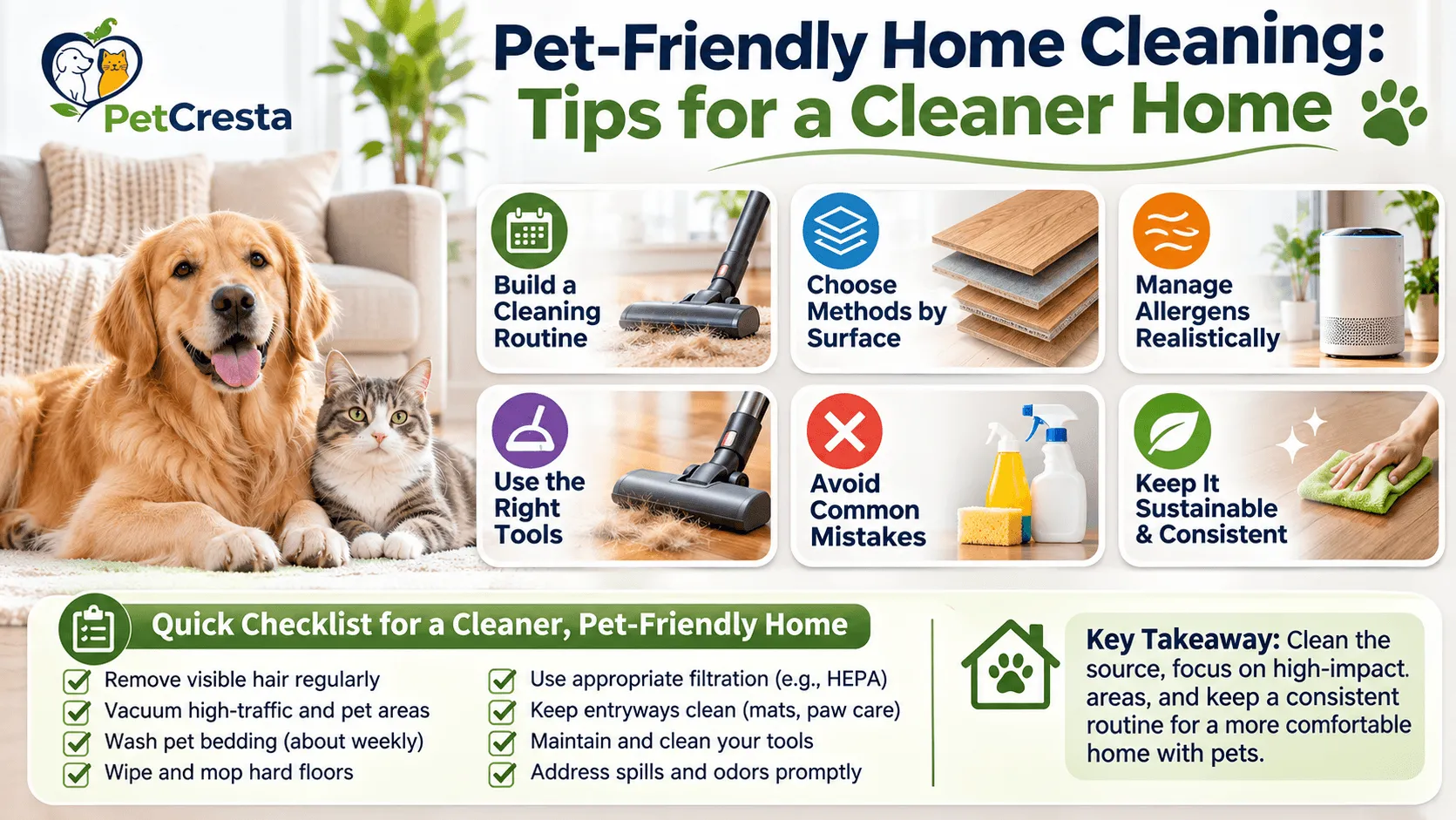
A cleaner, more comfortable pet-friendly home usually comes down to a mix of source control, consistent upkeep, and tools matched to your living situation—not any one product or method doing all the work.
Why Pet-Related Debris Accumulates Indoors
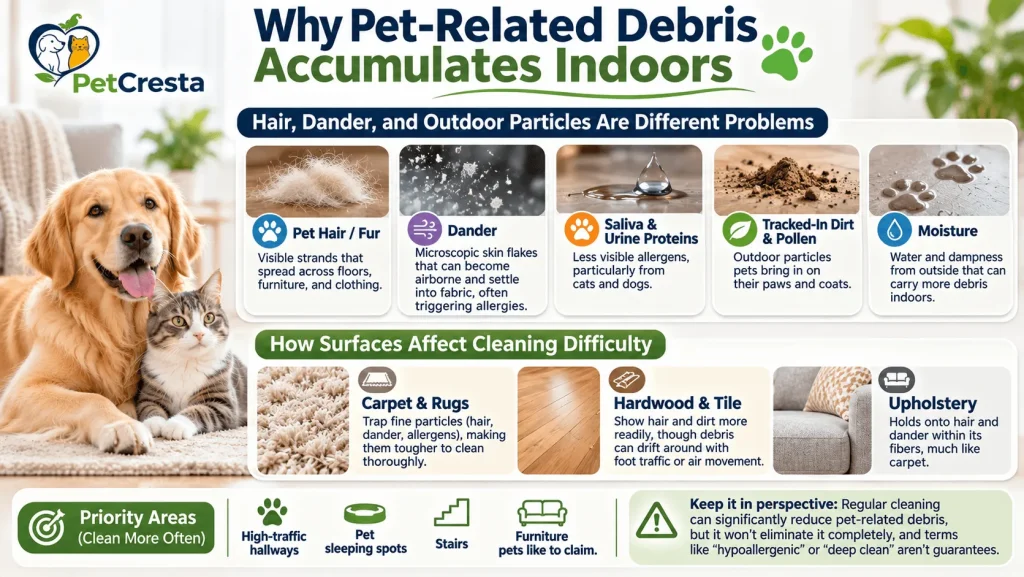
Pet-related debris builds up through everyday activities, from shedding and grooming to outdoor play and resting on furniture. Understanding where these particles come from and how different surfaces retain them can help you clean more effectively. It also makes it easier to focus your efforts on the areas that need the most attention.
Hair, Dander, and Outdoor Particles Are Different Problems
It helps to think of pet mess as several distinct problems rather than one. Pet hair or fur is the most obvious—strands end up on floors, furniture, and clothing almost everywhere. Dander, on the other hand, is made up of microscopic skin flakes that can become airborne and settle into fabric, often contributing to allergic reactions.
Saliva and urine proteins add another, less visible layer of allergens, particularly with cats and dogs. On top of all that, pets track in dirt, pollen, and moisture every time they come back inside.
Hair is easy enough to spot and sweep up. Dander and allergen particles are a different story—they work into carpet fibers, upholstery, and bedding and tend to stay put. Regular cleaning can cut down on these particles meaningfully, but it’s worth staying realistic: in a household with pets, you’re not going to eliminate them completely.
How Surfaces Affect Cleaning Difficulty
Carpet and rugs are effective at trapping fine particles, which makes them tougher to clean thoroughly but also means whatever debris they hold stays less visible for longer. Hardwood and tile show hair and dirt more readily, though that same smooth surface lets debris drift around a room with foot traffic or a stray breeze.
Upholstered furniture splits the difference, holding onto hair and dander within its fibers much like carpet does.
Priority areas usually include high-traffic hallways, pet sleeping spots, stairs, and any furniture pets like to claim. These spots build up debris faster than the rest of the house and deserve more frequent attention.
It’s also worth treating terms like “hypoallergenic” or “deep clean” with a healthy dose of skepticism—they get used loosely and shouldn’t be taken as guarantees.
Build a Practical Cleaning Routine
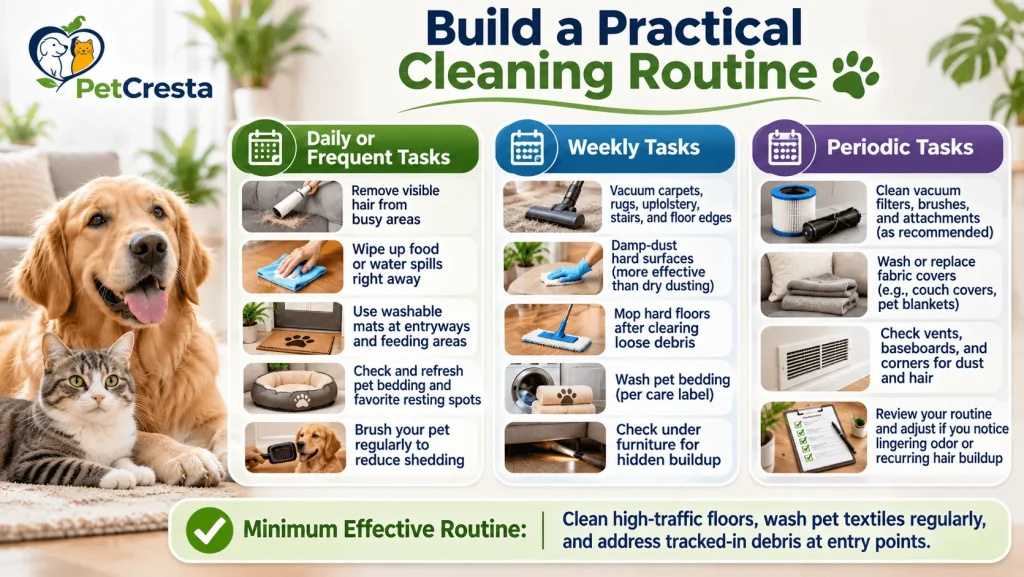
Keeping a home clean with pets is easier when maintenance becomes part of your regular schedule rather than a response to visible mess. Dividing cleaning into daily, weekly, and periodic tasks helps prevent debris from accumulating without making the routine overwhelming. Adjust the frequency according to your pet’s shedding habits, flooring, and household needs.
Daily or Frequent Tasks
A workable routine starts small: clearing visible hair from busy areas before it spreads, wiping up food or water spills right away, and keeping an eye on entryways where pets drag in moisture or debris.
Washable mats near doors and feeding stations make the daily upkeep easier, and a quick check of pet bedding or favorite resting spots can catch buildup before it gets out of hand.
Regular brushing can also help remove loose fur before it settles on household surfaces. Owners of heavily shedding breeds can benefit from understanding Fox Red Labrador shedding and grooming, particularly how seasonal coat changes affect the amount of hair that collects indoors.
Weekly Tasks
Once a week, vacuuming carpets, rugs, upholstered furniture, stairs, and floor edges covers the areas that collect debris the fastest. Homes with multiple pets or heavy shedders may need more frequent vacuuming.
Damp-dusting hard surfaces tends to work better than dry dusting, which mostly just moves particles around instead of removing them. Round out the week by mopping hard floors after clearing loose debris, washing pet bedding per its care label, and checking under furniture for anything that’s been missed.
The U.S. Environmental Protection Agency identifies frequent cleaning—including vacuuming carpets and furniture—as a practical way to reduce indoor dust and allergens.
Minimum effective routine: Clean high-traffic floors, wash pet textiles regularly, and address tracked-in debris at entry points.
Periodic Tasks
Less often, it’s worth cleaning vacuum filters, brushes, and attachments per the manufacturer’s instructions, washing or swapping out fabric covers, and checking vents, baseboards, and corners that tend to get overlooked.
It also pays to periodically take stock of whether your routine is actually working—lingering odor or recurring hair buildup is a sign to adjust before the problem grows.
Choosing Cleaning Methods for Different Surfaces
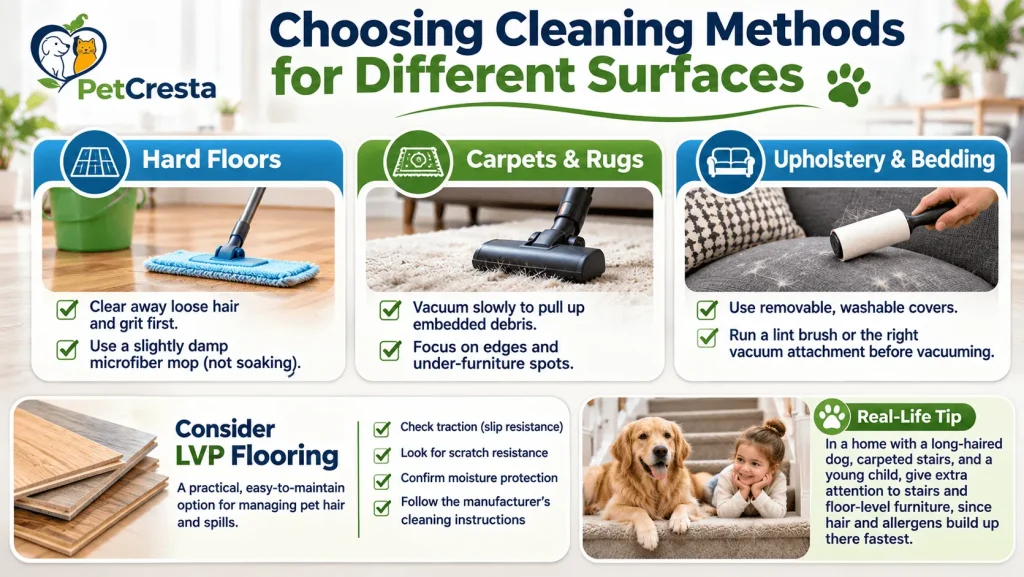
On hard floors, clear away loose hair and grit before mopping, and stick to a slightly damp microfiber mop rather than soaking the surface, which can damage certain materials over time.
For carpets and rugs, vacuuming slowly rather than rushing through tends to pull up more embedded debris. Pay particular attention to edges and under-furniture spots, since steady maintenance generally beats occasional deep cleans.
For upholstery and bedding, removable washable covers make life easier, and running a lint brush or the right attachment over the surface before vacuuming helps lift loose hair first.
The type of flooring also influences your cleaning routine. Homeowners considering easier-to-maintain surfaces may find luxury vinyl plank flooring a practical option for managing everyday pet hair and spills, although traction, scratch resistance, moisture protection, and manufacturer-specific cleaning instructions should also be considered.
Picture a household with a long-haired dog, carpeted stairs, and a young child. In that scenario, the stairs and any floor-level furniture become higher priorities than rooms that see less use, since hair and allergens tend to concentrate wherever the dog rests and wherever the child plays closest to the floor.
Managing Allergens Without Overpromising
Managing pet allergies takes more than just clearing away visible fur. Cutting down on exposure usually calls for several measures working together: keeping pets out of bedrooms, washing bedding often, cleaning upholstered furniture and carpets on a regular schedule, using appropriate filtration, and improving ventilation where possible.
The American Academy of Allergy, Asthma & Immunology recommends frequent cleaning and the use of a vacuum with a HEPA filter or double-layered bag for allergy-sensitive households.
The American College of Allergy, Asthma & Immunology echoes this, noting that regular use of an efficient vacuum may help reduce allergen levels, while HEPA air cleaners can lower airborne allergens.
None of this should be mistaken for medical treatment—persistent symptoms are a good reason to talk to a qualified healthcare professional.
Selecting Tools Based on Household Needs
When sizing up cleaning tools, it helps to weigh suction performance on your particular flooring, how well a device handles long hair without tangling, the quality of its filtration, how easily it empties without kicking dust back into the air, noise and weight, and whether it comes with attachments suited to stairs or upholstery.
Maintenance demands and the availability of replacement parts matter just as much.
No single device takes the place of washing bedding, wiping down surfaces, or managing pet areas directly. The right choice depends on your flooring, your pet’s coat type, and the size of your household, not some universal answer.
Common Mistakes That Make Pet Cleaning Less Effective
Common missteps include rushing through high-traffic areas, skipping stairs and baseboards, waiting until the mess piles up before tackling it, overdoing it with cleaning solutions, and neglecting filters or brush rolls.
Masking odors with fragrance instead of dealing with their source, and letting persistent dampness or stains slide, can also chip away at an otherwise solid routine.
Key takeaway: Clean the source, target the surfaces where debris collects, and maintain the equipment used to clean them.
A Sustainable Standard for a Pet-Friendly Home
A cleaner pet-friendly home comes down to consistency, not perfection. Identify where the debris originates, prioritize high-traffic and soft-surface areas, and pair floor, furniture, and textile cleaning with proper tool maintenance.
Map out your home’s highest-impact zones and build a routine you can realistically stick to. The goal isn’t removing every last hair or allergen, but creating a more comfortable place to live.
FAQ’s
Maintain a consistent routine that includes removing loose hair, wiping up spills, washing pet bedding, and vacuuming high-traffic areas. Regular grooming and washable mats at entry points can also help reduce the amount of debris entering your home.
Vacuum high-traffic areas and favorite pet resting spots several times a week, or daily when shedding is heavy. Other areas may only need weekly cleaning, depending on the number of pets, flooring type, and household allergy concerns.
Regular brushing, washable furniture covers, lint brushes, and suitable vacuum attachments can help manage loose fur. Focus on the places where your pet sleeps or rests most often, since these tend to accumulate hair faster.
Identify and clean the source rather than covering the smell with fragrance. Wash bedding, clean litter boxes regularly, address accidents promptly, and allow damp surfaces to dry. An enzyme-based cleaner appropriate for the affected surface may help remove urine-related odors.
Vacuums equipped with effective HEPA filtration can help capture fine particles, including some pet allergens, during cleaning. However, vacuuming alone cannot eliminate allergens. Combining regular cleaning, bedroom restrictions, textile washing, and appropriate air filtration may help reduce exposure.
Washing pet bedding approximately once a week is a reasonable starting point for many households. More frequent washing may be necessary if bedding becomes dirty, develops odors, or is used by a pet with heavy shedding. Always follow the fabric’s care instructions.
Sealed tile, suitable vinyl flooring, and properly finished hard surfaces are generally easier to clear of visible fur and everyday dirt than carpet. However, pet traction, scratch resistance, moisture exposure, and the manufacturer’s cleaning requirements should also influence the choice.
No. Some cleaning products can irritate pets or cause harm if swallowed, inhaled, or contacted before surfaces are dry. Follow product labels, keep animals away during cleaning as directed, provide appropriate ventilation, and store cleaning supplies securely out of reach.