What Is LVP Flooring? Types, Costs, Pros And Cons
So the Question starts with: What is LVP flooring? Luxury vinyl plank is known as LVP. A multi-layer resilient floor that is constructed from long boards, typically finished with a hardwood style print. LVP can’t be called wood and its performance is subject to its finish, wear layer, core, locking system, installation and build quality as a whole.
It has become a favorite for houses where spills, pets, muddy shoes, and everyday wear are commonplace. You’re able to achieve an oak, hickory, walnut or any other wood style without having to deal with all the maintenance needs of real wood.
That said, the letters “LVP” convey a limited amount of information. Other planks are thin and flexible. Some others have stiff SPC or WPC cores. There can be a wide range of differences in water ratings, comfort, sound, durability, and warranties.
This guide will give you an understanding of the basic manufacturing process of LVP, the various forms it can come in, the costs involved in creating LVP, its applications, and some questions you may want to ask before purchasing LVP.
What Is LVP Flooring? At A Glance
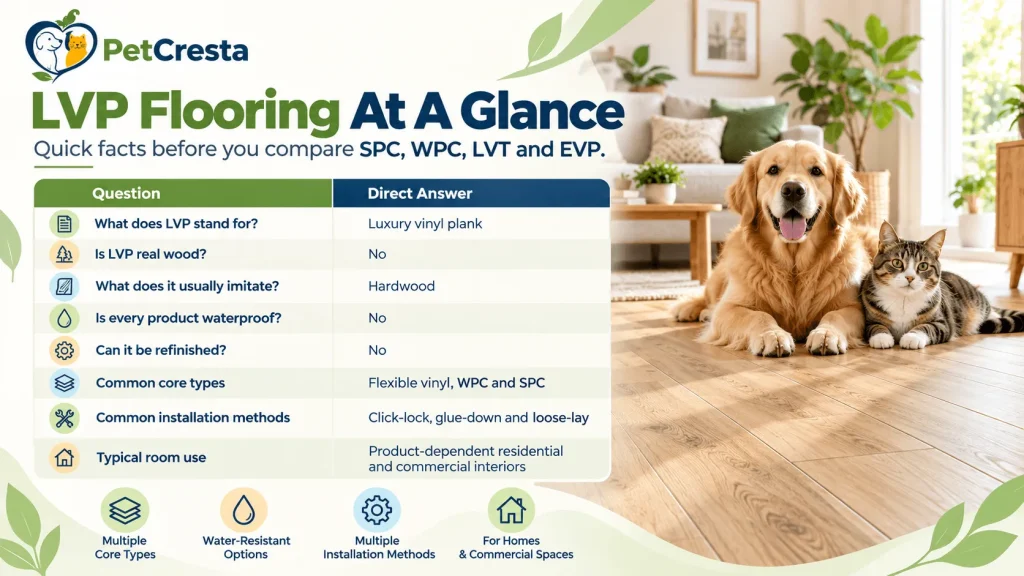
When SPC, WPC, LVT and EVP come into the mix, it can get complicated with product labels. Before you dive into the technical details, it’s important to have these quick facts as the foundation.
| Question | Direct Answer |
|---|---|
| What does LVP stand for? | Luxury vinyl plank |
| Is LVP real wood? | No |
| What does it usually imitate? | Hardwood |
| Is every product waterproof? | No |
| Can it be refinished? | No |
| Common core types | Flexible vinyl, WPC and SPC |
| Common installation methods | Click-lock, glue-down and loose-lay |
| Typical room use | Product-dependent residential and commercial interiors |
What Does LVP Stand For In Flooring?
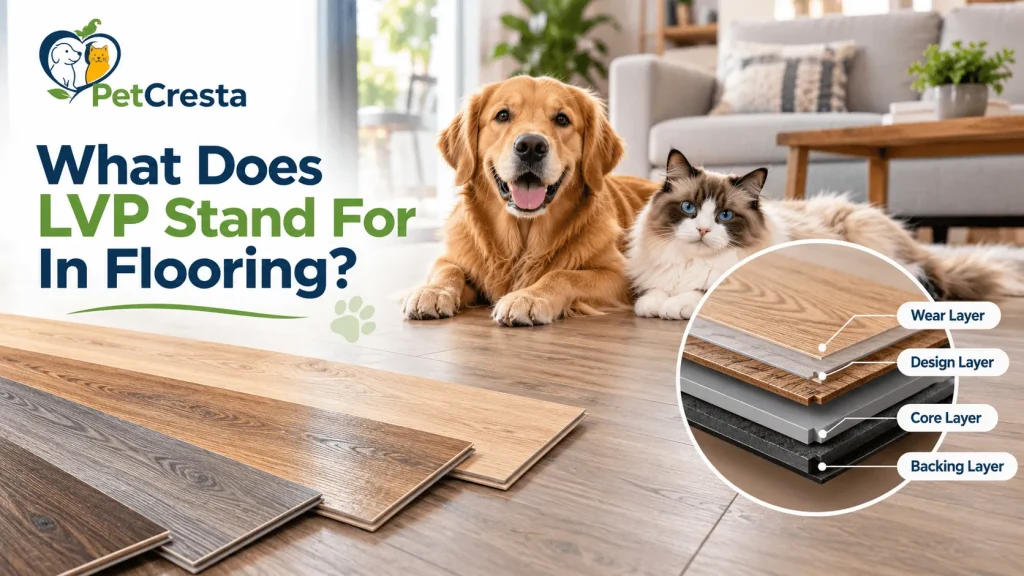
LVP refers to Luxury Vinyl Plank flooring. The long, board-like format is known as “plank. Luxury is usually a quality that has better printing, texture, construction, and finish than basic vinyl, but isn’t a quality grade that’s regulated.
Both low- and high price items can be labeled as LVP. The locking edges, surface protection, realism of the design, strength of the core, and the warranty might differ a lot.
LVP is a member of the resilient-flooring family. Unlike rigid surfaces like stone or ceramic tile, resilient materials give underfoot and are flexible. The Resilient Floor Covering Institute classifies flexible LVT and LVP as modular resilient flooring installed in both plank and tile options, either glue down, floating or loose-laid.
LVT Vs LVP Flooring
Typically, LVP is manufactured in long planks and mimics the look of wood. Typically, LVT is available in squares or rectangles and emulates stone, ceramic or concrete.
They both fall under the luxury vinyl category. They can be similar in shape, often the same printed design, as well as the same core, finish, wear layer and installation methods.
| Feature | LVP | LVT |
|---|---|---|
| Typical shape | Long plank | Square or rectangular tile |
| Common appearance | Wood | Stone or ceramic |
| Main material | Luxury vinyl | Luxury vinyl |
| Installation options | Floating, glue-down or loose-lay | Floating, glue-down or loose-lay |
| Performance | Product-dependent | Product-dependent |
Do not rely on the label alone. Check the technical sheet for core construction, wear layer, water rating, total thickness, and approved installation method.
Is LVP The Same As Vinyl Flooring?
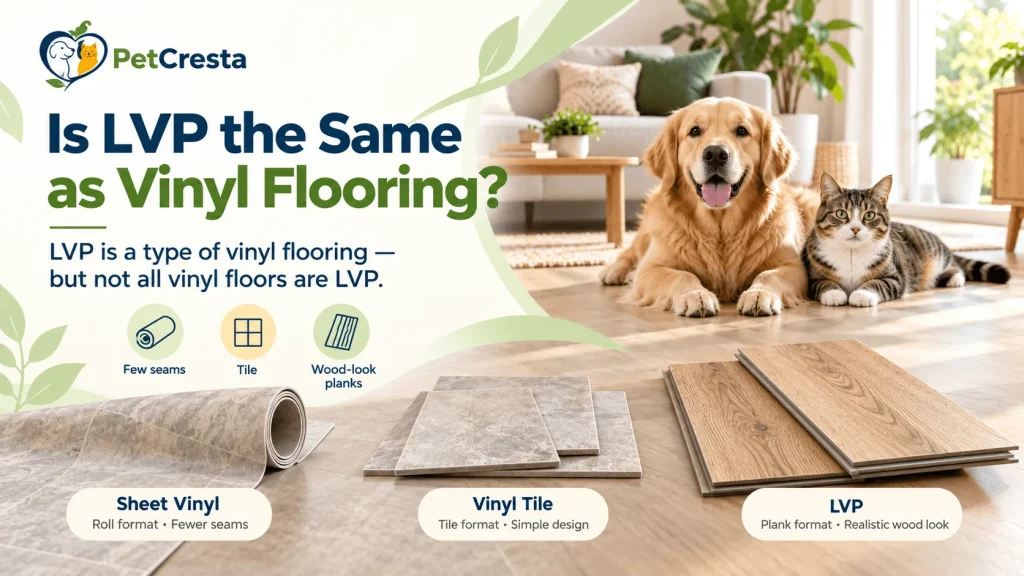
LVP is a type of vinyl floor; not all vinyl floors are LVP. Anything made of vinyl is ‘LVP’ – ‘like calling every dog a Labrador’. Different members of the same family.
Sheet vinyl is produced in big rolls and can be installed in a room with a minimal amount of seams. Typically, a standard vinyl tile is more likely to be simple in its construction and design. LVP is typically high on plank format, layered construction, realistic printing, surface texture and stronger finishes.
Sheet products might be better in applications where there are fewer desired seams. When it comes to looks or replacing a single piece, plank products typically come out on top.
Where Do SPC, WPC, Rigid Core, And EVP Fit?
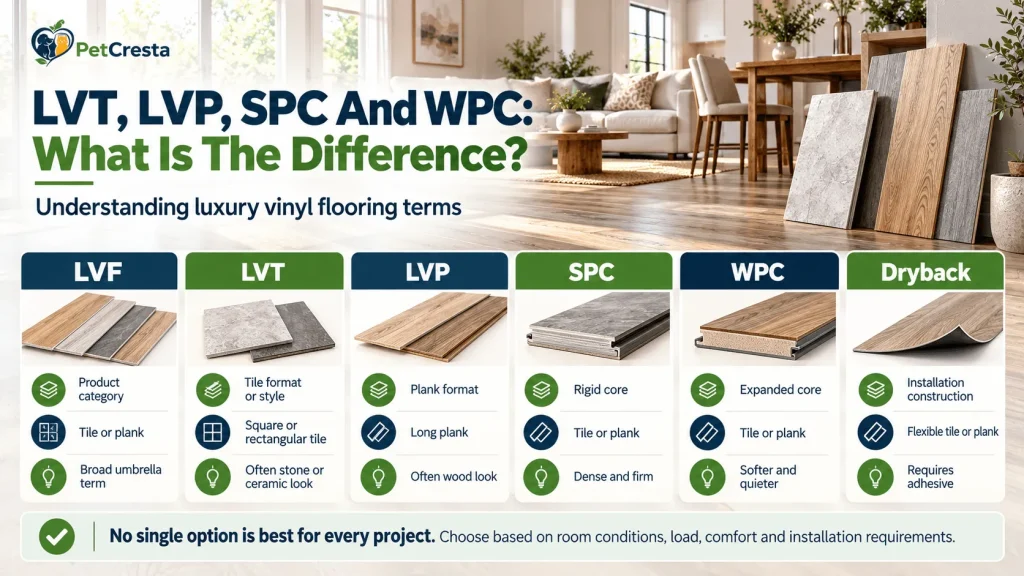
Rigid core is a very general term for construction types. It is available in two popular varieties: SPC and WPC.
Typically, SPC refers to stone-plastic composite or stone-polymer composite. The most common acronym for ‘WPC’ is ‘wood-plastic composite’ or ‘wood-polymer composite.’ Flexible LVP is not part of the Rigid-Core group.
EVP is typically engineered vinyl plank, although that terminology is not universal throughout the industry. Some vendors use it for rigid-core flooring overall.
Installation comes in a variety of forms, including click-lock, glue-down and loose-lay. They do not give you any idea of the composition of the core. It’s easier to compare products when construction and installation are separated.
What Is LVP Flooring Made Of?
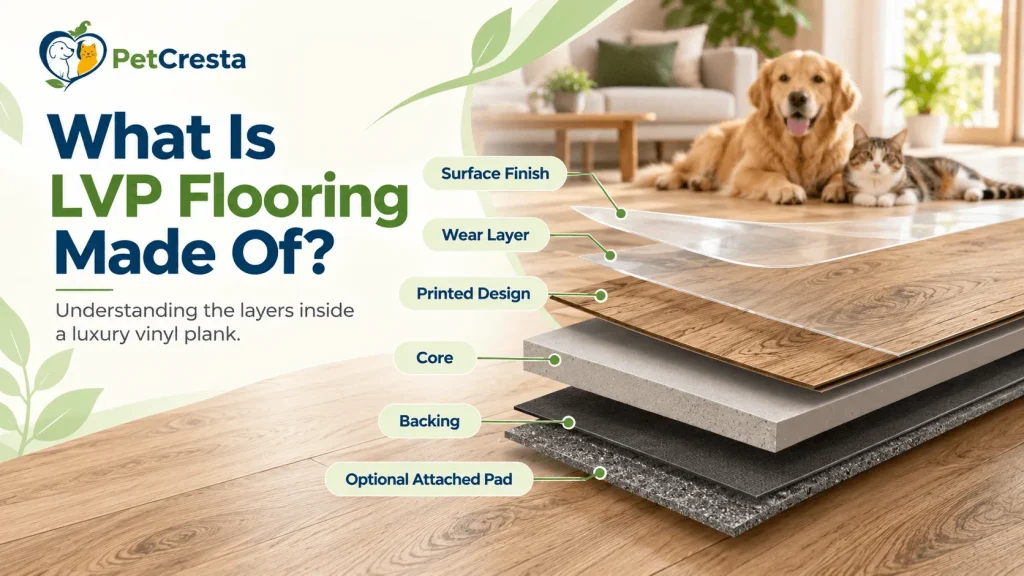
A standard LVP plank consists of multiple layers that are bonded together. Manufacturers might refer to the various layers differently or they may merge some of the layers, but typically, they include a surface finish, a wear layer, a printed design, the core, a backing, and an optional attached pad.
There are various roles that each part performs. They both influence how the floor appears and feels, its ability to take traffic, its moisture resistance and its performance on installation.
Enhanced printing and in-register design, and texture embossing, are key parts of the realism of today’s flexible LVT and LVP products, the RFCI states.
Surface Finish And Wear Layer
Surface finish is the initial protection of the floor against stains, scuffs and general wear and tear. Under it there is a transparent wear layer to protect the printed image.
Wear layers are measured in product sheets in the United States. A mil is equal to 1/1000 of an inch. The 20-mil layer is approximately 0.5 millimeter thick.
Note that Mil is not millimeters. The 20mm wear layer would be more like a paving slab than a normal finish.
More numbers may be helpful in a high-traffic area, but that doesn’t necessarily make the entire plank superior. Chemistry, core strength, edge design, quality of installation, and maintenance all have an impact on performance.
Design Layer, Embossing, And Pattern Repetition
The design layer is the layer that contains the image of the wood, stone or tile that is to be printed. High-quality products feature more detailed photos, even color variations and more photos of the individual planks.
Embossing adds texture. Standard embossing produces an overall wood-like effect, and embossed-in-register, or EIR, sets up embossed raised texture that matches the printed grain. A printed knot can thus seem like a knot, instead of a random bump.
Pattern repetition should be noted as well. Arrange some complete planks side by side and inspect for matching grain marks. Even a good-looking sample can make a big room sound artificial if it is repeated often.
Dark floors can show dirt, old pet hair and small scratches more clearly. Dark grit will stand out on very light surfaces. Sample before making a selection, both during the day and under your evening lights.
LVP Flooring Colors
LVP comes in white, grey, oak, light, blonde, maple, and other wood-inspired shades. Check samples in the room because lighting can change the undertone.
| LVP Color | Typical Look | Best For | Main Consideration |
|---|---|---|---|
| White LVP flooring | Whitewashed, pale oak, or bleached wood | Small or dark rooms | Can show dark dirt and marks |
| Grey LVP flooring | Silver, greige, or charcoal | Modern and neutral interiors | Dark grey may show dust and scratches |
| Oak LVP flooring | Natural, honey, white oak, or stained oak | Traditional and modern rooms | Pattern repetition varies by product |
| Light LVP flooring | Pale beige, ash, or light oak | Bright, open-looking spaces | May show gaps or dark debris |
| Blonde LVP flooring | Warm, pale wood tones | Scandinavian and relaxed interiors | Undertones may appear yellow in some lighting |
| Maple LVP flooring | Cream, honey, or light brown | Simple and clean interiors | Usually has less grain contrast |
Core And Backing Layers
The plank is mostly supported by the core. Flexible vinyl bends easily, SPC is dense and firm and WPC usually uses a lighter foamed core.
There is a backing layer below this. Several planks have an attached pad that enhances comfort, sound control or ease of installation.
Extra underlayment is not necessarily safe with attached padding. If the manufacturer doesn’t allow it, a second soft layer may allow too much movement and cause stress on the locking edges.
Wear Layer Vs Total Plank Thickness
Wear-layer thickness and total thickness describe different parts of the product. Mixing them up can make an average plank look more impressive than it really is.
| Measurement | What It Describes | What It Does Not Prove |
|---|---|---|
| Wear layer | Protective layer above the print | Overall plank strength |
| Total thickness | Full plank from top to bottom | Scratch resistance by itself |
| Core thickness | Structural body of the plank | Finish quality |
| Attached pad thickness | Backing or cushioning layer | Permission to add more underlayment |
A thick plank may feel substantial, but that thickness could come mostly from its core or pad. A thinner commercial glue-down product can still perform well when it has a suitable finish and is installed over a well-prepared substrate.
Types Of LVP Flooring
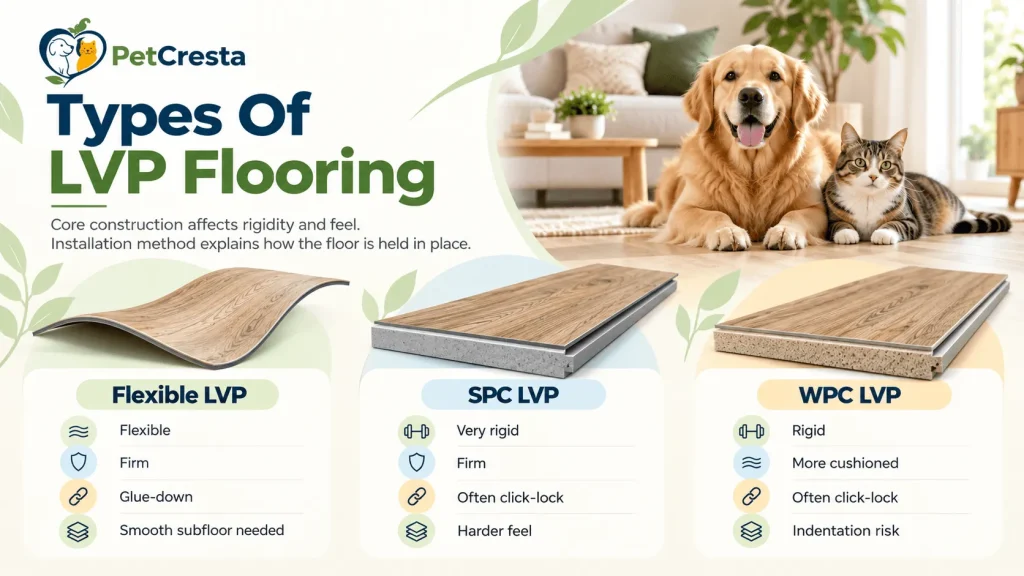
LVP can be classified by core construction and by installation method. Those two systems overlap, yet they answer different questions.
Core type affects rigidity and feel. Installation method explains how the floor is held in place.
| Type | Rigidity | Underfoot Feel | Common Installation | Main Consideration |
|---|---|---|---|---|
| Flexible LVP | Flexible | Firm | Glue-down | Subfloor smoothness |
| SPC LVP | Very rigid | Firm | Often click-lock | Harder feel |
| WPC LVP | Rigid | More cushioned | Often click-lock | Indentation risk |
What Is Flexible LVP?
Flexible LVP is made with a bendable vinyl core and typically is thinner than rigid-core flooring. It may be glued directly to the prepared subfloor.
This building process may be suitable for extensive spaces and commercial interior spaces. Its compact design also proves beneficial in areas where low ceiling clearance is required.
Due to its ability to closely follow the surface over which it is placed, poor preparation will reveal itself. After installation, the old adhesive ridges, deep grout lines, bumps or dips might be visible.
What Is SPC LVP Flooring?
SPC uses a rigid core that is dense. It is normally firm to the touch and does not indent easily.
That solidity can be appropriate for entrances, kitchens, rental properties, and hectic family rooms. However, surface wear is dependent on the surface finish; the strength of the joint is dependent on the locking system.
No leveling up will even out an uneven floor with a rigid plank. There may be areas that flex, click or put pressure on the joints.
What Is WPC LVP Flooring?
The interior of WPC is typically foamed, lighter than regular wood. Has a more plush feel than SPC and is often warmer.
This luxurious softness could be ideal for bedrooms and living rooms. Other products offer some level of sound reduction as well, but not all products offer the same level of acoustical performance; sound reduction should be checked by tested ratings, not by simple thickness.
Indents can be caused by narrow legs on furniture and concentrated loads on appliances. The wide protectors distribute weight.
What Are Click-Lock, Glue-Down, And Loose-Lay LVP?
Normally floating on the substrate, planks connect to each other at the edge. Glued down flooring requires adhesive to be applied to prepared surfaces.
Loose-lay products are based on weight, backing friction and sometimes on perimeter fixation. Depending on room size and traffic.
RFCI notes that there are three basic methods of installation for flexible LVT and LVP: dry-back or glue-down, floating, and loose-lay.
LVP Flooring Pros And Cons
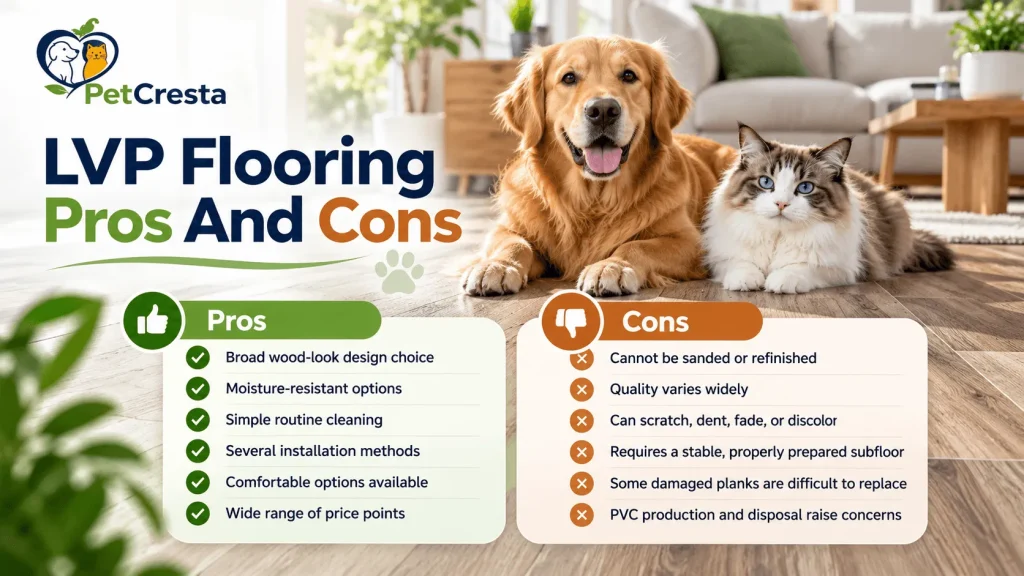
LVP comes with many designs, is moisture rated, and is available in a variety of installation systems. While these benefits make it feasible, it does have its limitations that need to be considered before buying.
A list of sales statements is not as helpful as a balanced comparison.
| Benefits | Drawbacks |
|---|---|
| Broad wood-look design choice | Cannot be sanded or refinished |
| Moisture-resistant options | Quality varies widely |
| Simple routine cleaning | Can scratch, dent, fade, or discolor |
| Several installation methods | Requires a stable, properly prepared subfloor |
| Comfortable options available | Some damaged planks are difficult to replace |
| Wide range of price points | PVC production and disposal raise concerns |
Benefits Of LVP Flooring
Today, modern LVP can be reproduced to create light oak, walnut, rustic hickory and other wood styles. Texture, matte finishes, beveled edges and wider planks can enhance realism.
Ordinary spills are more palatable in many collections than are natural hardwood. Generally, routine care is simple, and click-lock products might be ideal for qualified Do-It-Yourselfers.
Generally, LVP is less hard and warmer than ceramic tile. Depending on the room and subfloor, WPC and padded products might be quieter, too.
In some systems, individual replacement of planks is possible. There are collection options for shops, offices, rental homes and other bustling interiors.
Disadvantages Of LVP Flooring
LVP is not sanded or refinished. With serious damage, the plank will most likely need to be replaced.
The surface may be scratched by grit. Some furniture can cause dents; strong sunlight can cause fading of some designs or movement of products with low temperature tolerance.
When a plank is floating in the middle of a room, it may be necessary to remove some of the flooring to repair the plank. Matching replacements could become problematic when a collection is discontinued.
Smooth surfaces may also be slippery when wet. The textured appearance is not a guarantee of tested slip resistance, so check product test data for commercial projects and projects involving accessibility.
Is LVP Flooring Waterproof?
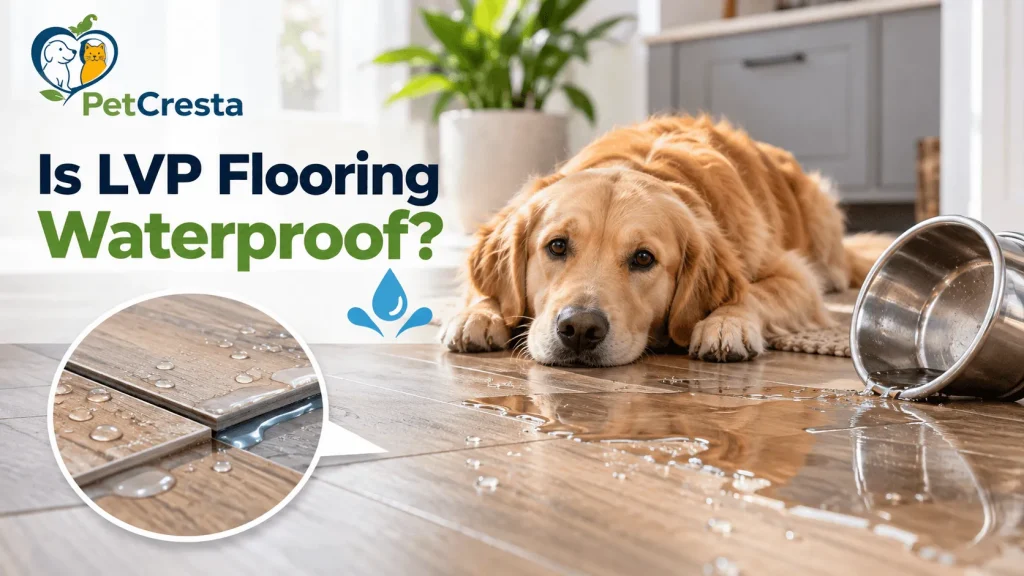
Not all LVP collections have the same water rating and some have waterproof cores. Moisture can seep through seams, edges, transitions and gaps in the planks or between the planks and the room, even when the planks are described as waterproof.
See if the manufacturer specifies the words ‘water resistant,’ ‘waterproof,’ or a term similar to those used to define them. After reading the warranty, you will know what the claim is.
Waterproof Material Vs Waterproof Installation
A waterproof core can be stable even if it comes in direct contact with water. That is an indication of the nature of the plank itself.
Included in the installed floor are joints, perimeter spaces, trims, transitions and penetrations. Those areas can permit moisture to get to the substrate.
Now suppose you had a hose that broke in your dishwasher overnight. Now suppose you had a dishwasher hose that broke overnight. The plank can last out as the water moves under the plank and impacts the pad, subfloor, cabinets, trim, or drywall.
Words that are waterproof can be comforting, but should not be used in place of correct installation or leak prevention.
What Happens If Water Gets Under LVP?
Under a floating floor, there could be moisture that is not detected. Nearby walls, trim, wood subfloors and the underlayment and adhesive may remain damp.
If any of these signs persist, it should be looked at: odor, squishing sounds, lifted edges, discoloration or water coming out at seams. The leak or moisture source should be repaired before restoring the floor.
It’s a different situation when the water is clean from a small spill, as opposed to contaminated floodwater or a drain backup. When water is found to have spread a considerable distance, is present in walls, or contains contamination, then it is wise to hire a professional to assess the situation.
Where Can LVP Flooring Be Used?
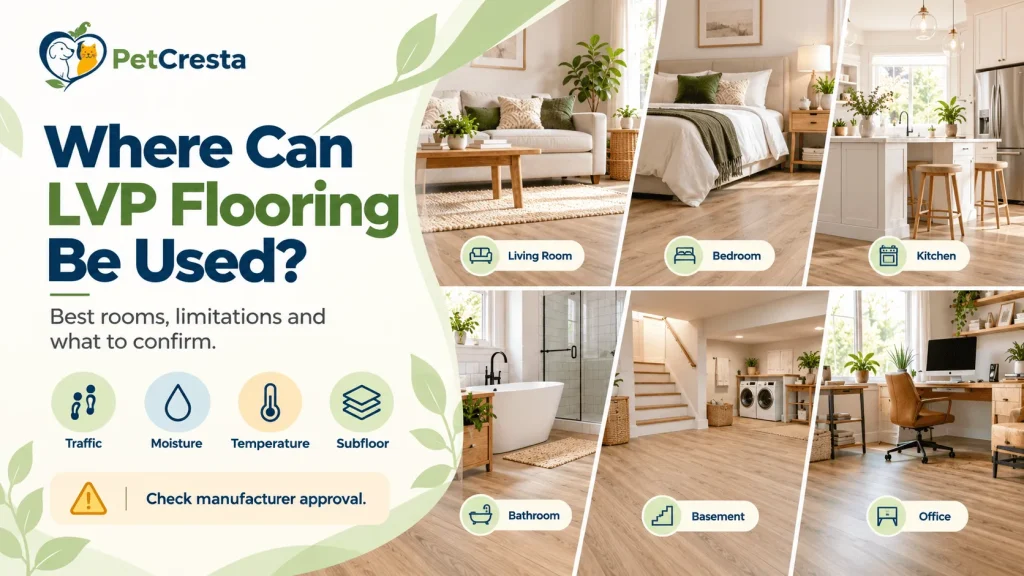
LVP is often used in areas such as living rooms, bedrooms, kitchens, bathrooms, basements, offices, retail spaces, and other areas. Depending on the product used, room conditions, traffic, moisture, temperature and substrate will determine suitability.
Don’t settle for a showroom commitment; get written approval from the manufacturer!
| Area | General Suitability | What To Confirm |
|---|---|---|
| Living room | Commonly suitable | Traffic, sunlight, furniture |
| LVP flooring for Bedroom | Commonly suitable | Comfort and sound |
| LVP flooring for kitchen | Usually suitable | Spill rating and appliance placement |
| LVP flooring for Bathroom | Product-dependent | Wet-area approval and edge details |
| Basement | Often suitable | Concrete moisture and vapor control |
| Laundry room | Product-dependent | Leak exposure |
| Stairs | Product-dependent | Compatible nosing and adhesive |
| Commercial area | Product-dependent | Wear rating and commercial warranty |
| Sunroom | Frequently restricted | Temperature and UV exposure |
| Heated LVP flooring | Product-dependent | Temperature limits and written approval |
Is LVP Suitable For Kitchens, Bathrooms, And Basements?
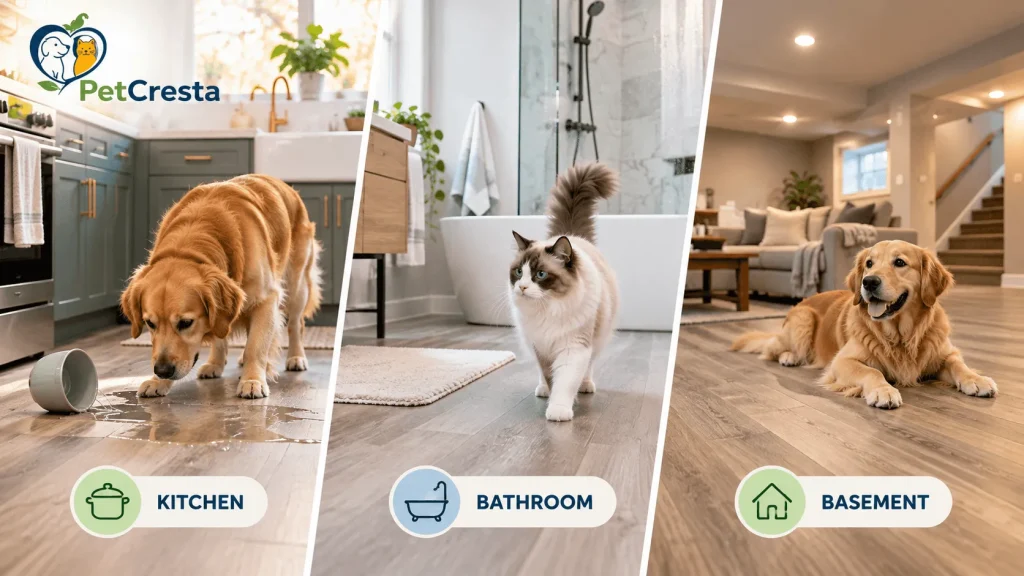
As standard spills can be easily cleaned up, LVP flooring for kitchens is a popular spot. Planning is required for appliance leaks, heavy cabinetry and floating-floor movement.
Products that are rated for use in bathrooms are good for use outside of showers. It should not be used in place of waterproof systems that must be used inside an enclosure of a shower or wet room.
The conditions of the slab can greatly affect basement installations. Testing and vapor control requirements should be considered prior to installation because concrete may look dry but moisture can still be released.
Similar concerns come to mind when considering laundry rooms. A splash can be dealt with. A leaky washing machine is a whole other story.
Can LVP Be Installed Over Radiant Heating?
The use of radiant heating is permitted with some LVP products; others are not. The technical data sheet should verify and confirm compatibility and maximum allowable surface temperature.
Care should be taken in increments when increasing and decreasing heat. Flooring materials and joints might be under stress when there is a sudden change.
There are also requirements for the heating system to match the underlayment. Thick rugs will hold heat, so all of the above must be followed.
Is LVP Good For Pets And Busy Homes?
The many finishes that are resistant to the average staining and wear make LVP practical in an active household. Small marks can be easily hidden on matte or lightly textured surfaces, whereas glossy surfaces will reveal them more clearly.
But weaker coatings can still be scratched with claws. Promptly clean up pet accidents and make sure to use compatible rug pads to prevent discoloration.
Traction varies. When stability is important, older dogs may find the slippery surface to be a problem; physical samples and/or slip information are helpful.
Where Should LVP Not Be Installed?
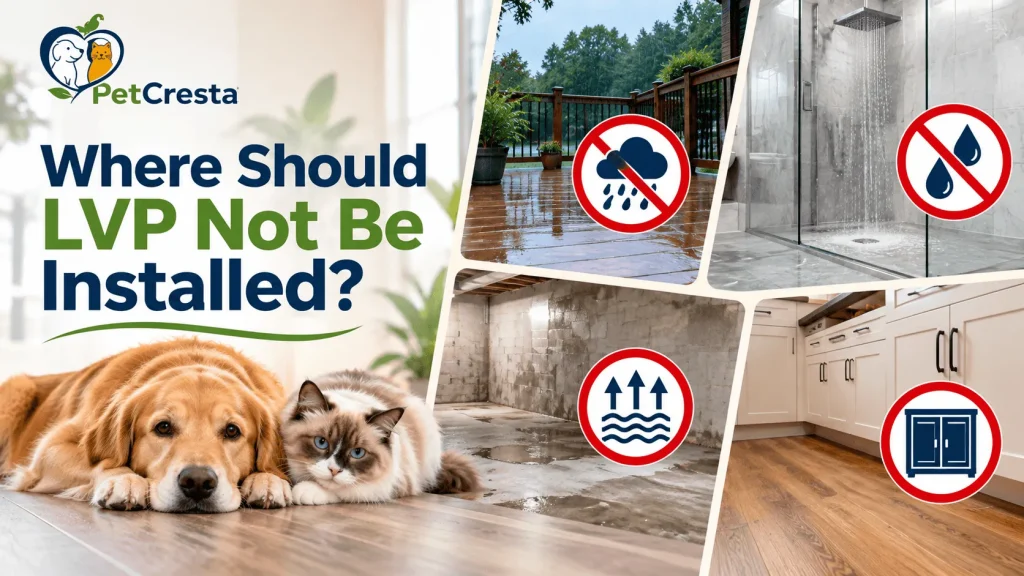
The vast majority of LVP is designed to be used in an indoor, climate-controlled setting. Typically, exterior patios, open porches and unconditioned buildings are not part of product approvals.
Unless specially heated, standard planks are not a good choice for shower floors. Areas with persistently wet slabs, leafy spaces with significant wetness issues and spaces exposed to high temperatures or direct sun can also cause problems.
Unless otherwise advised, don’t trap a floating floor under fixed cabinetry. When expansion is not possible, the floor will tell you all about it.
How Much Does LVP Flooring Cost?
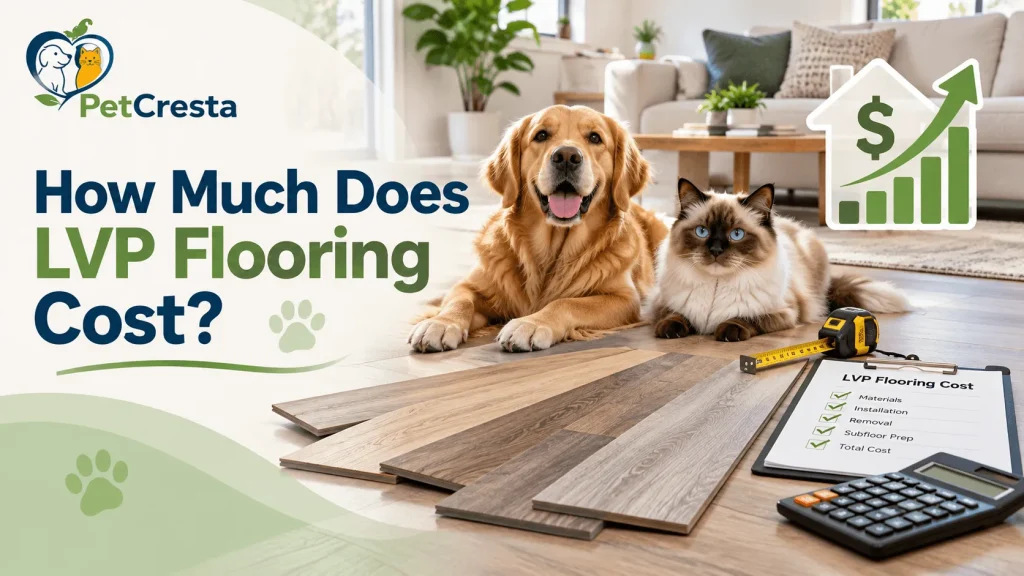
Today, the cost of LVP materials is estimated to be approximately $2 – $10 per square foot, and professional labor is typically $2 – $6 per square foot. Typical installed projects are therefore in the range of $4 to $16 per square foot, and can be more expensive depending on the materials used, or on the challenges of the layout, stairs, removal, or major substrate work. Please note that these figures are valid as of August 2026 and should only be used as estimates and not as quotes.
| Cost Category | Typical US Range | What Changes The Price |
|---|---|---|
| Material only | $2–$10 per sq. ft. | Brand, core, wear layer, design |
| Basic professional installation | $2–$6 per sq. ft. | Region and installation system |
| Total installed project | $4–$16 per sq. ft. | Preparation, removal, trims, layout |
| Existing-floor removal | Project-dependent | Material and disposal rules |
| Subfloor repair or leveling | Project-dependent | Condition and required work |
Angi’s 2026 data also shows broad material pricing for luxury vinyl products and notes that repairs, removal, transitions, room size, and local labor can alter the final bill.
Material Cost Vs LVP Install Cost
The price printed on the box covers only the flooring. A finished project may require several other materials and services.
| Cost Item | What It May Include |
|---|---|
| Flooring | Planks and expected waste |
| Underlayment | Separate pad when required |
| Adhesive | Glue approved for the product and substrate |
| Preparation | Leveling, patching, cleaning, or moisture treatment |
| Removal | Existing flooring and disposal |
| Trim | Baseboards, quarter-round, transitions, and stair parts |
| Labor | Layout, cutting, fitting, and finishing |
Ask whether estimates include delivery, tax, waste, transitions, baseboard work, furniture moving, and disposal. Two similar-looking quotes may cover very different scopes.
What Increases LVP Installation Cost?
Rooms that have islands, angled walls, closets, or many doorways will require more cuts and fitting. Herringbone, chevron and diagonal layouts add labor and waste.
Stairs can be more expensive due to matching of nosings, careful adhesion and fitting each stair individually. Minimal service charges may be applicable to small projects.
These include moisture treatment, leveling of floors, moving of furniture, removing and discarding old floors and trimming doors. It can be significantly more expensive to match the stair parts than it is to match flat planks.
Is Cheap LVP Worth Buying?
When appropriate to the room and specifications are clearly established, Affordable LVP can be effective. The low price doesn’t necessarily mean low quality.
Check at edges; join together some sample planks and see if the seams lay flat. Check the finish, pattern repeat, warranty, certification, installation instructions, and replacement options.
Weak locking joints can make the cheapest box the most expensive item to install when it comes time to replace the floor. Purchase extra planks when they are still selling them in that color.
How Long Does LVP Flooring Last?
The life span of LVP varies. The service life is related to the construction, finish quality, traffic, installation, moisture, sunlight, furniture loads, and care.
A quiet bedroom won’t cause as much stress on flooring as a sandy entrance for kids, pets and delivery drivers. It’s the same plank, but it can be very different in those two places.
The life of a warranty may be a few years or decades, but it is not a guaranteed life. Actual coverage is subject to the limits of the warranty.
Warranty Length Vs Expected Lifespan
A warranty is a guarantee of performance or defectiveness that is expressed under certain conditions. It does not guarantee that the floor will be scratch-, dent-, stain-, and color change-free.
The price in residential and commercial terms can vary. Other factors that can impact coverage include direct sunlight, moisture under the floor, rolling chairs, and approved maintenance.
Before buying, ask:
- Is labor covered?
- Does waterproof coverage include anything beneath the plank?
- Are rental properties included?
- Are pets or rolling chairs excluded?
- Can the warranty transfer to a new owner?
- What happens if the color is discontinued?
Read the exclusions with the same attention you give the headline term. The large number on the front page is only part of the story.
How Is LVP Flooring Installed?
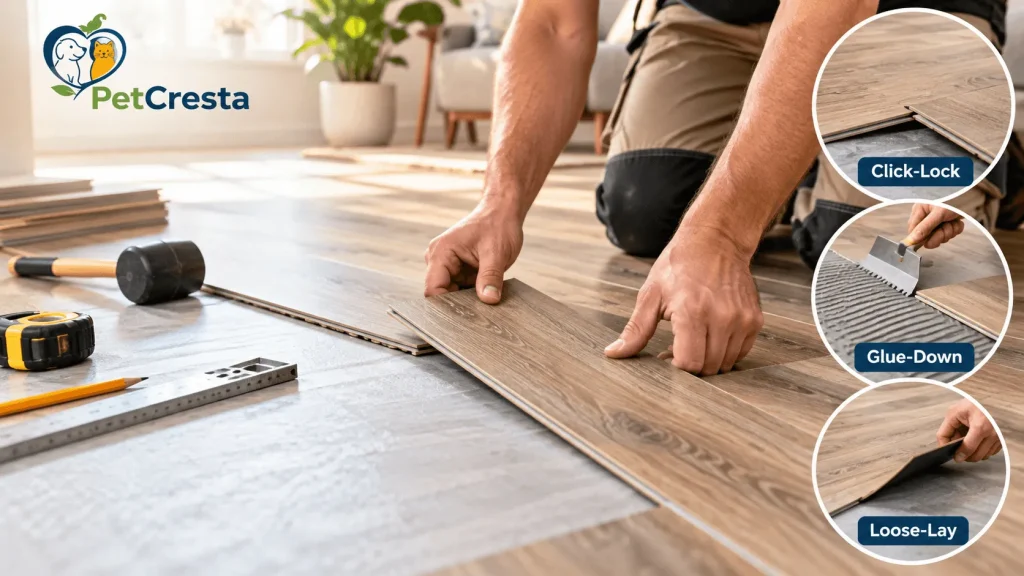
LVP can be installed as a floating click lock floor, glued down with adhesive or as a loose-lay system. The proper procedure is determined by the product design.
The work starts in advance of the first board being cut. Space dimensions, space layout, substrate condition, temperature, moisture, doorways and transitions must be addressed.
Use a specific guide to installing LVP flooring for detailed cutting, staggering and layout.
How Does Floating Click-Lock LVP Work?
Click-lock planks connect to each other along ends and sides. The finished surface is routinely placed on top of the substrate and not glued down.
A space is left for movement around walls, columns and fixed objects. Trim conceals does not sink the floor.
When installed over a ‘floating’ built-in, heavy built-ins can limit movement. Locking profiles may also become damaged or weak and fail to hold when stressed.
How Is Glue-Down Or Loose-Lay LVP Installed?
Glue down LVP flooring is attached to a smooth, prepared substrate. The procedure of application (adhesive, trowel, working time, moisture limit, and rolling) should be the same as the product instructions.
Loose lay planks are weighted and have a high friction backing. Perimeter fixation may still be necessary in larger areas or if there is heavy traffic.
One plank of a glued-down floor can be lifted without removing the whole room to make local repairs. These are also indicators of inadequate substrate preparation.
What Subfloor Preparation Does LVP Need?
Substrate should be clean, dry, stable and flat within tolerance of the flooring manufacturer. The finished floor can be disturbed by dust, loose material, ridges, dips and high spots.
Moisture testing or vapor control might be necessary for the concrete. Grout lines may need to be filled in and wood subfloors may need repair for movement or squeaks.
Rigid-core flooring can disguise very minor imperfections, but it doesn’t correct an actual uneven surface. An additional check of floor height should be conducted at doors, stairs, appliances and adjoining rooms.
Does LVP Flooring Need Underlayment?
Certain products need particular underlayment. Some collections have an attached pad, and some collections don’t allow an additional layer.
If there is excessive cushioning, it may allow the joints to flex beyond design. It is not so helpful to get a soft install on day one if it starts failing later on in the day.
Often the vapor barrier and acoustic underlayment are different products. Tested sound ratings may also be necessary for apartments and condominiums.
Should LVP Be Installed Professionally?
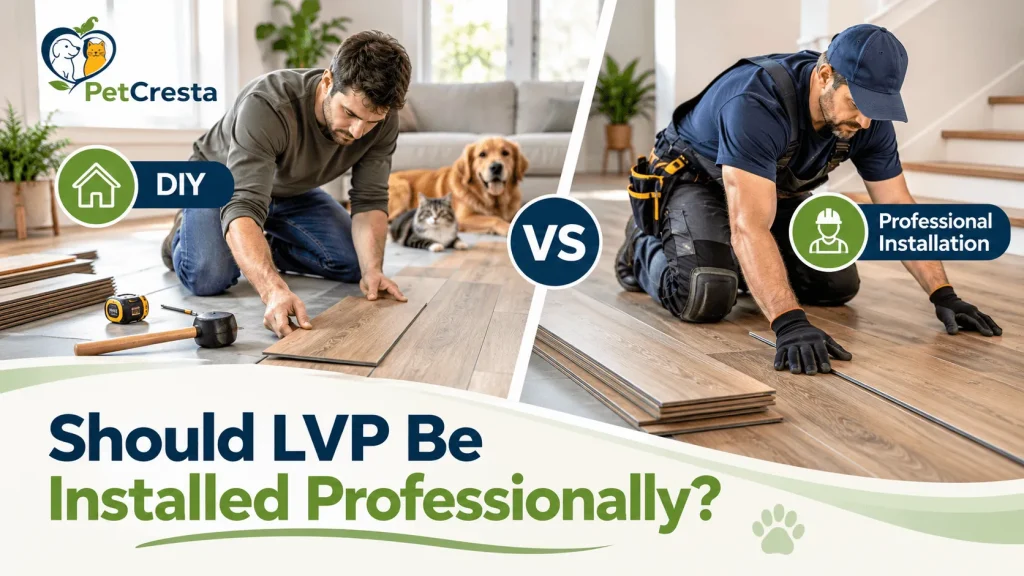
A skilled DIYer may handle a simple rectangular room with a flat substrate and straightforward click-lock system. More demanding work carries a higher risk of expensive mistakes.
| Project Condition | DIY May Be Reasonable | Professional Help Is Safer |
|---|---|---|
| Simple rectangular room | Yes, with suitable skills | Optional |
| Uneven subfloor | No | Yes |
| Glue-down installation | Possible for experienced installers | Usually |
| Stairs | Difficult | Recommended |
| Moisture-prone concrete | No without proper testing | Recommended |
| Herringbone or chevron | Difficult | Recommended |
| Commercial project | Rarely | Yes |
Professional help is particularly useful for stairs, moisture-prone slabs, patterned layouts, extensive leveling, and commercial installations. Warranty requirements may also specify approved procedures or documentation.
How To Clean And Repair LVP Flooring?
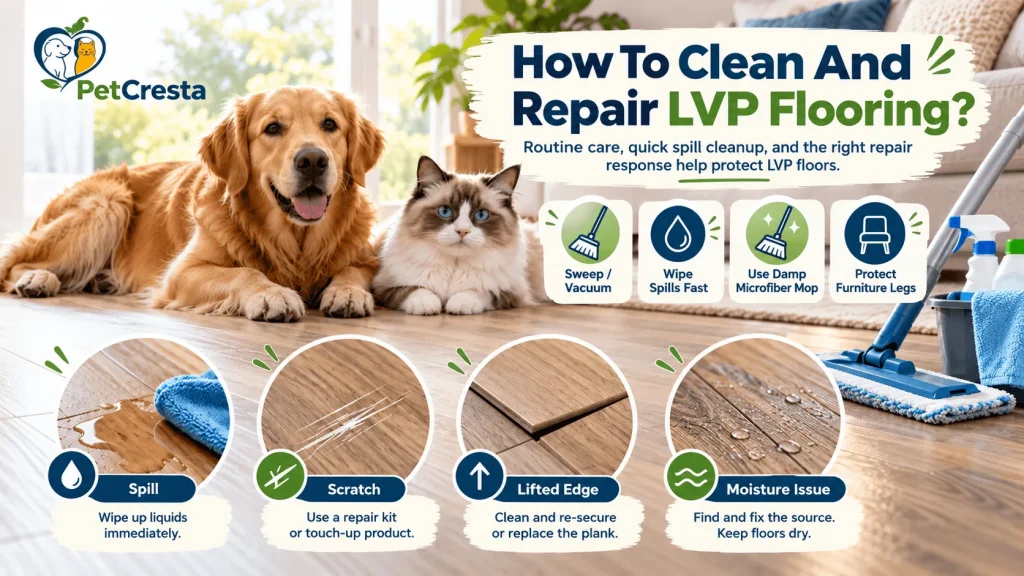
Often, routine maintenance is easily handled. Many common problems can be avoided by regularly removing the grit and cleaning up spills promptly.
Damage should be detected prior to treatment. Each of these surface marks (deep gouge, broken joint, lifted edge and moisture issue) requires a different response.
For more detailed instructions, please refer to LVP Floor Cleaning Guidelines and Guidelines for Repairing Damaged LVP.
What Is The Best Way To Clean LVP Flooring?
Sweep or vacuum with a hard floor setting, but not by beating the floor. Shoes and furniture can leave grit under them that can act as sandpaper.
Clean with a moisture-wet microfiber mop and a cleaner that is suitable for the product. Immediately dry up spills; don’t let liquids sit at seams.
Do not use abrasive pads, strong chemicals, or unapproved waxes and polishes that may damage the finish. The cost, effectiveness, and ease of use of the vinyl care products and methods Shaw currently recommends include regular removal of grime, quick cleanup of spills, neutral-pH cleaner, appropriate mats, and large furniture protectors.
Can You Steam-Clean LVP Flooring?
Steam cleaning may be limited due to the effects of heat and moisture on the finish or joints, or on the adhesive or core. It can also result in a warranty issue if it is not intended.
Only use steam when the exact flooring manufacturer gives written permission. The general rule is to use a damp microfiber mop.
Shaw’s care instructions for resilient vinyl specifically state that steam is not recommended due to its possible impact on vinyl and adhesive bonds.
Can Scratched Or Damaged LVP Be Repaired?
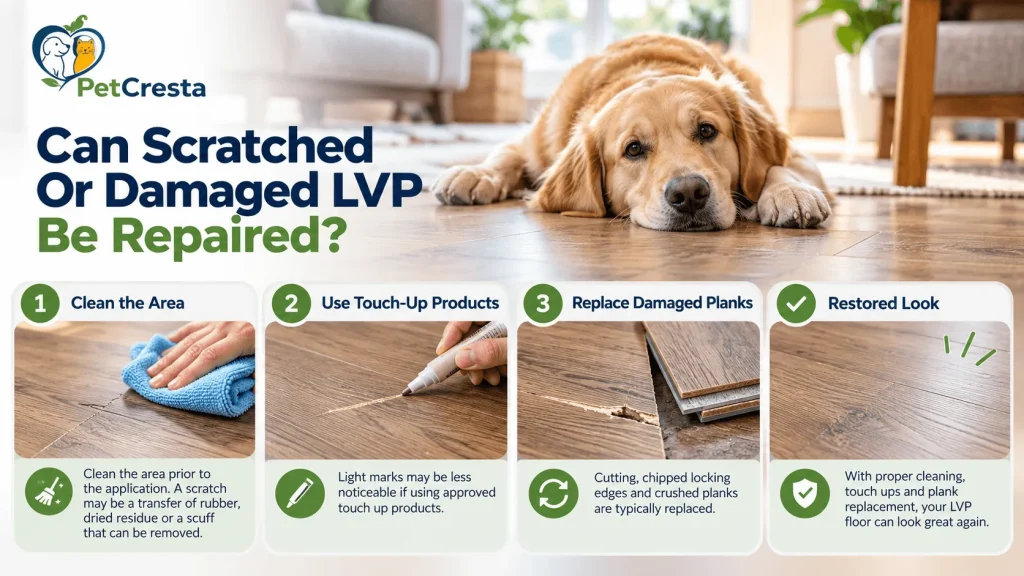
Clean the area prior to the application. A scratch may be a transfer of rubber, dried residue or a scuff that can be removed.
Light marks may be less noticeable if using approved touch up products. The cutting, chipped locking edges and crushed planks are typically replaced.
Which Rugs And Furniture Protectors Are Safe For LVP?
Select rug pads that are stated to be compatible with vinyl flooring. A few types of rubber, latex or dyed backing can interact with the surface, creating color discoloration.
Scratch Pad Under Furniture to prevent furniture from scratching. Under heavy pieces that have narrow legs, use wide load-bearing protectors.
Chair mats should also be suitable for vinyl. While entry mats can help minimize grit, they still must be compatible with the rest of the rug, just as other rugs do. For heavy items, Shaw recommends non-rubber and non-latex mat backings and wide floor protectors.
Is LVP Flooring Safe For Indoor Air And The Environment?
PVC is commonly found in LVP, as well as other formulation materials such as stabilizers and pigments. Emissions and material characteristics differ among manufacturers and collections.
No category name can tell you if one product suits your priorities for indoor air. Technical disclosures and independent certification provide more helpful evidence.
What Should Buyers Know About VOCs And Certifications?
Volatile Organic Compounds (VOCs) – These are chemicals that may be emitted from some materials and products as gases. They can be from either flooring or installation adhesives.
A hard surface flooring, adhesives, and underlayment indoor-air certification program. Products that are certified are tested in approved testing laboratories and must be re-tested on an ongoing basis, SCS states.
What is also included in the UL GREENGUARD evaluation are the chemical emissions of product groups that contain flooring and building materials. Manufacturers of certified products continue to be subjected to the program’s manufacturing review and routine testing.
Certification does not mean:
- The product contains no chemicals
- Every sensitive person will tolerate it
- The floor is durable
- An uncertified product is automatically unsafe
Check that the certificate matches the exact product and collection. Adhesives should be reviewed separately.
EPA guidance recommends ventilation and following product-label precautions when working with materials that emit VOCs.
What Are The Environmental Concerns With LVP?
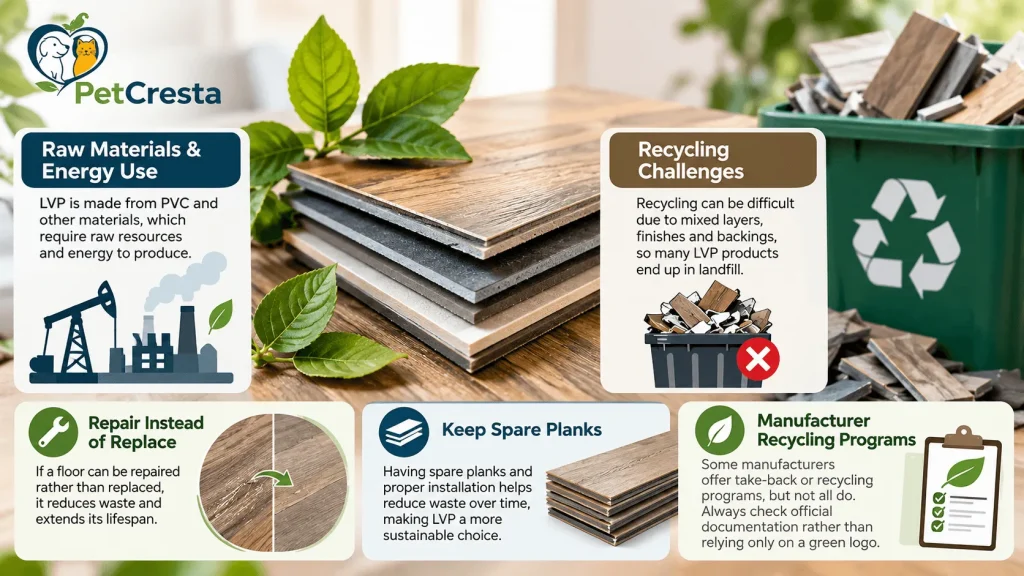
Raw materials and energy are used for the production of PVC. Recycling can be difficult at the end of life due to mixed layers, finishes and backings.
If a floor can be repaired, rather than replaced, it can lead to less waste. Therefore, availability of spare planks and correct installation is not only a financial value, but also an environmental value.
Collective or recycling programmes are available by some manufacturers, but not all. An environmental benefit should not be as a result of a green logo on the box but rather be backed up by existing product documentation.
How Does LVP Compare With Other Flooring?
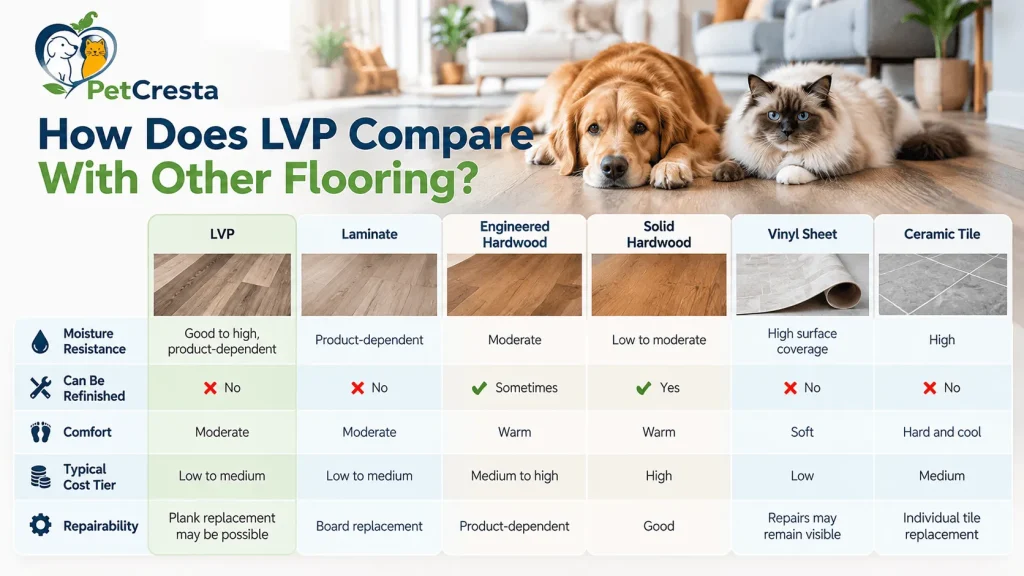
There is no one flooring type that suits every house. Moisture, cost, comfort, reparability, natural materials and expected use are all factors.
The table below contrasts the general classifications. Individual products may deviate from these overall trends.
| Flooring Type | Moisture Resistance | Can Be Refinished | Comfort | Typical Cost Tier | Repairability |
|---|---|---|---|---|---|
| LVP | Good to high, product-dependent | No | Moderate | Low to medium | Plank replacement may be possible |
| LVP flooring vs Laminate | Product-dependent | No | Moderate | Low to medium | Board replacement |
| LVP flooring vs Engineered hardwood | Moderate | Sometimes | Warm | Medium to high | Product-dependent |
| Solid hardwood | Low to moderate | Yes | Warm | High | Good |
| LVP flooring vs vinyl sheet | High surface coverage | No | Soft | Low | Repairs may remain visible |
| Ceramic tile | High | No | Hard and cool | Medium | Individual tile replacement |
LVP Flooring Vs Laminate
The inner layer of LVP is typically vinyl or composite vinyl. Most of the time, laminate will have a core of wood fiber, and then have a printed design and protective surface.
In moist environments, LVP may have some benefits, but water-resistant laminate products have become more effective. Assumptions about either product category are less important than product ratings.
Laminate can offer a hard surface and give the look of wood. Depending on the core and backing used, LVP is more waterproof rated and can sound quieter than carpet.
Both materials cannot be refinished like hardwood. Boards or planks that are damaged should be replaced.
LVP Flooring Vs Hardwood And Engineered Hardwood
Solid hardwood is solid wood and can often be sanded multiple times. Engineered hardwood features a real wood veneer with a multi-layered core.
LVP is a replica of wood by printing. Costs less and is more tolerant to everyday moisture, but cannot be aged, patinated, or renewed in the same manner.
Hardwood might have a longer service life, premium property value additions, and be more refinable. Engineered wood can be more dimensionally stable than solid wood, and maintain a real wood surface.
This will vary depending on the most important feature—moisture performance, natural material, reparability, cost, or resale value.
LVP Flooring Vs Tile And Sheet Vinyl
Ceramic and porcelain tile have a low absorbency to surface water and will perform well for radiant water heating systems. They are harder, cooler, and an additional maintenance chore.
LVP is warmer and quieter. Installation can also be quicker, particularly for the click-lock products.
Sheet vinyl has fewer seams as it comes in big rolls. This can be beneficial in areas of rooms that are moist.
A plank LVP is generally more convincing and is more readily replaceable in the area. When seaming and cost are paramount, then sheet vinyl may be the best choice.
How Do You Choose High-Quality LVP Flooring?
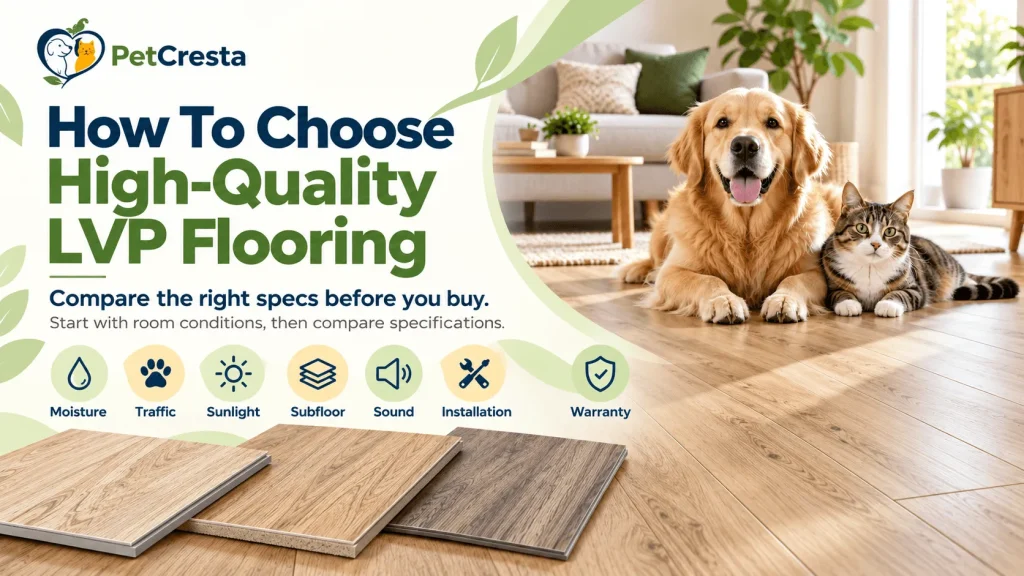
Begin with the room conditions and then move on to specifications. Colour is important but not a technical solution.
Before you’re in love with a specific oak, here are a few other factors to consider in narrowing down your list. Before you fall for a specific shade of oak, there are a few other factors that should narrow down your list: moisture, traffic, sunlight, substrate requirements, sound requirements, installation method, and warranty.
Choose The Core Type For The Room
Flexible glue-down LVP is suitable for large-scale installations, commercial interior applications and projects that demand a low profile. Requires an even and stable substrate.
SPC can be used in areas where firmness and dent resistance are important. In cases where cushioning and warmth are more important, WPC can be used.
Commercial spaces should use commercial approved products. The technical compatibility of radiant-heated rooms must be clearly stated.
Evaluate The Wear Layer, Finish, And Total Thickness
While wear-layer thickness can help compare products, other factors such as finish quality, intended traffic, locking strength, and warranty should also be taken into account.
| Use Case | What To Compare | What Else Matters |
|---|---|---|
| Low-traffic residential room | Residential-rated wear layer | Finish, warranty, joint quality |
| Busy household | Higher residential specification | Pets, grit, furniture loads |
| Light commercial space | Written commercial rating | Traffic type and cleaning |
| Heavy commercial use | Project-specific specification | Tested performance and warranty |
Numerous stronger residential and light-commercial products have a 20-mil wear layer, although this is not a standard requirement. If joints are poor or inadequate, a large number can not make up for it.
The overall thickness also impacts floor height, transition planning, and the look and feel of the final floor.
Check The Locking System, Edges, And Underlayment
Look at a whole sample instead of a small sample chip. Check for cracked, worn, or brittle locking edges.
Glue multiple planks together and inspect to see if seams lie flat. Loose movement or if the height varies, it could indicate milling or joint problems.
Check for matching trims, transitions and stair parts. Check the rules for the attached pad and underlayment before purchasing additional materials.
Judge Design Realism And Pattern Repetition
Place a number of full planks side by side. Check for repeated knots, matching grain lines, abrupt changes in color and mismatching print.
EIR can enhance realism. Bevelled edges can enhance the plank effect but deeper grooves can trap more dirt.
Look at samples in the daylight and under artificial light. In a showroom, a warm gray may appear very blue in the light of the house bulbs.
Read The Warranty And Certification Documents
Check for limitations such as direct sun, moisture, rolling chairs, pets, temperature and cleaning materials.
Waterproof wording should be carefully reviewed. Plank stability coverage may be provided, but coverage for the substrate, labor, mold, flooding or appliance leaks is excluded.
The documents that were collected should appear in the certification records. Be sure to find out if there are costs for labor, removal, shipping and replacements.
Use A Sample-Evaluation Checklist
A simple worksheet makes several similar-looking products easier to compare. Record the same information for each option.
| Item | Details To Record |
|---|---|
| Product and collection | Exact name and model |
| Core type | Flexible vinyl, SPC, WPC, or other |
| Installation system | Click-lock, glue-down, or loose-lay |
| Wear layer | Stated mil or millimeter measurement |
| Total thickness | Full plank thickness |
| Finish | Surface coating and texture |
| Pattern repetition | Number of distinct plank visuals |
| Edge construction | Square, beveled, or micro-beveled |
| Underlayment | Attached, required, optional, or prohibited |
| Room approval | Bathroom, basement, commercial, radiant heat |
| Certification | Current third-party documentation |
| Warranty | Term, exclusions, and labor coverage |
| Price | Material and estimated installed cost |
| Replacement availability | Local stock and spare-box plan |
The checklist turns a showroom decision into a fair comparison. Appearance still matters—you will be looking at the floor every day—but beauty works better when the joints stay together.
Is LVP Flooring Right For Your Home?
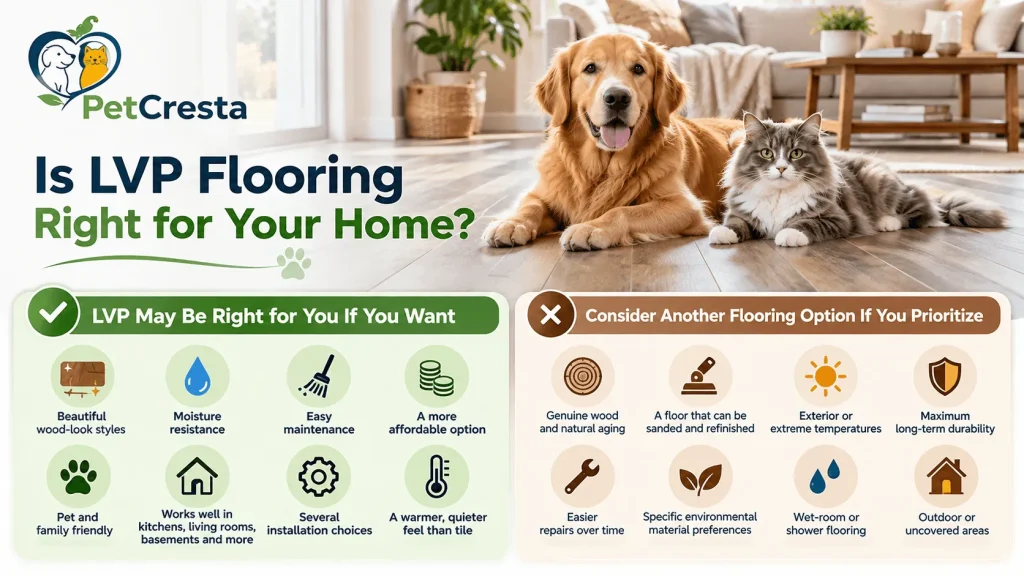
LVP is an ideal choice for many homes as it offers a balance of appearance, moisture resistance, ease of maintenance and price. It is most effective when the product is appropriate to the room, and the substrate is properly formulated.
If natural wood and refinishing, extreme temperatures, exterior exposure or long-term repairing and redoing are more of a priority, another material might be better suited.
LVP May Be Suitable When You Prioritize
LVP may suit your home when you want:
- A wood-look floor without real hardwood
- Easier care for spills and everyday mess
- Moisture-rated options for kitchens or basements
- A moderate project budget
- Several installation choices
- Pet- and family-friendly surfaces
- A warmer feel than ceramic tile
- Broad color and plank-size choices
Choose by room conditions first and appearance second. That order may feel less exciting, but it tends to prevent expensive regrets.
Another Flooring Type May Be Better When You Prioritize
Consider another material when you want:
- A floor that can be sanded and refinished
- Genuine wood grain and natural aging
- Exterior or open-air installation
- Purpose-built wet-room performance
- Easier material recycling
- Maximum long-term repairability
- Strong premium-property character
- Resistance to extreme temperature or sunlight
Before ordering, confirm room approval, substrate requirements, total installed cost, warranty exclusions, and replacement availability.
Conclusion: Should You Choose LVP Flooring?
LVP is a multilayer vinyl floor that can provide realistic wood designs, useful moisture performance, manageable care, and a broad price range.
Its limitations include variable product quality, scratching or denting, difficult repairs in some layouts, and no ability to sand or refinish the printed surface.
Compare several full-size samples, verify the room and installation requirements, and read the complete warranty before choosing an LVP floor.
FAQ’s
No. LVP generally uses a printed image rather than a real wood surface. Solid and engineered hardwood contain genuine timber.
No. Product ratings and warranties vary. Even waterproof-rated planks may allow water to reach the substrate through seams, edges, or installation gaps.
The right specification depends on the room, traffic, construction, finish, and warranty. Total plank thickness and wear-layer thickness measure different parts of the product.
It often can when the existing surface is stable, clean, dry, flat, and approved by the manufacturer. Concrete moisture and deep grout lines may require extra preparation.
Many collections are approved for bathroom floors. LVP does not replace the waterproof system required inside showers or wet rooms.
The plank may survive while underlayment, adhesive, substrate, trim, or walls remain wet. The water source should be repaired, and hidden materials may require drying or replacement.
Formulations and emissions vary. Check product disclosures, installation adhesives, and current third-party indoor-air certifications rather than judging every LVP product as one category.
LVP flooring can be a good choice for homes that need a wood-look surface with easier cleaning, moisture-rated options, and a moderate price. Its suitability depends on the product quality, room conditions, subfloor preparation, installation, and warranty. It may not be ideal when you want genuine wood, refinishing, exterior use, or maximum long-term repairability.
The concrete must be clean, dry, stable, and flat within the flooring manufacturer’s tolerance. Test the slab for moisture and use an approved vapor-control system when required. Fill cracks, remove high spots, correct low areas, and follow the product instructions for click-lock, glue-down, or loose-lay installation.
Begin by identifying whether the problem is a surface scuff, scratch, broken joint, lifted edge, damaged plank, or moisture issue. Some light marks can be cleaned or reduced with an approved touch-up product. Deep cuts, crushed planks, or broken locking edges usually require plank replacement. Repair any leak or subfloor problem before replacing the flooring.
Remove loose dirt with a soft broom or a vacuum set for hard floors. Clean the surface with a damp microfiber mop and a manufacturer-approved neutral-pH cleaner. Work in small sections and dry excess moisture promptly. Avoid abrasive pads, harsh chemicals, waxes, polishes, and steam unless the flooring manufacturer permits them.
PVC is a common material in LVP flooring, but formulations and emissions differ between products. Review the exact product’s technical disclosures and look for current third-party indoor-air certifications such as FloorScore or GREENGUARD. Adhesives and underlayments should be checked separately because they may have different emission ratings.
Painting LVP is generally not recommended unless the flooring manufacturer approves it. Paint may not bond properly to the protective finish and can peel, scratch, or affect the warranty. Replacing damaged planks or choosing a new floor is usually more dependable than painting the existing surface.
Use a neutral-pH cleaner that is approved for vinyl flooring. Avoid bleach, ammonia, abrasive powders, solvent-based cleaners, waxes, and oil soaps unless the manufacturer specifically allows them.
Use a soft broom, a hard-floor vacuum setting, a microfiber mop, clean water, and an approved vinyl-floor cleaner. Use non-abrasive cloths for spot cleaning and dry spills before moisture reaches the seams.
The removal method depends on how the floor was installed. Click-lock planks can usually be unlocked row by row after removing the trim and transitions. Glue-down LVP may require lifting, scraping, and adhesive removal. Loose-lay planks can often be lifted directly, although perimeter adhesive may need to be released. Check for asbestos or other hazardous materials before disturbing an older underlying floor.
How We Prepared This Guide
The information in this guide was compiled after consulting with the resources that have been put together by the resilient-flooring industry, manufacturer care instructions, installation instructions, indoor-air certification programs, EPA information and current estimates of the costs of various LVP systems.
This general information should not be used to supplant the technical sheet, installation manual, care instructions, or warranty for any specific product. If there are product-specific instructions which contradict general information, the product instructions should be followed.
Here, no laboratory test or first-hand product comparison is claimed. Each subsequent sample inspection should contain details of the product, date, lighting conditions, documents inspected, and method of evaluation.
References
- Resilient Floor Covering Institute. “Flexible LVP/LVT.” (RFCI)
- Resilient Floor Covering Institute. Industry overview and resilient-flooring resources. (RFCI)
- SCS Global Services. “FloorScore Certification.” (SCS Global Services)
- UL Solutions. “UL GREENGUARD Certification.” (UL Solutions)
- US Environmental Protection Agency. “Volatile Organic Compounds’ Impact on Indoor Air Quality.” (US EPA)
- Shaw Floors. “Vinyl Floor Care & Maintenance.” (Shawfloors)
- Angi. “How Much Does Vinyl Flooring Installation Cost? 2026 Data.” (Angi)
- HomeGuide. “How Much Does Luxury Vinyl Plank Flooring Cost?” (HomeGuide)