Bernedoodle vs Sheepadoodle: Temperament, Grooming, Health & Care
Put a Bernedoodle and a Sheepadoodle side by side, and you might have trouble telling them apart at first. Both have fluffy coats, teddy bear faces, and Poodle genes, but they don’t always behave alike once you get to know them. One might happily curl up beside you after a walk, while the other keeps bringing you a toy when you’re ready to sit down.
If you’re searching for Micro Bernedoodle puppies, it’s worth looking beyond their appearance and thinking about what daily life with one would actually be like. The differences in energy, coat care, and health can matter quite a bit once the puppy settles into your home.
Quick Answer: Bernedoodle vs Sheepadoodle
Bernedoodles and Sheepadoodles can both make affectionate, trainable companions, but neither mix has one guaranteed personality or coat type. Bernedoodles are often associated with a somewhat calmer companion style, while Sheepadoodles may inherit more energetic or herding-related behavior from the Old English Sheepdog side.
Those are tendencies rather than rules. The parents, individual puppy, socialization, training, size and home environment can matter as much as the name of the cross.
Bernedoodles and Sheepadoodles Have Different Personalities

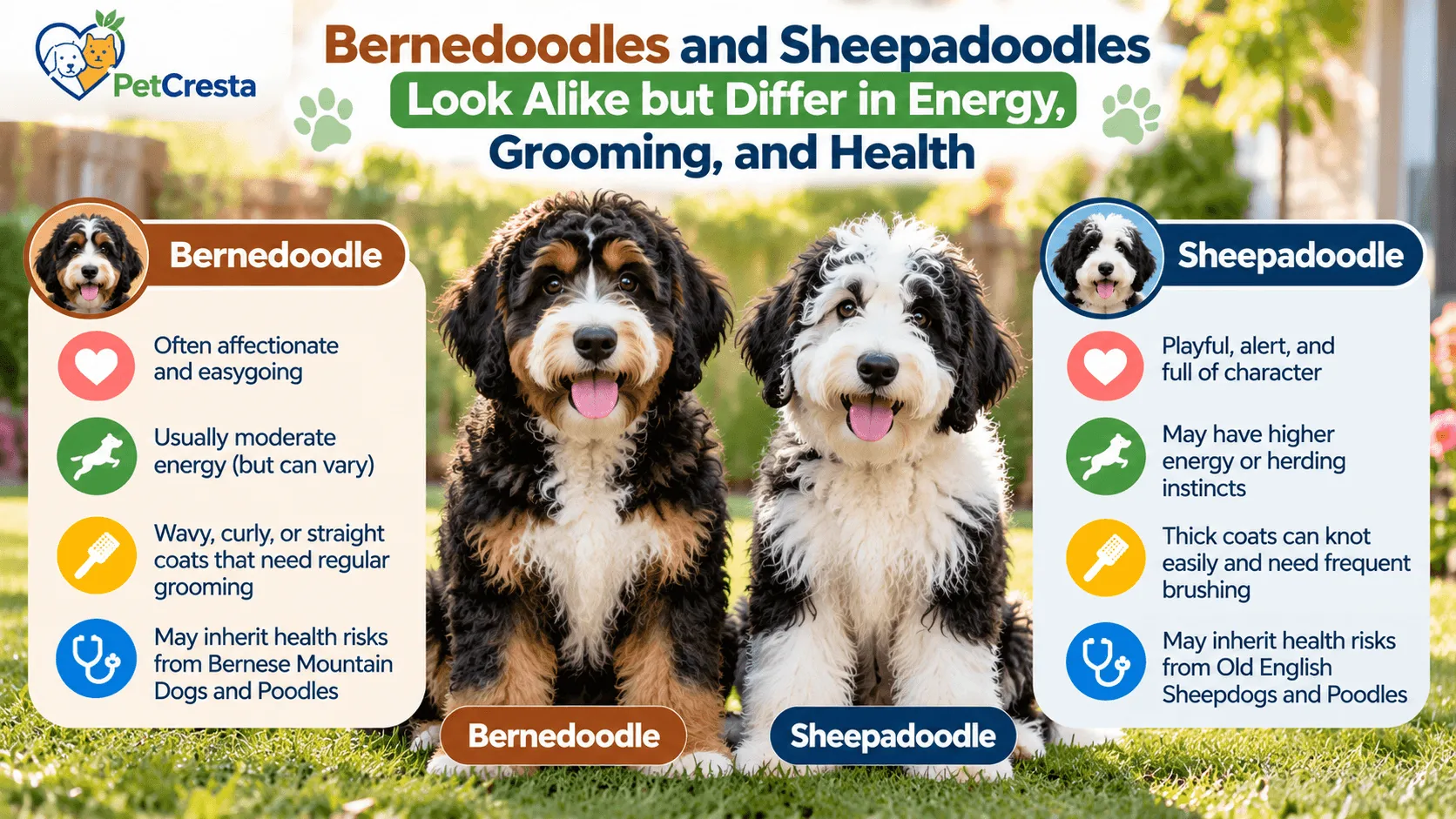
Bernedoodles come from Bernese Mountain Dogs and Poodles, while Sheepadoodles are a mix of Old English Sheepdogs and Poodles. Both can be loving family pets, but there’s no single personality that fits every dog. Bernedoodles are often described as affectionate and easygoing, although some have plenty of energy and enjoy being involved in everything. Sheepadoodles can be playful, alert, and full of character, sometimes with a stubborn streak that makes training an interesting experience.
Of course, you can’t predict a dog’s personality just by knowing its breed mix. A Sheepadoodle might be perfectly happy relaxing on the couch, while a Bernedoodle might be the one racing around the backyard. Early socialization, training, and the personalities inherited from their parents all play a part. When visiting a breeder, ask about the parents’ temperaments and watch how the puppies react to people and new surroundings.
If you’re still learning about the Bernedoodle side, our complete Bernedoodle puppy guide explains generations, coat types, size, temperament and everyday care in greater detail.
How Much Exercise Will They Need?
Neither dog is likely to be happy spending every day without a walk or something interesting to do. Bernedoodles usually benefit from regular walks, play sessions, and time with their families. Some are satisfied with a moderate daily routine, while others need longer outings and activities that challenge them mentally. A game of fetch or a short training session can be just as useful as another walk around the neighborhood.
Sheepadoodles can be a handful if they don’t get enough activity. Their Old English Sheepdog background may show up as a strong urge to follow people around, herd other pets, or find something to keep themselves busy. Leave a bored Sheepadoodle alone with nothing to do, and your shoes or furniture might suddenly become much more interesting. If your household is away most of the day, think honestly about who will give the dog exercise and company.
Whichever mix you choose, consistent training matters. These adult dog training tips can help owners build more manageable everyday behavior.
Their Coats Can Take More Work Than You Expect
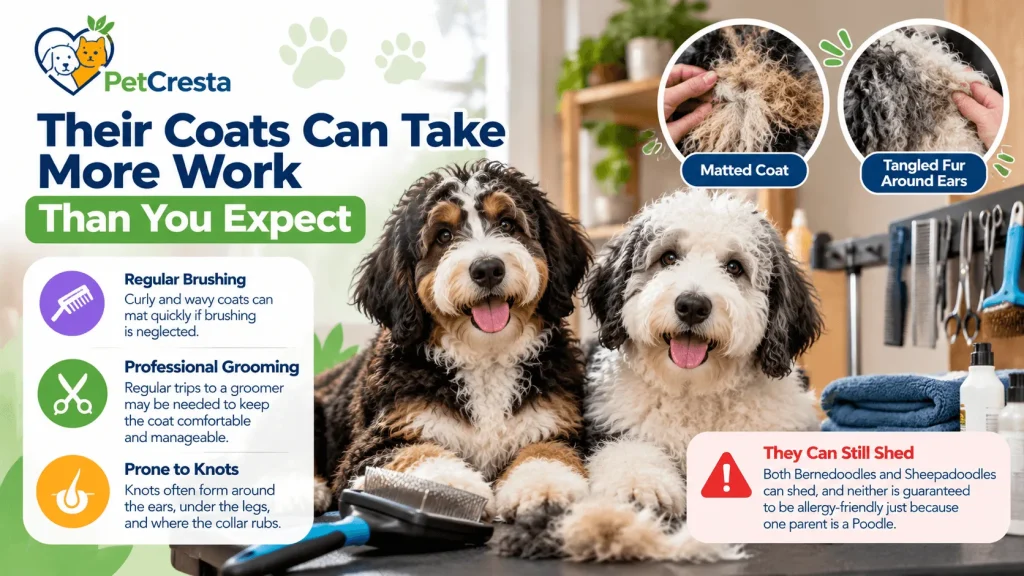
That soft, fluffy coat is adorable until you discover a tangle that won’t come out with a quick brush. Bernedoodles can have straight, wavy, or curly coats, and the amount of maintenance depends partly on which type they inherit. Curly coats tend to trap loose hair and can mat close to the skin if brushing gets neglected. Regular trips to a groomer may be needed to keep the coat comfortable and manageable.
Sheepadoodles aren’t exactly a wash-and-go option either. Their thick coats can knot around the ears, under the legs, and wherever a collar rubs against the fur. If you keep the coat long, you’ll probably need to brush it frequently, sometimes every day, rather than waiting until grooming day. Both mixes can shed, and neither is guaranteed to be allergy-friendly just because one parent is a Poodle.
What About Their Health?
It’s easy to get caught up in choosing a color or imagining what your puppy will look like as an adult, but health deserves just as much attention. Bernedoodles can inherit conditions associated with Bernese Mountain Dogs and Poodles, including hip problems, certain eye disorders, and other inherited diseases. Bernese Mountain Dogs also have a higher risk of some cancers. This doesn’t mean a Bernedoodle will necessarily develop these problems, but it’s a good reason to ask about the parents’ health history.
Sheepadoodles have their own risks, including joint and eye conditions that can occur in their parent breeds. It would be good to ask the breeder the following:
- Which health screenings have been completed
- Are the results available for review
- Do they have any inherited conditions
Be cautious if someone brushes off your questions or claims their puppies can’t develop inherited conditions. Routine veterinary checkups, proper nutrition, dental care, and keeping your dog at a healthy weight will also help support its well-being.
Which One Makes More Sense For Your Family?
Think about your routine on an ordinary Tuesday, not just what you hope weekends with your dog will look like. If you enjoy daily walks and want an affectionate companion who can settle down with you afterward, a Bernedoodle may be worth considering. If your family is active and you have time for training, play, and regular grooming, a Sheepadoodle could be a good fit, too. Either way, make sure you can handle the dog’s needs as it grows, rather than choosing based on how tiny and cute it looks as a puppy.
Size is another thing to check carefully. Both mixes come in different sizes, depending on their parents, and terms such as mini and micro aren’t guarantees of a specific adult weight. If you’re looking at a Micro Bernedoodle for sale, ask how big the parents are and what size the breeder realistically expects the puppies to reach. Be wary of anyone who promises an exact adult weight, since genetics and growth can vary from one puppy to another.
Final Word
Bernedoodles and Sheepadoodles may look like close cousins, but living with either one comes with its own set of responsibilities. Think about your schedule, your patience for grooming, and the kind of energy you’d enjoy having around the house. Before choosing Micro Bernedoodle puppies, take time to ask the breeder questions and check the health information rather than making a decision based on looks alone. The best match is the dog whose needs fit your real life, not just the one you fall for in a photo.
Frequently Asked Questions
Some Bernedoodles may have a calmer temperament, while some Sheepadoodles may be more energetic or engaged because of Old English Sheepdog influence. This is not guaranteed. Individual temperament, parent behavior, age, training and environment all matter.
Either can be energetic. Sheepadoodles may sometimes show higher activity or herding-related behavior, while Bernedoodles range from moderately active to highly energetic. Assess the individual dog rather than relying on the mix name.
Both can be responsive to training. Consistent reward-based training, early socialization and clear routines usually matter more than choosing one mix over the other.