How Long Can Dogs Go Without Water? Dehydration Signs, Safe Limits, and When To Call a Vet
So, the most common question is how long can a dog go without water. In most healthy adult dogs, 12-24 hours and many scenarios get interesting well before that.
But this does not imply that 12-24 hours is safe in all instances. A vomiting, overheated, hard panting, fevered, or diarrhea-prone dog will become dehydrated much quicker than a normal dog in a cool room.
The answer to this question is not really the “survival time” thing! It is a risk. A dog may have an increased temperature, reduced comfort, poor circulation and poor organ function long before it reaches the extreme level.
TLDR: How Long Can a Dog Go Without Water?
Dogs can survive for up to 48 hours without water. It is not recommended for most healthy adult dogs to be deprived of water for longer than 12-24 hours. When heat, vomiting, diarrhea, excessive panting, fever or sickness are involved, the danger increases much earlier.
If a dog will not drink water and is lethargic, vomiting repeatedly, collapsing, overheating, or straining to pass urine, he or she requires immediate veterinary care.
Avoid Waiting Until The Survival Limit Is Reached
In some cases, a dog could live for more than a day without drinking water, but the waiting period is not a safe home.
Before the survival limit has been reached, dehydration can impact circulation, body temperature, electrolytes, comfort, and organ functioning. Safe window also varies according to age, heat, sickness, vomiting, diarrhea, and general health.
If a stray dog will not drink water or if the dog appears sick, weak, hot, or refuses to eat or drink for a fixed number of hours, call a veterinarian early rather than a fixed number of hours.
Quick Triage: Monitor, Call, Or Er?
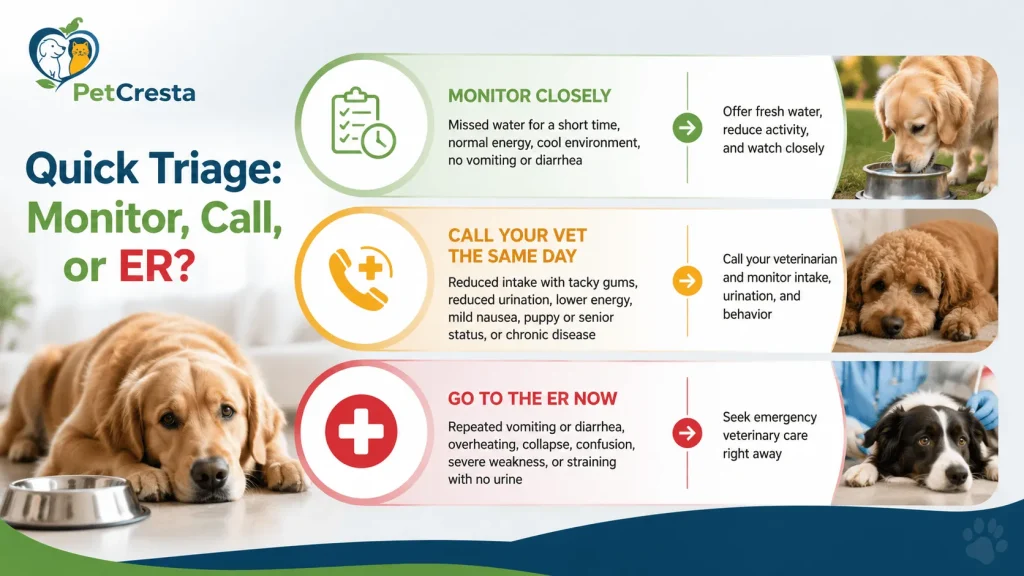
| Level | What you are seeing | What to do next |
|---|---|---|
| Monitor closely | Missed water for a short time, normal energy, cool environment, no vomiting or diarrhea | Offer fresh water, reduce activity, and watch closely |
| Call your vet the same day | Reduced intake with tacky gums, reduced urination, lower energy, mild nausea, puppy or senior status, or chronic disease | Call your veterinarian and monitor intake, urination, and behavior |
| Go to the ER now | Repeated vomiting or diarrhea, overheating, collapse, confusion, severe weakness, or straining with no urine | Seek emergency veterinary care right away |
The Core Concept: Survival Vs Safe Without Water
Dehydration begins to take its toll on a dog much sooner than when he gets to his limit to survive. It is better to evaluate your dog’s condition on the fly than on arbitrary numbers.
Why Survival Hours Can Be Misleading
Owners often wonder how many days can a dog survive without water. The issue is that very high or very low survival rates are not safe targets. A dog can still live longer than an actual state of dehydration.
Hence, the “wait and see” approach is a bad strategy. The more sensible answer to the question of how long can a dog live without water is to assess the individual dog in question, rather than follow an outrageous survival story. Though it may seem like a dramatic time limit, a dog’s body might be suffering before they reach that stage if they are trying to catch their breath when they are sick, panting heavily or losing fluids.
What Dehydration Does Inside The Body
As a dog gets drier, the fluid that is available for normal circulation becomes reduced. This decreases the blood supply to tissues and organs.
Dogs are also less able to cool off during periods of dehydration, particularly when they are out in hot weather or during heavy panting. Fluid loss will cause electrolyte changes, altering muscle and nerve activity and increasing weakness, nausea and illness. Dehydration can begin to cause damage to a dog’s internal systems before the maximal survival period is reached.
How Long Can Dogs Go Without Water In Real Life?
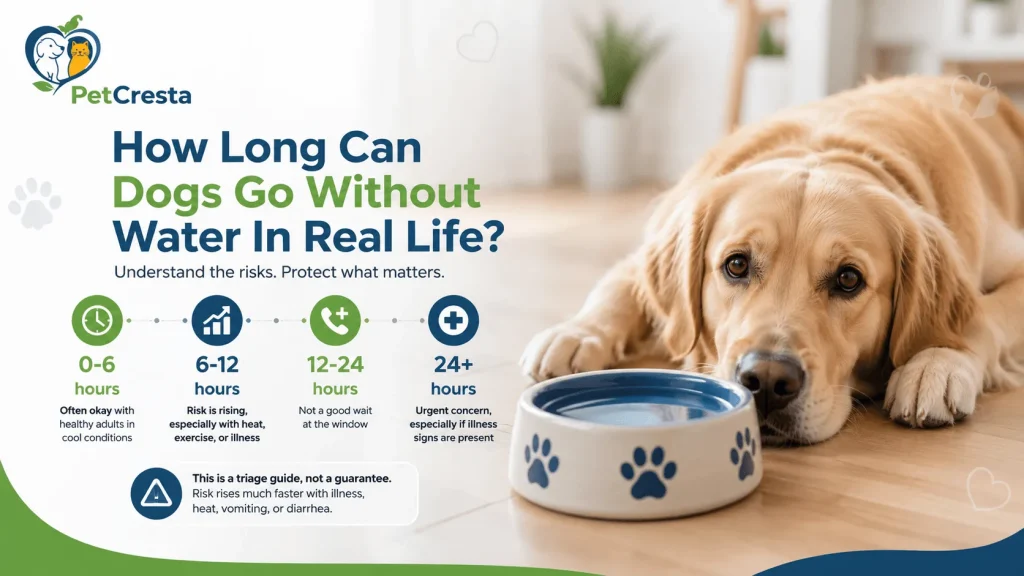
If you are still wondering how long can a dog last without water in a real household setting, the safest way to answer it is with a rising-risk timeline, not a survival challenge.
| Time without water | What it means | What to do |
|---|---|---|
| 0-6 hours | Often okay with healthy adults in cool conditions | Offer fresh water and observe |
| 6-12 hours | Risk is rising, especially with heat, exercise, or illness | Troubleshoot, monitor closely, and check for early dehydration signs |
| 12-24 hours | Not a good wait at the window | Contact a vet if refusal continues or symptoms appear |
| 24+ hours | Urgent concern, especially if illness signs are present | Seek veterinary evaluation properly |
This is a triage guide, not a guarantee. Risk rises much faster with illness, heat, vomiting, or diarrhea.
Risk Factors That Shorten The Safe Window
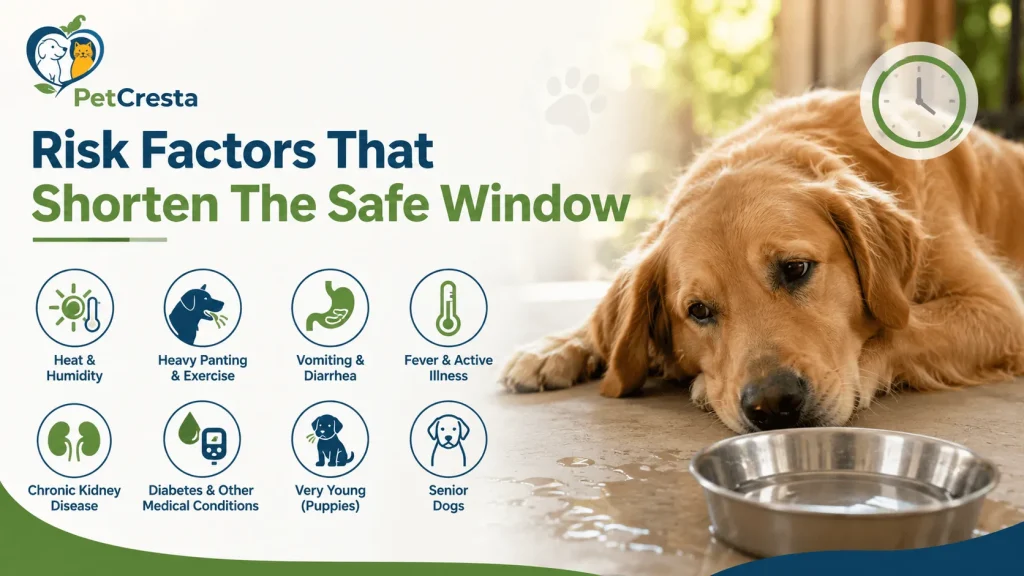
Not all dogs are at the same risk in the same amount of time. That’s one reason why there is no single safe answer to the question of why my dog is not drinking water. The margin is quickly lost in heat and humidity. So are heavy panting, long periods of exercise, vomiting and diarrhoea, fever and active illness.
Chronic medical conditions, such as kidney disease, diabetes, or other chronic medical issues, may cause dogs to fall into trouble early. Nursing puppies may also be at risk of losing water more quickly.
The smaller the dog, the younger it is, the older it is or the sicker it is, the less margin for error. This is why it is far more significant when a puppy or a senior dog doesn’t drink water than when a healthy young adult dog doesn’t.
Dogs At Higher Risk Of Dehydration
There is not as much time to spare in some dogs when they stop drinking. These dogs can become dehydrated more rapidly, due to an increased or rapid loss of water, increased water requirement, or decreased physical reserve.
| Higher Risk Dog | Why The Risk Rises Faster |
|---|---|
| Puppies | Smaller reserve and faster fluid loss |
| Senior dogs | More likely to have a chronic illness or lower reserve |
| Small dogs | Less body fluid reserve than larger dogs |
| Dogs with vomiting | Fluid is being lost and not replaced well |
| Dogs with diarrhea | Fluid and electrolytes are lost quickly |
| Dogs in hot weather | Panting and heat stress increase fluid loss |
| Flat faced dogs | Higher overheating risk during heat or activity |
| Thick coated dogs | May overheat faster in warm weather |
| Dogs with kidney disease or diabetes | Fluid balance may already be unstable |
| Pregnant or nursing dogs | Higher water demand |
| Dogs on certain medications | Some medicines can affect thirst, urination, or hydration |
A puppy, senior dog, sick dog, or overheated dog should not be managed with the same waiting period as a healthy adult dog resting indoors
Common Scenarios
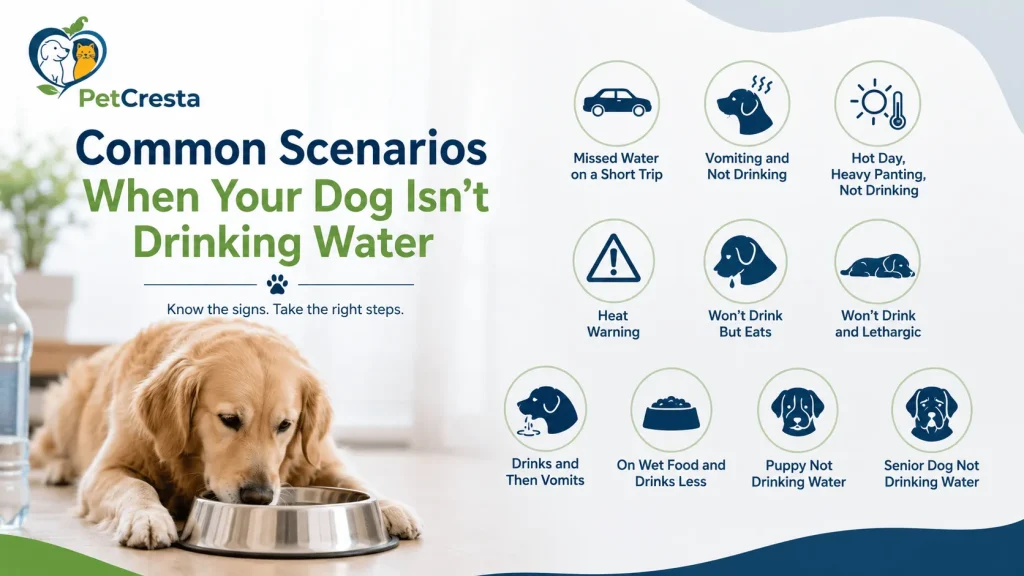
Below are some common scenarios:
The Dog Missed Water On A Short Trip And Seems Normal
What it could mean: A dog that is healthy and has missed water for a few minutes in a cool climate could still be healthy.
What to do now: Give fresh water to the dog and let the dog drink in peace and keep track of energy levels as well as urination and gum humidity over the next few hours.
When to escalate: Contact your veterinarian if your dog seems to be a bit off or refuses to drink water, or if it begins showing signs of dehydration.
A Dog Vomiting And Not Drinking Water
What it could mean: This is more significant since fluid loss and poor intake are occurring simultaneously.
What to Do: Avoid forcing the dog to consume large quantities. Give only small, moderate quantities if your dog is awake and is able to keep the dog down.
When to Escalate: When vomiting is frequent weakening or the dog becomes unable to hold the water down, the dog is a medical emergency that requires prompt attention from a veterinarian.
Hot Day, Heavy Panting, And Not Drinking
What could it mean? This could indicate the risk of heat stroke or heat stress.
What to do now: Take the dog to a cooler area to stop any activity, then give water to the dog if it is awake.
When to Escalate: If you are in need of emergency medical attention, seek it out in the event of confusion, nausea, vomiting, diarrhea extreme weakness, collapse or persistent excessive panting.
Heat Warning
If your dog is hot, panting heavily, weak, confused, vomiting, drooling or collapsing, he’s not just thirsty. This may indicate heat illness, a condition that can turn serious in no time.
Remove the dog from the warm region, discontinue activity, and provide water if the dog is conscious and drinking normally. Never squeeze water into the mouth.
If the dog collapses, becomes confused, is extremely weak, vomits repeatedly, breathlessly pants or has difficulty settling after cooling, vet care is needed immediately.
The Dog Won’t Drink Water But Eats
What it could mean: The eating pattern does not exclude a potential problem. Stress, mild nausea and bowel fear dental pain, and an early illness could all be the cause of this type of pattern.
What to Do: Provide fresh water in a bowl that is clean bowl, then try to find a more peaceful spot and keep track of the amount of water consumed, urination and energy.
When to Increase: The same-day veterinary consultation is recommended when the low intake persists or the dog appears unwell.
The Dog Won’t Drink Water And Is Lethargic
What could it mean: This is more serious than drinking less on its own. It could indicate the presence of dehydration or pain, fever or stomach upset, heat illness or infection, or a different medical issue.
What to Do: Limit your dog’s activity, make sure that it is cool and calm and give tiny amounts of water if the dog is active.
When to Exhale: If the lethargy is evident, the dog is not rising normally, and if vomiting or diarrhea, collapse or confusion is apparent, call a veterinarian immediately for immediate care.
The Dog Drinks And Then Vomits
What it could mean: This can happen due to nausea, excessive heat, or drinking too quickly. The picture is altered when vomiting repeatedly.
What to do now: Give small amounts of food gradually instead of just letting your dog drink the entire bowl.
When to erupt: When To Escalate vomiting, appear weak, or be unable to keep even small amounts of liquid down, then veterinary treatment is necessary.
The Dog Is On Wet Food And Drinks Less Than Expected
What it could mean: Dogs that eat moist food could drink less water from the bowl due to the fact that some water comes from the meals.
What to do Next: Take a look at the complete picture, which includes the energy level, appetite, urination as well as gum water.
When to Escalate: Contact your veterinarian if your dog seems to be drinking less than normal and appears tired or nauseated. Or if they do not seem well.
Puppy Not Drinking Water
What could it mean: Puppies have less reserve and are more susceptible to dehydration particularly in cases of diarrhea, vomiting or heat exposure. Low appetite is also present.
What to do now: Provide fresh water frequently and keep your puppy cool and look closely for changes in energy levels and swollen gums. decreased elimination.
When to erupt: A weak puppy that is vomiting, having nausea, and refusing to drink fluids for a long period of time should be treated quickly.
Senior Dog Not Drinking Water
What it could mean: Older dogs could have lower physiologic reserves, more chronic illness and nausea, dental pain as well as mobility concerns that limit intake of water.
What to do now: Provide easy access to clean water at multiple locations and keep track of behaviors, urination and appetite.
When to increase the dosage: Same-day advice from a veterinarian is recommended in cases where a dog that is older obviously drinking less, and especially when chronic illness or weakness is the cause.
How Much Water Should A Dog Drink Per Day?
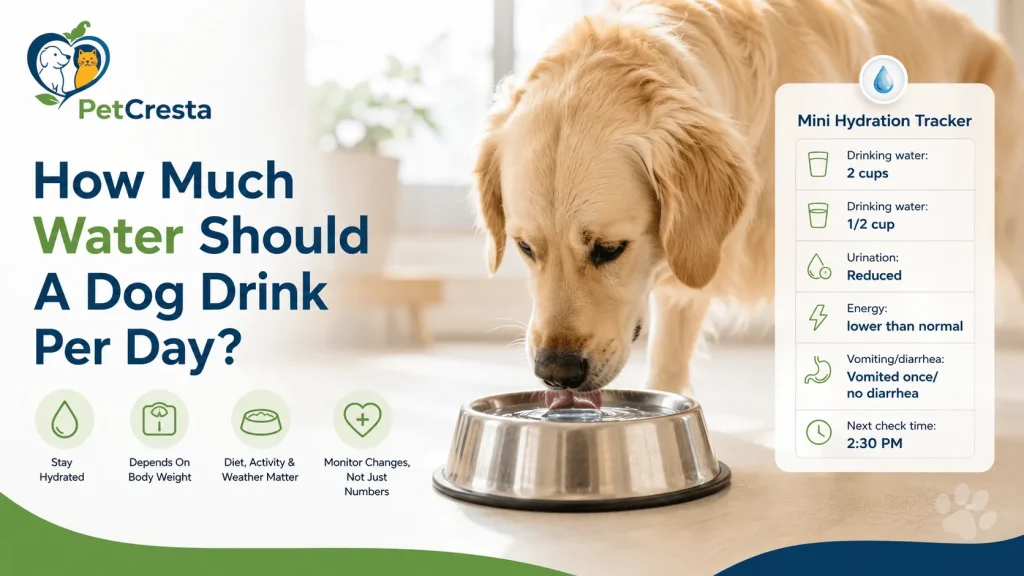
The daily water requirements vary based on the size of your diet and health. Monitoring for any sudden changes in your drinking habits is usually more important than achieving the ounce mark.
Rule Of Thumb
A typical guideline is 1 ounce of water for every body weight pound per day. So a dog that weighs 20 pounds could drink about 20 ounces daily for a dog of 50 pounds. A dog of the same weight might require 50 ounces.
The number you see is only an indication of the beginning place. Diet is also important. Dogs who eat moist or wet food might consume less water from their bowls since a portion of the fluid they consume comes from their meals. In actual life, the most important indicator is not always the exact amount of ounces. It’s a sudden shift in the normal drinking habits, particularly in cases where appetite, energy levels and comfort are also affected.
What “Normal Drinking” Looks Like
Certain dogs drink a few larger drinks following meals or after walks. Other dogs drink all day. An abrupt change in drinking habits can be a factor more than the precise amount of ounces.
If a dog drinks regularly but suddenly stops drinking or drinks less frequently the same amount, it should be treated with seriousness, especially in cases where energy level or urination levels are also changing.
Daily Water Intake By Weight
A common guideline is about 1 ounce of water per pound of body weight per day. This is only a starting point. Diet, weather, activity, illness, age, medication, pregnancy, and nursing can change a dog’s needs.
| Dog Weight | Approximate Daily Water Guideline |
|---|---|
| 10 lb | About 10 oz daily |
| 20 lb | About 20 oz daily |
| 40 lb | About 40 oz daily |
| 60 lb | About 60 oz daily |
| 80 lb | About 80 oz daily |
Dogs eating wet food may drink less from the bowl because part of their moisture comes from food. Dogs eating dry food, exercising, panting, nursing, or spending time in warm weather may need more.
A sudden change in normal drinking habits matters more than one exact number. Reduced drinking with low energy, vomiting, diarrhea, or reduced urination should not be ignored.
How To Measure Intake
A simple home-based check can work effectively:
- Determine how much water flows through the bowl.
- See what is left after a certain time.
- Take note of the frequency of urination.
- Monitor appetite, energy and appetite, and diarrhea, vomiting and panting.
The use of tracking is particularly useful for dogs that are sick or recovering from illness, or is under the watch of a vet. Monitoring the production of urine is an integral part of the standard fluid assessment for veterinary treatment.
Mini Hydration Tracker
- Drinking water: 2 cups
- Drinking water: 1/2 cup
- Urination: Reduced
- Energy: lower than normal
- Vomiting/diarrhea: Vomited once/ no diarrhea
- Next check time: 2:30 PM
This simple tracker helps you discern trends and provide your vet with more information should you need to contact.
Signs Of Dehydration In Dogs
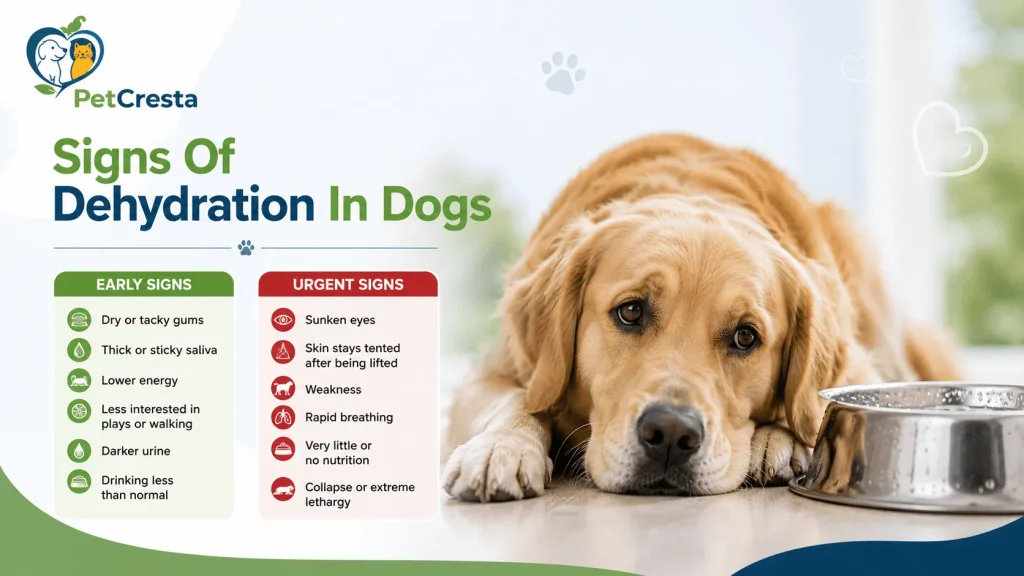
Dog dehydration symptoms can begin appearing prior to a dog appearing severely sick. The early signs indicate that your dog is beginning to lose excessive fluid. The signs must be watched carefully, particularly in the event that your dog is drinking less fluid than normal.
Signs of dehydration in the immediate aftermath could be more severe or occur along with a serious health issue. If you notice these signs then the dog needs to be examined by a veterinarian promptly.
| Early signs | Urgent signs |
|---|---|
| Dry or tacky gums | Sunken eyes |
| Thick or sticky sliva | Skin stays tented after being lifted |
| Lower energy | Weakness |
| Less interested in plays or walking | Rapid breathing |
| Darker urine | Very little or no nutrition |
| Drinking less than normal | Collapse or extreme lethargy |
How To Check At Home Safely
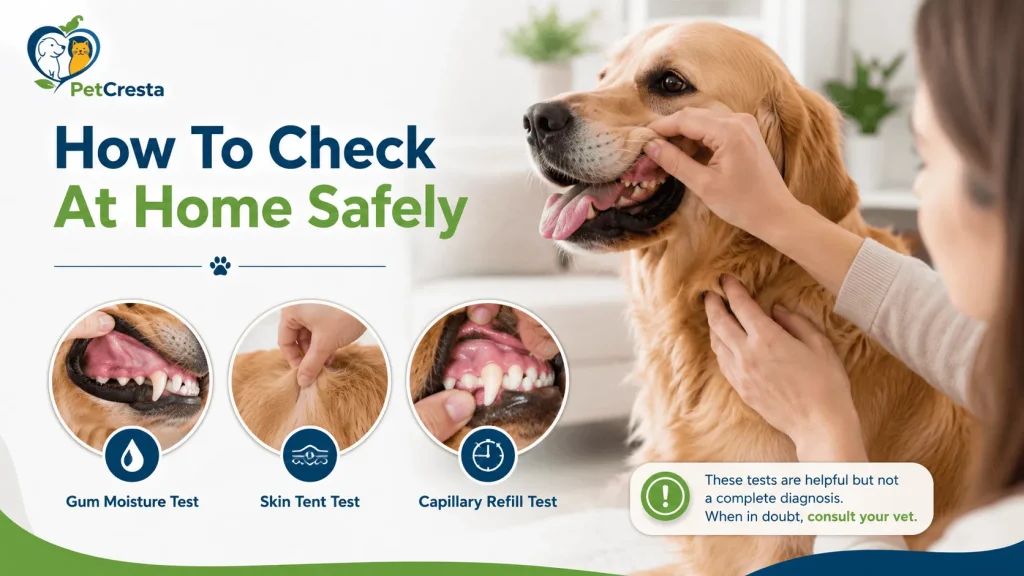
Gum Moisture Test:
Lift the lips and gently massage the gums. Healthy gums should be moist. If they appear dry, sticky, or tacky, dehydration is more likely. In puppies, gums that are tacky are considered to be among the most reliable signs of home.
Dog Skin Tent Test Dehydration:
Lift the skin gently over the neck or shoulders, then let it go. If the dog is hydrated, the skin should come back rapidly. The slow return may indicate dehydration.
Capillary Refill Test:
Apply pressure gently to your gum till the surface becomes pale. Then release. Color should come back swiftly. The delay in replenishment can raise worries about circulation issues or dehydration.
These tests are beneficial but they’re not complete. They shouldn’t be used to make a diagnosis. Uncertain results are an excellent reason to consult a vet.
What Not To Rely On
Dry noses alone are not a reliable test for dehydration. The moisture of the nose fluctuates throughout the day and may fluctuate with the time of day or humidity levels, as well as the surroundings.
Dry noses are particularly important when it is accompanied by other symptoms of illness like low appetite, lethargy and weakness. It can also be accompanied by clear symptoms of dehydration.
Dog Not Drinking Water: Common Causes
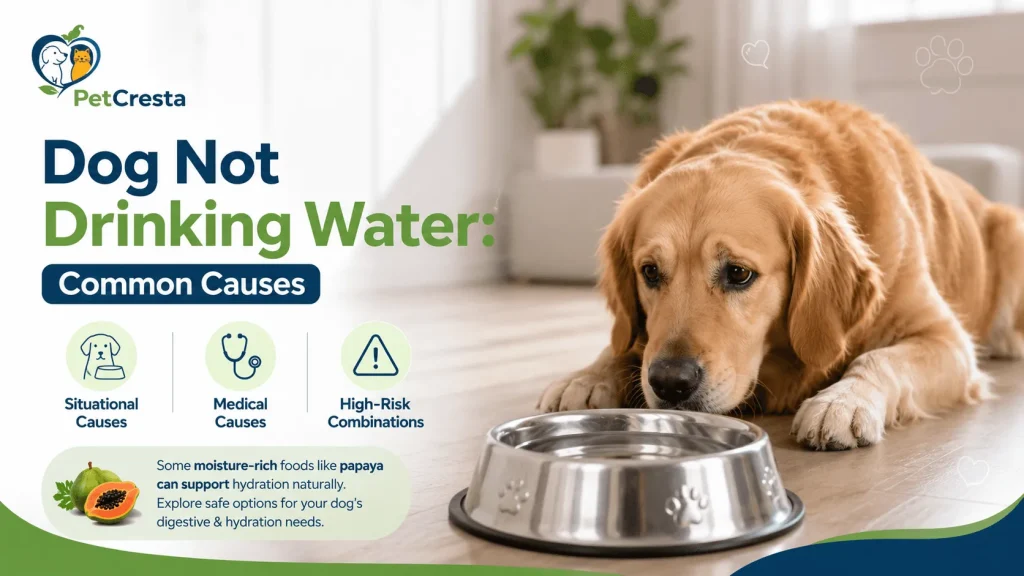
A dog may skip water for simple situational reasons or due to serious medical issues. Paying attention to high-risk combinations helps decide when urgent action is needed.
Situational Causes
Stress, travel, a new environment, a dirty bowl, poor bowl placement, competition with other pets, or a preference for a different bowl setup can all reduce drinking.
Medical Causes
Nausea, vomiting, diarrhea, dental pain, mouth injury, fever, infection, kidney disease, pancreatitis, heat illness, and urinary obstruction are all more concerning causes of dog not drinking water.
High-Risk Combinations
These patterns deserve faster action:
- Not drinking + vomiting
- Not drinking + diarrhea
- Not drinking + heavy panting or overheating
- Not drinking + lethargy or weakness
What To Do Right Now If Your Dog Won’t Drink
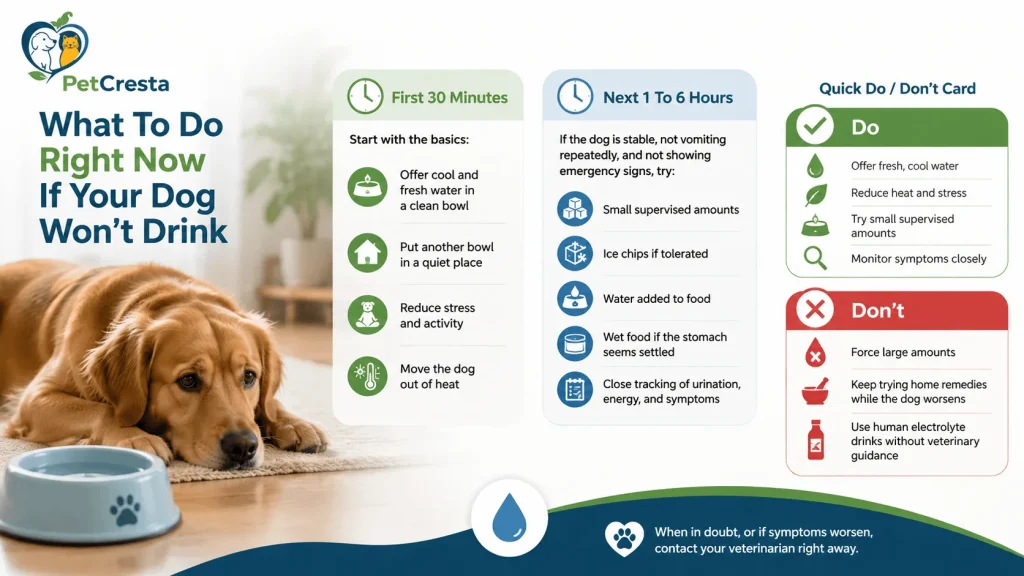
First 30 Minutes
Start with the basics:
- Offer cool and fresh water in a clean bowl
- Put another bowl in a quiet place
- Reduce stress and activity
- Move the dog out of heat
Next 1 To 6 Hours
If the dog is stable, not vomiting repeatedly, and not showing emergency signs,
Try
- Small supervised amounts
- Ice chips if tolerated
- Water added to food
- Wet food if the stomach seems settled
- Close tracking of urination, energy, and symptoms
Quick Do / Don’t
Do
- Offer fresh, cool water
- Reduce heat and stress
- Try small supervised amounts
- Monitor symptoms closely
Don’t
- Force large amounts
- Keep trying home remedies while the dog worsens
- Use human electrolyte drinks without veterinary guidance
What Not To Do If A Dog Refuses Water
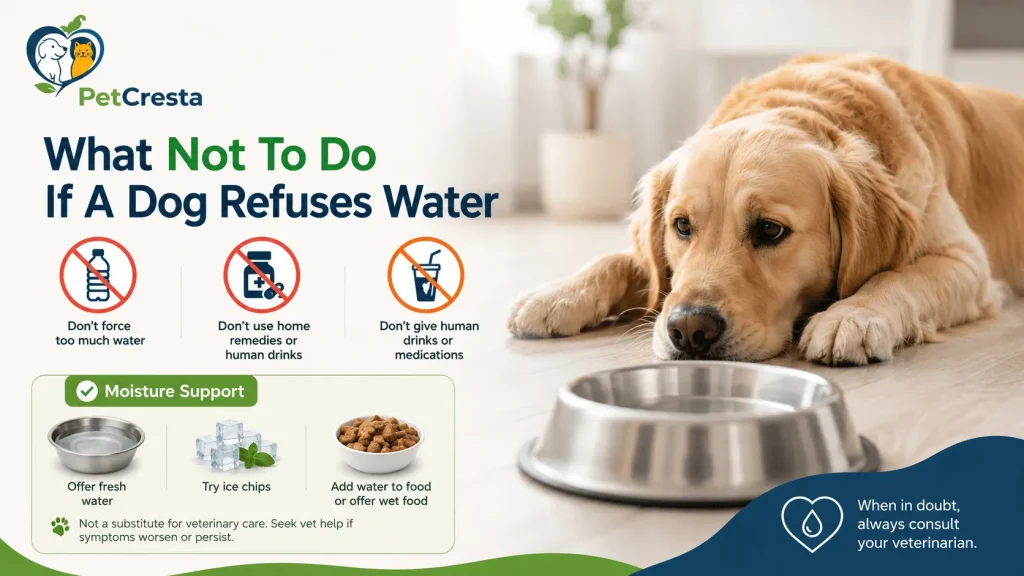
Don’t try to give your dog too much water at one time. This may be dangerous when the dog is weak, has nausea, is confused, or is vomiting.
If the dog is getting worse, do not continue to use home remedies. If vomiting occurs more than once, collapse, overheating, extreme weakness or failure to urinate, then veterinary attention is required.
Never administer human sports drinks, electrolyte drinks, flavored drinks or medications without veterinary advice. Certain ingredients can be unfit for use in dogs, and the incorrect ingredient can impede timely treatment.
Moisture Support For Stable Dogs
Small moisture supporting steps may be helpful if the dog is alert, stable and does not vomit every time and is being monitored closely.
First, fresh water should be given. If there’s no stomach upset, some dogs can also eat ice chips, a little bit of water added to their food, or wet food.
This is not a substitute for veterinary treatment. When the dog looks sick, weak, overheated, hurts or is not able to hold down its water, home moisture tricks are not sufficient.
Dehydration Treatment For Dogs
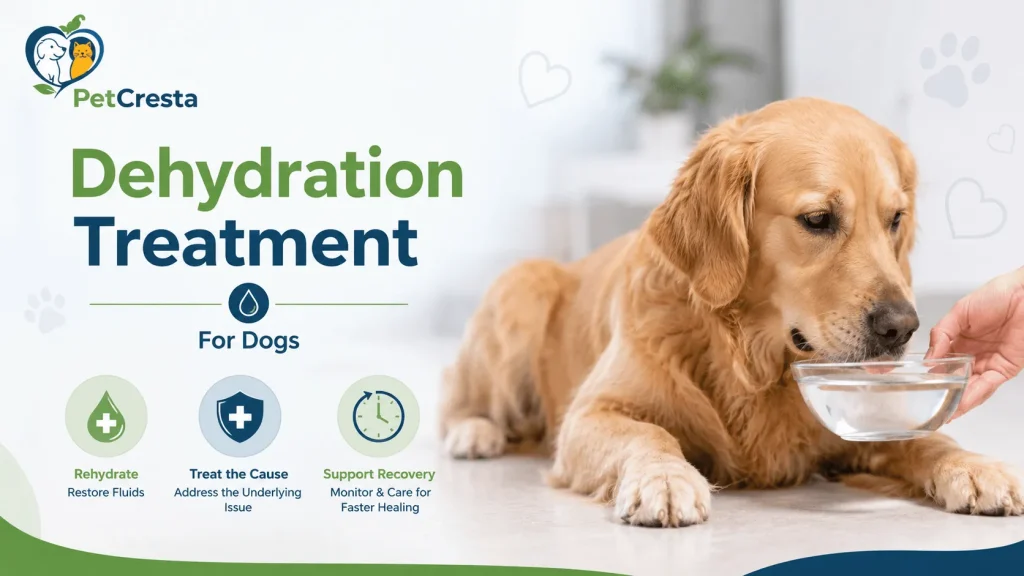
Dehydration treatment for dogs depends on the severity and the cause behind it. Mild cases in a stable dog may improve with careful oral intake and correction of the underlying problem.
More serious cases may need veterinary treatment, including anti-nausea medication, subcutaneous fluids, intravenous fluids, testing, and treatment of the illness causing the fluid loss.
Recovery Timeline
Mild dehydration may improve fairly quickly once intake returns and the cause is controlled. More severe dehydration often needs veterinary fluids and may require hospital monitoring for a day or longer.
Water Restriction Myths
Below are some common water restriction myths that people are confused about:
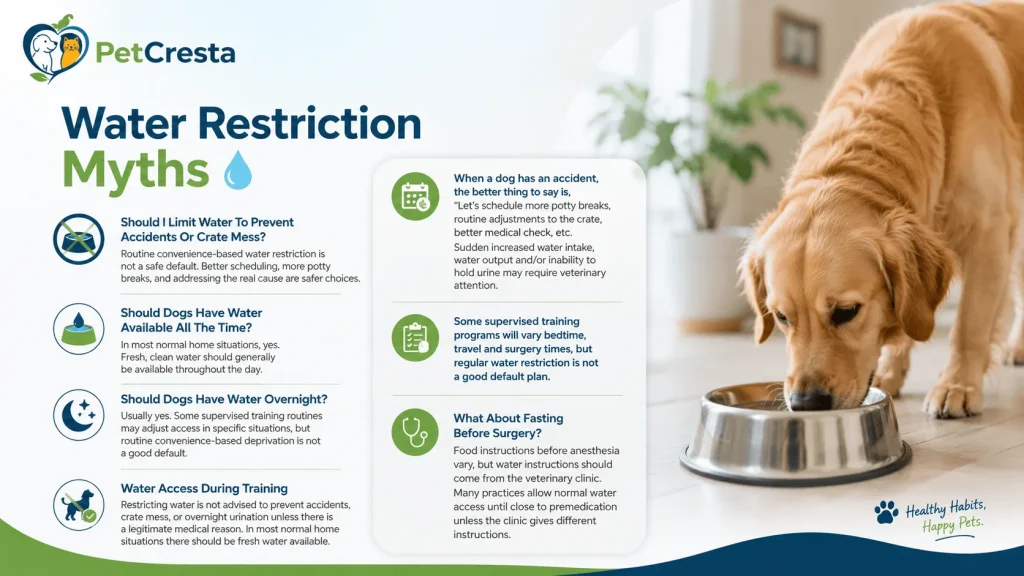
Should I Limit Water To Prevent Accidents Or Crate Mess?
Routine convenience-based water restriction is not a safe default. Better scheduling, more potty breaks, and addressing the real cause are safer choices.
Should Dogs Have Water Available All The Time?
In most normal home situations, yes. Fresh, clean water should generally be available throughout the day.
Should Dogs Have Water Overnight?
Usually yes. Some supervised training routines may adjust access in specific situations, but routine convenience-based deprivation is not a good default.
Water Access During Training
Restricting water is not advised to prevent accidents, create mess, or overnight urination unless there is a legitimate medical reason. In most normal home situations there should be fresh water available.
When a dog has an accident, the better thing to say is, “Let’s schedule more potty breaks, routine adjustments to the crate, better medical check, etc. Sudden increased water intake, water output and/or inability to hold urine may require veterinary attention.
Some supervised training programs will vary bedtime, travel and surgery times, but regular water restriction is not a good default plan.
What About Fasting Before Surgery?
Food instructions before anesthesia vary, but water instructions should come from the veterinary clinic. Many practices allow normal water access until close to premedication unless the clinic gives different instructions.
When To Call A Vet Vs Go To An Emergency Clinic
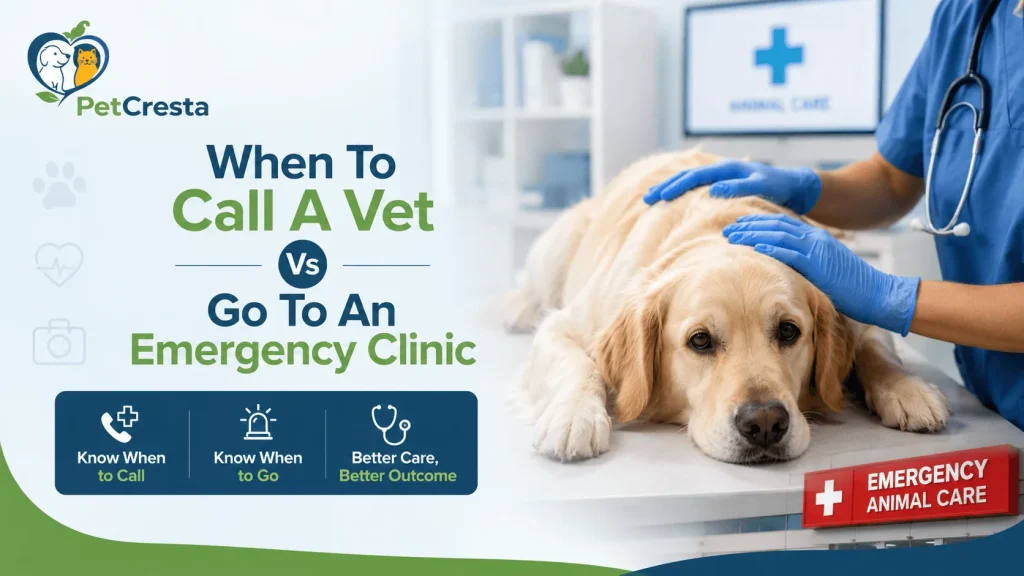
Call Your Vet The Same Day If
- Water refusal continues beyond roughly half a day
- Mild dehydration signs appear
- Urination is reduced
- The dog is clearly off
- The dog is a puppy, a senior, or has a chronic disease
What To Tell The Vet
Before calling the veterinarian, collect the details that help the clinic judge risk faster.
| Detail | What To Note |
|---|---|
| Time without drinking | When the dog last drank normally |
| Water amount | How much was offered and how much was left |
| Urination | When the dog last passed urine |
| Vomiting or diarrhea | How often it happened and when it started |
| Energy level | Normal, quiet, weak, confused, or collapsed |
| Gum moisture | Moist, dry, sticky, pale, or unusual |
| Heat exposure | Walks, car rides, hot weather, heavy panting |
| Food intake | Eating normally, eating less, or refusing food |
| Medical history | Kidney disease, diabetes, medications, senior age |
| Other symptoms | Pain, coughing, bloating, straining, trembling |
This information helps the vet decide whether home monitoring, same-day care, or emergency treatment is safest.
Go to the ER if
- Repeated vomiting or diarrhea is happening, and the dog is not drinking
- Heatstroke or overheating is suspected
- Severe dehydration signs are present
- The dog collapses, seems confused, or is in severe pain
- The dog is straining and not producing urine
What A Vet May Do
Veterinary care may include hydration assessment, temperature and circulation checks, anti-nausea medication, fluid therapy, bloodwork, urinalysis, and hospital monitoring if needed.
Prevention And Hydration Habits
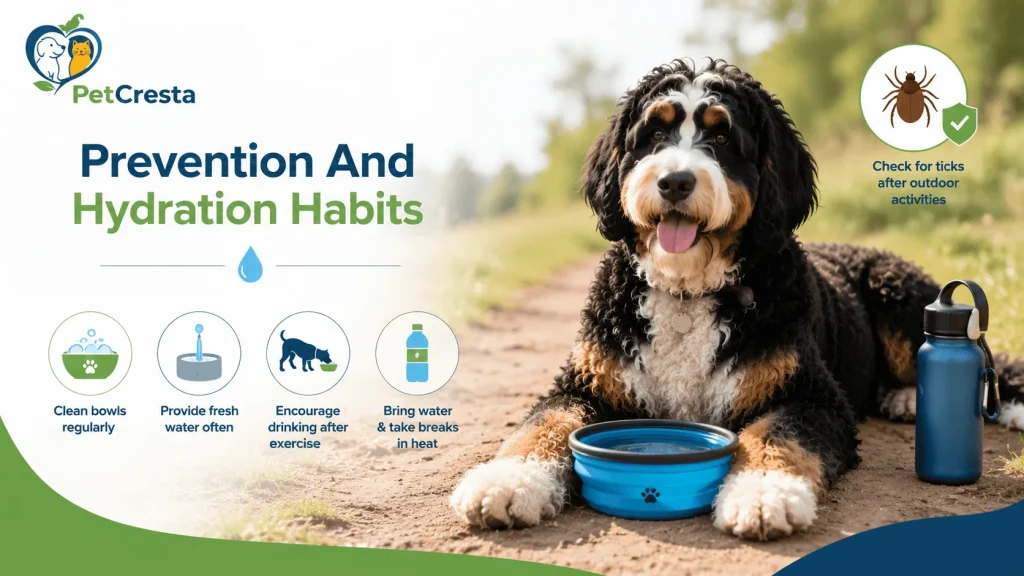
A good habit to keep in mind is regularly cleaning your bowls, rehydrating water frequently and encouraging drinking after a walk or a game.
Multiple water fountains can aid in larger and multi-floor residences, as well as houses with pets.
In hot weather, bring water and give breaks prior to when the dog appears distressed. Anyone who is panting heavily and drooling as well as showing weakness, vomiting, disorientation, or collapse requires urgent cooling and immediate veterinary care. The addition of water or food to meals could help some dogs get more food.
The dogs who are outdoors during warm weather can be exposed to a variety of concurrent health risks that go beyond dehydration. Owners of active outdoor dogs should also be familiar with managing fully embedded ticks on dogs as part of the same post-outing health check routine.
Tools And Templates
Below are some common tools and templates:
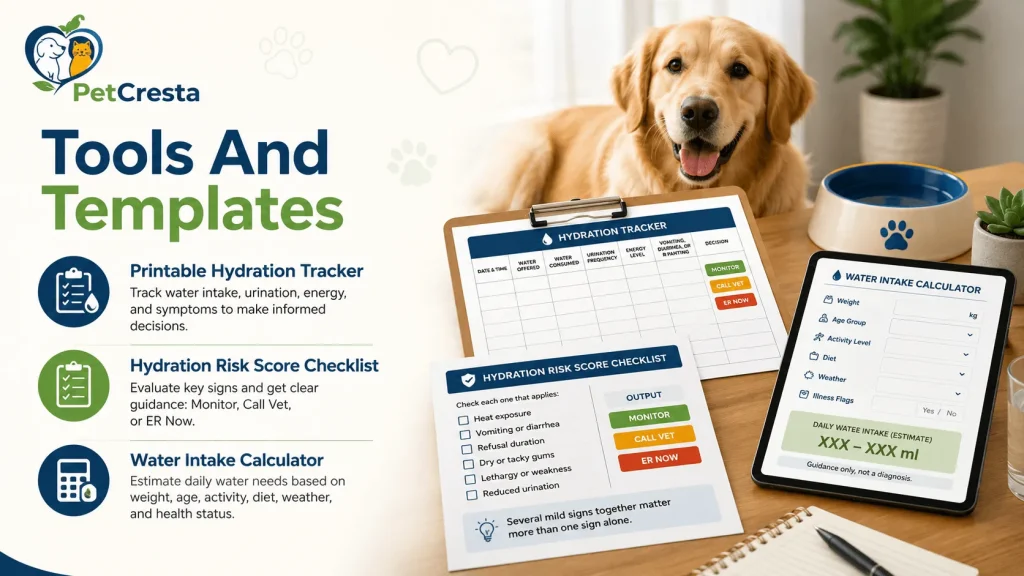
Printable Hydration Tracker
Use a simple log with:
- Date and time
- Water offered versus consumed
- Urination frequency
- Energy level
- Vomiting, diarrhea, or panting
- Decision: monitor, call vet, or ER now
Hydration Risk Score Checklist
Check each one that applies:
- Heat exposure
- Vomiting or diarrhea
- Refusal duration
- Dry or tacky gums
- Lethargy or weakness
- Reduced urination
Output
- Monitor
- Call vet
- ER now
Several mild signs together matter more than one sign alone.
Water Intake Calculator
A practical intake tool can consider:
- Weight
- Age group
- Activity level
- Diet
- Weather
- Illness flags
The result should be treated as guidance only, not a diagnosis.
Key Takeaways
- The majority of healthy adult dogs are not able to go for more than 12-24 hours without drinking water.
- If you’re asking what time dogs can go without water, don’t use of survival time for a test at home.
- The risk increases significantly in the case of diarrhea, vomiting, excessive heat, and illness.
- The first home check-ups for gums include skin tenting and capillary replenishment.
- The signs of dehydration in dogs are more relevant when they are present in a group.
- The feeling of weakness, vomiting and collapse or difficulty urinating indicates urgent medical attention from a veterinarian.
FAQ’s: How Long Can A Dog Last Without Water
Most healthy adult dogs should not go more than 12–24 hours without drinking, and the risk rises much sooner with heat or illness.
Some dogs might survive longer than a day, but dehydration can become dangerous well before that and needs veterinary attention.
Dehydration can develop within hours if the dog is sick, vomiting, has diarrhea, or is overheating.
Tacky gums, thick saliva, lower energy, and reduced urination are common early signs.
Offer fresh water, try small, frequent amounts or ice chips, and call a vet if refusal continues or symptoms appear.
It can be, especially with vomiting, diarrhea, lethargy, or heat exposure; contact a vet for same-day advice.
A common guideline is about 1 ounce per pound per day, but diet, weather, and activity can change needs.
In most cases, yes, especially in warm weather, after exercise, and for puppies and seniors.
Severe untreated dehydration can reduce circulation and contribute to organ problems, especially when linked to illness or overheating.
Only with veterinary guidance, since electrolyte needs and ingredient safety vary.
Stress, bowel issues, mild nausea, or early illness can cause this; monitor closely and call a vet if it persists or worsens.
Offer small amounts more slowly and call a vet, especially if vomiting repeats or the dog becomes weak.
References
- MSD Veterinary Manual. Maintenance Fluid Plan in Animals.
- MSD Veterinary Manual. The Fluid Resuscitation Plan in Animals.
- MSD Veterinary Manual. Vomiting in Dogs.
- AAHA. 2024 Fluid Therapy Guidelines for Dogs and Cats.
- AAHA. 2020 Anesthesia and Monitoring Guidelines for Dogs and Cats.
- AVMA. Warm Weather Hazards / Warm Weather Pet Safety materials.
- AVMA. Pet First Aid materials.