The Everyday Challenges Of Running A Dog Boarding Facility
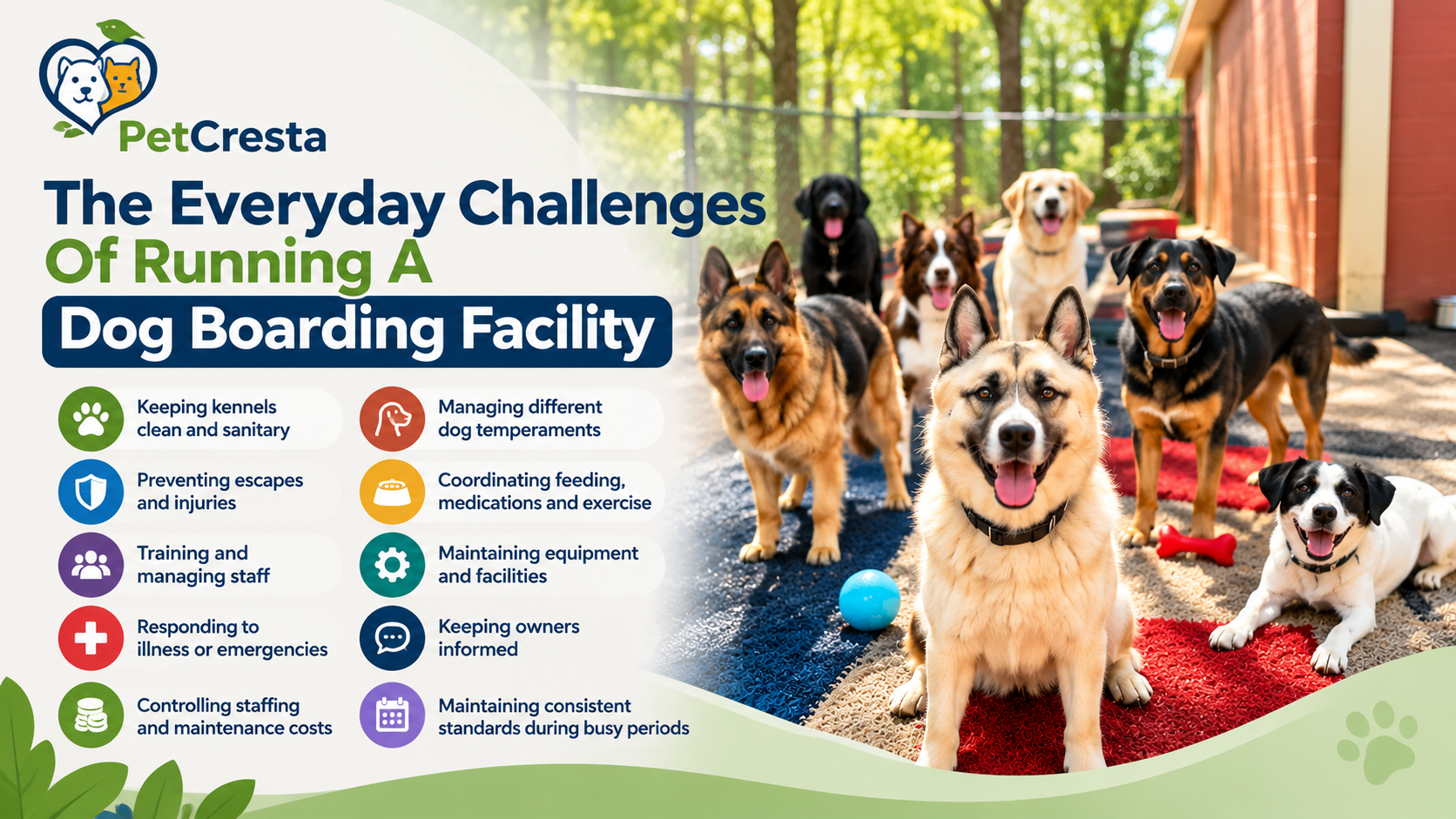
Running a successful dog boarding facility involves much more than giving dogs a comfortable place to stay while their owners are away.
Behind the scenes, staff members have to manage feeding schedules, exercise, cleaning, behavior, medications, customer communication, maintenance, and safety at the same time. Those responsibilities become harder when dozens of dogs arrive with different routines, temperaments, health needs, and levels of comfort around unfamiliar people or animals.
A well-run boarding facility therefore depends on systems as much as good intentions. Clean accommodation, trained employees, accurate records, secure spaces, dependable equipment, and clear emergency procedures all affect the quality of care.
Understanding these everyday challenges can help boarding managers build an operation that is safer for dogs, easier for staff to manage, and more reassuring for owners.
Quick Answer: What Makes A Dog Boarding Facility Difficult To Run?
The biggest challenges of running a dog boarding facility usually include:
- keeping kennels and exercise areas sanitary
- managing dogs with different temperaments
- preventing escapes and injuries
- coordinating feeding, medications, and exercise
- training employees consistently
- maintaining equipment and facilities
- responding to illness or emergencies
- keeping owners informed
- controlling staffing and maintenance costs
- maintaining consistent standards during busy periods
The challenge is not handling any one of these jobs individually. It is keeping all of them organized every day, including weekends, holidays, staff changes, and peak boarding periods.
Maintaining Clean Kennels And Outdoor Exercise Areas
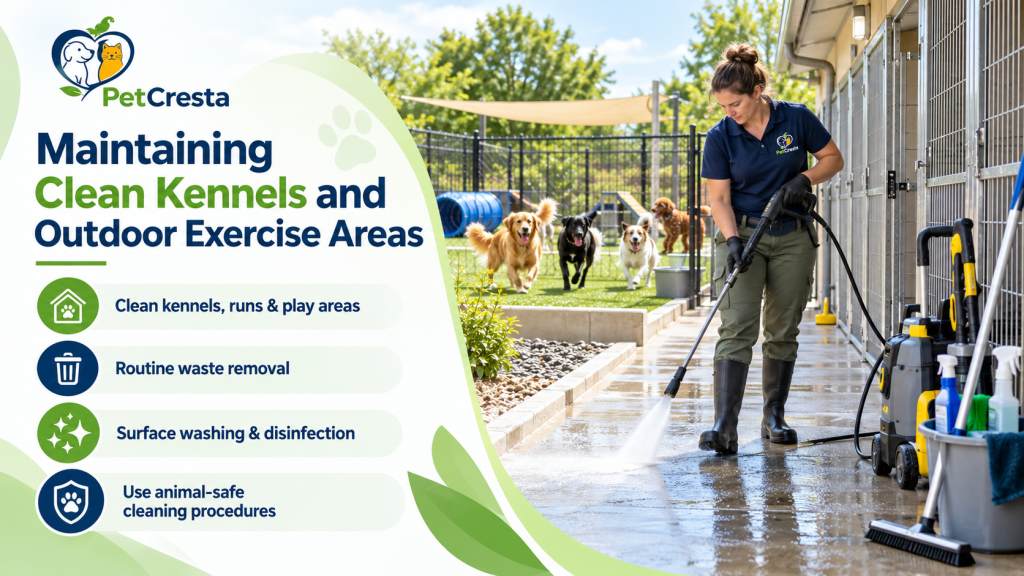
Cleanliness is one of the most demanding responsibilities in a boarding facility.
Kennels, outdoor runs, play areas, food-preparation spaces, entrances, and service areas can become dirty quickly when several dogs are using them throughout the day. Waste, spilled water, muddy paws, hair, and food residue all require regular attention.
Facilities with concrete outdoor surfaces, washable kennel structures, and dedicated maintenance areas may benefit from commercial cleaning equipment.
Suppliers such as https://hotsyhouston.com/ offer commercial pressure-washing equipment that can support cleaning of appropriate exterior and washable surfaces. Equipment should always be used according to manufacturer instructions and away from animals while cleaning is taking place.
A written sanitation schedule makes the work easier to manage. Staff should know which areas need immediate cleaning, which require routine washing, and when deeper sanitation is needed.
Separate Cleaning From Disinfection
Cleaning and disinfection are related, but they are not exactly the same job.
Physical cleaning removes dirt, hair, organic matter, and waste from a surface. Disinfection is performed afterward with an appropriate product when required.
Trying to disinfect a visibly dirty surface may reduce how effectively the process works.
Staff should also be trained to follow product dilution, contact time, ventilation, rinsing, and animal-safety instructions rather than assuming that stronger concentrations provide better results.
Reduce Cross-Contamination Between Dogs
Shared bowls, toys, cleaning tools, bedding, and play spaces can transfer dirt or infectious material between animals if procedures are poorly organized.
Facilities can reduce this risk by maintaining separate cleaning supplies where appropriate, laundering bedding thoroughly, washing reusable food and water dishes, and following a planned cleaning sequence.
Dogs showing signs of possible infectious illness should not simply be moved into ordinary group areas.
The facility should have a procedure for separating the dog and contacting the owner or veterinarian when necessary.
Choosing Reliable Equipment For Daily Operations
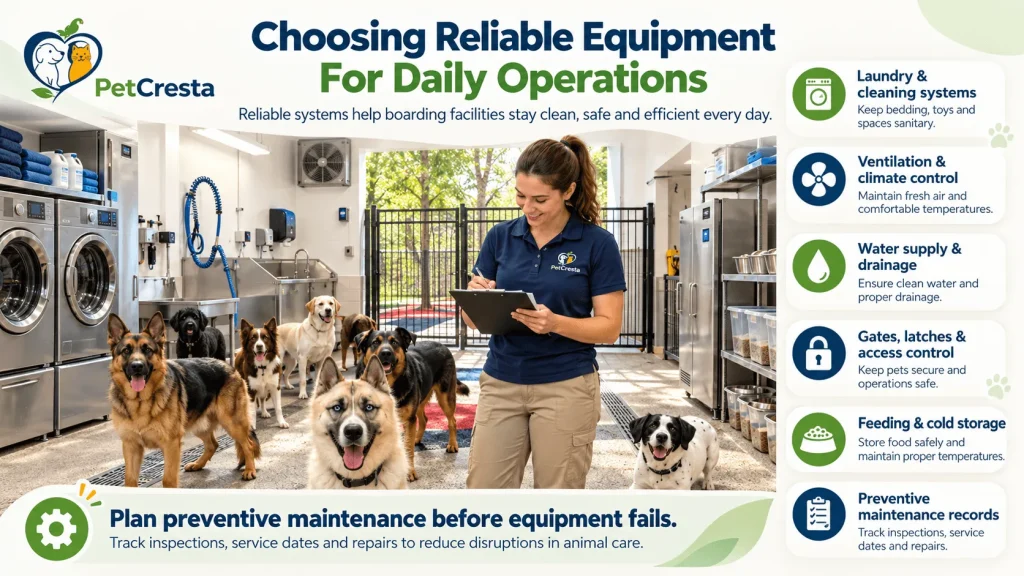
A boarding business relies on far more equipment than customers usually see.
Laundry machines, ventilation systems, water supplies, gates, drainage, cleaning equipment, refrigerators, feeding equipment, lighting, and climate-control systems may all operate for long periods every day.
A failure can disrupt several parts of the operation at once.
Owners responsible for large properties may also need specialized machinery for exterior cleaning and maintenance.
For example, Hotsy South Texas supplies pressure-washing solutions for businesses handling commercial cleaning workloads. The right equipment can reduce the amount of time employees spend maintaining appropriate exterior and service areas.
Equipment selection should be based on workload, surface compatibility, maintenance requirements, available storage, and safe operating procedures.
Plan Preventive Maintenance Before Equipment Fails
Waiting until an essential machine stops working can leave staff scrambling during an already busy day.
Facilities should maintain basic inspection and servicing schedules for equipment that affects sanitation, ventilation, water supply, access control, and temperature.
Manufacturer recommendations should guide maintenance intervals.
Keeping records of repairs and service dates can also help managers identify equipment that is becoming unreliable before repeated breakdowns interfere with animal care.
Managing Dogs With Different Temperaments and Needs
No two boarding dogs respond to the environment in exactly the same way.
One dog may immediately enjoy staff attention and group play. Another may become quiet and withdrawn. Some bark constantly during the first day, while others become overstimulated around unfamiliar dogs.
Good boarding care does not assume that every dog should follow the same social routine.
Before admission, staff should collect information about:
- normal feeding routines
- known medical needs
- medications
- previous boarding experience
- behavior around unfamiliar dogs
- handling sensitivities
- escape behavior
- exercise preferences
- signs of fear or stress
- emergency contacts
That information should be available to the employees actually caring for the dog rather than remaining only in a booking form.
Assess Dogs Before Group Play
Breed and body size alone do not determine whether dogs are suitable play partners.
Staff should consider behavior, play style, arousal level, age, physical limitations, and how each dog responds to the group.
A dog that enjoys other dogs at home or at a familiar park may still behave differently in an unfamiliar boarding environment.
Group play should therefore be supervised, and dogs should have a way to disengage and rest.
Dogs that are uncomfortable in groups may be better suited to individual enrichment or exercise.
Recognize Stress Before It Escalates
Boarding can be stressful even when a facility is well managed.
Staff should watch for meaningful changes such as repeated attempts to escape, persistent hiding, reduced appetite, unusually withdrawn behavior, escalating vocalization, defensive behavior, or inability to settle.
These signs do not all have the same cause, so employees should avoid diagnosing them themselves.
Instead, observations should be documented and escalated according to facility policy.
Dogs showing severe distress, sudden behavior changes, or possible medical problems may need veterinary attention rather than simply more exercise or stricter handling.
PetCresta’s guide on when a dog needs professional training also explains why fear, aggression, and sudden behavioral changes should not automatically be treated as ordinary obedience problems.
Creating Safe Intake And Health Procedures
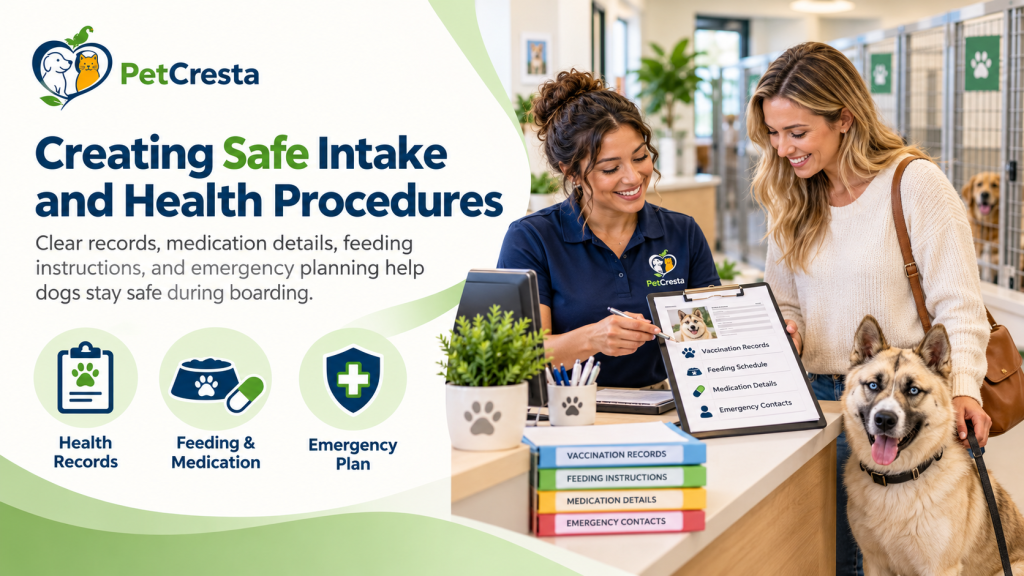
A well-organized boarding stay begins before the owner leaves.
The facility needs accurate information about the dog, its routine, and any special care requirements.
Admission policies may include vaccination documentation or other health requirements depending on local regulations, veterinary guidance, the type of facility, and the services being offered.
Requirements should be explained clearly before arrival so owners have time to prepare.
Record Feeding, Medication, And Emergency Information
Instructions such as “one tablet twice daily” are not enough unless employees also know which dog receives the medication, the dose, the timing, and what to do if a dose is missed or refused.
The same principle applies to food.
Each dog’s record should make feeding amounts, frequency, allergies or dietary restrictions, medications, owner contacts, and veterinary information easy for authorized staff to find.
Medication administration should be documented rather than left to memory between shifts.
Have a Plan for Illness or Injury
Even healthy dogs can become sick or injured during a boarding stay.
Facilities need a written procedure covering:
- who evaluates the situation
- when the owner is contacted
- when veterinary care is sought
- which veterinary clinic should be used
- how transportation is handled
- how treatment authorization is documented
- how the dog is separated from other animals when appropriate
Local laws and licensing requirements vary, so boarding businesses should verify the rules that apply in their jurisdiction.
The goal is to avoid making important decisions for the first time during an emergency.
Training Employees And Organizing Daily Responsibilities
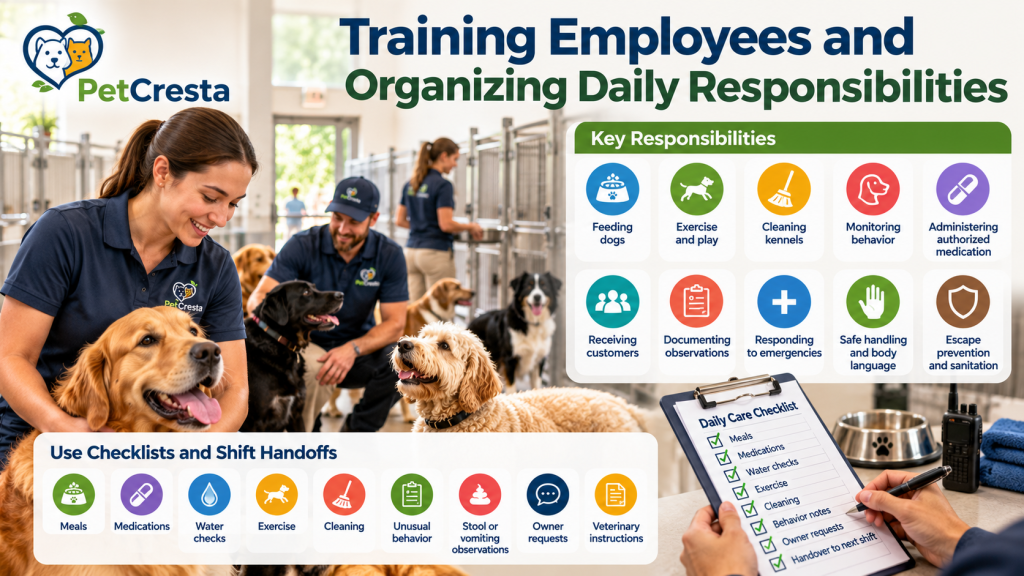
Employees influence nearly every part of the boarding experience.
Their work may include feeding dogs, exercising them, cleaning kennels, monitoring behavior, administering authorized medication, receiving customers, documenting observations, and responding to emergencies.
Those responsibilities require more than simply liking dogs.
Staff training should cover safe handling, canine body language, sanitation, escape prevention, incident reporting, emergency procedures, and the facility’s own operating policies.
New employees should understand when they are expected to handle a situation themselves and when it should be passed to a supervisor, veterinarian, or other qualified professional.
Use Written Checklists And Shift Handoffs
Busy boarding operations create opportunities for small tasks to be missed.
Written or digital records can help track:
- meals
- medications
- water checks
- exercise
- cleaning
- unusual behavior
- stool or vomiting observations when relevant
- owner requests
- veterinary instructions
Shift handovers are especially important.
If one employee notices that a normally social dog refused breakfast or became unusually withdrawn, the next employee should not have to discover that change from scratch.
Consistent recordkeeping makes care more continuous.
Preventing Escapes And Other Safety Incidents
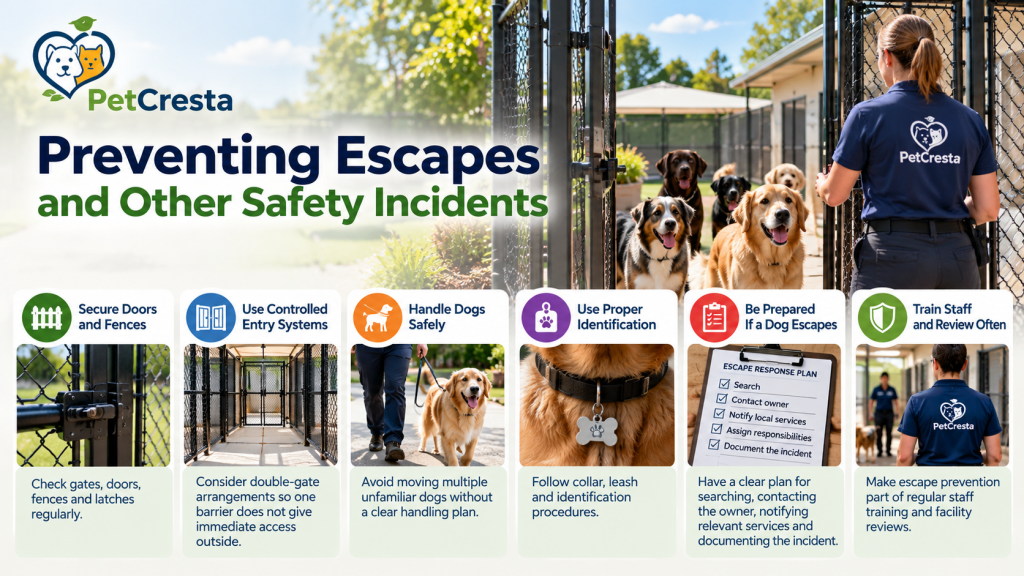
Escape prevention deserves its own operating procedure.
Dogs that normally stay close to their owners may behave very differently when frightened, overstimulated, or placed in unfamiliar surroundings.
Doors, gates, fences, kennel latches, and transfer areas should be checked regularly.
Facilities can also use controlled entry systems or double-gate arrangements where practical so that opening one barrier does not immediately give a dog access to an unsecured exterior area.
Employees should avoid moving multiple unfamiliar dogs through entrances without a clear handling plan.
Collar, leash, and identification procedures should also be defined.
If a dog does escape, staff should already know who is responsible for searching, contacting the owner, notifying relevant local services, and documenting the incident.
PetCresta’s dog ran away guide provides a useful overview of immediate search and recovery steps.
Keeping Owners Informed Throughout Their Dog’s Stay
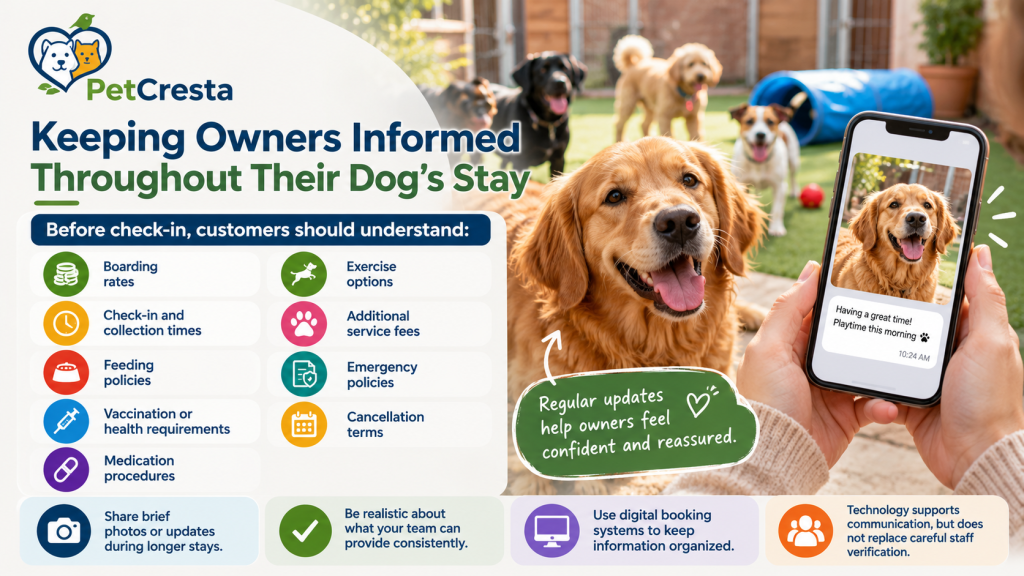
Leaving a dog in someone else’s care can be stressful for the owner as well as the animal.
Clear communication reduces uncertainty.
Before check-in, customers should understand:
- boarding rates
- check-in and collection times
- feeding policies
- vaccination or health requirements
- medication procedures
- exercise options
- additional service fees
- emergency policies
- cancellation terms
During longer stays, brief photographs or updates can reassure owners that their dog is settling in.
Updates should still be realistic. A facility should not promise constant photographs if staffing levels cannot support them consistently.
Digital booking systems can help keep reservations and care instructions organized, but technology does not replace careful verification by staff.
Balancing Operating Costs With Quality Animal Care
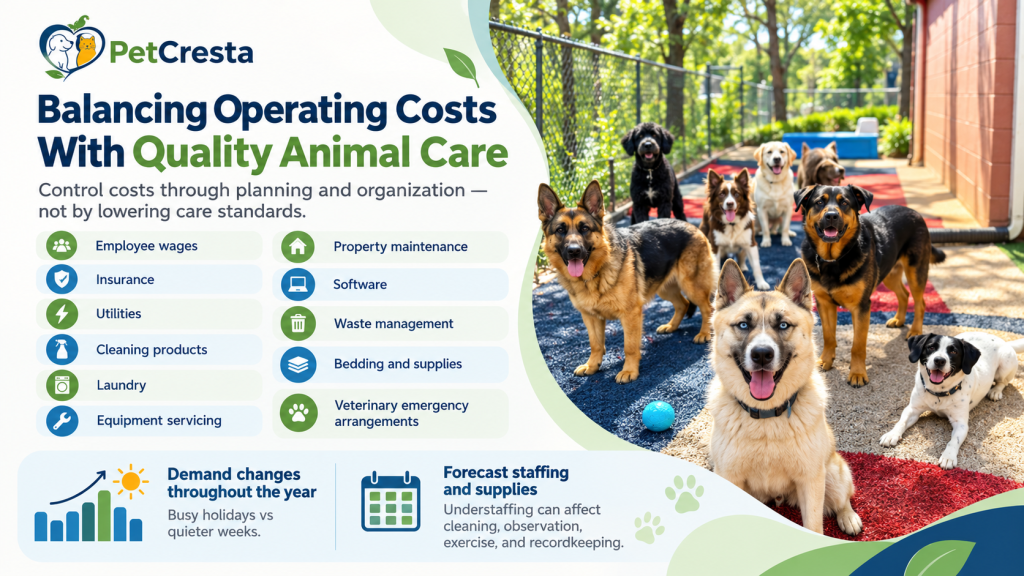
Dog boarding businesses have substantial ongoing expenses.
Common costs include:
- employee wages
- insurance
- utilities
- cleaning products
- laundry
- equipment servicing
- property maintenance
- software
- waste management
- bedding and supplies
- veterinary-related emergency arrangements
Demand can also vary significantly throughout the year.
Holiday periods may fill the facility quickly, while quieter weeks produce fewer bookings without eliminating fixed expenses.
Managers therefore need to forecast staffing and supply requirements rather than treating every month the same.
Cost control should focus on reducing waste and improving organization, not reducing care below reasonable standards.
Understaffing may appear less expensive in the short term, but it can make cleaning, observation, exercise, and recordkeeping harder to perform consistently.
Building a Reputation That Encourages Repeat Bookings
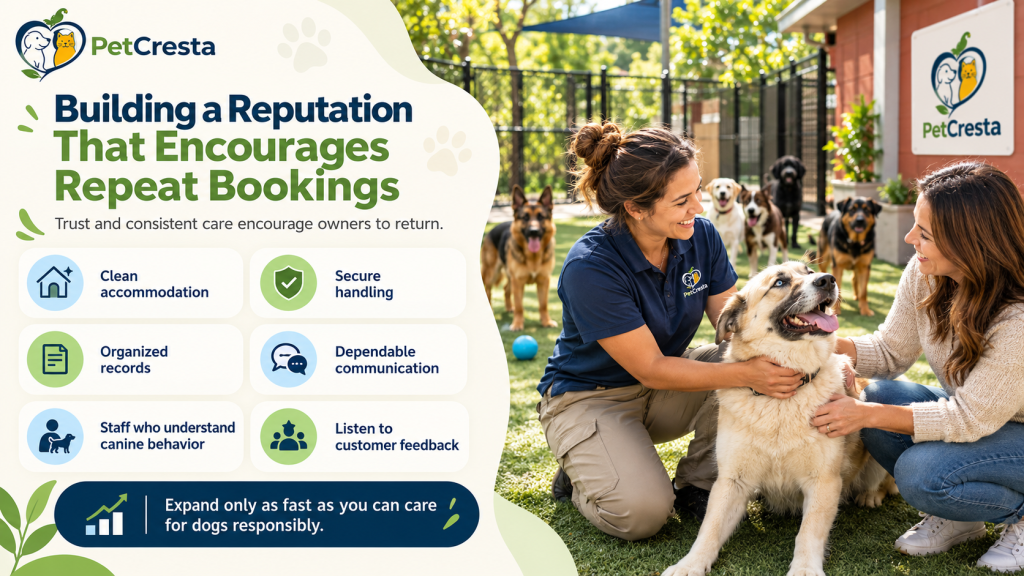
Trust determines whether many owners return to a boarding facility.
A polished website may help someone discover the business, but repeat bookings are built through the experience the owner and dog receive.
Clean accommodation, secure handling, organized records, dependable communication, and employees who understand canine behavior all contribute to that experience.
Feedback can also expose problems that managers no longer notice themselves.
If several customers raise similar concerns about check-in delays, communication, cleanliness, or collection procedures, the issue deserves attention rather than being treated as an isolated complaint.
Growth creates another challenge.
Adding more kennels increases capacity, but the facility may also need more staff, cleaning equipment, exercise space, recordkeeping capacity, and supervision.
Expansion should therefore be planned around the number of dogs the business can care for responsibly, not simply the maximum number of enclosures that fit on the property.
Final Takeaway
Running a dog boarding facility requires constant coordination between animal care and business operations.
Cleanliness and reliable equipment matter, but so do careful intake procedures, trained employees, behavior monitoring, emergency planning, escape prevention, accurate records, and clear communication with owners.
The strongest facilities build repeatable systems around those responsibilities.
That helps employees know what to do, gives dogs more consistent care, and gives owners greater confidence when leaving their pets behind.
FAQ’s
The biggest challenges usually include sanitation, staffing, managing different dog temperaments, preventing escapes, maintaining equipment, recording medications and feeding instructions, handling emergencies, and keeping owners informed.
Cleaning frequency depends on the area and how heavily it is used. Waste and soiled areas should be addressed promptly, while kennels, bowls, bedding, exercise areas, and shared surfaces should follow a documented cleaning and sanitation schedule appropriate for the facility.
Good facilities gather behavioral information before admission, observe each dog after arrival, supervise social interaction, create compatible play groups, and provide individual exercise or rest when group activity is not suitable.
No. Group play should depend on compatibility, behavior, health, size where relevant, play style, and the dog’s comfort level. Some dogs are happier and safer with individual exercise.
Useful records include owner contact information, veterinarian details, feeding instructions, medication directions, health requirements, behavior history, handling concerns, emergency contacts, and any relevant special-care instructions.