How To Keep Pets Calm And Safe During Noisy Celebrations
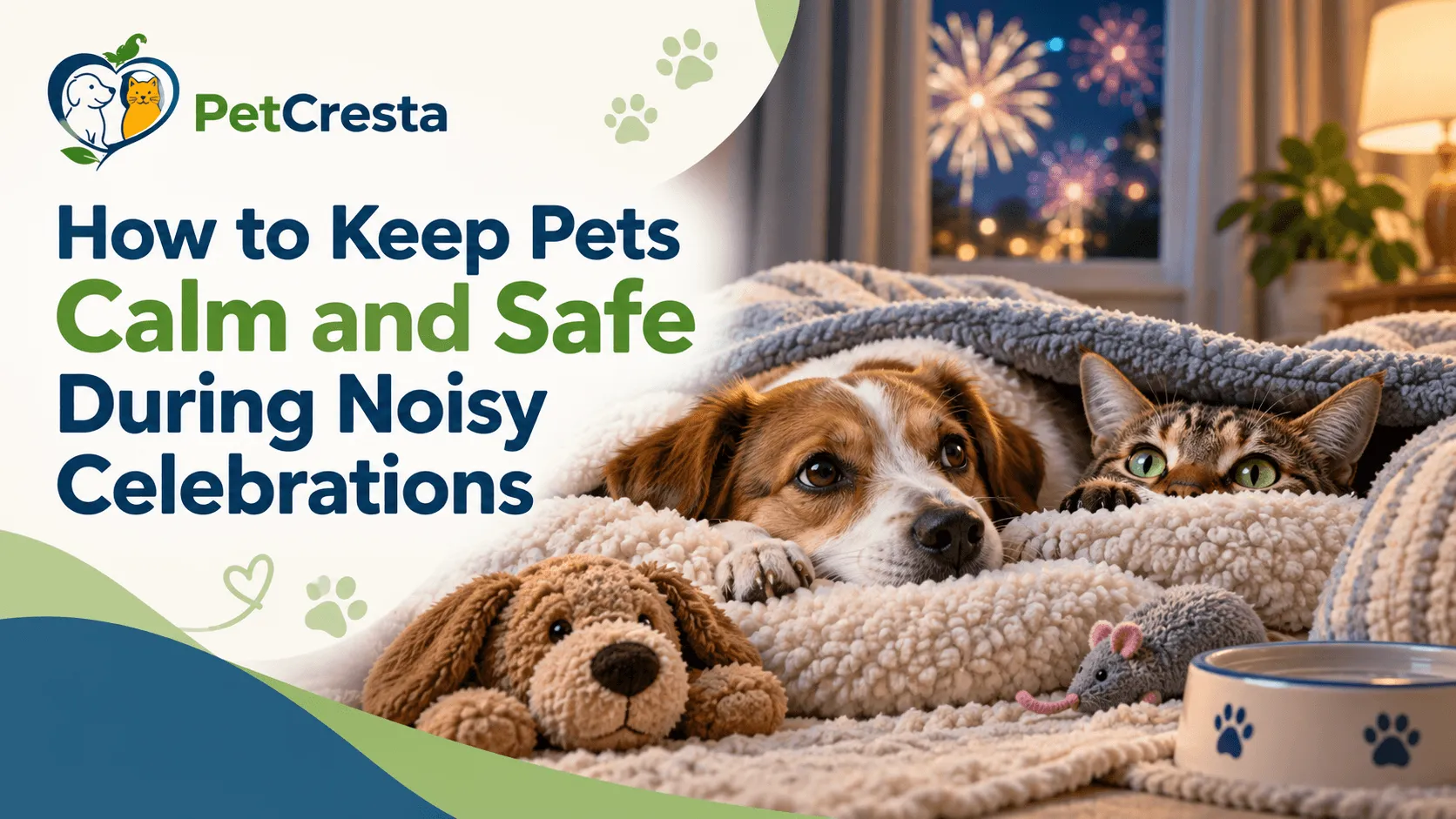
Large crowds, loud music, and fireworks can make celebrations thrilling for humans but stressful for pets. Even normally calm animals can become agitated when their surroundings abruptly change, and dogs and cats might not know where sudden bangs, flashes, or strange voices are coming from.
Being prepared makes a big difference. Pets can feel safer before the noise starts if they have a quiet room, comfortable bedding, and a safe hiding place. By maintaining routines as normal as possible, owners can also lessen needless disruption.
Eliminating every sound is not the goal. That might not be feasible during significant festivities. Rather, the objective is to provide pets with a stable environment where they can hide, stay inside safely, and stay near familiar people. A stressful evening can be kept from becoming dangerous by considering these details before guests arrive or fireworks start.
Quick Answer
When fireworks or other loud celebrations are expected, bring pets indoors early, secure doors and windows, create a familiar quiet area, close curtains, provide normal background sound, and keep feeding and exercise routines as predictable as possible. Check ID tags and microchip information beforehand. If a pet experiences severe or repeated noise-related fear, speak with a veterinarian before the next event.
This is strongly supported by current veterinary and animal-welfare guidance. Cornell recommends preparing a safe indoor area before panic starts, while Blue Cross and the RSPCA recommend keeping pets indoors, reducing exposure to flashes and noise, providing hiding places, and maintaining normal routines.
Prepare A Clean, Quiet Room In Advance
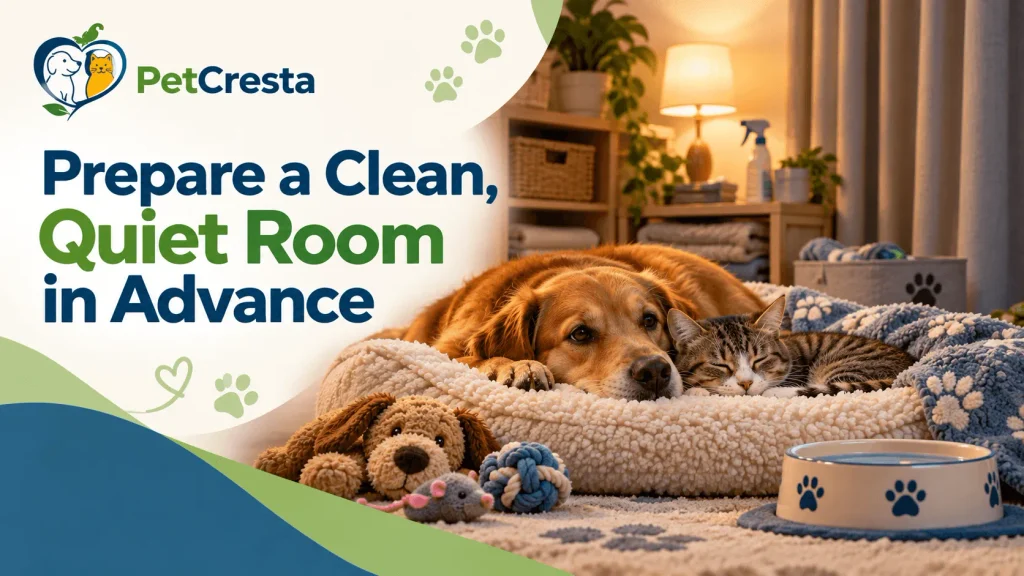
When they have a familiar place to hide, pets can often handle noise better.
Before the celebration starts, set up a room away from the busiest area of the house. Access to water, bedding, and favorite toys can help the space feel more like home rather than like a place where the pet has been abruptly confined.
A cleaner environment can also make the room more comfortable, particularly if it is normally used for storage or receives less everyday attention. Equipment and supplies from US Cleaning Tools fit into this practical side of home preparation, where removing dust and keeping frequently used pet areas clean can make the space easier to use.
However, don’t introduce overpowering cleaning odors right before the event. The animal should still be able to recognize the room because familiar smells can be comforting.
Think About Pets Before Planning Fireworks

Anyone organising a celebration that includes fireworks should consider animals in the area before the first one is lit.
People who shop at Red Apple Fireworks or other fireworks retailers may be planning a visually impressive celebration, but the decision to use fireworks should still come with careful consideration of local rules, safe distances and the effect sudden noise can have on pets and neighbours.
It is never appropriate to take pets outside to watch fireworks. When an unexpected explosion occurs nearby, even an animal that typically reacts well to loud noises may become frightened.
Bring pets inside well in advance of dusk if fireworks are anticipated in the neighborhood. Because scared animals may try to flee through areas they would typically ignore, doors, gates, and windows should be thoroughly inspected.
It is much simpler to plan around pets than to search for a scared animal after it has fled. If a frightened dog does get loose, follow PetCresta’s guide on what to do if your dog runs away for first-hour search steps, escape-point checks, sighting advice, and ways to prevent another escape.
Reduce Sudden Changes In Sound

A completely silent house can sometimes make outdoor bangs feel even sharper.
It might be possible to lessen the contrast by playing a familiar background sound. A more steady sound environment can be produced by a radio, television, or relaxing playlist played at a moderate volume.
You can lessen outside noise and flashes by closing windows and curtains.
It’s crucial to avoid raising an obvious alarm in response to every bang. Pets frequently pick up on behavioral changes in their owners, and a nervous response can confirm the notion that something hazardous is going on.
Rather, act as normally as you can while still letting the animal stay nearby if it so chooses.
A nervous pet should not be made to interact or come out of hiding. For dogs that also struggle with fear, distractions, or settling in everyday situations, PetCresta’s guide to training an adult dog explains how to build more reliable behavior gradually without overwhelming the dog.
Make Sure Identification Is Up To Date
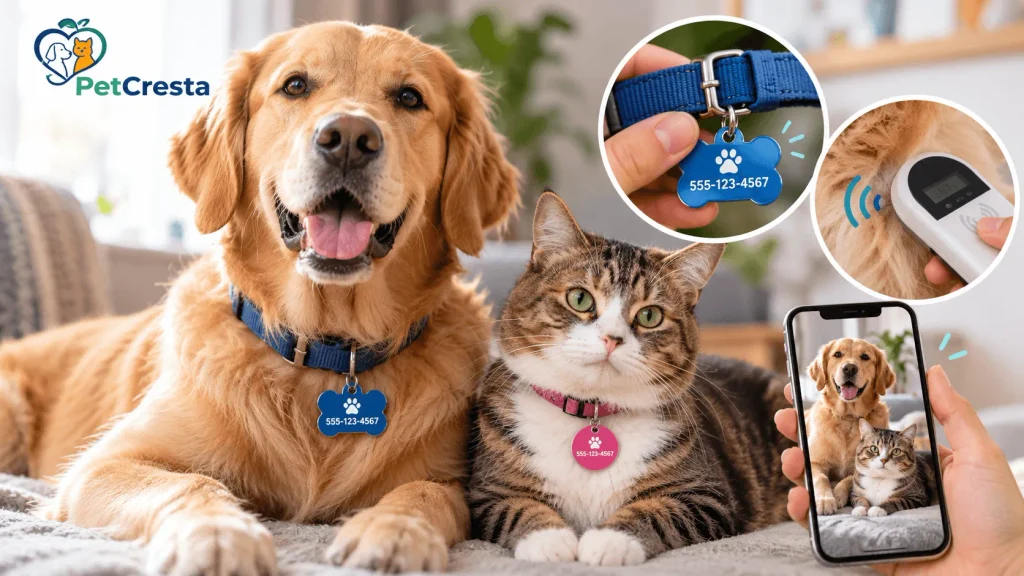
Sometimes scared pets manage to get away, even with careful planning.
Because of this, identification is particularly crucial during holidays and significant occasions. Verify that tags have up-to-date contact information and that collars fit snugly.
If the pet has chips, the microchip details should also be examined.
Sometimes owners update their address or phone number without realizing that the animal’s identification record still contains older information. If something goes wrong, a few minutes spent verifying those details prior to a boisterous celebration can have a significant impact.
It can also be helpful to have recent photos of the pet on hand.
Although it is hoped that these precautions will never be necessary, preparation offers an additional degree of security.
Keep Food and Walks on a Familiar Schedule
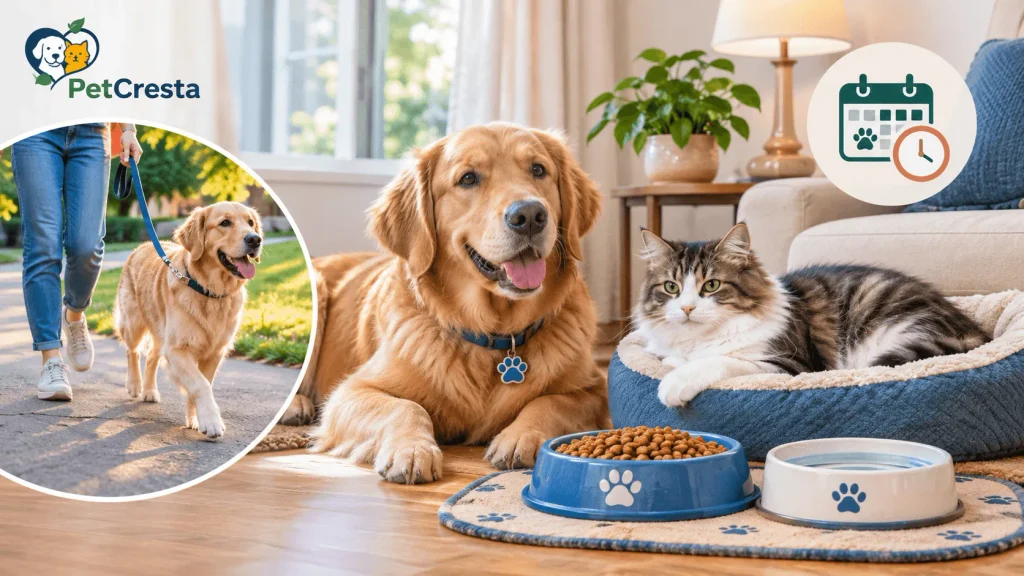
Routine can be reassuring when the surrounding environment becomes unusual.
Feed pets at approximately their normal time and, for dogs, plan walks before noisy celebrations are likely to begin. Trying to take a nervous dog outside once fireworks are already going off can create unnecessary difficulty.
An earlier walk may also provide exercise before the animal spends more time indoors.
During the event, make sure water remains available and avoid giving unfamiliar foods simply because guests are celebrating.
Party snacks can contain ingredients that are unsuitable for animals, and guests may not realise what a pet can or cannot safely eat.
Keeping pet food separate reduces the risk of well-meaning visitors sharing something inappropriate.
Give Pets Space While Keeping Them Secure
Some animals seek reassurance during noisy events, while others prefer to hide.
Both responses can be normal.
If a pet chooses to sit nearby, calm interaction may help. If it goes under furniture or into a familiar crate, it is usually better not to repeatedly pull it back out.
The priority is security.
Guests should be reminded not to leave external doors open, particularly if people are moving frequently between indoor and outdoor areas.
Children should also understand that a frightened pet may need more space than usual. If a dog repeatedly experiences intense fear, panic, or anxiety that interferes with normal activities, it may also help to understand when a dog needs professional training and when veterinary or behavioral support is more appropriate.
A little preparation allows celebrations and pet safety to coexist much more easily. Creating a quiet room, maintaining familiar routines and securing the home can reduce many of the risks associated with noisy events.
Owners cannot control every firework or loud sound outside, but they can control the environment their pets experience inside. That familiar, secure space can make a difficult evening much easier to manage.
Quick Fireworks Safety Checklist For Pet Owners
| Before the celebration | During the noise | Afterward |
|---|---|---|
| Exercise dogs earlier | Keep pets indoors | Return to normal routine |
| Prepare a familiar retreat | Close windows and curtains | Check eating and drinking |
| Check ID and microchip details | Use familiar background sound | Look for lingering distress |
| Secure doors and gates | Allow hiding | Check doors/gates before letting pets out |
| Feed normally | Keep guests from feeding pets | Contact a vet if severe distress continues |
FAQ’s
Bring your pet indoors before fireworks begin, provide a familiar hiding place, close windows and curtains, and use normal background sound such as a television or radio. Keep your own behavior predictable and allow the pet to seek either contact or solitude.
Yes, if your pet actively seeks contact and appears calmer when you provide it. You do not need to deliberately ignore a frightened pet. If the animal prefers to hide, however, avoid forcing interaction or repeatedly pulling it from its safe place.
Dogs and cats are generally safer indoors during fireworks. Bring them inside before displays begin, secure exterior doors and windows, and make sure guests understand that frightened pets may try to escape.
Familiar music, television or radio at a moderate volume may help mask some outside noise. It should be something the pet is already accustomed to rather than a new loud sound introduced during an already stressful event.