6 Hot Weather Dog Walking Myths and How to Keep Dogs Safe
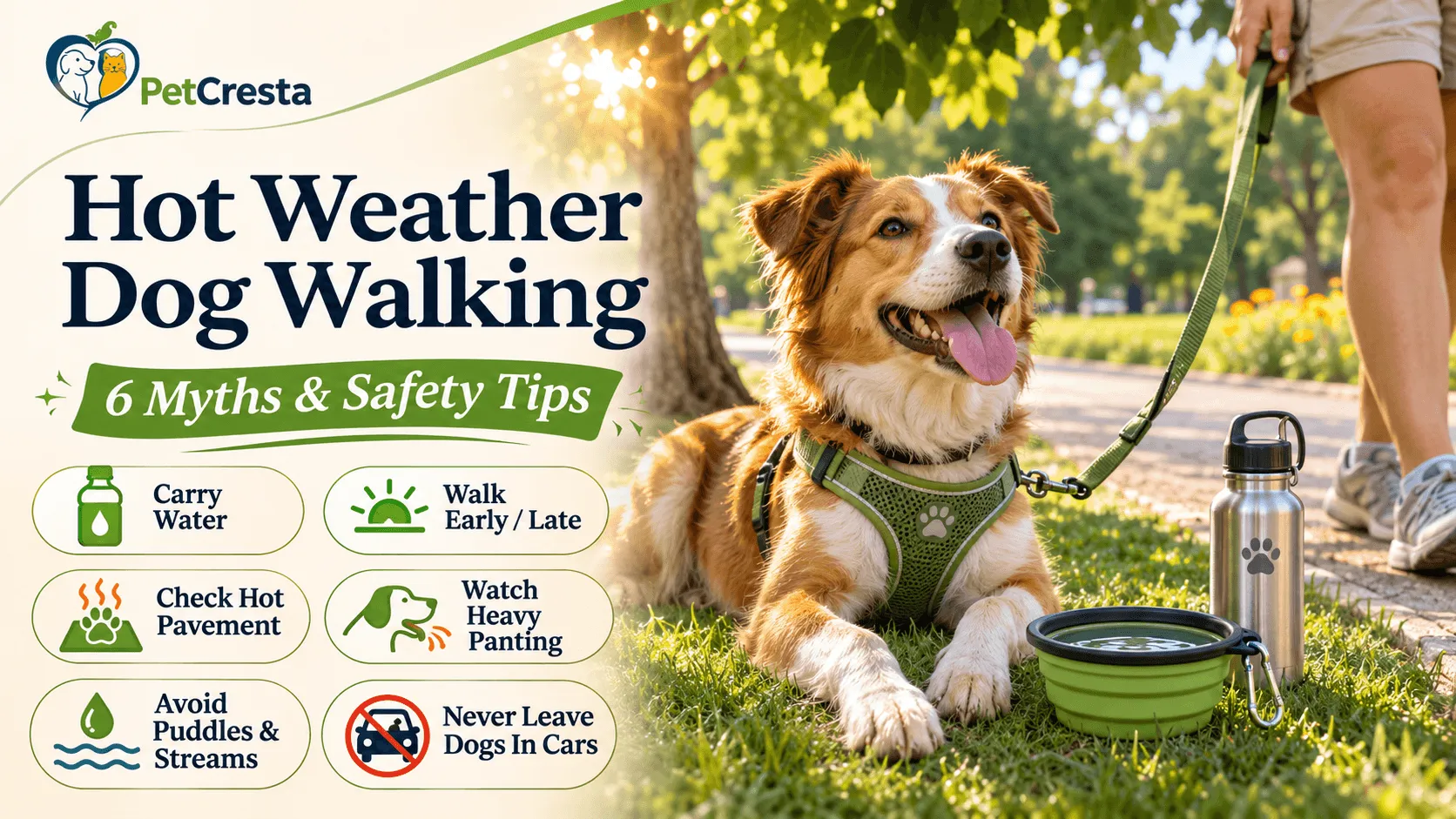
Walking your dog in summer may seem harmless, but rising temperatures, hot pavement, and high humidity can quickly turn an enjoyable outing into a serious health risk. Many pet owners unknowingly follow common hot weather dog walking myths, such as believing a large drink before leaving is enough, ice water is dangerous, or heavy panting simply means their dog is tired.
In reality, dogs regulate body temperature differently from humans, making them more vulnerable to overheating during exercise. Understanding these misconceptions can help owners make safer decisions about hydration, walking schedules, and outdoor conditions.
This guide explains six common myths about walking dogs in hot weather, the facts behind them, and a practical routine for keeping your dog safer.
Why Summer Walks Catch So Many Owners Off Guard
A dog pulling toward the door at 2 p.m. in July isn’t telling you the weather is fine. Most dogs want to walk even when outdoor conditions are uncomfortable or unsafe.
That eagerness can hide how quickly body heat builds during exercise.
Unlike humans, dogs cannot rely on extensive sweating to cool themselves. They regulate body temperature mainly through panting, with limited sweating through their paw pads.
Panting becomes less effective when the air is hot and humid because moisture evaporates less readily. Direct sunlight and heated surfaces can increase the strain.
The safest approach to summer dog walking is to assess the weather, choose suitable walking times, carry drinking water, and watch how your dog responds.
There is no single outdoor temperature that is safe for every dog. Breed, age, health, humidity, and activity level all influence heat tolerance.
Myth 1: A Big Drink Before You Leave Is Enough
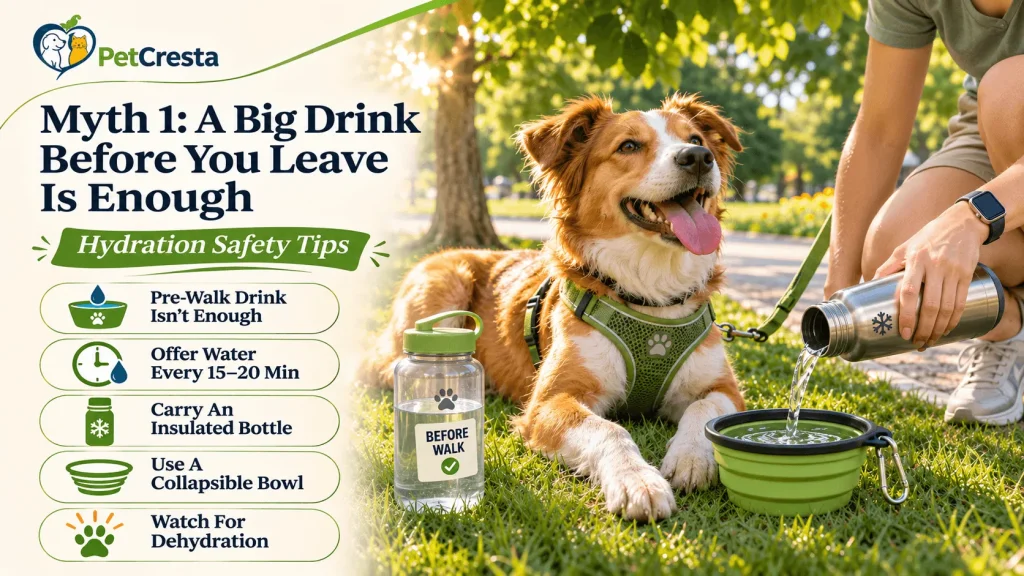
Giving your dog water before leaving is helpful, but it doesn’t guarantee adequate hydration throughout a walk.
Dogs lose moisture through panting, and fluid needs increase with exercise, heat, and humidity. A pre-walk drink should never replace drinking opportunities during longer outings.
For a moderate walk, offering water approximately every 15 to 20 minutes can serve as a practical reminder. However, this is not a fixed veterinary requirement. Some dogs need more frequent access, and particularly hot conditions may make it safer to shorten or cancel the walk.
How to Keep Drinking Water Cool During Summer Walks
Water carried in a thin plastic bottle can become warm during a sunny walk. Although safe drinking water doesn’t need to be icy, many dogs may prefer it cool and fresh.
One practical option is to prepare an insulated bottle before leaving home.
Fill a double-walled bottle partly with ice, add clean water, and bring a collapsible bowl. The kind of insulated tumblers and bottles that drinkware makers such as Polar Camel sell for people can help maintain cooler drinking temperatures during outdoor activities.
Keep the dog’s water separate from your own and offer it regularly. Make sure your pet can drink comfortably rather than forcing water into its mouth.
Owners should also recognize the signs of dehydration in dogs, which may include tacky gums, unusual lethargy, reduced urination, and changes in normal drinking behavior.
These symptoms can have several causes, so a dog that appears weak, unwell, or unable to drink normally needs veterinary assessment.
What actually keeps your dog safe: Carry enough fresh water, offer it throughout the outing, and adjust the walk to the weather rather than relying on one large drink beforehand.
Myth 2: Ice Water Is Dangerous for Dogs
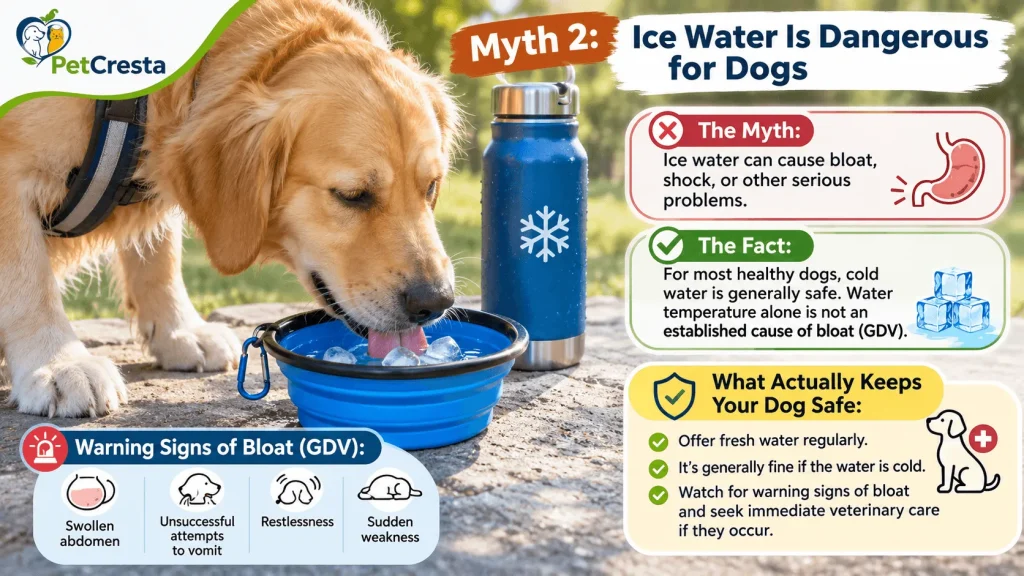
Every summer, stories circulate claiming that drinking ice water causes bloat, shock, or other serious medical problems in dogs.
For most healthy dogs, cold drinking water is generally safe. Water temperature alone is not an established cause of gastric dilatation-volvulus (GDV), the potentially life-threatening condition commonly known as bloat.
Small ice cubes may also be acceptable for some dogs, provided they are offered safely and do not pose choking or dental-injury risks.
The bigger concern during hot weather is allowing a dog to become severely overheated or dehydrated.
Can Drinking Too Much Water Quickly Cause Problems?
An extremely thirsty dog may drink rapidly and occasionally vomit or regurgitate.
This is one reason to offer water frequently instead of waiting until your dog is desperate to drink.
However, vomiting after drinking and GDV are different problems. Rapid water consumption should not be presented as a proven direct cause of GDV.
Large and deep-chested dogs can be at increased risk of the condition, regardless of water temperature.
Owners should understand the warning signs of bloat in dogs, including unsuccessful attempts to vomit, a swollen abdomen, restlessness, and sudden weakness.
Suspected GDV is an immediate veterinary emergency.
What actually keeps your dog safe: Offer fresh drinking water regularly. Cold water is generally acceptable, but unusual vomiting, abdominal swelling, or weakness should never be ignored.
Myth 3: Streams and Puddles Are Nature’s Water Bowl
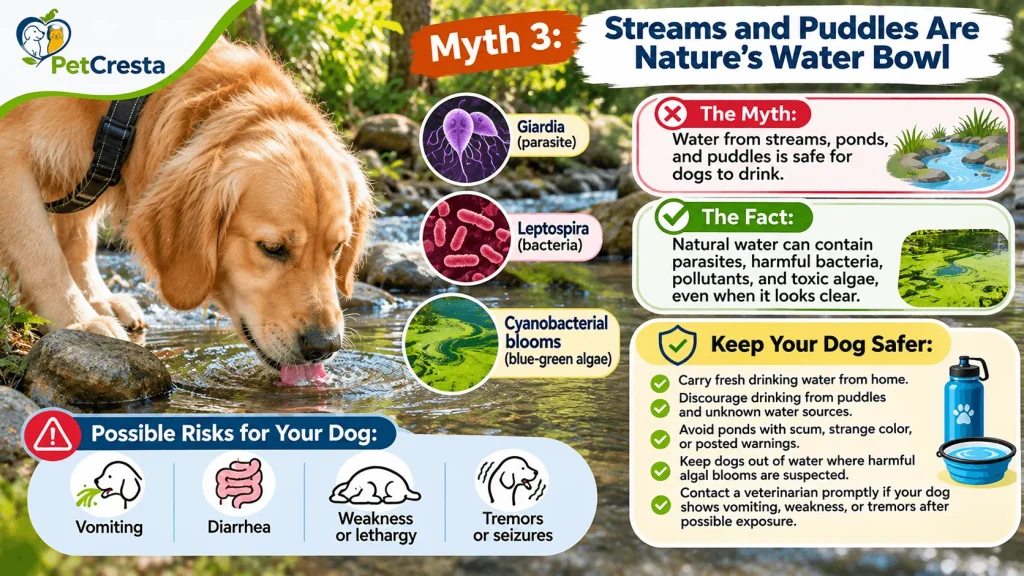
A dog lapping water from a creek may seem perfectly natural. However, water that looks clean is not necessarily safe.
Puddles, streams, ponds, and lakes may contain microorganisms, environmental pollutants, or harmful toxins.
Giardia is a parasite that can spread through contaminated water and cause gastrointestinal illness. Leptospira bacteria may be present in environments contaminated by the urine of infected animals.
Summer brings another concern: cyanobacterial blooms, commonly called blue-green algae.
Some cyanobacteria produce toxins that can cause severe illness in dogs, sometimes after relatively limited exposure.
Why Even Clear Water Can Be Unsafe
Clear or fast-flowing water is not guaranteed to be free from contamination.
Dogs may swallow water while swimming and ingest additional residues when licking their coats afterward.
The best precautions include:
- Carrying fresh drinking water from home.
- Discouraging drinking from puddles and unknown water sources.
- Avoiding ponds with suspicious scum, unusual discoloration, or posted warnings.
- Keeping dogs out of water where harmful algal blooms are suspected.
- Contacting a veterinarian immediately after possible exposure to toxic algae.
If your dog develops vomiting, weakness, tremors, or other unusual symptoms after visiting a natural water source, seek veterinary care promptly.
What actually keeps your dog safe: Bring your own water and avoid potentially contaminated streams, puddles, and ponds.
Myth 4: Heavy Panting Just Means a Good Workout
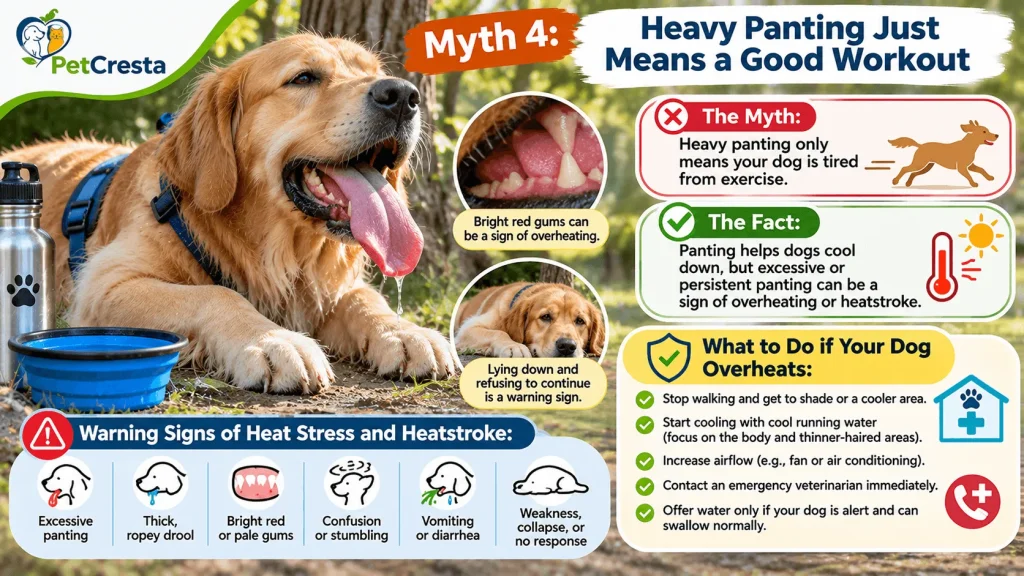
Panting after exercise is normal, but not every panting dog is simply tired.
Dogs use panting to release body heat. When they become too hot, panting may become excessive or fail to reduce their temperature adequately.
What matters is whether your dog is recovering comfortably or showing signs of worsening distress.
A dog that has exercised normally may settle after resting in a cooler environment. Persistent heavy panting, especially when accompanied by weakness or abnormal behavior, should raise concern.
Warning Signs of Heat Stress and Heatstroke
Watch for:
- Persistent or excessive panting.
- Thick, ropey drool.
- Bright red, unusually pale, or abnormal-looking gums.
- A glazed expression, confusion, or stumbling.
- Vomiting or diarrhea.
- Unusual weakness or lagging behind.
- Lying down and refusing to continue.
- Collapse, seizures, or reduced responsiveness.
Heatstroke can develop rapidly and become life-threatening.
What Should You Do if Your Dog Overheats?
Stop walking immediately and move your dog into shade or a cooler indoor environment.
If heatstroke is suspected, begin active cooling at once. Apply cool running water to the dog’s body, especially the trunk and areas with thinner hair, and increase airflow with a fan or air conditioning where available.
Contact an emergency veterinarian and arrange immediate transport. Beginning cooling before transport can improve outcomes, but veterinary care must not be delayed.
Cold-water immersion may also be effective in appropriate circumstances, particularly for young, healthy dogs that can be handled safely. Not every dog is suitable for immersion, so applying running water is a practical general first-aid option.
If your dog is alert and able to swallow normally, offer water without forcing it. Do not attempt to give drinking water to a collapsed or confused dog.
Even if the dog appears to recover, veterinary examination is recommended because internal complications may not be immediately obvious.
What actually keeps your dog safe: Recognize overheating early, stop exercise, start effective cooling, and obtain emergency veterinary care.
Myth 5: All Dogs Handle Heat About the Same
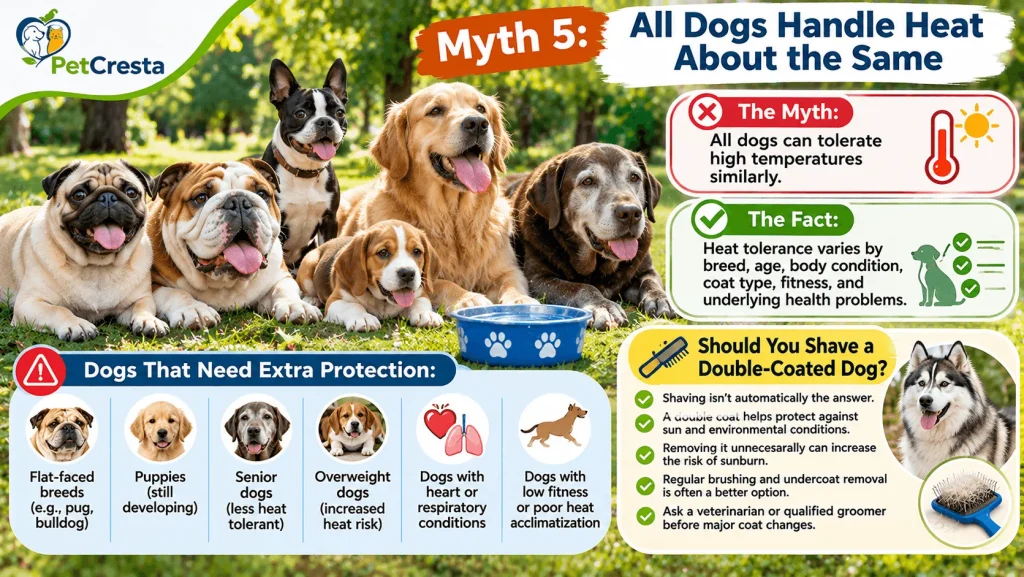
Dogs vary considerably in their ability to tolerate high temperatures.
Breed, age, body condition, coat type, fitness, and underlying health problems can all change the risk.
Flat-faced dogs such as pugs, bulldogs, Boston terriers, and boxers may struggle more because their airway structure can interfere with effective cooling through panting.
The ASPCA’s hot weather safety guidance notes that brachycephalic breeds, elderly pets, and overweight animals are particularly vulnerable to overheating.
Which Dogs Need Extra Protection?
Higher-risk groups can include:
- Flat-faced breeds with shortened airways.
- Puppies and senior dogs.
- Overweight dogs.
- Dogs with heart or respiratory conditions.
- Dogs with limited physical fitness or poor heat acclimatization.
- Dogs exercising intensely in humid weather.
Even a healthy, lean, short-haired dog can overheat when conditions become extreme.
Should You Shave a Double-Coated Dog in Summer?
Shaving isn’t automatically the answer.
A double coat provides some protection from sunlight and environmental conditions. Removing it unnecessarily can expose the skin to additional risks, including sunburn.
Regular brushing and appropriate removal of loose undercoat may be more useful for many double-coated breeds.
However, grooming needs differ by coat type and health status. Ask a veterinarian or qualified groomer before making major coat changes.
What actually keeps your dog safe: Adjust walks to your dog’s individual heat tolerance rather than assuming every breed can handle the same conditions.
Myth 6: A Few Minutes in a Parked Car Won’t Hurt
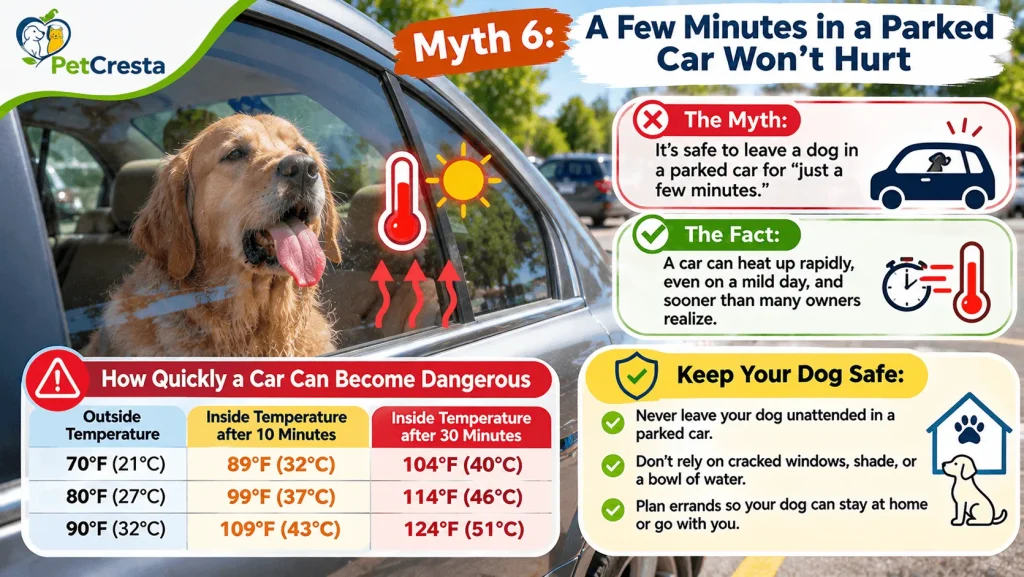
“I’ll only be a minute” is an especially dangerous assumption when a dog is left inside a parked vehicle.
A car can heat up rapidly, even when the outdoor temperature feels comfortable.
Sunlight warms interior surfaces, which transfer heat into the enclosed space. Slightly opening the windows does not reliably prevent dangerous temperature increases.
On a mild day, the temperature inside a parked car can become hazardous in a short time.
Dogs are particularly vulnerable because panting becomes less effective as their surroundings heat up.
Why a Quick Errand Can Become an Emergency
An unexpected checkout delay or short conversation may keep you away longer than planned.
During that time, the dog has limited ways to escape the heat.
Heatstroke may develop before an owner realizes the danger.
Never assume that shade, a cracked window, or a bowl of water makes an unattended parked car safe.
What actually keeps your dog safe: If your dog cannot accompany you into the destination, leave them safely at home rather than inside a parked car.
A Realistic Hot-Day Dog Walking Routine
Safe hot weather dog walking is mainly about timing, preparation, and understanding your dog’s limits.
Use this straightforward checklist before and during summer outings.
| Step | What to Do | Why It Matters |
|---|---|---|
| 1. Check the weather | Review temperature, humidity, sunshine, and heat alerts | Helps avoid dangerous walking conditions |
| 2. Check the pavement | Feel exposed surfaces before walking | Helps identify potentially hot ground |
| 3. Prepare drinking water | Carry fresh water in an insulated bottle and a clean bowl | Makes hydration accessible |
| 4. Choose a cooler route | Prefer shade, grass, and less exposed paths | Reduces heat and hot-surface exposure |
| 5. Shorten the walk | Replace long walks with shorter, slower outings | Reduces heat buildup during exercise |
| 6. Monitor recovery | Watch breathing, energy, and behavior afterward | Helps identify possible heat-related illness |
How Hot Is Too Hot for Dog Paws?
Asphalt, concrete, and other exposed surfaces can become substantially hotter than the surrounding air.
A common practical check is placing the back of your hand against the pavement for several seconds.
If it feels uncomfortably hot, choose another walking surface or postpone the outing.
This is a rough screening method, not a scientifically validated guarantee that pavement is safe.
Can Short Walks Still Meet Your Dog’s Needs?
Yes. During warm weather, a shorter walk with opportunities to sniff and explore can provide mental enrichment without the strain of prolonged exercise.
A gentle walk in the shade may be more appropriate than a long outing on exposed pavement.
Indoor scent games, food puzzles, and reward-based training can also help maintain activity during heatwaves.
When Should You Skip a Summer Dog Walk?
Sometimes the safest decision is to stay indoors.
Consider postponing outdoor activity when:
- Extreme heat warnings are in effect.
- Humidity is high enough to interfere with effective cooling.
- Pavement remains dangerously hot.
- Shade and drinking water are unavailable.
- Your dog has medical conditions that increase heat-related risk.
- Your dog is already panting heavily or appears unwell before leaving.
There is no universal temperature cutoff that applies to every dog.
During extreme weather, toilet breaks may need to be brief, and exercise can be replaced with safe indoor enrichment.
Final Takeaway
Summer dog walking can remain enjoyable, but it requires more care than simply following your usual route.
The six common myths share one problem: they encourage owners to underestimate the effects of heat, dehydration, unsafe water, and prolonged exposure.
Carry clean drinking water, choose cooler walking times, avoid potentially contaminated water sources, and never leave your dog unattended in a parked vehicle.
Most importantly, watch how your dog behaves. Persistent panting, weakness, vomiting, confusion, or collapse may indicate a heat-related emergency.
If you suspect heatstroke, begin active cooling immediately and seek emergency veterinary attention.
A shorter, safer walk is always preferable to pushing your dog beyond its limits.
FAQ’s
It depends on the temperature, humidity, pavement conditions, and your dog’s health. Walks during cooler periods may be safer, but extreme heat can make outdoor exercise dangerous even with drinking water and shade.
There is no single temperature that applies to every dog. Humidity, direct sunlight, breed, age, body condition, and exercise intensity all affect heat tolerance. Avoid walks when heat conditions are unsafe.
Yes, cold drinking water is generally safe for healthy dogs. Water temperature alone is not an established cause of GDV. Offer water regularly and seek veterinary advice if your dog develops concerning symptoms.
Offer fresh drinking water regularly. Longer or warmer outings may require more frequent breaks, while extreme weather may make walking inappropriate altogether.
Yes. Dogs can develop heat-related illness during short outings when temperatures, humidity, individual vulnerability, or exercise intensity create dangerous conditions.
Excessive panting, heavy drooling, weakness, confusion, vomiting, abnormal gum color, or poor coordination can indicate heat-related illness. Suspected heatstroke requires immediate cooling and emergency veterinary care.
It is safer to bring clean water from home. Streams and puddles may contain parasites, bacteria, pollutants, or harmful toxins even when the water appears clear.
If pavement feels uncomfortably hot against the back of your hand, avoid walking on it. Choose a cooler surface and remember that a hand test cannot guarantee paw safety.
Yes. Flat-faced breeds, overweight dogs, older dogs, and dogs with underlying health conditions can have greater difficulty coping with heat.
Stop exercise, move your dog into a cooler environment, begin active cooling using cool running water, and contact an emergency veterinarian immediately. Do not delay medical care even if your dog appears to improve.