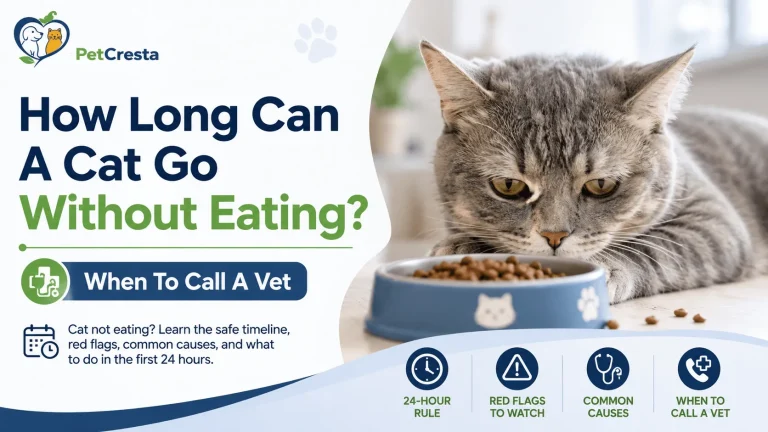
Are Monsteras Toxic To Cats? Symptoms, Safe Limits, And What To Do
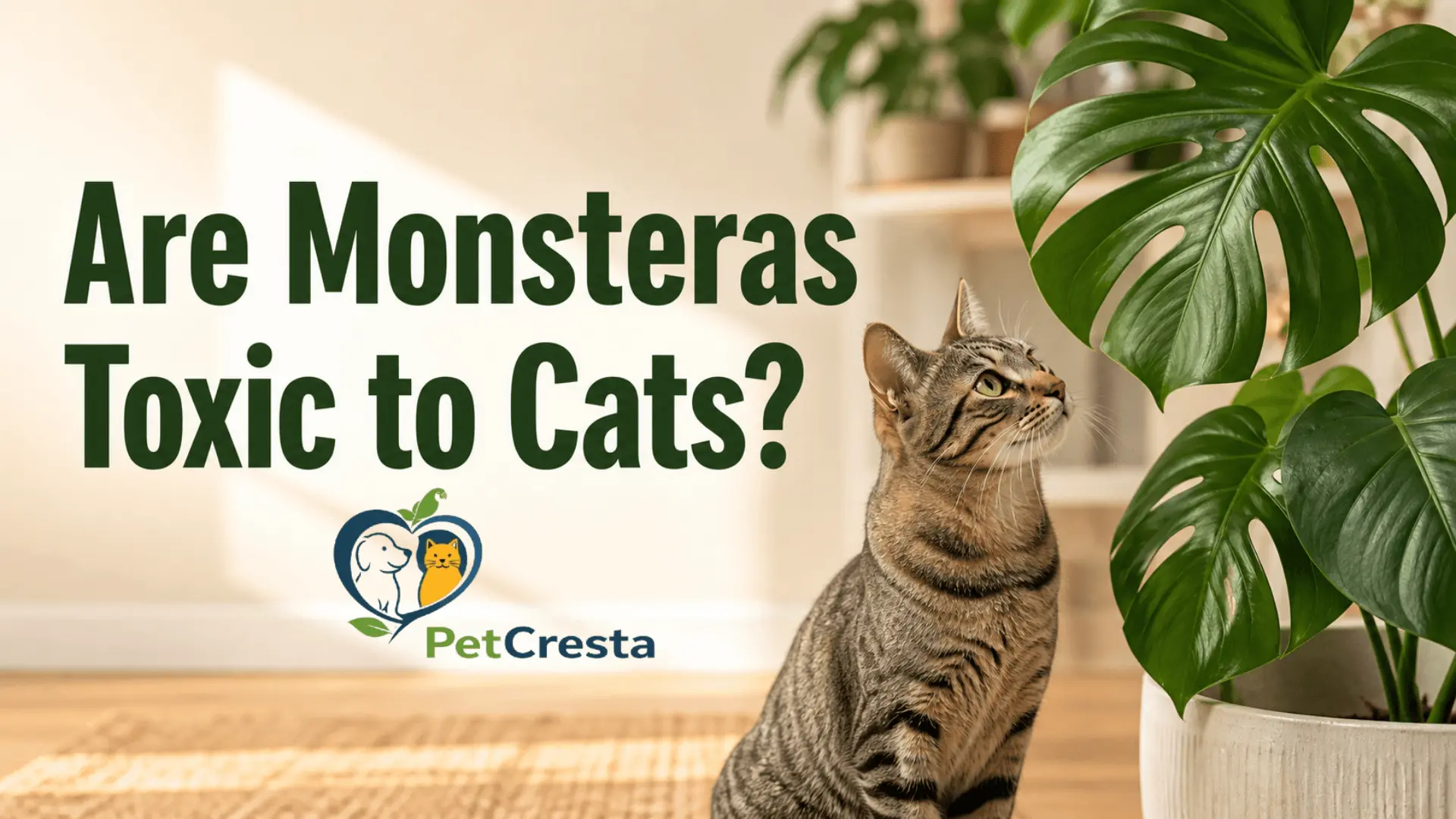
Yes, Monstera plants are toxic to cats. They contain insoluble calcium oxalate crystals that can cause immediate pain and irritation when a cat chews the leaf, stem, or root. Most cases are mild to moderate rather than life-threatening, but the reaction can be painful and may look dramatic.
This guide explains the symptoms to watch for, what to do right away, when the situation becomes urgent, which Monstera types are unsafe, and how to reduce risk at home.
Clinical note: This article is educational and does not replace direct veterinary care.
TL;DR: Monstera Plant Characteristics At A Glance
| Characteristic | Detail |
|---|---|
| Common names | Monstera, Swiss cheese plant, hurricane plant, cutleaf philodendron, Mexican breadfruit |
| Most common scientific name | Monstera deliciosa |
| Plant family | Araceae |
| Main toxic principle | Insoluble calcium oxalate crystals |
| Main exposure route | Chewing or contact with sap from broken tissue |
| Most common signs | Oral pain, drooling, pawing at the mouth, vomiting, trouble swallowing |
| Usual severity | Mild to moderate |
| Cats are at a higher practical risk | Kittens, small cats, persistent plant chewers |
| Main safety point | No part of the plant should be treated as safe to chew |
Monstera And Cats: At A Glance
Before going deeper, here is a fast reference covering the most important facts about monstera toxicity in cats.
| Topic | Key fact |
|---|---|
| Is Monstera plant toxic to cats? | Yes |
| What causes the reaction? | Insoluble calcium oxalate crystals |
| How fast do signs appear? | Usually within seconds to minutes after chewing |
| Is sniffing dangerous? | No, chewing is the main risk |
| Are all common varieties unsafe? | Yes |
| Is it usually fatal? | No, fatal outcomes are very uncommon |
| What should be done first? | Remove access, rinse the mouth if possible, and call a vet |
| What should not be done? | Do not induce vomiting, and do not start random home remedies without guidance |
| What is the biggest emergency sign? | Trouble breathing or marked throat swelling |
Quick Answer: Are Monsteras Toxic To Cats?
Yes. Monstera is toxic to cats. The usual problem is fast mouth and throat irritation, not delayed organ failure. Signs often start within seconds to minutes after chewing because the plant causes direct tissue irritation on contact. Most cases are painful but not fatal, yet the reaction should not be ignored.
Emergency:
If a cat has just chewed a monstera, take these steps right away:
- Remove access to the plant and any loose pieces
- Gently wipe or rinse the mouth if the cat allows it
- Offer fresh water
- Call a veterinarian or poison service
- Go to an emergency clinic now if there is breathing trouble, marked swelling, collapse, repeated vomiting, or inability to swallow water
Why Monstera Is Toxic To Cats
Monstera toxicity starts on contact. When plant tissue is broken, insoluble calcium oxalate crystals are released and embedded in the soft tissues of the mouth, lips, tongue, and throat. That is why cats often react within seconds to minutes after chewing.
These crystals cause physical irritation rather than delayed systemic poisoning. A cat may suddenly stop chewing, drool, paw at the mouth, shake the head, or show discomfort when swallowing. If plant material reaches the stomach, vomiting may follow.
In most cases, the main concern is pain and local swelling rather than organ damage. The situation becomes urgent if swelling affects swallowing or breathing, or if vomiting continues long enough to risk dehydration.
Is Every Type Of Monstera Poisonous To Cats? Species Breakdown
Many cat owners search for a specific variety rather than the whole plant group. That is useful because Monstera is sold under different names, and some plants are mislabeled in shops.
Is Every Type Of Monstera Poisonous To Cats?
All commonly kept Monstera varieties should be treated as toxic to cats. If a plant belongs to this group or is sold under a similar aroid houseplant label, it is safest to assume it is not appropriate for chewing.
Monstera Deliciosa Toxic To Cats
Yes. Monstera deliciosa is toxic to cats. This is the plant most people mean when they say Swiss cheese plant. It contains insoluble calcium oxalate crystals and can cause oral pain, drooling, vomiting, and swallowing discomfort.
Monstera Adansonii Toxic To Cats
Yes. Monstera adansonii is also toxic to cats. Its trailing growth can place leaves lower in the home, which may make access easier for curious cats.
Mini Monstera Toxic To Cats
Plants sold as mini monstera should also be treated as unsafe around cats. Many owners assume the smaller size means a lower risk, but chewing is still the issue.
Monstera Peru Toxic To Cats
Yes. Monstera Peru should also be treated as toxic to cats. The same general risk pattern applies.
| Plant name | Common label | Toxic to cats? | Practical note |
|---|---|---|---|
| Monstera deliciosa | Swiss cheese plant | Yes | Most common indoor type |
| Monstera adansonii | Swiss cheese vine | Yes | A trailing habit can lower access |
| Mini monstera sold in shops | Mini monstera | Treat as yes | Small size does not make it safe |
| Monstera Peru | Monstera Peru | Yes | The same household caution applies |
How Dangerous Is It If A Cat Chews Monstera?
There is no useful safe amount to chew. Even one bite can cause pain, drooling, and mouth irritation. The reason many cases stay mild to moderate is that the burning sensation often makes the cat stop quickly.
That does not mean the exposure should be brushed off. A small bite can still justify first aid, close monitoring, and a call to a veterinarian or poison service. The main emergency concern is swelling that affects swallowing or breathing.
Monstera Belongs to a Toxic Plant Family
Monstera plants that cat owners keep are part of a much larger group of toxic houseplants. The Araceae family, commonly called aroids, contains dozens of popular houseplants that share the same calcium oxalate toxicity mechanism. Once monsteras and cats have been identified as an incompatible combination, the logical next step is a full household plant audit. Monstera toxic classification does not exist in isolation; many plants sitting in the same rooms carry identical risks.
Moving one monstera does not address the pothos on the windowsill or the peace lily on the coffee table. The table below covers the most commonly kept aroids in pet households.
| Plant | Common Name | Toxic to Cats? |
|---|---|---|
| Monstera deliciosa | Swiss Cheese Plant | Yes |
| Epipremnum aureum | Pothos / Devil’s Ivy | Yes |
| Philodendron spp. | Philodendron | Yes |
| Spathiphyllum spp. | Peace Lily | Yes |
| Alocasia spp. | Elephant Ear | Yes |
| Anthurium spp. | Flamingo Flower | Yes |
| Syngonium podophyllum | Arrowhead Plant | Yes |
| Rhaphidophora tetrasperma | Mini Monstera | Yes |
All plants in the aroid family contain calcium oxalate crystals. If Monstera is already in the home, check whether other plants share the same risk.
Multiple plant ingestions in the same household are not uncommon in clinical practice. In many of those cases, the owner had addressed the monstera concern but had not realized other plants in the home carried the same risk.
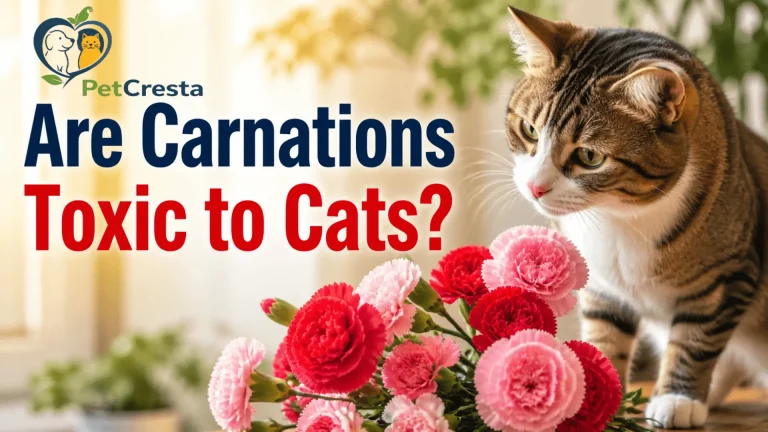
This is not a cause for panic. It is a cause for informed placement decisions across the entire home, not just around one plant. A full plant safety check should go beyond monstera, and whether carnations are toxic to cats is useful for owners who also keep cut flowers or decorative bouquets in the home.
Signs After Ingestion
A cat that chews on a monstera usually looks uncomfortable very quickly. The pattern is often obvious.
What Does Monstera Poisoning Look Like In Cats?
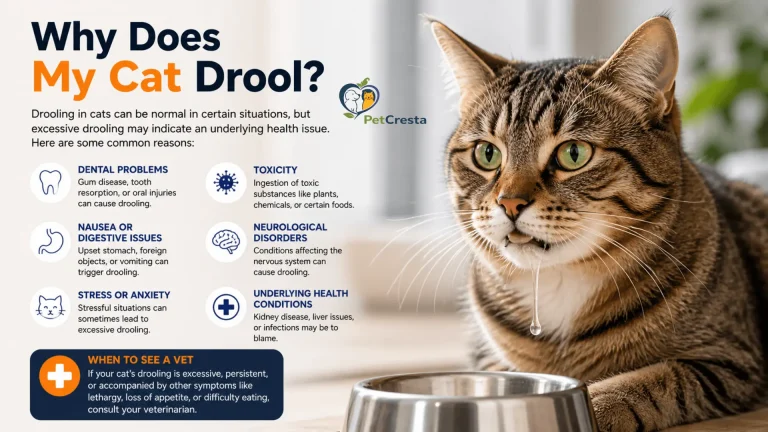
Excessive drooling is one of the earliest signs after a cat chews monstera, and why does my cat drool can help explain how plant irritation differs from nausea, dental disease, or other mouth problems. The most common signs are:
| Symptom | Why it happens |
|---|---|
| Drooling | The mouth is irritated, and the body tries to flush it |
| Pawing at the mouth | The cat reacts to pain and burning |
| Lip or tongue swelling | Tissue irritation causes inflammation |
| Vomiting | Plant material may irritate the stomach |
| Trouble swallowing | The mouth and throat can become sore or swollen |
| Head shaking | The cat reacts to oral discomfort |
| Refusing food or water | Eating may become painful |
| Quiet behavior | Pain and nausea may reduce normal activity |
Symptom Timeline
| Time after chewing | What may happen |
|---|---|
| Seconds to 5 minutes | Sudden discomfort, chewing stops, drooling starts |
| 5 to 30 minutes | Pawing at the face, lip, and tongue irritation, head shaking |
| 30 minutes to 2 hours | Vomiting may occur if plant material was swallowed |
| 6 to 24 hours | Mild cases often start improving |
| 24 to 48 hours | Most uncomplicated cases resolve |
Recovery and Prognosis After Monstera Ingestion
Most cats recover well with supportive care and close observation. Improvement is often seen within the first day, and full recovery is common within 24 to 48 hours in uncomplicated cases.
The main concerns are dehydration from vomiting, refusal to drink, and significant swelling. If those appear, the cat needs veterinary care rather than home monitoring.
Warning Signs That Need Emergency Veterinary Care
Use this checklist seriously.
☐ Open mouth breathing
☐ Visible throat swelling
☐ Repeated vomiting that continues
☐ Collapse or marked weakness
☐ Loss of coordination
☐ A kitten with known plant exposure
☐ A cat that cannot swallow water
These signs justify emergency evaluation.
Sniffing Vs. Chewing: A Distinction Every Cat Owner Needs
Not every interaction between a cat and a monstera plant carries the same risk. The difference between a cat that sniffs a leaf and one that chews through a stem is clinically significant. Understanding that distinction changes how the risk in any given household gets assessed, and it prevents owners from either overcorrecting or underreacting.
How Close Is Too Close for Cats Around Monstera?
| Scenario | Risk level | What to do |
|---|---|---|
| The cat walks near the plant | Low | No action needed |
| Cat sniffs the leaf | Low | Monitor, but chewing is the real concern |
| A cat bites a leaf or stem | Meaningful | Start first aid steps |
| The cat repeatedly chews houseplants | Higher | Remove access and reassess plant safety |
My Cat Ate Monstera: Step-By-Step First Aid
Step 1
Move the cat away from the plant and remove all loose pieces.
Step 2
Check the mouth gently. Look for leaf pieces, drooling, redness, or swelling. Do not force the mouth open.
Step 3
If the cat allows it, gently rinse the mouth with clean water.
Step 4
Offer fresh water. Some cats will drink after the first irritation settles slightly.
Step 5
Save a photo or sample of the plant if identification is needed.
Step 6
Call a veterinarian or poison service and report the plant name, the time of exposure, the cat’s size, and current symptoms.
Step 7
Watch for breathing changes, repeated vomiting, weakness, or increasing swelling.
Step 8
Go in right away if symptoms are progressing rather than settling.
Do NOT Do These Things
• Do not induce vomiting
• Do not force food into the mouth
• Do not rely on random internet remedies
• Do not wait if breathing looks abnormal
• Do not assume that one small bite always stays mild
What The Veterinarian Will Do
A vet visit following a cat that ate a Monstera leaf is focused on comfort and monitoring. Here is what to expect from the clinical assessment:
- Oral examination to assess the extent of tissue irritation, redness, and swelling inside the mouth and throat
- Anti-inflammatory medication to reduce oral discomfort and bring down tissue swelling
- Pain management to allow the cat to eat and drink normally during recovery
- Fluid therapy if vomiting has been significant enough to risk dehydration
- Airway assessment to confirm that throat swelling is not restricting breathing before the cat is discharged
- At-home monitoring instructions covering what to watch for over the following 24 to 48 hours
Most cats treated promptly do not require overnight hospitalization.
Monstera Safety Myths Cat Owners Believe
A handful of widely repeated myths lead cat owners to underestimate the risk in specific and consistent ways. Each of the three below is addressed directly because they come up regularly in clinical conversations about the Monstera plant and cats safety.
Does Placing Monstera On A High Shelf Make It Safe
Height alone does not make a Monstera safe in a home with cats. Cats that climb can reach most standard household furniture, and even a plant positioned above eye level carries a risk that most owners do not anticipate. Monstera leaves are large and heavy. They droop downward and fall from the plant as it grows, depositing leaf material at floor level even when the main plant sits high. High placement reduces risk meaningfully, but it does not eliminate it.
Is Monstera Safe If The Cat Has Never Chewed Plants Before
Prior behavior reduces risk but does not predict future behavior with certainty. A cat that has ignored houseplants for years may respond differently when a new plant is introduced into the space. New smells, textures, and leaf shapes trigger curiosity in cats that would otherwise leave established plants alone. Passive assumptions based on past behavior are not a substitute for active supervision during the first few weeks with any new plant in the home.
Does Washing Monstera Leaves Remove The Toxicity
Washing monstera leaves does not reduce toxicity in any way. Calcium oxalate crystals are stored inside the plant cells, not on the surface of the leaves. They are only released when the tissue is physically broken through chewing or damage. Surface cleaning does not affect what is contained inside the plant, and this myth consistently gives owners a false sense of safety without addressing the actual source of risk.
Can Cats and Monstera Live in the Same Home?
Yes, but only with honest risk management. A calm adult cat that ignores plants is different from a kitten or a cat that chews leaves regularly.
| Household situation | Risk level | Best approach |
|---|---|---|
| Adult cat with no plant interest | Lower | Strict placement and monitoring |
| A cat with occasional curiosity | Moderate | Barriers, placement, enrichment |
| Kitten or known plant chewer | Higher | Remove access completely |
How To Keep Your Cat Safe Around Monstera Plants
Good prevention usually comes from three layers: placement, deterrence, and enrichment.
Placement Strategies That Actually Work
Height alone is not a reliable strategy in a home with cats that climb. The more effective placement options either remove the plant from the cat’s environment entirely or make access structurally impossible rather than just inconvenient.
- Rooms that the cat does not consistently and reliably access, with the door consistently and reliably closed
- Hanging planters mounted at ceiling height with no nearby surface to jump from
- Enclosed plant cabinets with ventilation built specifically for pet households
- Outdoor placement in climates where the plant can thrive year-round
Deterrent Methods And Their Limitations
Deterrents work best as a secondary layer rather than a primary strategy. A cat that is sufficiently motivated will push past most deterrents over time, particularly when the plant remains consistently accessible.
| Deterrent Method | How It Works | Limitation |
|---|---|---|
| Pet-safe bitter spray on leaves | Discourages chewing through taste aversion | Must be reapplied regularly to remain effective |
| Citrus peel near the pot | Cats dislike citrus scent naturally | Loses scent quickly and needs frequent refreshing |
| Motion-activated air sprayer | Harmless burst of air when the cat approaches | Requires careful positioning and setup |
| Double-sided tape at the base | Cats dislike the texture on their paws | Limited range, effective for floor-level access only |
Behavioral Enrichment As A Prevention Strategy
Cats often chew plants out of curiosity, boredom, or oral habit. Prevention improves when the cat has better alternatives.
Useful options include:
• Safe cat grass
• Puzzle feeders
• Daily play sessions
• Climbing shelves and perches
• Rotating toys
• Window viewing spots
Cat-Safe Plants That Look Like Monstera
For cat owners who love the tropical, large-leaf aesthetic of monstera, several non-toxic alternatives deliver the same visual presence without any calcium oxalate risk. Giving up the monstera does not have to mean giving up the look entirely.
Beautiful Monstera Alternatives That Are Safe For Cats
Each plant below was selected for visual similarity to monstera, not just toxicity status. The goal is to help plant-loving cat owners find an alternative that satisfies the same design desire rather than settling for something that simply appears on a safe list.
| Plant | Why It Resembles Monstera | Care Level | Safe for Cats |
|---|---|---|---|
| Calathea spp. | Large, dramatic, patterned leaves with bold tropical presence | Moderate | Yes |
| Spider Plant | Trailing, lush growth that suits hanging displays well | Easy | Yes |
| Boston Fern | Full, green, tropical texture with similar visual weight | Moderate | Yes |
| Parlor Palm | Tall, architectural, fills vertical space like a mature monstera | Easy | Yes |
| Peperomia | Compact with varied leaf shapes and rich surface textures | Easy | Yes |
| Prayer Plant | Dramatic folding leaves and rich color, visually striking at any size | Moderate | Yes |
| Areca Palm | Full, feathery, and tropical, it fills a room with presence effectively | Moderate | Yes |
A home that prioritizes a monstera plant and a cat-friendly environment does not have to sacrifice the tropical aesthetic. Calathea and prayer plants offer leaf drama at a scale comparable to monstera.
Parlor palms and areca palms fill vertical space the way a mature monstera does, making them strong choices for anyone who keeps monstera as a statement piece. All of the alternatives above are widely available and require similar or easier care than monstera itself.
Monstera Toxicity Vs. Allergy In Cats. What Is The Difference
Monstera toxicity is the predictable result of crystal contact with soft tissue. In other words, the plant irritates the mouth because of what it contains.
An allergy is an immune response. That is a different process. In practice, most reaction owners notice after chewing monstera is toxicity-related irritation, not a true allergy.
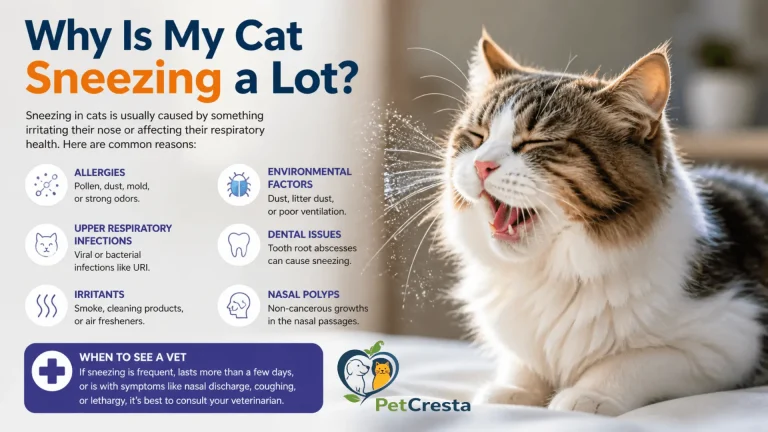
For the cat owner at home, the response is similar either way. Remove access, assess symptoms, and call a veterinarian if the cat looks uncomfortable or abnormal. Sneezing is not one of the main signs of monstera toxicity, so if a cat is showing repeated nasal symptoms instead, cat sneezing a lot may help cover other common causes.
Key Takeaways
• Monstera is toxic to cats
• The problem comes from insoluble calcium oxalate crystals
• Symptoms often start within minutes after chewing
• Drooling, mouth pain, vomiting, and swallowing discomfort are the main signs
• Severe airway swelling is uncommon, but it is the main emergency risk
• Most mild cases improve with supportive care
• Cats that chew plants repeatedly need stronger home management
• Safer look-alike houseplants are available for cat homes
FAQ
Yes, Monstera deliciosa is toxic to cats and is the variety most commonly found in homes. It contains calcium oxalate crystals throughout its leaves, stems, roots, and sap. The only exception is the fully ripe fruit, which does not carry an active toxicity risk.
Yes. The Swiss cheese plant is a common name for Monstera deliciosa, and it is toxic to cats. The name refers to the holes in mature leaves and does not indicate a different plant or a lower level of toxicity risk.
Recovery is possible in very mild cases where a healthy adult cat took a single small bite and showed only brief, minimal drooling. Even so, a vet call is still the recommended course of action. Any cat showing continued vomiting, lethargy, swelling, or refusal to eat requires professional attention, not home monitoring.
Yes, Monstera adansonii is toxic to cats. It contains the same calcium oxalate crystals as all monstera varieties. Symptoms after exposure are identical to those of Monstera deliciosa: drooling, oral pain, pawing at the mouth, and possible vomiting.
Calcium oxalate crystals are present throughout the entire plant, including leaves, stems, roots, and aerial roots. No part of the plant is safe for a cat to chew or ingest. The fully ripe fruit has a lower crystal content, but most indoor monstera plants never produce fruit, making this distinction irrelevant in most household situations.
Simple skin contact with an intact monstera leaf is unlikely to cause significant harm. Toxicity occurs through chewing or contact with sap from broken tissue, not passive contact with an undamaged leaf surface. A cat that brushes past or rubs against the plant is not at meaningful risk.
Yes, mini monstera are toxic to cats. Rhaphidophora tetrasperma contains irritant compounds similar to true monstera varieties and poses the same risk of oral and gastrointestinal irritation on ingestion.
Yes. Monstera peru is toxic to cats. Like all monstera species, it contains insoluble calcium oxalate crystals that cause oral pain, drooling, and gastrointestinal irritation when chewed or swallowed.
When a cat eats monstera, calcium oxalate crystals embed in the mouth and throat tissues. Drooling and pawing at the mouth follow within minutes, with vomiting possible 30 to 90 minutes later. Mild cases typically resolve within 12 to 24 hours.
Death from monstera exposure is extremely rare. The crystals cause local irritation, not organ failure. The only life-threatening risk is severe throat swelling that obstructs the airway. If breathing is labored or collapse occurs, seek emergency veterinary care immediately.
In mild to moderate cases involving healthy adult cats, symptoms typically begin resolving within 12 to 24 hours and reach full resolution within 48 hours with appropriate supportive care. Kittens, cats that ingested large amounts, or cats with pre-existing health conditions may take longer and require direct veterinary management throughout recovery.
Indoor cats face more consistent and repeated exposure to the plant, which raises the probability of ingestion over time. Outdoor cats typically have access to more environmental variety, reducing the draw to any single houseplant. Risk in both cases comes down to the individual cat’s chewing behavior rather than location alone.
No. Calcium oxalate toxicity is a physical response to crystal contact with soft tissue. It is not a sensitivity that reduces with repeated exposure. A cat that has lived near a monstera plant for years without incident does not have a reduced biological response to the crystals. The risk remains constant as long as the cat has access to the plant.
References
- ASPCA Poison Control, Swiss Cheese Plant, toxic to cats, insoluble calcium oxalates, oral irritation, and vomiting (ASPCA)
- ASPCA Toxic and Non-Toxic Plant List for Cats, Monstera deliciosa and related common names (ASPCA)
- Pet Poison Helpline, Split Leaf Philodendron and Hurricane Plant, tissue irritation from insoluble calcium oxalate crystals, rare upper airway swelling (Pet Poison Helpline)
- VCA, Plants That Are Toxic to Cats and Top Toxic Household Plants for Pets, raphide crystal injury, drooling, vomiting, mouth burns (VCA)
- Merck Veterinary Manual, poisonous houseplants and ornamentals, variable toxicity across plant species and households (Merck Veterinary Manual)