
Choosing Pet-Friendly Backyard Fence Materials: Comparing Aluminum, Wooden, Vinyl, and Composite Fencing for Active Dogs
Designing a safe, functional outdoor sanctuary for dogs requires far more than simply marking a property line. When evaluating pet friendly backyard fence materials, homeowners have to account for breed behavior, jumping height, digging instincts, chewing habits, and local climate conditions. A decorative boundary that looks great on a brochure can quickly fail if an energetic herding dog squeezes through wide pickets, a terrier tunnels beneath an ungraded bottom rail, or intense summer sun warps low-grade boards until latches no longer catch.
Whether you are upgrading an aging perimeter or planning a fresh installation, selecting the right structural material—whether powder-coated aluminum, California redwood, commercial-grade vinyl, composite, or security chain link—determines both your pet’s daily safety and your property’s long-term value. Below is an engineering-backed breakdown of how today’s leading fence systems perform in real-world backyards, along with installation standards practiced across Southern California.
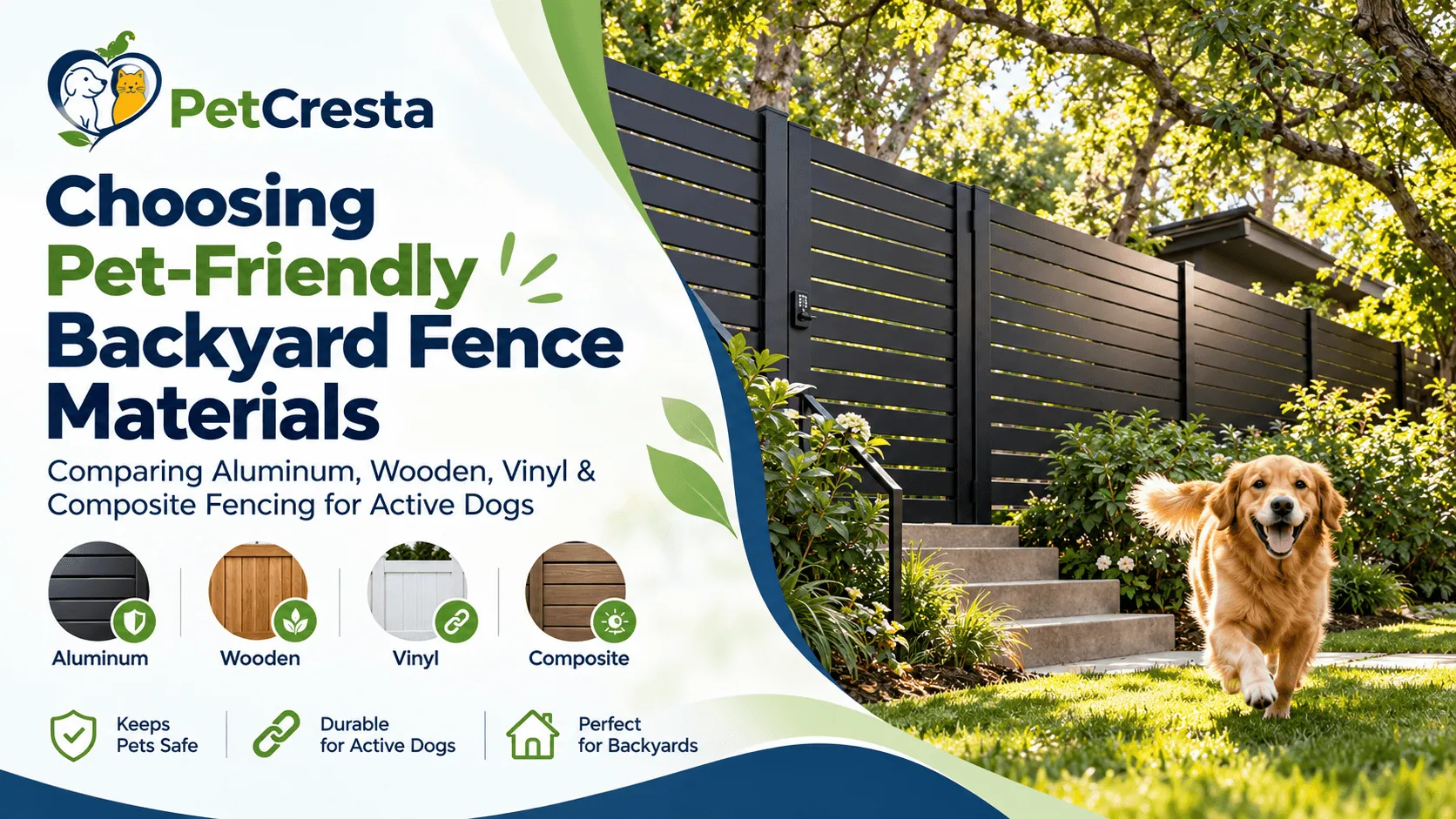
SEO Alt Text: Modern powder-coated aluminum fence and gate system installed for a secure pet-friendly California backyard
What Makes a Fence Truly Safe for Pets?
Before comparing individual materials, it helps to evaluate any perimeter through four mechanical criteria that directly impact dogs and cats:
- Zero-Splinter & Chew-Resistant Surfaces: Anxious or bored dogs frequently paw, scratch, or chew at fence boards near gates. Materials must resist splintering and avoid toxic chemical treatments.
- Visual Barrier vs. Airflow Balance: Reactive dogs that bark at passing pedestrians, cyclists, or neighborhood dogs thrive behind full-privacy or semi-privacy horizontal panels that cut off line-of-sight triggers.
- Grade-Hugging Bottom Clearance: Even a 4-inch gap beneath a bottom rail on a sloped yard is an open invitation for diggers. Proper stepped or racked installation keeps bottom rails tight to the soil or concrete curbing.
- Structural Post Depth & Wind Resistance: Large dogs jumping against a fence exert repeated lateral impact. Setting line posts at least 24 inches deep—and terminal or gate posts 36 to 48 inches deep in high-strength concrete footings—prevents leaning panels and misaligned gate latches.
1. Aluminum Fencing: Chew-Proof Strength and Modern Architectural Privacy
For decades, homeowners associated metal fencing exclusively with open ornamental bars. Today, modern architectural aluminum has evolved into one of the most versatile pet friendly backyard fence materials on the market, available in both open-picket designs and full-privacy horizontal slat systems.
Why Aluminum Excels for Dog Owners
- Impervious to Chewing and Scratching: Thick-walled, architectural-grade aluminum coated in an AAMA 2604 or 2605 architectural powder finish will not splinter, crack, or peel when dogs jump against it.
- Custom Slat Spacing: Unlike standard prefabricated iron panels that leave 4-inch gaps (which toy breeds and puppies can slip through), custom horizontal aluminum systems can be built as full-privacy boards or with narrow 0.5-inch to 1-inch semi-privacy spacing.
- Zero Rust in Coastal or Irrigated Yards: Unlike raw steel or budget wrought iron, aluminum never corrodes when exposed to lawn sprinklers, morning coastal marine layer moisture, or pet urine.
- Hillside Adaptability: When homeowners invest in professional aluminum fence installation, experienced crews can custom-rack or step the horizontal profiles along steep grades so there are no triangular gaps at the bottom of the slope.
Best For: Homeowners who want a sleek, modern aesthetic with zero painting or staining, high structural rigidity against large dogs, and full-privacy or semi-privacy options that handle sloped terrain effortlessly.
2. Vinyl Privacy Fencing: Smooth, Splinter-Free, and Visual-Trigger Proof
If your primary goal is stopping “fence fighting” and nuisance barking along a busy sidewalk or shared neighbor boundary, commercial-grade PVC vinyl fencing is a standout contender.
Key Advantages of Vinyl for Backyard Pets
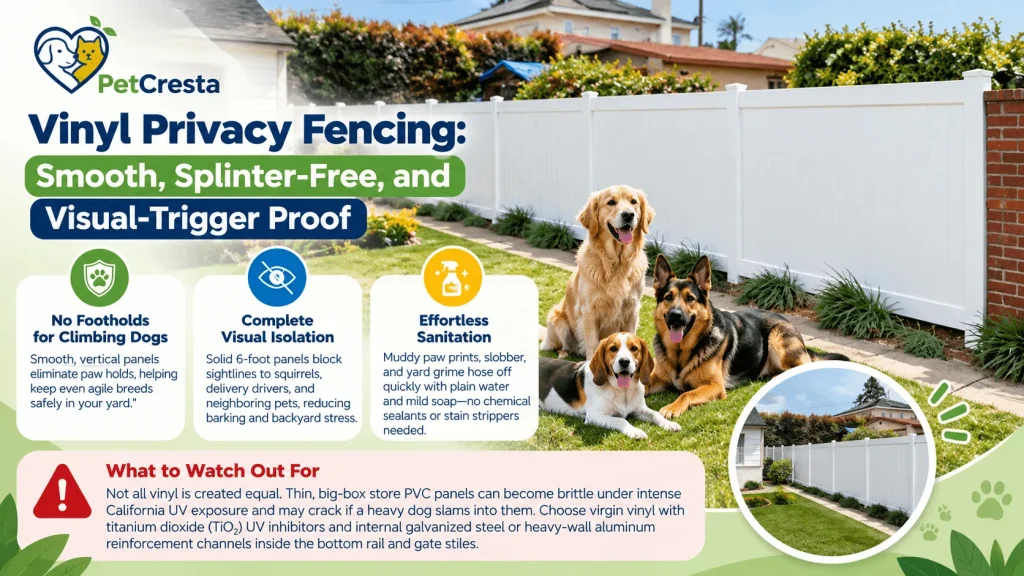
- No Footholds for Climbing Dogs: Agile breeds like Belgian Malinois, Huskies, and Australian Shepherds can use the horizontal rails of a traditional wood fence like a ladder. Tongue-and-groove vinyl privacy panels present a completely flush, smooth vertical face on both sides—eliminating paw holds.
- Complete Visual Isolation: Solid privacy panels can block sightlines to squirrels, delivery drivers, and neighboring pets, which may help reduce some visual triggers. However, fencing should work alongside appropriate management and training for adult dogs when barking, lunging, or other unwanted behaviors persist.
- Effortless Sanitation: Muddy paw prints, slobber, and yard grime hose off in seconds with plain water and mild soap, without ever needing chemical sealants or stain strippers.
What to Watch Out For
Not all vinyl is created equal. Thin, big-box store PVC panels become brittle under intense California UV exposure and can crack if a heavy dog slams into them at full sprint. Always specify virgin vinyl formulated with titanium dioxide ($\text{TiO}_2$) UV inhibitors and internal galvanized steel or heavy-wall aluminum reinforcement channels inside the bottom rail and gate stiles.
3. Wooden Fencing (California Redwood & Cedar): Classic Warmth and Custom Grading
Traditional wooden fencing remains a favorite for homeowners who love natural grain texture and organic backyard warmth. However, choosing the right timber species and construction style is critical when pets share the yard.
Engineering a Dog-Safe Wood Fence
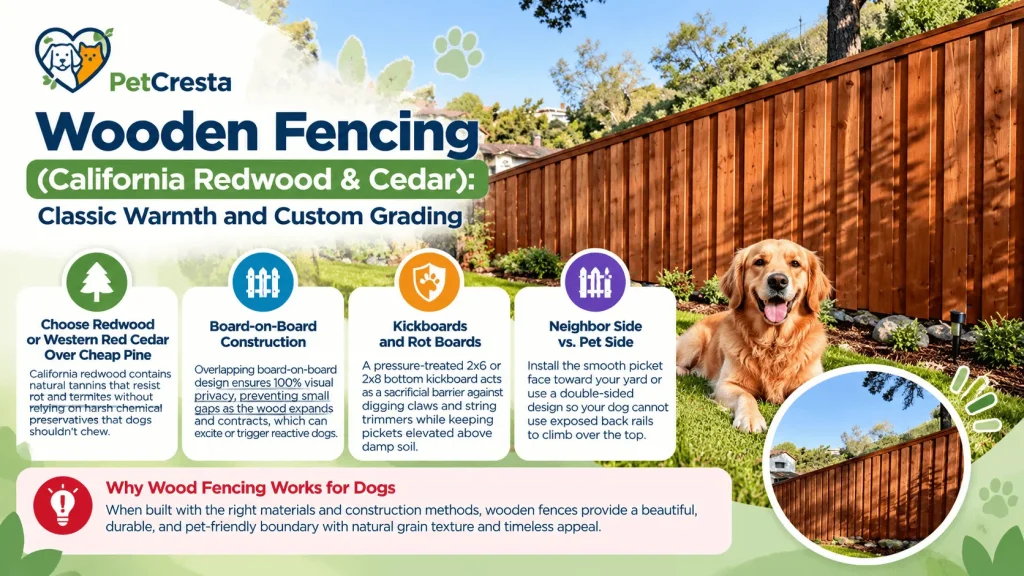
- Choose Redwood or Western Red Cedar Over Cheap Pine: California redwood contains natural tannins that resist rot and termites without relying on harsh copper-based chemical preservatives that dogs shouldn’t chew.
- Board-on-Board Construction: Standard side-by-side wooden pickets shrink slightly as they season under hot sun, opening 0.25-inch to 0.5-inch sight gaps that excite reactive dogs. Overlapping board-on-board construction ensures 100% visual privacy even as the wood expands and contracts seasonally.
- Kickboards and Rot Boards: Adding a pressure-treated 2×6 or 2×8 bottom kickboard directly along the soil line acts as a sacrificial barrier against digging claws and string trimmers while keeping the vertical redwood pickets elevated above damp soil.
- Neighbor Side vs. Pet Side: Always install the smooth picket face (“good side”) facing inward toward your yard—or build a double-sided “good neighbor” shadowbox/board-on-board design—so your dog cannot use exposed 2×4 back rails to climb over the top.
4. Composite, Chain Link, and Cable Railing: Specialized Fencing Options
Beyond the “big three” of aluminum, vinyl, and wood, modern properties frequently incorporate specialized materials depending on lot topography and security needs:
- Composite Fencing (WPC): Co-extruded wood-plastic composite boards combine recycled hardwood fibers and high-density polyethylene wrapped in a protective polymer cap. Composite is heavier and denser than vinyl, completely immune to splinters and termites, and offers rich woodgrain textures in charcoal, teak, and walnut tones. When anchored into powder-coated aluminum or galvanized steel posts, a composite fence easily withstands both 70+ mph Santa Ana wind gusts and 100-pound dogs.
- Vinyl-Coated Chain Link & Security Fencing: For large acreage, side-yard dog runs, or perimeter utility zones, black vinyl-coated chain link with integrated privacy slats provides an economical, chew-proof enclosure. Using a 9-gauge or 11-gauge core wire with a fused polymer coating prevents paws from catching on raw wire burrs.
- Stainless Steel Cable Railing (For Decks & Hillside Views): When fencing a raised deck or hillside patio overlooking a canyon, solid panels block the view. Marine-grade 316 stainless steel cable railing preserves panoramic vistas—just ensure cables are tensioned properly with intermediate spreader bars so spacing never deflects beyond 4 inches under a pet’s weight.
Quick Comparison Matrix: Pet-Friendly Backyard Fence Materials
| Fence Material | Chew & Scratch Resistance | Visual Privacy for Reactive Dogs | Climbing Prevention | Maintenance Level | Expected Lifespan |
|---|---|---|---|---|---|
| Powder-Coated Aluminum | Exceptional (5/5) | High (Full-privacy or custom gap slats) | High (Flush horizontal or vertical options) | Virtually Zero | 30–40+ Years |
| Composite (WPC) | Exceptional (5/5) | Maximum (100% solid board interlock) | Maximum (Flush both sides) | Virtually Zero | 25–35+ Years |
| Commercial Vinyl (PVC) | High (4/5) | Maximum (100% solid tongue-and-groove) | Maximum (Smooth, zero footholds) | Very Low (Hose wash) | 20–30 Years |
| California Redwood | Moderate (3/5) | High (Best with board-on-board layout) | High (If rails are concealed or capped) | Moderate (Re-stain every 3–5 yrs) | 15–25 Years |
| Coated Chain Link | High (4.5/5) | Low to Moderate (Requires privacy slats) | Low (Agile dogs can grip mesh) | Very Low | 20+ Years |
The Weakest Link in Pet Containment: Gate Engineering & Hardware
Ask any seasoned contractor or dog trainer where backyard escapes actually happen, and the pedestrian or driveway gate is one of the first places worth checking. Wood gates framed purely with wood can eventually sag under gravity, causing the latch pin to miss the strike plate by half an inch—sometimes leaving enough space for a determined dog to push the gate open with its nose.
To make your backyard truly escape-proof, professional installers focus on three critical gate upgrades:
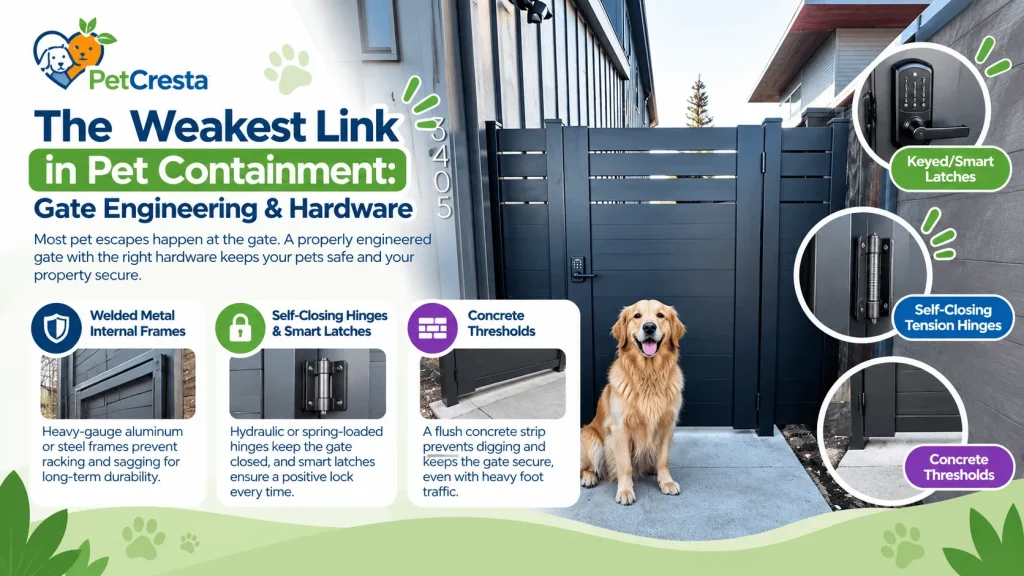
- Welded Metal Internal Frames: Even if you choose wooden redwood or composite infill boards, building the gate around a welded steel or heavy-gauge aluminum Z-frame prevents racking and sagging over decades of daily use.
- Self-Closing Tension Hinges & Keyed/Smart Latches: Hydraulic or spring-loaded self-closing hinges ensure the gate pulls shut automatically behind meter readers, landscapers, or children. Upgrading to a smart lock or magnetic safety latch (installed at least 54 inches above grade if your yard also encloses a swimming pool under the California Pool Safety Act) guarantees a positive lock every single time.
- Concrete Thresholds Underneath Gates: Pouring a flush concrete mow strip or threshold directly beneath pedestrian and sliding driveway gates stops dogs from digging out at the gate opening where foot traffic wears away grass.
Professional Fence Installation & Service in Southern California
Even the highest-grade pet friendly backyard fence materials will underperform if posts are shallowly set in expansive clay soil or panels leave gaps along hillside contours. For homeowners across Greater Los Angeles, Glendale, Pasadena, Burbank, and the San Gabriel Valley, working with a dedicated local specialist ensures every post, rail, and gate is engineered for both municipal code compliance and real-world durability.
Founded and led by licensed contractor Dmitrii, HandyMaestro specializes in custom residential and commercial fence and gate installation and service across Southern California. Rather than relying on one-size-fits-all prefab panels, HandyMaestro follows a transparent, engineering-first four-step process:
- Project Discovery Call: Discuss your yard layout, pet containment requirements, privacy goals, and preferred styles (aluminum, composite, redwood, vinyl, chain link, or cable railing).
- On-Site Consultation with Dmitrii: Meet directly on your property to inspect soil stability, slope grade transitions, property boundary lines, and gate swing clearances.
- Custom Design Approval & Scheduling: Receive a detailed structural plan and transparent estimate tailored to local rules—including Los Angeles Department of Building and Safety (LADBS) height codes and California’s Good Neighbor Fence Act (California Civil Code § 841) for shared boundary lines.
- Precision Installation: Deep concrete footings, laser-leveled rails, custom-welded metal gate frames, and smart-lock integrations built right and built to last.
“Disclaimer: Fencing and gate structures are subject to high wind loads, soil shifts, and structural stresses. The information provided is for educational and reference purposes only. Always consult a licensed fencing contractor, structural engineer, or your local building department before undertaking major structural or retaining wall installations.”
FAQ’s
Powder-coated architectural aluminum and steel-framed composite fencing are the most durable options for large or high-energy dogs. Neither material can be chewed or splintered, both resist heavy lateral impact when anchored in 24-to-36-inch concrete footings, and full-privacy horizontal layouts eliminate the visual triggers that cause dogs to charge or bark at the fence line.
For most medium-to-large breeds, a 6-foot full-privacy fence with a smooth interior face (no exposed horizontal climbing rails) provides reliable containment. In most California municipalities, 6 feet is the standard maximum backyard height permitted by right without a special variance, though homeowners on sloped lots should ensure the contractor steps or racks the panels so the effective height never drops below 6 feet at grade transitions.
The most effective structural solutions are installing a buried concrete mow strip (curbing) directly along the bottom fence line, adding a heavy-duty 2×8 pressure-treated bottom kickboard on wooden fences, or anchoring L-shaped galvanized dig-guard mesh 12 to 18 inches into the soil along the interior perimeter.
About the Author
Dmitrii Handymaestro is a licensed contractor with an engineering background and the founder of HandyMaestro, Southern California’s premier fencing and gate installation company. With over a decade of hands-on construction experience, Dmitrii specializes in designing and building durable, code-compliant, and visually stunning wood, vinyl, composite, and custom metal fences. When he isn’t managing job sites or consulting with clients, he writes technical guides to help California homeowners understand local building codes, property laws, and materials options.