What Do Swans Eat? Foods They Love, Foods to Avoid, and Feeding Tips
Swans are easy to spot and easy to feed, which is why this topic often gets mixed up. One part of the question is about the natural diet. The other part is about what people can safely offer in parks, ponds, canals, and lakes.
Those are related, but they are not the same thing. A wild swan lives on wetland food that is available through daily foraging. Public feeding should only support that pattern, not replace it. This guide separates the natural diet from supplemental feeding, explains what do swans eat, which foods are useful, which foods are poor choices, and how age, habitat, and winter conditions change the picture.
TL;DR: What Does A Swan Eat?
Swans mostly eat aquatic plants, algae, grasses, roots, stems, and other wetland vegetation. They may also swallow tiny aquatic animals such as insects, tadpoles, frogs, or small fish in limited amounts, but plant matter remains the core of the diet.
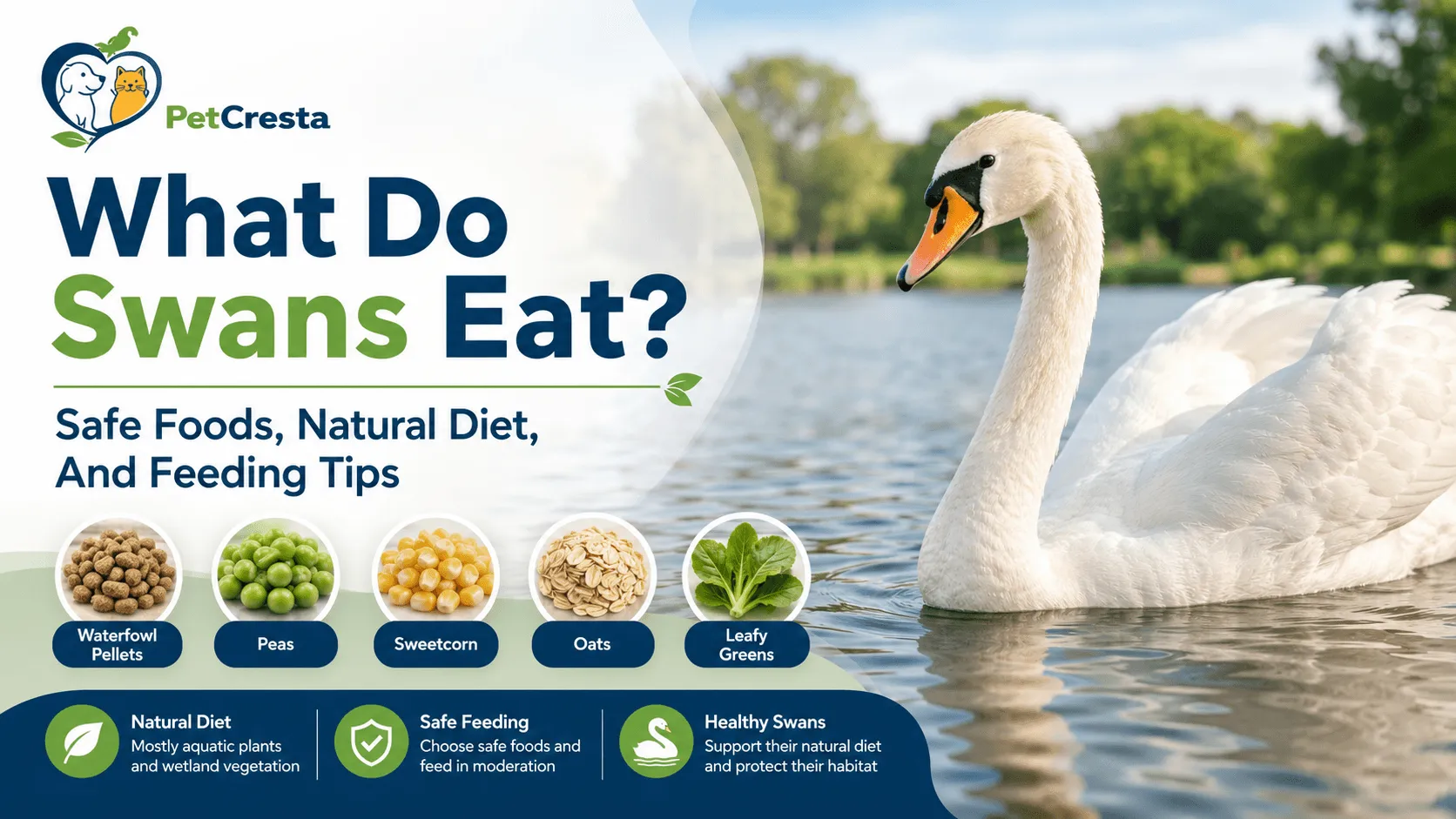
If food is offered by people, better choices include waterfowl pellets, peas, sweetcorn, oats, wheat, mixed grain, and leafy greens. Mouldy food, greasy leftovers, and heavily processed foods should not be given.
Swan Diet At A Glance
The table below separates natural foods from supplemental foods and shows which options are best, acceptable only in moderation, or best avoided.
| Food | Natural or supplementary | Best, acceptable in moderation, or avoid | Notes |
|---|---|---|---|
| Pondweed | Natural | Best | A key wetland food in shallow water |
| Duckweed | Natural | Best | Common in ponds and calm water |
| Algae | Natural | Best | Often eaten with other aquatic plants |
| Grass | Natural | Best | Grazed on land and along the water edge |
| Roots and stems | Natural | Best | Pulled from submerged vegetation |
| Waterfowl pellets | Supplementary | Best | One of the strongest feeding choices |
| Peas | Supplementary | Good choice | Simple and easy to scatter |
| Sweetcorn | Supplementary | Good choice | Best used in small amounts |
| Oats | Supplementary | Good choice | Plain oats work better than bread |
| Wheat or mixed grain | Supplementary | Good choice | Useful in moderate amounts |
| Leafy greens | Supplementary | Good choice | Chop into manageable pieces |
| Bread | Supplementary | Acceptable in moderation | Low value compared with better options |
| Mouldy food | Supplementary | Avoid | Unsafe and should never be offered |
| Processed leftovers | Supplementary | Avoid | Salt, sugar, fat, and additives make them poor choices |
What Swans Eat In The Wild
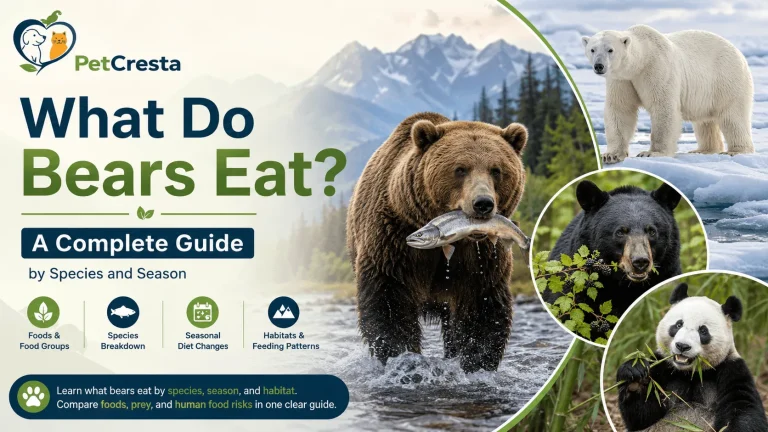
Swans are mainly herbivorous birds, so most of their natural diet comes from wetland vegetation. In the wild, they feed by browsing through shallow water, pulling up plant material, and grazing where soft growth is easy to reach. The exact foods change by habitat, but the overall pattern stays strongly plant-based. For a broader wildlife diet comparison, what do bears eat shows how another animal’s food choices change by species, habitat, and season.
Do Swans Eat Plants?
Yes, plant matter is the foundation of what swans eat in the wild. Aquatic vegetation, soft shoots, stems, roots, and floating plant growth make up most of the natural diet. This is why swans are best understood as birds that depend on wetland plants far more than animal prey.
Do Swans Eat Grass?
Yes, swans often graze on short grass along the water’s edge and in nearby fields. Grass becomes even more noticeable in the diet when land-based feeding is easier than reaching submerged plants. In colder months, swans may also feed on shoots and field growth where vegetation is still available.
Do Swans Eat Algae And Duckweed?
Yes, both algae and duckweed can be part of a swan’s natural diet. Algae is commonly taken while feeding in shallow water, and duckweed is another useful food source in calm ponds and slow freshwater habitats. These soft wetland foods fit the swan’s normal feeding style very well.
Do Swans Eat Fish, Frogs, Insects, And Other Small Animals?
Sometimes, but these foods remain a minor part of the diet. While feeding through aquatic vegetation, swans may swallow small fish, frogs, tadpoles, insects, worms, molluscs, and other tiny aquatic animals. Even so, these foods do not define the swan’s feeding pattern. Plants still make up the largest share of what swans eat in the wild.
Do Swans Eat Meat?
Not in the way a hunting bird would. Swans are not active predators, and they do not rely on meat as a main food source. Animal matter is usually taken incidentally while the bird is already feeding on plants, algae, and other wetland growth.
| Main foods | Sometimes eaten | Often incidental |
|---|---|---|
| Aquatic plants | Small fish | Tadpoles mixed in with vegetation |
| Algae | Frogs | Insects among wetland plants |
| Grass and shoots | Worms and molluscs | Tiny aquatic life lifted from the waterbed |
| Roots and stems | Invertebrates | Small animals swallowed while browsing |
How Do Swans Get Their Food
Swans find food by searching in shallow water where aquatic vegetation is easy to reach. They skim the surface, dip the head and neck below the water, and tip forward to pull up plants growing lower down. This is also how swans get their food in most natural habitats. Their feeding style is built around reach, patience, and steady browsing rather than pursuit.
What Do Swans Eat In Lakes?
In lakes, swans often feed on aquatic plants, algae, floating vegetation, and nearby grass along the edges. Shallow lake margins are especially useful because they give swans easier access to pondweed, stems, roots, and other soft plant growth without needing to dive deeply.
What Do Swans Eat In Ponds?
In ponds, swans commonly browse on duckweed, pondweed, algae, and other soft plant growth found in calm, shallow water. Pond habitats often make feeding easier because the vegetation sits close to the surface, which is why swans are often seen feeding slowly in the same area for long periods.
Do Swans Have Teeth?
Swans do not have true teeth. Their bills have serrated, tooth-like edges that help grip, strip, and tear plant material. These ridges are part of the feeding design and make it easier to handle slippery vegetation.
What To Feed Swans Safely
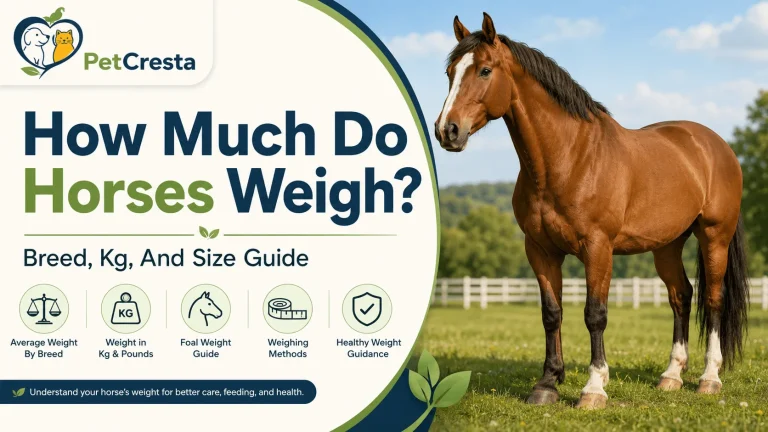
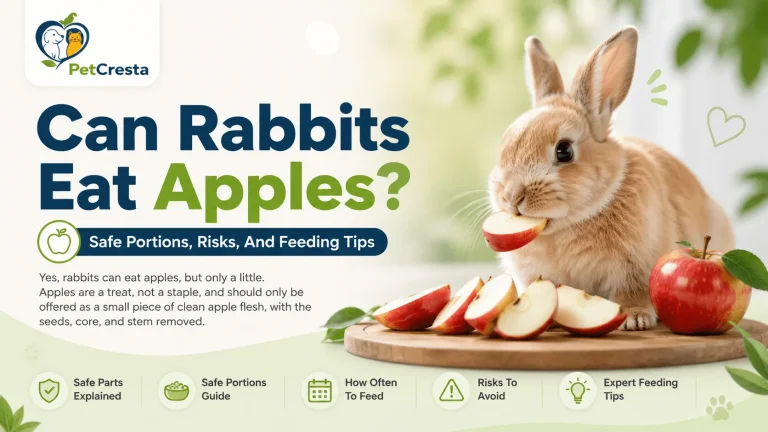
If swans are fed by people, the safest foods are the ones that stay closest to the bird’s natural feeding pattern. Floating waterfowl pellets are one of the strongest choices. Peas, sweetcorn, oats, wheat or mixed grain, lettuce, spinach, cabbage, watercress, and chopped leafy greens are also suitable in moderate amounts. If fruit safety for other animals is also being compared, Can rabbits eat apples explains why a food that seems simple still needs portion control in a pet diet.
Best Food For Swans
Floating swan or duck pellets are one of the best options because they are made for waterfowl and remain easy to reach on the surface. After that, plain peas, sweetcorn, oats, wheat, mixed grain, and chopped greens are strong choices.
These foods are easier to handle, easier to portion, and closer to the kind of diet swans already do well with. They also create less waste than rich or heavily processed human food.
When Extra Feeding Helps
Extra feeding is not always needed. It becomes more useful in freezing weather, in large canals or rivers with fewer water plants, and in urban waterways where natural forage may be limited or harder to reach. That is why feeding advice can sound more urgent in some settings than in others.
Scale matters too. Swans eat a large amount of vegetation over the course of a day. A small public handout can help in the right situation, but it does not replace the steady plant intake a swan normally depends on.
How And What To Feed Swans And Ducks Safely
In mixed waterfowl areas, the safest overlap foods are floating pellets, peas, sweetcorn, oats, wheat, mixed grain, and chopped greens. Food should be thrown into the water rather than onto the bank, so birds do not learn to walk onto roads, paths, or crowded spaces looking for people.
Placement matters. Foods that sink work best in shallow water because swans can only reach so far below the surface. For cygnets, softened pellets are easier to nibble than hard dry pieces. Small amounts are best. If food starts to collect, feeding should stop.
Can Swans Eat Bread?
Swans can eat bread, but bread is not the best food for them. It is better described as tolerated than ideal. Small amounts of fresh bread are very different from mouldy bread or heavily processed leftovers, yet bread still offers less value than pellets, peas, grain, oats, or leafy greens.
This is where feeding advice often becomes too extreme. Bread does not need to be treated as poison in every tiny amount, but it should not be treated as a preferred food either.
Is Bread Bad For Swans?
Bread becomes a problem when it is overused, when it replaces better foods, or when it is left to spoil. The issue is not only bread itself. It is the feeding habit that grows around it. If people keep bringing the same low-value food in large amounts, it crowds out better choices.
Mouldy bread is a separate problem and belongs firmly in the unsafe category. Fresh bread in small amounts belongs in the low-value category.
Better Foods Than Bread
Pellets, peas, sweetcorn, oats, wheat, mixed grain, and leafy greens are all better options than bread. They are simpler, cleaner, and more useful as part of limited supplemental feeding.
If food is being brought for swans, these should come first. Bread should not be the center of the feeding plan.
| Bread | Better options | Never feed |
|---|---|---|
| Low value if used often | Waterfowl pellets | Mouldy bread |
| Easy to overuse | Peas and sweetcorn | Salty snacks |
| Often becomes the default public food | Oats and wheat | Sugary baked foods |
| Better kept as an occasional fallback | Leafy greens | Processed leftovers |
What Not To Feed Swans
Some foods are clearly unsafe, while others are simply poor choices. Mouldy food, cooked meats, pizza, cakes, sandwiches with butter or meat products, salty snacks, greasy leftovers, and other heavily processed foods should be avoided.
These foods do not fit the swan’s normal diet, and they can also spoil in or near the water. That creates a second problem, because bad feeding not only affects the bird. It also affects the habitat.
Harmful Foods Vs. Low-Value Foods
Unsafe foods belong in one group. Mouldy food, processed meals, cooked meat scraps, salty snacks, and sugary baked foods belong there. Low-value foods belong in another group. Fresh bread in small amounts fits here because it is tolerated better than mouldy or greasy food, but it still should not become the main thing being offered.
That distinction makes feeding advice much clearer. Not every poor choice is equally harmful, but the better choices are still easy to identify.
| Avoid | Not ideal | Better choices |
|---|---|---|
| Mouldy food | Bread in excess | Waterfowl pellets |
| Salty snacks | Large dumps of one food | Peas |
| Sugary baked foods | Repeated public handouts | Sweetcorn |
| Greasy leftovers | Low variety feeding | Oats, wheat, and mixed grain |
What Do Baby Swans Eat?
Baby swans, called cygnets, begin with softer foods and may take more tiny aquatic life than adults do. In the first days after hatching, they can still absorb nutrients from the remaining yolk. As active feeding begins, soft aquatic plants and small aquatic insects become useful foods, and the diet gradually shifts toward the more plant-rich pattern seen in adults.
This age-based change matters because very young birds are not simply eating the exact same way as a full-grown swan. Their feeding develops in stages.
How Cygnets Learn To Feed
Adult swans do not place food directly into the mouths of cygnets, but they do help them feed. Parents lead the young to productive feeding areas, pull up aquatic vegetation so it floats at the surface, and stir up edible material from the waterbed.
Cygnets learn by staying close and copying the adults. The feeding lesson is visual and gradual, not sudden.
If People Feed Cygnets
If cygnets are fed by people, the safest approach is to keep it simple and limited. Softened floating pellets, tiny peas, and tender greens in small pieces are better choices than heavy bread feeding.
The goal should never be to replace the adults or interrupt natural learning. Supplemental food should be small, gentle, and easy to swallow.
| Stage | Main feeding pattern | Practical note |
|---|---|---|
| Newly hatched cygnet | Soft plant matter and tiny aquatic life | Still supported by the remaining yolk at first |
| Growing cygnet | More vegetation with some small aquatic food | Learns by copying the adult feeding |
| Juvenile swan | Increasingly plant-rich feeding | Moves steadily toward the adult pattern |
What Swans Eat In The Winter
Winter changes food access more than it changes the core diet. Swans still depend mainly on plant matter, but frozen water, reduced growth, and fewer shallow feeding areas can push them toward field grazing, open water, leftover grains, seeds, and crop remains.
This does not turn swans into different feeders. It changes where the food comes from and how easy it is to reach.
How Winter Changes Feeding Behavior
In winter, swans may move more often in search of open water and accessible feeding areas. They may spend more time in shallows, along field edges, or on farmland where grains and crop leftovers remain available. Public feeding also becomes more common during cold periods, especially in urban waterways where birds gather in visible groups.
That is why winter feeding advice appears so often in swan guidance. The main issue is access, not a complete shift away from the usual plant-heavy pattern.
| Season | Main food access | Common feeding pattern |
|---|---|---|
| Spring and summer | Abundant aquatic vegetation | More water-based browsing |
| Autumn | Mixed plant access | Water feeding plus more grazing |
| Winter | Reduced aquatic access in some areas | More field grazing, open-water feeding, and some supplemental food |
Do Different Swan Species Eat Different Foods?
Most swan species remain strongly plant-oriented, but habitat changes the details. The main differences usually come from wetland type, water depth, regional vegetation, and seasonal conditions rather than from a complete change in feeding style.
Species comparisons are useful, but the same broad pattern still holds. Swans rely on vegetation first.
What Do Mute Swans Eat?
Mute swans’ diet includes aquatic vegetation, algae, grasses, and grains, with small aquatic animals appearing only in limited amounts. In winter or in urban waters, they may graze more on land and take supplemental food from people.
What Do Black Swans Eat?
Black swans stay mostly plant-focused, feeding on aquatic and marsh vegetation, algae, and grazed plant matter on land. The exact plants vary by region, but the diet remains centered on vegetation.
What Do Trumpeter Swans Eat?
Trumpeter swans feed on aquatic plants, tubers, roots, grasses, and leftover grain in agricultural areas. Their long necks help them reach submerged food without deep diving.
| Species | Main foods | Feeding habitat | Winter note |
|---|---|---|---|
| Mute swan | Aquatic plants, algae, grasses, grains | Ponds, lakes, rivers, park water | May graze fields and take more supplemental food |
| Black swan | Aquatic plants, marsh plants, algae | Wetlands, lakes, marshes | Stays strongly plant-focused |
| Trumpeter swan | Aquatic plants, roots, tubers, grasses | Shallow ponds, lakes, marshes, rivers | May use harvested fields |
Should You Feed Swans At All?
Not every swan needs human feeding. In many places, natural food is still available, and extra feeding adds little value. Local signs, nesting areas, crowding, shallow-water access, and overall habitat condition should all be considered before offering food.
A second point matters here. Wetland loss, pollution, and changing water conditions can reduce the aquatic plants that swans depend on. That helps explain why supplemental feeding becomes more common in some human-managed waterways. Even so, feeding should stay moderate, clean, and secondary to natural foraging.
Conclusion
Swans mainly live on aquatic plants, algae, grasses, roots, stems, and other wetland vegetation. Small aquatic animals can appear in the diet, but they are not the main feature. When food is offered by people, the better choices are pellets, peas, sweetcorn, oats, wheat, mixed grain, and leafy greens.
Bread is not the best food, even though small amounts of fresh bread are different from mouldy or processed leftovers. The safest approach is to respect the swan’s natural diet, offer suitable food in moderation, and avoid anything spoiled, salty, sugary, greasy, or heavily processed.
FAQ’s
Swans usually eat aquatic plants, algae, grasses, roots, stems, and other soft wetland vegetation. That plant-based pattern makes up most of the natural diet in ponds, lakes, marshes, and slow-moving rivers. Small aquatic animals may be swallowed at times, but they are not the main food source.
If swans are fed by people, the safer options include waterfowl pellets, peas, sweetcorn, oats, wheat, mixed grain, and chopped leafy greens. These foods are closer to the swan’s natural feeding pattern than bread or processed leftovers. Food should still be offered in small amounts and should never replace normal foraging.
Mouldy food, salty snacks, sugary baked goods, greasy leftovers, processed meals, and spoiled bread are harmful choices for swans. These foods do not match the swan’s normal diet and can also create hygiene problems around the water. Even suitable food becomes a problem if too much is left behind.
Cygnets start with softer foods and may take more tiny aquatic life than adults do in the early stage. As they grow, the diet shifts more clearly toward aquatic plants and other wetland vegetation. They also learn where and how to feed by staying close to the adults.
Food is better thrown into the water, ideally in a shallow area where swans can reach it easily. This helps them feed where they naturally browse and reduces the risk of drawing them onto roads, footpaths, or crowded banks. Small, controlled amounts are always better than one large pile.
Not always. In many places, swans can find enough natural food on their own, especially where wetlands are healthy and plant growth is easy to reach. Supplemental feeding becomes more useful in harsh winter weather or in heavily managed waterways where natural forage is limited.
Winter can reduce access to shallow aquatic plants, so swans often spend more time grazing on grass, shoots, grains, and leftover crop material in fields. This does not mean the diet stops being plant-based. It simply means land food becomes easier to reach than underwater vegetation.
If feeding is allowed, offer only suitable foods such as pellets, peas, grain, or chopped greens. If the bird looks weak, injured, tangled, or unusually unresponsive, the better step is to contact a local wildlife rescue or swan care group. Hunger and illness can look similar from a distance.
Swans can eat small amounts of fresh bread, but bread is still a low-value food compared with better options like pellets, peas, oats, grain, and greens. The larger problem is repeated bread feeding, especially when it replaces more suitable foods. Mouldy bread should never be given.
The basic pattern stays similar because swans mainly look for aquatic vegetation, algae, and nearby grass in both habitats. The difference usually comes from what plants are growing there and how easy they are to reach. Calm, shallow water often gives swans the best access to natural food.
References
- Birdfact – What Do Swans Eat?
- Birdfact – Baby Swans
- Birdfact – Mute Swan
- Birdfact – Trumpeter Swan
- Swan Lifeline – Feeding Swans and Cygnets
- Swan Life – What Swans Eat and Drink
- IFAW – Swans
- The Swan Food Project – What to Feed
- All About Birds – Trumpeter Swan Overview
- All About Birds – Trumpeter Swan Life History