
How to Reduce Household Dust and Indoor Allergens
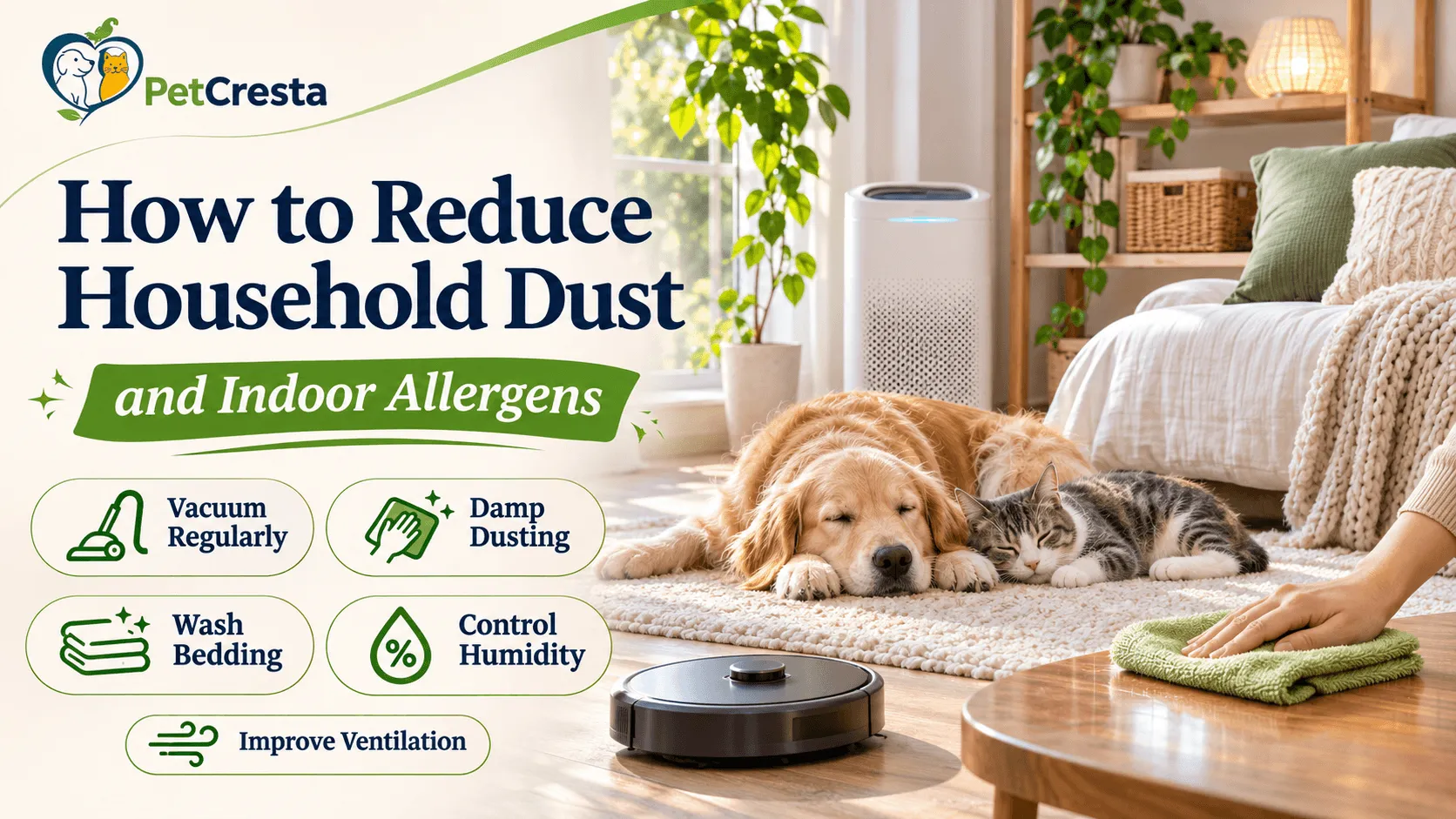
Dust has a way of settling where you least expect it—deep in carpet fibers, along bedding seams, inside upholstery, and across surfaces you rarely touch.
Over time, these particles mix with pet dander, pollen, and tiny skin flakes to form the substance most people simply call dust.
Learning how to reduce household dust involves more than buying a particular cleaning device. Regular vacuuming, damp dusting, humidity control, and proper ventilation all help limit the accumulation of dust and indoor allergens.
Some households rely on a robot vacuum to keep floors on a regular cleaning schedule, but that’s only one part of a larger strategy.
Quick Answer: To reduce household dust and indoor allergens, vacuum regularly with effective filtration, wipe surfaces with damp microfiber cloths, wash bedding frequently, control excess indoor moisture, and maintain your home’s ventilation and filtration systems.
Cleaning can reduce accumulated dust, but no routine eliminates every allergen. It also does not replace medical treatment when allergy or asthma symptoms persist.
Why Household Dust and Allergens Matter
Household dust contains textile fibers, soil particles, skin cells, pollen, and other debris. Much of it is visible, but individual allergen particles, such as dust-mite waste, can be microscopic.
Dust mites commonly live in mattresses, pillows, carpets, and upholstered furniture, where they feed on shed skin cells.
People with allergies or asthma may react when allergens become airborne during cleaning or everyday activities.
Common symptoms include sneezing, congestion, coughing, and itchy eyes. However, these symptoms can have several causes, so persistent or severe problems should be discussed with a healthcare provider.
Identify the Main Sources of Indoor Dust
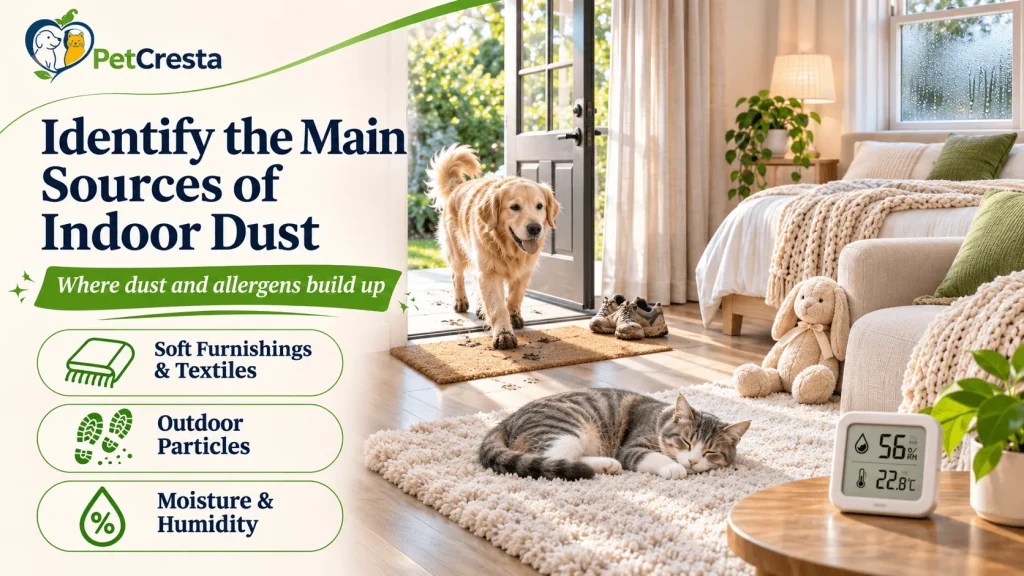
Knowing where dust accumulates makes it easier to prioritize cleaning.
Soft furnishings and textiles: Rugs, curtains, stuffed toys, upholstered furniture, and bedding can hold dust and allergens. Bedrooms deserve special attention because people spend many hours near fabric surfaces.
For people with confirmed dust-mite sensitivity, reducing unnecessary fabric items may help limit exposure.
Outdoor particles: Soil and pollen enter through open windows, on shoes, and on pets. Doormats, leaving outdoor footwear near the entrance, and wiping muddy paws can help reduce the amount of material tracked indoors.
Moisture and humidity: Excess humidity encourages dust-mite survival and can contribute to mold growth. A hygrometer can help homeowners monitor humidity levels.
Keeping indoor humidity around 30–50% is a useful general target, although the appropriate level depends on climate, weather, and condensation risk.
Address leaks and persistent condensation promptly so small moisture problems do not become larger ones.
Build a Practical Cleaning Routine
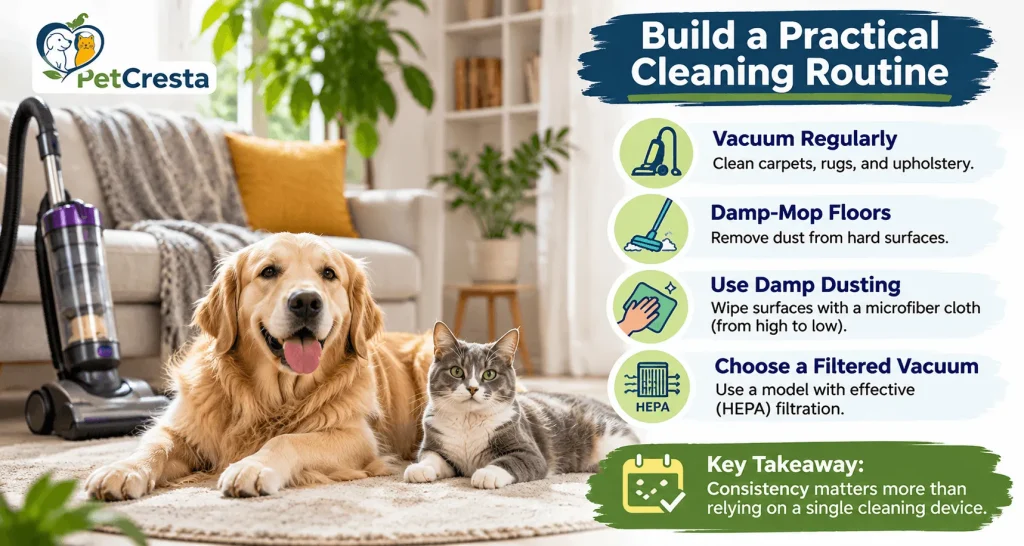
Regular cleaning helps remove settled particles before they accumulate across floors, furniture, and other surfaces.
Vacuum carpets and upholstery, then damp-mop hard floors as appropriate for the flooring material.
Automated cleaning tools can help maintain consistency, but they cannot reach every stair, upholstered surface, or cluttered corner.
Key Takeaway: Consistency matters more than relying on a single cleaning device.
Use Damp Dusting Instead of Dry Dusting
Damp microfiber cloths capture particles more effectively than methods that simply scatter loose dust.
Work from higher surfaces toward lower ones, including shelves, accessible vents, furniture, and baseboards.
This helps prevent dust from settling on surfaces you have already cleaned.
Household fixtures also deserve attention. Choosing easy-to-clean wall fixtures can make maintenance simpler, particularly in homes with pets where hair and dust collect around furniture and decorative details.
Smooth surfaces and accessible fixture designs generally require less effort to clean than elaborate shapes with numerous grooves.
Choose a Vacuum With Effective Filtration
Vacuuming can temporarily stir up dust, particularly when equipment leaks fine particles back into the room.
For households concerned about allergens, consider a vacuum with effective whole-machine filtration and a properly sealed system.
A genuine HEPA filter can capture very fine particles, but filter performance alone does not guarantee that the entire vacuum prevents dust leakage.
Follow the manufacturer’s instructions for cleaning or replacing filters.
People with significant dust sensitivity may prefer to leave the room while vacuuming takes place.
Reduce Dust Mite Exposure in the Bedroom
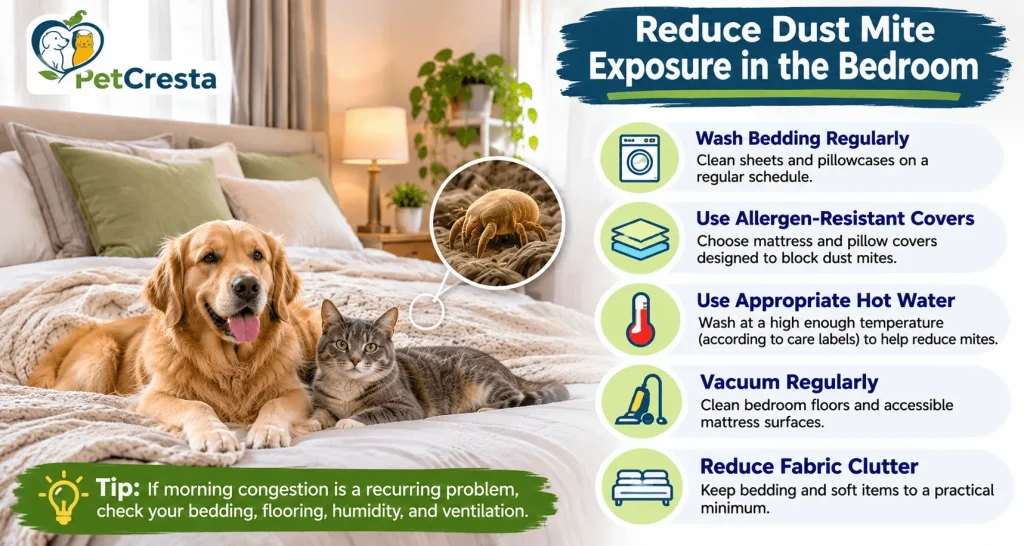
Bedrooms can contain substantial dust-mite allergen reservoirs because mattresses, pillows, and bedding provide places for particles to accumulate.
Washing sheets and pillowcases regularly, using allergen-resistant mattress and pillow covers, and reducing unnecessary fabric clutter can help lower exposure.
For washable bedding, appropriately hot water may help reduce dust mites, provided the fabric-care instructions allow it.
Vacuum bedroom floors and accessible mattress surfaces regularly.
If morning congestion is a recurring problem, start by checking bedding, flooring, humidity, and ventilation before expanding cleaning efforts throughout the house.
These measures may help reduce exposure, although they cannot guarantee that allergy symptoms will disappear.
Improve Indoor Air Quality During Cleaning
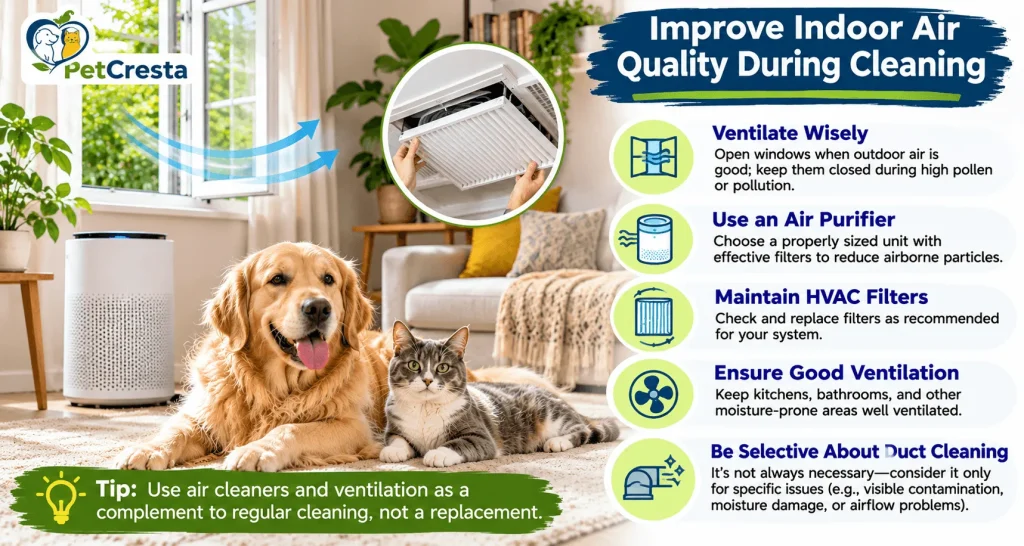
Cleaning can temporarily release fine particles into the air, so ventilation matters.
Opening windows may help when outdoor air quality and pollen conditions are suitable. During high-pollen periods or outdoor pollution events, keeping windows closed may be more appropriate.
Portable air cleaners can support particle reduction when correctly sized for the room and equipped with suitable filters.
However, they should supplement surface cleaning and source control rather than replace them.
Maintain HVAC Filters and Ventilation
Check HVAC filters according to the manufacturer’s instructions and replace them when needed.
The appropriate filter depends on the system’s design and airflow requirements.
Ventilation also matters in kitchens, bathrooms, and other areas where moisture or airborne particles are generated.
The U.S. Environmental Protection Agency provides guidance on indoor air quality, ventilation, filtration, and particle control.
Routine air-duct cleaning is not universally necessary. It is generally more useful to investigate specific problems such as visible contamination, moisture damage, or suspected airflow issues before arranging professional service.
Create a Sustainable Household Cleaning Schedule
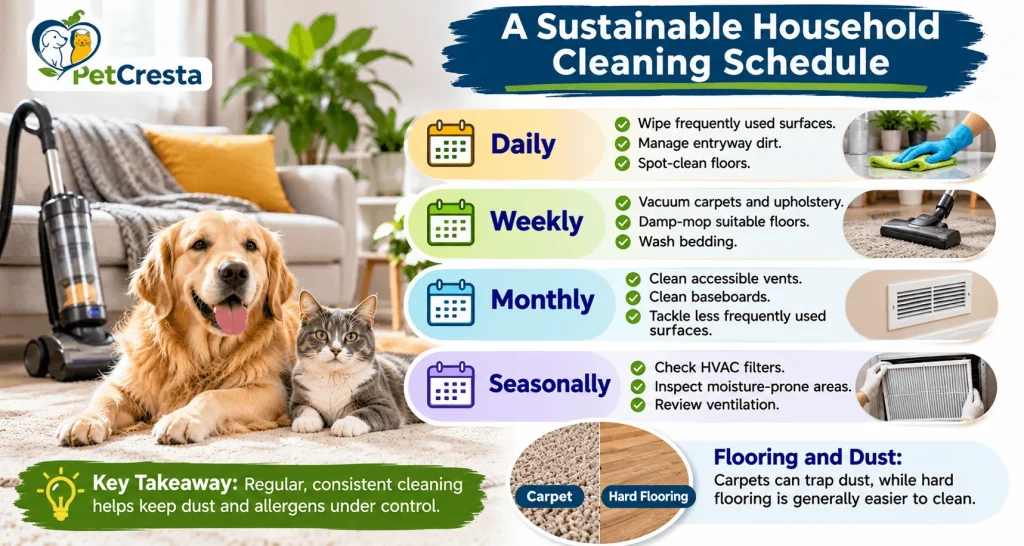
Reducing household dust becomes easier when cleaning tasks are divided across the week instead of being left for occasional intensive sessions.
A simple schedule might look like this:
| Frequency | Recommended Tasks |
|---|---|
| Daily | Wipe frequently used surfaces, manage entryway dirt, and spot-clean floors |
| Weekly | Vacuum carpets and upholstery, damp-mop suitable floors, and wash bedding |
| Monthly | Clean accessible vents, baseboards, and less frequently used surfaces |
| Seasonally | Check HVAC filters, inspect moisture-prone areas, and review ventilation |
These are starting points rather than fixed rules. Homes with shedding pets, heavy foot traffic, or allergy-sensitive occupants may need more frequent attention.
Consider Flooring and Dust Accumulation
Flooring materials can influence how easily a room is cleaned.
Carpets hold particles within their fibers, while suitable hard flooring allows settled dust to be removed through vacuuming and damp cleaning.
Homeowners comparing flooring materials may find PetCresta’s guide to luxury vinyl plank flooring useful for understanding construction, maintenance, and practical household considerations.
Changing flooring is not necessary for every household, but ease of cleaning can be worth considering during an already-planned renovation.
Common Mistakes to Avoid
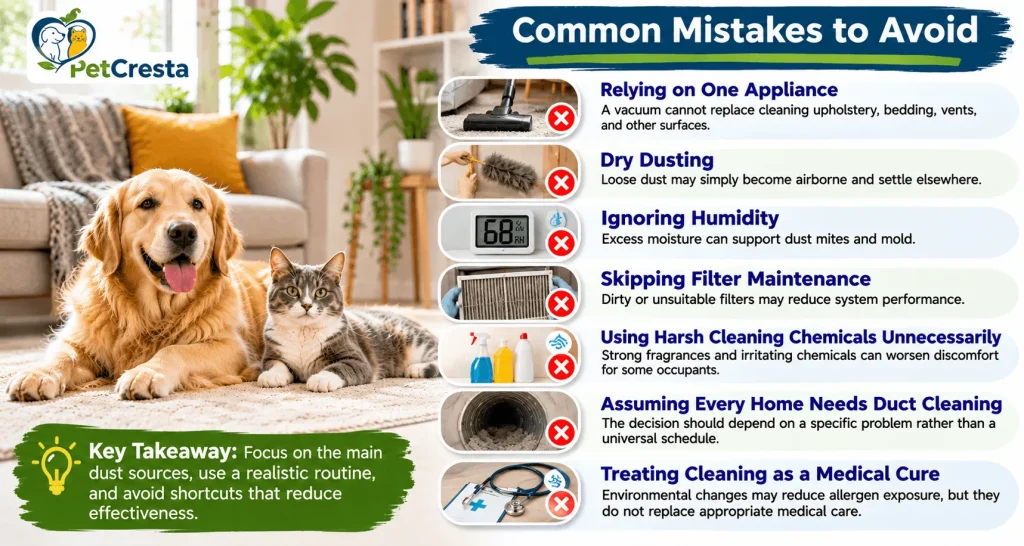
A home can look clean while still containing microscopic allergens.
Several common habits can make dust management less effective:
- Relying on one appliance: A vacuum cannot replace cleaning upholstery, bedding, vents, and other surfaces.
- Dry dusting: Loose dust may simply become airborne and settle elsewhere.
- Ignoring humidity: Excess moisture can support dust mites and mold.
- Skipping filter maintenance: Dirty or unsuitable filters may reduce system performance.
- Using harsh cleaning chemicals unnecessarily: Strong fragrances and irritating chemicals can worsen discomfort for some occupants.
- Assuming every home needs duct cleaning: The decision should depend on a specific problem rather than a universal schedule.
- Treating cleaning as a medical cure: Environmental changes may reduce allergen exposure, but they do not replace appropriate medical care.
The most useful routine is one that addresses the household’s main dust sources without creating an unrealistic workload.
Final Takeaway
Reducing household dust works best through consistent cleaning, moisture control, ventilation, and limiting the accumulation of particles.
Start with the rooms where dust or symptoms are most noticeable. Focus on two or three practical changes, such as weekly bedding washes, regular vacuuming, and damp dusting.
Then adjust the routine according to your household’s needs.
A cleaner indoor environment may reduce exposure to certain particles and allergens, but persistent respiratory or allergy symptoms deserve medical guidance.
FAQ’s
Regular vacuuming, damp microfiber dusting, cleaning soft furnishings, and limiting the amount of dirt entering the home can help reduce accumulated dust. Consistent cleaning is generally more useful than relying on one appliance.
Wash bedding regularly, control indoor humidity, clean fabric surfaces, and improve ventilation when outdoor conditions permit. These steps can reduce some allergen sources, although they cannot eliminate every allergen.
A vacuum with effective HEPA filtration and a sealed system can help capture fine particles during cleaning. Actual allergen exposure also depends on vacuum design, how it is used, and other household conditions.
Weekly vacuuming is a reasonable starting point for many homes. High-traffic rooms and homes with shedding pets may benefit from more frequent cleaning.
Opening windows can improve ventilation under suitable conditions, but it can also introduce pollen, outdoor dust, and pollution. Consider outdoor air quality and seasonal allergens before ventilating.
Keeping indoor relative humidity below 50%, where practical, can help make conditions less favorable for dust mites. Avoid excessively damp conditions, and account for local climate and condensation risks.
A properly sized air purifier with effective particle filtration can remove some airborne dust. It cannot remove dust already settled on furniture, floors, or bedding, so regular surface cleaning remains necessary.
Carpet fibers can trap dust, pollen, and other particles. Hard flooring is generally easier to wipe or damp-mop, although both surfaces need regular cleaning.
Brush and groom pets appropriately, clean their bedding, vacuum floors and upholstery, and wipe paws after outdoor activities. Regular cleaning can help manage loose hair, dander-containing dust, and tracked-in soil.
No. Cleaning can reduce exposure to some indoor allergens, but it cannot guarantee that symptoms will disappear. People with persistent allergies or asthma should seek appropriate healthcare advice.