Can Rabbits Eat Apples? What’s Safe, What’s Not, and How Much to Feed
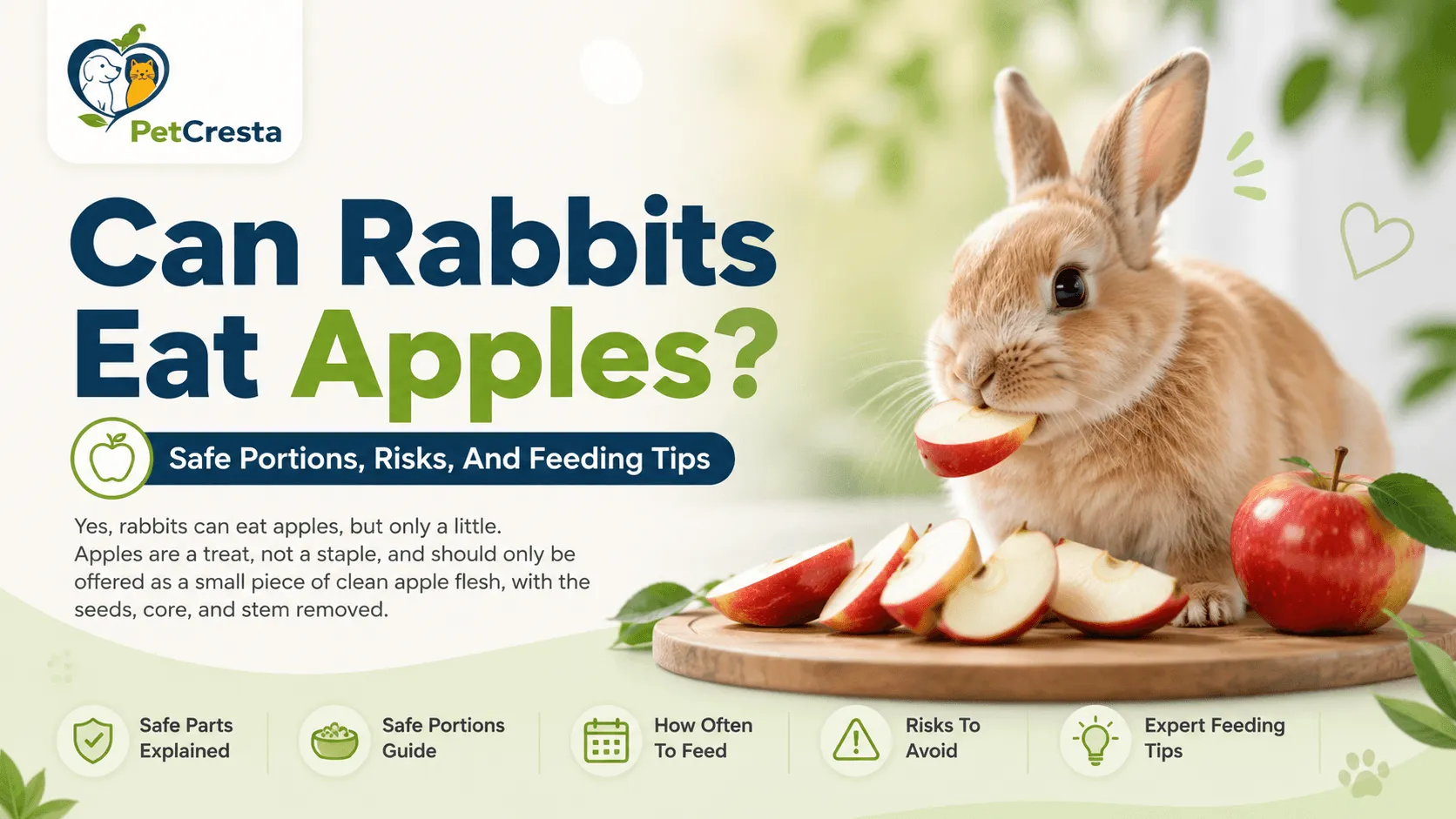
Wondering can rabbits eat apples, and is it safe? Apples are a treat, not a staple, and should only be offered as a small piece of clean apple flesh, with the seeds, core, and stem removed.
Here’s everything you need to know about the safe parts of the apple, the safe amount of apple to feed, how often to feed it, and what to do if it eats too much. It also addresses the case of infant rabbits, different apple-based products, and potential risks of apple consumption in rabbits.
TL;DR: Can Bunnies Eat Apples?
Bunnies can have apples as a treat in moderation. The apple needs to be thoroughly washed, the seeds, stem, and core removed, and the apple should be diced into small cubes.
Apples should not be fed every day. Apples are sweet, fiber-poor (compared to hay), and can be overused. It’s much safer to have a small piece every now and then than to feed apples regularly.
Apple Safety At A Glance
The best way to grasp this subject is to split each component of the apple. This helps quickly address the most common questions of owners and not fall into the trap of thinking the whole apple is safe.
| Apple part or form | Safe or not | Why | Serving note |
|---|---|---|---|
| Apple flesh | Yes | This is the part most often used as a treat | Offer only a very small piece |
| Apple skin | Yes | Usually fine if the fruit is washed well | Small amount only |
| Apple peels | Yes | Similar to skin if clean and fresh | Do not give large amounts |
| Apple seeds | No | Best avoided completely | Remove before feeding |
| Apple core | No | Not a feeding part and may contain seeds | Discard fully |
| Apple stem | No | Not worth feeding | Remove before serving |
| Green apples | Yes | Still a sugary fruit | Treat only |
| Red apples | Yes | Safe in a small portion | Treat only |
| Granny Smith apples | Yes | Safe if prepared properly | Same rules as other apples |
| Dried apple | Limited | More concentrated and easier to overfeed | Very rare and a very small amount |
| Applesauce | Not ideal | Often processed and too concentrated | Best avoided |
| Apple juice | Not ideal | High sugar offers no feeding advantage | Best avoided |
| Cooked apple | Limited | Still sugary and not better than a fresh apple | Plain only, but fresh is better |
| Apple leaves or twigs | Limited | Only consider if clean and pesticide-free | Best handled cautiously |
Why Apples Are Only An Occasional Treat, Not A Health Food
A rabbit’s diet should stay centered on hay, with fresh greens and a suitable pellet plan when appropriate. Fruit sits much lower on that list because it adds extra sugar without providing the same day-to-day value as fiber-rich foods.
That is why apples belong in the treat category. A tiny piece once in a while can fit into a balanced rabbit diet, but apples should never replace hay or compete with normal hay intake.
It also helps to avoid thinking of apples as a health food for rabbits. They may add variety, and many rabbits enjoy the taste, but they are still a sweet extra, not an important daily food. For another animal feeding guide, what do swans eat shows how safe foods, natural diet, and supplemental feeding differ by species.
Which Parts Of An Apple Are Safe For Rabbits?
Not every part of the apple should go into a rabbit’s bowl. This section is where owners usually need the most clarity, especially when they are looking for answers about skin, peels, seeds, and the core.
Can Rabbits Eat Apples With Skin?
Yes, rabbits can eat apples with skin if the apple is washed well and served in a very small amount. A thin piece of clean apple with the skin still on is usually fine for most healthy adult rabbits as an occasional treat.
The bigger issue is not the skin itself. The real concern is still portion size, because apples are sweet and should stay a small extra rather than a regular food. A tiny piece with skin is very different from giving a large slice too often.
Can Rabbits Eat Apple Peels?
Yes, rabbits can eat apple peels in a small amount if the peel comes from a fresh, well-washed apple. Apple peels should be treated the same way as the rest of the fruit, which means they still count as part of a sugary treat.
Peels should not be offered in large amounts just because they seem thinner or lighter than the flesh. They are still part of the apple, so the same moderation rules apply. Small, clean peel pieces are the safest choice.
Can Rabbits Eat Apple Core?
No, rabbits should not be given an apple core. The core is not a useful feeding part, and it often comes with seeds attached, which should always be removed before serving an apple to a rabbit.
A common owner mistake is offering a larger wedge and assuming the rabbit will only nibble the safe part. It is much safer to trim away the middle first and offer only a small piece of plain apple flesh. That makes the serving cleaner, safer, and easier to control.
Can Rabbits Eat Apple Seeds?
No, rabbits should not eat apple seeds. Seeds should always be removed before any apple is offered, even when the serving is very small.
The safest habit is to prepare the fruit fully before it goes into the bowl. A rabbit should not be chewing around the seeded middle of the fruit. Only the clean edible portion should be offered, and the seeds should be discarded completely.
Can Rabbits Eat Apples Without Seeds?
Yes, that is the safest way to offer an apple. A small piece of plain apple flesh with the seeds, core, and stem removed is the best option for most rabbits.
Even then, the serving should stay tiny because safe does not mean unlimited. Apples without seeds are still treats, not everyday foods. Good preparation makes apple safer, while moderation keeps it appropriate for a rabbit’s diet.
Can Bunnies Eat Green Apples?
Yes, bunnies can have green apples in a very small amount if the fruit is washed well and all seeds, the core, and the stem are removed first. Green apples are still fruit, so they should only be offered as an occasional treat.
The tart taste does not make them a better everyday option. The same rule still applies: a tiny piece is enough, and an apple should never replace hay or become a routine snack.
Can Rabbits Eat Red Apples?
Yes, rabbits can eat red apples if they are prepared properly and served in a very small amount. Red apples are safe in the same basic way as other apple types, which means the unsafe parts must be removed before feeding.
Their sweeter taste does not change the need for moderation. Red apples should still stay in the treat category, and the serving should remain small enough that it never affects normal hay intake.
Can Rabbits Eat Granny Smith Apples?
Yes, rabbits can eat Granny Smith apples in a small amount if they are washed well and the seeds, core, and stem are removed. If the question is whether rabbits can have Granny Smith apples, the answer is the same: yes, but only as a tiny occasional treat.
Granny Smith apples are still apples, so the feeding rules do not really change. The variety matters less than the preparation, the portion size, and how often the fruit is offered.
What About Apple Tree Leaves And Twigs?
Some rabbit resources allow clean, pesticide-free apple leaves or twigs in limited situations, but that does not change the guidance on the fruit itself. Anything sprayed, dirty, moldy, or uncertain should be avoided.
For most owners, the simplest and safest takeaway is still to focus on a small, well-prepared piece of apple flesh. Tree material is a separate feeding issue and needs more caution than many people expect.
Fresh, Dried, And Processed Apple Forms
Apple can show up in several forms, and not all of them are equally useful for rabbit feeding. Fresh apples are the simplest choice, while concentrated or processed forms are easier to overdo.
Fresh Apple Slices
Fresh apple slices are the best option when owners want to offer apples. They are easy to wash, trim, and portion into very small pieces.
Fresh fruit also makes portion control easier. One tiny piece is usually enough for a treat, especially if the rabbit has not had an apple before.
Dried Apple
Dried apple is much more concentrated than a fresh apple. Because the water has been removed, it is easy to feed too much without noticing how much sugar is being given.
If dried apple is ever offered, it should be plain, unsweetened, and given in a very tiny amount. It is not a better choice than a fresh apple, and for many rabbits, it is easier to skip it altogether.
Applesauce, Juice, And Cooked Apple
Applesauce and juice are not good routine choices for rabbits. They are often processed, higher in sugar per serving, or simply unnecessary when a plain, fresh slice can do the job better.
Cooked apple is also not a useful improvement over a fresh apple. Even when plain, it still counts as a sugary treat. Fresh, well prepared apple remains the clearest and simplest option.
How Much Apple Can A Rabbit Eat?
The safest advice is to think very small. Most pet rabbits do not need more than one or two tiny bite-sized pieces at a time. That is enough to offer variety without turning apple into a large sugary snack.
A simple rule helps here: apples should stay small enough that they never compete with hay intake. For most rabbits, that means a tiny treat portion rather than a noticeable side serving.
A common mistake is using human snack portions as a guide. Rabbits are small animals with sensitive digestive systems, so a little fruit goes a long way. Portion size depends heavily on body size, and how much horses weigh offers a useful contrast between small pet feeding limits and large animal body weight.
Portion Size By Rabbit Size
Size can help owners think about portions, but the serving should still stay modest across the board.
| Rabbit size | Sensible treat portion |
|---|---|
| Small rabbit | 1 very small bite-sized piece |
| Medium rabbit | 1 to 2 very small bite-sized pieces |
| Large rabbit | Up to 2 small bite-sized pieces |
These are still treat amounts, not meal additions. Rabbits that gain weight easily or have a history of soft stools need even more caution.
How Often Can Rabbits Eat Apples?
Once or twice a week is a reasonable upper limit for most healthy adult rabbits. That keeps Apple in the treat category where it belongs.
Some rabbits do better with fruit even less often. If a rabbit has a sensitive stomach, messy droppings, or poorer hay intake after treats, it makes sense to cut back.
Can Rabbits Eat Apples Every Day Safely?
No, apples should not be an everyday food. Even if a rabbit tolerates a small piece, daily fruit feeding can turn into an unhealthy habit and add more sugar than needed.
It is much better to save apples for occasional use and keep daily feeding focused on hay, water, and appropriate greens.
How To Feed Apples To Rabbits Properly
Feeding apples to rabbits properly is mostly about preparation, portion size, and keeping fruit in the treat category. A tiny piece offered the right way is very different from handing over a large wedge with the middle still attached.
The safest method is simple: wash the apple well, remove the seeds, core, and stem, cut a very small piece, and offer only a little at first. After that, watch your rabbit’s appetite, droppings, and interest in hay before offering the apple again.
Wash And Prepare The Apple
Start by washing the apple well. Then remove the stem, seeds, and entire core before cutting off a small serving piece.
If the skin is clean and fresh, it can stay on. There is no need to peel the fruit just because it is going to a rabbit, but it does need to be properly cleaned.
Cut It Into Small Pieces
Apple should be cut into very small pieces before serving. This keeps the portion under control and makes it easier for the rabbit to eat safely.
Large chunks are unnecessary. Tiny pieces are enough, and they reduce the chance of a rabbit swallowing more than intended.
Start Small and Watch For Changes
If the rabbit has never had an apple before, offer a very small piece first. Then watch for changes over the next day, especially appetite, stool quality, and interest in hay.
A rabbit that keeps eating normally and passes normal droppings has likely tolerated the small sample well. Even then, apples should stay an occasional extra, not a routine food.
Common Feeding Mistakes
Several feeding mistakes show up again and again with fruit treats:
- giving too much at once
- leaving seeds or the core attached
- feeding apples every day
- using sweetened dried apple or applesauce
- offering old, bruised, or moldy fruit
Small, clean, plain portions are the safest path.
Can Baby Rabbits Eat Apples?
Baby rabbits do not need sugary treats, and apples are not a priority food for them. Their diet should stay stable and appropriate for their age, with much more focus on the basics than on sweet extras.
For that reason, apple is best handled very cautiously in young rabbits. If a rabbit is still very young or the diet is still being established, it is wiser to avoid fruit or speak with a rabbit-savvy veterinarian before adding it.
Risks Of Feeding Apples To Rabbits
The main risks of feeding apples to rabbits are overfeeding, poor preparation, and reduced hay intake after sweet treats. Apple flesh in a tiny amount is usually not the biggest problem on its own. Trouble starts when the portion gets too large, the fruit is offered too often, or unsafe parts are left attached.
Apples are sweet and much lower in fiber than hay. That matters because rabbits rely on a fiber-rich diet to keep the digestive tract moving normally. When sugary treats are overused, they can contribute to soft stool, gas, reduced appetite, and a drop in normal droppings.
This section is important because many owners think only in terms of toxicity. With rabbits, the bigger danger is often digestive upset from the wrong amount or the wrong feeding pattern.
What To Do If Your Rabbit Eats Too Much Apple Or Apple Seeds
Too much apple can upset a rabbit’s digestion. A rabbit that eats too many sugary treats may eat less hay, pass fewer droppings, or start to look uncomfortable. In more serious cases, digestive slowdown can become a real concern.
If a rabbit stops eating, produces very few droppings, or seems painful and quiet, GI stasis has to be considered and should be treated as urgent.
If Your Rabbit Ate A Small Amount And Seems Fine
If your rabbit ate one small piece and is acting normally, stop all fruit for now and keep the diet simple. Hay and water should stay available at all times, and the rabbit should be watched closely over the next day for any change in appetite, droppings, or comfort.
A rabbit that keeps eating hay, stays bright, and passes normal droppings has likely handled the small treat without trouble. Even then, it is best not to offer more fruit right away.
Mild Signs To Watch For
A rabbit that has eaten too much apple may show soft stool, mild gas, less interest in hay, or smaller droppings than usual. Some rabbits may also seem a bit uncomfortable or less eager for their normal food.
These signs matter because rabbits can worsen faster than many owners expect. Mild digestive upset should not be ignored, especially in a rabbit that already has a sensitive stomach.
When to Call a Vet Right Away
Call a rabbit-savvy veterinarian promptly if your rabbit stops eating, becomes lethargic, produces very few droppings, shows signs of pain, or seems to be getting worse instead of better. A rabbit that is hunched, quiet, and refusing food needs quick attention.
A wait-and-see approach is not a good choice when appetite and droppings fall sharply. Rabbits can decline quickly once digestion slows down.
If Your Rabbit Ate Apple Seeds Or The Core
Do not offer more fruit. Monitor your rabbit closely and watch appetite, droppings, energy level, and comfort.
If your rabbit ate more than a tiny accidental amount of seeds or part of the core, or if any abnormal signs appear, contact a rabbit-savvy veterinarian. It is always safer to act early when a rabbit has eaten something that should have been removed before feeding.
Conclusion
Rabbits can eat apples, but only as a small occasional treat. The safest method is to wash the fruit, remove the seeds, core, and stem, and offer just one or two tiny pieces at a time.
The main rules are simple: keep the portion small, do not feed apples every day, and watch for any digestive changes after a new treat. When in doubt, it is always safer to stay conservative with fruit and keep the diet centered on hay.
FAQ’s
Apple seeds are a part of the fruit that should be avoided completely. The safest approach is full removal before feeding, rather than trying to judge whether a tiny amount is harmless. Rabbits have sensitive digestive systems, and there is no benefit to taking that risk. Safe feeding starts with careful preparation.
Many rabbits will eat apples because they are sweet and easy to chew. That does not mean apples should be offered often, since rabbits can enjoy foods that still need strict limits. A rabbit being eager to eat an apple is not the same as an apple being a good everyday food. It should still stay a small occasional treat.
The main risks are overfeeding, digestive upset, reduced hay intake, and offering unsafe parts like seeds or the core. Apples are sweet and much lower in fiber than hay, so they can cause trouble when given too often or in large portions. The safest approach is small, occasional servings only. Good preparation matters just as much as the amount.
Wild rabbits may nibble fallen fruit if they come across it, but that does not change what is best for a pet rabbit. Pet rabbits should still be fed with careful portion control and safe preparation in mind. Wild feeding behavior is not a guide for routine pet care. Apple should still stay occasional.
Many rabbits like apples because they are sweet and easy to eat. That is exactly why owners need to be careful with portion size. A rabbit enjoying a food does not make it a good everyday option. Treat foods can be appealing while still needing strict limits.
References