Worried What Bears Eat? Learn Diet by Species, Habitat, and Season
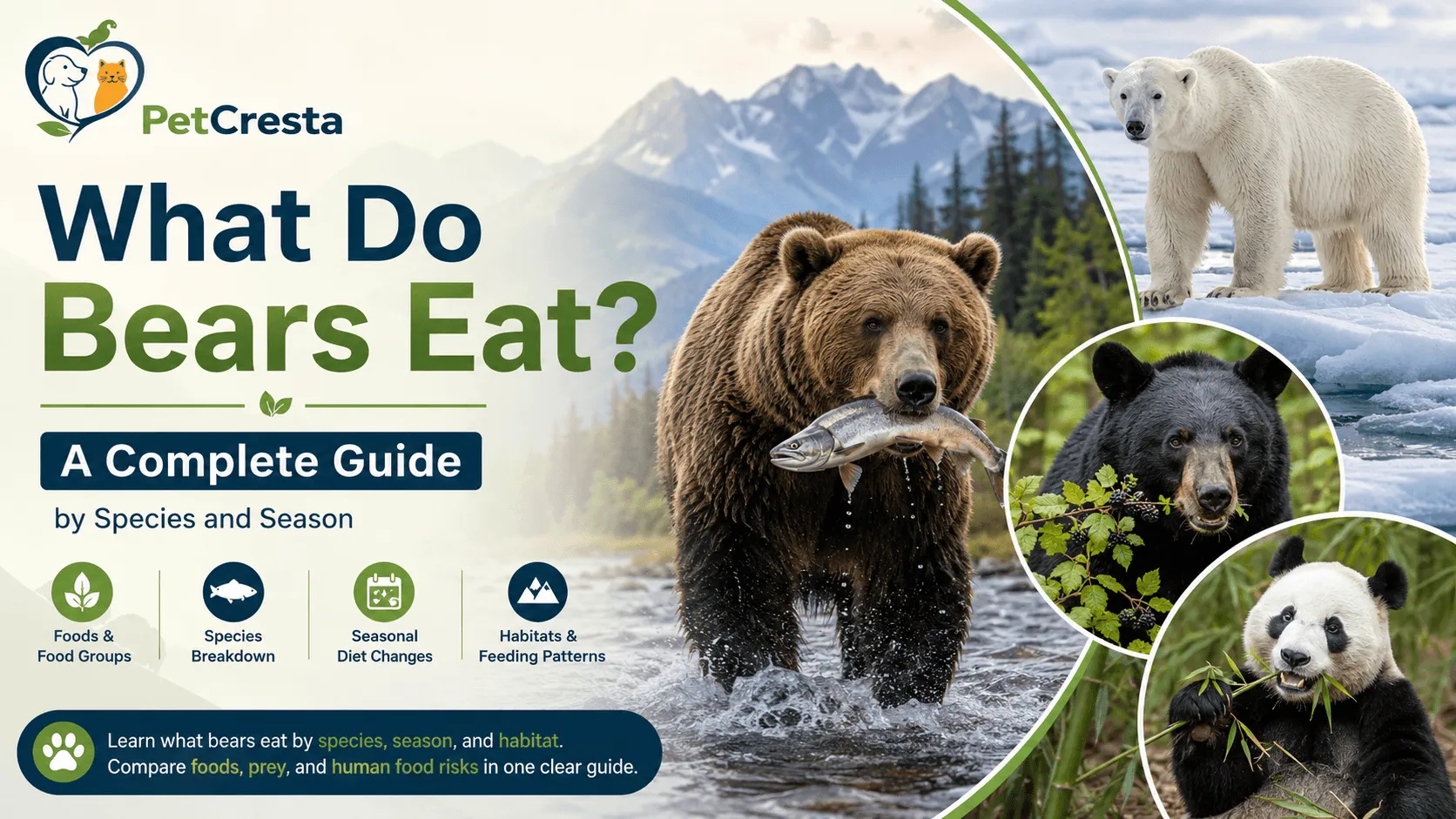
Bears do not all eat the same foods. Most bear species are omnivores, but the balance between plant and animal food changes with species, habitat, and season. A black bear in a forest, a brown bear near a salmon river, and a polar bear on Arctic sea ice do not live on the same menu.
That is why the question of what bears eat needs a fuller answer than berries or fish alone. Some bears spend much of the year eating grasses, roots, fruit, nuts, and insects. Others rely far more on animal prey.
This guide explains what do bears Eat?, by species, common food groups, prey, habitat, and season, so the full picture is easy to follow.
TL;DR: Bear Diet Quick Facts
- Great Smoky Mountains black bears get about 85% of their diet from plant materials, and nuts and acorns become especially important in the fall.
- Glacier Bay black bears feed on shoreline grasses, sedges, dandelions, wild celery, cow parsnip, berries, salmon, birds, eggs, rodents, and carcasses, depending on season and location.
- Brown bears may eat close to 80% plant foods in some settings, then shift into fish, carrion, and other animal foods when available.
- Polar bears may eat up to 150 pounds in one sitting and often depend on repeated seal hunting to maintain body condition.
What Does A Bears Eat?
Most of them eat a mix of plant and animal foods, including grasses, roots, berries, nuts, fruit, insects, fish, carrion, and sometimes mammals. Polar bears depend mainly on seals, while giant pandas eat mostly bamboo. What a bear eats depends on the species, where it lives, and what food is easiest to find at that time of year.
Bear Diet At A Glance
| Bear species | Main foods | Diet type | Common high-value foods | Main feeding setting |
|---|---|---|---|---|
| American black bear | Grasses, roots, berries, nuts, insects, carrion, fish, small animals | Omnivore | Berries, nuts, insects, easy calories | Forests, mountains, mixed woodland |
| Brown bear | Roots, berries, herbs, insects, fish, carrion, mammals | Omnivore | Salmon, berries, rich seasonal foods | Rivers, coasts, mountains, and tundra edges |
| Grizzly bear | Similar to the brown bear, with more inland variation in many areas | Omnivore | Berries, roots, insects, carcasses, and fish were available | Inland mountains, valleys, open wildlands |
| Polar bear | Seals, marine mammal remains, occasional birds, and eggs | Carnivore leaning heavily toward meat | Seal fat and meat | Arctic sea ice and the coastal Arctic |
| Giant panda | Bamboo, small amounts of other plant matter | Herbivore leaning in practice | Bamboo shoots and leaves | Mountain bamboo forests |
| Sloth bear | Termites, ants, fruit, honeycomb, soft plant matter | Omnivore | Insects and fruit | Dry forests and grassland edges |
| Sun bear | Fruit, insects, honeycomb, small animals | Omnivore | Fruit and insects | Tropical forests |
| Andean bear | Fruit, bromeliads, leaves, soft plant matter, occasional animal matter | Omnivore | Fruit and plant matter | Cloud forests and mountain forests |
| Asian black bear | Fruit, nuts, insects, plant matter, carrion, small animals | Omnivore | Nuts, fruit, mast crops | Forested mountain habitats |
Takeaways
Most bears are omnivores, not strict meat eaters. Black bears and brown bears often eat a large amount of plant matter throughout the year. Polar bears are the most meat-focused bear species, while giant pandas are the most plant-focused. Bear food also changes with local supply, weather, and season.
Are Bears Carnivores, Or Omnivores, Or Herbivores?
Most bears are omnivores. That means they eat both plant and animal foods. This group includes black bears, brown bears, grizzlies, sun bears, sloth bears, Andean bears, and Asian black bears.
Polar bears are the clearest meat-focused exception because they depend heavily on seals and other marine food sources. Giant pandas are the clearest plant-focused exception because bamboo makes up most of their daily intake. So when people ask are bears carnivores or omnivores, the best answer is that most are omnivores, but some species lean strongly in one direction.
What Do Bears Eat by Species
Bears belong to the same animal family, but they do not feed in the same way. Some species stay broad and flexible in what they eat, while others depend much more on one main food source. Looking at the diet by species makes the differences clearer and helps explain why the answer changes so much from one bear to another.
What Do Black Bears Eat
Black bears eat a wide range of foods, but much of their diet is plant-based. Common foods include grasses, sedges, roots, berries, nuts, fruit, insects, carrion, and occasional fish or small animals. In Great Smoky Mountains National Park, roughly 85% of black bears’ diet is made up of plant materials, with nuts and acorns especially important in the fall.
Their menu also changes by region. In Glacier Bay, black bears feed on shoreline grasses, sedges, dandelions, wild celery, cow parsnip, berries, salmon, birds, eggs, rodents, and even whale carcasses when available. That range shows why black bears do so well across different habitats.
Black bears also respond quickly to seasonal foods. Outdoor Life and Cat Tales both show how black bears shift from spring vegetation to summer berries and insects, then toward higher-calorie foods in late season. That seasonal flexibility is one of the main reasons black bears are such adaptable omnivores.
What Brown And Grizzly Bears Eat
Brown bears and grizzlies eat both plant and animal foods, but plant matter often makes up most of the diet. FOUR PAWS notes that brown bears may feed almost 80% on bark, leaves, roots, mushrooms, nuts, fruit, and berries. They also eat meat when available, including rodents, birds, frogs, snakes, fish, and carrion.
Food choices change a lot by location. Coastal brown bears often focus on fish, especially salmon, while inland grizzlies rely more on roots, berries, insects, carcasses, and occasional prey. A-Z Animals also highlights berries, bulbs, roots, insects, fish, and squirrels as common brown-bear foods, which fits that broad omnivorous pattern.
What Do Polar Bears Eat
Polar bears eat mostly seals, especially ringed and bearded seals. These prey animals provide the fat-rich diet polar bears need to stay warm and survive in Arctic conditions. NatHab notes that a polar bear can eat up to 150 pounds in one sitting and may need to catch a seal every five to six days to maintain body weight.
Polar bears do not feed like forest bears. The U.S. Fish and Wildlife Service explains that they often hunt seals by ambushing them at breathing holes in the sea ice. When food is available, they may also scavenge larger marine remains or take birds and eggs, but seal hunting remains the center of the diet.
What Giant Pandas Eat
Giant pandas eat mostly bamboo. Shoots, stems, and leaves make up almost all of the daily diet. They may take small amounts of other plant material now and then, but bamboo remains the main answer.
This makes giant pandas unusual within the bear family. They are still bears, but their feeding pattern is far more specialized than that of black bears or brown bears.
Other bear species in brief
Sloth bears are known for feeding on termites, ants, fruit, and other soft foods. Sun bears eat fruit, insects, honeycomb, and small animals in tropical forests. Andean bears eat a lot of fruit and plant matter, while Asian black bears eat fruit, nuts, insects, plant material, carrion, and some small animals, depending on season and habitat.
What Foods Do Bears Eat Most Often?
Bears usually eat the foods that give the best energy return for the least effort. That means there is no single favorite food for every bear. What foods bears eat most often depends on the species, the habitat, and the season, but several food groups come up again and again across bear diets. For another clear animal diet comparison, what do swans eat shows how feeding habits change by species, habitat, and available food sources.
Plants, Grasses, Roots, And Leaves
For many omnivorous bears, plant matter makes up a large part of the diet. Fresh grasses, sedges, leaves, shoots, roots, and bulbs are especially useful in spring when richer seasonal foods may still be limited.
These foods are common, reliable, and easy to gather. For black bears and many brown bears, this type of feeding fills much of the year.
Berries, Fruit, Nuts, And Seeds
Many readers ask, do bears eat berries and ” Do bears eat fruit, and the answer is yes. In many regions, berries and other soft fruits are some of the most important seasonal foods in a bear’s diet. If the question is what fruits do bears eat, the answer depends on the habitat, but common examples include blueberries, blackberries, raspberries, huckleberries, apples, and other wild or orchard fruit when available. Apples can appear in many animal diet questions, and can rabbits eat apples explains how the same fruit fits very differently in a pet rabbit diet than in wild bear foraging.
Nuts and seeds matter too, especially before winter. Acorns and other mast crops can become major calorie sources when bears are building fat reserves. This is why fruit, berries, and nuts often become some of the most heavily used foods in late summer and fall.
Insects And Bugs
Insects give many bears a useful source of protein and fat. Ants, beetles, larvae, grubs, bees, and wasps are all eaten by different bear species.
Bears may dig into ant colonies, tear apart rotten wood, turn over rocks, or rip open nests to reach these foods. For some species, insects are only part of the menu. For others, such as sloth bears, they are a major food source.
Fish In A Bear’s Diet
A common question is do bears eat fish, and yes, they do. In fact, bears eat fish whenever the habitat gives them the chance, and for some populations, fish can be one of the richest foods available. Brown bears are the best-known example, especially near salmon runs, though some black bears also eat fish where the opportunity appears.
Fish are not equally important for every bear species, but when they are available, they provide dense nutrition and can become a major seasonal food source. In some river and coastal habitats, fish help bears gain weight quickly before colder months.
Insects And Bugs
People also ask do bears eat insects and ” Do bears eat bugs, and both answers are yes. Common insect foods include ants, beetles, larvae, grubs, bees, and wasps. If the question is what insects do bears eat, the short answer is that bears often target whatever is easy to reach and rich in nutrients.
Bears may dig into ant colonies, tear apart rotten logs, turn over rocks, or rip open nests to reach these foods. For some species, insects are only one part of the menu. For others, such as sloth bears, they are one of the most important food groups.
Human Food And Garbage
Bears may also eat human food when they find it, but this is not a healthy or natural part of a bear’s diet. Trash, pet food, coolers, and camp food are better understood as attractants that change bear behavior and increase conflict.
What Animals Do Bears Eat?
Animal food is only one part of the picture, and it does not mean every bear hunts in the same way. Some bears take live prey more often, while others mostly scavenge when the chance appears
Prey Vs Scavenging
Not all animal food comes from hunting. Bears often scavenge as well as hunt, and that difference matters. A bear that feeds on a dead deer is scavenging. A bear that actively chases and kills live prey is hunting.
Many bears do both, but they usually choose the easier option when food is available. That is why the question of what do bears prey on needs a careful answer.
Common Animal Foods
Depending on species and habitat, bears may eat fish, deer, fawns, rabbits, foxes, rodents, bird eggs, chicks, carrion, and, in the case of polar bears, seals. Some of these foods are common in one bear population and rare in another.
So yes, bears can eat deer, rabbits, and foxes, but not every bear species hunts those animals often. In many cases, animal food comes from a mix of active hunting and scavenging.
How Often Do Bears Eat Meat?
The answer changes a lot by species and place. Polar bears depend heavily on meat. Brown bears may eat substantial amounts of animal food where fish or carcasses are abundant. Black bears can eat meat too, but in many regions they spend much of the year feeding mostly on plants, berries, fruit, and insects.
So bears do eat meat, but not all bears rely on it in the same way.
What Do Bears Eat In The Wild By Habitat
Habitat shapes what food is easy to find, worth the effort, and available across the year. A bear living in a forest, coastline, mountain country, or Arctic sea ice does not face the same feeding options. Looking at the diet by habitat helps explain why local food patterns can be very different even within the same bear family.
What Do Bears Eat In The Forest And Mountain Habitats
In forests and mountain habitats, bears often eat berries, nuts, roots, grasses, insects, carrion, and small mammals. Black bears and inland brown bears fit this pattern well.
These habitats usually provide a changing menu across the year, which is why food choice shifts so much from spring to fall.
River And Coastal Habitats
Rivers and coasts can create some of the richest feeding grounds for bears. Fish, shellfish, marine remains, coastal plants, and nearby berry patches all increase food options.
This is why coastal brown bears are closely linked with salmon. A strong fish run can shape how long a bear stays in one place and how much body fat it gains.
Arctic And Sea Ice Habitats
Arctic habitats support a very different feeding pattern. Polar bears depend mainly on seals and other marine food tied to sea ice conditions.
This makes Arctic feeding much more specialized than forest feeding. A polar bear cannot switch to a mostly berry and root diet the way a black bear can.
Human Edge Habitats
Some bears live near farms, cabins, suburbs, campgrounds, or roads. In these places, garbage, orchards, crops, bird feeders, pet food, and outdoor storage can become major food attractants.
This is still part of what wild bears may end up eating near people, but it is risky for both sides. Human edge feeding often leads to conflict, property damage, and dangerous bear behavior.
Regional Diet Examples
A bear’s diet can look very different from one region to another. In the Great Smokies, black bears rely heavily on plant materials, especially nuts and acorns in the fall. In Glacier Bay, black bears graze on shoreline plants in spring and summer, then shift to berries and salmon later in the year.
In the Arctic, polar bears stay tied to seal hunting and sea ice rather than switching to a mostly plant-based seasonal diet.
How Bear Diet Changes by Season
Bear diets shift through the year as food sources appear, ripen, disappear, or become harder to reach. Spring feeding does not look the same as late summer or fall feeding, and those changes affect how bears build energy and body fat. This seasonal view helps connect the diet to real feeding behavior instead of treating it like one fixed menu.
Spring
After winter, many bears feed on the first foods available. Fresh shoots, sedges, grasses, roots, bulbs, insects, and carrion can all be important in spring.
This season is often about steady recovery and easy foraging rather than the richest foods of the year.
Summer
Summer brings a wider choice. Fruit begins to ripen, insects remain active, and fish may become available in some habitats. Bears often spend long periods feeding on whichever summer food is most abundant.
This is when local conditions matter a lot. One bear may focus on berries, while another nearby spends more time on insects or fish.
Fall
Fall is the heavy feeding season for many bears. Nuts, berries, fruit, fish, and other rich foods become more important as bears build fat reserves.
This intense late-season feeding period is often called hyperphagia. Bears may spend much of the day eating and moving between the best food patches.
Winter
Black bears and many brown bears reduce or stop feeding during denning and depend on stored body fat. That is why fall feeding is so important.
Polar bears are different. Their diet remains tied more closely to seal hunting and sea ice conditions than to the same winter pattern seen in denning bears.
How Bears Find, Forage, And Hunt Food
Bears are excellent at locating food. Smell is one of their strongest tools, and they can detect food sources from impressive distances. They also remember productive feeding areas and often return when those foods become available again.
Different foods call for different methods. A bear may dig for roots, tear apart logs for insects, turn over rocks, climb trees for fruit or mast, or stand in moving water to catch fish. When animal food is available, bears may scavenge carcasses or actively hunt if the effort makes sense.
This is why bear diets can look so different from one place to another. Bears do not follow one fixed menu. They follow opportunity.
Do Bears Eat Honey? Common Diet Myths
Bear diet is often reduced to a few popular images, but many of those ideas are too simple. Honey is one of the most repeated examples, even though it is only a small part of the story. This section clears up a few common myths and separates memorable images from how bears actually feed.
The Honey Myth
Bears do eat honey sometimes, but honey is not the main answer to what foods bears eat. That image is memorable, but it leaves out most of the real diet.
When bears raid hives, they may also be after larvae and the rest of the food reward inside the nest, not just honey alone.
Myth: All Bears Are Meat Eaters
This is not true. Most bears are omnivores, and many spend much of the year eating mostly plant matter, fruit, berries, roots, and insects rather than large prey.
Myth: All Bears Hibernate The Same Way
Bear winter behavior is not identical across species. Black bears and many brown bears depend heavily on stored fat during denning, while polar bears follow a very different feeding pattern tied to Arctic hunting conditions.
Myth: Human Food Is Harmless
Human food can reshape bear behavior. A bear that learns to seek garbage, pet food, or camp supplies may return again and again. This raises the risk of dangerous encounters and often ends badly for the bear.
Why Human Food Is Dangerous For Bears
Human food changes bear behavior more than it changes nutrition. A bear that finds easy calories in trash, pet food, coolers, bird feeders, or camp supplies may start returning to the same places again and again.
Island Park Bears warns that once bears find an easy meal, they can lose both their preference for natural food sources and their fear of humans. That is the real danger. Food-conditioned bears are more likely to damage property, approach homes or camps, and end up in serious conflict with people.
What Do Baby Bears Eat?
Baby bears start with milk. In the earliest stage of life, milk provides the nutrition needed for growth and development.
As cubs grow and begin moving with their mother, they start sampling solid foods found in the local habitat. That may include soft plant matter, berries, fruit, and insects. Over time, cubs learn the local food pattern by following the mother’s feeding routine.
Conclusion
Most bears are omnivores, but that does not mean all bears eat the same foods. Black bears, brown bears, grizzlies, polar bears, pandas, and other bear species follow different feeding patterns shaped by habitat and season.
The clearest way to understand a bear’s diet is to look at three things together: species, place, and time of year. Once those are clear, the menu makes sense. Bears eat what helps them survive where they live.
FAQ’s
Yes, most bears are omnivores, which means they can use both plant and animal foods. What matters more is how strongly each species leans in one direction. Black bears and brown bears are flexible omnivores, while polar bears lean much more toward animal prey, and giant pandas lean much more toward plant feeding.
Most bears are not true herbivores, even though some of them eat a lot of plant material. A bear may spend long periods feeding on grasses, roots, fruit, berries, and nuts, but that still does not make the whole bear family herbivorous. The main exception in the daily feeding pattern is the giant panda, which depends mostly on bamboo.
Yes, and for many species, plant foods are a major part of the yearly diet. Bears may feed on grasses, sedges, leaves, roots, bulbs, berries, nuts, and other seasonal vegetation depending on where they live. In some habitats, plant foods make up far more of the diet than many people expect.
There is no single favorite food for all bears because feeding choice depends on species, season, and local food supply. A forest bear may focus on berries or nuts, a coastal brown bear may focus on salmon, and a polar bear depends mainly on seals. Bears usually keep returning to the food source that gives the best reward at that time.
Yes, bears can eat deer, but it is not the main food source for most bear populations. They may take fawns, weak animals, or feed on deer carcasses they find rather than hunt healthy adult deer often.
Sometimes, but foxes are not a major or routine food source for most bears. A bear may kill or scavenge a fox if the opportunity appears, especially in areas where animal food is available and easy to take. This is better understood as occasional opportunistic feeding than a core part of the bear’s diet.
American black bears eat a wide mix of foods and adjust quickly to local conditions. Their diet often includes grasses, roots, berries, nuts, insects, carrion, and sometimes fish or small animals, with seasonal changes across the year. This flexibility is one reason they can live in forests, mountains, wetlands, and even areas close to people.
References
- Black Bears | U.S. National Park Service
- Brown Bears | U.S. National Park Service
- Black Bears | Great Smoky Mountains National Park | U.S. National Park Service
- A Polar Bear Year: Early Winter | U.S. Fish & Wildlife Service
- Giant Panda | World Wildlife Fund
- Storing Food | Bears | U.S. National Park Service
- Managing Human-Bear Interactions | Bears | U.S. National Park Service
- What Do Black Bears Eat? | Outdoor Life
- What Do Black Bears Eat? A Guide to Their Diverse Diet | Cat Tales
- Brown Bear Food and Feeding Behaviour | FOUR PAWS
- Polar Bear Story: What Do Polar Bears Eat? | Natural Habitat Adventures