Mice In The Home: How To Keep Your Dog Safe
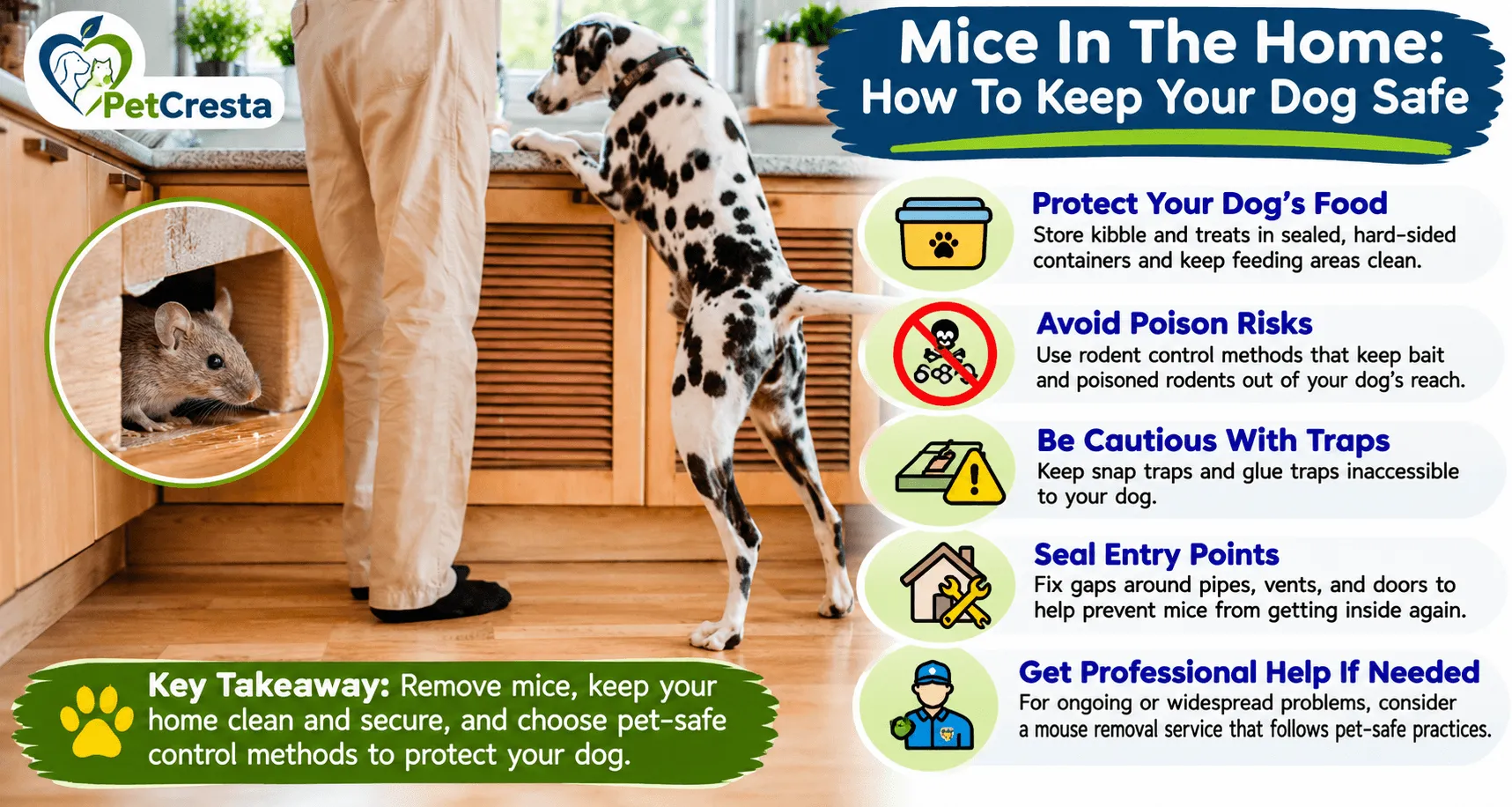
If you have a dog, a mouse problem is more than a household nuisance. Dogs often investigate sounds behind walls or under cabinets. Once mice find food and shelter in your home, you need a plan that protects your space without creating new hazards for your pet. Understanding everyday dog care and safety can also help you recognize household risks before they become serious.
The safest way to get rid of mice when you have dogs is to secure food, block rodent entry points, keep your pet away from affected areas, and use traps or professional removal methods that prevent pet access. Avoid leaving poison or traps anywhere your dog can reach them.
With the right precautions, you can address a mouse problem without introducing unnecessary hazards for your pet.
Why Mice Are A Bigger Problem For Dog Owners
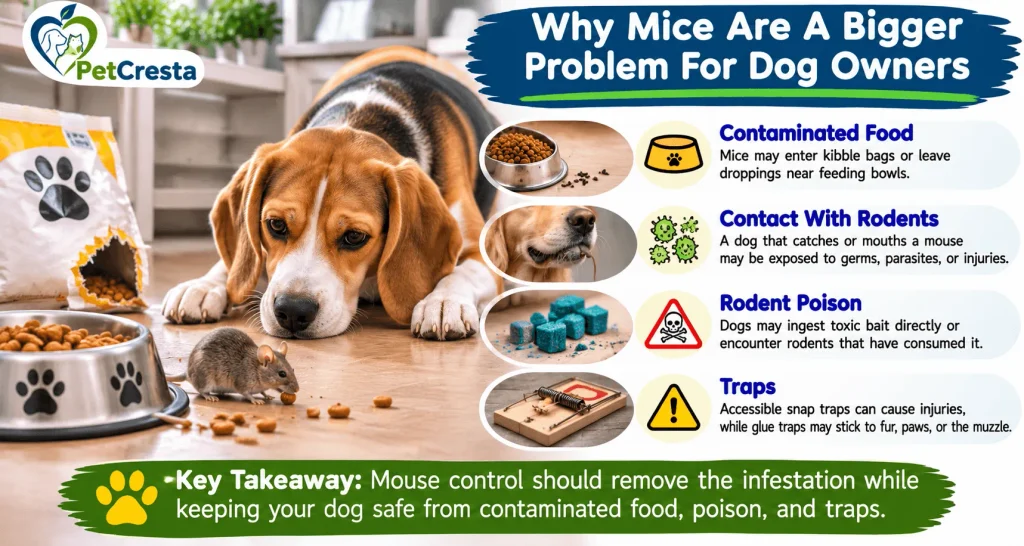
Mice can contaminate dog food, feeding areas, and household surfaces with urine and droppings. They may chew through packaging, damage stored belongings, and create unsanitary conditions in places where your dog spends time.
Dogs face several possible hazards during a mouse infestation:
- Contaminated food: Mice may enter kibble bags or leave droppings near feeding bowls.
- Contact with rodents: A dog that catches or mouths a mouse may be exposed to germs, parasites, or injuries.
- Rodent poison: Dogs may ingest toxic bait directly or encounter rodents that have consumed it.
- Traps: Accessible snap traps can cause injuries, while glue traps may stick to fur, paws, or the muzzle.
The risk from a poisoned mouse depends on the rodenticide, the amount involved, and the exposure. If you suspect your dog has swallowed rodent bait or a poisoned mouse, contact a veterinarian immediately.
Mouse control should address the infestation while protecting your dog’s health and daily environment.
When Professional Help Makes More Sense
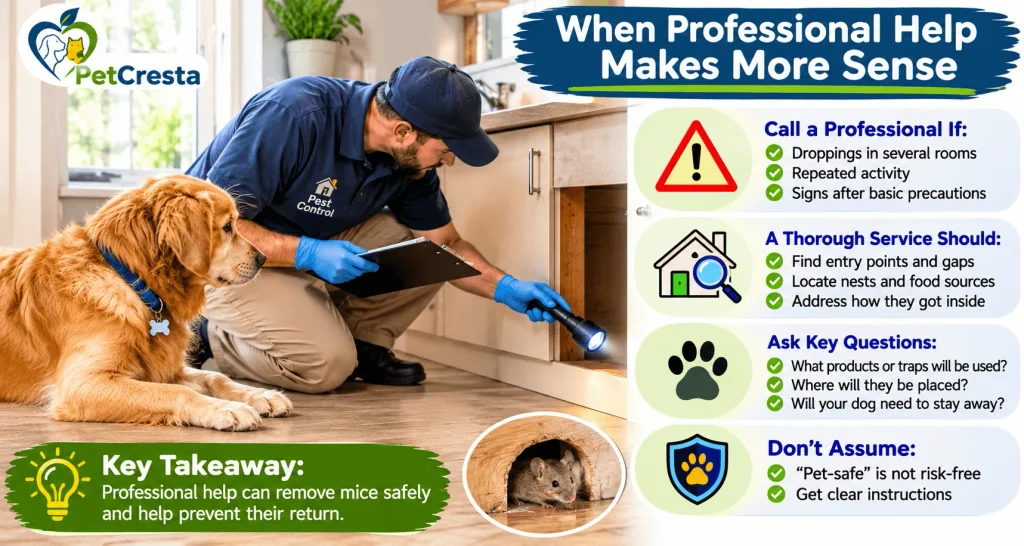
If you find droppings in several rooms, hear repeated activity, or continue seeing signs after basic precautions, the infestation may need professional attention. A mouse removal service may be a safer option for a home with dogs if the provider explains its methods and pet-safety precautions.
A thorough service should look beyond visible mice. It should identify entry points, nests, food sources, and gaps. Removing rodents without addressing how they entered can leave the problem unresolved.
Ask what products or traps will be used, where they will go, and whether your dog must stay away during treatment. Do not assume a treatment described as pet-safe is risk-free in every situation. Get clear instructions and follow them.
Signs Your Dog May Notice Before You Do
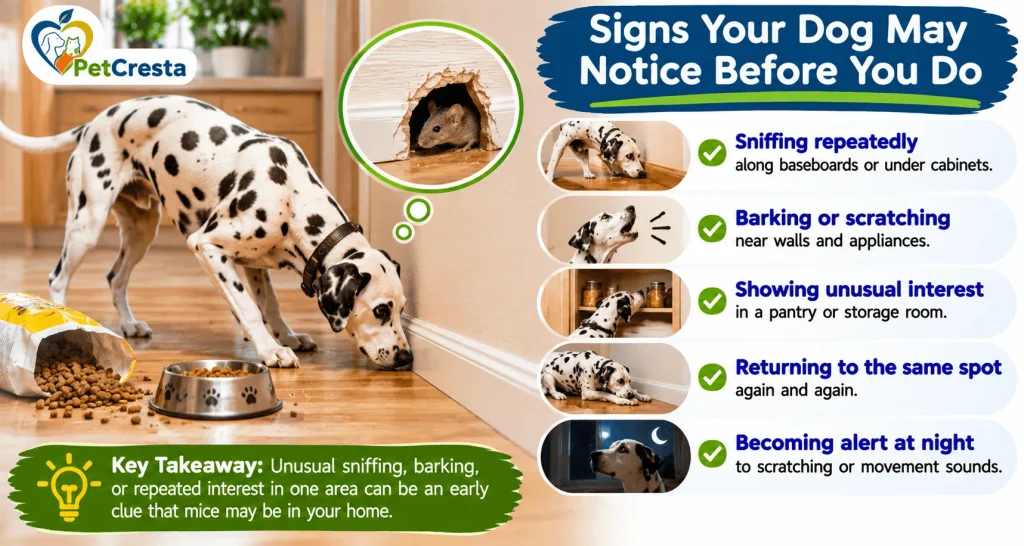
Dogs may detect rodent activity before you find droppings. You might see yours sniffing along baseboards or reacting at night. Repeated barking or pawing near walls and appliances can be a clue worth investigating. If your dog repeatedly approaches an unsafe area, practicing basic commands through adult dog obedience training may help you redirect its attention while you investigate.
Check the feeding area, too. Disturbed food, shredded packaging, or scattered treats may indicate that mice are foraging. Pet food is an easy source of calories, particularly when bags are left open or bowls remain full overnight.
Listen for scratching in ceilings, movement in pantries, or sounds behind appliances. If your dog repeatedly returns to the same area, inspect it carefully. This can help narrow down where to look, but does not confirm an infestation.
Pet-Safe Mistakes To Avoid When Acting Quickly
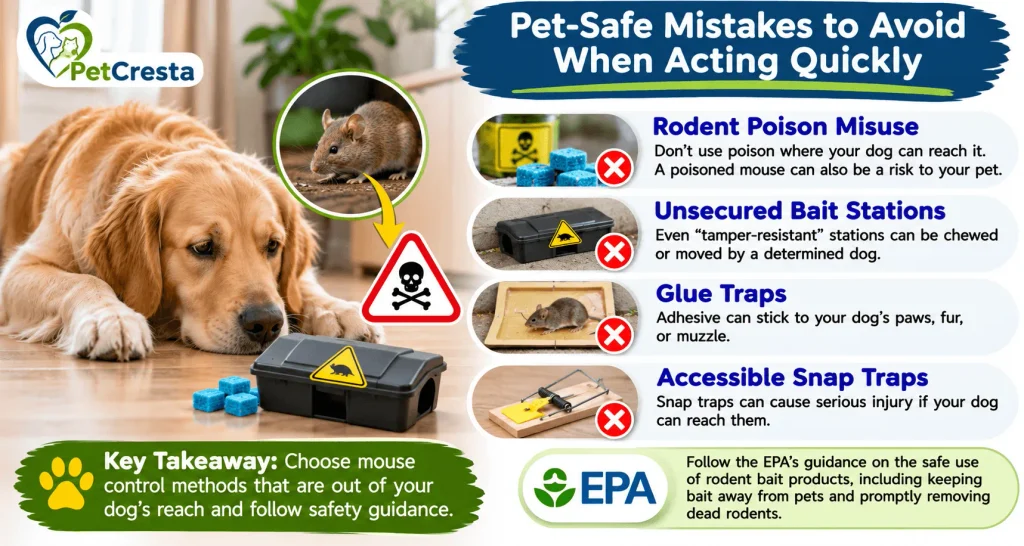
The biggest mistake is using rodent poison without considering what your dog can reach. Follow label directions even when using bait stations designed to reduce access. A determined dog may chew or move an unsecured station. A poisoned rodent can also pose a risk if your pet finds it.
The Environmental Protection Agency explains how to safely use rodent bait products, including keeping bait away from pets and promptly removing dead rodents. If you cannot keep a product inaccessible to your dog, choose another approach with professional guidance.
Glue traps are a poor fit for many pet households. A curious dog can get adhesive on its paws, fur, or muzzle. Snap traps can injure a pet if placed where it can reach them. Never assume a hidden location is inaccessible.
Protect Your Dog’s Food, Toys, And Favorite Spaces
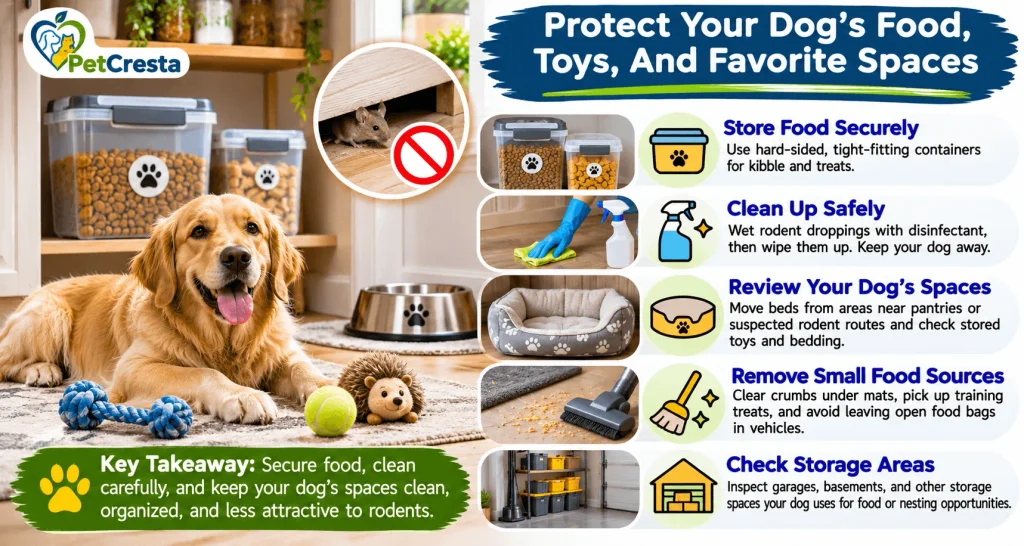
Start with food storage. Move kibble from paper or thin plastic bags into hard-sided containers with tight-fitting lids. Store treats securely, remove uneaten food when practical, and clean feeding mats regularly.
Rodent cleanup also needs care. Sweeping or vacuuming dry droppings can send contaminated particles into the air. The Centers for Disease Control and Prevention explains how to clean up after rodents, including wetting droppings with disinfectant before wiping them up. Keep your dog away during cleanup, and store cleaning products well away from curious pets.
Review your dog’s usual spaces. If a bed is near a pantry, utility room, or suspected rodent route, move it temporarily. Check plush toys and bedding stored close to the floor, especially in closets or storage areas where mice may nest. Creating a safer living environment also involves choosing pet-friendly home fixtures and keeping potentially hazardous household items beyond your dog’s reach.
Small food sources matter. Clear crumbs under feeding mats, pick up training treats, and avoid leaving open food bags in a vehicle. Inspect garages, basements, and storage areas your dog uses. Rodents follow accessible food, not the purpose of a room.
Prevention In A Dog-Friendly Home
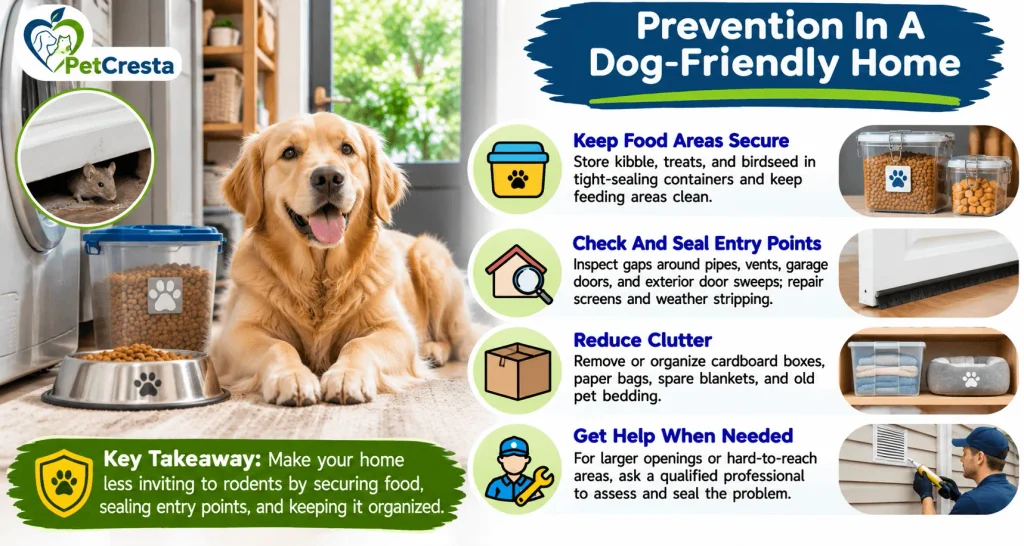
Prevention should fit your routine. If your dog eats in a laundry room, secure food and clean the area regularly. If toys collect near the back door, check them and the surrounding space. These habits make food and nesting material harder to find.
Inspect gaps around pipes, vents, garage doors, and exterior door sweeps. Seal suitable gaps with durable materials and repair damaged screens or weather stripping. For larger openings or areas you cannot safely reach, ask a qualified professional to assess them.
Reduce clutter that can provide nesting material or hiding places. Organize cardboard boxes, paper bags, spare blankets, and old pet bedding. Keep bulk food, birdseed, and treats in secure containers rather than open bags in garages or sheds. Prevention means removing easy opportunities for rodents.
Keep Your Dog Safe While You Solve The Problem
A mouse problem may seem minor when you hear one scratch or find a dropping. But dogs can come into contact with contaminated food, traps, bait, or rodents while investigating. Plan each step before taking action.
Focus on securing food, limiting access to affected areas, avoiding unsafe DIY methods, and cleaning contamination carefully. If you suspect your dog has swallowed poison or a poisoned rodent, contact a veterinarian immediately rather than waiting for symptoms.
The aim is to remove mice, restore a clean home, and prevent their return without exposing your dog to unnecessary risks. A measured, pet-aware response can protect your household better than a rushed fix.
Frequently Asked Questions
Yes. Mice may expose dogs to germs, parasites, contaminated food, and other hazards. The level of risk depends on the type of contact. Contact a veterinarian if your dog has eaten a mouse, has been bitten, or develops concerning symptoms after exposure.
Start by securing food, cleaning contaminated areas safely, and sealing entry points. If trapping is needed, use methods that keep traps completely inaccessible to your dog. Professional pest control may be appropriate for persistent infestations.
Mouse poison can be dangerous to dogs. Even bait stations intended to restrict access require careful placement and use according to the product label. If your dog might reach the bait, discuss alternative control methods with a qualified professional.
Yes, secondary poisoning is possible when a dog eats a mouse that has consumed certain rodenticides. Risk varies by poison type and exposure. Contact a veterinarian promptly if you suspect your dog has eaten a poisoned rodent.
Snap traps can injure dogs if accessible, while glue traps may become attached to fur, paws, or the muzzle. Any trapping device must be secured in a location your dog cannot reach.
Store kibble and treats in tightly sealed, hard-sided containers. Clean feeding areas regularly, remove food spills, and avoid leaving accessible food overnight.