How To Prevent Your Home From Turning Into A Wildlife Habitat
If you live in Trussville, Alabama, knowing how to prevent wildlife from entering your home can save you from expensive repairs and stressful encounters. Wooded neighborhoods, changing seasons, and easy access to food make residential properties attractive to squirrels, raccoons, bats, rodents, and other animals.
A scratching sound in the attic or droppings near the garage may seem like a minor problem. However, these early warnings can indicate animals nesting inside your property.
The good news is that most wildlife problems can be reduced through regular inspections, proper exclusion, and simple changes around your home. The goal is to protect your property, family, and pets while avoiding unnecessary harm to animals.
How Can You Prevent Wildlife From Entering Your Home?
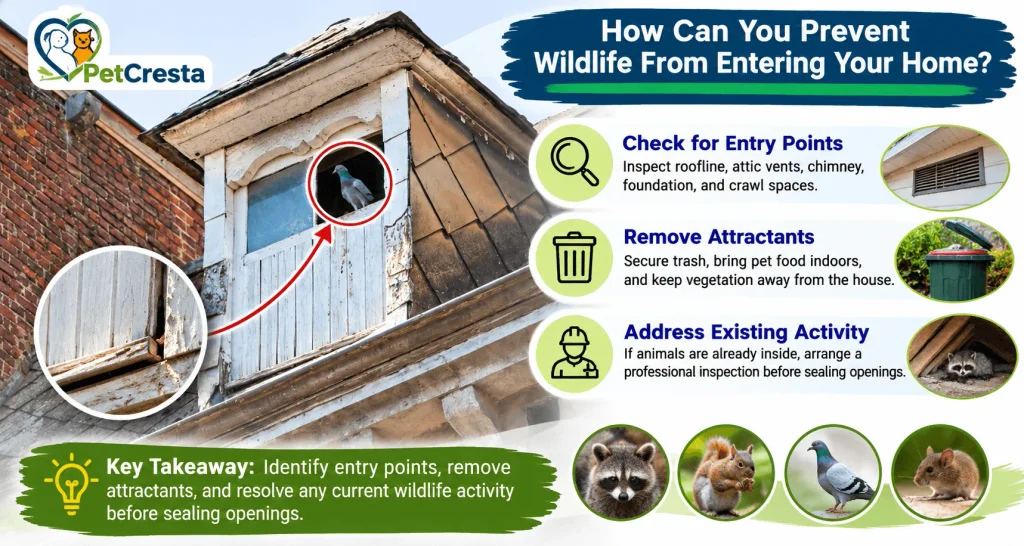
The most effective approach combines three actions: identify possible entry points, remove food and shelter attractants, and address existing animal activity before sealing openings.
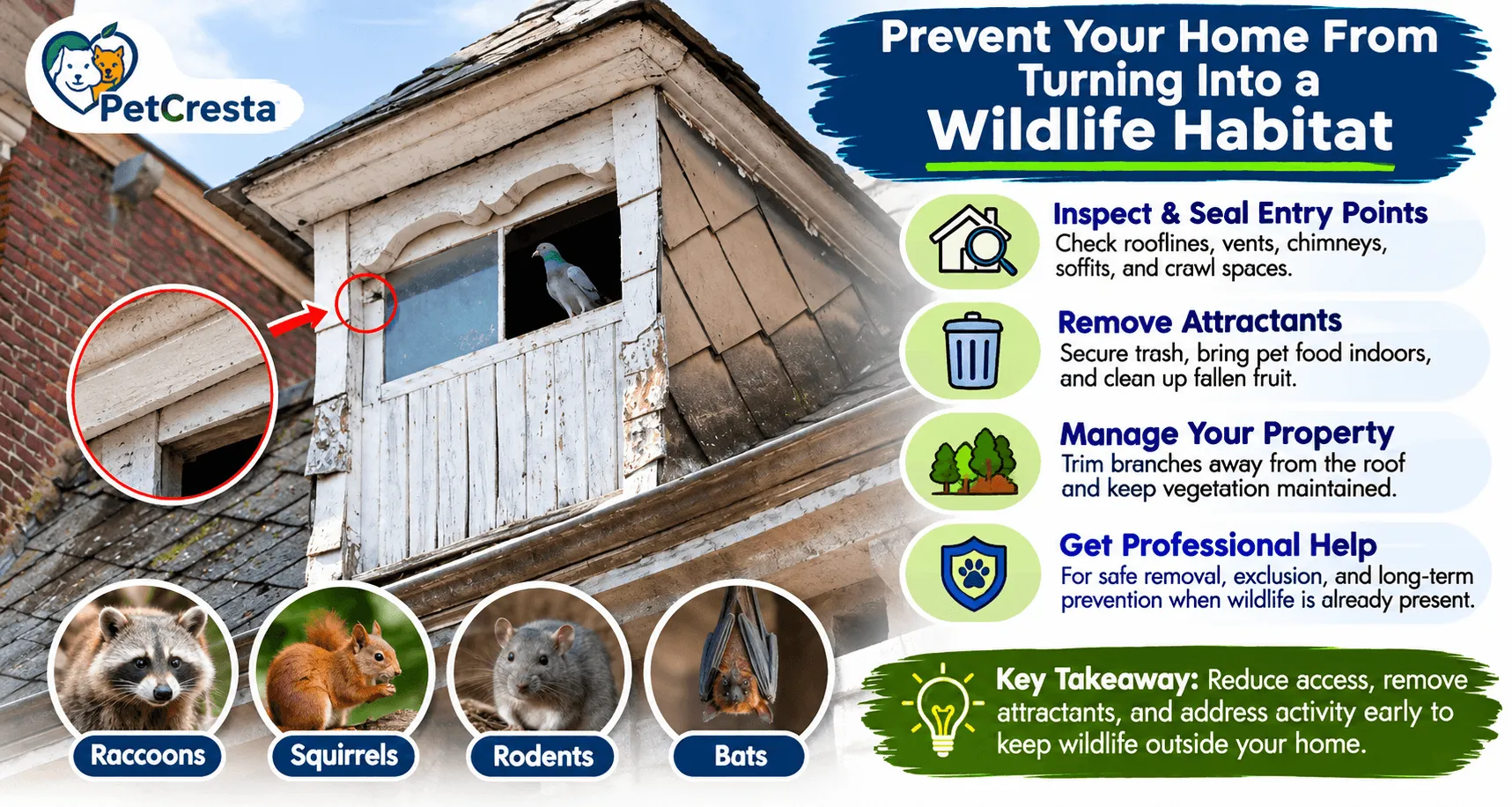
Start by checking your roofline, attic vents, chimney, foundation, and crawl spaces. Repair damaged screens, secure trash containers, bring pet food indoors, and keep vegetation away from vulnerable parts of the building.
If animals are already inside, arrange a professional inspection before making permanent repairs. Sealing an occupied opening can trap wildlife or separate mothers from their young.
Know The Early Warning Signs Before Damage Spreads
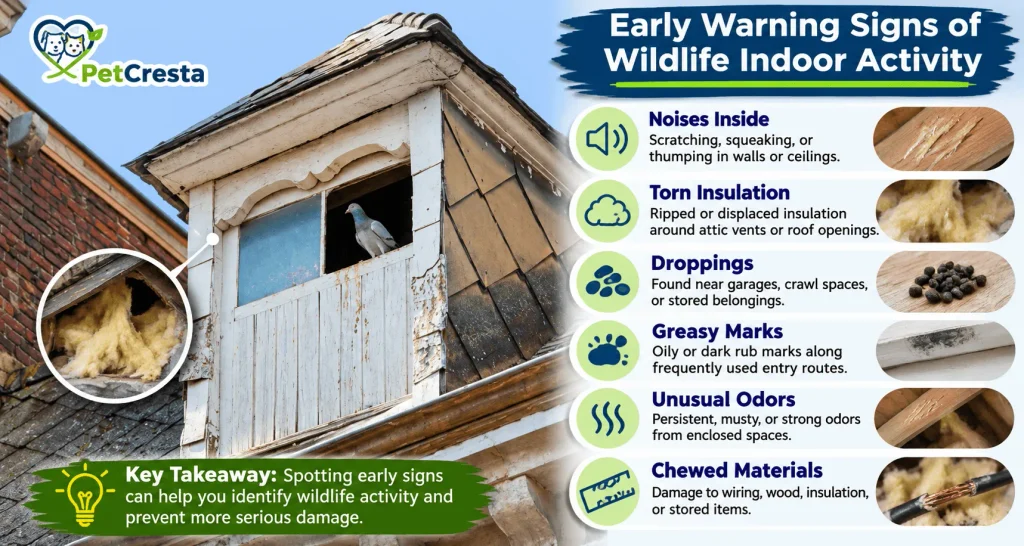
Wildlife rarely makes its presence obvious immediately. Small changes around your property may be the first indication that an animal has found shelter indoors.
Common signs include:
- Scratching, squeaking, or thumping sounds inside walls and ceilings.
- Torn insulation around attic vents or roof openings.
- Droppings near garages, crawl spaces, or stored belongings.
- Greasy marks along frequently used entry routes.
- Unusual odors coming from enclosed spaces.
- Chewed wiring, wood, insulation, or stored materials.
Different animals leave different clues. Squirrels are often active during daylight hours, while raccoons commonly move around at night. Rodents may produce repeated scratching sounds behind walls or cabinets.
Bats can leave accumulated droppings near roosting areas. However, droppings alone are not enough to identify the species confidently.
Use Professional Help When the Situation Involves Risk
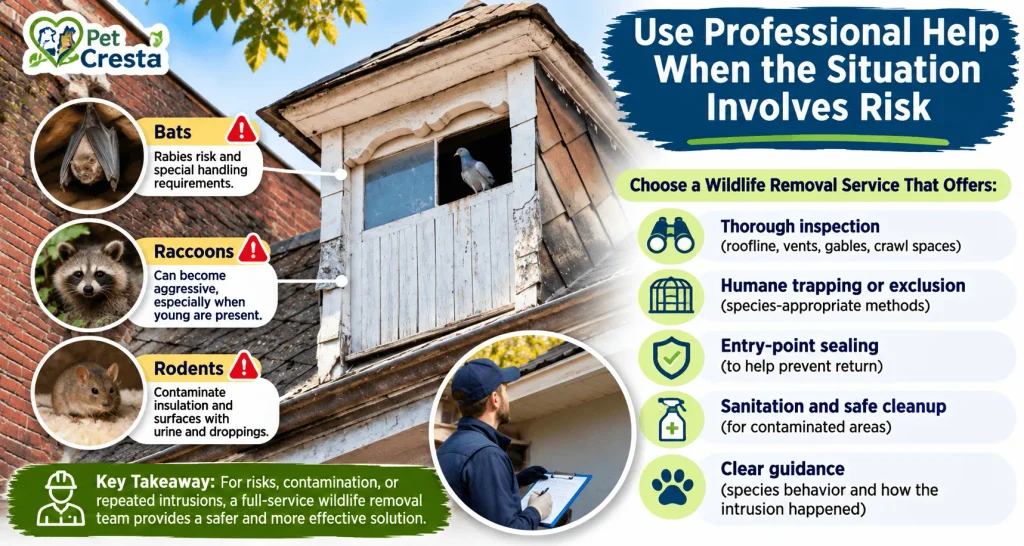
Some wildlife situations move beyond inconvenience and into health or safety territory. Bats, for example, require careful handling because of rabies exposure protocols and strict exclusion timing. Raccoons can become aggressive when juveniles are present. Rodents contaminate insulation and stored materials with urine and droppings that should not be cleaned casually.
If you are comparing options for wildlife removal services in Trussville, look for teams that handle inspection, humane trapping or exclusion, entry-point sealing, and sanitation. That full-stack process matters more than a quick removal visit. You want somebody evaluating rooflines, vent screens, gable gaps, and crawl-space vulnerabilities, not just setting traps and leaving. A reliable operator should also explain species behavior and show you how the intrusion happened in the first place.
Understand Why Animals Keep Choosing Residential Spaces
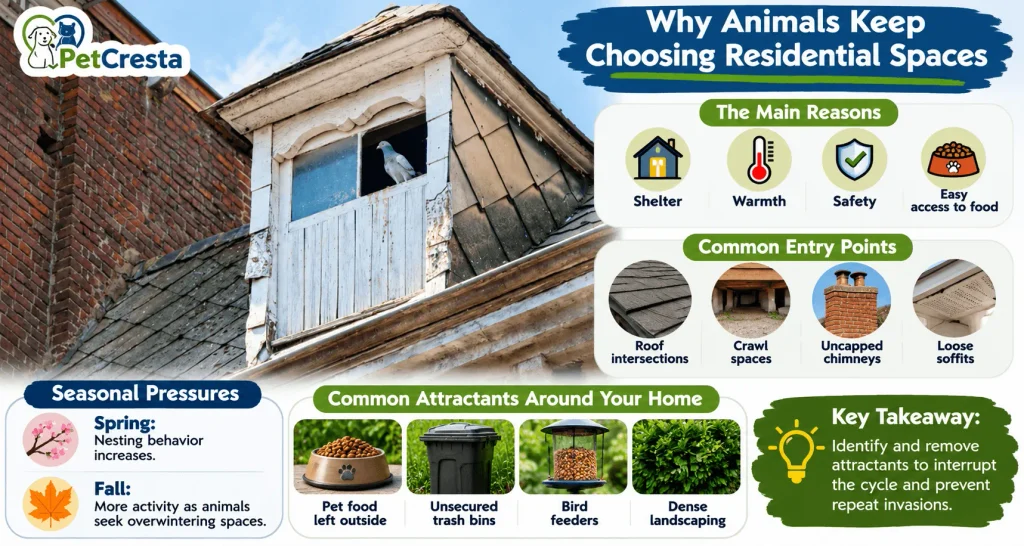
Wildlife enters homes for the same reasons you use one: shelter, warmth, safety, and easy access to food. Roof intersections, crawl spaces, uncapped chimneys, and loose soffits create ideal entry points. Once an animal finds one weak spot, your house can become a reliable den site.
In places like Trussville, seasonal changes push animals closer to buildings. Spring often brings nesting behavior. Fall increases pressure as animals search for protected overwintering spaces. Pet food left outside, unsecured trash bins, bird feeders, and even dense landscaping can pull activity closer to the structure. What looks like a random nuisance usually follows a clear pattern. When you understand the attractants around your property, you can start interrupting the cycle instead of reacting to the same invasion every year.
Avoid DIY Fixes That Trap the Problem Indoors
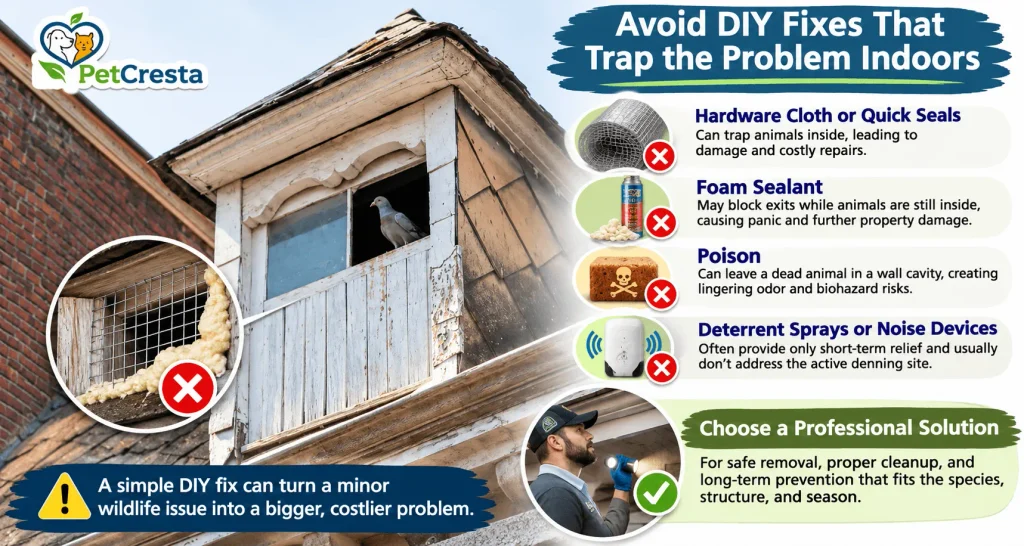
A lot of homeowners try to solve wildlife issues with hardware cloth, foam sealant, poison, or a quick trap from a big-box store. That approach often backfires. If you seal an entry hole while animals are still inside, they may panic and tear through drywall, vents, or fascia boards trying to escape.
Poison creates a different mess. An animal can die inside a wall cavity, leaving odor and biohazard concerns that linger for weeks. Store-bought deterrent sprays and noise devices also tend to disappoint because they rarely address the active denning site. Humane removal and exclusion work best when they match the species, the structure, and the season. That is where professional inspection becomes less about convenience and more about accuracy. The goal is removal, cleanup, and prevention working together instead of one temporary patch.
Protect Pets and Kids During Active Wildlife Intrusions
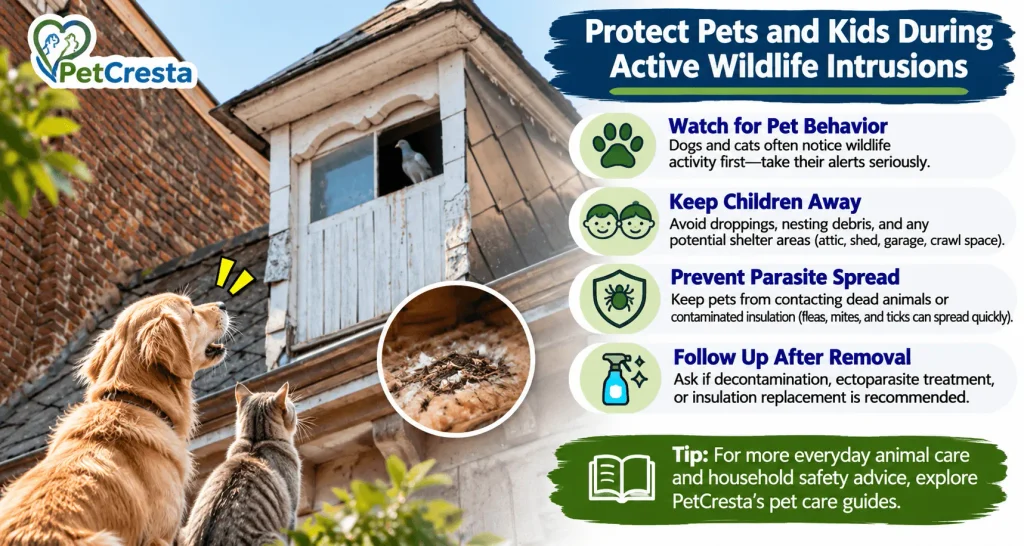
Pets usually notice wildlife before people do. A dog staring at one wall, pawing near a cabinet base, or barking at the attic access point can give away hidden activity. Cats may fixate on ceilings or vents where movement is happening. Those reactions are useful, but they also create risk if your pet corners an injured or defensive animal.
Keep children away from droppings, nesting debris, and any area where an animal may be sheltering. That includes sheds, garages, crawl-space doors, and attic pull-downs. Do not let pets investigate dead animals or contaminated insulation. Parasites such as fleas, mites, and ticks can spread from wildlife into your home environment quickly. For more information on everyday animal care and household safety, explore PetCresta’s pet care guides.
After removal, ask whether decontamination, ectoparasite treatment, or insulation replacement is recommended. Those steps are easy to overlook, yet they often determine whether your home feels normal again.
Make Your Home Harder to Reenter After Removal
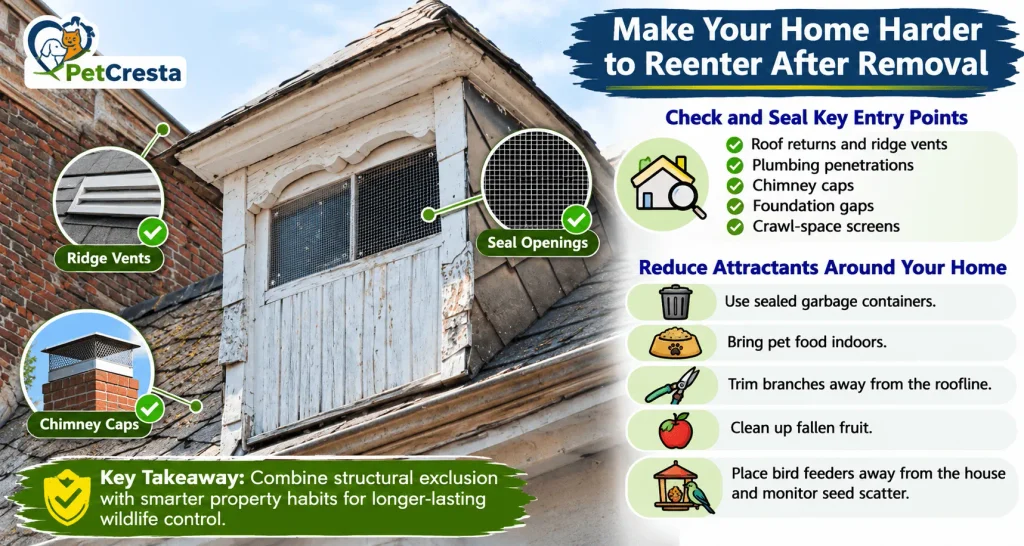
Removal is only half the job. Long-term control depends on exclusion and habitat correction. Start with a detailed exterior check: roof returns, ridge vents, plumbing penetrations, chimney caps, foundation gaps, and crawl-space screens. Even a small opening can be enough for mice or bats, while larger construction defects invite squirrels and raccoons.
Then reduce attractants around the property. Store garbage in sealed containers, bring pet food inside, trim branches away from the roofline, and clean fallen fruit if you have producing trees. If you use bird feeders, place them away from the house and monitor seed scatter. Wildlife pressure rarely disappears completely in suburban areas, but your home does not have to be the easiest target. The strongest prevention plan combines structural exclusion with smarter property habits, and that gives you a much better chance of staying wildlife-free season after season. For related household care advice, browse PetCresta’s home improvement guides.
Final Takeaway
Preventing wildlife from turning your home into a shelter requires more than removing an unwanted visitor.
Regular inspections, timely repairs, secure food storage, and appropriate wildlife exclusion can reduce the likelihood of recurring intrusions.
For homeowners in Trussville, seasonal awareness and attention to rooflines, attic openings, and crawl spaces are particularly useful.
If you suspect animals are already inside, seek qualified assistance before sealing entry points or disturbing nesting areas.
A well-maintained home can remain comfortable for your family and pets while allowing local wildlife to live safely outside.
Frequently Asked Questions
Inspect the exterior for openings, repair damaged vents and screens, secure garbage, remove outdoor food sources, and keep vegetation away from vulnerable areas. If animals are already inside, arrange their safe removal before permanently sealing entry points.
Wildlife is commonly attracted by accessible food, water, warmth, and shelter. Outdoor pet food, unsecured trash, fallen fruit, damaged rooflines, and accessible crawl spaces can make a property more inviting.
Squirrels, raccoons, rodents, and bats may enter attics, depending on the location and building conditions. Each species has different nesting habits, potential risks, and appropriate exclusion methods.
Yes. Rodents and some other animals may chew electrical wiring or damage surrounding materials. Suspected electrical damage should be evaluated by a qualified electrician because damaged wiring can create fire and shock hazards.
DIY removal can be risky, especially when bats, raccoons, dependent young, or contaminated materials are involved. Professional inspection is generally the safer choice for occupied attics and uncertain situations.
Supervise pets outdoors, keep them away from suspected nesting areas, avoid leaving pet food outside, and maintain recommended vaccinations. Contact a veterinarian promptly if your pet is bitten, scratched, or potentially exposed to a bat.