The Warning Signs Of Bloat Every Large Breed Owner Should Recognize
Bringing home a puppy is exciting, but there is more to the decision than simply falling in love with an adorable face. Your family’s lifestyle, daily routine, and expectations all play a role in finding a companion who will fit naturally into your home. Taking the time to focus on choosing the right puppy can help you make a thoughtful decision that works for both your family and your new pet.
It is worth considering temperament, energy level, size, and care needs before making a commitment. With a little preparation, the process can feel much less overwhelming and a lot more rewarding.
What Is Bloat In Dogs?
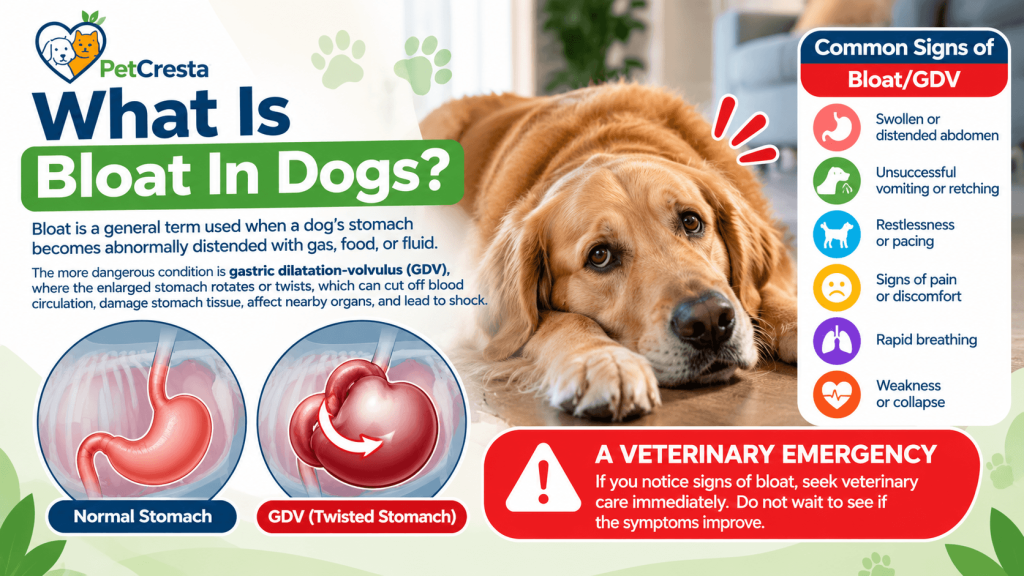
Bloat is a general term owners often use when a dog’s stomach becomes abnormally distended with gas, food, or fluid.
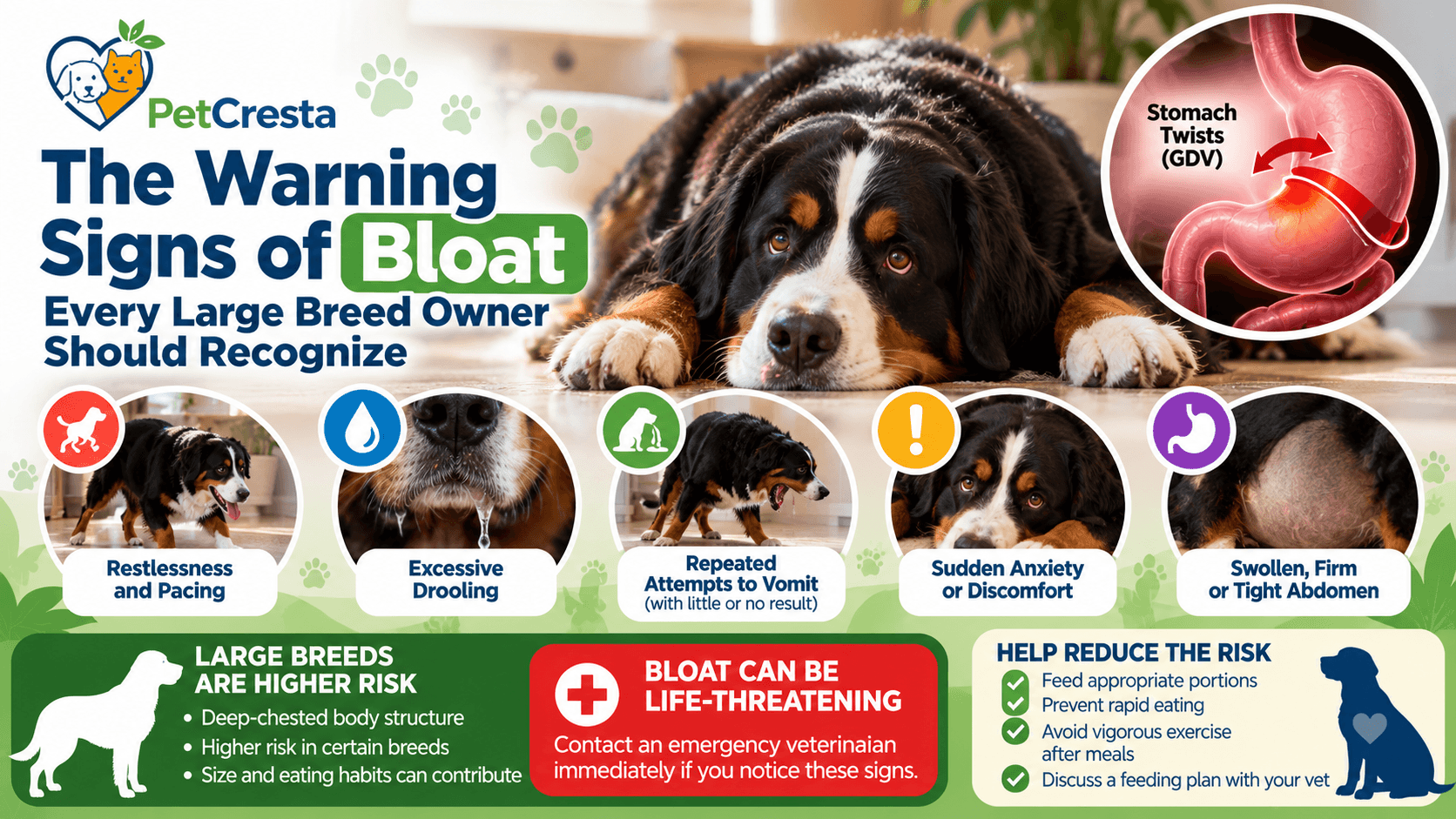
The more dangerous condition is gastric dilatation-volvulus (GDV). In GDV, the enlarged stomach rotates or twists, which can interfere with blood circulation, damage stomach tissue, affect nearby organs, and lead to shock.
Owners cannot reliably determine at home whether stomach distension has progressed to volvulus. That is why suspicious symptoms should be treated as an emergency rather than monitored for several hours.
Early Warning Signs To Watch For
Bloat can develop quickly, so knowing the early changes in your dog’s behavior can help you recognize that something is not right.
Restlessness and Pacing
A dog experiencing early discomfort may suddenly become restless, pace around, or have trouble settling down. They may repeatedly change positions as if they cannot find a comfortable way to lie down. If this behavior appears suddenly and seems unusual for your dog, it is worth taking seriously.
Repeated Attempts to Vomit
One of the classic warning signs is trying to vomit or retch without bringing anything up. Your dog may repeatedly gag, appear uncomfortable, or make attempts to vomit with little or no result. This is not something to simply wait out, especially when it occurs alongside other possible signs of bloat.
Excessive Drooling
A dog with significant stomach discomfort may begin drooling much more than usual. You might notice wet lips, frequent swallowing, or saliva hanging from the mouth. Sudden excessive drooling combined with restlessness or unsuccessful retching should prompt immediate veterinary attention.
Sudden Anxiety or Discomfort
Some dogs may seem unusually anxious when they are experiencing abdominal pain. They might look toward their stomach, whine, avoid lying down, or seem unable to relax. Since dogs cannot explain what hurts, sudden changes in their normal behavior can be an important clue.
Changes In The Abdomen
A dog experiencing bloat may develop a noticeably swollen, firm, or tight abdomen as gas builds up in the stomach. However, the swelling may not always be easy to see, especially in dogs with thick coats or larger bodies, so do not rely on appearance alone. If your dog suddenly seems uncomfortable and you notice changes around the abdomen, seek emergency veterinary care right away.
Why Large Breed Dogs Need Extra Attention
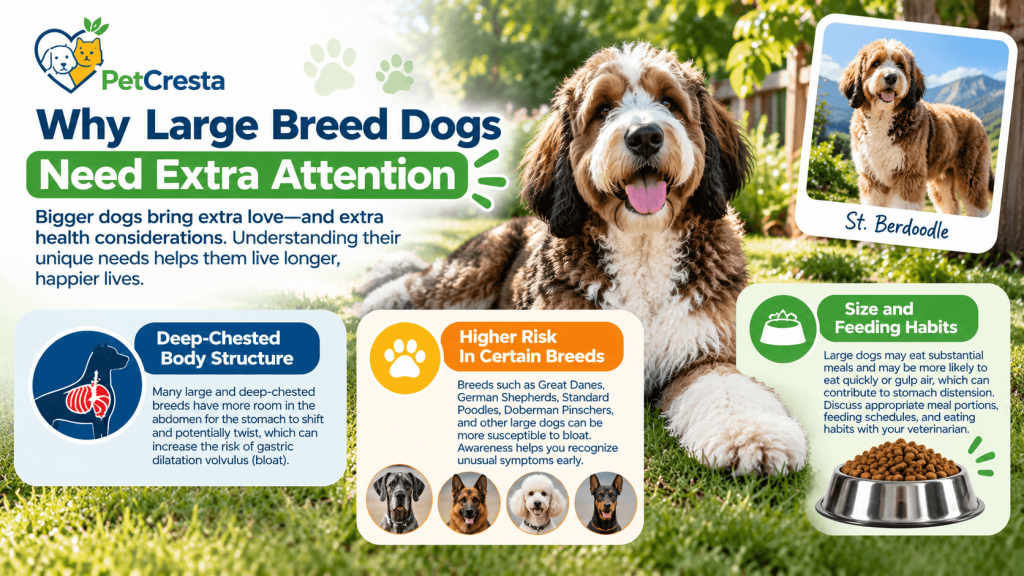
This is especially relevant for owners of giant or large mixed breeds, including dogs such as the St. Berdoodle, whose size can make large-dog health planning particularly important.
Deep-Chested Body Structure
Many large and deep-chested breeds have body shapes that are associated with a higher risk of gastric dilatation volvulus. Their deeper chest structure can provide more room for the stomach to shift and potentially twist. This is one reason owners of these dogs should become familiar with the warning signs rather than assuming bloat is unlikely.
Higher Risk In Certain Breeds
Breeds such as Great Danes, German Shepherds, Standard Poodles, Doberman Pinschers, and other large dogs can be more susceptible to bloat. Having a breed that is considered higher risk does not mean your dog will develop the condition, but it does make awareness especially important. Knowing your dog’s potential risk can help you recognize unusual symptoms and respond promptly.
Owners of large Poodle crosses may also benefit from understanding broader large-dog health considerations, including the signs associated with GDV and other conditions that can require prompt veterinary attention.
Size and Feeding Habits
Large dogs may eat substantial meals, and eating too quickly or consuming a large amount at once can contribute to stomach distension. Some dogs also gulp air while eating, particularly when they are very eager about their food. Discussing appropriate meal portions, feeding schedules, and eating habits with your veterinarian can help you make sensible choices for your dog
Pet owners can also review these bloat-aware feeding habits for practical guidance on meal frequency, rapid eating and activity around mealtimes.
When To Contact A Veterinarian
If you notice sudden restlessness, repeated unproductive retching, excessive drooling, abdominal swelling, weakness, or collapse, contact an emergency veterinarian immediately. Bloat can become life-threatening quickly, so it is not something to watch at home or wait until the next morning to address. When in doubt, it is always safer to have your dog evaluated promptly.
Reducing The Risk Of Bloat
While bloat cannot always be prevented, sensible feeding and daily habits may help reduce some risk factors. Feeding appropriate portions, discouraging rapid eating, and avoiding vigorous exercise immediately after meals are practical steps to discuss with your veterinarian, especially if you are considering a Mini Bernedoodle for sale. Your veterinarian can also recommend feeding routines based on your dog’s size, age, health, and individual risk.
Preparing For A Possible Emergency
Having an emergency plan can make it easier to stay calm if your dog suddenly shows signs of bloat. Keep your veterinarian’s number and the contact information for a nearby emergency animal hospital somewhere easy to find, and know the quickest route there. Acting quickly matters, so avoid spending valuable time trying home remedies if you suspect something is seriously wrong.
Conclusion
Knowing the warning signs of bloat can help large breed owners recognize when their dog needs urgent veterinary attention. Being prepared, understanding your dog’s normal behavior, and acting quickly can make a stressful situation easier to manage. Ultimately, choosing the right puppy also means being ready to understand their health needs and provide the care they need throughout their life.
FAQ’s
There is no single first symptom in every dog. Restlessness, pacing, drooling and repeated unsuccessful attempts to vomit are common early warning signs.
Yes. Abdominal enlargement may be difficult to see early in the condition or in dogs with certain body types and coats. Do not wait for obvious swelling if other GDV symptoms are present.
A dog with GDV may appear restless, repeatedly attempt to vomit without producing anything, drool, pant, develop a swollen abdomen or show obvious discomfort. As the condition progresses, weakness, pale gums and collapse may occur.
Owners should never assume suspected bloat or GDV will resolve without veterinary care. GDV is a life-threatening emergency and requires immediate veterinary assessment.