
Pug vs French Bulldog Puppies: Cost, Health & Personality

Small companion dogs with loving dispositions, expressive faces, and comparatively low exercise requirements are pugs and French Bulldogs. It may be challenging to decide between them because of these similarities.
Additionally, there are significant distinctions.
Pugs are typically lighter, more gregarious with strangers and other dogs, and are expected to live longer. Although French Bulldogs are generally calmer and have a stockier build, puppies can be much more expensive. Due to their shortened skulls, both breeds are brachycephalic, which raises the possibility of respiratory and heat-related issues.
Therefore, families should consider more than just appearance when choosing between Pug and French Bulldog puppies. More important factors include the puppy’s temperament, exercise tolerance, breeder screening, health history, and continuing veterinary expenses.
PetCresta’s broader dog care and breed guides can also help prospective owners compare breeds, training needs, health considerations, and everyday care requirements.
Pug Vs French Bulldog At A Glance
| Feature | Pug | French Bulldog |
|---|---|---|
| Typical adult size | Small | Small but heavier-built |
| General personality | Affectionate, playful, social | Affectionate, playful, adaptable |
| Exercise needs | Moderate | Moderate |
| Grooming | Low coat maintenance but noticeable shedding | Low coat maintenance with fold and ear care |
| Heat tolerance | Poor | Poor |
| Major concern | Breathing, eyes, weight, joints | Breathing, spine, skin, joints |
| Typical lifespan | About 13–15 years | About 10–12 years |
| Puppy purchase cost | Usually lower | Usually higher |
| Apartment suitability | Often good | Often good |
| First-time owner suitability | Possible with preparation | Possible with preparation |
Individual dogs vary, so this table should be treated as a breed-level comparison rather than a prediction of how every puppy will develop.
Pug vs French Bulldog: What Is The Main Difference?
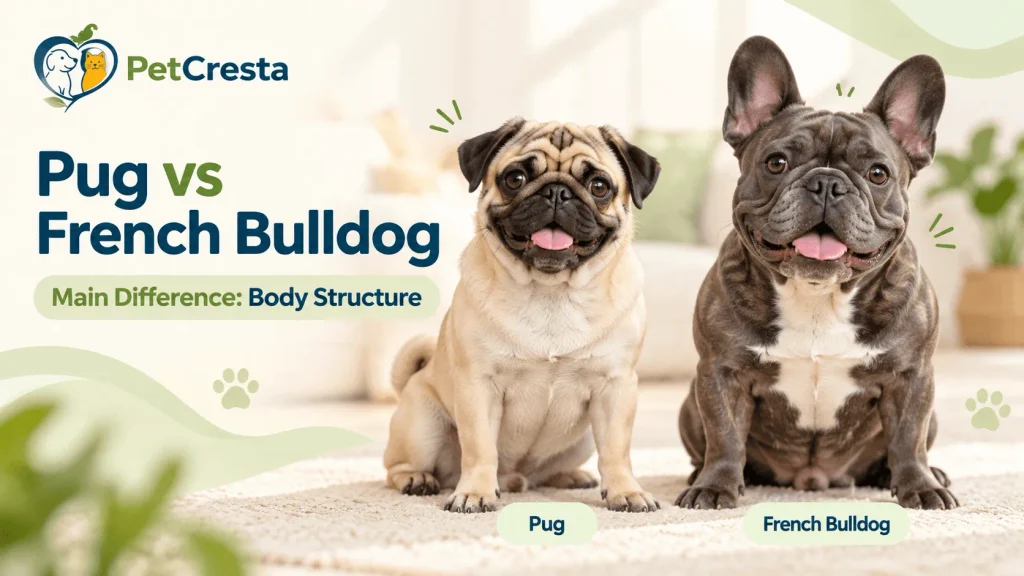
Body structure is the most obvious difference.
Pugs are small dogs with short muzzles, wrinkled foreheads, large round eyes, and curled tails. Pugs typically weigh between 14 and 18 pounds as adults.
French Bulldogs typically have a heavier, more muscular appearance. They can be identified by their compact frame, short muzzle, wide chest, and upright “bat” ears. French Bulldogs typically weigh less than 28 pounds as adults.
Their tendency to develop close bonds with people can be explained by the fact that both were primarily developed as companion dogs.
Pug Personality

Originating in China, pugs have a long history as companion dogs. They are frequently characterized as being very people-oriented, playful, affectionate, and inquisitive.
Many people like going from room to room with family members and taking part in everything that goes on in the house.
Typical characteristics of pug personalities include:
- Affection toward family members
- Playful behavior
- Strong interest in food
- Sociability with people
- Ability to adapt to apartments and smaller homes
- A tendency to seek attention and companionship
A well-socialized Pug can fit into many family structures, including homes with children or other dogs. Individual temperament and early socialization still matter.
French Bulldog Personality

French Bulldogs are also companion-oriented dogs. They are usually playful and affectionate but may appear slightly more laid-back than some Pugs.
Common French Bulldog characteristics include:
- Strong attachment to family
- Playfulness in short bursts
- Adaptability to smaller homes
- Moderate exercise requirements
- Alert behavior without necessarily being highly active
- A tendency to enjoy close physical companionship
Some Frenchies can also be strong-willed during training, so consistency and reward-based training help.
If you are also considering a French Bulldog cross, see our complete guide to Frenchton puppies for information about temperament, size, breathing, grooming, health, and daily care.
Pug vs French Bulldog Cost
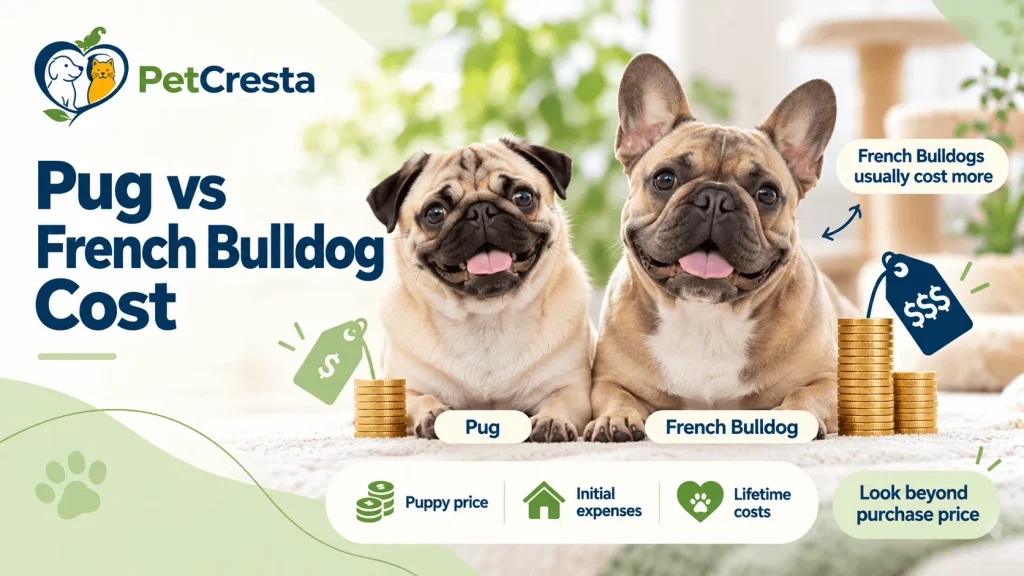
Purchase price is one of the biggest differences between these breeds.
Puppy Purchase Price
French Bulldog puppies generally cost more than Pugs.
Exact prices should not be treated as fixed because they vary according to:
- Location
- Breeder experience
- Health testing
- Pedigree
- Veterinary expenses involved in breeding
- Puppy demand
- Registration and documentation
- Individual breeding program
French Bulldogs can be particularly expensive because reproduction may require greater veterinary involvement in some breeding programs.
Pugs usually have a lower initial purchase price, although responsibly bred puppies with documented health testing can still be expensive.
Someone looking for fawn pug puppies for sale should compare more than the advertised price. Health testing of the parents, the puppy’s living environment, socialization, veterinary records, and breeder transparency deserve greater weight than coat color or a low price.
Initial Puppy Expenses
The purchase price is only the beginning.
New owners may also need to budget for:
- Veterinary examination
- Vaccinations
- Microchipping
- Parasite prevention
- Food
- Crate or carrier
- Bed
- Collar and harness
- Toys
- Training classes
- Pet insurance
- Spaying or neutering when appropriate
Costs vary by location and by the individual puppy’s needs, so a single universal first-year figure can be misleading.
Lifetime Costs Matter More Than Purchase Price
Both Pugs and French Bulldogs may develop medical conditions that become expensive to manage.
A less expensive puppy does not necessarily become the less expensive dog over its lifetime.
When comparing affordable purebred puppies online, buyers should therefore look beyond the advertised purchase price and investigate health testing, veterinary history, breeder practices, and the health of related dogs.
Pug vs French Bulldog Health
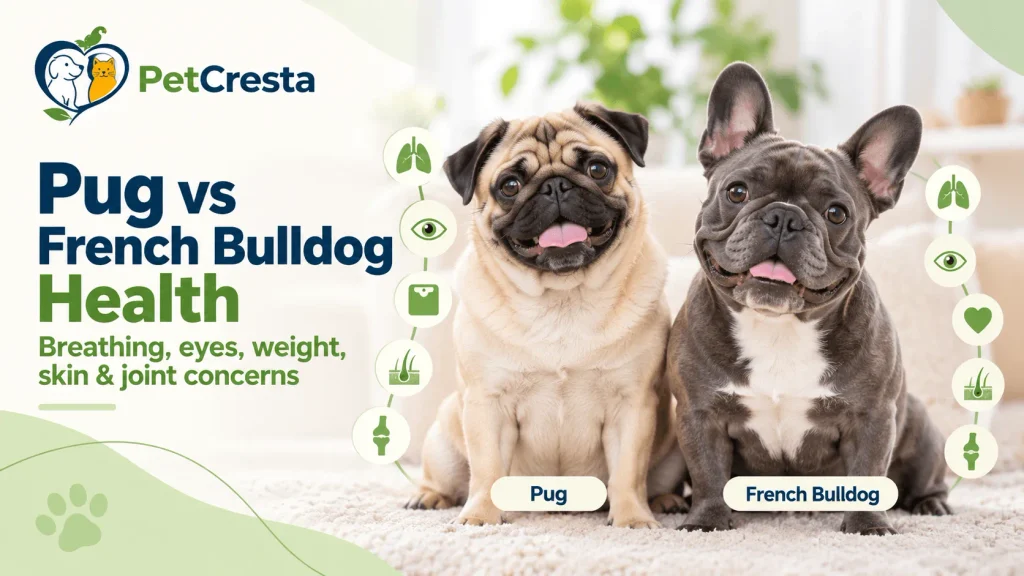
Health deserves particular attention in this comparison because both breeds are brachycephalic.
Brachycephalic dogs have shortened skulls and muzzles. Some individuals can develop brachycephalic obstructive airway syndrome, commonly called BOAS, which can interfere with normal breathing, exercise, sleep, and heat regulation.
Not every Pug or French Bulldog experiences the same degree of respiratory difficulty, but prospective owners should understand the risk before choosing either breed.
Common Health Concerns In Pugs
Health concerns associated with Pugs can include:
Breathing Problems
Their shortened muzzle can reduce airflow in some dogs. Signs of clinically important breathing difficulty can include noisy breathing, exercise intolerance, gagging, sleep disturbance, or difficulty recovering after activity.
Heavy breathing should not automatically be dismissed as “normal for the breed.”
Eye Problems
The large, prominent eyes of a Pug are vulnerable to problems including corneal injuries and dry eye.
Any squinting, redness, cloudiness, discharge, or sudden eye discomfort warrants veterinary attention.
Weight Gain
Pugs often enjoy food and can gain excess weight easily.
Keeping a Pug lean is particularly important because extra weight can put more stress on breathing, mobility, and joints.
Patellar and Hip Problems
Orthopedic conditions can occur in the breed, which is one reason responsible breeding programs use appropriate screening.
Pug Dog Encephalitis
Necrotizing meningoencephalitis, another name for pug dog encephalitis, is a dangerous neurological disorder linked to the breed.
Although genetic testing cannot predict every individual’s health outcome, responsible breeders can use available genetic risk testing as one part of their breeding decisions.
Health Testing to Ask a Breeder About

A breeder should be willing to explain which health tests have been completed on the parents and provide results that buyers can verify.
For a Pug
Ask about screening relevant to:
- Eyes
- Patellas
- Hips
- Pug Dog Encephalitis risk
Other testing may also be appropriate depending on the breeding program and family history.
For a French Bulldog
Ask about screening relevant to:
- Hips
- Eyes
- Patellas
- Heart
- Respiratory function
Additional testing may be recommended based on the dog’s lineage and breeding program.
A puppy health check alone is not the same thing as health testing breeding dogs for inherited conditions.
Pug vs French Bulldog Lifespan

Pugs generally have the longer breed-level life expectancy.
A typical Pug lifespan is approximately 13–15 years, while a French Bulldog is commonly listed at approximately 10–12 years.
These numbers are estimates rather than guarantees.
An individual dog’s lifespan is influenced by genetics, body condition, breathing function, veterinary care, injury, inherited disease, lifestyle, and many other factors.
Which Breed Sheds More?

Pugs tend to be heavier shedders.
Their short coat may look low-maintenance, but loose hair can accumulate throughout the home. Regular brushing helps control shedding.
French Bulldogs also shed, although coat maintenance is usually straightforward.
Neither breed should be selected on the assumption that it is hypoallergenic.
Grooming and Daily Maintenance

Pug grooming: Routine Pug care generally includes:
- Regular brushing
- Nail trimming
- Dental care
- Ear checks
- Keeping facial folds clean and dry
- Occasional bathing
Because the eyes are prominent, owners should also watch closely for irritation or injury.
French Bulldog Grooming
French Bulldog care generally includes:
- Weekly brushing
- Nail trimming
- Dental care
- Ear cleaning when needed
- Monitoring facial folds
- Keeping skin folds dry
Their upright ears also make routine ear checks worthwhile.
Exercise Needs

Neither Pugs nor French Bulldogs require the exercise levels expected from high-energy sporting or working breeds.
They still need regular movement, play, mental enrichment, and opportunities to explore.
Pug Exercise
A healthy Pug often enjoys:
- Short walks
- Indoor play
- Food puzzles
- Training games
- Sniffing activities
Exercise should be adjusted for age, fitness, temperature, and breathing ability.
French Bulldog Exercise
French Bulldogs also benefit from short walks, play sessions, training, and enrichment.
Some individuals are surprisingly energetic, but strenuous activity should not be forced simply because the dog appears enthusiastic.
Heat Safety For Both Breeds
Hot or humid conditions deserve special caution.
Because brachycephalic dogs may not cool themselves as efficiently as dogs with longer muzzles, exercise should be reduced during hot weather.
Signs such as severe breathing difficulty, weakness, collapse, confusion, or excessive overheating require urgent veterinary attention.
Training a Pug vs French Bulldog

Both breeds can learn effectively with positive reinforcement.
Training a Pug
Pugs are often food-motivated, which can make reward-based training effective.
Keep treats small so training calories do not contribute to excessive weight gain.
Training a French Bulldog
French Bulldogs can learn quickly but may sometimes appear independent or stubborn.
Short, consistent training sessions usually work better than repetitive drilling.
For either breed, early puppy training should focus on:
- Name recognition
- Recall
- Loose-leash walking
- Handling
- Calm greetings
- Toilet training
- Crate or resting-area training
- Socialization
- Settling around distraction
Are Pugs or French Bulldogs Better With Children?

Either breed can live successfully with children when temperament, training, socialization, and supervision are appropriate.
Breed alone does not guarantee that a dog will be safe or comfortable around children.
Adults should teach children not to:
- Pull ears or tails
- Climb on the dog
- Disturb a sleeping dog
- Take food or toys from the dog
- Chase a dog that is trying to move away
Interactions between young children and dogs should be supervised.
Which Is Better for Apartment Living

Both can adapt well to apartments because of their small size and moderate exercise requirements.
Apartment suitability depends on more than size, though.
Consider:
- Barking tendencies
- Ability to settle when alone
- Access to safe exercise
- Indoor temperature
- Stairs
- Elevator access
- House-training arrangements
Climate control is especially important for brachycephalic dogs living in hot regions.
Finding a Responsible Breeder

Whether you are considering a Pug or French Bulldog, the breeder matters enormously.
Look for someone who:
- Performs breed-appropriate health testing
- Allows buyers to verify test results
- Discusses health problems openly
- Can explain the health and temperament of the parents
- Raises puppies in clean, appropriate conditions
- Provides veterinary and vaccination records
- Socializes puppies appropriately
- Asks buyers questions about their homes and lifestyles
- Has a plan for taking a dog back if the owner can no longer care for it
- Does not pressure buyers into immediate payment
Be cautious when a seller emphasizes unusual colors, extreme physical features, “rare” status, or a bargain price while providing little health information.
Red Flags When Buying Puppies Online

Online puppy searches require extra care.
Warning signs can include:
- Multiple breeds always available
- No verifiable information about the parents
- Refusal to show where puppies are raised
- No health-testing documentation
- Pressure to send a deposit immediately
- Stock photographs or inconsistent puppy photos
- Unusually low prices with no explanation
- Sellers unwilling to answer detailed questions
- Promises that a puppy is guaranteed never to develop health problems
A responsible seller should expect buyers to ask questions.
Should You Consider Adoption?

Buying from a breeder is not the only option.
Pug and French Bulldog rescue organizations sometimes have puppies, adolescents, or adult dogs available for adoption.
An adult rescue dog can also give a family more information about established size, personality, activity level, and some existing health needs than is possible with a young puppy.
Pug vs French Bulldog: Which Is Right For You?
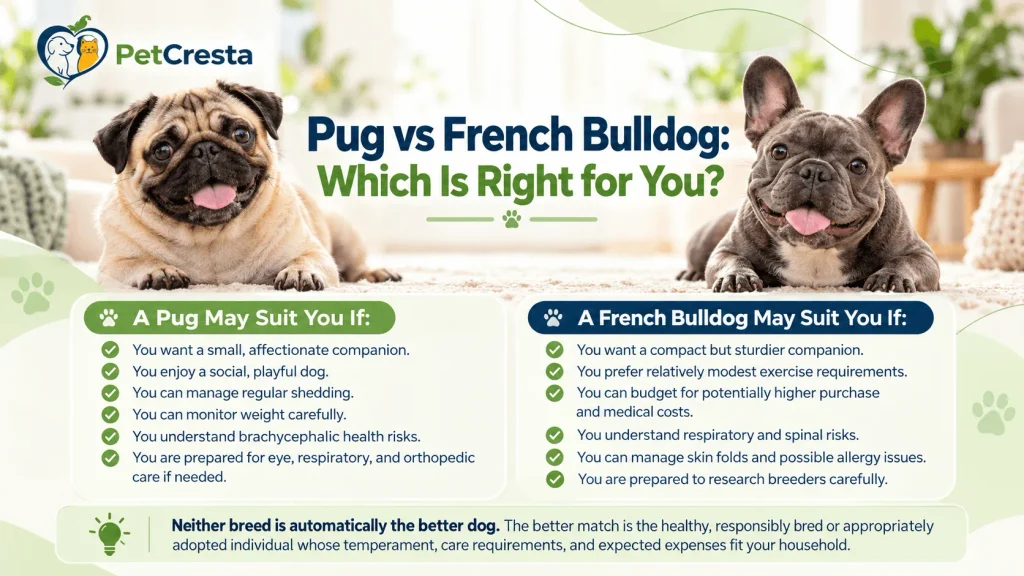
Choose based on how the breed’s needs match your household rather than appearance alone.
A Pug May Suit You If:
- You want a small, affectionate companion.
- You enjoy a social, playful dog.
- You can manage regular shedding.
- You can monitor weight carefully.
- You understand brachycephalic health risks.
- You are prepared for eye, respiratory, and orthopedic care if needed.
A French Bulldog May Suit You If:
- You want a compact but sturdier companion.
- You prefer relatively modest exercise requirements.
- You can budget for potentially higher purchase and medical costs.
- You understand respiratory and spinal risks.
- You can manage skin folds and possible allergy issues.
- You are prepared to research breeders carefully.
Neither breed is automatically the better dog.
The better match is the healthy, responsibly bred or appropriately adopted individual whose temperament, care requirements, and expected expenses fit your household.
Common Myths About Pugs and French Bulldogs
Myth: Flat-Faced Dogs Do Not Need Much Exercise
They still need regular activity and enrichment.
The difference is that activity must be adapted to the dog’s breathing capacity and environmental temperature.
Myth: Loud Breathing Is Always Normal for These Breeds
Snorting can occur, but persistent respiratory distress should not be dismissed simply because a dog is brachycephalic.
Myth: A More Expensive Puppy Must Be Healthier
Price does not prove responsible breeding.
Health-testing documentation, parental health, living conditions, socialization, and breeder practices provide much more useful information.
Myth: A Cheap Purebred Puppy Is Automatically a Bargain
A low purchase price can be overwhelmed by veterinary costs if breeding practices and health screening were poor.
Evaluate the dog and breeder rather than choosing on price alone.
Final Comparison
The Pug and French Bulldog share many qualities: both are compact companion dogs, both tend to bond closely with people, and both can adapt well to smaller homes.
Their differences become more important when cost and health are considered.
Pugs are generally smaller, tend to shed more, and usually have a longer expected lifespan. French Bulldogs are more muscular, generally cost more to purchase, and require particular attention to respiratory, spinal, skin, and orthopedic health.
Neither breed should be chosen solely because of its face, color, popularity, or purchase price.
When comparing Pug vs French Bulldog puppies, look for healthy breathing, an appropriate body structure, stable temperament, verifiable parental health screening, responsible early socialization, and a breeder or rescue organization willing to answer difficult questions.
Those factors will tell you much more about your future companion than a puppy advertisement ever can.
FAQ’s
Either may work for a prepared first-time owner. Pugs are often very people-oriented and trainable with rewards, while French Bulldogs can also be manageable companion dogs. The larger issue with both breeds is understanding their potential respiratory and veterinary needs before bringing one home.
French Bulldog puppies generally have a higher purchase price. Actual prices vary considerably according to location, pedigree, breeder practices, health testing, and demand. Lifetime medical expenses should also be considered rather than comparing purchase prices alone.
Pugs generally have a longer breed-level life expectancy. Pugs are commonly listed at about 13–15 years, compared with roughly 10–12 years for French Bulldogs. Individual lifespan can fall outside either range.
It is not accurate to assume every Pug is healthier than every French Bulldog. Both breeds have significant inherited and structural health risks. The health of the parents, breathing function, screening results, body structure, weight, and veterinary care are more useful when evaluating an individual puppy.