
How To Create A Pet-Friendly Backyard That Is Easy To Maintain
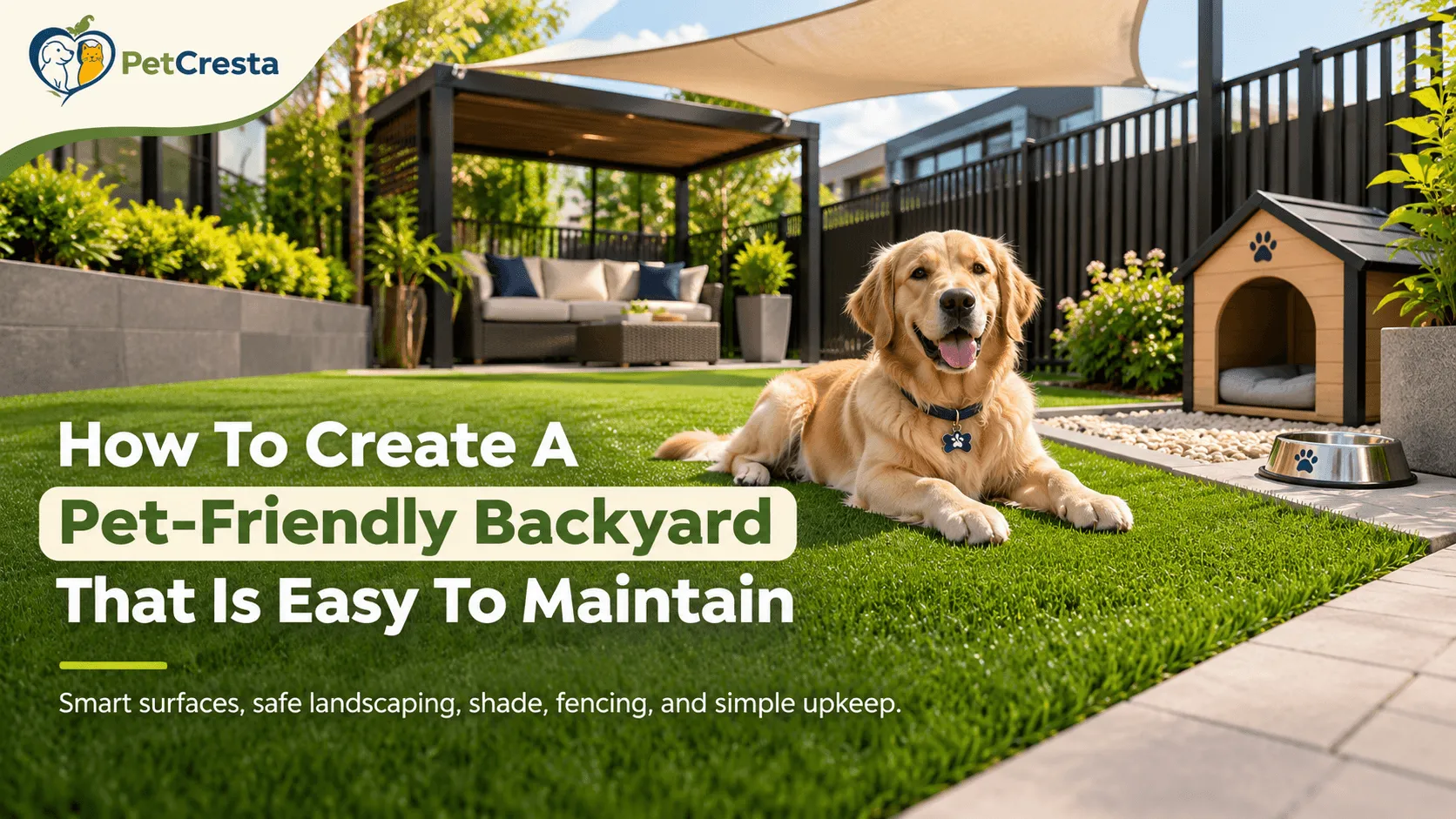
Creating a backyard that accommodates pets while remaining attractive and manageable requires thoughtful planning. Dogs need space to exercise, explore, and relax, but traditional outdoor surfaces can quickly become muddy, damaged, or difficult to maintain. Homeowners considering pet-safe artificial grass can explore artificial turf solutions designed for pet-friendly outdoor spaces, offering an alternative to natural lawns that require frequent watering, mowing, and repairs. By selecting durable materials, incorporating practical features, and establishing simple maintenance routines, homeowners can create an outdoor environment that supports their pets without adding unnecessary responsibilities.
Choose Durable And Pet-Friendly Ground Surfaces
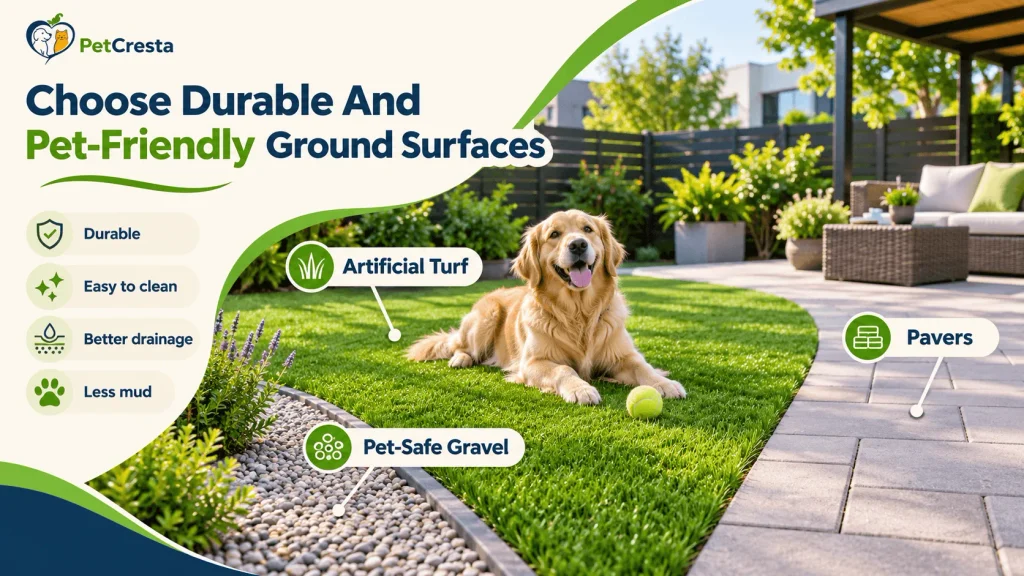
The ground surface is one of the most important considerations when designing a pet-friendly backyard. Natural grass can become worn in areas where dogs frequently run, dig, or play, leaving exposed soil and muddy patches. Choosing a durable surface helps maintain the appearance of the yard while reducing the need for constant repairs.
Artificial turf is a practical option for homeowners seeking a consistent lawn appearance with less routine maintenance. Pet-oriented turf systems can include drainage features that help liquids pass through the surface, although regular cleaning remains necessary. Other suitable materials, such as smooth paving stones and appropriately sized gravel, can provide durable surfaces for walkways and designated activity areas.
Create Designated Areas For Different Activities
Dividing the backyard into functional spaces makes it easier to accommodate different pet activities. Dogs benefit from having sufficient room to run, explore, and engage in physical exercise without encountering unnecessary obstacles. A dedicated play area can also help protect flower beds, outdoor furniture, and other landscaping features from accidental damage.
Consider establishing separate spaces for exercise, relaxation, and bathroom activities. A designated bathroom area with an easy-to-clean surface can simplify waste removal and reduce unwanted odors throughout the yard. Providing a quiet resting spot away from busy play areas also gives pets somewhere comfortable to relax after physical activity.
Provide Adequate Shade And Fresh Water
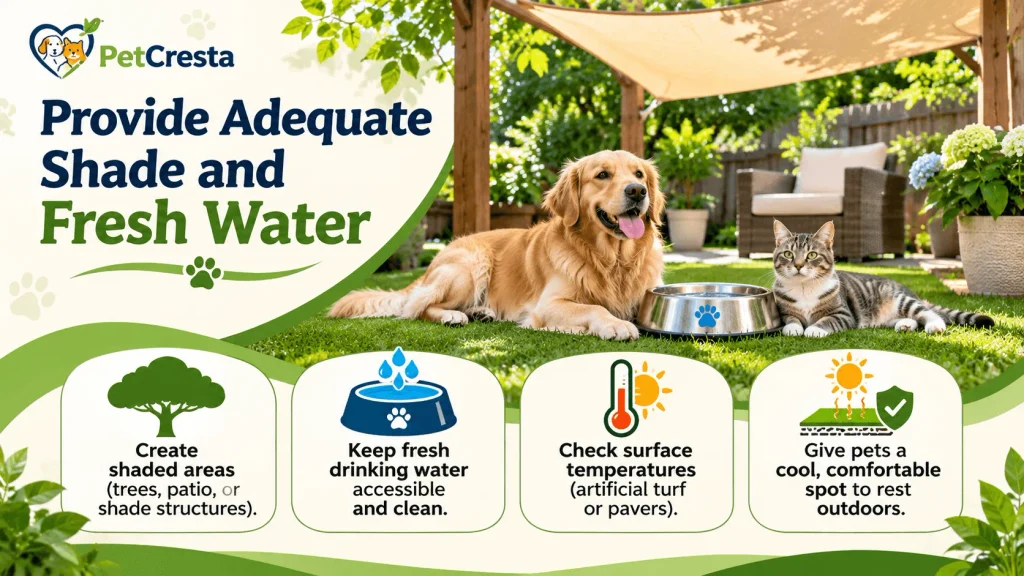
Outdoor comfort is essential for pets, particularly during warmer weather when prolonged sun exposure can increase the risk of overheating. Trees, covered patios, and shade structures can provide sheltered spaces where animals can escape direct sunlight. These features also make the backyard more comfortable for homeowners who enjoy spending time outdoors with their pets.
Fresh drinking water should always be accessible when pets spend time outside. Place sturdy water bowls in shaded locations and clean them regularly to prevent dirt and debris from accumulating. Since artificial turf and paved surfaces can become hot in direct sunlight, checking surface temperatures before allowing pets to play is equally important.
Select Landscaping That Is Safe For Pets
Plants and decorative landscaping features contribute to an attractive backyard, but some varieties can be harmful to animals. Before introducing new plants, homeowners should confirm that they are suitable for households with dogs or other pets. Avoiding toxic species reduces the likelihood of accidental poisoning when curious animals investigate garden beds.
Raised planters and protective borders can help separate delicate plants from active play areas. Choosing hardy, low-maintenance vegetation also reduces the time spent pruning, watering, and replacing damaged greenery. Mulch should be selected carefully, as certain materials, including cocoa mulch, can pose health risks if swallowed by dogs.
Install Secure Fencing And Practical Pathways
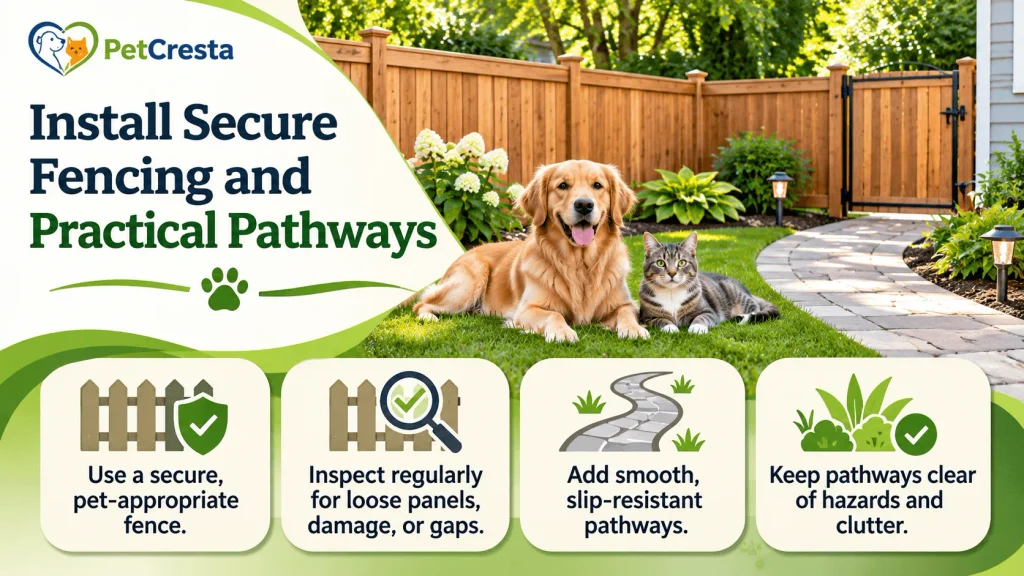
A secure boundary is essential for preventing pets from wandering into unsafe surroundings. Fencing should be appropriate for the size, strength, and behavior of the animals using the backyard. Regular inspections can identify loose panels, damaged gates, and gaps that might allow pets to escape.
Well-designed pathways can also improve the functionality of outdoor spaces. Smooth, slip-resistant materials create comfortable walking routes while helping direct movement away from sensitive landscaping areas. Keeping pathways clear of sharp objects, unstable decorations, and unnecessary clutter reduces potential hazards during everyday activities.
For a more detailed comparison of aluminum, wood, vinyl, composite, and other options, see PetCresta’s guide to pet-friendly backyard fence materials.
Establish a Simple Backyard Maintenance Routine
Even low-maintenance outdoor spaces require consistent attention to remain clean and comfortable. Removing pet waste promptly helps control odors and reduces the possibility of bacteria spreading across frequently used areas. Regularly rinsing appropriate surfaces and cleaning feeding stations can further improve backyard hygiene.
Artificial grass should be maintained according to the manufacturer’s recommendations, particularly in areas frequently used by pets. This may involve rinsing, removing debris, brushing flattened fibers, and using suitable cleaning products when necessary. Checking drainage systems, fencing, and outdoor furniture periodically also helps prevent minor maintenance concerns from becoming expensive repairs.
Final Takeaway
Creating a pet-friendly backyard that is easy to maintain is mainly a matter of planning the space around how pets actually use it.
Durable surfaces reduce wear. Secure fencing limits escape risks. Shade and water improve outdoor comfort. Pet-safe landscaping reduces avoidable hazards, while good drainage and designated bathroom areas make cleaning easier.
Artificial turf can be useful in the right setting, but it should be chosen with drainage, heat, cleaning, and installation quality in mind rather than treated as a maintenance-free solution.
A yard does not need to be elaborate to work well for pets. It needs to be secure, comfortable, cleanable, and suitable for the animals living there.
Frequently Asked Questions
There is no single best surface for every pet. Natural grass, artificial turf, pavers, and selected gravel can all work depending on climate, drainage, the pet’s activity level, and how the area will be maintained. Many yards work best with a combination of surfaces.
Artificial grass can work well for dogs because it does not develop muddy patches or require mowing. Pet waste still needs to be removed, the surface needs cleaning, drainage must be adequate, and the turf should be checked for excessive heat during sunny weather.
Use durable surfaces in high-traffic areas, create a designated bathroom zone, choose hardy plants, maintain good drainage, secure the fence, and keep a short cleaning routine. Designing around your dog’s regular movement patterns can also reduce lawn and garden damage.
Avoid plants known to be toxic to the species using your yard. Because toxicity differs between dogs, cats, and other animals, identify each plant accurately and check a reliable veterinary or animal-poison resource before planting it.