
When Does A Dog Need Professional Training?
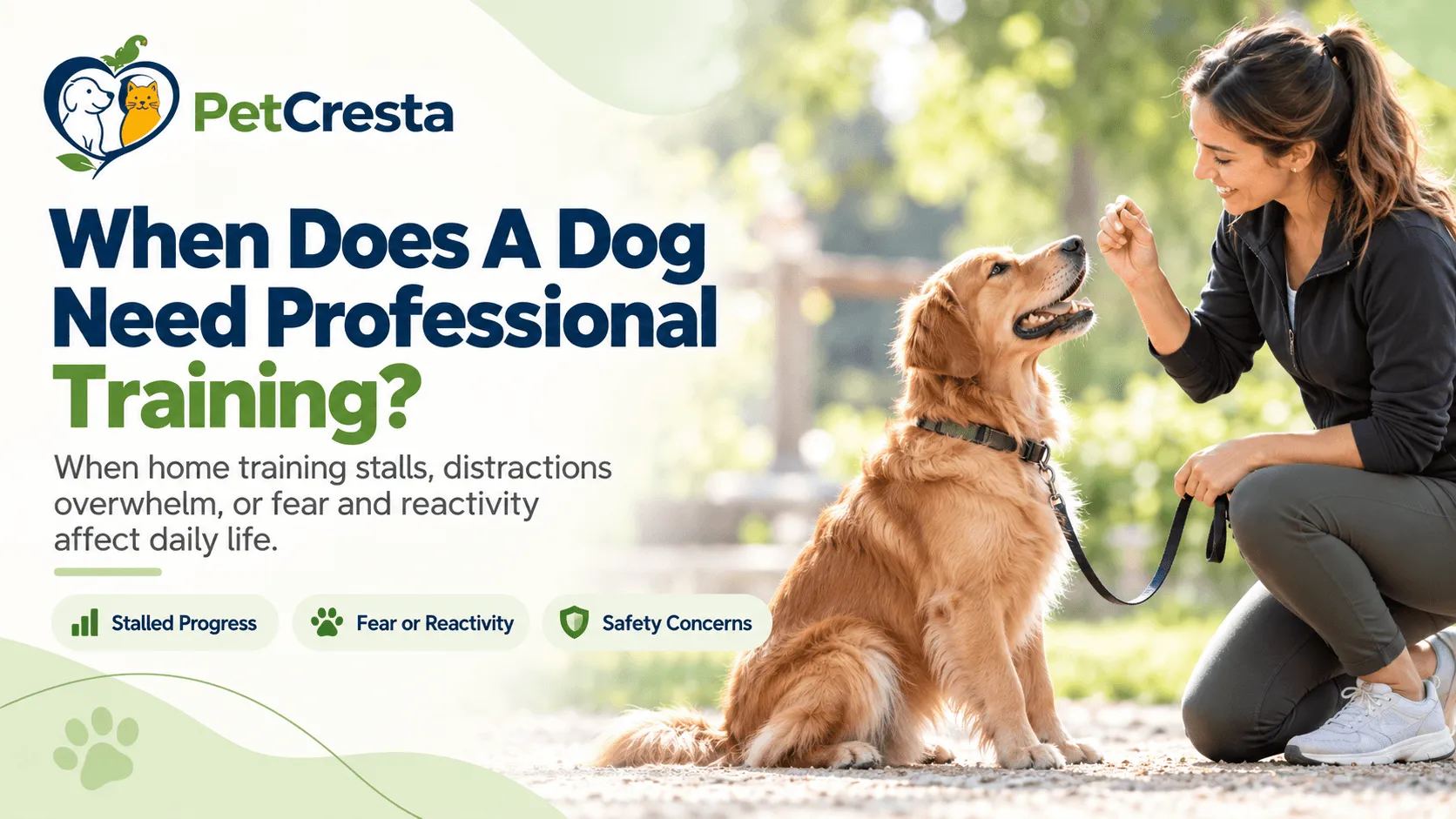
Many everyday dog behaviors improve with patience, consistency, and simple practice at home. Others become harder to manage because the dog is confused, overwhelmed, fearful, or repeatedly practicing the unwanted behavior. Knowing when to keep working at home and when to bring in a professional can save frustration for both you and your dog. The goal isn’t perfect obedience. It’s clearer communication and behavior that make everyday life safer and easier.
If the behavior is safe to manage and still improving, many owners can continue training an adult dog at home using consistent cues, appropriate rewards, and gradual increases in difficulty.
Quick Answer: When Does a Dog Need Professional Training?
A dog may benefit from professional training when:
- home training has stopped producing progress
- the same unwanted behavior keeps returning
- the dog behaves well at home but cannot cope around distractions
- leash pulling, jumping, barking, or poor recall is becoming difficult to manage
- the owner is unsure how to teach or reinforce the desired behavior
- fear or anxiety interferes with normal activities
- the dog growls, snaps, lunges, guards resources, or shows other potentially dangerous behavior
- separation-related distress is severe
- Behavior changes suddenly without an obvious explanation
- The owner needs help creating a structured training plan
Routine manners problems may be appropriate for a qualified reward-based trainer. Fear, aggression, severe anxiety, or sudden behavioral changes may require coordination between a veterinarian and an appropriately qualified behavior professional.
Start by looking at what the behavior is telling you

A dog that pulls on the leash, jumps on visitors, ignores a recall cue, or steals food from the counter isn’t necessarily being stubborn. Often, the unwanted behavior has simply been rewarded in some way.
Consider jumping as an example. If your dog jumps and receives eye contact, talking, or petting, that interaction can make jumping worth repeating. Training becomes easier when you decide what you want instead, such as four paws on the floor, and consistently reward that behavior.
Before assuming your dog needs intensive training, look at the situation around the behavior. Does it happen only when guests arrive? Does your dog respond well indoors but struggle outside? Does the problem appear when there are other dogs nearby? These details help identify whether your dog needs more practice, better management, or professional guidance.
Know when home training has stopped making progress

Basic skills can often be practiced at home in short, focused sessions. Sit, stay, settling on a mat, polite greetings, and loose-leash walking all benefit from repetition in increasingly distracting environments.
Basic skills can often be practiced at home in short, focused sessions. Sit, stay, settling on a mat, polite greetings, and loose-leash walking all benefit from repetition in increasingly distracting environments. A structured approach to adult dog training can help owners build these behaviors gradually before deciding that professional intervention is necessary.
The problem comes when you keep repeating the same approach without seeing meaningful progress. For example, a dog might perform a reliable recall in the living room but completely ignore the cue at a busy park. Practicing the cue louder or more often may not solve the issue because the outdoor environment presents an entirely different level of distraction.
This is where structured dog training services can be useful. A trainer can watch how you give cues, how quickly rewards arrive, what distracts your dog, and whether the environment is making the exercise too difficult. Sometimes a small change in timing or training setup makes a noticeable difference.
Professional help can also prevent you from accidentally teaching the wrong pattern. Repeating a cue five times before your dog responds, for instance, can teach the dog that the first four repetitions don’t matter.
Pay attention to fear, reactivity, and sudden behavior changes
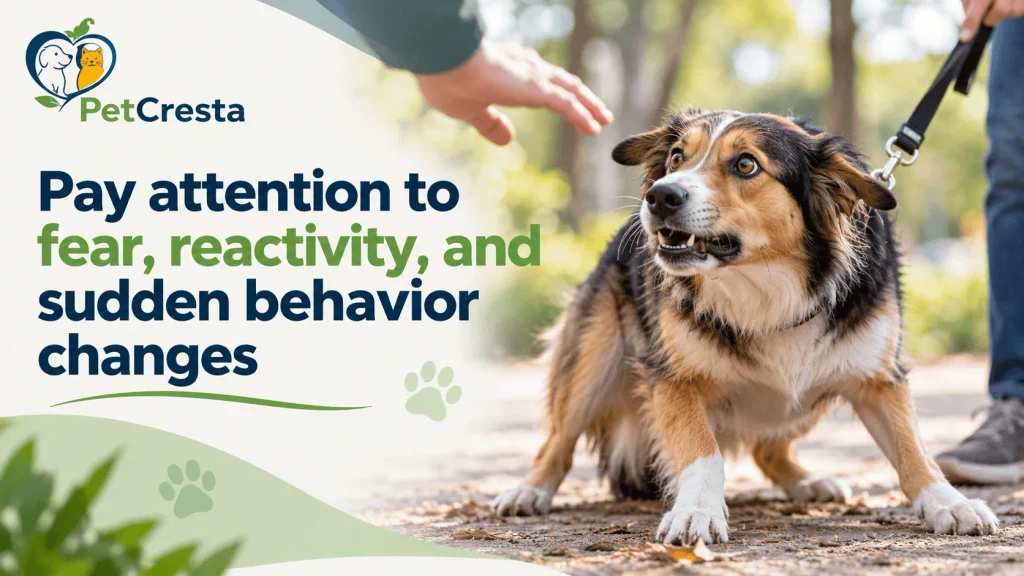
Some behavior concerns deserve more caution than ordinary manners training. Growling, snapping, intense fear, lunging toward dogs or people, guarding food or objects, and severe distress when left alone shouldn’t be approached as simple obedience problems.
Avoid punishing warning signals such as growling. Removing the warning doesn’t necessarily remove the discomfort causing it. The American Veterinary Society of Animal Behavior recommends reward-based training methods and advises against aversive methods that rely on pain, fear, or physical or psychological discomfort.
A sudden behavior change also deserves attention. If a normally social dog suddenly becomes irritable when touched, refuses familiar activities, or begins reacting in situations that were previously comfortable, speak with a veterinarian. Pain, illness, or another physical problem can sometimes contribute to changes in behavior. Training shouldn’t be used as a substitute for investigating a possible medical cause.
Choose a trainer based on methods, not promises

Dog training isn’t just about whether a trainer can make a dog follow commands during a session. You need an approach that you can understand and continue using at home.
Ask a prospective trainer how they teach new behaviors, what equipment they use, and how they respond when a dog gets something wrong. They should be able to explain their process clearly rather than relying on vague language about dominance, control, or making a dog “respect” its owner.
Also ask what your involvement will look like. A dog may learn quickly with a professional, but the skills need to transfer to everyday situations with you. Good training should therefore include guidance for the owner, not only work performed with the dog.
Be cautious about guaranteed results or fixed timelines. Dogs differ in learning history, temperament, environment, motivation, and the complexity of the behavior being addressed. Teaching a puppy to sit and helping an adult dog become more comfortable around unfamiliar dogs are very different training tasks.
Make everyday life part of the training plan

Formal sessions matter, but much of dog training happens during ordinary routines. Waiting calmly before going through a door, checking in with you during a walk, settling while you prepare dinner, and greeting visitors politely are all opportunities to reinforce useful behavior.
Formal sessions matter, but much of dog training happens during ordinary routines. Waiting calmly before going through a door, checking in with you during a walk, settling while you prepare dinner, and greeting visitors politely are all opportunities to reinforce basic obedience and everyday manners.
Keep practice manageable. Asking for an easy behavior in a quiet environment builds a foundation before you add distance, duration, or distractions. If your dog repeatedly fails, the exercise may simply be too difficult at that moment. Make the situation easier rather than assuming the dog is refusing to cooperate.
Professional training becomes especially valuable when you aren’t sure how to make that progression safely or consistently. The trainer’s role isn’t simply to teach commands. It is to help you understand how your dog learns and give you a practical plan you can continue between sessions.
Can You Train a Dog at Home Instead?

Yes. Many dogs can learn ordinary household manners through consistent home training.
Continue working at home when:
- the behavior is safe to manage
- the dog is making steady progress
- you understand how to teach the skill
- the dog remains comfortable during training
- you can control the training environment
- the behavior does not involve serious aggression, panic, or safety concerns
Professional help becomes more appropriate when the owner no longer knows how to progress safely or the behavior exceeds what can reasonably be handled through basic home training.
Training should make communication clearer
You don’t need professional help for every imperfect behavior. Many dogs learn everyday manners through consistent, reward-based practice at home.
Consider getting additional guidance when progress has stalled, the behavior is difficult to manage safely, or you’re unsure why your current approach isn’t working. The right training plan should give your dog clearer expectations while giving you practical skills you can use long after the formal sessions end.
FAQs
Consider a professional trainer when consistent home training is not producing progress, the behavior is difficult to manage, or you are unsure how to teach the desired alternative behavior. Fear, aggression, severe anxiety, or sudden behavior changes may require more specialized help.
Leash pulling, jumping, unreliable recall, door rushing, excessive excitement, and inconsistent obedience can often benefit from professional training. Aggression, guarding, severe fear, and serious reactivity may require a behavior professional as well.
There is no minimum age at which all dogs need professional training. Puppies can benefit from appropriately run training and socialization programs, while adolescents and adult dogs can also learn new skills. The right timing depends more on the dog’s needs than age alone.